Best Free Fishing Spots in Alaska
Let's be honest, the dream of fishing in Alaska often conjures images of expensive fly-in lodges, guided charters, and all-inclusive packages that can quickly empty your wallet. Many aspiring anglers might feel disheartened, thinking that experiencing Alaska's legendary fisheries requires a small fortune. But what if I told you that some of the most memorable fishing experiences, and even trophy catches, can be had without spending a dime on a guide or private access? This comprehensive guide is dedicated to revealing the best free fishing spots in Alaska, proving that incredible angling adventures are within reach for those willing to explore and cast a line from public access points.
Understanding "Free" Fishing in Alaska and Why It Matters
When we talk about "free" fishing in Alaska, it's crucial to set expectations. We're not talking about fishing without an Alaska Fishing License: Complete Guide – that's a legal requirement for almost everyone, residents and non-residents alike, and it's essential for funding conservation efforts. What we mean by "free" are those incredible public access points, roadside opportunities, and walk-in spots that don't require you to pay for a charter boat, a private lodge, or guided services. For many, the sheer cost of an Alaskan fishing trip can be a huge hurdle, and finding these accessible, unguided locations opens up the Last Frontier to a much wider audience.
The Cost Barrier and the Appeal of DIY Fishing
I’ve heard it countless times from folks wanting to visit: "Alaska fishing sounds amazing, but the prices for a week-long trip are just out of reach!" And they're not wrong. A good fishing charter for salmon or halibut can easily run hundreds of dollars per person per day, and multi-day packages at remote lodges can climb into the thousands. While these experiences are undeniably fantastic and offer unique advantages, they aren't the only way to experience world-class fishing. The appeal of do-it-yourself (DIY) fishing in Alaska is immense, not just for the cost savings, but for the profound sense of accomplishment and freedom it brings.
Imagine spending a morning on the bank of a pristine river, casting your own line, relying on your own skills and research, and then feeling that electrifying tug of a chrome-bright sockeye salmon. That moment, earned through your own effort and exploration, often feels far more rewarding than if a guide had put the fish on your hook. This independent spirit is deeply ingrained in Alaskan culture, and it extends beautifully to the fishing scene. You get to set your own schedule, explore at your own pace, and truly connect with the wild landscape on your terms. Plus, the money saved on charters can be reallocated to other parts of your trip, like better gear or more days exploring!
Essential Preparations: License, Regulations, and Safety
Before you even dream of casting a line in a "free" spot, you must have your ducks in a row. First and foremost, a valid Alaska fishing license is non-negotiable. Whether you're a resident or a non-resident, under 16 or over 60, there are specific Alaska Fishing License Cost and Types you'll need. Make sure you purchase the correct one for your duration and residency status. Fines for fishing without a license are steep and absolutely not worth the risk.
Next, and equally important, is understanding Alaska Fishing Regulations Explained. These aren't just suggestions; they are laws designed to protect Alaska's incredible fisheries for future generations. Regulations change frequently, often mid-season, via emergency orders, so it's critical to check the Alaska Department of Fish and Game (ADF&G) website or their physical regulation booklets before each outing. Pay close attention to bag limits, size restrictions, specific gear restrictions (like bait or single-hook rules), and closed areas. For instance, knowing when you need a Do You Need a King Salmon Stamp in Alaska or understanding Alaska Halibut Charter Regulations Explained (even if you're not on a charter, general halibut rules apply) can save you a lot of headache. Ignorance of the law is not an excuse, and game wardens are incredibly diligent in Alaska.
Finally, safety cannot be overstated. When you're out there on your own, especially in remote areas or along popular riverbanks, you are responsible for your own well-being. This includes:
- Bear Awareness: Alaska is bear country. Carry bear spray, know how to use it, and make noise when walking through brush. Proper food storage is crucial.
- Weather Readiness: Alaskan weather can change in an instant. Always bring layers, quality rain gear, and waterproof boots or waders. Getting hypothermia miles from your car is a serious threat.
- Water Safety: Rivers can be swift and cold. Wear a life vest if you're in a boat or near deep, fast-moving water. Be aware of slippery banks and unpredictable currents.
- Communication: Let someone know where you're going and when you expect to return, especially if heading to more remote areas with limited cell service.
Accessible Roadside and Urban Fishing Hotspots
One of the great joys of fishing in Alaska is how close some truly incredible opportunities are to major population centers. You don't always need to fly into the wilderness to find hungry fish. Many of the state's best "free" spots are right off the road system or even within city limits, making them perfect for day trips or quick outings.
Anchorage Area Gems
Believe it or not, the largest city in Alaska boasts some surprisingly good, and free, fishing opportunities right within or very close to its bustling core. These spots are perfect for those staying in Anchorage or flying in and out, offering a chance to wet a line without extensive travel.
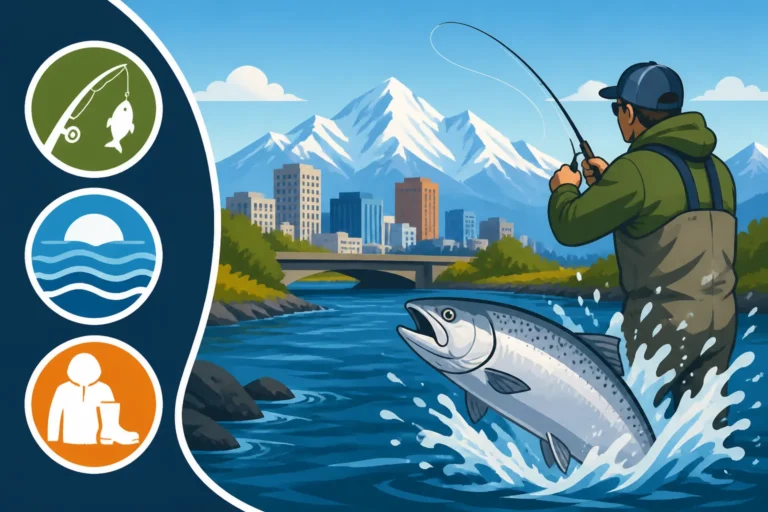
Ship Creek: This is arguably the most famous urban fishery in Alaska. Flowing right through downtown Anchorage, under the shadow of skyscrapers and just a stone's throw from the cruise ship docks, Ship Creek offers an astounding opportunity to catch salmon.
- What You'll Catch: Primarily King Salmon (Chinook) in May and June, followed by Coho Salmon (Silver) in late July and August. Dolly Varden and resident trout are also present.
- Best Time: The King salmon run typically starts in mid-May and peaks in June. Coho salmon usually arrive in late July and continue through August. Check Alaska King Salmon Fishing Regulations and Limits specifically for Ship Creek, as rules can be highly dynamic.
- Access: Excellent, with paved paths, boardwalks, and designated fishing platforms. You can literally walk from your downtown hotel and be fishing in minutes. There's also a public fishing derby held here annually, adding to the excitement.
- Techniques: Spin fishing with Pixee spoons, Vibrax spinners, or cured salmon eggs is popular. Fly fishing can also be effective.
Campbell Creek: A beautiful stream that winds its way through Anchorage's greenbelt, offering a more serene urban fishing experience than Ship Creek.
- What You'll Catch: Primarily Rainbow Trout, Dolly Varden, and sometimes small numbers of salmon (typically Pinks or Cohos) during their runs, though it's more known for its resident fish.
- Best Time: Trout and Dolly Varden can be caught throughout the open season. Salmon runs are less predictable here than in Ship Creek, but late summer can offer some action.
- Access: Multiple access points through Anchorage's extensive park system. You can walk or bike the trails and find quiet spots.
- Techniques: Small spinners, flies (especially dry flies and nymphs for trout), and even small pieces of cured salmon eggs work well.
Eagle River: Just a short drive north of Anchorage, Eagle River offers excellent bank fishing in a more natural, yet still very accessible, setting.
- What You'll Catch: King Salmon (early season), Pink Salmon (odd years), Chum Salmon, Coho Salmon (late season), and resident Dolly Varden and Rainbow Trout.
- Best Time: King salmon in June, Pink and Chum in July (peak on odd years for Pinks), Coho from August through September.
- Access: Multiple pull-offs and trails along the Glenn Highway offer river access. Eagle River Campground and Eagle River Nature Center also provide public access points.
- Techniques: Vary by species, but spinners, jigs, and cured roe are effective. Fly fishing is also popular for trout and Dolly Varden. This river provides a great opportunity for Best Bank Fishing in Alaska.
Kenai Peninsula Public Access
The Kenai Peninsula is world-renowned for its fishing, and while it's famous for lodges and charters, it also boasts an incredible array of public access points that are completely free to use (beyond your license, of course!). This is where many Alaskans go to fill their freezers.
Kenai River (Public Access Points): The Kenai River is legendary, especially for its massive King salmon and abundant Sockeye. While some stretches are private, there are many public access points that allow you to fish its hallowed waters.
- What You'll Catch: Giant King Salmon, abundant Sockeye Salmon, impressive Silver Salmon, and trophy Rainbow Trout.
- Best Time: King salmon runs are typically in June and July. Sockeye salmon runs are in July and August. Silver salmon runs are August through September. Rainbow trout fishing is excellent throughout the summer and fall. You can read more about Best Fishing on the Kenai Peninsula.
- Access: Look for state recreation sites and city parks.
- Soldotna City Park: Right in the heart of Soldotna, offering good bank access for Sockeye and King salmon. It can get crowded, but the fishing can be phenomenal.
- Bing's Landing Recreation Area: Located near Sterling, this popular spot provides ample parking and river access. Great for Sockeye in July.
- Swiftwater Park: Another excellent state park near Soldotna with good bank access.
- Techniques: For Sockeye, "flossing" or "flipping" is the dominant technique. Kings are often targeted with back-bouncing or back-trolling (from shore, using current to drift baits), while Silvers hit spinners and eggs. For trout, beads and egg patterns are very effective.
Russian River: A tributary of the Kenai, the Russian River is famous for its massive Sockeye salmon runs, drawing anglers from all over the world.
- What You'll Catch: Overwhelmingly Sockeye Salmon, with some Rainbow Trout and Dolly Varden.
- Best Time: First run Sockeye in June, second run Sockeye in July (often peaking mid-July).
- Access: Managed by the US Forest Service, there are well-maintained trails and platforms. Access points are typically found around the confluence with the Kenai River and upriver, often near campgrounds. Be prepared for crowds during peak Sockeye runs—this is where the term "combat fishing" truly comes alive.
- Techniques: Flipping flies (typically a weighted, unbaited fly designed to snag in the mouth as the fish swim upstream) is the primary method for Sockeye. Check Alaska Sockeye Salmon Fishing Regulations and Limits carefully, especially regarding fly patterns and weighted lures.
- Local Tip: For a quieter experience, consider hiking further upstream or going during off-peak hours. Even if you're not booking a trip, looking at popular charter destinations on platforms like FishingBooker can give you an idea of where the fish congregate and where public access might exist nearby, like around the Russian River Ferry crossing.
Ninilchik River: South of the major Kenai River hotspots, the Ninilchik River offers a more laid-back roadside fishing experience for salmon.
- What You'll Catch: King Salmon (early season) and Silver Salmon (late season).
- Best Time: Kings in late May and June, Silvers in August and September.
- Access: Various pull-offs along the Sterling Highway offer access, particularly where the river runs close to the road. The Ninilchik State Recreation Area also provides good access.
- Techniques: Spinners, cured roe, and jigs are popular and effective.
Interior and Southeast Opportunities
Beyond the Southcentral road system, other regions of Alaska offer fantastic free fishing, particularly in the Interior around Fairbanks and along the extensive coastlines of Southeast Alaska.
Fairbanks Area Lakes/Rivers: Interior Alaska, though less famous for salmon runs than the coast, provides excellent freshwater fishing, much of it accessible by road or short hikes.
- What You'll Catch: Arctic Grayling, Northern Pike, various trout species (Rainbow, Lake Trout), and sometimes salmon (Chum and King) in the larger river systems.
- Best Time: Summer months for most species (June-August). Ice fishing is popular in winter.
- Access:
- Chena River: Flows through Fairbanks, offering chances for Grayling and occasional salmon. Numerous parks and public access points.
- Quartz Lake: A popular state recreation area near Delta Junction (about 90 miles southeast of Fairbanks) known for Rainbow Trout, Arctic Char, and Arctic Grayling. Excellent shore fishing and boat launches.
- Tanana River: A major river, offering access to Pike and salmon. Access is often via gravel roads or boat launches.
- Techniques: Fly fishing is excellent for Grayling. Spinners and spoons work for Pike and trout. For salmon, tried-and-true methods like cured eggs and large spinners are effective.
Juneau Area Shoreline/Creeks: Southeast Alaska's capital city, Juneau, being on the coast, offers ample opportunities for shore-based fishing in both saltwater and freshwater creeks.
- What You'll Catch: All five species of Pacific Salmon (depending on the creek and season), Dolly Varden, Cutthroat Trout, and various rockfish and bottomfish from saltwater access points.
- Best Time: Salmon runs typically start in late spring (Kings) and continue through late summer/fall (Cohos).
- Access: Many creeks accessible via hiking trails or roadside pull-offs, such as Sheep Creek, Cowee Creek, and Montana Creek. Public docks and beaches around Juneau also offer saltwater opportunities.
- Techniques: Spin fishing with spoons and spinners is very popular for salmon. Fly fishing is productive for trout and Dolly Varden. Jigging or bait fishing from docks can yield bottomfish.
Strategies for Discovering Your Own Free Fishing Paradises
Alaska is vast, and while I've highlighted some popular spots, there are countless other hidden gems waiting to be discovered. Part of the allure of free fishing is the thrill of exploration. With a little research and a willingness to wander, you can find your own personal honey holes.
Utilizing Public Lands and Parks
Alaska has an incredible amount of public land – state parks, national forests, and borough lands – all of which usually permit fishing with a valid license. This is your playground. Don't be afraid to pull out a map, whether physical or digital, and look for those green spaces.
- State Parks and Recreation Areas: These are goldmines for accessible fishing. Many, like those along the Kenai Peninsula (e.g., Crooked Creek, Anchor River State Recreation Areas) or near Fairbanks, offer designated fishing areas, boat launches (if you have a small boat or kayak), and often campgrounds right by the water. They are typically well-marked and maintained.
- National Forests: Areas like the Chugach National Forest and Tongass National Forest provide vast stretches of rivers, lakes, and coastline. While some areas require more effort to reach, many offer drive-up access or short hikes to prime fishing spots. Look for Forest Service roads and trailheads that lead to water.
- Borough Lands: Local government entities also manage lands with public access. Checking borough websites for parks and recreation maps can reveal smaller, lesser-known fishing holes close to communities. These might be quiet lakes stocked with trout or smaller creeks.
- Unimproved Access Points: Sometimes, the best spots aren't officially designated. They might be a small pull-off on a gravel road, followed by a faint trail through the brush to a river bend. These spots often require a bit more bushwhacking and local knowledge but can offer solitude and excellent fishing away from the crowds. Always respect private property signs, but a vast amount of Alaska is truly public.
Researching Local Knowledge and Online Resources
One of the most powerful tools in finding free fishing spots is information. The Alaskan fishing community is generally friendly and often willing to share general advice, though specific secret spots are usually guarded!
- ADF&G Resources: The Alaska Department of Fish and Game is your absolute best friend. Their website is a treasure trove of information, including weekly fishing reports, detailed regulation booklets, fish stocking schedules for lakes, and even maps showing public access points. They also publish salmon run forecasts which can help you time your visit to a particular river.
- Local Tackle Shops: These are invaluable. Step into any tackle shop in Soldotna, Seward, or even a smaller town, and strike up a conversation. The folks working there are often avid anglers themselves and can provide hyper-local, up-to-the-minute advice on what's biting, where, and with what. They’ll also know about any recent Alaska Fishing Emergency Orders Explained that might impact your plans.
- Online Forums and Social Media Groups: There are numerous dedicated Alaskan fishing forums and Facebook groups where anglers share tips, photos, and discuss current conditions. While you might not get someone's exact GPS coordinates, you can glean a lot of general information about productive areas and techniques.
- Mapping Tools: Google Earth, Gaia GPS, or even simple road maps can be incredibly useful. Look for blue lines (rivers/creeks) crossing roads, or lakes adjacent to public lands. Zoom in to identify trails, pull-offs, or areas where the land appears unencumbered by private development. Even commercial fishing platforms like FishingBooker, though designed for booking guides, can be a great research tool. By looking at where guides operate and what species they target, you can identify highly productive general areas and then use public land maps to find your own unguided access points nearby. This way, you leverage commercial knowledge for your free adventure.
Embracing Bank Fishing and Wading
Many of the best free fishing spots in Alaska are accessible by foot from the bank or by wading. You don't need a boat for many of these opportunities, which further reduces costs.
- Bank Fishing: This simply means casting from the shore. It's the most common and accessible form of free fishing. Rivers like the Kenai, Russian, and Ship Creek offer miles of bank access. Lakes like Quartz Lake also have excellent shore fishing. The key is to find good casting lanes and understand how fish move along the banks. Learning about How to Bank Fishing for Salmon in Alaska can significantly improve your success.
- Wading: For river anglers, waders are often essential. They allow you to get further into the river, access different currents, and often reach fish that are out of casting range from the bank. However, wading in Alaska rivers can be dangerous due to swift currents, deep holes, and slippery rocks. Always use a wading staff, know your limits, and be aware of increasing water levels. Make sure you have the right Best Waders for Alaska Fishing for the cold water.
Making the Most of Your Free Alaska Fishing Adventure
Free fishing isn't just about saving money; it's about the adventure, the challenge, and the deep satisfaction of connecting with nature on your own terms. To truly maximize your experience, a few extra considerations go a long way.
Gear Up Smart, Not Expensive
You don't need the latest, most expensive gear to catch fish in Alaska. A decent setup that can handle the powerful runs of salmon and the occasional large trout is sufficient.
- Rods and Reels: For salmon and larger trout, a medium-heavy spinning or baitcasting rod (7-9 feet) paired with a reliable reel spooled with 20-30 lb braided line and a fluorocarbon leader is a solid choice. Brands like Ugly Stik or Penn offer durable, affordable options. For smaller trout or grayling, a lighter setup (medium-light, 6-7 feet) is ideal.
- Lures and Bait: For salmon, you can't go wrong with classic spinners (e.g., Mepps Aglia, Vibrax) in various sizes and colors, Pixee spoons, and a good supply of cured salmon eggs. For trout, bead rigs, small spinners, and fly patterns like egg-sucking leeches are effective. Keep it simple and bring a variety. You can get a lot of mileage out of a few well-chosen items mentioned in an Alaska Fishing Gear and Tackle Guide.
- Waders and Rain Gear: This is where you shouldn't skimp too much. Alaska is wet and cold. Breathable chest waders (neoprene for colder seasons) and a high-quality waterproof, breathable rain jacket and pants are essential for comfort and safety. Nothing ruins a fishing trip faster than being wet and cold.
- Essentials: Don't forget a landing net (especially for big salmon), pliers, line cutters, a small first-aid kit, insect repellent, sunscreen, bear spray, and plenty of water and snacks. A harvest record card is also required for certain species, so know What Is the Alaska Harvest Record Card and how to fill it out.
Timing Your Visit for Success
Even the best free fishing spot can be unproductive if you hit it at the wrong time. Understanding the seasons and daily patterns is crucial.
- Salmon Runs: Alaska's salmon runs are migratory. Kings come first, often in May and June. Sockeye typically follow in June and July, with the largest runs usually peaking in mid-July. Pinks and Chums are abundant in July and August (Pinks mostly on odd-numbered years). Silvers (Cohos) are late-season heroes, running from August through September. Consult an Alaska Salmon Run Timing Explained chart and look at specific river forecasts from ADF&G.
- Tides: For saltwater access points or rivers influenced by tides (like the lower Kenai or Ship Creek), knowing the tide schedule is critical. Incoming tides often bring fresh fish, while outgoing tides can concentrate them in certain channels or make access difficult.
- Time of Day: While the "midnight sun" means long daylight hours in summer, fish often feed more actively during cooler periods. Early mornings and late evenings (even at 11 PM!) can be incredibly productive, and often less crowded.
- Emergency Orders: These are a part of fishing in Alaska. ADF&G issues emergency orders that can change bag limits, open/close fisheries, or alter gear restrictions with little notice, often due to conservation concerns or exceptional runs. Always check the latest emergency orders for your specific fishing area before heading out. You can often find announcements on ADF&G’s website or local tackle shop bulletins.
Respecting the Resource and Other Anglers
As independent anglers, we have a responsibility to be good stewards of Alaska's natural resources and to show courtesy to fellow fishermen.
- Leave No Trace: Pack out everything you pack in. This includes all trash, broken fishing line, and any discarded bait. Our beautiful fishing spots should remain pristine for everyone to enjoy.
- Fishing Etiquette: Especially in crowded public areas like the Russian River, respect personal space, avoid cutting lines, and be mindful of your casting arc. A little patience and a friendly attitude go a long way. When a fish is hooked, try to land it quickly and efficiently, then get out of the way for others.
- Fish Handling: If you're practicing catch-and-release, learn Alaska Catch-and-Release Best Practices to ensure fish have the best chance of survival. Use barbless hooks (often required), minimize handling, and release fish gently. If you're keeping fish, understand Alaska Fishing Limits and Bag Limits Explained and process your catch ethically. Know Alaska Fish Transport and Shipping Rules if you plan to take your bounty home.
| Free Fishing Spot | Primary Species | Best Season | Key Access Points | Notes |
|---|---|---|---|---|
| Ship Creek (Anchorage) | King, Coho Salmon | May-Aug | Downtown Anchorage boardwalks | Urban, high success, can be crowded |
| Kenai River (Public Access) | Sockeye, King, Silver Salmon, Rainbow Trout | June-Sept | Soldotna City Park, Bing's Landing, Swiftwater Park | Legendary fishery, can be very crowded for Sockeye |
| Russian River (Kenai Pen.) | Sockeye Salmon | June-July | US Forest Service campgrounds & trails | Famous for "combat fishing," specific techniques needed |
| Eagle River (Near Anchorage) | King, Coho, Pink, Chum Salmon, Dolly Varden | June-Sept | Glenn Highway pull-offs, Eagle River Campground | Diverse species, more natural setting than Ship Creek |
| Ninilchik River (Kenai Pen.) | King, Silver Salmon | May-June (Kings), Aug-Sept (Silvers) | Sterling Hwy pull-offs, State Rec Area | Less crowded than Kenai/Russian, good roadside access |
| Chena River (Fairbanks) | Arctic Grayling, Chum, King Salmon | June-Sept | Fairbanks parks & boat launches | Good for Grayling, urban access in Interior |
| Quartz Lake (Near Fairbanks) | Rainbow Trout, Arctic Char, Grayling | May-Sept (open water), Winter (ice fishing) | Quartz Lake State Recreation Area | Stocked lake, great for families, shore fishing |
| Juneau Area Creeks/Shoreline | All Salmon Species, Dolly Varden, Rockfish | May-Oct | Sheep Creek, Montana Creek, public docks | Coastal access, mixed freshwater/saltwater |
Remember, the beauty of Alaska fishing lies not just in the size of the fish, but in the experience itself. Finding and successfully fishing these free spots adds a layer of satisfaction that money can't buy. Happy fishing, and tight lines!
Disclaimer
The information provided in this guide is for general informational purposes only and is not intended as legal advice regarding fishing regulations. Alaska fishing regulations are subject to change without notice, often through emergency orders. It is the sole responsibility of each angler to consult the current Alaska Department of Fish and Game (ADF&G) regulations booklet, check for emergency orders, and obtain the necessary licenses and stamps before engaging in any fishing activities. Failure to do so may result in fines or penalties. Always prioritize safety and practice ethical angling.