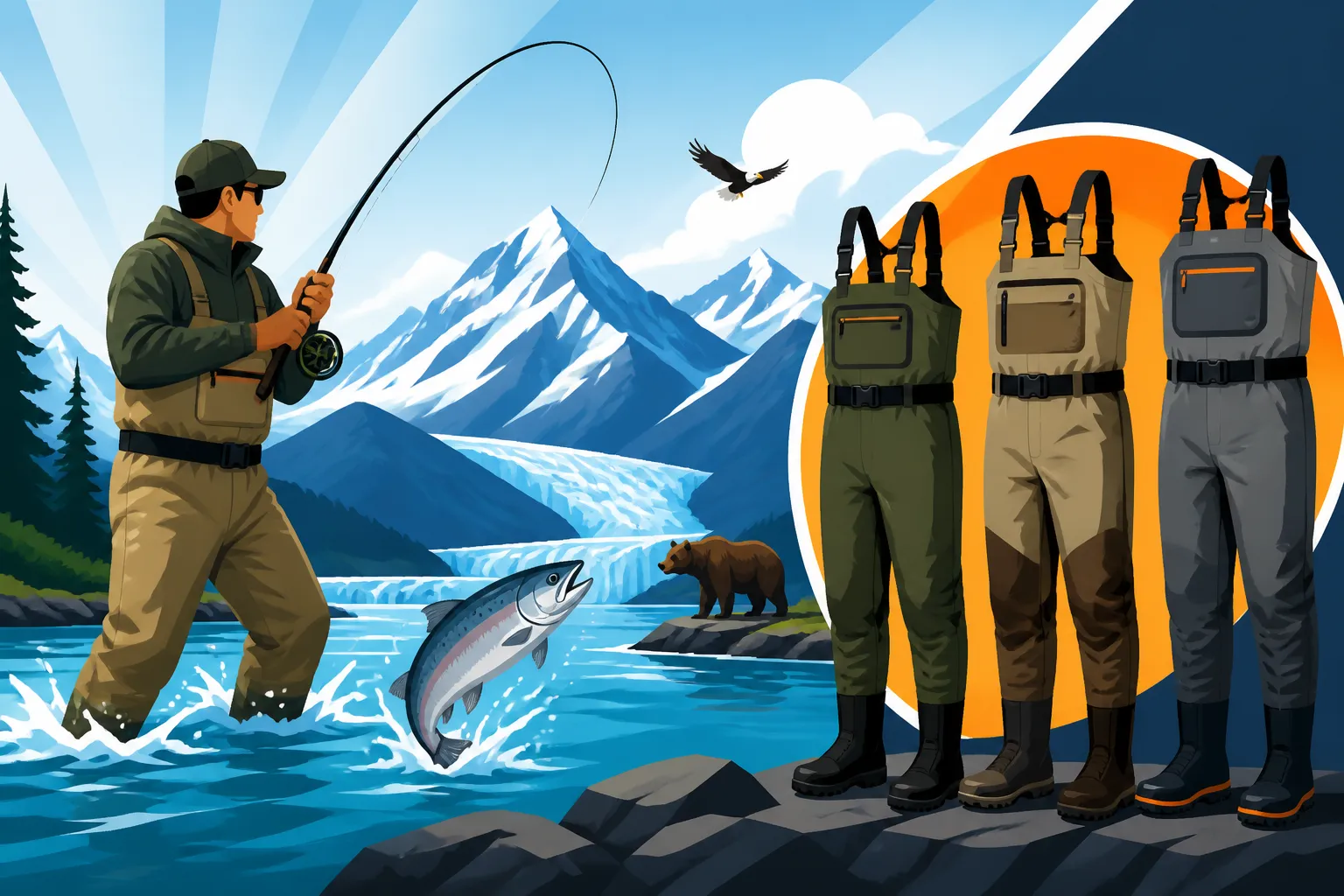
Best Waders for Alaska Fishing
Stepping onto an Alaskan riverbank or the deck of a charter boat, you quickly realize that comfort and protection aren't just luxuries—they're necessities. Many anglers, especially those new to the Last Frontier, underestimate just how critical good waders are until their feet are numb or their pants are soaked through after only an hour. This guide isn't just about finding something to keep you dry; it's about choosing the right waders that will stand up to Alaska's notoriously challenging conditions, ensuring your fishing trip remains memorable for the right reasons, not for how miserably cold you were.
Why Waders Are Non-Negotiable in Alaska's Fishing Scene
If you're planning a fishing adventure in Alaska, whether it's battling powerful King Salmon on the Kenai River or pursuing spirited Rainbow Trout in a pristine wilderness stream, having the right gear is paramount. And honestly, for a significant portion of the season, nothing is quite as essential as a reliable pair of fishing waders. Forget trying to "make do" with rain pants and boots; Alaska demands more.
The Unpredictable Alaska Climate
Alaska's weather has a reputation, and it's well-earned. One moment you could be basking in glorious sunshine, and the next, a chilly drizzle is setting in, or a gust of wind is whipping down the valley, making even warm air feel biting. This isn't your average summer shower; the water here, whether in a glacial river or the vast ocean, is often shockingly cold. Standing in it for even a short period without proper insulation and waterproofing can quickly lead to discomfort, hypothermia, and ultimately, cutting your fishing day short.
Waders act as your personal environmental control system, a barrier against the cold water, persistent rain, and often relentless winds. They keep your lower half dry and provide a crucial layer of insulation. For anyone spending hours actively fishing—casting, retrieving, moving upstream or down—the ability to stay warm and dry directly impacts endurance and enjoyment. Imagine finally hooking into that dream Sockeye Salmon, only to be distracted by freezing legs because you thought cheap rain gear would suffice. It's a real frustration many face, but it's entirely avoidable with the right preparation. You'll want to review your full Alaska Fishing Gear and Tackle Guide to make sure you have everything you need.
Navigating Diverse Fishing Environments
Alaska offers an incredible variety of fishing experiences, each with its own demands on your gear. Many of the most productive fishing spots, especially for salmon and trout, require wading directly into rivers and streams. Places like the Russian River, famed for its Sockeye runs, often involve standing in swift currents for hours. The banks can be muddy, slick with moss, or strewn with sharp rocks and submerged logs. A flimsy pair of waders won't just be uncomfortable; they could be a safety hazard, prone to tearing or offering insufficient grip.
Beyond river wading, even if you're primarily doing Bank Fishing in Alaska, you'll appreciate the protection waders offer from wet grass, unexpected puddles, and the occasional splash from a netted fish. For those considering fly-out trips to remote lakes or streams, you'll often be stepping out of a floatplane directly into shallow water or boggy ground. Robust waders shield you from the elements and the rough terrain, protecting your legs from abrasions and your body from the insidious chill. They're an integral part of your How to Dress for Alaska Fishing strategy, ensuring you're ready for whatever the Alaskan wilderness throws at you.
Key Features to Look for in Alaska Fishing Waders
Choosing waders isn't just about picking a size; it's about understanding the specific demands of Alaskan fishing. The right features can make a world of difference between a great day on the water and a cold, miserable experience.
Material Matters: Durability and Breathability
When it comes to wader materials, you're generally looking at a trade-off between warmth, durability, and breathability. For Alaska, you often need a good balance, leaning towards durability and the ability to layer for warmth.
- Breathable Waders (e.g., Gore-Tex, Toray, various proprietary blends): These are by far the most popular choice for active anglers in Alaska, especially during the warmer months (June-August). Materials like Gore-Tex, commonly found in high-end waders from brands like Simms (their G3 and G4 lines are legendary) and Orvis (Pro Waders), are designed with microscopic pores that allow sweat vapor to escape while preventing water from entering. This keeps you from feeling clammy and overheated during strenuous hiking or casting, which is a huge comfort factor. However, "breathable" doesn't mean "warm." You'll need to layer appropriately underneath. They are lighter and pack down smaller, which is great if you're flying into a remote lodge. Look for waders with multiple layers (3-layer, 4-layer, 5-layer) in high-wear areas like the knees and seat for added durability against river rocks and boat gunwales.
- Neoprene Waders: These offer excellent insulation, making them a popular choice for very cold water conditions or late-season fishing in Alaska. The thick neoprene material traps a layer of warm water against your skin (if water gets in, which it shouldn't), similar to a wetsuit. However, they are not breathable, which means you can quickly overheat and sweat profusely if you're doing much walking or fishing on a warmer day. They are also bulkier and heavier, and less flexible than breathable options. For static fishing in truly frigid waters, or ice fishing, they might be ideal, but for active river fishing during peak salmon runs, they often prove too warm.
The current trend definitely favors breathable waders, but the choice hinges on when and how you plan to fish. Many Alaskan guides opt for high-quality breathable waders because of their versatility, layering up with fleece pants or thermal leggings as needed.
Construction and Design for Alaskan Conditions
Beyond the material, the way a pair of waders is constructed is critical for their performance and lifespan in rugged Alaska.
- Seam Sealing: This is where waders often fail. Look for waders with reinforced, taped, or sonic-welded seams. Cheaper waders often rely on glue, which can degrade and leak. High-quality waders invest heavily in seam technology because a dry seam means a dry angler. This is a non-negotiable feature for Alaska.
- Bootfoot vs. Stockingfoot:
- Stockingfoot Waders: These have neoprene "socks" attached to the bottom, and you wear separate wading boots over them. This is the most popular style for Alaskan river fishing. They offer better ankle support and grip, especially when navigating slippery riverbeds or hiking to a spot. You can choose specialized wading boots that fit your foot and provide superior traction. This system is also more versatile as you can change boots for different conditions or replace them when worn out.
- Bootfoot Waders: These have boots permanently attached. They are convenient for quickly slipping on and off, and there's no gravel to get into separate wading boots. However, the fit is often less precise, leading to less ankle support, and they can be heavy and bulky for extensive walking. They are generally warmer due to the integrated insulation, making them a good choice for shallow, still, and very cold water fishing, but less ideal for active wading in fast-moving rivers like the Kenai or Kasilof.
- Reinforcements: The knees and seat of waders take the most abuse. Look for waders with extra layers of material or reinforced panels in these areas. This significantly extends the life of your waders, protecting against punctures from sharp rocks or wear and tear from sitting in a boat or on the bank.
- Pockets and Features: Thoughtful design includes features that enhance your fishing experience. Hand-warmer pockets are a godsend on chilly days. Waterproof external pockets are great for storing essentials like your fishing license (essential if you forget your Alaska Harvest Record Card Explained), phone, or camera. Attachment points for tools, D-rings for landing nets, and internal flip-out pockets for smaller items all add to the functionality. Brands like Simms and Orvis often integrate these features seamlessly. Many anglers find the ability to quickly access essential gear without rummaging through a backpack invaluable.
Fit and Comfort: A Crucial Element
A poorly fitting pair of waders will make you miserable, no matter how good the material. Comfort isn't just about feeling nice; it affects your mobility, your safety, and your ability to fish effectively.
- Layering: This is perhaps the most overlooked aspect. You need enough room under your waders to wear insulating layers, especially when fishing in colder conditions. Think fleece pants, long underwear, or even insulated hiking pants. Don't buy waders that fit snugly over just your jeans; you won't be able to add warmth when you need it. A good fit allows for a full range of motion without feeling baggy or cumbersome.
- Sizing Charts: Never guess your wader size. Every reputable manufacturer provides detailed sizing charts that include chest, inseam, and foot size. Measure yourself accurately, and if in doubt, err slightly on the side of a bit more room for layering. Different brands have different fits; some are more athletic, others more generous.
- Mobility: Fishing in Alaska often involves active movements—casting, walking through brush, navigating uneven riverbeds, and fighting strong fish like King Salmon. Your waders should allow you to bend, squat, and step without feeling restricted or like they're pulling. This is particularly important for techniques like "flipping" for Sockeye, where quick, agile movements are key to success. You don't want your waders to be the reason you miss that perfect cast or stumble on a slippery rock.
Top Recommendations for Alaska Fishing Waders
Given the sheer variety of options out there, it can feel overwhelming to pick the "best." The truth is, the "best" waders are the ones that fit your budget, your fishing style, and the specific Alaskan conditions you'll encounter.
Premium Options for the Dedicated Angler
For those who fish Alaska frequently, or simply demand the absolute best performance and durability, investing in a top-tier pair of waders is a wise decision. These waders are built to withstand heavy use and the harshest conditions.
- Simms G3 Guide Waders & G4Z/G4 Pro Waders: Simms is practically synonymous with high-end waders, and for good reason. Their G3 Guide Waders are a legendary workhorse, offering exceptional durability, breathability (with Gore-Tex Pro Shell fabric), and smart features. The G4Z and G4 Pro are their flagship models, boasting even more robust construction, more Gore-Tex layers, and innovative features like waterproof zippers (G4Z). These waders are designed for guides and anglers who spend hundreds of days on the water. They come with a premium price tag, but their longevity and performance often justify the investment. Many seasoned Alaskan anglers swear by Simms for their reliability, especially when fishing demanding rivers like the Kenai. You can often find great deals on older models or refurbished pairs on sites like Amazon or specialized fly shops.
- Orvis Pro Waders: Orvis has made significant strides in the wader market with their Pro Waders. These are highly competitive with Simms, offering superb durability, breathability, and angler-focused design. They feature a unique CORDURA® fabric in high-wear areas for incredible abrasion resistance, paired with a comfortable, athletic fit. The integrated tool docking stations and ample pocket space are big pluses. They are designed for serious anglers who need gear that performs flawlessly trip after trip.
- Patagonia Swiftcurrent Expedition Waders: Patagonia brings its reputation for quality outdoor gear to its waders. The Swiftcurrent Expedition Waders are built for rugged environments, featuring a strong, durable fabric and a thoughtful design that emphasizes mobility and comfort. They're a solid choice for those who value ethical manufacturing alongside top-tier performance.
These premium waders often come with excellent warranties and repair services, which is a huge benefit when you're relying on them in remote areas.
Mid-Range Workhorses for Value and Performance
If you're not planning to guide for a living but want a reliable pair of waders that won't break the bank, the mid-range category offers fantastic value. These are often perfect for a dedicated annual Alaska trip.
- Redington Sonic-Pro Waders: Redington's Sonic-Pro series are a favorite among many anglers. They utilize sonic-welded seams (hence the name), which eliminate stitch holes, a common point of leakage. They offer good breathability, solid durability for the price, and a comfortable fit. They come in various configurations, including models with reinforced knees and seat. They are a significant step up from entry-level waders and provide excellent performance for the casual to moderately frequent angler.
- Frogg Toggs Pilot II Guide Waders: Frogg Toggs might be known for their rain gear, but their waders offer surprising quality for their price point. The Pilot II Guide Waders are a great example, featuring a durable, breathable fabric and a good range of features. They're often a solid choice for those looking for a reliable, no-frills wader that performs well without the premium price tag. While perhaps not as durable as a Simms G3 over many years of hardcore use, they are more than adequate for most Alaskan fishing adventures.
- Hodgman H5 H-Lock Waders: Hodgman has been in the wader game for a long time. Their H5 H-Lock Waders offer a good balance of features, including a durable 5-layer fabric in the legs and a 3-layer upper for breathability. The H-Lock boot system is designed to lock compatible wading boots into place, minimizing gravel entry and providing a secure feel. They're a dependable option for anglers who want quality without spending top dollar.
This category often hits the sweet spot for many visitors to Alaska, offering enough performance to be comfortable and dry, without feeling like you've overspent for occasional use. You can certainly find these on Amazon or at major outdoor retailers.
Budget-Friendly Choices for Occasional Trips
For the infrequent angler, someone making a one-off trip to Alaska, or those on a very strict budget, there are entry-level waders that will keep you dry, albeit with some compromises in durability, breathability, and features.
- Frogg Toggs Grand Pass Waders: As mentioned, Frogg Toggs offers great value. Their Grand Pass waders are a popular budget option. They're breathable and feature some reinforcements, making them a decent choice for occasional use. Just be prepared for less overall durability compared to higher-end models.
- Allen Company Rock Creek or Black River Waders: Allen offers several affordable wader options. While they won't have the advanced materials or features of premium brands, they serve their purpose of keeping you dry. These are typically best for very light use or if you're only wading for short periods. Expect more basic construction and less breathability, meaning you might feel clammy on active days.
These budget options are often widely available on Amazon and other large online retailers. While they'll get the job done for a few days of fishing, temper your expectations regarding long-term durability and extreme comfort. For prolonged exposure to the Alaskan elements, particularly during peak Alaska Fishing Seasons: Month-by-Month Guide, you'll definitely appreciate the benefits of stepping up to a mid-range or premium pair.
Here's a quick comparison of general wader types:
| Feature | Breathable Stockingfoot Waders | Neoprene Bootfoot Waders |
|---|---|---|
| Material | Multi-layer Gore-Tex, Toray, or proprietary breathable fabrics | Thick neoprene (3mm-5mm) |
| Insulation | Low; requires layering underneath | High; good for very cold water |
| Breathability | High; prevents clamminess from sweat | Low; can lead to sweating and overheating |
| Durability | Varies; premium models are highly durable, often reinforced | Generally durable against punctures due to thickness |
| Mobility | Excellent; lightweight, flexible, paired with supportive boots | Moderate; bulky and less flexible |
| Comfort | High, especially with proper layering; less prone to overheating | High in cold water; can be uncomfortable/sweaty in warmer temps |
| Footwear | Separate wading boots (superior grip/support) | Integrated boots (convenient, but less support) |
| Best Use | Active wading, varied conditions, warmer months, hiking | Stationary fishing in very cold water, ice fishing |
| Price Range | Mid to Premium | Entry to Mid-range |
Maintaining Your Waders for Longevity in Alaska
Even the best waders won't last if you don't take care of them. Alaska's environment, with its mud, silt, saltwater spray, and variable temperatures, can be tough on gear. Proper maintenance is key to maximizing their lifespan and ensuring they're ready for your next adventure.
Proper Cleaning and Drying Techniques
One of the most common reasons waders fail prematurely is improper drying. Leaving them wadded up wet in a gear bag is a surefire way to encourage mildew, which not only smells awful but can also degrade the fabric and seam tapes.
- Rinse Them Off: After each trip, especially if you've been in saltwater or muddy rivers, rinse your waders thoroughly with fresh water. This removes grit, salt, and organic matter that can abrade the fabric or clog the breathable membrane over time. Pay special attention to the neoprene booties (if stockingfoot) or integrated boots, as mud and debris can hide in those areas.
- Dry Them Properly: Turn your waders inside out first and hang them in a well-ventilated area, out of direct sunlight. This allows the inner layers to dry completely. Once the inside is dry, turn them right side out and hang them again until the exterior is dry. Airflow is crucial. Never store waders damp. If you're on a multi-day trip, even a partial drying overnight can make a huge difference in comfort and preventing mildew. Consider taking them out of your gear bag and hanging them in your cabin or tent.
- Spot Cleaning: For stubborn stains, use a mild soap (like Granger's or Nikwax wader cleaner) and a soft brush. Avoid harsh detergents or bleach, as these can damage the waterproof membrane and seam tape.
Repair and Storage Tips
Even with the best care, small punctures or leaks can happen. Knowing how to quickly fix them can save a trip.
- Patching Small Leaks: Carry a small wader repair kit with you on your Alaska trips. Products like Aquaseal or Gear Aid Tenacious Tape are lifesavers. To find a pinhole leak, turn your waders inside out, spray the suspected area with rubbing alcohol (it will darken around the leak), or fill the waders with a small amount of water (being careful not to overfill and stress seams) and look for drips. Patch promptly to prevent small leaks from becoming big problems.
- Proper Storage: Once your waders are completely dry, store them properly. Hang them in a closet or a dry, cool place. Avoid folding them tightly, which can create permanent creases and stress points that lead to leaks. Ideally, hang them by the suspenders or a wide hanger in a way that minimizes folds. Keeping them off the floor also protects them from rodents if stored in a garage or shed. Proper storage also helps ensure that your Best Rain Gear for Alaska Fishing and other essential items stay in top condition.
- Inspect Regularly: Before and after each season, give your waders a thorough inspection. Check all seams, zippers, and reinforced areas for any signs of wear, abrasion, or potential leaks. Addressing minor issues early can prevent major headaches later.
By investing in quality waders and committing to proper maintenance, you'll ensure your gear is always ready for the unparalleled fishing adventures that await you in Alaska.
Disclaimer
The information provided in this guide is for general informational purposes only and does not constitute professional advice. Fishing conditions, regulations, and gear recommendations can change. Always consult the latest Alaska Department of Fish and Game regulations and local experts before embarking on any fishing trip. Safety should always be your top priority when fishing in Alaska.