How to Tell Salmon Species Apart
One of the most common head-scratchers for any angler coming to Alaska, whether you're a seasoned veteran or a first-timer, is telling the different salmon species apart. You’re out on the river, the adrenaline is pumping, and you just landed a beautiful fish, but then the crucial question hits: "Is this a King? A Sockeye? Or something else entirely?" Getting it wrong can lead to serious regulatory issues, missed opportunities, or simply not appreciating the incredible diversity of your catch. This guide is here to walk you through the distinct features of Alaska's five main Pacific salmon species, helping you confidently identify your fish every time.
The Challenge of Salmon Identification in Alaska
Fishing in Alaska is an experience unlike any other, but it comes with its own unique set of challenges, and distinguishing between the magnificent salmon species is high on that list. While they all share the overarching "salmon" moniker, each species has its own subtle (and sometimes not-so-subtle) characteristics that can trip up even experienced anglers.
Why Accurate ID is Crucial
Beyond the sheer satisfaction of knowing what you've caught, precise salmon identification is absolutely non-negotiable for practical and legal reasons in Alaska. First and foremost, fishing regulations are species-specific. You'll find different daily and annual bag limits for King Salmon compared to Sockeye, and sometimes even a difference in whether you need a specific stamp, like the King Salmon Stamp, to retain certain species. Imagine the frustration, not to mention the potential fines, of reeling in what you thought was a Coho, only to find out it was an over-limit King! Understanding these nuances is critical for staying within the law and ensuring sustainable fishing practices for future generations.
Moreover, knowing your species helps you tailor your techniques and gear. Different salmon react to different lures, baits, and presentation styles. A technique perfect for enticing a King might be completely ignored by a Sockeye. So, if you're targeting a specific run, knowing what fish you're seeing (or hoping to see) will make you a much more effective angler. It also enriches your overall experience; each species offers a unique fight and culinary experience. For detailed information on specific rules, always consult the official guide on Alaska Fishing Regulations Explained.
Common Frustrations for Anglers
It’s easy to feel a bit overwhelmed when trying to identify salmon, and you’re certainly not alone in that feeling. One of the biggest frustrations comes from the sheer variability within a single species. A salmon fresh from the saltwater might look significantly different from one that has been in freshwater for a few weeks, slowly transitioning to its spawning colors. A gleaming, chrome-bright King Salmon in Cook Inlet looks vastly different from a dark, scarred King making its way up the Kenai River.
Adding to the complexity are the occasional emergency orders issued by the Alaska Department of Fish and Game. These orders can change bag limits, open or close fisheries, or alter gear restrictions mid-season, sometimes specifically targeting certain species based on run strength. Keeping up with these changes, while simultaneously trying to remember the subtle differences between a silver-bright Coho and a small King, can feel like a full-time job. Many anglers find it helpful to carry a laminated field guide or have a reliable app on their phone for quick reference, and you can find excellent waterproof options for this on Amazon.
King Salmon (Chinook): The Apex Angler's Prize
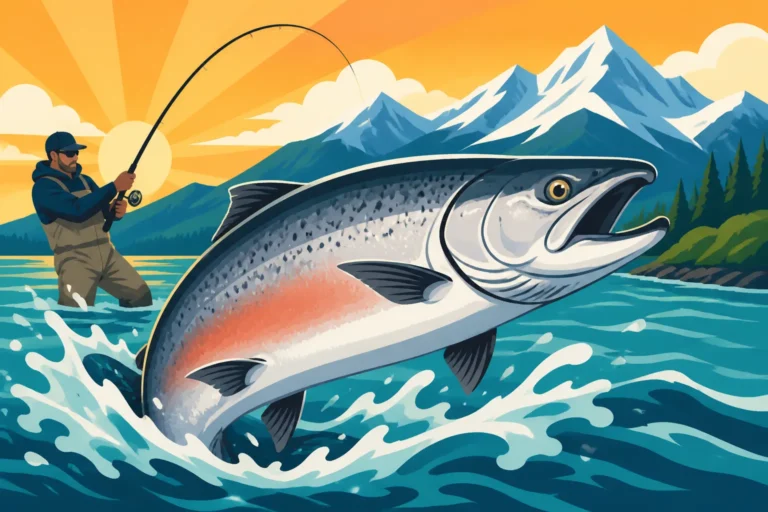
Ah, the King Salmon! Also known as Chinook, these are the giants of the Pacific salmon world and often the ultimate trophy for anglers visiting Alaska. They command respect, not just for their size but for their incredible fighting power. Landing a King is an experience etched into memory forever.
Key Physical Characteristics
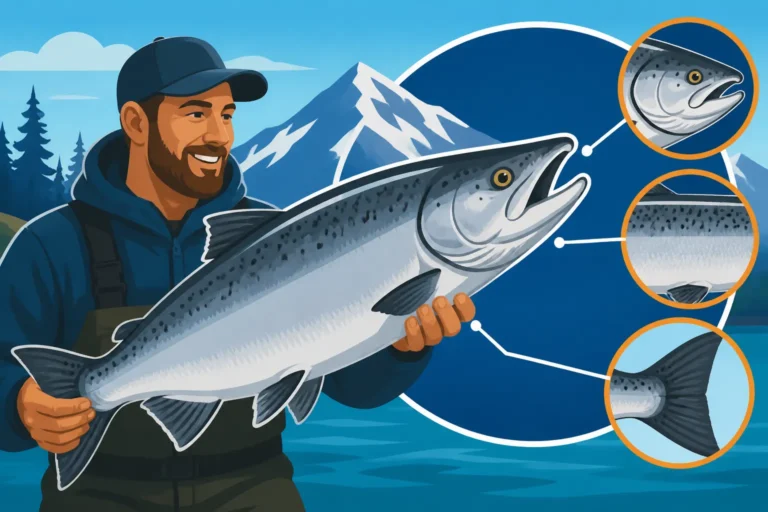
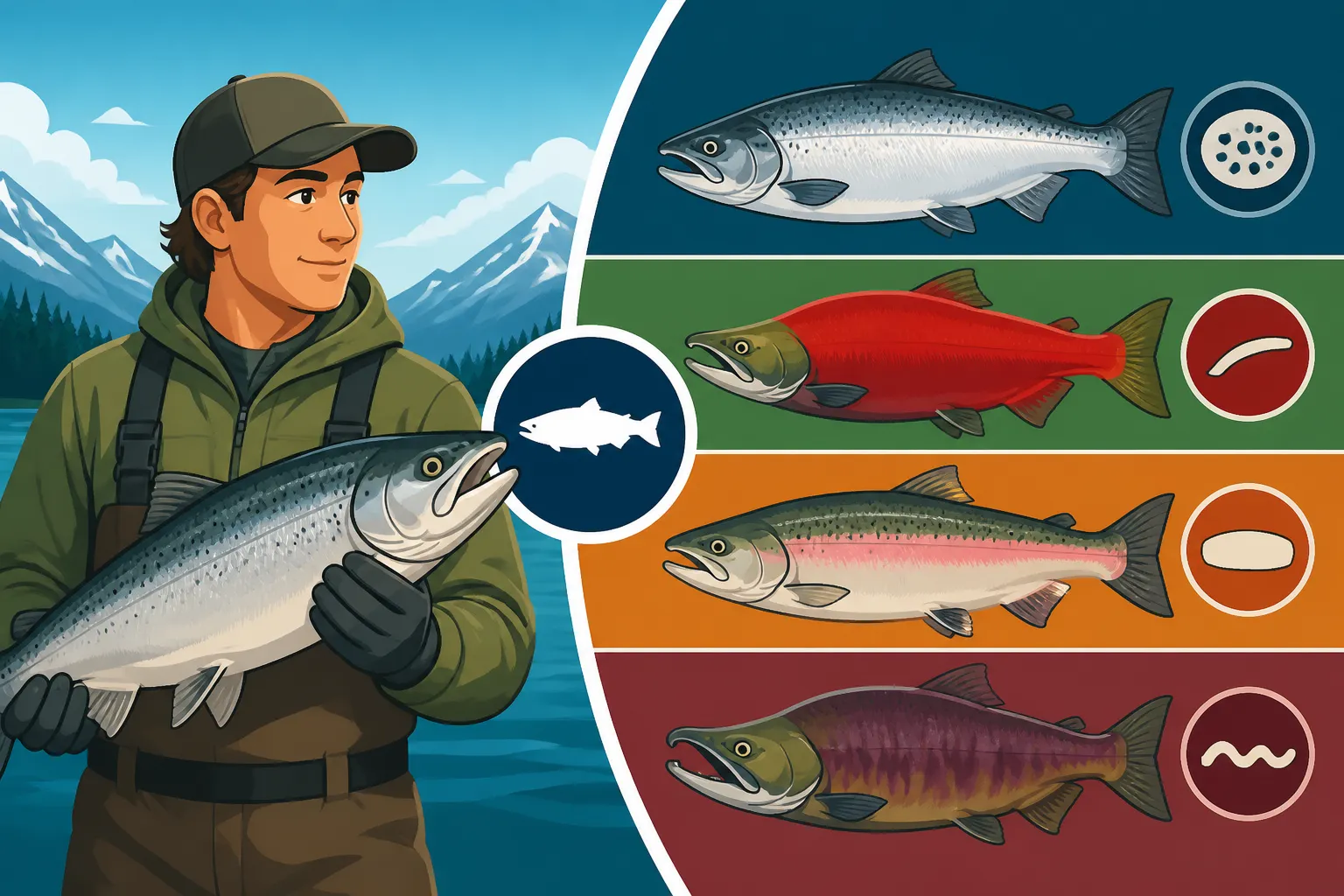
When you pull a King Salmon aboard, there are several tell-tale signs to look for. Start with the spots: King Salmon typically have distinct, irregular black spots covering their entire back, dorsal fin, and both lobes of their caudal (tail) fin. This "spot-everywhere" pattern is one of the most reliable indicators. Now, take a look inside the mouth. This is a critical identifier. King Salmon have a black gumline along the base of their teeth, on both the upper and lower jaw. It's usually a solid, dark black pigmentation, and it contrasts sharply with the white or pale gums you might see on other species. Their tail fin is also generally broad and slightly forked, often with those characteristic spots spread across both sections.
Beyond spots and gums, consider their body shape. Kings are robust, thick-bodied fish, built for power. Their scales are relatively large compared to other salmon species. Remember, especially if you're fishing for Alaska King Salmon Fishing Regulations and Limits, accurate identification is key, as their limits are often the most restrictive.
Size and Behavior Clues
Size is often the first clue people think of with King Salmon, and for good reason. They are the largest of the Pacific salmon, with adults commonly weighing 20 to 40 pounds, and true monsters pushing well over 50, 60, or even 70 pounds are caught every year. The world record King Salmon, caught in Alaska's Kenai River, weighed over 97 pounds! If you've got a truly massive salmon on the line, especially one that peels line off your reel like a freight train and leaves your arms aching, you're likely battling a King.
Their fight is legendary – powerful, deep runs, head shakes, and sometimes even spectacular aerial displays. They prefer deeper, cooler water in rivers and estuaries, often hugging the bottom during their upstream migration. When they're fresh from the ocean, their skin will be a brilliant chrome silver with a darker back, but as they move into freshwater, they can darken dramatically, sometimes appearing almost black or mottled brown, especially the males who develop a pronounced "kype" (hooked jaw) and a more aggressive look. For those chasing these giants, understanding How to Catch King Salmon in Alaska often involves heavy tackle and patience.
When and Where You'll Find Them
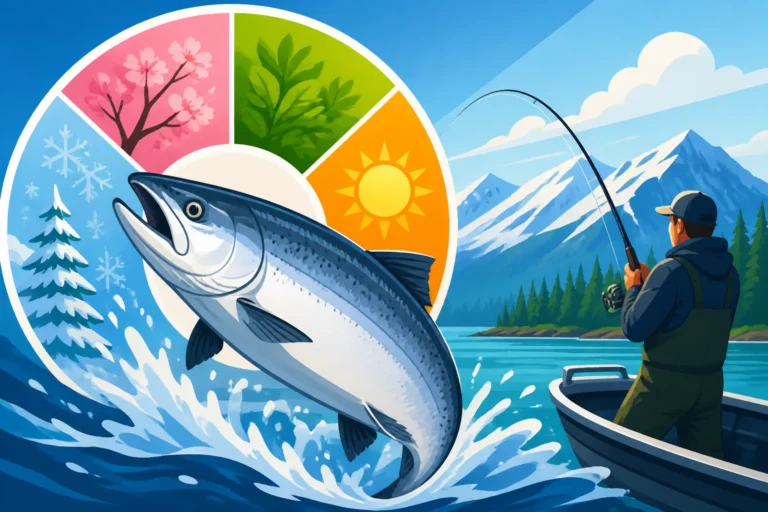
King Salmon typically undertake the earliest salmon runs of the season in Alaska, with the first waves often appearing in late May and continuing through June and into early July in many river systems. Famous King Salmon strongholds include the Kenai River, the Kasilof River, the Deshka River, and parts of the Nushagak River in Bristol Bay.
On the Kenai River, for instance, you'll find two distinct runs: the "early run" in May and early June, and the larger "late run" from late June through July. These runs can be highly anticipated and draw anglers from all over the world. Many anglers book charters specifically for these peak King periods, focusing on the deep holes and strong currents where these powerful fish rest during their migration. Knowing the Alaska Salmon Run Timing Explained for King Salmon is crucial for planning a successful trip.
Sockeye Salmon (Red): The Hard-Fighting Red Rocket
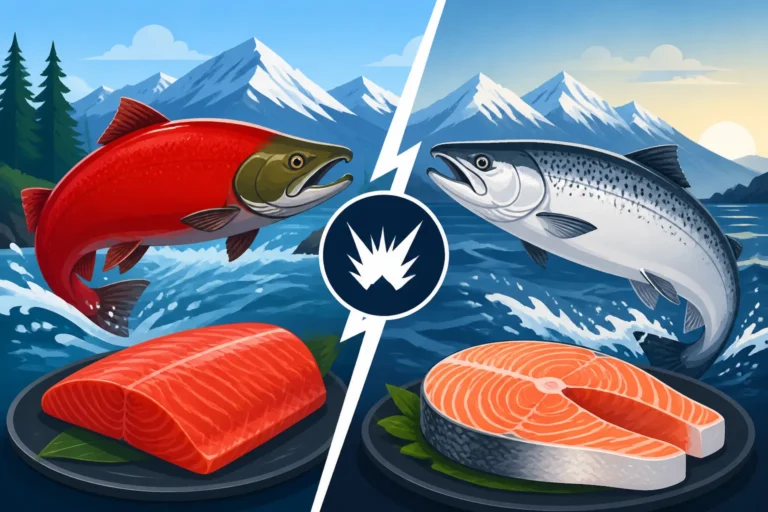
Sockeye Salmon, also known as Reds due to their brilliant spawning coloration, are perhaps the most iconic salmon species for many Alaskans, especially for their incredible table fare and challenging fight. These fish are known for their spectacular, synchronized runs that can turn rivers crimson with their numbers.
Distinctive Features
Unlike King Salmon, Sockeye have very few, if any, black spots on their back or tail. This lack of spotting is a primary identifier. When you look inside their mouth, you'll see a white or pale gumline along the base of their teeth, a stark contrast to the King's black gums. Their tail fin is also generally squared off or slightly forked, but without the prominent spots found on Kings.
Another key feature to observe, especially in ocean-phase Sockeye, is their eye size. Sockeye often have relatively large eyes compared to their head size. Their body is streamlined and sleek, built for speed and endurance rather than brute power like a King. Their scales are also noticeably smaller than those of a King. When fresh from the ocean, they are a beautiful metallic blue-green on their back, fading to silver on their sides and belly.
Color Changes and Spawning Phase
The most dramatic transformation occurs as Sockeye approach their spawning grounds. They undergo a stunning metamorphosis, turning from a chrome-silver fish to a brilliant, fiery red body with a distinctive olive-green head. This vibrant coloration is why they earn their "Red Salmon" nickname. Males will also develop a pronounced hump on their back and a hooked jaw (kype) as they get closer to spawning.
These vivid colors are part of their mating display and signal their readiness to reproduce. Seeing a river teeming with thousands of bright red Sockeye is one of Alaska's most breathtaking natural spectacles. However, this transformation also means their flesh quality deteriorates significantly once they've been in freshwater for a while, making the "chrome-bright" ocean-phase fish the most sought after by anglers. For those keen to understand the full journey, exploring the Alaska Salmon Life Cycle Explained can be fascinating.
Habitat and Run Patterns
Sockeye Salmon have a unique life cycle tied closely to lakes. After hatching in river systems, the juveniles migrate to freshwater lakes where they spend one to three years feeding on plankton before heading out to the ocean. When they return, they primarily target river systems with an accessible lake component for spawning. This ecological dependency explains why you'll find massive Sockeye runs in river systems like the Kenai River, Kasilof River, and especially the famous Russian River, which feeds into Skilak Lake and Kenai Lake. The Bristol Bay region, with its vast network of lakes and rivers, hosts the largest Sockeye runs in the world.
Sockeye runs typically start later than Kings, beginning in June and often peaking in July, making July a prime time for Sockeye fishing across much of Southcentral Alaska. Catching these hard-fighting fish, especially on the Kenai, often involves specific techniques like "flossing" or "flipping," requiring a good understanding of How to Catch Sockeye Salmon in Alaska and the regulations specific to their runs, such as Alaska Sockeye Salmon Fishing Regulations and Limits.
Coho Salmon (Silver): The Acrobatic Leaper
Coho Salmon, affectionately known as Silvers, are often the favorites of anglers who enjoy an energetic, acrobatic fight. They arrive later in the summer and early fall, offering thrilling action when other salmon runs might be tapering off.
Identifying Marks
Coho Salmon share some visual similarities with King Salmon, which can sometimes lead to confusion. However, there are crucial distinctions. Coho typically have black spots, but these are usually concentrated only on their upper back and the upper lobe of their caudal (tail) fin. You won't see the widespread spotting across the entire tail that characterizes a King. Like Sockeye, Coho also possess a white or pale gumline inside their mouth, another key differentiator from the King.
Their tail fin is slightly more forked than a King's and is generally not as broad. When fresh from the ocean, Coho are incredibly silver, almost mirror-like, giving them their "Silver Salmon" moniker. Their body shape is sleek and torpedo-like, indicating their agility. Their scales are intermediate in size compared to Kings and Sockeye.
Fight and Fillet Qualities
If you're looking for an exciting fight, Coho Salmon rarely disappoint. They are known for their aggressive strikes, blistering runs, and spectacular aerial displays, often leaping clear out of the water multiple times during a fight. This makes them a joy to catch on lighter tackle, and many fly anglers specifically target Coho for their spirited battles. They are incredibly strong for their size, often punching above their weight class.
Culinary-wise, Coho are highly regarded. Their flesh is typically bright orange-red and has a firm texture and rich flavor, making them excellent for grilling, baking, or smoking. They are a staple of many Alaskan dinner tables. When considering tackle or gear for these energetic fish, always check for current deals on fishing equipment, which you can often find on Amazon, perfect for outfitting yourself for their unique fight.
Peak Seasons and Locations
Coho Salmon runs typically begin in late July or early August and can continue strong through September, and sometimes even into October in certain areas. This makes them a fantastic target for late-season trips to Alaska, extending the fishing opportunities well beyond the peak King and Sockeye runs.
They are widespread throughout Alaska's coastal waters and river systems. You'll find strong Coho runs in rivers across Southcentral Alaska, including the Kenai Peninsula (Kenai and Kasilof Rivers), Prince William Sound, and Resurrection Bay near Seward. Southeast Alaska, particularly around Sitka and Juneau, also boasts phenomenal Coho fishing, both in freshwater and saltwater. They often hold in slower currents, eddies, and even small tributaries, making them accessible to both boat and bank anglers. For more specific location details, check out guides like Seward Alaska Fishing Guide. The bag limits for these popular fish are typically more generous than for Kings; learn more with Alaska Coho Salmon Fishing Regulations and Limits.
Pink Salmon (Humpy): The Abundant Small Fry
Pink Salmon, commonly called Humpies due to the prominent hump males develop during spawning, are the smallest and by far the most abundant of the Pacific salmon species in Alaska. While often overlooked by anglers seeking bigger game, they offer incredible action, especially for families and beginners.
Unique Physical Traits
Pink Salmon have several unmistakable identifying characteristics. The most obvious is the presence of large, oval-shaped black spots on their entire back and, critically, very large, distinct spots on both lobes of their caudal (tail) fin. These spots are usually much larger and more widely spaced than those found on King Salmon. Their scales are very small, giving their skin a smooth, almost velvety appearance compared to other salmon. When you look inside their mouth, you'll find a white or pale gumline.
As they enter freshwater, especially the males, they develop a dramatically pronounced hump on their back, making their "Humpy" nickname undeniable. Their coloration also shifts from a brilliant silver-blue to a pale greenish-brown with darker bars on their sides.
Size and Abundance
Pink Salmon are the smallest of the Pacific salmon, typically weighing between 3 to 5 pounds, though occasionally larger ones are caught. Don't let their size fool you, though; they are aggressive biters and can provide fast-paced action. Their sheer abundance is staggering; during peak "even year" runs, rivers can be absolutely choked with Humpies. These massive runs provide a vital food source for bears, eagles, and other wildlife.
While not generally considered a prime table fish when spawning, chrome-bright Pink Salmon fresh from the ocean are quite palatable, with delicate, pale orange flesh. Many Alaskans smoke or can Pink Salmon. For anglers looking for non-stop action, especially with kids, targeting Pink Salmon is a fantastic way to introduce them to the joys of fishing. Check the Alaska Pink Salmon Regulations before heading out.
Where and When to Expect Them
Pink Salmon have a unique biennial life cycle, meaning strong runs occur predominantly in "even years" (e.g., 2024, 2026). In odd years, runs can still occur, but they are typically much smaller. They have the shortest lifespan of the Pacific salmon, returning to spawn and die at two years old.
Their runs generally occur from late July through August, often overlapping with Coho. They tend to spawn in the lower reaches of rivers and in smaller coastal streams, sometimes even just a few miles from the ocean. You can find them in virtually any coastal waterway in Alaska, from the smallest creeks to larger rivers. For families, shore fishing for Pink Salmon can be incredibly productive and accessible. Sometimes, even the urban streams like Ship Creek near Anchorage will see good numbers of Humpies.
Chum Salmon (Dog): The Less Glamorous, Still Fun Catch
Chum Salmon, often called Dog Salmon due to the impressive canine-like teeth males develop during spawning, are arguably the least sought-after by sport anglers in Alaska. However, they are incredibly strong fighters and play a vital ecological role.
Distinguishing Characteristics
Chum Salmon have some very distinctive features that set them apart. When fresh from the ocean, they are a steely blue-green on their back with faint, irregular vertical bars (sometimes called "calico markings") on their sides. They have a white or pale gumline in their mouth, similar to Sockeye and Coho. Critically, Chum Salmon have no significant spots on their back or tail fin. This lack of spotting is a key identifier.
Their tail fin is generally broad and slightly forked or squared, much like a King's but without the spots. Their body is somewhat deeper than a Coho's but not as thick as a King's. Their scales are relatively large, similar to King Salmon.
Spawning Colors and Mouth Structure
As Chum Salmon transition to freshwater for spawning, their appearance becomes quite dramatic. The faint vertical bars become much more pronounced, transforming into striking purple and red blotches and stripes, giving them a "calico" or "tiger-striped" appearance. The males develop a substantial kype (hooked jaw) and, most notably, large, menacing canine-like teeth, which is where they get their "Dog Salmon" nickname. Their flesh, while typically pale and sometimes watery for spawning fish, can be firm and red-orange when caught fresh from saltwater.
While not typically targeted for their culinary quality in the same way Kings or Sockeye are, ocean-bright Chums are often used for smoking, canning, or even as bait for other species, like halibut. Don't discount them as a game fish, though; their sheer power makes them a blast to catch.
Fishing for Chums
Chum Salmon runs usually occur from mid-June through August, often overlapping with King and Sockeye runs in early summer, and Coho and Pink runs in late summer. They are widely distributed throughout Alaska's coastal and interior river systems. While not always the primary target, anglers frequently encounter them while fishing for other salmon species.
Their fighting prowess is often underestimated. Chums are incredibly strong and powerful, capable of long, sustained runs, making them a challenging and fun catch, especially on medium-weight tackle. They are frequently caught using methods similar to those for Coho, such as casting spinners or spoons. Areas like the Yukon River, and parts of Southeast Alaska and Prince William Sound, see significant Chum runs. Before targeting these powerful fish, ensure you're aware of the Alaska Chum Salmon Regulations.
Quick Reference: A Side-by-Side Comparison
To help consolidate all this information, here's a handy table summarizing the key distinguishing features of Alaska's five Pacific salmon species. Keep this in mind the next time you're on the water, perhaps with a waterproof guide from Amazon at your side, ready to identify your catch!
Visual Cues at a Glance
| Feature | King Salmon (Chinook) | Sockeye Salmon (Red) | Coho Salmon (Silver) | Pink Salmon (Humpy) | Chum Salmon (Dog) |
|---|---|---|---|---|---|
| Spots | Large, irregular spots on back & both tail lobes | Few to no spots on back or tail | Spots on upper back & upper tail lobe only | Large, distinct oval spots on back & entire tail | Few to no spots on back or tail; faint bars (calico) |
| Gumline | Black on both jaws | White/pale on both jaws | White/pale on both jaws | White/pale on both jaws | White/pale on both jaws |
| Tail Shape | Broad, slightly forked, spotted | Squared or slightly forked, unspotted | Slightly forked, spots on upper lobe only | Moderately forked, heavily spotted | Broad, slightly forked or squared, unspotted |
| Body Shape | Thick, robust, deep-bodied | Streamlined, sleek | Torpedo-like, agile | Smallest, compact body | Deep-bodied, less streamlined than Coho |
| Spawning Colors | Dark, mottled, pronounced kype | Bright red body, green head, prominent hump | Darker, sometimes reddish flanks, kype | Pronounced hump on males, greenish-brown with dark bars | Vertical red/purple bars (calico), large teeth, kype |
| Average Size | 20-40+ lbs (Largest) | 5-10 lbs | 8-15 lbs | 3-5 lbs (Smallest) | 10-20 lbs |
Beyond Visuals: Behavioral and Habitat Clues
While visual identification is your primary tool, paying attention to behavioral cues and habitat preferences can also help confirm your initial assessment. For instance, if you're battling a fish that stays deep and makes powerful, head-shaking runs, it's very likely a King. If you're "combat fishing" on the Russian River in July and seeing thousands of fish flashing red and green, you're squarely in a Sockeye fishery. These fish often hug the banks, and your technique will likely involve methods like "flipping" for them.
Coho, on the other hand, are often found in shallower water and known for their aggressive strikes and spectacular leaps. Pink Salmon will readily hit almost anything you throw at them, providing constant action, especially in even-numbered years and in terminal fisheries like Ship Creek near Anchorage. Chum Salmon will fight like an absolute bulldog, relying on brute strength and deep runs, often found in robust numbers in areas where other salmon are running. Understanding these "tells" of each species will only sharpen your identification skills over time. Always double-check local Alaska Fishing Regulations by Region to ensure you're compliant, as rules can vary significantly from one watershed to another.
Disclaimer
The information provided in this guide is for general informational purposes only and is not a substitute for official regulations. Fishing rules and regulations in Alaska are dynamic and subject to change frequently, often through emergency orders issued by the Alaska Department of Fish and Game (ADF&G). Always consult the most current ADF&G regulations booklet and check for emergency orders before you head out fishing. Failure to comply with regulations can result in significant fines and penalties.