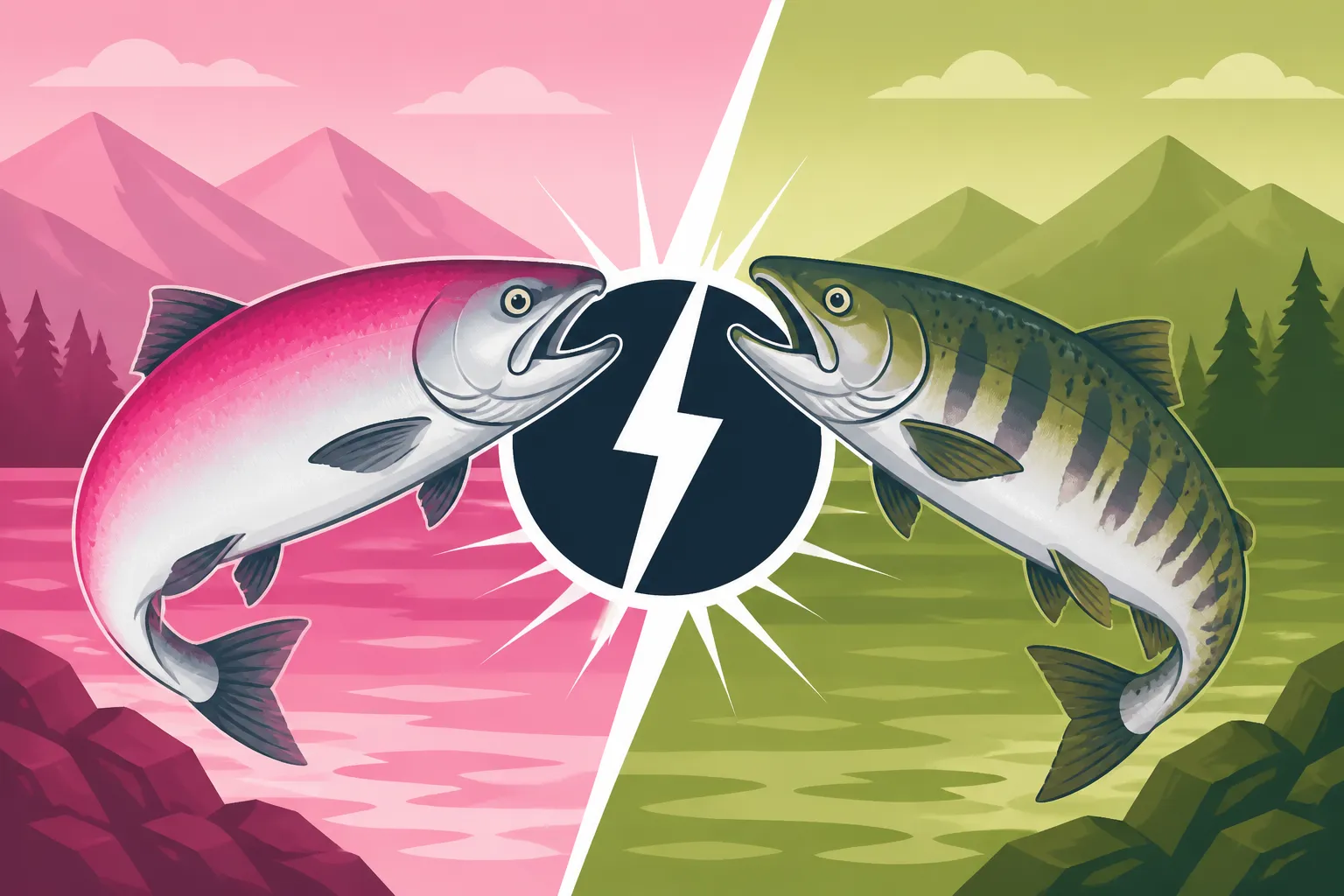
Pink vs Chum Salmon Differences
It can be incredibly confusing for even seasoned anglers to tell the difference between a pink salmon and a chum salmon when you first pull them out of Alaska's wild waters. Both species can appear similar, especially when fresh from the ocean, leading to honest mistakes that can impact your fishing experience and even adherence to regulations. This guide is here to untangle that confusion, offering clear, actionable ways to identify pink and chum salmon so you can confidently distinguish between these two prolific Alaskan species.
The Basics: Understanding Pink and Chum Salmon
Before we dive into the nitty-gritty of telling these two magnificent fish apart, let's establish a foundational understanding of what makes them unique members of Alaska's salmon family. Both are Pacific salmon, crucial to the ecosystem and a huge draw for anglers, but their subtle differences are what really count.
General Characteristics and Common Names
Pink salmon, often affectionately called "humpies" due to the pronounced hump males develop on their backs during spawning, are generally the smallest of the Pacific salmon species. They're known for their sheer abundance, often arriving in colossal numbers during their predictable biennial runs. If you've ever experienced a truly massive salmon run in Alaska, chances are you were witnessing a pink salmon spectacle. They're a short-lived species, typically completing their life cycle in just two years, which means every other year sees a dominant run in certain areas.
Chum salmon, on the other hand, are often referred to as "dog salmon" or "keta salmon." The "dog salmon" moniker comes from the impressive, canine-like teeth that mature chums, especially males, develop as they prepare to spawn. These teeth can look quite intimidating! Chum salmon are typically larger than pinks, though not as big as kings, and have a more elongated, torpedo-shaped body. They're incredibly resilient and widely distributed across Alaskan waters, playing a vital role in both sport and subsistence fisheries. You might find them less concentrated than pinks, but their numbers are still substantial and they offer a different kind of angling challenge. Many people have questions about Alaska Chum Salmon: Facts and Fishing Tips, which really highlights their unique place in the salmon lineup.
Where They are Found in Alaska
Both pink and chum salmon are incredibly widespread throughout Alaska, inhabiting coastal waters, estuaries, and countless rivers and streams from Southeast Alaska all the way up to the Arctic. However, their preferred habitats and typical run patterns do have some distinctions.
Pink salmon tend to favor shorter coastal streams and rivers, often spawning closer to the ocean or even in intertidal areas. This preference means you'll find enormous pink salmon runs in places like Prince William Sound, Cook Inlet tributaries, and many rivers across Southeast Alaska, where they're easily accessible. They don't typically travel far upstream, making them a common target for bank anglers and those fishing near river mouths. Understanding the general Alaska Salmon Run Timing Explained can give you a better idea of where and when to expect these fish.
Chum salmon are also found throughout these regions but often penetrate further upstream into river systems than pinks. They utilize a broader range of spawning habitats, including smaller tributaries and even mainstem river gravels. This means you might encounter them alongside other salmon species in rivers like the Kenai or Susitna, not just at the very mouth. Places like the Yukon River system are particularly known for their strong chum salmon runs, showcasing their ability to travel vast distances to their spawning grounds. If you're looking for more specific location advice, diving into resources like "Best Fishing Spots in Alaska" might provide valuable insights for targeting both species.
Key Physical Differences for Identification
Now, let's get down to brass tacks: what physical traits can you actually look for when trying to distinguish a pink from a chum? These details are critical, especially when fishing regulations might differ between species.
Size and Shape Disparities
The most immediate difference you'll often notice is size. Pink salmon are generally the smallest of the Pacific salmon, typically weighing between 3 to 5 pounds, though larger ones can certainly be caught, sometimes reaching up to 10-12 pounds. Their body shape, especially for males, becomes quite compressed and develops that distinctive, almost cartoonish hump as they mature and get closer to spawning. This "humpy" appearance is a dead giveaway for a male pink. Females are more streamlined but still retain the smaller overall size.
Chum salmon, on the other hand, are considerably larger than pinks. They commonly range from 8 to 15 pounds, with some trophy specimens pushing 20 pounds or more. Their body is more elongated and robust, often described as torpedo-shaped or football-shaped, lacking the severe compression or the dramatic dorsal hump of a spawning male pink. While males also develop some kype (a hooked jaw), it's generally less pronounced than that of a large king salmon, and their body remains stout rather than deeply humped. If you're holding a fish that feels substantial but isn't quite a giant King, you might be looking at a chum. Knowing Alaska Salmon Size Comparison can really help put this into perspective.
Mouth, Teeth, and Jaw Distinctions
This is one of the most reliable ways to differentiate between the two species, especially as they get closer to spawning. Pink salmon have relatively small mouths with very fine, almost imperceptible teeth. As males mature, they do develop a kype, or hooked jaw, but their teeth remain small. You can run your finger along the roof of their mouth (carefully, of course!) and feel only small, sharp points, not prominent fangs.
Chum salmon are a different story entirely, which is where their "dog salmon" nickname comes from. As they mature and enter freshwater, male chum salmon develop prominent, often terrifying, canine-like teeth. These teeth are quite large, easily visible, and can feel like miniature fangs. They also develop a distinct kype, but it's the teeth that are truly unmistakable. When a chum salmon opens its mouth, especially a spawning male, those impressive chompers are hard to miss. These teeth are a key characteristic when you're learning How to Identify Alaska Salmon Species.
Tail and Fin Patterns
Examining the tail and fin patterns offers another excellent way to tell these species apart. Pink salmon have large, oval-shaped spots on their backs and, crucially, on both lobes of their caudal (tail) fin. These spots are typically quite prominent and dark. Their scales are also quite small. When you see those distinct, large black spots covering the entire tail, you're almost certainly looking at a pink salmon. Their adipose fin (the small, fleshy fin on their back near the tail) is also typically unspotted.
Chum salmon have relatively small, indistinct spots, if any, on their backs. The most important difference, however, is that their tail fin is largely unspotted or has only very faint, diffused spotting that doesn't cover the entire fin like it does on a pink. Their caudal fin is also typically more forked than a pink's. Additionally, chum salmon often have a white or light-colored tip on their anal fin (the fin located behind the anus on the underside). This white tip, combined with the lack of distinct spots on the tail, is a strong indicator of a chum salmon. Checking for these unique markings is key for knowing How to Identify a Pink Salmon versus How to Identify a Chum Salmon.
Coloration and Markings
Coloration is probably the trickiest feature, as it can vary dramatically depending on whether the fish is fresh from the ocean, transitioning, or fully in spawning colors. However, there are still some general guidelines.
When fresh from the ocean, both species can appear silvery, making identification tougher. However, pink salmon often have a slight greenish-blue metallic sheen on their backs, fading to silver on their sides. The key, as mentioned, are those large, oval black spots on their back and tail. These spots are usually quite clear and distinct even in bright, ocean-fresh fish.
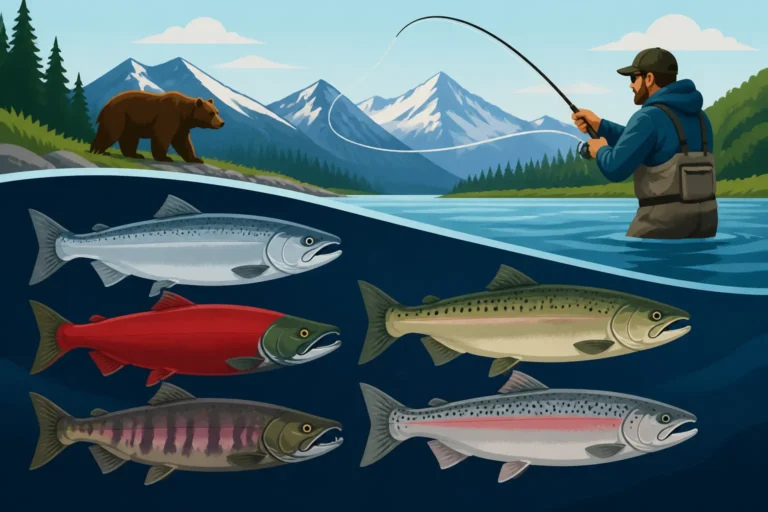
As chum salmon transition to spawning, their coloration becomes much more vibrant and striking. They develop a distinctive series of vertical bars or stripes of green, purple, and red on their sides, often described as a "tiger stripe" pattern. This is why some anglers call them "calico salmon." Their back often becomes a darker olive green, and their belly may stay lighter or take on a yellowish hue. These bold, colorful vertical bars are a strong indicator of a spawning chum, and quite different from the more muted and spotted pattern of a spawning pink. Spawning pinks, while developing their hump, usually turn a duller greenish-brown on their back with a pale belly, and those black spots remain prominent.
Here's a quick comparison table to help visualize these differences:
| Feature | Pink Salmon (Oncorhynchus gorbuscha) | Chum Salmon (Oncorhynchus keta) |
|---|---|---|
| Common Names | Humpy, Humpback Salmon | Dog Salmon, Keta Salmon, Calico Salmon |
| Average Size | 3-5 lbs (up to 12 lbs) | 8-15 lbs (up to 20+ lbs) |
| Body Shape | Smaller, compressed; males develop pronounced dorsal hump | Larger, elongated, robust (torpedo-shaped); less pronounced hump |
| Mouth/Teeth | Small mouth, fine teeth; male kype less prominent | Large mouth, prominent canine-like teeth (fangs); male kype distinct |
| Tail Spots | Large, distinct oval spots on both lobes of caudal fin | Largely unspotted or faint, diffused spots; no distinct spots covering entire fin |
| Body Spots | Large, oval spots on back (often extending to dorsal fin) | Small, indistinct spots or no spots on back |
| Spawning Colors | Dull greenish-brown back, pale belly; spots remain prominent; male hump pronounced | Distinct vertical green/purple/red bars ("tiger stripes") on sides; dark olive back |
| Anal Fin | No distinct white tip | Often a white or light-colored tip |
Behavioral and Life Cycle Nuances
Beyond their physical appearance, pink and chum salmon exhibit distinct behaviors and life cycle patterns that influence their presence and how anglers interact with them. Understanding these can help you anticipate which species you're likely to encounter.
Spawning Habits and Timing
Pink salmon have one of the most rigid and predictable spawning cycles among Pacific salmon. They are exclusively two-year-old fish, meaning a particular river system will often see a dominant run every other year. For instance, if a river has a huge run of pinks in an even-numbered year, it will likely have a smaller (or non-existent) run in the odd-numbered year, and vice-versa. They generally spawn closer to the ocean, often in the lower reaches of rivers and streams, and sometimes even in the intertidal zone where freshwater mixes with saltwater. This preference for lower river reaches is due to their short migratory journey after entering freshwater. They typically arrive and spawn from late July through September.
Chum salmon have a more varied life cycle, generally returning to spawn at ages 3 to 5, though 4-year-olds are most common. This means you'll find them returning to rivers more consistently year after year, without the biennial fluctuations seen in pinks. They are known for traveling considerable distances upstream to spawn, sometimes hundreds of miles from the ocean, utilizing a wider array of habitats than pinks. Their spawning migration usually begins a bit earlier than pinks, often starting in June and extending through August, with some runs peaking in July. This extended run period and wider habitat usage mean you might find them in areas where pinks simply don't venture.
Dietary Preferences and Feeding Behavior
When they are in the ocean, both pink and chum salmon are opportunistic feeders, but they do show some preferences. Pink salmon primarily feed on smaller crustaceans, zooplankton, and small fish, which contributes to their smaller size. Their diet in the ocean is vast, and they are not particularly selective. This wide diet makes them accessible to a variety of predators and fishing methods in saltwater.
Chum salmon have a more diverse diet that includes a wider range of invertebrates, squid, and smaller fish. While they also consume zooplankton and crustaceans, they tend to be more piscivorous (fish-eating) than pinks, which helps them attain their larger size. Once they enter freshwater for their spawning migration, like all Pacific salmon, they largely cease feeding. However, understanding their ocean feeding habits can sometimes give clues about what might attract them when they are still transitioning in brackish waters or if they are "feeder" fish in saltwater.
Run Timing in Alaska Rivers
Knowing the general run timing for each species can be a massive advantage for anglers planning a trip to Alaska. While exact timings can vary slightly year to year based on water conditions and climate, there are distinct patterns.
Pink salmon typically begin showing up in significant numbers in Alaskan rivers from mid-July through August, with peak runs often occurring in August. Because of their two-year life cycle, it's crucial to check local forecasts for odd or even year dominance. For example, if you're fishing a river known for strong odd-year pink runs, you'll want to plan accordingly. Major coastal areas, like those near Juneau or Valdez, often experience incredible pink salmon runs during this window. If you're looking for specifics on when these fish show up, an article like When Do Pink Salmon Run in Alaska would be incredibly helpful.
Chum salmon runs usually commence a bit earlier, often starting in June in some river systems and continuing strong through July and into August. Their runs can sometimes overlap with early sockeye or even late king salmon runs, offering diverse angling opportunities. Rivers farther inland, especially those in Western Alaska, will see chum runs stretching later into the season due to the longer migration. To optimize your chances of catching them, looking into When Do Chum Salmon Run in Alaska can provide invaluable intelligence. Always remember to check current Alaska Fishing Emergency Orders Explained, as regulations can change rapidly based on run strength.
Fishing Considerations: What Anglers Need to Know
Distinguishing between pink and chum salmon isn't just an academic exercise; it has real implications for your fishing strategy, your freezer, and your wallet. Different species means different tactics, different culinary experiences, and sometimes different rules.
Best Techniques and Gear
Due to their aggressive nature in saltwater and their sheer numbers in freshwater, pink salmon are often considered excellent sport for light tackle. They are eager biters and will strike at a wide array of lures, including small spinners, spoons, and flies. For freshwater fishing, smaller, brightly colored lures like Pixee spoons, Vibrax spinners, or small pink or chartreuse flies are often incredibly effective. When the runs are thick, a simple twitching jig can also yield fantastic results. Their smaller size makes them a great target for beginners or those looking for fast action. You can often find a good selection of these on platforms like Amazon, ensuring you're ready for the bite.
Chum salmon, being larger and often more powerful, require slightly heavier gear, especially if you're targeting them in strong currents. They can be very aggressive, particularly when fresh from the ocean. They respond well to larger spinners, spoons, and weighted flies in various colors like chartreuse, pink, or purple. Drift fishing with cured roe or even larger jigs can be effective in rivers. While they might not jump as much as a silver salmon, their brute strength and head shakes can make for a thrilling fight. Guides often recommend medium-heavy spinning rods or a 7-9 weight fly rod for chums. Learning about Best Fishing Techniques for Alaska, especially for salmon, will give you a broader understanding.
Taste and Culinary Value
The culinary reputation of pink and chum salmon is often debated, and honestly, a lot of it comes down to how fresh the fish is and how it's prepared.
Pink salmon, when caught fresh from the ocean or early in their river run, have delicate, mild-flavored pinkish-orange flesh. They are lower in fat content than king or sockeye salmon but still delicious. They're excellent for grilling, baking, or pan-frying, and due to their abundance, they are a primary species used for canned salmon. If you're wondering, Are Alaska Pink Salmon Good to Eat? The answer is a resounding yes, especially when handled properly. They also make fantastic smoked salmon.
Chum salmon also have firm, flavorful flesh, though it's typically lighter in color, ranging from pale orange to pinkish-red, and can be less oily than other salmon. When caught fresh from the ocean, their meat is highly prized, especially for smoking, canning, and making delicious salmon jerky. Some argue that early-run chums have a superior texture and flavor profile to later-run pinks. Unfortunately, "dog salmon" is a name that sometimes unfairly biases people against them. However, for those in the know, a fresh chum salmon is a truly versatile and tasty fish. You'll find many resources discussing Are Alaska Chum Salmon Good to Eat?, often highlighting their value. Many specialty seafood companies, like Copper River Seafoods, offer excellent examples of how delicious properly processed chum can be.
Regulatory Differences
This is where accurate identification becomes paramount. Alaska fishing regulations are complex and often species-specific, especially when it comes to bag limits and retention rules. Failing to correctly identify your catch can lead to citations and fines.
For instance, Alaska Pink Salmon Regulations and Limits will often differ from Alaska Chum Salmon Regulations and Limits. In some areas or during certain periods, there might be higher bag limits for pinks due to their sheer numbers, while chum limits might be more conservative. Additionally, emergency orders, which can change regulations quickly due to specific run strengths, might impact one species more than another. It's not uncommon to see a "no retention" rule for one salmon species while others remain open.
Always consult the most current Alaska Fishing Regulations Explained booklet or the Alaska Department of Fish and Game (ADF&G) website before you go fishing. Pay close attention to the specific rules for the body of water you're fishing and the time of year. Knowing your fish species is not just about bragging rights; it's about being a responsible and legal angler in Alaska. Many charters will provide the necessary guidance, but ultimately, it's the angler's responsibility to know the rules. You can even find specific guidelines on Alaska Salmon Bag Limits by Species which details what you can and cannot keep.
Common Misconceptions and How to Avoid Them
Even with all the clear differences, it's easy to fall prey to common misconceptions or misidentifications, especially in the heat of the moment or when fish are in transition. Let's clear up some of those persistent myths.
"Humpy" vs. "Dog Salmon" Nicknames
The nicknames "humpy" for pink salmon and "dog salmon" for chum salmon are probably the most well-known and, ironically, often the source of confusion for new anglers. While these nicknames are indeed derived from distinct physical characteristics (the male pink's hump and the male chum's dog-like teeth), relying solely on them without understanding the nuances can lead to mistakes.
For example, a female pink salmon doesn't develop much of a hump, making the "humpy" nickname less useful for identification in that case. You'd need to rely on the tail spots and smaller size. Similarly, a fresh-from-the-ocean chum might not yet have developed its prominent teeth or vibrant spawning colors, making the "dog salmon" identifier less obvious. In these situations, the subtle details like the absence of tail spots on a chum or the presence of a white anal fin tip become crucial. It's better to use a combination of features rather than a single, potentially misleading, nickname-driven characteristic. Many books on Alaska's fish, available on Amazon, delve into these specific identification challenges.
Spotting Them in Mixed Runs
One of the biggest challenges for anglers is when pink and chum salmon runs overlap, which often happens, particularly in mid-summer. You might be fishing a river that has a strong run of both species simultaneously. This is where quick and accurate identification skills are absolutely essential.
Imagine you're standing on the banks of a river like the Kasilof, and you're seeing salmon flash by. You hook into a fish, and it could be either. If you quickly glance at the tail and see those distinct, large black spots covering both lobes, you've likely got a pink. If the tail is mostly clear or only faintly spotted, and you then notice the powerful, robust body and perhaps those intimidating teeth if it's a male, you've landed a chum. Always take a moment to observe the fish carefully before deciding whether to retain it, especially if there are different bag limits or regulations for each species. It’s important to understand topics like Alaska Fishing Limits and Bag Limits Explained to avoid accidental violations in these mixed run scenarios. Observing how Alaska Fishing Regulations by Region can also vary will further assist you in avoiding mistakes.
Disclaimer
Fishing regulations and conditions in Alaska are subject to change rapidly due to emergency orders issued by the Alaska Department of Fish and Game. Always consult the latest official regulations before heading out on your fishing trip. This guide is for informational purposes only and does not supersede official ADF&G regulations.