Alaska Pink Salmon Regulations
One of the most common frustrations for anglers heading to Alaska, whether you're a seasoned veteran or a first-timer, is the sheer complexity of understanding fishing regulations, especially for specific species. Pink salmon, affectionately known as "humpies" due to the pronounced hump males develop during their spawning run, are often abundant, but their regulations can still trip up even experienced fishermen. This guide aims to demystify Alaska's pink salmon regulations, offering a clear, comprehensive breakdown so you can focus on the thrill of the catch without worrying about unknowingly breaking the rules.
Understanding Pink Salmon Regulations in Alaska
Pink salmon are a cornerstone of Alaska's diverse fisheries, known for their incredible abundance and their predictable two-year life cycle. They are the most numerous of the Pacific salmon species in Alaska, and their sheer numbers mean that regulations are often more liberal compared to their highly prized cousins, the Chinook (King) and Sockeye (Red) salmon. However, "liberal" doesn't mean "non-existent," and understanding the nuances is crucial to ensure you're fishing legally and sustainably. Many anglers, especially those new to the state, often assume that because pinks are so plentiful, there are no real rules. This couldn't be further from the truth. While the goal is to allow for robust harvests, the Alaska Department of Fish and Game (ADF&G) still actively manages these populations, and ignoring the rules can lead to citations and fines.
Why Pink Salmon Regulations Exist
You might wonder why, with millions upon millions of pink salmon returning to Alaskan waters every other year (they have a strong two-year cycle, meaning odd years generally see larger returns than even years), there's a need for regulations at all. The answer lies in sustainable management and equitable distribution. Even incredibly prolific species need careful oversight to ensure future generations of fish, and future opportunities for anglers. Regulations help prevent localized overharvesting, protect spawning grounds, and account for the needs of all user groups—sport, commercial, and subsistence.
Imagine a popular roadside stream during a massive pink salmon run. Without limits, a small number of individuals could potentially decimate the run in that particular area, impacting the overall health of the local population and reducing opportunities for others. The ADF&G balances the desire for anglers to enjoy the abundant resource with the long-term health of the ecosystem. These regulations are dynamic, too, constantly monitored and adjusted based on scientific data about run strength and escapement numbers. It’s a delicate balance, and it’s why understanding the "why" behind the rules can make them easier to follow. For a broader overview of how all these rules fit together, check out our guide on Alaska Fishing Regulations Explained.
General Statewide Rules for Pink Salmon
While specifics can vary by region and even by individual river system, there are some overarching principles that apply to pink salmon fishing throughout Alaska. Generally, pink salmon are open to sport fishing during their run periods, which typically peak in July and August in most areas, especially in Southcentral Alaska like Prince William Sound and the Kenai Peninsula. The methods are often less restrictive than for other salmon species, allowing for both bait and lures in many areas.
One of the key differences you’ll notice with pink salmon compared to, say, King salmon, is the lack of strict gear restrictions in many open areas. You’re typically allowed to use conventional spinning gear, baitcasting setups, and fly rods. While specific rivers might have barbless hook requirements or single-hook rules to protect other species, these are often eased for pink salmon fisheries where the primary goal is harvest. However, it's never a good idea to assume. Always consult the current regulations booklet for the specific region you plan to fish in. The information in the official ADF&G regulations booklet is the final word, and it’s easily accessible online or at any licensed vendor.
Daily and Possession Limits for Pink Salmon
This is often where the most significant variations occur, but it's also where pink salmon stand out for their generosity. Due to their immense numbers, daily and possession limits for pink salmon are typically very high, sometimes even unlimited in certain areas during peak runs. This is a stark contrast to species like King salmon, where limits might be one per day and a couple annually for non-residents. This abundance is one of the reasons pink salmon are fantastic targets for families or beginners, as success rates can be incredibly high.
Typical Daily Bag Limits
For most areas of Alaska, the daily bag limit for pink salmon is either quite generous or, in some designated terminal fisheries, unlimited. For example, in many Southcentral Alaskan waters, you might find a daily limit of 6 or 10 pink salmon, which is plenty for most anglers to take home a good haul. In certain "personal use" fisheries or specific terminal areas (waters near hatcheries where the returning fish are largely destined for harvest), the limit might be "no limit" or "as specified by emergency order," effectively meaning you can keep as many as you can legally process and transport.
Here’s a snapshot of typical bag limits, though always verify with current ADF&G regulations:
| Region/Location (Example) | Typical Daily Bag Limit for Pink Salmon | Notes |
|---|---|---|
| Most Southcentral Rivers | 6-10 fish | Varies by specific river section |
| Prince William Sound | Often 6-10 fish | Can be more liberal in some areas |
| Southeast Alaska (Marine) | Usually 6-10 fish | Check specific area regulations carefully |
| Designated Terminal Areas | Often Unlimited (by EO) | Typically near hatcheries; check emergency orders |
Remember, these are examples. A river like Ship Creek in Anchorage might have different rules than a remote stream on Prince of Wales Island. The key takeaway is that if you're targeting pink salmon, you're usually allowed to keep a good number, making them a fantastic species for filling your freezer. Our article on Alaska Salmon Bag Limits by Species dives deeper into how these numbers compare across different salmon species.
Possession Limits and Storage Considerations
Possession limits are just as important as daily limits. A possession limit refers to the total number of fish you can have on hand, in your cooler, or at your lodge, at any given time. For pink salmon, the possession limit often mirrors the daily limit, or it might be two or three times the daily limit, depending on the area. In some of the highly liberal fisheries, the possession limit might also be unlimited, reflecting the daily "no limit" rule.
When you're dealing with potentially large numbers of fish, like pink salmon, storage becomes a real consideration. If you're staying at a lodge, they'll usually have fish processing facilities and freezers. If you're on a DIY trip, you need to think about coolers, ice, and eventually, how you'll get your catch home. Exceeding the possession limit, even if you caught them legally on separate days, is a violation. This means if the daily limit is 10 and the possession limit is 20, you can't have 21 pink salmon in your possession at any point. When you’re fishing for multiple days, it's crucial to track your catch meticulously and ensure you have appropriate storage that keeps your fish in good condition and within the legal limits. For those looking to bring home a lot of fish, resources like heavy-duty vacuum sealers and large coolers, often found on Amazon, become indispensable.
Gear, Bait, and Method Restrictions
Unlike the highly regulated and often contentious King salmon fisheries, pink salmon fishing generally allows for a wider array of gear and methods. This makes it more accessible for anglers of all skill levels, from beginners using simple spin setups to experienced fly fishermen. However, it's important to remember that general rules still apply, and some waters have special regulations that can impact even pink salmon fishing.
Allowed Gear and Tackle for Pink Salmon
For pink salmon, you’ll typically find that standard sport fishing gear is perfectly acceptable. This means you can use:
- Spinning Rods and Reels: Often rigged with spoons, spinners, or jigs. Many anglers find success with brightly colored lures, especially pink, chartreuse, or even iridescent silver. Brands like Blue Fox, Panther Martin, or Pautzke (for egg cures) are popular choices and can often be conveniently ordered from Amazon before your trip.
- Baitcasting Rods and Reels: Similar to spinning gear, these are great for casting heavier lures or for anglers who prefer the control of a baitcaster.
- Fly Rods: Pink salmon are excellent targets for fly anglers. They readily hit a variety of flies, especially weighted streamers and egg patterns, or even brightly colored poppers in some areas. A 7 or 8-weight rod is usually sufficient.
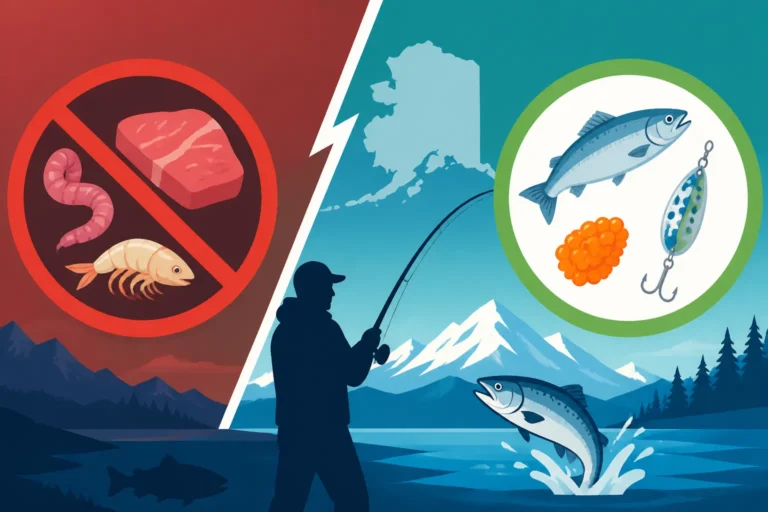
- Bait: In many areas open to pink salmon fishing, bait is permitted. Cured salmon roe, pieces of herring, or even shrimp can be effective. However, always double-check if bait is allowed in your specific fishing location, especially if you're in a river that also holds other salmon or trout species that might have stricter regulations.
A critical point to remember is the hook type. While many pink salmon fisheries allow barbed hooks, specific regulations (especially in systems where Rainbow Trout or Steelhead are present) might mandate barbless hooks to reduce harm to incidentally caught non-target species. Always carry a pair of pliers or a hook file to crimp down barbs if needed. Our Alaska Fishing Gear and Tackle Guide offers more general advice on what to pack.
Special Considerations for Certain Waters
Even with pink salmon, certain bodies of water will have specific rules that deviate from the general statewide guidelines. These are usually implemented to protect other, more vulnerable species, or to manage specific conservation concerns.
- Single Hook / Barbless Hook Rules: As mentioned, some river systems, particularly those known for sensitive trout populations like sections of the Kenai River or areas in Bristol Bay, may require single-shank, barbless hooks on all gear, regardless of the target species. This prevents accidental foul-hooking and minimizes injury to fish that are to be released. If you're fishing a river with strong trout or King salmon populations, always assume barbless is the rule unless explicitly stated otherwise.
- No Bait Zones: A less common restriction for pink salmon, but still possible, is the prohibition of bait in certain areas. This is usually to protect other species or to manage catch-and-release success.
- "No Snagging" Rules: While pink salmon are often caught accidentally by "flossing" or "snagging" in crowded sockeye fisheries, deliberately snagging fish is illegal in most sport fisheries in Alaska, unless specifically allowed in very limited "terminal harvest areas" under emergency order. If you intend to harvest a fish, it must be hooked in the mouth or jaw. Understanding what constitutes legal hooking versus snagging is vital to avoid violations. The ADF&G rules are quite explicit on this point.
It's paramount to consult the local fishing regulations for the specific area you intend to fish. These booklets are organized by region (e.g., Southcentral, Southeast, Interior) and then by specific water bodies. Don't rely on word-of-mouth; always get the official guide.
Checking Emergency Orders and Regional Differences
One of the most dynamic aspects of fishing in Alaska is the constant potential for emergency orders (EOs). These are sudden, in-season changes to regulations made by the ADF&G to respond to rapidly changing conditions, such as stronger or weaker than expected fish runs, or unexpected environmental factors. Ignoring emergency orders is a common and costly mistake made by many anglers, even those who consider themselves well-informed.
The Importance of Emergency Orders
Emergency Orders (EOs) can change anything from bag limits and legal fishing hours to open/closed sections of a river or even the types of gear allowed. For pink salmon, an EO might open a section of river to an "unlimited" bag limit due to an unexpectedly strong return, or conversely, close an area if a run is struggling. These changes can happen with little notice, sometimes just a day or two before they take into effect. This means the regulation booklet you printed in May might be out of date by July.
Anglers are responsible for knowing and adhering to all current regulations, including emergency orders. So, how do you stay informed?
- ADF&G Website: The official Alaska Department of Fish and Game website is the most authoritative source. They have dedicated pages for emergency orders, often broken down by region.
- Local Sport Shops: Bait and tackle shops in fishing towns like Soldotna, Seward, or Homer are usually excellent sources of up-to-the-minute information. They often have printed copies of recent EOs and staff who are knowledgeable about local conditions.
- ADF&G Hotline/App: Some regions have dedicated hotlines or even mobile apps that provide real-time updates on fishing conditions and emergency orders.
- Charters and Guides: If you're fishing with a Alaska Fishing Charters: Complete Guide or guide, they are legally obligated to know the current regulations and will keep you informed.
It's good practice to check for EOs daily, especially if you're on an extended fishing trip. A quick check on your phone each morning before heading out can save you from a potential violation. Understanding How to Check Alaska Emergency Orders Before Fishing is a crucial skill for any Alaska angler.
Regional Nuances in Pink Salmon Rules
While many regulations are statewide, Alaska is a vast state, and fishing rules are often tailored to specific regions and even local watersheds. Pink salmon regulations can differ significantly depending on where you are:
- Southcentral Alaska: Areas like Prince William Sound and the Kenai Peninsula often see massive pink salmon runs. Regulations here are typically quite liberal, reflecting the abundance, especially in areas influenced by hatchery programs such as in Valdez or Seward. You might find higher daily limits or more relaxed gear rules. However, even here, a section of a river like the Kenai that also sees strong King and Sockeye runs might have stricter rules.
- Southeast Alaska: The "Inside Passage" region, from Ketchikan up to Juneau, also gets strong pink salmon returns. While marine limits for pinks are usually generous, specific freshwater streams in Southeast might have different rules due to local conservation efforts or the presence of other unique species.
- Western/Northern Alaska: In more remote areas, pink salmon runs might be less predictable or the primary focus might be on subsistence or personal use fisheries for local residents. Sportfishing opportunities might be more limited or subject to very specific rules.
Always verify the regulations for the specific fishery management region and river system you plan to visit. The ADF&G sport fishing regulation booklets are color-coded and clearly delineated by region, making it easier to find the relevant section. Understanding How to Read Alaska Fishing Regulations effectively is a skill that will serve you well throughout your Alaskan angling adventures.
Recording Your Pink Salmon Catch
When you’re catching a lot of fish, especially pink salmon with their generous limits, it’s easy to lose track. However, proper recording of your catch is a non-negotiable part of responsible and legal fishing in Alaska, particularly for species that have specific harvest card requirements.
Harvest Record Card Requirements
For many salmon species, including King and Sockeye, a valid Alaska Sport Fishing License requires you to carry a King Salmon Stamp if you intend to keep Kings, and a Harvest Record Card for certain species. While pink salmon generally don't require individual recording on a harvest card in the same way that King salmon or certain species of halibut do, the rules can change, and it’s always wise to be aware. The requirement for a Harvest Record Card is primarily focused on higher-value or more closely managed species to track annual harvests effectively.
However, even if pink salmon aren't individually noted, you are still responsible for adhering to your overall daily and possession limits. This means if you're stopped by an Alaska Wildlife Trooper, they can ask to see your license, stamp (if applicable), and inspect your catch to ensure you're within legal limits. Having a clear idea of how many fish you've caught and kept is essential. For a general understanding of the harvest card, our guide on the Alaska Harvest Record Card Explained is a good resource.
Best Practices for Tracking Your Catch
Even if you don't need to punch out a specific space on a card for each pink salmon, maintaining an accurate count is smart fishing. Here are a few practical tips:
- Digital Tally: Use a simple note on your phone or a small digital counter to keep a running tally of fish kept.
- Physical Tally: A small piece of paper and a pencil kept in a waterproof bag in your tackle box works wonders. Just a tick mark for each fish.
- Cooler Organization: If you’re keeping a lot of fish over multiple days, try to organize your coolers. Some anglers will put each day’s catch in a separate bag or cooler, making it easier to demonstrate compliance if questioned about possession limits.
- Understand What Counts: A fish that is bled out and kept in a cooler is undeniably "in possession." Even a fish you've caught and released might need to be noted if there's a specific release mortality consideration or if you're fishing under special catch-and-release rules, although this is less common for pink salmon.
The goal is transparency and compliance. Wildlife Troopers appreciate anglers who are organized and clearly understand their responsibilities. It makes their job easier and avoids potential misunderstandings that can lead to Alaska Fishing Violations and Fines.
Pink Salmon Conservation and Ethical Angling
While pink salmon are abundant, ethical angling practices remain important. Respecting the resource ensures that these incredible runs continue to thrive for years to come.
Minimizing Impact on Spawning Grounds
Pink salmon, like all salmon, return to freshwater to spawn and die. As they enter rivers and streams, they transition from their ocean-bright silver phase to their spawning colors, often becoming dark with the characteristic hump developing on males. While these fish are still legal to harvest in many areas, particularly in lower river sections or marine areas, fishing directly on active spawning beds can disrupt the natural reproductive process.
- Avoid Walking on Redd Nests: Salmon create depressions in the gravel called "redds" where they deposit their eggs. Walking through shallow, gravelly areas in rivers can crush eggs, so be mindful of where you wade.
- Respect Fish Behavior: When salmon are actively spawning, they are often less interested in feeding. While you might still hook them, consider focusing your efforts on fish that are fresher and still actively migrating upstream.
- Observe Posted Signs: Many critical spawning areas will have signs posted by ADF&G, the U.S. Forest Service, or other land managers, indicating sensitive habitats or areas with specific restrictions. Always heed these warnings.
Even though pink salmon are plentiful, a healthy respect for their life cycle is part of being a responsible angler in Alaska.
Responsible Catch and Release
While most pink salmon fishing involves harvesting due to their numbers and good eating quality, there are times you might practice catch and release. Perhaps you’ve reached your limit for the day, or you've caught a smaller fish than you prefer to keep. If you plan to release a pink salmon, or any fish:
- Handle with Care: Use wet hands to minimize the removal of the protective slime layer.
- Support the Fish: Support the fish horizontally, especially larger ones, to avoid damaging internal organs.
- Quick Release: Remove the hook quickly and gently. If the fish is deeply hooked, cut the line as close to the hook as possible.
- Revive If Necessary: If the fish seems sluggish, hold it gently in the water, facing upstream, until it swims away under its own power.
Adhering to Alaska Catch-and-Release Best Practices is crucial for the health of released fish, no matter the species. Even for abundant pink salmon, a little care goes a long way.
Disclaimer
Please note that this guide provides general information about Alaska pink salmon regulations and is not a substitute for the official Alaska Department of Fish and Game (ADF&G) regulations. Fishing rules are subject to change, often without much prior notice, through emergency orders. Always consult the most current ADF&G sport fishing regulation booklet for the region you plan to fish, and check for any emergency orders before heading out on the water. Your compliance with all state and federal fishing laws is solely your responsibility.