How to Catch Sockeye Salmon in Alaska
Trying to catch sockeye salmon in Alaska can feel like trying to win the lottery – everyone wants a piece, but it often seems like pure luck, leaving many anglers scratching their heads in frustration. These incredible fish are notoriously challenging to entice with traditional baits and lures once they hit freshwater, making a successful trip feel like a monumental achievement. This comprehensive guide is here to demystify the art of sockeye fishing, walking you through everything you need to know to increase your chances of landing some of Alaska's most prized and delicious salmon.
Understanding the Sockeye Salmon
Sockeye salmon, also known as red salmon, are truly special. Their vibrant red flesh, firm texture, and rich flavor make them a culinary delight, which is why so many anglers flock to Alaska's rivers each summer. But their unique biology also dictates how we must approach catching them.
Sockeye Salmon Biology and Life Cycle
Sockeye salmon embark on one of the most incredible migrations in the natural world. Unlike other salmon species that might spend less time in freshwater after hatching, sockeye typically spend one to three years in freshwater lakes before migrating to the ocean. Once in the Pacific, they feed voraciously, often on zooplankton, which contributes to their distinctive red flesh due to the crustaceans they consume. This diet is key to understanding why they're so tricky to catch in rivers. They're not actively feeding on typical bait fish or insects when they return to spawn. Instead, their primary drive is reproduction.
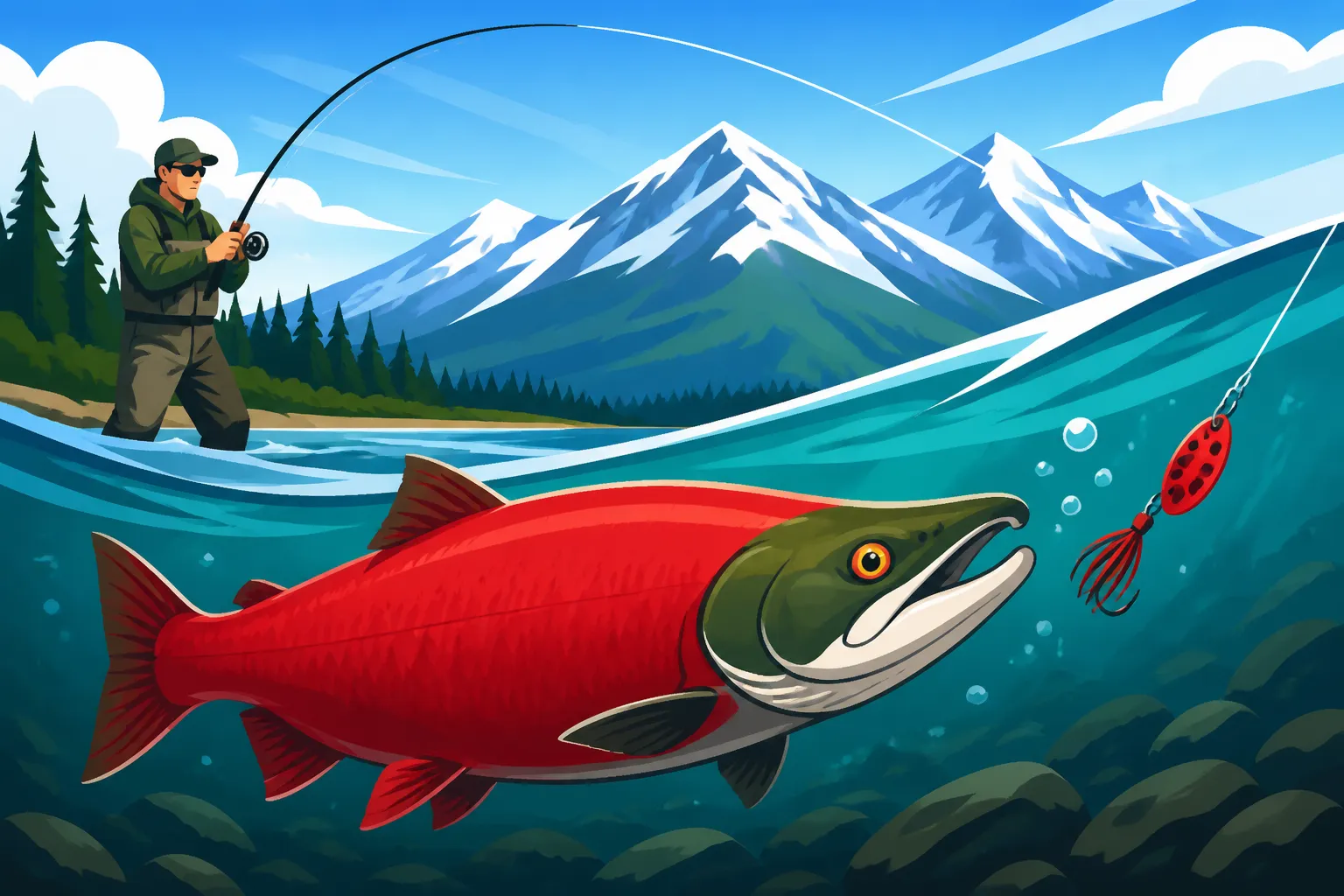
When sockeye enter freshwater from the ocean, they undergo a remarkable transformation. Their silvery ocean-bright scales begin to change, with males developing a pronounced humpback and both sexes turning a brilliant, deep crimson red with olive-green heads as they prepare for spawning. This dramatic color change signals they are nearing the end of their life cycle, fueled purely by instinct and stored energy, not by eating. This is precisely why presenting a fly or lure directly in their path, rather than trying to entice a bite, becomes the most effective strategy.
Identifying Sockeye Salmon
When you're out on the water, especially during a busy salmon run, it's easy to get confused between the different salmon species. But identifying sockeye is crucial, not just for bragging rights, but for adhering to specific regulations. Ocean-phase sockeye are sleek and silver with small, sparse black spots on their backs that usually don't extend below the lateral line, if present at all. They have large, prominent eyes relative to their head size.
Once they hit freshwater and begin their journey upstream, their appearance changes drastically. They develop that iconic brick-red body and green head. They typically don't have spots on their tails or bodies, unlike King (Chinook) or Silver (Coho) salmon. Their gill plates are also quite smooth and typically lack the radiating lines you might see on a King salmon. Knowing these subtle differences will help you confirm your catch, especially since How to Identify a Sockeye Salmon is a skill every Alaska angler should master.
Why Sockeye are Such a Prized Catch
Beyond their exquisite taste, catching a sockeye salmon offers a unique thrill. They are incredibly strong fighters, often making blistering runs and acrobatic jumps that will test your gear and your angling prowess. For many, the challenge itself is a huge part of the appeal. Unlike other salmon that might strike a trolled lure or a swung fly out of aggression, sockeye require a precision-based approach, often referred to as "flossing," to ethically and legally hook them. This technique, while sometimes debated, is recognized as the most effective way to intercept these non-feeding fish.
The sheer abundance of sockeye in some rivers, like the Kenai or Russian River, creates an almost unparalleled fishing experience where, during peak runs, the river can literally be teeming with thousands of fish. This combination of challenge, beauty, fighting spirit, and deliciousness is why sockeye salmon hold such a special place in the hearts of Alaska anglers.
When and Where to Find Sockeye
Timing and location are everything when it comes to sockeye fishing in Alaska. You can have the perfect gear and technique, but if you're not there when the fish are, and in the right spot, you'll be out of luck.
Prime Sockeye Salmon Run Timing
Sockeye salmon runs in Alaska typically begin in late May or early June and can extend through August, with different rivers and different runs peaking at various times. Generally, there are two main "runs" of sockeye salmon in Southcentral Alaska rivers. The first run usually occurs in June, with fish often heading to systems like the Russian River and Kasilof River. The larger, more famous second run typically peaks in July, bringing massive numbers of sockeye into the Kenai River.
It's vital to remember that these are general timelines. Actual run timings can vary year to year based on ocean conditions, water temperatures, and other environmental factors. For instance, the Copper River in Southcentral Alaska often sees its sockeye run kick off earlier, sometimes in mid-May, providing some of the first fresh salmon of the season. To truly stay on top of it, anglers frequently check the Alaska Department of Fish and Game (ADF&G) run reports and news releases. These resources are invaluable for understanding When Do Sockeye Salmon Run in Alaska in specific areas.
Top Sockeye Fishing Locations in Alaska
Alaska boasts numerous incredible sockeye fishing destinations, each offering a slightly different experience.
-
Kenai River: Arguably the most famous sockeye river in the world, the Kenai River on the Kenai Peninsula sees immense runs of sockeye, especially during the July second run. While it can be incredibly crowded – a situation often dubbed "combat fishing" – the sheer volume of fish makes it a bucket-list destination. Popular access points include the Kenai River personal use dipnet fishery near Soldotna for residents, and numerous public access points along the river for sport anglers. For a detailed look, check out our guide on the Kenai River Sockeye Fishing Guide.
-
Russian River: A tributary of the Kenai, the Russian River is renowned for its consistent and strong sockeye runs, particularly in June. It's easily accessible via a ferry from the Kenai River side or by hiking in, and it's another prime example of where you'll find significant crowds during peak times, but also incredible fishing. The confluence with the Kenai is a popular spot, as are various bends and eddies further upstream.
-
Kasilof River: Located just south of the Kenai, the Kasilof River also hosts strong sockeye runs. It tends to be less crowded than the Kenai but still offers fantastic opportunities, especially for those looking for a slightly more relaxed experience while targeting sockeye. Both guided and unguided options are popular here, often fished from drift boats.
-
Copper River: Known for its early, prized sockeye, the Copper River system, particularly near Chitina, is famous for its dipnet fishery. While this is primarily a personal-use fishery for Alaska residents, its strong runs mean a lot of sockeye enter the system. Sport fishing for sockeye is also popular in tributaries that feed into the Copper.
These rivers represent just a few of the many fantastic options. Identifying the Best Rivers for Sockeye Salmon in Alaska often comes down to personal preference for crowds, accessibility, and time of year.
Reading Run Forecasts and Emergency Orders
Staying informed is perhaps the most critical component of a successful sockeye trip. The Alaska Department of Fish and Game (ADF&G) provides detailed run forecasts at the beginning of each season, offering predictions on the size and timing of salmon returns. However, these are just forecasts. The actual runs can vary, and ADF&G actively monitors fish escapement (the number of fish that make it past fishing areas to spawn) throughout the season.
Based on these real-time assessments, they issue "Emergency Orders" that can change regulations, sometimes with very little notice. This might mean opening or closing a fishery, changing bag limits, or modifying legal gear. These changes are designed to protect the resource and ensure sustainable fisheries. Before heading out, always check the latest ADF&G news releases and emergency orders for your specific area. Ignoring these can lead to fines and confiscated gear. Understanding How to Check Alaska Emergency Orders Before Fishing is non-negotiable for any angler in the state.
Essential Gear for Sockeye Success
When targeting sockeye, you can't just show up with any old fishing rod. These fish require specific gear that can withstand their powerful runs and allow you to effectively employ the specialized techniques needed to catch them.
Rods and Reels for Sockeye Fishing
For sockeye, you want a setup that's robust and sensitive. A medium-heavy to heavy action spinning or casting rod, typically 8.5 to 10.5 feet long, is ideal. The extra length helps with casting distance, line control, and fighting strong fish in fast currents. A fast action tip allows you to feel the subtle "tick" of a sockeye passing over your line, which is crucial for the flossing technique, while the powerful backbone helps you leverage a strong fish against the current.
Pair your rod with a durable spinning reel in the 3000 to 4000 series size, or a reliable baitcasting reel if that's your preference. The most important feature of your reel is a smooth, strong drag system. Sockeye make powerful, often unexpected runs, and a sticky or weak drag will quickly lead to broken lines and lost fish. Brands like Shimano, Daiwa, and Penn offer excellent options that can stand up to the rigors of Alaskan salmon fishing. You can find a good selection of these on Amazon, often with better prices than local shops if you plan ahead.
Line and Terminal Tackle Choices
Your line choice is just as critical as your rod and reel. Most experienced sockeye anglers opt for braided main lines, typically 30-50 lb test. Braid offers superior sensitivity, minimal stretch, and excellent casting distance. To this, you'll attach a leader of 20-30 lb monofilament or fluorocarbon. Fluorocarbon is less visible in the water and more abrasion-resistant, which is a plus when fishing in crowded conditions or around rocky bottoms. The leader length can vary, but usually, it's between 24 and 48 inches.
Terminal tackle for sockeye is relatively simple but highly specific. You'll need:
- Weighted Flies/Flossing Jigs: These are typically unbaited, brightly colored flies (often with pink, red, or orange yarn) or small jigs designed to snag lightly in the mouth area as the fish swims over the line. Many local shops sell pre-tied sockeye rigs.
- Snelled Hooks: Size 2/0 to 4/0 octopus-style hooks, often pre-snelled on a leader for convenience.
- Sliding Weights: Pencil leads, slinky weights, or banana weights ranging from 1/2 oz to 2 oz or more, depending on current speed and water depth. You'll want an assortment. These weights slide freely on your main line above a swivel, allowing your leader with the fly to drift naturally.
- Barrel Swivels: To connect your main line to your leader, preventing line twist.
Having a good selection of these components is crucial, as you will inevitably lose gear to snags in the fast-flowing rivers. Stocking up beforehand, perhaps from a reliable online retailer like Amazon, can save you time and money.
Waders, Rain Gear, and Other Essentials
Alaska weather is famously unpredictable, and even on a sunny summer day, a sudden downpour isn't uncommon. Being prepared for the elements is not just about comfort; it's about safety.
- Waders: Breathable chest waders are essential for getting into the river to reach prime fishing lanes. Neoprene waders are warmer but less breathable. Make sure they fit well and pair them with sturdy wading boots that offer good ankle support and traction on slippery riverbeds. Do You Need Waders for Alaska Fishing? Absolutely, if you plan to wade.
- Rain Gear: A high-quality, waterproof and breathable rain jacket and pants are a non-negotiable item. You'll be glad to have them when the inevitable rain squall hits, keeping you dry and warm.
- Layered Clothing: Dress in layers. Even on cold mornings, the sun can warm things up quickly. Synthetics and wool are far superior to cotton, which loses its insulating properties when wet. For more tips on staying comfortable, check out How to Dress for Alaska Fishing.
- Bear Spray: This is not optional. You are fishing in bear country, and encounters are always possible, especially when fish are concentrated. Carry bear spray on your hip, readily accessible, and know how to use it.
- Fishing Vest or Pack: Keep your terminal tackle, knife, water bottle, and other small essentials organized and close at hand.
- Pliers/Forceps: For hook removal.
- Stringer or Cooler Bag: To keep your catch fresh.
Being prepared for the Alaskan wilderness means you can focus on the fishing, rather than battling the elements or scrambling for gear.
Mastering Sockeye Fishing Techniques
Sockeye salmon, as we've discussed, don't typically bite once they enter freshwater. This means conventional fishing methods with bait or lures designed to elicit a strike are largely ineffective. Instead, a specific technique has evolved to legally and ethically catch these fish: the "flossing" method.
The Art of "Flossing" or "Sockeye Flipping"
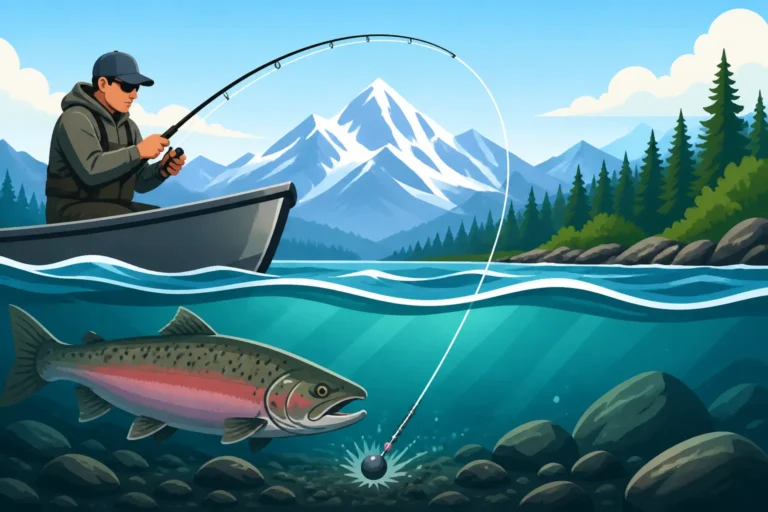
"Flossing" is the primary and most effective technique for catching sockeye salmon in Alaskan rivers. It involves drifting a weighted line with a short leader and an unbaited fly or bare hook through a school of migrating sockeye, aiming for the line to pass over the fish's head, causing the hook to enter its mouth as the fish opens it or turns slightly. It's a precise presentation, not an attempt to snag the fish externally. While sometimes controversial, it is a legal and widely accepted method in many Alaskan sockeye fisheries when performed correctly. Our article on Best Technique for Kenai Sockeye: The Flossing Debate delves deeper into this.
Here’s a step-by-step guide to flossing:
- Cast Upstream: Cast your weighted rig (with a sliding weight, swivel, leader, and sockeye fly/hook) across the current and significantly upstream from where you expect the fish to be. The amount upstream depends on current speed and water depth.
- Mend Your Line: Immediately after casting, "mend" your line by lifting your rod tip and tossing a loop of line upstream. This reduces drag on your main line, allowing your weight to sink and your rig to drift naturally at the same speed as the current, directly into the fish's path.
- Feel the "Tick": As your rig drifts, maintain a slight amount of slack in your line, just enough so the weight bounces along the bottom, but not so much that you can't feel subtle changes. You're waiting for a distinct "tick" or "thump." This isn't usually a bite; it's the feeling of your line hitting a fish.
- Set the Hook: When you feel that "tick," immediately and forcefully set the hook upstream. If your line has properly passed over the fish, the hook should find its way into the fish's mouth. If you wait too long, the line will have passed the fish, and you'll miss the opportunity.
- Fight the Fish: Once hooked, sockeye are powerful fighters. Keep your rod tip up, maintain tension, and let your drag do the work. Be prepared for strong runs and jumps.
Patience, practice, and precise execution are key to mastering this technique. It's not about brute force, but about finesse and timing.
Drift Fishing for Sockeye
While flossing is dominant, some anglers also use a form of drift fishing, especially in certain areas or during periods of clearer water. This method often employs a more traditional fly-fishing setup, or a spinning rod with a float (indicator).
-
Float Fishing: With a float rig, you'd use a fixed or sliding float set to the appropriate depth, a small amount of weight, and a sockeye fly or bead pattern. The idea is for the float to carry your offering downstream at the same speed as the current, presenting it naturally to fish that might be holding in calmer pockets or along current seams. This can sometimes entice a sockeye that might be slightly aggressive or react to a presentation, especially in areas where they aren't actively trying to avoid the main drift of lines.
-
Bottom Bouncing/Indicator-Free Drift: A more subtle approach involves drifting small, weighted flies or beads along the bottom without a float. This requires a very sensitive rod and keen attention to your line, looking for any hesitation or unnatural movement that indicates a fish interaction. For broader techniques, our guide on How to Drift Fishing for Salmon in Alaska can provide a good foundation.
These methods are generally less effective than dedicated flossing for the bulk of the sockeye run in high-density areas but can have their moments in less pressured waters or specific conditions.
Other Less Common Methods and Considerations
It's important to differentiate between legal flossing and illegal snagging. Snagging is intentionally foul-hooking a fish anywhere other than the mouth. While flossing aims for the mouth, accidental foul-hooking can sometimes occur. If you foul-hook a fish (i.e., hook it anywhere outside the mouth), you must immediately release it. This ethical consideration is paramount in Alaska. Alaska Snagging Regulations Explained provides further details on what is and isn't permitted.
While sockeye in freshwater are largely non-feeding, very early in their run, or in saltwater, they might occasionally strike a spoon, spinner, or trolled fly. This is the exception, however, not the rule for the main river fisheries. Don't waste your time trying to get them to bite a traditional lure in the middle of a river run where flossing is the established method. Focus on the proven techniques for the highest chance of success.
Reading the Water and Fish Behavior
Understanding where sockeye salmon hold and how they behave in a river system is almost as important as having the right gear. The fish aren't just everywhere; they use specific parts of the river for travel and rest, and knowing how to identify these spots will dramatically improve your chances.
Identifying Sockeye Holding Water
Sockeye salmon, like all migrating fish, seek out certain types of water as they move upstream. They're looking for paths of least resistance, places to rest, and areas with good flow that provide oxygen without exhausting them.
- Current Seams: These are the edges where fast-moving water meets slower water. Sockeye will often travel along these seams, using the slower current to conserve energy while still making progress upstream. Look for changes in water texture or color that indicate a current seam.
- Eddies and Back-Currents: These are areas where the water circles back on itself or is significantly slower than the main current. Sockeye will often stack up in these spots to rest before tackling another stretch of rapids or fast water. These can be prime locations, as fish are concentrated and less actively swimming, making them easier to target.
- Gravel Bars and Drop-offs: Fish will often hug the contours of the river bottom. Gravel bars provide consistent depth, and drop-offs can create current breaks where fish congregate. Using polarized sunglasses helps you spot these underwater features.
- Confluences: Where two rivers meet, like the Kenai and Russian Rivers, fish often hold as they decide which path to take. These areas can be incredibly productive but also very crowded.
Observing other anglers can also give you clues. If everyone is casting into a particular lane, there's usually a good reason for it – that's where the fish are moving.
The Impact of Water Levels and Clarity
River conditions, particularly water levels and clarity, play a huge role in sockeye fishing success and how you should adjust your approach.
- High and Turbid Water: Heavy rains or significant glacial melt can cause rivers to rise and become murky. In these conditions, sockeye might hug the banks more tightly, seeking clearer or calmer water. You'll likely need heavier weights to get your rig down to the fish, and your presentations might need to be slower to give fish time to "find" your line. Fishing can be tougher, but not impossible.
- Low and Clear Water: While often preferred for visibility, very low and clear water can make fish skittish. Sockeye might be more aware of angler presence and lines. In these conditions, using lighter leaders (still strong, but perhaps 20lb instead of 30lb) and smaller flies might be beneficial. You'll also need to be stealthier in your approach.
- Glacial Melt: Rivers fed by glaciers, like parts of the Kenai, can have significant daily fluctuations in water level and clarity due to warm temperatures melting ice. Fishing early in the morning before the day's melt really kicks in can sometimes offer clearer water.
Always be prepared to adjust your weight. A good rule of thumb is to use just enough weight to feel your rig occasionally ticking the bottom without getting constantly snagged. This ensures your fly is presented at the fish's level.
Understanding Sockeye Migration Patterns
Sockeye salmon don't just randomly swim upstream; they follow distinct migration paths within the river. They'll often take the path of least resistance, which usually means hugging banks where the current is slightly slower, or funneling through specific channels and riffles.
By spending time observing the river, you can start to identify these lanes. Watch for flashes of red in the water, or the subtle wakes created by schools of fish moving. Understanding how they navigate rapids, eddies, and submerged structures will allow you to position yourself and your casts more effectively. They often travel in waves, so patience is crucial. There might be periods of intense action, followed by lulls. Don't pack up too early; another wave of fish could be just around the bend. Learning to "read the water" is an acquired skill that comes with experience, but it's one of the most rewarding aspects of becoming a proficient sockeye angler.
Sockeye Fishing Regulations and Ethics
Fishing in Alaska means understanding and respecting a dynamic set of rules designed to preserve these precious resources. Ignorance of the law is never an excuse, and regulations can change without much warning.
Navigating Alaska's Complex Regulations
Alaska's fishing regulations can feel incredibly complex, especially for visitors or new anglers. They vary not only by species but also by river, by specific section of a river, and even by date ranges within the season. For instance, the Kenai River might have different sockeye limits than the Kasilof, or different gear restrictions. Furthermore, these regulations are subject to change via "Emergency Orders" issued by the Alaska Department of Fish and Game (ADF&G). These orders can open or close fisheries, modify bag limits, or change legal gear on short notice to respond to fish escapement numbers.
It’s easy to get frustrated by the constant changes, but they are critical for conservation. Before every fishing trip, you must consult the current annual Alaska Sport Fishing Regulations booklet and check for any recent emergency orders for your specific area. You can find these online on the ADF&G website or through their hotline. Our guide on How to Read Alaska Fishing Regulations offers a detailed walkthrough of how to decipher the regulations booklet, and Alaska Fishing Emergency Orders Explained will help you understand how these in-season changes work. Always assume regulations are strict and err on the side of caution.
License Requirements and Stamps
Anyone aged 16 or older needs an Alaska fishing license to sport fish. Whether you're an Alaska resident or a non-resident, there are different types of licenses available, ranging from 1-day to annual options.
- Non-Residents: If you're visiting, you'll need an Alaska Non-Resident Fishing License Guide to understand the various options available to you, like 1-day, 3-day, 7-day, 14-day, or annual licenses. You can purchase these online, at most sporting goods stores, or from authorized vendors throughout the state.
- Residents: Alaska residents also need a license, though the cost is significantly lower, and certain groups (like seniors or disabled veterans) may have exemptions or special licenses. A comprehensive overview can be found in the Alaska Fishing License: Complete Guide.
King Salmon Stamp: Even if you are only targeting sockeye, if you are fishing in waters where King salmon might be present and open for retention, you might also need a King Salmon stamp, particularly if you are a non-resident. This stamp is required to legally retain a King salmon. Always check the regulations for your specific body of water. While sockeye don't require their own stamp, being prepared for other species or inadvertent catches is part of being a responsible angler.
Bag Limits, Possession Limits, and Harvest Records
Understanding limits is non-negotiable. Breaking these rules, even accidentally, can lead to substantial fines and loss of fishing privileges.
- Daily Bag Limit: This is the maximum number of fish you can legally keep in a 24-hour period. For sockeye, this often ranges from 3 to 6 fish per day, but it can change based on the specific river and run strength.
- Possession Limit: This is the maximum number of fish you can have in your possession at any given time, whether fresh, frozen, or processed. Often, the possession limit is twice the daily bag limit, but not always. If you've been fishing for multiple days and have processed fish at your lodge or home, those count towards your possession limit. This can be particularly confusing for multi-day trips.
- Annual Limits: For certain species, like King salmon, there might also be an annual limit for non-residents. While sockeye typically don't have an annual limit, it's good to be aware of this concept for other species.
Harvest Record Card: All anglers aged 16 or older, regardless of residency, are required to carry a signed sport fishing license with an Alaska Harvest Record Card attached. You must immediately record certain species after they are retained, and for sockeye, this often applies to rivers like the Kenai and Russian River. You must record the date, location, and species. Failing to record a fish or incorrectly filling out your card is a violation. For detailed instructions on recording your catch, refer to the Alaska Harvest Record Card Explained.
Here's a simplified look at typical sockeye limits, but ALWAYS CHECK CURRENT ADF&G REGULATIONS FOR YOUR SPECIFIC FISHING LOCATION AND DATE.
| River System | Run Timing | Typical Daily Bag Limit | Typical Possession Limit | Notes |
|---|---|---|---|---|
| Kenai River | 2nd Run (July) | 3-6 Sockeye | 6-12 Sockeye | Varies by emergency order, often restrictive |
| Russian River | 1st & 2nd Run (June-Jul) | 3-6 Sockeye | 6-12 Sockeye | Specific sections may have different rules |
| Kasilof River | Early/Late Runs | 3-6 Sockeye | 6-12 Sockeye | Check for specific gear restrictions |
| Copper River & Tribs | Early Run (May-June) | Varies by fishery type | Varies by fishery type | Often a personal use dipnet fishery |
Alaska Salmon Bag Limits by Species offers a deeper dive into the specifics for different salmon, but always verify current information. These regulations are designed to protect Alaska's incredible fishing opportunities for future generations, and responsible angling means adhering to them precisely.
Processing and Preserving Your Catch
Catching a beautiful sockeye salmon is only half the battle. To truly enjoy the fruits of your labor, you need to properly process and preserve your catch, ensuring that delicious flavor makes it all the way to your dinner plate, whether that's tonight or months from now.
Field Care and Filleting Your Sockeye
Proper field care starts the moment you land your fish. The goal is to chill the fish quickly and thoroughly to maintain its quality.
- Bleed the Fish: This is a crucial first step for optimal flavor and preservation. Immediately after landing, dispatch the fish humanely (a sharp blow to the head) and then cut the gill arches or sever the caudal artery near the tail. This allows the blood to pump out, resulting in cleaner, better-tasting meat.
- Chill Immediately: Get your bled fish on ice as soon as possible. A cooler filled with ice is indispensable. Don't let your fish sit in the sun or in warm water.
- Filleting: While some anglers prefer to whole-fish their catch, filleting is more common. If you're not confident in your filleting skills, many fish processors in towns like Homer, Seward, or Soldotna offer this service. However, learning to fillet your own salmon is a rewarding skill. You'll need a sharp, flexible filleting knife. Start by making a cut behind the gill plate, down to the backbone, then run your knife along the backbone towards the tail, separating the fillet from the bones. Flip the fillet over and remove the rib bones, then carefully skin it. For a visual guide, check out How to Fillet a Salmon in Alaska.
The quicker you bleed and chill your fish, the better the quality of the final product.
Freezing, Vacuum Sealing, and Shipping
Once filleted, the next step is preserving your sockeye for long-term enjoyment.
- Vacuum Sealing: This is hands-down the best method for freezing salmon. A good vacuum sealer removes all air from the package, preventing freezer burn and extending the shelf life of your fish significantly. Place individual fillets or portions into vacuum seal bags, ensuring the fish is dry before sealing. Vacuum-sealed salmon can last for 12-18 months in a deep freezer without a noticeable decline in quality. You can find reliable vacuum sealers and bags at many appliance stores or on Amazon.
- Freezing: After vacuum sealing, flash freeze your fillets by placing them flat in the coldest part of your freezer until solid. Then, stack them for efficient storage.
- Shipping Home: If you're visiting Alaska, shipping your catch home is a popular option. Many fish processing companies throughout Alaska offer services that include custom processing, vacuum sealing, flash freezing, and packing your fish in insulated, airline-approved boxes for shipment via air cargo or ground services. You can pick up your fish at your local airport or have it delivered to your door. The cost varies depending on the weight and destination. Always check with the processor about their shipping options and pricing. Our article on How to Vacuum Seal and Ship Alaska Fish provides more detailed information on this process, and How Much Fish Can You Bring Home from Alaska will help you plan your limits.
Cooking Your Delicious Sockeye
Sockeye salmon is prized for its firm texture, rich flavor, and vibrant red-orange flesh, making it incredibly versatile in the kitchen. Once you've gone to all the effort of catching and preserving it, you'll want to make sure you cook it right!
- Grilling: Sockeye shines on the grill. Its robust flavor stands up well to high heat. A simple preparation with olive oil, salt, pepper, and a squeeze of lemon is often all you need. You can also marinate it in teriyaki, soy sauce, or a dill-lemon mixture.
- Baking or Roasting: For a hands-off approach, baking or roasting is fantastic. Place fillets on a baking sheet, perhaps with some fresh herbs like dill or parsley, a pat of butter, and bake at 375-400°F until cooked through (internal temperature of 145°F).
- Smoking: If you have access to a smoker, sockeye is phenomenal smoked. The rich, fatty meat absorbs smoke flavor beautifully, creating a tender, flaky product that's excellent on its own, in dips, or on bagels.
- Pan-Seared: A quick pan-sear with a crispy skin is another delicious option. Cook skin-side down first to crisp it up, then flip and finish.
No matter how you prepare it, the distinct flavor and texture of Alaskan sockeye are unparalleled. Enjoying your catch, knowing the effort and adventure behind it, is truly the best part of the Alaskan fishing experience.
Troubleshooting Common Sockeye Fishing Challenges
Fishing for sockeye in Alaska is an incredible experience, but it's not without its hurdles. From navigating crowds to dealing with frustrating snags and the ever-present wildlife, being prepared for these challenges can make your trip much more enjoyable.
Dealing with Crowds and "Combat Fishing"
One of the most intense aspects of sockeye fishing in popular rivers like the Kenai or Russian River is the sheer number of people. During peak runs, spots can be shoulder-to-shoulder, a situation affectionately (or sometimes not-so-affectionately) known as "combat fishing." It can be intimidating, frustrating, and certainly not for the faint of heart. Our article on Alaska Combat Fishing Rules on the Russian River details what to expect.
- Patience and Etiquette: The most important thing is patience and adhering to unspoken rules of etiquette. Take turns casting, don't cast over someone else's line, and be mindful of your backcast.
- Find Your Space: Arrive early to secure a good spot, or be willing to walk further from popular access points. Sometimes, even a short walk can put you in a less crowded area with equally good fishing.
- Embrace It: For many, the camaraderie and shared excitement of combat fishing are part of the fun. Strike up conversations, learn from others, and celebrate successes. If the crowds are truly overwhelming, consider visiting during a less popular run, or explore lesser-known sockeye rivers.
Snags, Lost Gear, and Frustration
Fishing in fast, rocky rivers means snags are an inevitable part of the experience. You will lose weights, leaders, and flies. It's not a matter of if, but when. This can be incredibly frustrating, especially when the fish are running thick, and you're spending more time re-rigging than fishing.
- Carry Extra Gear: Always bring plenty of spare terminal tackle: weights, swivels, hooks, and pre-tied sockeye flies/leaders. If you bought in bulk on Amazon, this is where it pays off.
- Learn to Re-Tie Quickly: Practice tying your knots (like the improved clinch knot or palomar knot) quickly and efficiently. This minimizes downtime.
- Minimize Snags: Pay attention to your drift. If you're constantly snagging, you might be using too much weight, or your cast isn't allowing your rig to drift cleanly over the bottom. Try adjusting your weight or your casting angle.
- Don't Get Discouraged: It happens to everyone. Take a deep breath, re-rig, and get back to fishing. Sometimes a fresh start is all you need.
Bear Safety in Alaska's Fishing Grounds
Alaska is bear country, and where there are salmon, there will almost certainly be bears – both brown (grizzly) and black bears. Encounters are a possibility, and being "bear aware" is critical for your safety and theirs.
- Carry Bear Spray and Know How to Use It: This is your primary defense. Carry it on your hip or chest, readily accessible, not buried in your pack. Make sure you know how to disengage the safety and spray effectively.
- Make Noise: When walking to and from fishing spots, especially in dense brush or along noisy rivers, make your presence known by talking loudly or clapping. This helps prevent surprise encounters.
- Store Food Properly: Never leave food or attractants (like fish guts) unattended. Keep food in bear-resistant containers or hung from a tree. Dispose of fish waste responsibly by tossing it into deep, fast-moving current, away from the bank.
- Be Aware of Your Surroundings: Scan the banks, look for fresh tracks or scat, and be aware of any smells. If you see a bear, give it plenty of space. Do not approach it.
- Fishing with Bears: If a bear comes into your fishing area, reel in your line, make yourself known, and slowly back away, giving the bear ample space. Never turn and run. If a bear is focused on a salmon carcass or actively fishing, give it wide berth. For comprehensive guidelines on staying safe, consult How to Fish Safely Around Alaska Bears. Your safety is always more important than catching a fish.
Disclaimer
The information provided in this guide is for general informational purposes only and is not intended as legal advice regarding fishing regulations. Alaska fishing regulations, including bag limits, gear restrictions, and season dates, are subject to change by the Alaska Department of Fish and Game (ADF&G) through emergency orders. It is the responsibility of every angler to consult the most current Alaska Sport Fishing Regulations booklet and any active emergency orders for the specific area they plan to fish before engaging in any fishing activities. Failure to do so may result in fines or penalties.