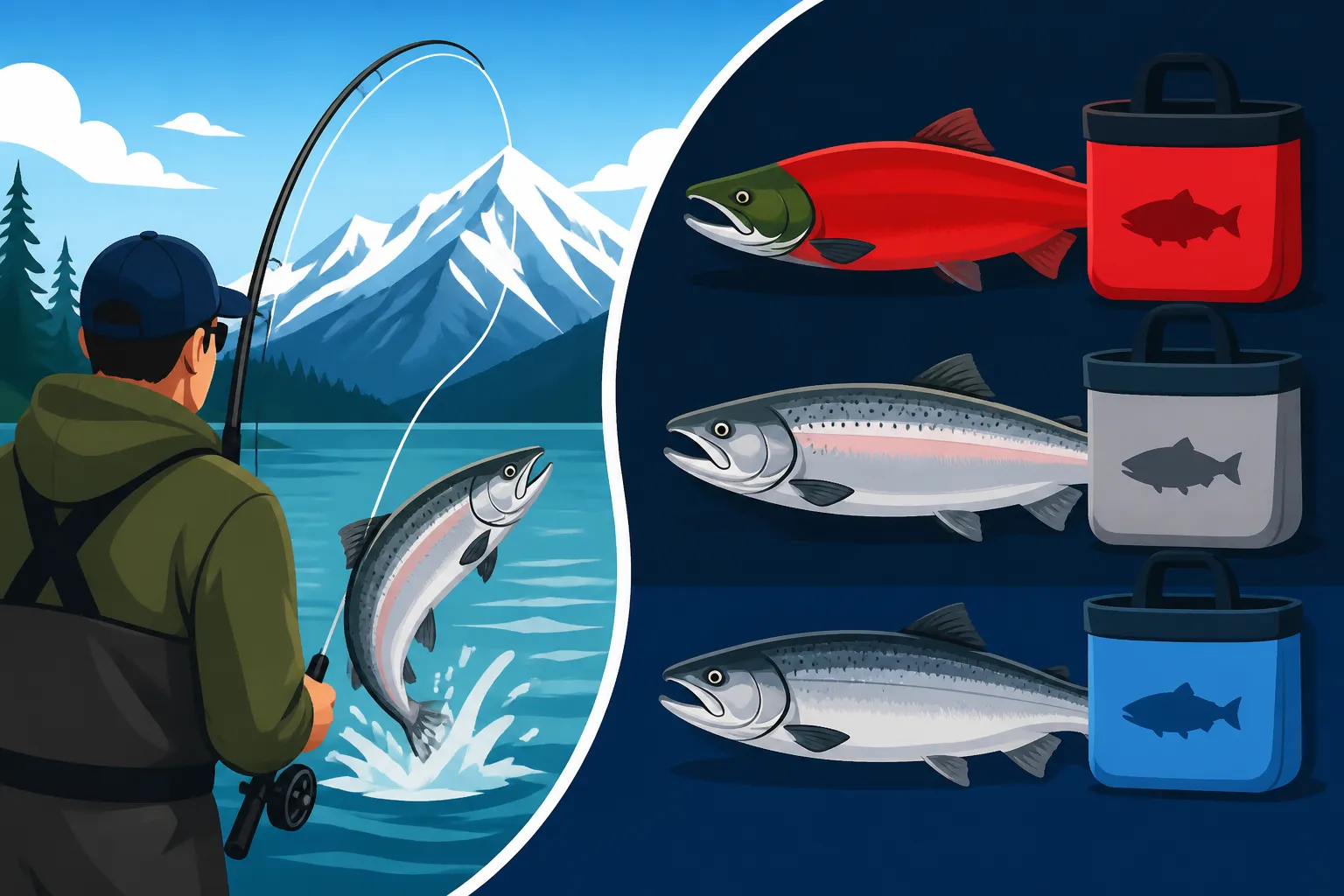
Alaska Salmon Bag Limits by Species
A common headache for anglers visiting or living in Alaska is deciphering the ever-changing and often complex salmon bag limits. Trying to understand how many of each species you can keep, especially when traveling between different regions or as a non-resident, can be incredibly confusing. This comprehensive guide is here to untangle the specifics of Alaska's salmon bag limits by species, ensuring you stay legal and make the most of your incredible fishing adventure.
Understanding the Foundation of Alaska Salmon Regulations
Why Bag Limits Exist
Bag limits aren't just arbitrary rules designed to make your life harder; they are a critical tool for conservation and sustainable fisheries management. Alaska's waters are teeming with incredible salmon runs, but these populations are delicate and susceptible to overfishing, environmental changes, and habitat loss. The Alaska Department of Fish and Game (ADF&G) sets these limits to ensure that enough fish escape to spawn, maintaining healthy populations for future generations of both fish and anglers. It's a balancing act: allowing anglers to enjoy the resource while safeguarding its long-term viability. Without these careful controls, the legendary salmon runs we cherish could quickly dwindle within a few seasons, impacting not just sport fishing but commercial and subsistence users too. This system ensures everyone gets a fair shot and the fish have a chance to perpetuate.
It's a misconception to think that Alaska's vastness automatically protects its fish stocks. While there's certainly a lot of wild country, the concentrated nature of salmon runs into specific river systems means they are highly vulnerable at certain times of the year. Imagine if during the peak Sockeye run on the Kenai River, there were no limits. The sheer volume of anglers could decimate the returning spawners, leading to a disastrous collapse in future years. Bag limits, alongside other regulatory measures like gear restrictions and season dates, act as vital safeguards, maintaining the delicate balance between human enjoyment and ecological necessity. They are a testament to Alaska's proactive approach to resource stewardship, aiming for abundance rather than mere survival.
Resident vs. Non-Resident Differences
One of the most significant distinctions in Alaska's fishing regulations, especially when it comes to salmon bag limits, is the difference between residents and non-residents. This isn't unique to Alaska, but it's particularly pronounced here due to the immense value of the state's natural resources. Generally, non-residents face more restrictive limits, particularly for species like King Salmon, and often have higher license fees. This disparity helps manage harvest pressure and prioritize the long-term benefit for Alaskan residents, who directly contribute to the state's economy and management efforts through taxes and other means. For instance, a resident might have a more generous annual limit on King Salmon compared to a visitor. It’s absolutely crucial for visitors to familiarize themselves with the specific non-resident rules; ignorance is rarely an excuse when facing a wildlife trooper. If you're planning a trip, be sure to check out our detailed Alaska Non-Resident Fishing License Guide to understand all the specific requirements you'll encounter.
The philosophical underpinning of this distinction often revolves around the concept of stewardship. Residents, through their taxes and long-term residency, are considered the primary custodians of the state's resources. While tourism is a vital part of Alaska's economy, the state seeks to ensure that its resident population has primary access and opportunity, especially for highly prized species. For a non-resident, understanding and respecting these differences is paramount to having a smooth and enjoyable fishing trip. Always double-check which regulations apply to you based on your residency status. Assuming general limits apply to all anglers is a common pitfall that can lead to unexpected fines or confiscation of catch.
Emergency Orders and In-Season Changes
Here's where things can get truly tricky and require constant vigilance: Alaska's fishing regulations are not static. Due to the dynamic nature of salmon runs, environmental conditions, and conservation needs, ADF&G frequently issues "Emergency Orders." These orders can change bag limits, open or close specific areas, alter fishing methods, or adjust seasons, sometimes with very little notice. A river that was open yesterday might be closed today for King Salmon, or the Sockeye limit could suddenly increase or decrease based on run strength. It's a responsive management system designed to protect the resource in real-time. Anglers often express frustration with these sudden changes, especially if they've traveled a long way, but it's all part of ensuring sustainable fisheries. Always, always check for the latest emergency orders before you head out. You can learn more about how to check these crucial updates in our guide on How to Check Alaska Emergency Orders Before Fishing.
Even if you've studied the annual regulation booklet cover-to-cover, an emergency order can override anything printed there. Imagine planning a dream trip to the Kenai River for Kings, only to find out upon arrival that an emergency order has closed the King Salmon fishery due to poor escapement. This scenario, while disheartening, highlights the flexibility needed to protect vulnerable stocks. It's a good idea to have a waterproof copy of the current regulations or a reliable app on your phone, and a portable battery pack. Some anglers even buy a small, sturdy waterproof case for their phone on Amazon to keep it safe while checking for updates on the water. Being prepared for these changes, both mentally and practically, is a hallmark of an experienced Alaska angler.
King Salmon Chinook Bag Limits
The King Salmon, or Chinook, is the prized jewel of Alaska's salmon species, renowned for its immense size, powerful fight, and rich flavor. Because of its popularity and often sensitive stock status, King Salmon regulations are typically the most stringent and subject to the most frequent changes. These magnificent fish command significant attention from management agencies, leading to carefully calibrated limits.
Daily and Annual Limits for Residents
For Alaskan residents, the daily bag limits for King Salmon generally range from one to two fish per day, depending on the specific waterbody and time of year. However, it's the annual limit that really defines resident access. Residents often have an annual limit that allows them to keep several King Salmon throughout the season, which provides a significant advantage over non-residents. For example, in many Southcentral Alaska waters, a resident might be allowed to keep a total of five King Salmon annually, with specific daily limits varying by month or location. This annual limit is cumulative across all fisheries, so every King Salmon kept counts toward that total, regardless of where or when it was caught. Keeping track of your annual harvest is essential, and this is where your Alaska Harvest Record Card Explained comes into play. You must immediately record any King Salmon you retain. Failure to do so can result in hefty fines and penalties, as wildlife troopers frequently perform checks on the water and at boat launches.
Consider a resident angler who fishes the Kasilof River in June, keeps one King, and then later fishes the Deshka River in July and keeps another. Both of these fish count towards their annual limit. If their annual limit is five, they would have three Kings left they could legally retain for the remainder of the fishing year. This system is designed to provide residents with sustained opportunities over the season, acknowledging their local connection to the resource. It also places a personal responsibility on each resident to accurately track and report their harvest, which is crucial data for ADF&G's management strategies. The integrity of the annual limit system relies heavily on individual angler compliance.
Daily and Annual Limits for Non-Residents
Non-resident King Salmon limits are consistently more restrictive than those for residents, reflecting the state's management philosophy. Daily limits for non-residents are often limited to one King Salmon per day, and critically, the annual limit is significantly lower. For instance, a common non-resident annual limit might be two or three King Salmon for the entire year, across all areas of the state. This means if you catch and keep a King Salmon in Southeast Alaska in June, and then travel to the Kenai River in July, that first fish counts towards your overall annual quota. Once you've reached your annual limit, you cannot retain any more King Salmon for the remainder of the license year, even if you travel to a different region or purchase a new license. This makes careful planning of your trip and conscientious tracking of your catch absolutely paramount. Always double-check the current regulations for the specific area you plan to fish, as these limits can vary and are highly susceptible to emergency order changes. Our guide on Alaska King Salmon Daily and Annual Limits provides specific details on these non-resident restrictions.
Imagine a group of non-resident friends planning a two-week fishing vacation to Alaska. If they each have an annual limit of two King Salmon, they need to decide if they want to try for a King on multiple days, knowing they can only keep two total, or focus their King efforts on specific, high-potential days. Once that second King is in the cooler, they legally cannot retain another, even if they hook a monster on their last day. This scenario underscores the importance of understanding and adhering strictly to these annual non-resident limits. It requires discipline and a clear understanding of the rules before you ever wet a line.
King Salmon Stamps and Special Regulations
Beyond the general daily and annual limits, there are often additional requirements and special regulations associated with King Salmon fishing. One of the most common is the King Salmon Stamp. In many areas, if you intend to fish for or retain a King Salmon, you are required to purchase and possess a valid King Salmon Stamp in addition to your regular fishing license. This stamp's cost often varies between residents and non-residents, and it's a dedicated fund that goes directly back into King Salmon research and enhancement projects. Not having a stamp when you're caught with a King Salmon, or even just fishing for them in designated areas, can lead to fines. Furthermore, certain rivers or sections of rivers might have specific size restrictions (e.g., King Salmon over a certain length must be released), bait restrictions, or even require specific gear types, like single-hook or barbless hooks, especially during periods of low returns or during catch-and-release seasons. It’s absolutely vital to be aware of these nuances. To fully understand these requirements, refer to our guide, Do You Need a King Salmon Stamp in Alaska, before your trip. Always read the fine print for the specific region and waterway you intend to fish, as a blanket rule rarely applies across the entire state.
An example of a special regulation might be a "catch-and-release only" period for King Salmon, even if the general season is open. This can happen on rivers like the Kenai if escapement goals are borderline, as detailed in our article on Alaska Kenai River King Salmon Closure Explained. In such cases, you might still need a King Salmon stamp just to fish for them, even though you cannot retain any. These regulations are designed to provide angling opportunity while giving the critical spawning fish the best chance to reproduce. Always consult the specific regional summary in the ADF&G regulation booklet and cross-reference with any active emergency orders to ensure full compliance.
Sockeye Salmon Red Bag Limits
Sockeye Salmon, also known as Reds, are celebrated for their vibrant red flesh, incredible fighting spirit when hooked, and their massive, often overwhelming, run sizes. While King Salmon regulations are often restrictive, Sockeye limits are generally more generous, especially in areas with robust returns. They form the backbone of many Alaskan fisheries, both sport and subsistence.
Typical Daily Limits and Possession
For Sockeye Salmon, daily bag limits are usually much higher than for Kings, often ranging from three to six fish per day in general sport fisheries. In areas with exceptionally strong runs, these limits can even be higher, sometimes reaching ten or more fish per day, especially in personal use fisheries. The possession limit for Sockeye is typically twice the daily bag limit, meaning you can have up to twice the number of fish at your camp or in your freezer that you are legally allowed to catch in a single day. This allows multi-day anglers to build up a decent amount of fish. For instance, if the daily limit is three Sockeye, your possession limit would generally be six. It’s important to distinguish between daily and possession limits to avoid inadvertently breaking the law. A good way to keep track is to immediately gut and bleed your fish, and put them on ice. Having a reliable, easily accessible cooler and a method to count your fish is crucial.
Consider a family on a week-long trip to the Russian River. If the daily limit is three Sockeye, they might catch three fish on Monday, put them on ice, and then catch three more on Tuesday. By the end of Tuesday, they'd have six Sockeye, which is within the typical possession limit. This enables them to accumulate enough fish to make the trip worthwhile, perhaps for smoking or canning later. However, if they caught four on Monday and four on Tuesday, they would have eight in possession, exceeding the six-fish possession limit and incurring a violation, even if they were only over by two fish. This highlights the importance of keeping a running tally of your catch. Many anglers use a simple tally counter or a notebook to avoid any confusion, especially during fast and furious Sockeye action.
Regional Variations Kenai River, Russian River
While general Sockeye limits are often generous, some of the most famous Sockeye fisheries, like those on the Kenai River and its tributary, the Russian River, have highly specific and often unique regulations. These rivers experience colossal Sockeye runs, attracting tens of thousands of anglers, which necessitates very detailed management. For example, on the Kenai River, the Sockeye limits can change frequently based on the real-time strength of the run, with emergency orders often adjusting the daily limits. The Russian River, famous for its "combat fishing," has very specific rules regarding gear, fishing hours, and boundaries to manage the intense angler pressure. It's not uncommon for limits on these specific rivers to differ from general area regulations, and anglers might even need specific permits or be restricted to certain sections of the river. Understanding these nuances is key to a successful and legal trip. Our article on Alaska Sockeye Daily Limit by River delves into the specific requirements for these popular spots. Always check the ADF&G sport fishing regulations for the Southcentral region before heading to these iconic destinations.
Anglers flock to the Kenai and Russian Rivers during the Sockeye runs, creating a unique and often challenging environment. The sheer volume of fish can be astounding, but so can the crowds. Regulations in these areas are often designed to distribute harvest pressure and ensure orderly fishing. For instance, the Russian River often has mandatory "single-hook, unbaited" rules to reduce snagging. Understanding where the legal boundaries for fishing are, especially near weir counting stations or designated sanctuaries, is also critical. A misstep by just a few feet can mean a serious violation. Don't rely on what others are doing; always confirm the rules yourself.
Personal Use Fisheries Dip Netting
Alaska offers unique opportunities for residents to participate in "personal use fisheries," most notably dip netting for Sockeye Salmon. These fisheries, like those on the Kenai River or at Chitina on the Copper River, allow residents to harvest large quantities of Sockeye for personal consumption using dip nets rather than traditional rod and reel. The bag limits in personal use fisheries are often set much higher than in sport fisheries, calculated per household or per permit, sometimes allowing for hundreds of pounds of fish. However, these fisheries require a specific permit, typically only available to Alaska residents, and have very strict rules regarding fishing times, locations, and methods. Non-residents are generally not eligible to participate in personal use dip netting. This is a critical distinction, as attempting to dip net as a non-resident would be a serious violation. For more information on this unique harvest method, our Alaska Personal Use Fishing Explained guide is a fantastic resource. Remember, while these limits are generous, the intent is for personal consumption, not commercial resale.
A typical scenario for a resident family at the Chitina dipnet fishery might involve a permit allowing them to harvest 15-25 Sockeye per household member, plus an additional amount for the head of household. This can quickly add up to a substantial amount of salmon – enough to fill a freezer for the winter. The experience itself is rugged and communal, with thousands of residents gathering along the riverbanks. The gear required, from large dip nets to sturdy waders and substantial coolers, can often be sourced through local Alaskan shops or, for certain accessories, even on Amazon, to ensure you're well-equipped for the labor-intensive harvest. It's a cherished tradition for many Alaskans, providing a direct connection to their food source.
Silver Salmon Coho Bag Limits
Silver Salmon, also known as Coho, are renowned for their aggressive strikes, acrobatic fights, and excellent table fare. Their runs typically occur later in the summer and into the fall, providing a fantastic fishing opportunity after the Sockeye frenzy has subsided. They are a beloved species for their consistent action and delicious meat.
General Daily and Possession Limits
Coho Salmon regulations are generally quite stable and offer consistent daily and possession limits across much of the state. A common daily bag limit for Coho Salmon is three fish per day, with a possession limit of six. These limits provide ample opportunity for anglers to harvest a good number of fish during their trip without putting undue pressure on the stocks. Unlike King Salmon, Coho limits are less frequently adjusted by emergency order unless there's an unusually poor return in a specific river system. This predictability makes planning a Coho fishing trip a bit simpler for many anglers. When you're out on the water, having a readily accessible stringer or a large cooler can make managing your catch much easier. Some anglers prefer to use sturdy, insulated fish bags that can be easily rinsed and stored, and you can find many great options for these on Amazon, making transportation of your catch much simpler. For detailed specifics on where and how to fish for these exciting salmon, our Alaska Coho Salmon Bag Limits article will be very helpful.
The relatively stable nature of Coho regulations is a boon for many anglers, especially those planning trips months in advance. You can generally count on the published limits remaining consistent through the season. Coho are also excellent targets for a variety of fishing methods, from fly-fishing to spin casting with spinners and spoons, making them accessible to anglers of all skill levels. Their propensity to fight hard and leap from the water makes them a thrilling catch, adding to the allure of a late-season Alaska fishing adventure.
Fall vs. Summer Runs Considerations
While Coho Salmon runs are generally considered a late summer and fall fishery, there can be subtle distinctions in regulations or fishing pressure between early-run Coho and late-run Coho, especially in certain river systems. Early runs might overlap with lingering Sockeye or King fisheries, potentially leading to specific gear restrictions aimed at protecting other species. For example, if King Salmon are still present and being protected, an emergency order might mandate single-hook, unbaited lures for all salmon fishing, including Coho, to reduce incidental King Salmon mortality. Later runs, particularly those pushing into September and October, might see fewer anglers but could also coincide with changing weather conditions and potentially reduced daily fishing hours in some remote locations. It's less about different bag limits for "fall" versus "summer" Coho and more about how the general Coho regulations integrate with the broader management picture for that specific river system at that time of year. Always check the regulations that span the exact dates of your fishing trip, as the season might shift slightly from week to week.
A good example might be fishing the Little Susitna River in August versus September. In August, you might still encounter some Sockeye, and therefore, specific gear rules could apply. By September, it's typically a full-on Coho fishery, and those specific restrictions might be lifted. However, the weather can turn colder, and river levels might fluctuate more dramatically. These subtle seasonal shifts don't always mean different numerical bag limits, but they absolutely affect the practicalities of fishing and what gear is permissible. Staying informed about the time of year and region-specific regulations ensures you're prepared for whatever conditions and rules await you.
Specific River Systems Kasilof, Little Susitna
Just like Sockeye, while general Coho limits apply broadly, specific river systems might have localized rules that differ from the norm. The Kasilof River, for instance, known for its Sockeye and King runs, also hosts strong Coho returns, and its regulations are often closely tied to the broader Kenai Peninsula management area. Its proximity to the Kenai River means that management decisions for one often influence the other, especially concerning overall salmon health in the region. The Little Susitna River, a popular road-system fishery near Anchorage, often has detailed regulations regarding fishing days, gear, and harvest limits for Coho, sometimes adjusted to manage angler effort in an accessible area. These hyper-local rules are often found in the "Special Regulations" section for each region within the ADF&G regulation booklet. Always flip to the page for the exact river you plan to fish. It's a common mistake to assume that if you're fishing one river on the Kenai Peninsula, the rules automatically apply to another; this is rarely the case. Being precise with your location and cross-referencing with the official Alaska Fishing Regulations Explained is the only way to be sure.
Imagine you're fishing the Kasilof and see someone downstream using bait when you know bait isn't allowed. It's possible that downstream is a different regulatory section of the river, where bait is permitted. Or perhaps they are simply violating the rules. Without checking the exact regulatory boundaries for that specific river, you can't be certain. This is why having your regulation booklet handy is critical. The Little Susitna, being easily accessible from Anchorage, experiences heavy angler pressure, particularly on weekends. As a result, its regulations are often more granular, sometimes restricting fishing to certain days of the week or imposing specific hours, all designed to spread out effort and conserve stocks in a high-traffic area.
Pink Salmon Humpy and Chum Salmon Dog Bag Limits
Pink and Chum Salmon are often grouped together in discussions about regulations due to their relatively robust populations and generally more liberal bag limits compared to Kings and Sockeye. They play crucial roles in the ecosystem and are fantastic sport fish in their own right, offering abundant opportunities for anglers across Alaska.
Generous Limits for Pinks
Pink Salmon, affectionately known as "Humpies" due to the pronounced hump males develop during spawning, are the most abundant salmon species in Alaska. They have a two-year life cycle, leading to massive runs every even-numbered year in many areas (e.g., 2024, 2026), with smaller runs in odd-numbered years. Because of their sheer numbers, Pink Salmon bag limits are almost universally generous, often allowing for six fish per day or even more in certain regions, with possession limits typically double the daily. In some areas, there might be no daily limit at all during the peak of the run! This makes Pink Salmon an excellent target for beginners, families, or anyone simply looking to bend a rod and fill a cooler without the intense pressure or strict regulations associated with Kings or Sockeye. They put up a surprisingly spirited fight on light tackle, and their meat is quite good, especially when fresh. For the precise limits, our Alaska Pink Salmon Regulations and Limits guide is invaluable.
The sheer volume of Pink Salmon during peak runs is something to behold. Rivers can literally turn dark with their numbers, and anglers can often catch them one after another. This makes them ideal for introducing children to fishing or for those who simply want a lot of action. Despite their smaller size compared to Kings or Cohos, a fresh Pink Salmon, especially caught directly from saltwater, offers a delicate flavor that is excellent grilled or baked. Their abundance also means they provide a significant food source for bears and other wildlife, playing a critical role in Alaska's ecosystem.
Chum Salmon Limits and Utilization
Chum Salmon, often called "Dog Salmon" due to their prominent canine-like teeth when spawning, are another highly abundant species. While not as sought after for their table quality as Sockeye or Kings, their firm, light-colored flesh is excellent for smoking, canning, or making fish spread. They are also incredibly strong fighters, often surprising anglers with their power. Like Pink Salmon, Chum Salmon bag limits are generally liberal, commonly allowing for five fish per day with a possession limit of ten. These limits reflect their strong populations and the desire to encourage harvest. Many anglers specifically target Chums for their eggs, which are prized as bait for other species, or for their fight. Don't underestimate a Chum; they are a fantastic sport fish! You can find more specific details on these regulations by checking out our Alaska Chum Salmon Regulations and Limits article.
Chum Salmon have historically been overlooked by some sport anglers due to perceptions about their eating quality, especially later in their spawning migration when their flesh softens. However, a fresh Chum Salmon caught in saltwater or early in its freshwater run is a powerful fish on the end of a line and provides quality meat for specific preparations. Their large, bright orange eggs are also highly valued by commercial and sport fishermen alike as prime bait for species such as King Salmon or Steelhead. Fishermen who know their value often target them specifically, filling coolers with their strong-fighting catch.
Identifying Pink and Chum Salmon
Given the different bag limits and management approaches for each salmon species, accurate identification is absolutely critical. While Pink and Chum Salmon are often less regulated than Kings or Sockeye, confusing them with a more heavily regulated species could lead to a violation. It's important to be able to tell these apart from other species, especially if you're fishing in an area where King Salmon or Sockeye limits are tight. A good, laminated fish identification chart is a great investment for any angler, and you can often find excellent, durable versions of these charts on Amazon, perfect for keeping in your tackle box or boat.
Here's a quick table to help with identification:
| Feature | Pink Salmon (Humpy) | Chum Salmon (Dog) |
|---|---|---|
| Size | Smallest Pacific salmon, 3-5 lbs usually | Medium-sized, 8-15 lbs usually |
| Spots | Large, oval black spots on back and entire tail | Small, indistinct spots on back, sometimes on tail |
| Tail Fin | Large, heavily spotted, v-shaped | Forked, faint rays, no spots |
| Mouth/Gums | White gums, black tongue | White gums, black tongue. Often purple/red bars on side |
| Spawning Male | Pronounced hump on back, hooked snout | Distinctive vertical bars (purple/red/green) on sides, hooked snout, large teeth |
| Color (Ocean) | Silvery | Silvery with subtle vertical bars |
Accurate identification becomes even more critical when a specific river might have a zero retention rule for one species but liberal limits for another. For instance, if King Salmon fishing is closed, but Coho are open, mistakenly identifying a small King as a Coho and retaining it would be a clear violation. Taking the time to study fish identification features before your trip, perhaps with a waterproof field guide purchased online, can save you a lot of grief and ensure you comply with all local rules.
Key Factors Influencing Salmon Bag Limits and In-Season Changes
Understanding why bag limits change is as important as knowing what they are. Alaska's fisheries are dynamic, and effective management requires constant adaptation to protect these precious resources. It's a complex dance between conservation, science, and public interest.
Conservation Concerns and Stock Health
At the heart of all bag limit decisions is the health of the salmon stocks. ADF&G scientists meticulously monitor salmon runs using various methods, including weir counts, sonar data, test fisheries, and escapement goals (the number of fish needed to reach spawning grounds). If a particular run is weaker than expected, or if escapement goals are not being met, managers will implement more restrictive measures. This could mean reducing daily bag limits, implementing size restrictions, or even closing a fishery entirely. Conversely, if a run is exceptionally strong, limits might be liberalized to allow for greater harvest. This conservation-first approach ensures that future generations will also have the opportunity to fish for these incredible species. It's a continuous balancing act, trying to provide sportfishing opportunities while never jeopardizing the long-term health of the populations.
The science behind these decisions is rigorous. Biologists employ techniques like hydroacoustics (sonar) on rivers like the Kenai to get real-time estimates of salmon moving upstream. This data is compared against historical averages and pre-season forecasts. When there's a significant deviation, managers must act quickly. For example, a historically low King Salmon run might trigger immediate closures to ensure that enough fish reach the spawning grounds to perpetuate the species. This proactive, adaptive management is what differentiates Alaska's fisheries and ensures their sustainability, even when it means making tough decisions that impact anglers.
Monitoring and Management by ADF&G
The Alaska Department of Fish and Game (ADF&G) is the primary agency responsible for managing the state's vast fisheries. Their biologists, technicians, and enforcement officers are constantly in the field, collecting data and ensuring compliance with regulations. They utilize sophisticated tools and decades of institutional knowledge to make informed decisions. This data collection allows them to predict run sizes, track escapement, and react swiftly to any changes in fish populations. The decisions made by ADF&G are often influenced by input from various stakeholders, including commercial fishermen, subsistence users, and sport anglers, all of whom have a vested interest in the sustainability of the resource. Their commitment to science-based management is what keeps Alaska's fisheries among the healthiest in the world, despite immense pressure. To dive deeper into the regulatory landscape, our Alaska Fishing Regulations Explained article covers the comprehensive framework of how these decisions are made and implemented.
The work of ADF&G extends beyond just setting limits. They also conduct habitat restoration projects, operate hatcheries (though the focus is overwhelmingly on wild stocks), and educate the public. Their enforcement division, the Alaska Wildlife Troopers, plays a vital role in ensuring compliance with regulations, acting as the eyes and ears on the water. It's a complex, multi-faceted operation, and while anglers may sometimes disagree with specific decisions, the overarching goal is always the long-term health and abundance of Alaska's fish. Understanding the role of ADF&G helps put the regulations into context and fosters greater appreciation for the effort that goes into managing these world-class fisheries.
How Anglers Stay Informed
Given the potential for emergency orders and in-season regulation changes, staying informed is paramount for any angler in Alaska. Relying solely on the printed regulation booklet, while a great starting point, is insufficient for a dynamic fishery. The ADF&G website is the official source for all emergency orders, often updated daily during peak fishing seasons. Many local fishing lodges and charter operations also do an excellent job of informing their clients. Local tackle shops are often invaluable resources, as they hear the latest news from guides and local anglers. Some regions even have dedicated hotlines for emergency orders. It's a good practice to check the ADF&G website or call a local office the day before or even the morning of your fishing trip, especially if you're targeting sensitive species like King Salmon or fishing in popular areas like the Kenai River. Make it a habit – a quick check can save you from a costly citation or, worse, inadvertently harming the resource you love.
In the digital age, staying informed is easier than ever, though it still requires effort. Many anglers bookmark the ADF&G emergency order page on their phones or subscribe to email alerts for specific regions. There are also social media groups and forums where local anglers and guides share updates, though it's always best to verify information with official sources. A waterproof case for your phone, which you can easily grab from Amazon, can be a lifesaver for checking updates on a rainy riverbank without fear of water damage. Being a responsible angler in Alaska means being a well-informed angler, constantly aware of the dynamic regulatory landscape.
Disclaimer
Please remember that fishing regulations in Alaska are subject to change without notice due to emergency orders from the Alaska Department of Fish and Game. Always consult the most current ADF&G regulations booklet and check for emergency orders before you head out on the water. This guide is for informational purposes only and should not be considered a substitute for official state regulations.