How to Drift Fishing for Salmon in Alaska
Standing on the bank of a swift Alaskan river, trying to tempt a powerful salmon into biting, can be a humbling experience. Many anglers struggle to get their bait or lure into the strike zone effectively, feeling like the current just sweeps everything away. If you've found yourself frustrated, wondering how the locals consistently hook into those magnificent fish, the answer often lies in mastering the art of drift fishing. This guide will meticulously break down how to effectively drift fish for salmon in Alaska, offering practical advice to transform your fishing success.
Understanding Drift Fishing and Its Alaskan Edge
Drift fishing is a fundamental technique that many seasoned Alaskan anglers swear by, and for good reason. It’s all about presenting your bait or lure in the most natural way possible, allowing it to tumble and drift downstream with the current, mimicking the movement of natural food sources.
What Drift Fishing Truly Means
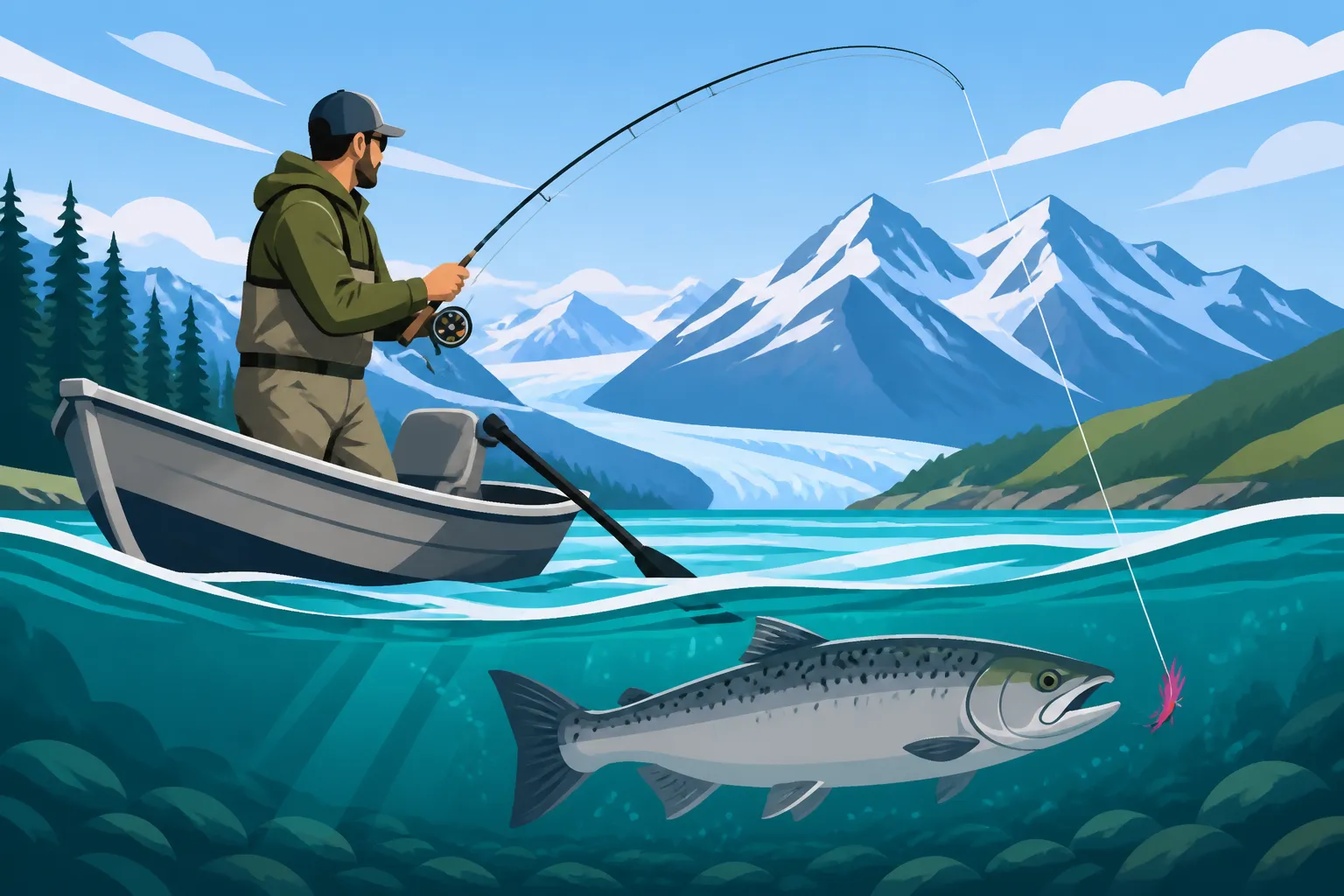
At its heart, drift fishing involves casting your line upstream and letting the current carry your offering down through a productive stretch of water. The key is to minimize resistance from your line, allowing your bait or lure to move at the same speed as the water around it. This means keeping a "tight line" without actually pulling your bait, maintaining just enough tension to feel subtle bites without impeding the natural drift. It's an active form of fishing, requiring constant attention to your line and the river's flow.
Unlike casting and retrieving, where you impart action to your lure, drift fishing lets the river do the work. Your job is to guide the drift, feel for strikes, and be ready to set the hook. This technique is incredibly effective for species like salmon, which often hold in specific seams, pools, and runs, waiting for food to be delivered to them by the current. They're not actively chasing down fast-moving prey; they're conserving energy, and a naturally drifting offering is often irresistible.
The Unique Alaskan Advantage for Drift Fishing
Alaska's rivers are wild, dynamic, and teeming with migratory salmon. These aren't your typical placid trout streams. We're talking about powerful currents, deep channels, and varying flows – conditions where drift fishing truly shines. Salmon entering freshwater often become less aggressive feeders as they prepare to spawn, making them more inclined to strike at something that looks easy and natural.
Consider the Kenai River or the Kasilof River, famous for their colossal King Salmon runs and abundant Sockeye. The powerful currents in these rivers would make constant casting and retrieving extremely tiring and often less effective. Drift fishing allows you to cover large stretches of prime habitat with minimal effort, precisely placing your offering in front of multiple fish without spooking them. Moreover, Alaskan rivers are often less clear than smaller streams, and the low visibility combined with strong currents means salmon rely heavily on sensing food drifting directly into their path. A perfectly weighted drift rig, tumbling along the bottom or through the water column, is precisely what they're looking for. It's why this technique is so effective here, allowing you to intercept salmon as they migrate upstream or hold in staging areas.
Essential Gear for Alaskan Salmon Drift Fishing
Having the right equipment is crucial for successful drift fishing, especially when you're battling the powerful currents and even more powerful fish that Alaska is famous for. Don't skimp on quality; a good setup will make all the difference when that monster King Salmon takes your bait.
Rods, Reels, and Line Choices
Your rod and reel are the foundation of your drift fishing setup. You need gear that can handle the stress of heavy weights, strong currents, and hard-fighting salmon.
- Rods: For most Alaskan salmon drift fishing, a medium-heavy to heavy action spinning or casting rod, typically between 8.5 to 10.5 feet in length, is ideal. The longer length helps with casting further, mending your line to control your drift, and absorbing the shock of a big fish run. Brands like Lamiglas, G. Loomis, and Fenwick make excellent rods suitable for this application. For instance, a 9-foot, 10-20 lb line rating, fast-action rod would be a versatile choice for Sockeye and Coho, while you might step up to a 10.5-foot, 15-30 lb rod for the mighty King Salmon. The sensitivity of a graphite rod allows you to feel those subtle bites even with heavy weights and fast currents.
- Reels: A sturdy, reliable reel with a smooth drag system is non-negotiable. For spinning gear, a 4000 to 6000 size reel is appropriate, while baitcasting reels should be a low-profile model capable of handling heavier lines and weights. Look for reels with a strong gear ratio for quick line retrieval, but more importantly, a consistently smooth drag to prevent break-offs when a salmon makes a powerful run. Shimano, Daiwa, and Penn are popular choices that hold up to the harsh Alaskan environment.
- Line: Your main line should be braided, typically 30 to 65 lb test, depending on the target species and river conditions. Braided line offers superior sensitivity, minimal stretch, and excellent casting distance. However, because it's opaque and can be visible to fish, you'll always use a monofilament or fluorocarbon leader. When you're fishing in really clear water or for particularly wary fish, a high-quality fluorocarbon leader purchased on Amazon can be a game-changer. For a general multi-species approach, 50 lb braided mainline with a 20-30 lb fluorocarbon leader is a good starting point. Remember to periodically check your mainline for fraying, especially after casting heavy weights or fishing in rocky areas.
Terminal Tackle: Weights, Leaders, and Hooks
This is where the rubber meets the road – or rather, where your bait meets the fish. The right terminal tackle is critical for getting your offering into the strike zone and staying there.
- Weights: The choice of weight is paramount in drift fishing. You need just enough weight to bounce along the bottom without snagging excessively, allowing your bait to drift naturally. Slinky weights (a shoestring filled with lead shot) are incredibly popular in Alaska because they are snag-resistant and conform to rocky river bottoms. Pencil weights and cannonball sinkers are also used, but slinkies are often preferred. The weight needed can vary wildly from 1/2 ounce in slower water to 2-3 ounces or more in swift currents. You want to feel a gentle tap-tap-tap as your weight ticks along the bottom. If you're not feeling the bottom, you need more weight. If you're constantly snagging, you might have too much.
- Leaders: Always use a fluorocarbon or monofilament leader. This nearly invisible connection is what the fish will see. The length of your leader will vary based on conditions, but a general rule of thumb is 18 to 36 inches. For Sockeye, a shorter leader (12-18 inches) is often used with a bare hook or small fly (often called "flossing"). For Kings and Coho, longer leaders (24-36 inches) with bait or larger lures are common. The leader test should be appropriate for the species – 15-25 lb for Sockeye and Coho, 25-40 lb for Kings. Learning how to tie a good leader knot, such as a double Uni-knot or an FG knot, is essential for a strong connection.
- Hooks: Sharp, strong hooks are critical. For baited setups, single barbless hooks are often mandated by Alaska Fishing Regulations Explained, especially for salmon. Popular choices include Gamakatsu or Owner octopus hooks in sizes 1/0 to 5/0. For "flossing" Sockeye, smaller, very sharp bare hooks (size 4 or 6) are common. Always check the current emergency orders and regulations for specific hook rules in the river you're fishing. Using barbless hooks makes for easier release and less damage to fish you aren't keeping.
Baits and Lures for Drifting Salmon
The specific bait or lure you use will depend heavily on the salmon species you're targeting and the time of year. Knowing your target will help you with your choice.
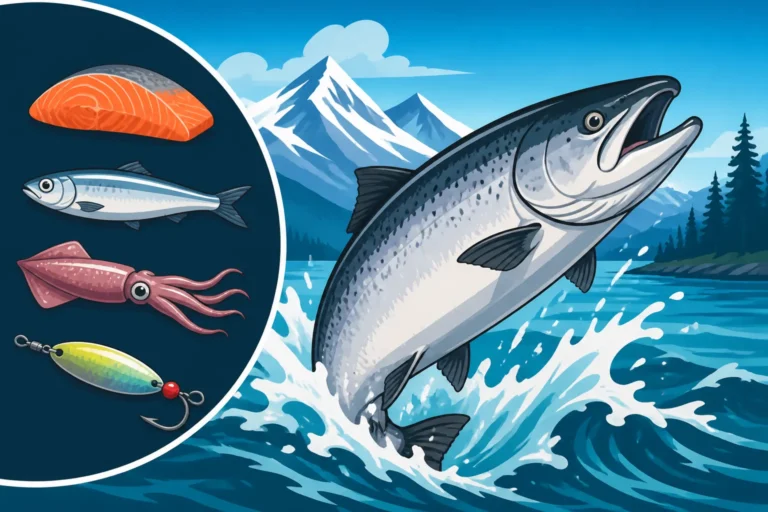
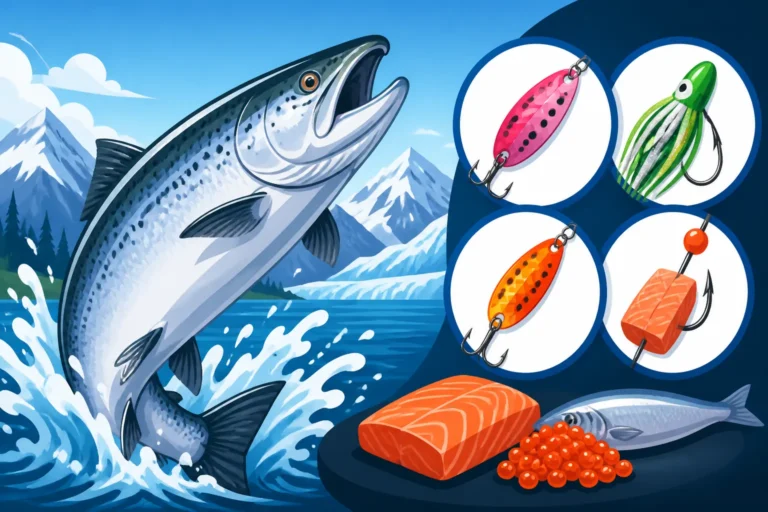
- Cured Roe (Eggs): This is arguably the most popular and effective bait for King and Coho salmon. Freshly cured salmon eggs are highly attractive due to their scent, color, and natural appeal. You can buy pre-cured eggs from local tackle shops or even cure your own using special brines and scents. Present them in a small roe bag (mesh netting) on your hook. This is often the Best Bait for Alaska Salmon, especially for Kings.
- Plastic Beads: Imitation salmon eggs, often called "beads," are incredibly effective for Rainbow Trout and Dolly Varden that follow salmon upriver to feast on their eggs. They can also entice salmon, especially Sockeye. These beads, often found in various sizes and colors on Amazon, are typically pegged a couple of inches above a bare hook.
- Spinners and Spoons: While often associated with casting and retrieving, smaller spinners like a #3 or #4 Mepps Aglia or Blue Fox Vibrax, or spoons like a #3 or #4 Kwikfish, can be effectively drifted in certain situations, especially for aggressive Coho or King Salmon. The key is to add enough weight above them so they tumble naturally without spinning excessively.
- Flesh: Small chunks of salmon flesh can be a powerful attractant, particularly for Coho Salmon. This is often rigged similarly to roe, on a single hook, allowed to drift naturally.
Mastering the Drift Fishing Technique for Salmon
Drift fishing might sound simple, but there's a nuanced art to it. Success lies in your ability to read the water, present your offering perfectly, and react quickly when a fish strikes.
Reading the River and Identifying Holding Water
Before you even make your first cast, you need to understand where the salmon are likely to be. They don't just hang out anywhere; they conserve energy in specific "holding water."
- Current Seams: Look for areas where faster water meets slower water. Salmon often sit just out of the main current in these seams, waiting for food to be swept by. A classic example is behind a large boulder or log jam.
- Soft Water Behind Obstructions: Any structure that breaks the current, be it a rock, a fallen tree, or a gravel bar, creates an eddy or calmer water where salmon can rest. Your goal is to drift your bait right past the edge of this calm water and into the fish's face.
- Deep Pools and Runs: Salmon will often hold in deeper sections of the river, especially after navigating rapids or waterfalls. These pools offer refuge and cooler water. Long, gradual runs with consistent depth are also prime drift fishing territory.
- Confluence of Rivers: Where two rivers meet, nutrients and food are abundant, and currents create ideal holding areas. Salmon often pause here before continuing their upstream journey.
- Color Changes: A distinct line in the water where clear water meets murky water often indicates a current seam or change in depth. Fish will often stack up along these lines. Learning to identify these spots is a crucial step in improving your chances of hooking a salmon, no matter if it's a King, Sockeye, or Coho.
The Perfect Cast and Presentation
This is where the magic happens. Your cast and how you manage your line during the drift are everything.
- Cast Upstream and Up-Current: Make your cast at a 45-degree angle upstream and slightly across the current. This gives your weight time to sink to the bottom before it reaches the prime holding water. The distance upstream depends on the current speed and depth, but typically 20-40 feet is a good starting point.
- Maintain a Slack-Free Drift (Line Mending): As your weight drifts downstream, your line will form a bow in the current, creating drag. This drag will pull your weight faster than the natural current, making your presentation unnatural and harder to feel bites. To combat this, you need to "mend" your line. As your line sweeps downstream, lift your rod tip and toss the slack upstream, effectively putting a small loop of line back against the current. This keeps your line straight and allows your weight to tumble at the natural speed of the river. It's a constant, rhythmic process that takes practice.
- Feel for the Bottom: You should feel your weight lightly ticking or bouncing along the bottom. This isn't a hard thump; it's a subtle sensation transmitted through your sensitive braided line and rod tip. If you don't feel it, you need more weight. If you're constantly snagging, you have too much weight or are drifting through an area with too many obstructions.
- The Bite: A salmon bite can be anything from a subtle "tick" that feels different from the bottom bouncing, to a sudden, violent yank that almost rips the rod out of your hand. Pay close attention to any interruption in your weight's rhythmic tap. If your line suddenly stops, or you feel a soft pull, set the hook immediately! Many bites are incredibly light, especially from Sockeye or Kings in less aggressive moods.
Setting the Hook and Fighting Your Fish
Once you feel that bite, don't hesitate.
- Setting the Hook: When you feel a strike, drop your rod tip slightly towards the fish, then sweep it sideways and firmly upstream or across the current in one fluid motion. Don't lift straight up, as this can often pull the hook out of the fish's mouth. The goal is to drive the hook home into the corner of the fish's jaw.
- Fighting the Fish: Alaskan salmon are powerful. Once hooked, they will run, jump, and headshake. Keep your rod tip up (around 90 degrees to the fish) to use the rod's flex to absorb shocks and maintain constant pressure. Let the drag do its job. Don't try to muscle a big King or Coho; you'll snap your line. Let it run, then slowly gain line back when it rests. Work the fish towards shallower, slower water if possible, making it easier to land.
- Landing Your Catch: For smaller salmon, a long-handled net is invaluable. For large Kings or tenacious Sockeye, a Boga Grip or tail-gaff can be used by experienced anglers, but always check local regulations regarding their use and best practices for release if you're not keeping the fish.
Troubleshooting and Advanced Tips for Drift Fishing Success
Drift fishing in Alaska is a dynamic experience. The river changes, the fish move, and your technique needs to adapt. Even seasoned pros face challenges, but knowing how to adjust can turn a slow day into a memorable one.
Adapting to Changing River Conditions
Alaska's rivers are living, breathing entities. What worked yesterday might not work today.
- Water Levels and Flow: Heavy rains or glacial melt can cause rivers to swell rapidly, increasing current speed and turbidity. In these conditions, you'll need heavier weights to reach the bottom, and bright, high-contrast baits or lures (like chartreuse or hot pink roe bags) might be more visible. Conversely, low, clear water demands lighter line, smaller baits, and a more stealthy approach. You might need to extend your leader length to create more separation between your weight and your bait.
- Water Clarity: Murky water, common after heavy rainfall, often calls for scent-enhanced baits or brighter colors. Fish rely more on lateral line senses and smell in low visibility. When the water is crystal clear, particularly common during dry spells, fluorocarbon leaders are crucial, and natural-colored baits or beads become more effective.
- Temperature Swings: Extreme temperature changes can affect fish behavior. Cold snaps might make fish sluggish and less likely to chase, requiring a slower, more deliberate drift. Warmer temperatures can make them more active. Pay attention to the weather patterns and how they might be influencing the river and its inhabitants.
Common Mistakes and How to Avoid Them
Even the best anglers make mistakes. Recognizing and correcting common drift fishing errors can drastically improve your catch rate.
- Too Much or Too Little Weight: This is perhaps the most common mistake. Too much weight means you're constantly snagging, ripping your bait off, and disturbing the riverbed. Too little weight means your bait is drifting above the fish, or worse, just tumbling uselessly in the current without reaching the strike zone. The ideal weight allows your rig to occasionally tap the bottom but primarily drift freely. Adjust your weight frequently based on the section of river you're fishing.
- Lack of Line Mending: Allowing too much slack or a big bow in your line leads to an unnatural drift and makes it incredibly difficult to feel bites. Consistent, subtle line mending is essential. Practice on a stretch of river where you know there are no fish, just to get the feel of keeping that line straight and sensitive.
- Not Setting the Hook Firmly: Salmon have tough mouths, especially Kings. A gentle tug isn't enough. You need a decisive, sweeping hookset. Many lost fish are due to a weak hookset that doesn't fully embed the hook.
- Ignoring River Structure: Blindly casting into open water is a recipe for frustration. Always target those current seams, eddies, and deeper pockets. If you're not getting bites, move to a different type of structure or a different spot altogether. Using an app with satellite imagery can help you identify promising structure before you even get to the river.
- Using Dull Hooks: Even the best gear is useless with a dull hook. Always check your hook point after every fish, after every snag, and periodically throughout the day. Carry a small hook sharpener and use it! A sharp hook penetrates easily, increasing your hookup ratio dramatically. You can often find excellent, durable hook sharpeners on Amazon.
Safety First: Bear Awareness and River Hazards
Alaska is wild, and fishing here comes with inherent risks. Safety should always be your top priority.
- Bear Awareness: You are in bear country. Both brown (grizzly) and black bears frequent salmon streams. Carry bear spray and know how to use it. Make noise while walking to avoid surprising a bear. Store food properly and clean fish away from your main fishing spot. Always be aware of your surroundings, especially during peak salmon runs. A good resource is the National Park Service's bear safety guidelines.
- Wading Hazards: Alaskan rivers can be powerful, cold, and unpredictable. Always wear a wading belt with your waders to prevent water from filling them if you fall. Use a wading staff for stability, especially in fast currents or unfamiliar areas. Never wade alone, and always let someone know where you're going and when you expect to return. Be mindful of slippery rocks and sudden drop-offs.
- Hypothermia: Even on a sunny day, the water in Alaska is often frigid. Dress in layers, wear waterproof outerwear, and have extra dry clothes available. If you do fall in, get to shore immediately, remove wet clothes, and warm up. Staying dry is key to enjoying your time on the water. Check out our guide on How to Dress for Alaska Fishing for more detailed advice.
- Know the Regulations: Alaska's fishing regulations are complex and can change rapidly via emergency orders, especially during critical salmon runs. Before heading out, check the Alaska Department of Fish and Game website or app for the latest regulations, bag limits, and emergency closures in your chosen area. Ignorance of the rules is not an excuse for a violation. Staying informed is crucial for a legal and enjoyable trip, and you can learn more by reading our Alaska Fishing Regulations Explained guide.
Drift fishing for salmon in Alaska is a rewarding endeavor that combines skill, patience, and a deep appreciation for the natural environment. With the right gear, technique, and safety precautions, you'll be well on your way to experiencing the thrill of hooking into one of Alaska's magnificent salmon. Don't forget to review Alaska Fishing Seasons: Month-by-Month Guide to time your trip perfectly, and to know How to Catch King Salmon in Alaska or How to Catch Sockeye Salmon in Alaska when you get there!
| Drift Fishing Setup Component | Key Considerations | Recommended for Salmon |
|---|---|---|
| Rod | Length, Action, Power | 8.5-10.5 ft, Medium-Heavy/Heavy, Fast Action |
| Reel | Drag System, Size, Durability | 4000-6000 Spinning or Heavy Baitcaster, Smooth Drag |
| Main Line | Sensitivity, Strength, Low Stretch | 30-65 lb Braided Line |
| Leader Material | Visibility, Abrasion Resistance | 15-40 lb Fluorocarbon or Monofilament |
| Weights | Snag Resistance, Bottom Contact | Slinky Weights (1/2 oz to 3+ oz) |
| Hooks | Sharpness, Strength, Size | Single Barbless 1/0 – 5/0 Octopus or specialized fly hooks |
| Bait/Lure | Scent, Color, Natural Presentation | Cured Roe, Plastic Beads, Small Spinners/Spoons |
Disclaimer
Fishing regulations and conditions in Alaska can change rapidly due to emergency orders and environmental factors. Always consult the official Alaska Department of Fish and Game (ADF&G) resources for the most current information before planning and embarking on any fishing trip. This guide provides general advice and should not be considered a substitute for official regulations or professional guidance. Stay safe and fish responsibly.