Alaska Dip Netting Regulations
Ah, dip netting in Alaska. It sounds simple enough, right? Just a net and some salmon. But anyone who's looked into it quickly realizes the regulations are a maze, full of specific rules about gear, locations, and who can even participate. It can be incredibly frustrating trying to sort through the Alaska Department of Fish and Game (ADF&G) booklets to figure out if you're even allowed to throw a net. This guide is here to clear up all that confusion and give you a comprehensive breakdown of Alaska's dip netting regulations, ensuring you're ready for a legal and successful personal use fishery.
Understanding Personal Use Dip Netting in Alaska
When we talk about dip netting in Alaska, we're almost exclusively discussing "personal use" fisheries. This isn't your typical sport fishing, where you're trying to catch fish for fun or trophy. Personal use fishing is about harvesting fish for consumption by yourself and your household. It's a deeply ingrained tradition for many Alaskans, providing a vital source of protein and a true taste of the wild. However, this distinction from sport fishing is critical, as it comes with its own unique set of rules, permits, and restrictions that often catch newcomers off guard.
The Purpose of Personal Use Fisheries
The very essence of personal use fisheries in Alaska is to allow residents to harvest fish, particularly salmon, for food. It’s a way to fill freezers for the winter, share with family and friends, and connect with the state’s abundant natural resources. Unlike commercial fishing, you can't sell your catch, and unlike sport fishing, the focus isn't on the recreational aspect but on the harvest itself. These fisheries are carefully managed by the ADF&G to ensure sustainable populations for future generations, which means the rules are strict and constantly monitored, sometimes even changing mid-season through emergency orders if fish returns are low. The goal is to balance the opportunity for Alaskans to feed their families with the conservation needs of the salmon runs.
Distinguishing Personal Use from Sport or Subsistence
It’s easy to get tangled up in the various fishing categories in Alaska. There's sport fishing, which requires a standard Alaska Fishing License: Complete Guide and is primarily for recreation. Then there's subsistence fishing, which has even more stringent residency requirements and is reserved for those who have traditionally relied on natural resources for their livelihood, often in rural areas. Personal use falls somewhere in between. It's often confined to specific areas and times, regulated by specific permits, and open primarily to Alaska residents. The key takeaway is that you cannot simply show up with a dip net and start fishing if you’re not an eligible resident with the correct permits for a designated personal use area. Understanding these differences is your first step to staying legal and enjoying the bounty Alaska offers.
Who Qualifies for Alaska Dip Netting?
This is often where the rubber meets the road for many aspiring dip netters. The eligibility requirements for personal use dip netting in Alaska are very specific, and they primarily favor residents. It's not just about having an Alaska driver's license; it delves deeper into how long you've lived in the state and what kind of permits you’ve acquired. Trying to navigate these requirements without proper understanding can lead to wasted trips or, worse, fines and confiscation of your catch.
Residency Requirements and Permits
To participate in Alaska's personal use dip net fisheries, you must be an Alaska resident. This isn't a vague term; the ADF&G has a clear definition. Generally, you need to have resided in Alaska for a continuous 12 months immediately preceding your application for a resident license, and you must not claim residency anywhere else. Simply visiting for a summer doesn't qualify you. Once you meet this crucial residency criterion, you'll need to obtain the appropriate personal use permit for the specific fishery you plan to participate in. For example, the Chitina personal use fishery requires a Copper River Personal Use Salmon Fishery Permit, which is separate from your general Alaska Fishing License Cost and Types and often has an associated fee. These permits are crucial, and without one, your dip netting efforts are illegal. You can learn more about securing these by looking at guides like the Alaska Resident Fishing License: Cost and How to Buy.
Age and Household Rules
Even within a resident household, there are rules about who needs a permit and whose catch counts towards the household limit. Generally, only one permit is issued per household. All members of the household, including dependents under 18, can participate under that single permit, but their combined catch contributes to the permit holder's overall bag and possession limits. This means if you're a family of four, all fishing under one permit, you can't each take a full daily limit; you collectively share the household limit. For children, while they might not need their own personal use permit, they often need a sport fishing license if they are 16 or older and actively fishing, even if they’re helping with the dip net. It’s always best to verify the exact age requirements for the specific fishery you intend to participate in, as these details can be found within the Alaska Fishing License Age Requirements.
Harvest Record Card Importance
Every personal use dip netter, regardless of whether they hold the permit or are fishing under a household permit, needs to understand the Alaska Harvest Record Card. This card is absolutely non-negotiable for tracking your catch. For personal use fisheries like Chitina or the Kenai, salmon caught must be immediately recorded on the personal use permit itself, or on a separate harvest record if specified, before leaving the fishing site. This includes species, date, and location. Failure to record your catch immediately is one of the most common violations and can result in severe penalties. It's designed to give ADF&G accurate data on harvest levels, which is vital for managing sustainable fisheries. Keeping a pen handy and understanding How to Fill Out an Alaska Harvest Record Card is just as important as knowing how to use your net.
Navigating the Major Dip Net Fisheries
Alaska boasts a few iconic personal use dip net fisheries, each with its own unique charm, challenges, and, of course, a specific set of regulations. These areas become bustling hubs of activity during the summer salmon runs, with thousands of residents eager to secure their winter stores. Understanding the nuances of each location is key to a successful trip, as rules can vary significantly from one river system to another.
Chitina Personal Use Fishery
The Chitina fishery on the Copper River is perhaps the most famous and, for many, the quintessential Alaska dip netting experience. It's located in the Southcentral region, a significant drive from Anchorage, and offers a chance at abundant sockeye salmon. The fishery is highly regulated, with specific opening and closing periods often announced just days in advance via Alaska Fishing Emergency Orders Explained. Access involves driving down a rugged, private road to the Copper River, and many anglers use ATVs or specially equipped vehicles. The landscape is wild, and the fishing can be challenging but incredibly rewarding.
You must possess a valid resident Alaska sport fishing license and a Copper River Personal Use Salmon Fishery Permit to participate. The fishing takes place from elevated platforms or rocky banks, where powerful currents funnel salmon close enough to the shore for dip nets. Due to the rapid currents and often slick, uneven terrain, safety is paramount. Make sure you have sturdy waders, a good life vest, and plenty of assistance if you're new to the area. The experience is often physically demanding, but the reward of hundreds of pounds of pristine sockeye makes it worthwhile for many Alaskans.
Kenai River Dip Netting Regulations
The Kenai River, iconic for its massive salmon runs, hosts another incredibly popular personal use dip net fishery, primarily targeting sockeye salmon. This fishery is much more accessible than Chitina, being right on the road system and popular with residents from Anchorage and the Kenai Peninsula. The fishing itself occurs in two main areas: the Kenai River mouth (often called "the flats") and the shorelines upstream. Regulations for this fishery, including specific boundaries and methods, are laid out in detail, and it’s important to review the Alaska Kenai Dip Netting Rules beforehand.
Unlike Chitina, where you're often fishing from platforms, Kenai dip netting involves wading into the river or fishing from shore. The "combat fishing" environment can be intense, with anglers standing shoulder-to-shoulder, patiently waiting for schools of sockeye to push upstream. The season is typically in July, and like all personal use fisheries, it’s subject to emergency orders that can open or close sections or modify bag limits based on fish escapement goals. A personal use permit, separate from your sport fishing license, is also required for the Kenai.
Kasilof River Dip Netting
Just south of the Kenai River, the Kasilof River offers another personal use dip net opportunity, also primarily for sockeye salmon. This fishery is often a bit less crowded than the Kenai, providing a slightly more relaxed experience while still offering excellent harvesting potential. The Kasilof personal use fishery is typically open in late June and early July, overlapping somewhat with the Kenai fishery, but with its own distinct regulations and permit requirements.
Similar to the Kenai, Kasilof dip netting involves wading into the river or fishing from the banks near the mouth. The fish runs tend to be earlier on the Kasilof, so many residents target this river first before moving to the Kenai. Always check the current ADF&G regulations for the specific season, as dates and limits can change annually based on forecast returns. You'll need a Kasilof Personal Use Salmon Fishery Permit, in addition to your Alaska resident sport fishing license. Pay close attention to fishing boundaries and allowed methods, as these are strictly enforced to manage the resource effectively.
Essential Gear and Legal Methods
Dip netting isn't just about having a net; it's about having the right net and using it in a legal manner. Alaska's regulations are precise about gear specifications and fishing techniques, designed to ensure fair chase, minimize harm to non-target species, and prevent overharvest. Showing up with the wrong equipment or employing illegal methods will quickly land you in trouble, making your trip less about harvesting fish and more about dealing with enforcement officers.
Dip Net Specifications
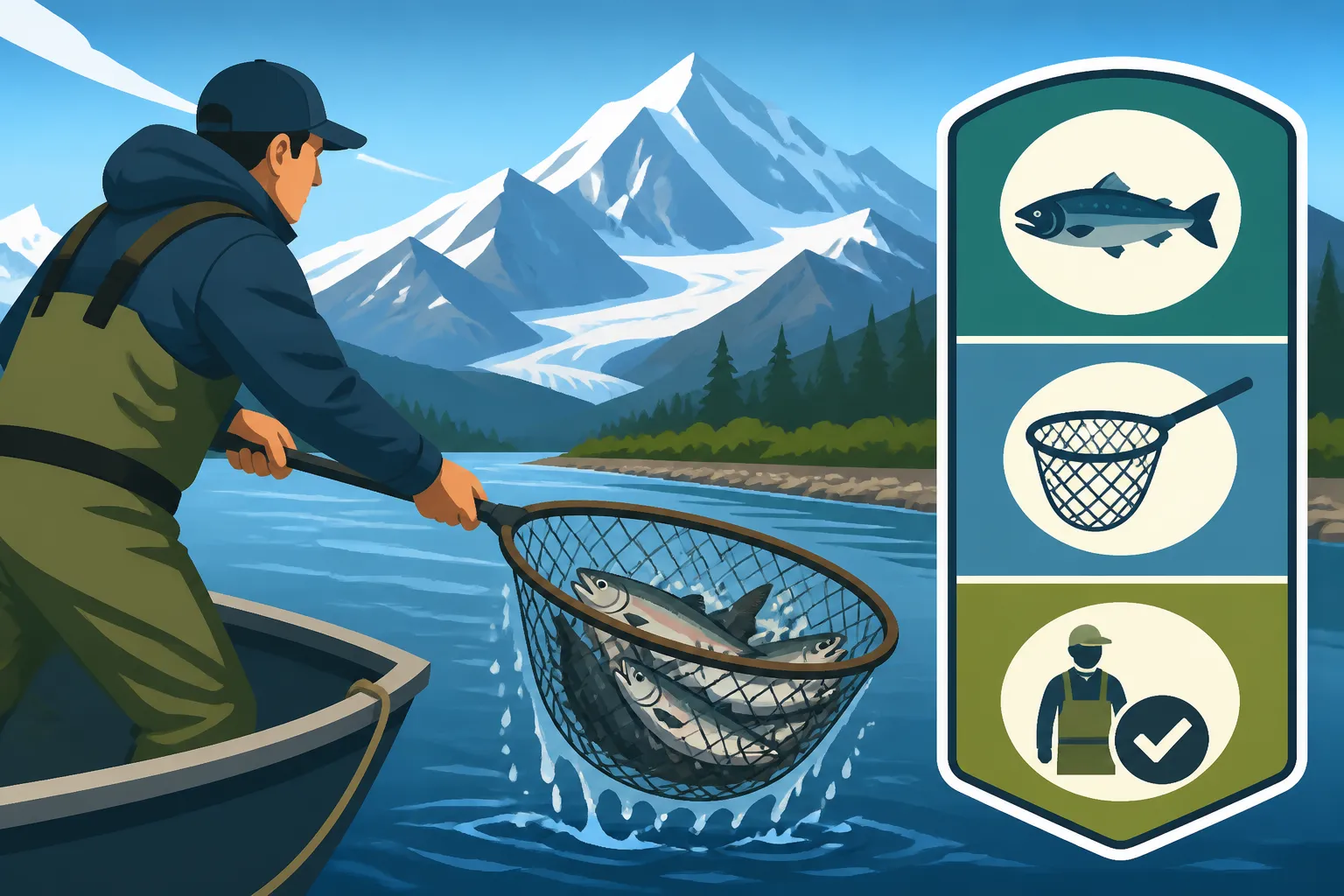
The term "dip net" itself has a specific definition in the eyes of ADF&G. For personal use fisheries, a dip net typically consists of a bag-shaped net that is suspended from a circular, square, or other shaped frame with a long handle. Critically, the mesh size and frame diameter are usually regulated. For example, in the Kenai River personal use fishery, the legal definition specifies "a bag shaped net supported by a rigid frame having a length of not more than five feet and a width of not more than five feet." The mesh size also has minimum and maximum dimensions, usually designed to catch salmon while allowing smaller fish to pass through.
Before heading out, you'll want to ensure your dip net meets the legal specifications, which means checking the mesh size and hoop diameter. Many anglers find it convenient to research and even purchase appropriate nets and accessories like heavy-duty gloves or extra stringers on sites like Amazon, making sure they arrive well before the season starts. Investing in a sturdy, regulation-compliant net is crucial. Additionally, you'll need reliable personal flotation devices (PFDs) for safety, especially in fast-moving rivers like the Kenai or Copper.
Prohibited Fishing Methods
While dip netting itself is a legal method in these designated personal use fisheries, there are many actions that are strictly prohibited. The most common violation is snagging. Snagging, or "flossing," is intentionally hooking a fish anywhere other than in the mouth. While it's sometimes tolerated in certain terminal sport fisheries, it is absolutely forbidden in personal use dip netting. The purpose of a dip net is to scoop fish, not to foul-hook them. If a fish is unintentionally snagged by your net, you should release it immediately and unharmed, if possible, rather than keeping it.
Other prohibited methods include using bait in some areas (which is generally not applicable to dip netting but good to be aware of for overall Alaska Fishing Regulations Explained), using more than one dip net per person, or using motorized devices to propel or retrieve the net. The focus is on active, manual deployment of the net. Always consult the specific regulations for your chosen fishery, as slight variations exist. The state wants to maintain a fair and ethical harvest, so respecting these rules is paramount.
Mastering Bag Limits and Recording Your Catch
One of the most complex, and often confusing, aspects of Alaska's personal use dip netting regulations involves the bag and possession limits, along with the meticulous recording requirements. These limits aren't arbitrary; they're set based on scientific forecasts of salmon returns and conservation goals, ensuring that enough fish escape to spawn and sustain future runs. Misunderstanding or ignoring these limits can lead to severe penalties, including fines and the loss of your harvested fish.
Daily and Annual Limits by Fishery
Each personal use dip net fishery has its own specific daily and annual limits, and these can change annually, or even in-season through emergency orders. For instance, the general rule for the Kenai River personal use dip net fishery is often 25 salmon for the permit holder and an additional 10 salmon for each household member. The annual limit often mirrors the daily limit, meaning once you've hit your household's annual limit, you're done for the season, even if the fishery remains open.
Compare this to the Chitina fishery, where limits might be expressed as a total number of salmon per permit holder, regardless of household size, and can be quite generous due to the massive Copper River sockeye runs. However, for both fisheries, these limits are combined for all species of salmon caught. So, if the limit is 25 salmon, you can't take 25 sockeye and then another 25 coho; it's 25 total salmon of any species. It's imperative to check the most current ADF&G regulations for your specific fishery, found in the Alaska Fishing Limits and Bag Limits Explained guides, before every outing.
The Critical Role of the Harvest Record Card
We've touched on this before, but it bears repeating: the harvest record card (or designated section on your permit) is not just a suggestion, it's a legal requirement. Every salmon harvested in a personal use dip net fishery must be immediately recorded. "Immediately" means as soon as the fish is retained and before it leaves the fishing site. This includes filling in the date, species (if differentiated), and location as specified on the card.
Imagine this scenario: you've just landed a beautiful sockeye on the Kenai. You're excited, maybe a little cold. Your immediate instinct might be to string it up and get back to fishing. But the legal requirement is to stop, pull out your permit and pen, and record that fish. Law enforcement officers frequently patrol these areas, and they will check. If you have unrecorded fish in your cooler, you are in violation, even if you are under the legal limit. This system provides critical data for fisheries managers and ensures accountability for individual harvesters. Neglecting this step is a common reason for citations. For detailed instructions, consult the guide on How to Fill Out an Alaska Harvest Record Card.
Possession Limits and Transportation
Beyond daily and annual harvest limits, there are also possession limits to consider, especially if you're traveling. Generally, your possession limit cannot exceed your annual household limit. This means you can't go on multiple trips and keep accumulating fish beyond your annual limit, even if you process and freeze them. For those who travel long distances to dip net, understanding Alaska Fish Transport and Shipping Rules is crucial. When transporting your catch, particularly if you’re driving back home, the fish should be stored in a way that allows them to be readily counted and identified. Often, keeping the heads or a portion of the skin intact can aid in species identification, especially if you have a mix of salmon types. Proper labeling with your name, permit number, and the date of harvest is also a good practice, even if not explicitly required by law, to avoid any confusion during potential inspections.
Common Misconceptions and Violations in Dip Netting
Despite the readily available information, many dip netters, especially those new to the practice or visiting specific fisheries for the first time, often fall prey to common misconceptions or inadvertently commit violations. Alaska's fishing regulations, particularly for personal use, are intricate and strictly enforced, not to make things difficult, but to ensure the sustainability of these precious resources. Understanding these pitfalls ahead of time can save you a lot of grief.
Misinterpreting Emergency Orders
One of the biggest areas of confusion stems from emergency orders. Alaska’s salmon runs are dynamic; their strength can vary widely year to year, and even week to week within a season. The ADF&G monitors these runs closely and issues emergency orders to adjust fishing seasons, bag limits, or even close fisheries entirely to meet escapement goals (the number of fish needed to reach spawning grounds). The misconception is often that the regulations published in the annual booklet are static. They are not. You must check the ADF&G website or hotline regularly for the specific fishery you're targeting, right up until the day you fish.
Many anglers arrive at the Kenai or Chitina assuming the published dates are final, only to find the fishery is closed or the limits have been drastically reduced. This can be incredibly frustrating after a long drive and significant preparation, but ignorance of an emergency order is not a valid excuse. Always consult official ADF&G resources for the latest information. This is why resources like Where to Find Alaska Emergency Order Announcements are so important.
The Myth of "Free Fishing" for Kids
Another common misunderstanding, particularly for families, is the belief that children don't need licenses or count towards limits. While minors under 16 generally don't need a sport fishing license to fish in Alaska, the rules for personal use dip netting are different. As discussed, personal use permits are typically issued per household, and all fish caught by anyone under that permit, including children, count towards the household's total bag and annual limits.
Furthermore, if a child who is 16 years or older is actively participating in the personal use fishery, even just assisting, they may need their own sport fishing license. The intent behind this is to ensure all participants are accountable and contribute to the permit system. It’s not about preventing kids from participating, but about ensuring responsible harvesting by all. Always confirm the specific rules regarding age and licensing for your chosen fishery to avoid any issues. For more details on this, you can look into the Alaska Youth Fishing License Rules.
Common Violations and Their Consequences
Beyond failing to check emergency orders or misunderstanding age rules, several other violations frequently trip up dip netters. These include:
- Failure to Record: As emphasized, not recording your catch immediately on your permit/harvest card is a serious offense.
- Exceeding Bag Limits: Intentionally or unintentionally taking more fish than allowed, whether daily or annually.
- Illegal Gear: Using a dip net that doesn't meet the precise size or mesh specifications.
- Fishing Out of Season/Area: Fishing before a fishery opens, after it closes, or outside designated personal use boundaries.
- Snagging/Flossing: Intentionally foul-hooking fish instead of scooping them with the net.
- Unlicensed Fishing: Fishing without a valid personal use permit or a sport fishing license (if required).
The consequences for these violations can be significant. They typically involve hefty fines, often hundreds or thousands of dollars, forfeiture of your catch (meaning all your hard-earned salmon are confiscated), and potential loss of future fishing privileges. In severe cases, particularly for repeat offenders or egregious violations, criminal charges could even be filed. Enforcement officers from the Alaska Wildlife Troopers are diligent, especially in popular fisheries like the Kenai and Chitina. They are not there to ruin your day, but to protect the resource, so understanding and following the rules is in everyone's best interest.
Here's a quick comparison of regulations for the two most popular dip netting fisheries:
| Feature | Chitina Personal Use Fishery | Kenai River Personal Use Fishery | Kasilof River Personal Use Fishery |
|---|---|---|---|
| Primary Target Species | Sockeye Salmon | Sockeye Salmon (some king salmon in sport fishery) | Sockeye Salmon |
| Eligibility | Alaska Resident, Valid Alaska Sport Fishing License | Alaska Resident, Valid Alaska Sport Fishing License | Alaska Resident, Valid Alaska Sport Fishing License |
| Permit Required | Copper River Personal Use Salmon Fishery Permit (ADF&G) | Kenai River Personal Use Salmon Fishery Permit (ADF&G) | Kasilof River Personal Use Salmon Fishery Permit (ADF&G) |
| Typical Season | June – Mid-September (highly variable by EO) | July (highly variable by EO) | Late June – Early July (highly variable by EO) |
| Access | Remote, private toll road to Copper River banks/platforms | Roadside, wading in river mouth and upstream banks | Roadside, wading in river mouth and upstream banks |
| Gear/Method | Dip Net (specific dimensions apply) from platforms/banks | Dip Net (specific dimensions apply) while wading/from bank | Dip Net (specific dimensions apply) while wading/from bank |
| Recording Catch | Mandatory immediate recording on permit | Mandatory immediate recording on permit | Mandatory immediate recording on permit |
| Bag Limits | Variable by EO (e.g., 25-60 salmon per permit holder) | Variable by EO (e.g., 25 for permit holder + 10 per household member) | Variable by EO (e.g., 25 for permit holder + 10 per household member) |
| Annual Limit | Usually equals daily limit per permit | Usually equals daily limit per household | Usually equals daily limit per household |
Responsible Practices and Safety Tips
Dip netting in Alaska, while incredibly rewarding, takes place in wild and often challenging environments. Beyond adhering to the letter of the law, it's crucial to practice responsible harvesting and prioritize safety. The rivers are powerful, the weather can be unpredictable, and you're in bear country. A successful and enjoyable dip netting trip is as much about being prepared and aware as it is about catching fish.
Bear Awareness
Wherever there are abundant salmon, there are bears. Both black and brown bears frequent the river systems of Alaska, especially during salmon runs. Encounters are possible, and knowing how to react is vital. Always carry bear spray and know how to use it. Store food and fish properly, away from your sleeping area if camping, and use bear-resistant containers. Keep your fishing site clean and free of fish carcasses and entraps. Make noise while walking to avoid surprising a bear. If you encounter a bear, remain calm, make yourself look as large as possible, speak in a firm voice, and back away slowly. Never run. Being bear aware is not just a suggestion; it's a fundamental part of recreating responsibly in Alaska's wilderness.
River Safety and Proper Attire
Alaska's rivers are cold, fast, and unforgiving. Hypothermia is a real danger, even in summer, if you fall in or get soaked. Always wear appropriate layering, including waterproof outer shells. Quality chest waders are essential for wading, and they should fit well. Consider a wading belt to prevent your waders from filling with water should you fall. Always wear a personal flotation device (PFD), especially when fishing in strong currents or from platforms above the river. The Kenai, Kasilof, and Copper Rivers are all powerful waterways, and accidents can happen quickly.
Beyond personal safety gear, consider bringing a first-aid kit, communication devices (satellite phone or inReach in remote areas), and going with a buddy. Many people find it helpful to purchase specialized gear on Amazon designed for extreme weather, from durable rain gear to insulated gloves, ensuring they are prepared for the unpredictable Alaskan elements. Good planning and respect for the powerful forces of nature will ensure you return home safely with your catch.
Preserving Your Harvest
Finally, how you handle your fish after it's caught makes a huge difference in its quality. Salmon spoil quickly in warm weather, so getting them cleaned and cooled immediately is paramount. Bring plenty of coolers filled with ice. As soon as you land a fish, bleed it thoroughly, then gut it. Some dip netters even bring portable filleting stations to process fish quickly on-site. Once cleaned, get the fish on ice as soon as possible. Don’t let them sit in the sun.
For longer trips or if you’re traveling a significant distance home, having a plan for processing and freezing your fish is essential. Many communities near dip netting sites, such as Soldotna or Cooper Landing for the Kenai, offer fish processing and vacuum sealing services. If you plan to ship your fish home, these services will also handle packaging and logistics. Proper care ensures that the hard work of dip netting results in delicious, high-quality salmon for your table.
Disclaimer
The information provided in this guide is intended for general informational purposes only and is subject to change. Alaska fishing regulations, including those for personal use dip netting, are complex and frequently updated by the Alaska Department of Fish and Game (ADF&G) through emergency orders. It is the responsibility of each individual angler to consult the most current official ADF&G regulations and emergency orders for the specific fishery they intend to participate in before engaging in any fishing activity. Failure to do so may result in fines or penalties.