Alaska Fishing Possession Limits Explained
One of the most common headaches for anglers dreaming of an Alaskan fishing adventure, or even long-time residents, is trying to decipher the often complex and ever-changing fishing regulations. It’s not just about what you can catch; it’s about how much you can actually keep and possess. This guide is here to untangle the often confusing world of Alaska fishing possession limits, helping you understand the rules so you can enjoy your time on the water without worry.
Understanding the Difference: Daily vs. Possession Limits
Before we dive deep into the specifics, it's absolutely crucial to grasp the fundamental difference between a "daily bag limit" and a "possession limit." Many folks, especially those new to fishing in Alaska, mix these up, and that confusion can lead to unintentional violations. Think of them as two distinct but related buckets that define how much fish you can legally have.
Daily Bag Limits: What You Can Keep in a Day
The daily bag limit refers to the maximum number of a particular species of fish you can legally harvest and retain in a single calendar day, from midnight to midnight. This is what you catch and keep from sunup to sundown, or whatever hours you're out on the water. For example, if the daily bag limit for sockeye salmon on the Kenai River is three fish, you can only keep three sockeye in that 24-hour period. Once you've kept your three, you're done for the day for that species, even if you decide to go back out in the evening.
This limit is designed to manage harvest pressure on fisheries on a day-to-day basis, ensuring that enough fish escape to spawn and sustain future populations. It’s straightforward in concept, but remember, once you keep a fish, it counts towards that daily limit, even if you later decide you want a different one. Responsible anglers make their decisions wisely. You can learn more about specific daily allowances in our comprehensive guide on Alaska Fishing Limits and Bag Limits Explained.
Possession Limits: What You Can Have on Hand
Now, the possession limit is where things often get a bit more nuanced. This limit dictates the maximum number of fish (or fish parts) you can have in your physical possession at any given time, regardless of when or where they were caught. This includes fish kept on your person, in your cooler, in your vehicle, at your lodge, or even at home in your freezer, if you are still actively fishing or on your trip. The intent here is to prevent anglers from stockpiling fish over multiple days beyond a sustainable amount.
So, while you might catch three sockeye today, and another three sockeye tomorrow, your total accumulation might be restricted by the possession limit. This becomes especially important for visitors who might be fishing for several days or even weeks. It's not uncommon for possession limits to be twice the daily bag limit, but this isn't always the case, and there are many exceptions we'll explore. This total count must be maintained until the fish are processed for consumption, preserved, or shipped out of the state by a specific set of rules.
Why the Distinction Matters for Anglers
Understanding this distinction is not just academic; it's vital for avoiding serious legal trouble. Imagine you’re on a multi-day fishing trip out of Homer. On Monday, you catch two beautiful halibut, right within the daily limit. On Tuesday, you head out again and catch another two. If the possession limit for halibut is only two, you would now be in violation, even though you were within the daily limit each day. This is a common pitfall.
The Alaska Department of Fish and Game (ADF&G) regulations are written to cover both scenarios, ensuring that both daily harvest rates and cumulative accumulation are managed sustainably. For guided trips, your charter captain or guide will typically handle the daily limits and advise on possession, but the ultimate responsibility always falls on the angler. If you're going it alone, especially for species like salmon or halibut, knowing these rules backward and forward is your first line of defense against citations.
General Statewide Possession Limits
While specific limits can vary wildly by species, region, and even time of year, there's a foundational rule that often applies to possession limits across Alaska, though it comes with plenty of important caveats. Knowing this general rule can be a good starting point before you dig into the fine print for your specific fishing plans.
The "Double Daily Bag" Rule
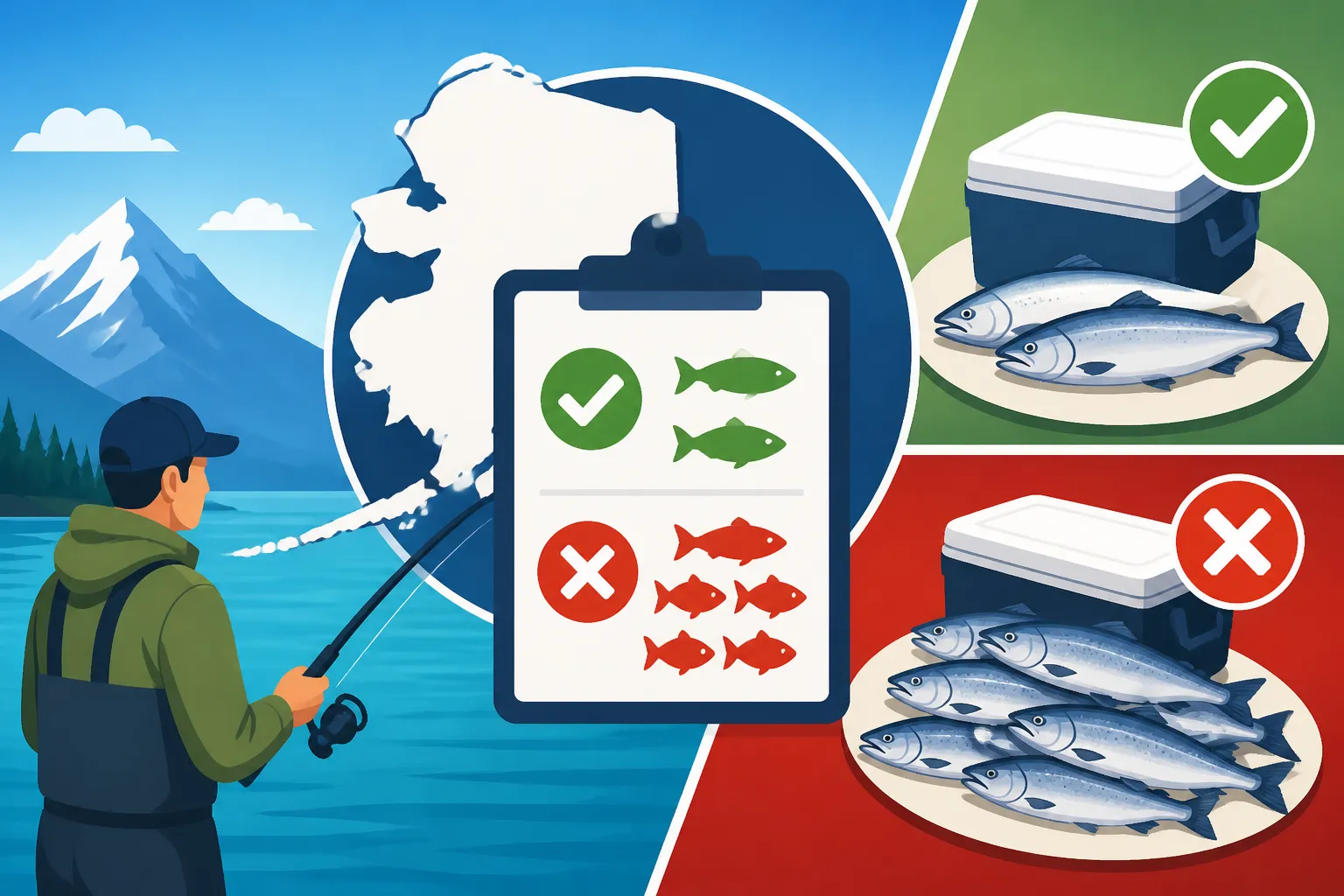
For many species and in many areas, the general statewide possession limit is set at "twice the daily bag limit." This means if you can keep two fish of a certain species in a day, you can possess a total of four of those fish at any given time during your trip, or until they are properly processed and no longer considered part of your "actively possessed" catch. This is a fairly common structure that allows anglers to fish for a couple of days and accumulate a reasonable amount of fish without exceeding sustainable harvest levels.
Let's use an example: if you're fishing for rainbow trout in a freshwater system where the daily limit is two fish, your possession limit would generally be four rainbow trout. This allows you to catch two on Monday, and then another two on Tuesday, and keep them all until you leave the area or consume them. However, it's imperative to always verify this specific rule for your chosen species and location in the current year's Alaska Fishing Regulations Explained booklet, as this "double daily" rule is a general guideline and not universally applied.
Exceptions to the Standard Rule
Here's where things get tricky, and why relying solely on the "double daily bag" rule can get you into hot water. Alaska's fisheries are incredibly diverse and dynamic, and regulations are frequently adjusted to protect specific runs or populations. There are numerous exceptions where the possession limit is not simply double the daily limit.
For instance, certain high-value species like King Salmon often have significantly more restrictive possession limits, sometimes even equaling the daily limit or having special annual limits, particularly for non-residents. Similarly, species like halibut in certain management areas might have a daily limit of one fish, and a possession limit that also restricts it to one, especially for guided anglers. Then there are regional considerations; a river system experiencing a struggling run might have a daily limit of one sockeye, but the possession limit could still be a strict one or even zero if an Alaska Fishing Emergency Orders Explained is in effect. These exceptions are critical to look up before you cast a line.
How Long Does the Possession Limit Apply?
This is another area that causes confusion. When does a fish stop counting towards your possession limit? Generally, fish count towards your possession limit until they are consumed, preserved (e.g., canned, smoked), or shipped out of Alaska. For many anglers, especially tourists, this means that all the fish they have caught and retained during their trip are subject to the possession limit until they are processed by a fish processor and prepared for shipping home.
If you’re staying at a lodge for a week, all the fish you catch over those days, stored in the lodge's freezer, are typically part of your possession limit. However, once those fish are commercially processed, frozen, and delivered to an air cargo facility for shipment out of state, they are generally no longer considered "in your possession" for the purposes of the limit, though there are still limits on how much fish you can bring home from Alaska. But if you’re driving home with your coolers, every fish in those coolers counts until you cross the state line or reach your permanent residence where they will be permanently stored. This crucial detail is often overlooked, leading to unexpected issues at checkpoints or during random checks.
Species-Specific Possession Limits
Alaska's waters are teeming with a dizzying array of fish species, and each one, or sometimes even subgroups within a species, can have its own distinct set of regulations regarding possession limits. This granularity is essential for targeted conservation efforts, ensuring that popular fisheries remain sustainable for generations.
Salmon Species: Kings, Sockeye, Coho, Pink, Chum
When it comes to salmon, regulations can be incredibly complex. Let's break down the general trends for the five Pacific salmon species:
- King Salmon (Chinook): These magnificent fish are often the most heavily regulated due to declining runs in many areas. For non-residents, there's typically a very low annual limit, often one to five Kings, and possession limits are frequently tied directly to this annual limit or are exceptionally restrictive, sometimes only one or two fish at a time, regardless of daily limits. For example, the Alaska King Salmon Fishing Regulations and Limits can change in-season due to emergency orders. It's not uncommon to find a daily limit of one King, with a possession limit of one King, even if you’re on a multi-day trip. Always check the region you're fishing in, especially on the Kenai River or Kasilof, which are frequently subject to special rules.
- Sockeye Salmon (Red): Sockeye are abundant in many rivers, particularly the Kenai and Russian Rivers. Daily limits can be generous during strong runs, often three to six fish. The possession limit is usually twice the daily limit, meaning you could accumulate six to twelve Sockeye over a couple of days. However, certain high-pressure areas, or areas with weaker runs, might have tighter possession limits, sometimes matching the daily limit, especially for Alaska Sockeye Salmon Fishing Regulations and Limits. Pay close attention to specifics like "Alaska Sockeye Daily Limit by River."
- Coho Salmon (Silver): Coho runs typically occur later in the summer and into the fall. Daily limits are often similar to Sockeye, usually three per day. Most areas will follow the "twice the daily bag" rule for Coho, allowing six fish in possession. However, like all salmon, local conditions and specific stream regulations can override this general rule, so always verify the Alaska Coho Salmon Bag Limits for your destination.
- Pink Salmon (Humpy): These smaller, prolific salmon often have very generous daily and possession limits, sometimes as high as six per day and twelve in possession, or even no limit in certain areas during peak years. They run every other year in abundance (even years in Southcentral, odd years in Southeast). Due to their sheer numbers, they are rarely subject to the same strict possession limits as Kings or even Sockeye.
- Chum Salmon (Dog): Chum salmon are also quite numerous and, like Pinks, often have more liberal daily and possession limits, typically following the "twice the daily bag" rule. They are a strong fighting fish and an important subsistence species.
Halibut and Other Marine Species
Saltwater fishing in Alaska presents another set of unique challenges regarding possession limits, especially for popular species like halibut.
- Halibut: This is arguably where possession limits cause the most confusion, particularly for those on guided charters. In many areas, especially popular destinations like Homer, Seward, and Valdez, the daily limit for halibut can be one or two fish, with size restrictions (reverse slot limits, specific length limits, or no size limit on the first fish retained). The possession limit is often identical to the daily limit for guided anglers (e.g., if you keep one halibut on a charter, you can only possess one from that specific trip, even if you fish multiple days with a guide). For unguided anglers, the possession limit might be twice the daily limit. This is a critical distinction that often catches people off guard. For example, the Alaska Halibut Daily Limit for Charter Anglers is different from unguided limits. Always verify the rules specific to your charter type and management area.
- Lingcod: These aggressive bottom dwellers have daily and possession limits that often restrict anglers to one or two fish, with a minimum size limit. The possession limit is typically twice the daily limit.
- Rockfish: Alaska has numerous species of rockfish (e.g., yelloweye, black rockfish). Regulations vary by species and region. Yelloweye rockfish, being long-lived and slow to reproduce, often have very restrictive daily and possession limits (sometimes one per day and one in possession, or a very low annual limit). Other rockfish might have higher limits. Remember, deepwater release devices are often required for rockfish caught from deep water.
Freshwater Species: Trout, Char, Grayling
Beyond salmon, Alaska's freshwater systems offer incredible fishing for resident species, each with its own set of possession limits.
- Rainbow Trout: These beautiful trout are prized by anglers. Daily limits are often one to two fish, with specific slot limits (e.g., only fish between 16-20 inches can be kept). The possession limit is typically twice the daily limit. However, many trophy trout waters, like sections of the Kenai River, are strictly catch-and-release only for rainbow trout, meaning the possession limit is zero. Always check local regulations like Alaska Rainbow Trout Regulations.
- Dolly Varden/Arctic Char: These species are often grouped together in regulations. Daily limits usually range from two to five fish, and possession limits follow the "twice the daily bag" rule. These are generally more liberal than trout limits.
- Arctic Grayling: Known for their striking dorsal fins, Arctic Grayling usually have daily limits of five fish, with possession limits of ten, though some smaller, more remote waters might have tighter restrictions to protect delicate populations.
Understanding these nuances is key. Imagine trying to outfit yourself with the right measuring tape or a scale; you might look on Amazon for a reliable, waterproof tool that can handle fish measurement to ensure you comply with size limits before deciding to retain a fish. It's an essential part of responsible angling.
| Species | Typical Daily Limit (Example) | Common Possession Limit (Example) | Notes |
|---|---|---|---|
| King Salmon | 1 fish | 1-2 fish (Annual limit for non-residents) | Highly variable, often very restrictive, check Alaska King Salmon Annual Limit for Non-Residents |
| Sockeye Salmon | 3-6 fish | 6-12 fish (Often twice daily) | Can be reduced by emergency order |
| Coho Salmon | 3 fish | 6 fish (Often twice daily) | Generally consistent |
| Pink Salmon | 6 fish or no limit | 12 fish or no limit | Abundant, limits usually generous |
| Halibut (Guided) | 1-2 fish (size restrictions) | 1-2 fish (Often matches daily) | Crucially, often equals daily limit for guided anglers |
| Halibut (Unguided) | 2 fish (size restrictions) | 4 fish (Often twice daily) | Check specific regulations for your area |
| Rainbow Trout | 2 fish (size restrictions) | 4 fish (Often twice daily) | Many areas are catch-and-release only |
| Dolly Varden | 5 fish | 10 fish (Often twice daily) | Generally liberal limits |
Note: These are general examples. Always consult the current year's Alaska Sport Fishing Regulations booklet and emergency orders for the specific region and waterbody you plan to fish. Regulations change frequently!
Regional Variations and Emergency Orders
Alaska is a vast state, and fishing regulations are not one-size-fits-all. What's legal on the Kenai Peninsula might be completely different in Southeast Alaska or Bristol Bay. This regional specificity, combined with the dynamic nature of fish runs, means you must stay constantly informed.
Navigating Alaska's Diverse Fishing Regions
The state is divided into several sport fishing regions, each with its own specific regulations tailored to local fish populations, habitat, and fishing pressure. For example, the Southcentral region, which includes popular destinations like Anchorage, the Kenai Peninsula, and Prince William Sound, has different rules than the Southeast region (Juneau, Ketchikan, Sitka) or the Interior (Fairbanks, Denali).
Within these regions, regulations can further vary by specific drainage, river system, or even individual lake. The Kenai River, for instance, has extremely detailed and often unique rules for its various sections, which can differ from those on the nearby Kasilof River. This hyper-local approach means that when you’re planning a trip, you need to identify not just the general area, but the exact waterbody you intend to fish. If you're wondering, "How to Read Alaska Fishing Regulations," start by identifying your specific fishing area within the regulations booklet.
The Impact of Emergency Orders on Limits
Perhaps the biggest variable in Alaska fishing regulations is the omnipresent possibility of "emergency orders." These are in-season changes to regulations implemented by the ADF&G to address unforeseen circumstances, such as weaker-than-expected fish runs, environmental conditions, or conservation concerns. Emergency orders can happen at any time, even mid-season, and can drastically alter daily and possession limits, close fisheries entirely, or change legal gear types.
For example, a strong King Salmon run might be anticipated on the Deshka River, leading to liberal early-season limits. If subsequent in-season data shows the run is actually very weak, an emergency order could be issued to reduce the daily limit to zero, make the fishery catch-and-release only, or close it entirely, impacting possession limits immediately. These orders are legally binding and supersede the printed regulation booklet. If you’re unaware, you could easily find yourself in violation. Knowing How to Check Alaska Emergency Orders Before Fishing is critical for any angler.
Staying Informed: Your Responsibility
Given the constant potential for change, staying informed is not just a suggestion; it’s a non-negotiable responsibility for every angler in Alaska. Ignorance of the law is never an excuse. Here are the primary ways to stay up-to-date:
- ADF&G Sport Fishing Regulations Booklet: Pick up the most current printed booklet for the region you’re fishing. These are available at most sporting goods stores (like Amazon if you order it in advance to plan your trip), tackle shops, and ADF&G offices. Study it thoroughly for your planned fishing locations and species.
- ADF&G Website: The official Alaska Department of Fish and Game website is an invaluable resource. They publish all emergency orders immediately. Many regions also have dedicated "news release" pages.
- Emergency Order Hotline/App: ADF&G often provides phone hotlines or even mobile apps specifically for emergency orders in certain popular regions, like Southcentral. These are fantastic for getting real-time updates while you're traveling.
- Local Tackle Shops and Guides: Local tackle shop owners and professional guides are often the first to know about changes. They are immersed in the local fishing scene and can offer invaluable insights. Always ask before you head out!
Don't assume that if you read the regulations last year, they're the same this year. And definitely don't assume that because your buddy fished the Kenai last week, the rules haven't changed since then.
Practical Tips for Staying Within Limits
Beyond just knowing the rules, there are practical steps you can take to ensure you always stay within the legal possession limits. These tips are especially helpful for those on multi-day trips or visiting from out of state, aiming to take home some of their catch.
The Importance of the Harvest Record Card
For specific species, primarily King Salmon and Halibut (in some areas), Alaska requires anglers to possess and accurately fill out a Alaska Harvest Record Card. This card is separate from your fishing license and is where you immediately record any retained King Salmon or other designated species (like annual limits on certain Halibut sizes). This isn't just a suggestion; it's a legal requirement, and failure to fill it out accurately and promptly can result in significant fines.
Here’s why it’s so important for possession limits: The card serves as a running tally of your harvest for species with annual or highly restrictive limits. If you have an annual limit of two King Salmon, your harvest card will reflect each one you retain, ensuring you don't exceed that total, regardless of daily or possession limits. Knowing How to Fill Out an Alaska Harvest Record Card correctly is paramount. Keep it safe and protected from the elements, along with your fishing license.
Transporting and Storing Your Catch
Proper handling, storage, and transport of your catch are not only good practices for preserving quality but also crucial for demonstrating compliance with possession limits.
- Whole vs. Filleted Fish: Generally, fish must be transported with enough identifying characteristics to determine species and verify compliance with size and bag limits until they reach your permanent residence or a processing facility. This often means leaving the head or tail on until filleting. For example, some regulations require the tail fin to remain attached to halibut fillets until they are at your final destination, allowing game wardens to measure the fish for compliance.
- Labeling: If you're sharing a cooler or freezer space with others, or if your fish are going to a processor, ensure every fish or bag of fillets is clearly labeled with your name, fishing license number, species, date of catch, and location. This is crucial if wardens need to verify possession limits for multiple individuals.
- Freezing and Packaging: When preparing your fish for travel, especially if you're flying, vacuum sealing and freezing are essential. While Amazon offers a wide array of reliable vacuum sealers and freezer bags, ensuring they're properly sealed helps prevent spoilage and keeps your catch identifiable. Remember, commercially processed fish that is tagged for shipment out of state by a licensed processor is generally considered "out of your possession" for the purpose of the limits, but verify this with your processor and the latest ADF&G rules.
- Shipping: If you plan to ship your fish home, understand the rules for Alaska Fish Transport and Shipping Rules. Processors are experts at this, but you should still be aware of any quantity limits, especially if you're relying on a commercial carrier.
Common Mistakes and How to Avoid Them
Even seasoned anglers can make mistakes. Being aware of the most common pitfalls can help you avoid them.
- Forgetting the Possession Limit is Not Always Double the Daily: This is the biggest one. Just because you caught two King Salmon (daily limit) today doesn't mean you can keep two more tomorrow if the possession limit is also two. Double-check for species like King Salmon and Halibut.
- Not Checking Emergency Orders: Relying solely on the printed book without checking for recent emergency orders is a recipe for a citation. Make it a daily habit to check the ADF&G website or hotline for the area you are fishing.
- Mixing Guided and Unguided Catch: If you fish on a charter for halibut one day and then go unguided the next, the limits (daily and possession) can be different. Understand how these scenarios interact with your total possession. The Alaska Halibut Charter Reverse Slot Limit is a good example of specific rules for guided trips.
- Improperly Recorded or Labeled Fish: Failing to record a King Salmon immediately on your harvest card, or having unidentifiable fish in your cooler, can lead to serious fines. Ensure everything is correctly documented and identifiable.
- Assuming Youth Are Exempt: While kids under 16 often don't need a license, they are still subject to daily and possession limits. If your child catches a fish, it counts towards their daily and possession limit, or if you are assisting, it may count towards yours. Be clear on Alaska Youth Fishing License Rules.
- Not Understanding Annual Limits: For non-residents, annual limits on King Salmon (and sometimes other species) are a hard cap. You cannot exceed this total for the entire calendar year, regardless of how many trips you take. This is distinct from daily or possession limits.
- Over-retaining Fish for Friends/Family: You cannot keep fish for others unless they are also licensed anglers actively participating in the fishing and are within their own limits. "Proxy fishing" has specific rules and is not a way to get around possession limits.
By taking these proactive steps and prioritizing vigilance, you can ensure your Alaskan fishing adventure remains memorable for all the right reasons, with a freezer full of legally acquired fish.
Disclaimer
The information provided in this guide is intended for general informational purposes only and does not constitute legal advice. Alaska fishing regulations are complex, frequently updated, and subject to change without notice, particularly through emergency orders. It is the sole responsibility of every angler to consult the most current Alaska Department of Fish and Game (ADF&G) Sport Fishing Regulations booklet, official ADF&G websites, and emergency orders for the specific region and waters they intend to fish before casting a line. Failure to do so may result in fines or other penalties.