How to Fill Out an Alaska Harvest Record Card
The thrill of fishing in Alaska is unmatched, but let's be honest, the paperwork part can feel like navigating a bureaucracy as vast as the Alaskan wilderness itself. Many anglers, especially those new to the state or making their first trip, find themselves staring at that little Alaska Harvest Record Card, wondering exactly what goes where and why it even matters. This comprehensive guide is here to cut through the confusion, offering a clear, step-by-step breakdown of how to properly fill out your harvest record card, ensuring you stay legal and contribute to vital conservation efforts.
Understanding the Alaska Harvest Record Card
Before you even cast a line, it's crucial to understand what this small, unassuming card represents. It's not just another piece of paper; it's a cornerstone of Alaska's sustainable fisheries management. Ignoring it or filling it out incorrectly can lead to headaches, fines, and even jeopardize the health of the very fish populations we all cherish.
What Exactly Is It?
The Alaska Harvest Record Card is a legal document that accompanies your sport fishing license. Its primary purpose is to collect detailed data on specific species caught by individual anglers. Think of it as your personal fishing diary, but with a serious, legally binding twist. The card typically lists various fish species, often focusing on those with specific annual limits, size restrictions, or management concerns, like King Salmon (Chinook) and Pacific Halibut. When you purchase your Alaska Fishing License: Complete Guide – whether it's a resident annual or a non-resident multi-day permit – this card is usually attached or issued alongside it. It's your responsibility to carry it with you whenever you're fishing for species that require recording.
This card is absolutely essential for tracking harvests, especially for species that are closely monitored due to conservation efforts or fluctuating populations. For example, some regions or rivers might have very specific harvest targets for sockeye or king salmon, and the data collected from these cards directly informs decisions made by the Alaska Department of Fish and Game (ADF&G). Without accurate reporting from individual anglers, state biologists would be flying blind, unable to make informed decisions about seasons, bag limits, and other crucial regulations designed to protect these precious resources.
Who Needs to Fill One Out?
This is where some anglers get tripped up. It's not everyone, for every fish. Generally, any angler—resident or non-resident, adult or youth—who catches and retains certain specified fish species in Alaska must accurately fill out a harvest record card. The most common species requiring recording are King Salmon and Halibut, but depending on the year, region, or specific emergency orders, other species like Steelhead or even certain trout might require recording in specific areas. Always check the current Alaska Fishing Regulations Explained for the most up-to-date requirements.
For instance, if you're targeting King Salmon on the Kenai River or out of Homer, you will need to record every King Salmon you keep, even if it's just one. Similarly, if you're deep-sea fishing for Halibut off the coast of Seward, every kept halibut must be marked. Children under the age of 16 often don't need a fishing license in Alaska, but if they are catching and retaining species that require a harvest card entry (like a King Salmon), their catch must still be recorded on an adult's harvest card. This ensures that even youth harvests are accounted for in the overall management data. It's always best to err on the side of caution and understand the specific rules for your target species and fishing location before you go.
Why Is It So Important?
The harvest record card isn't just bureaucratic red tape; it's a vital tool for scientific data collection and conservation. The information you provide directly helps the ADF&G manage fish populations, set appropriate bag limits, and ensure sustainable fishing opportunities for future generations. Imagine trying to manage a bank account without knowing how much money is being withdrawn – that's what fisheries management would be like without harvest data!
Every time you correctly fill out your card, you're contributing to a larger dataset that informs conservation decisions, opening and closing fisheries, and understanding population trends. This data helps biologists understand spawning success, migration patterns, and the overall health of a stock. If anglers don't accurately report their catches, the data becomes skewed, potentially leading to overly restrictive regulations or, worse, overfishing certain populations because managers underestimate the total harvest. Furthermore, failing to fill out your card correctly or at all can result in hefty Alaska Fishing Violations and Fines. The state takes its fish resources very seriously, and proper reporting is a key part of responsible angling. Your accurate entry on that card helps protect the resource, keeping those amazing Alaskan fishing opportunities alive for years to come.
Step-by-Step Guide to Filling Out Your Harvest Record Card
Okay, let's get down to brass tacks. You've got your fishing license, your harvest card, and you're ready to hit the water. But before you do, let's walk through the exact process of filling it out so there are no surprises or mistakes when that big fish hits your line.
Before You Even Wet a Line
Preparation is key, just like checking your tackle or tying your knots. The first step involves filling out the personal information section of your harvest card before you start fishing. This might seem obvious, but it's often overlooked in the excitement of getting to the water.
You'll need to clearly print your name, mailing address, and your sport fishing license number in the designated spaces. If you're a non-resident, make sure your temporary or multi-day license number is entered correctly. This initial information links the harvest card directly to you, the individual angler, making it a traceable and accountable document. Many anglers find it helpful to use a fine-tipped, permanent marker to fill this out, ensuring it doesn't smudge if it gets wet. A small waterproof pen, perhaps one you can find on Amazon or at your local sporting goods store, is an excellent addition to your fishing pack for this very reason. Having this pre-filled means one less thing to worry about when you're out on the water and just landed a big one.
Recording Your Catch Accurately
This is the most critical part: documenting your actual catch. As soon as you retain a fish that requires recording, you must immediately mark it on your harvest card. "Immediately" means before you return to port, before you start cleaning fish, and certainly before you get home. The regulations are very clear on this: the fish must be recorded prior to any transfer of possession, prior to leaving the fishing site, and prior to the fish being concealed from immediate view.
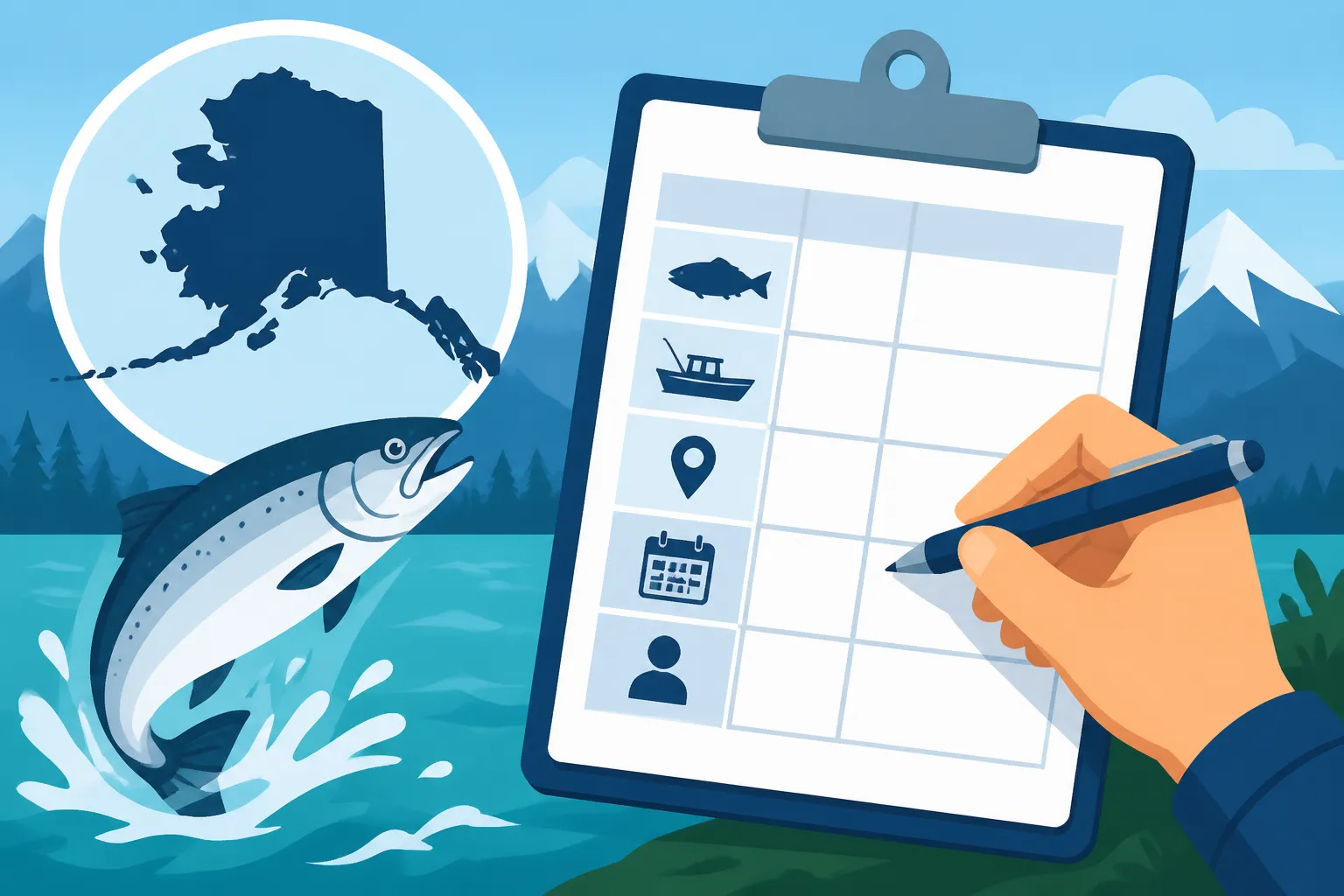
Each species will have its own dedicated section on the card. For instance, you'll find a row for "King Salmon" and another for "Halibut." When you catch and keep a fish, you need to:
- Date: Write the exact date of the catch.
- Location: Indicate the specific fishing area or body of water (e.g., "Kenai River," "Cook Inlet," "Kachemak Bay"). Be as specific as possible.
- Species: Ensure you're marking the correct species. Misidentifying a Coho for a King could lead to issues.
- Length (if required): For some species, like certain sizes of halibut, recording the length might be necessary. Check the regulations for that specific year and region.
- Marking/Punching: The most common method is to punch out or mark the corresponding box for that species and date. Some cards have pre-printed squares for each day of the month; you simply punch out the square for the day you caught the fish. Others might require you to write in the number of fish kept. Always read the instructions on your specific card carefully.
For example, if you catch a King Salmon on July 15th while fishing the Deshka River, you would find the King Salmon section, locate the square for July 15, and mark it with a permanent pen or punch it out. If the card allows for multiple entries on the same day for different species, be sure to keep them distinct. This meticulous recording ensures that every fish retained is accounted for, providing accurate data for conservation efforts and protecting you from potential Alaska Fishing Violations and Fines.
Specifics for King Salmon and Halibut
King Salmon and Halibut often come with additional or unique recording requirements due to their status as highly sought-after species with specific management plans. When you're fishing for these species, pay extra close attention to the details.
For King Salmon, in addition to marking the date and location, you might also need to record whether it was a "resident" or "non-resident" catch, especially in areas with different limits. You will also often need a separate King Salmon Stamp if you're fishing for these majestic fish, and that stamp also needs to be attached to your license. Check to see Do You Need a King Salmon Stamp in Alaska for more information. For non-residents, there's often an annual limit on King Salmon, so each recorded fish counts towards that overall tally. For example, if the annual non-resident limit is two King Salmon, once you've recorded two, you cannot retain any more for the remainder of the year. You can learn more about Alaska King Salmon Fishing Regulations and Limits to avoid any missteps.
Halibut regulations can be particularly complex, often involving specific size limits, reverse slot limits, and even charter vs. unguided limits. For instance, the ADF&G might implement an Alaska Halibut Charter Reverse Slot Limit where you can only keep fish under a certain size and/or over another, or a specific daily bag limit, such as Alaska Halibut Bag Limits Explained. If you're on a charter, your guide will usually assist with recording, but the ultimate responsibility often falls on the angler. You might need to record the total length of the halibut caught and kept. Always confirm the specific daily and annual limits for the area you are fishing before you head out, as these can change rapidly via Alaska Fishing Emergency Orders Explained. Your accurate recording of these prized catches is crucial for their long-term sustainability.
Dealing with No Catch Days
So, you went out, fished hard, had a great time, but the fish just weren't biting for the species requiring a harvest card. What do you do with those blank lines on your card? The simple answer is: you do nothing. You only fill out the harvest record card when you actually retain a fish that requires recording. If you didn't keep any King Salmon or Halibut on a particular day, you leave those corresponding spaces blank.
There's no need to write "N/A" or "no catch" or draw a line through blank days. The card is designed to only track positive harvest events. However, it's still good practice to review your card occasionally, especially after a multi-day trip, to ensure you haven't missed any entries for fish you did keep. It’s also wise to check the latest Alaska Fishing Limits and Bag Limits Explained before each outing, even if you’re a seasoned angler, because regulations can change. The important thing is to be honest and accurate. Don't feel compelled to fill every line, and certainly don't fabricate catches. The absence of an entry simply means no fish requiring recording was retained that day, which is perfectly normal for most anglers on most days!
Common Mistakes and How to Avoid Them
Even with the best intentions, it's easy to make mistakes when filling out your harvest record card, especially when you're caught up in the excitement of a catch or the complexity of regulations. Being aware of these common pitfalls can save you a lot of grief.
Incorrect Species Identification
This is a more frequent problem than you might think, particularly for those new to Alaska's abundant waters. While most seasoned anglers can tell a King from a Coho from a Sockeye, subtle differences can sometimes trip people up, especially when salmon are in their ocean-bright phase or beginning to transition. Mistaking a large Coho (Silver Salmon) for a King Salmon, or vice-versa, can lead to incorrect entries.
How to avoid it:
- Study fish identification guides: Before your trip, familiarize yourself with the key characteristics of each salmon species. Pay attention to tail spots, gum lines, and fin rays. Many online resources and the ADF&G regulations booklet provide excellent visuals and descriptions. You can find detailed guides on How to Identify Alaska Salmon Species or even specific guides like Alaska King Salmon: Complete Guide.
- Ask for help: If you're fishing with a guide, don't hesitate to ask them to confirm the species. They are experts and can quickly identify fish. If you're with experienced friends, they can also lend an eye.
- Use reference materials: Consider carrying a small, laminated fish identification card, perhaps one you purchased from Amazon or downloaded and printed before your trip, that you can quickly reference on the boat or bank. This simple tool can be a lifesaver.
Incorrectly recording a fish can not only skew critical fisheries data but could also put you in violation if you exceed a limit for a specific species while thinking it was another.
Forgetting to Record Immediately
The biggest mistake, and one that causes the most issues, is simply forgetting to record your catch immediately after retaining it. The regulations are strict about this timing for a reason: it prevents "high grading" (releasing smaller fish after catching a larger one to meet a limit), ensures accurate accounting, and avoids situations where an angler might claim ignorance later.
Consequences and best practices:
- Legal trouble: Law enforcement officers, such as Alaska Wildlife Troopers, can and do check harvest cards. If you have a retained fish that should be recorded but isn't, you could face a citation and fine, even if you genuinely intended to record it later.
- Develop a routine: Make it a habit. As soon as a fish that needs recording is in the boat or on the bank and you've decided to keep it, grab your license and pen. Mark the card before you put the fish in the cooler, take photos, or start rigging up again.
- Keep tools handy: Attach a small, waterproof pen to your license lanyard or keep it in a dedicated, easily accessible pocket. Make sure your harvest card is always with your license. For river fishing, a small waterproof pouch found on Amazon can keep your license and card dry and accessible.
- Buddy system: If you're fishing with others, gently remind each other, "Did you mark your card?" It helps everyone stay compliant.
Remember, "immediately" is key. Don't delay.
Illegible Writing and Missing Information
It might seem minor, but if the information on your harvest card is illegible or incomplete, it renders the data useless for ADF&G and can potentially create problems for you. If a Fish and Game biologist or a Wildlife Trooper can't read your name, license number, or the date/location of your catch, it's as if the information isn't there at all.
Clarity and completeness:
- Print clearly: Always use block letters when filling out your personal information and any written entries on the card.
- Permanent ink: Use a fine-tipped, permanent, and waterproof pen. Ballpoint pens can smudge or wash out easily if the card gets wet. Many fishing shops or even general stores like Fred Meyer in Alaska carry suitable pens.
- Fill all required fields: Double-check that all necessary fields for each catch (date, location, species, length if applicable) are completed. Don't leave blanks for required info. For example, if your card has a section for "River/Area," make sure you write in "Kenai River" or "Resurrection Bay," not just a vague "Alaska."
A clear, complete, and accurate card benefits everyone and prevents unnecessary scrutiny.
Not Understanding Emergency Orders
Alaska's fisheries are dynamic, and regulations can change rapidly due to factors like fish abundance, spawning returns, or environmental conditions. These changes are communicated via "Emergency Orders" issued by the ADF&G. What was legal yesterday might not be today. Failing to stay informed about these emergency orders can lead to unintentional violations, even with a perfectly filled-out card.
Impact on harvest limits:
- Daily checks: Especially during peak fishing seasons or for sensitive species like King Salmon or Sockeye, it is absolutely essential to check for emergency orders daily, or at least before each fishing trip. The ADF&G website is the primary source, but many local tackle shops, charter offices, and social media groups also share updates. Knowing How to Check Alaska Emergency Orders Before Fishing is critical.
- Impact on limits: An emergency order might close a fishery, reduce bag limits, change size restrictions, or even modify gear requirements (e.g., mandating barbless hooks). If you've been accustomed to catching three sockeye a day and an emergency order reduces it to two, continuing to catch three would be a violation, even if your physical card hasn't been updated.
- Record accurately: If an emergency order changes the rules, your harvest card entries must reflect the current regulations at the time of your catch, not the ones printed in your annual booklet. This means staying vigilant and adaptive.
Understanding and adapting to emergency orders is a hallmark of a responsible Alaskan angler.
Submitting Your Harvest Record Card
You’ve fished your heart out, adhered to all the rules, and diligently filled out your harvest record card. Now what? The final step is to submit it correctly, ensuring your valuable data makes it to the ADF&G.
When and Where to Submit
Submission deadlines and methods are critical. Generally, all harvest record cards for the current fishing year must be submitted to the ADF&G by a specific date, often October 31st or November 1st of the year you fished. This deadline ensures that biologists have ample time to compile and analyze the data for the preceding season before making decisions for the next.
Submission methods:
- Mail: The most common method. The back of your harvest card will have the correct mailing address for the ADF&G office. Make sure it's postmarked by the deadline. It's often a good idea to send it certified mail if you're concerned about proof of delivery, though standard mail is generally fine.
- Online: In recent years, the ADF&G has introduced online reporting options for some harvest cards, particularly for species like King Salmon. This can be a convenient way to submit your data and often provides instant confirmation. Always check the ADF&G website for the specific species you reported and the current availability of online submission. This might be linked to your license purchase portal, similar to How to Get an Alaska Fishing License Online.
- In-person drop-off: Some ADF&G offices or designated license vendors might have drop boxes for harvest cards. This is less common for the general sport fishing card but check local offices if you prefer this method.
Failing to submit your card by the deadline can result in penalties, as it's a legal requirement. Set a reminder on your phone or mark your calendar for late October to ensure you don't forget.
What Happens After Submission?
Once you've submitted your card, it joins thousands of others in the ADF&G offices. This isn't just a filing exercise; your data becomes a vital piece of the puzzle that helps manage Alaska's incredible fisheries.
Biologists meticulously compile and analyze the information from all submitted cards. They look at:
- Total harvest: How many of each species were caught across different regions?
- Effort: Where are anglers fishing, and how much effort is being expended?
- Trends: Are harvests increasing or decreasing over time? How do they compare to previous years or forecasted runs?
- Compliance: Are there any areas where reporting seems inconsistent, potentially indicating issues with understanding regulations or compliance?
This data directly informs decisions about future fishing seasons, bag limits (like Alaska Salmon Bag Limits by Species), size restrictions, and gear rules. For example, if King Salmon harvest numbers from the cards indicate a lower return than expected, the ADF&G might impose stricter limits or even closures the following year to protect the spawning stock. Conversely, strong returns might allow for more liberal regulations. Your simple act of filling out and submitting your card accurately is a fundamental component of keeping Alaska's fisheries healthy and thriving for generations to come.
Keeping Your Copy Safe
While you submit the original card, it’s always a good idea to keep a record for yourself. Many harvest cards have a small perforated section that you can detach and keep for your personal records, or you can simply take a photo of your completed card before mailing it.
Importance for audits or future reference:
- Proof of compliance: In rare cases, there might be a question about your compliance or an audit. Having a copy of your submitted card can serve as proof that you fulfilled your obligation.
- Personal records: It's also a great way to keep track of your own fishing success and compare it year to year. It can jog your memory about where you caught fish, when, and how many, helping you plan future trips.
- Understanding regulations: Reviewing past cards can help you better understand the dynamics of Alaska Fishing Regulations Explained and how they might apply to your specific catches in different years.
A quick photo with your phone takes seconds and can provide peace of mind and a valuable personal archive of your Alaskan fishing adventures.
Tools and Tips for Easier Record Keeping
Let's face it, keeping track of small pieces of paper and remembering to fill them out can be challenging in the middle of a thrilling fishing trip. Thankfully, a few practical tools and habits can make the process much smoother and ensure you're always compliant.
Physical vs. Digital Aids
The primary harvest record card is a physical document, but you can certainly use other aids to make the process easier and more reliable.
Physical aids:
- Waterproof pen/marker: This is non-negotiable. A fine-tipped permanent marker or a Fisher Space Pen (easily found on Amazon and at outdoor retailers) is ideal. Make sure it writes on wet surfaces and won't smudge.
- Waterproof pouch: A small, clear, waterproof pouch for your license and harvest card can protect them from the inevitable splashes and rain. Again, Amazon is full of options, or check out local outdoor stores like Bass Pro Shops or Cabela's.
- Clipboard/hard surface: Trying to write on a flimsy card in a bouncy boat or while standing on a riverbank can be tough. A small, rigid surface can make a big difference in legibility.
- Lanyard: Keep your license and harvest card on a lanyard around your neck or attached to your fishing vest. This keeps them readily accessible, so you don't have to dig through pockets or a tackle box when you need to make an entry.
Digital aids:
While you still need to mark the physical card, using your phone can be a backup or a way to track catches more meticulously.
- Notes app: Jot down details of your catches (species, date, time, location, length) in your phone's notes app as soon as you retain a fish. This acts as a reliable backup and can be transferred to your physical card later, should you somehow lose your pen or card temporarily.
- Fishing log apps: There are many fishing log apps available for smartphones that allow you to record detailed catch data, including photos, GPS coordinates, and weather conditions. While not a substitute for the official card, these can be invaluable for personal analysis and ensuring you don't miss anything when transferring to the physical card.
- ADF&G resources: Bookmark the ADF&G website on your phone. This gives you instant access to Alaska Fishing Emergency Orders Explained and detailed regulations, helping you confirm bag limits or species identification on the fly.
Staying Organized on the Water
Good organization isn't just about neatness; it's about efficiency and preventing crucial errors. Especially in the excitement of an Alaskan fishing trip, things can quickly become chaotic.
Practical tips for organization:
- Designated spot: Always keep your fishing license, King Salmon Stamp (if you need one, find out How Much Is the Alaska King Salmon Stamp here), and harvest card in the exact same spot every time. Whether it's a specific pocket in your waders, your rain gear, or a compartment in your boat's console, make it a habit. This prevents frantic searches when you need to record a fish.
- Pre-fill personal info: As mentioned earlier, fill out your name, address, and license number on your harvest card before you even leave your accommodation for the day. This saves time and ensures accuracy when you're out on the water.
- Review regularly: Take a few moments at the end of each fishing day to review your harvest card entries. Did you miss anything? Is everything legible? Does it match your memory of the day's catches? This quick check can catch minor errors before they become bigger problems.
- Understand regional variations: Alaska is a huge state, and regulations, including those for harvest cards, can vary significantly by region. For example, Alaska Kenai River Sockeye Recording Rules might differ slightly from rules in Southeast Alaska. Familiarize yourself with the specific regulations for the area you are fishing. Consulting the How to Read Alaska Sport Fishing Regulations Booklet before your trip is a wise move.
By adopting these simple organizational habits and utilizing practical tools, you can ensure that filling out your Alaska Harvest Record Card becomes a seamless, stress-free part of your incredible Alaskan fishing adventure, leaving you more time to enjoy the unparalleled beauty and bounty of the Last Frontier.
Disclaimer
Please remember that fishing regulations, including those pertaining to the Alaska Harvest Record Card, can change. While this guide provides comprehensive information, it is always your responsibility to consult the most current Alaska Department of Fish and Game (ADF&G) regulations booklet and check for emergency orders before you begin fishing. This content is for informational purposes only and does not constitute legal advice.