Alaska Pink Salmon Regulations and Limits
Trying to make sense of Alaska's fishing regulations can feel like deciphering an ancient text, especially when you're targeting a specific species like the feisty pink salmon. Many anglers get confused about daily limits and specific rules that change by location or even mid-season. This comprehensive guide is here to untangle the complexities of Alaska's pink salmon regulations and limits, ensuring you're well-prepared for your next fishing adventure.
Understanding Alaska's Pink Salmon Regulations
Pink salmon, often affectionately called "humpies" due to the pronounced hump developed by males during spawning, are the most abundant salmon species in Alaska. Their sheer numbers mean that regulations are often more liberal than for other salmon species, but that doesn't mean they're non-existent or straightforward. Ignorance of the rules can lead to fines and a ruined trip, so understanding the "why" and "where" of regulations is crucial.
The Rationale Behind Pink Salmon Management
Even with their incredible abundance, pink salmon populations are carefully managed by the Alaska Department of Fish and Game (ADF&G). Unlike Chinook (King) salmon or Sockeye (Red) salmon, which often face more restrictive limits due to conservation concerns or intense commercial pressures, pink salmon management primarily focuses on ensuring sustainable escapement for future generations while also providing ample opportunity for sport, personal use, and commercial fisheries. The goal isn't necessarily to conserve them in the same way as, say, a struggling King run, but rather to manage the sheer volume efficiently.
Fisheries biologists monitor the returning pink salmon runs meticulously. They track numbers to ensure enough fish make it upstream to spawn, perpetuating the cycle. The regulations you see are the result of scientific data combined with public input, designed to balance angler enjoyment with long-term fish health. While it might seem overkill for a species so numerous, this proactive approach is what keeps Alaska's fisheries healthy and thriving, year after year.
Where to Find the Official Rules
The absolute first step for any angler, whether you're a seasoned local or a first-time visitor, is to consult the most current Alaska Sport Fishing Regulations booklet. This isn't just a suggestion; it's a necessity. These booklets are updated annually and are the definitive source for all regulations, including those pertaining to pink salmon. You can often find a physical copy at most sporting goods stores, tackle shops, and even many convenience stores across Alaska. For those who prefer digital, the ADF&G website is an invaluable resource, offering downloadable PDF versions of the regulations by region. Sometimes, you can even find supplementary guides or region-specific publications on platforms like Amazon if you're looking for extra reference materials before your trip.
It's critical to understand that regulations can change suddenly due to "Emergency Orders." These are mid-season adjustments made by ADF&G in response to unexpected changes in fish runs, weather, or other factors. For example, a river might suddenly close to all salmon fishing, or bag limits could be drastically reduced or increased with just a few hours' notice. Always make checking for these Alaska Fishing Emergency Orders Explained a part of your daily fishing routine, especially when targeting pink salmon in popular areas.
Typical Daily Bag and Possession Limits for Pink Salmon
When it comes to pink salmon, anglers often find themselves with generous limits, reflecting their robust populations. However, these limits are rarely uniform across the entire state. They fluctuate not only year to year but also significantly by region and even by specific river systems or marine waters.
General Statewide Guidelines
Generally speaking, pink salmon daily bag limits are quite liberal compared to other salmon species. It's not uncommon to see limits of 6, 10, or even 15 pink salmon per day in many areas, particularly during the peak of a strong run. The possession limit often mirrors the daily bag limit or is slightly higher, meaning you can have no more than that number of fish in your possession, whether in your cooler, car, or at your lodge, unless they are processed and frozen for transport.
For non-residents, there can sometimes be slight differences, though for pink salmon, these are usually minimal or non-existent compared to residents. For instance, while a non-resident might face a lower annual limit for King salmon, pink salmon limits tend to be similar for both resident and non-resident anglers due to their sheer numbers. Always double-check the current Alaska Fishing Limits and Bag Limits Explained section of the regulations booklet for the most accurate and up-to-date information for your specific status.
Regional Variations and Specific Waterbody Rules
This is where things get interesting, and sometimes, a little confusing. Alaska is a vast state, and pink salmon runs can vary wildly from one bay to the next, let alone from Southcentral to Southeast. What's allowed in Prince William Sound might be completely different from what's permitted in a small stream near Juneau.
- Southcentral Alaska: Areas like Prince William Sound and Resurrection Bay are often fantastic for pink salmon. You might find limits of 6 to 10 pinks per day, with generous possession limits. However, in popular roadside systems like tributaries feeding Cook Inlet (e.g., portions of the Susitna River drainage), while pinks are plentiful, there might be specific closures or gear restrictions in place to protect other species running at the same time. The ADF&G typically aims to provide maximum opportunity here while ensuring escapement.
- Southeast Alaska: This region is famous for its prolific salmon runs, and pinks are no exception. Anglers fishing around Ketchikan, Sitka, or Juneau often enjoy very liberal pink salmon limits in marine waters and many freshwater systems. It's common for limits to be 6 or 10 pinks per day, often as part of an aggregate salmon limit. Always check the specific regulations for the particular waterway you plan to fish, as even adjacent rivers can have different rules.
- Interior Alaska: While less known for massive pink salmon runs compared to coastal areas, some Interior rivers do see pink returns. Regulations here might be tied into broader salmon management plans for the specific river, and local rules for tributaries can be quite nuanced.
A great example of regional variation often occurs on the Kenai Peninsula. While the Kenai River is world-renowned for its King and Sockeye salmon, pink salmon also run in huge numbers, especially in even-numbered years. The regulations for pinks on the mainstem Kenai might be different from its tributaries or nearby Kasilof River, especially concerning gear and specific sections. Understanding How to Read Alaska Fishing Regulations is paramount.
Here's a simplified table illustrating potential regional differences for pink salmon regulations. Please remember these are examples and highly subject to change. Always consult the current ADF&G regulations.
| Region/Waterbody Example | Daily Bag Limit (Pink Salmon) | Possession Limit (Pink Salmon) | Common Restrictions | Notes |
|---|---|---|---|---|
| Prince William Sound (Marine) | 6 (part of aggregate salmon limit) | 12 | No specific restrictions often for pinks | Very popular for boat anglers |
| Southeast Alaska (Marine) | 6 (part of aggregate salmon limit) | 12 | Single hook often required in certain areas | Highly productive region |
| Kenai River (Certain sections) | 6 to 10 (varies by year/section) | 10 | Often subject to emergency orders, gear limits | Even-numbered years see huge runs |
| Freshwater tributaries (General) | 5 | 10 | Bait restrictions, specific closure dates | Can be more restrictive to protect other species |
Specific Regulations Beyond Just Numbers
While knowing how many pink salmon you can keep is crucial, Alaska's fishing regulations extend far beyond simple numerical limits. There are rules governing how you can fish, when you can fish, and even what you must do with your catch. Ignoring these details can lead to fines, confiscation of gear, or even loss of fishing privileges, so it's just as important to understand the nuances as the numbers.
Gear Restrictions and Methods
Alaska's diverse fisheries mean a variety of gear rules. For pink salmon, which are aggressive biters and relatively easy to catch, gear restrictions are often in place to protect other, more sensitive species that might be in the same waters at the same time. For instance, in many popular salmon streams, especially when King or Sockeye salmon are also present, you might encounter rules requiring Alaska Single-Hook Rules During King Closures. This means no treble hooks or multiple hooks on your lure.
- Single-Hook Rule: This is extremely common in freshwater salmon fisheries. The idea is to reduce incidental mortality of other species that might be foul-hooked. If you're using spinners or spoons for pinks, ensure they have a single, barbless hook, or you're ready to crimp down the barbs on a barbed hook. Many anglers prefer barbless hooks for easier release of unintended catches anyway, which aligns with Alaska Catch-and-Release Best Practices.
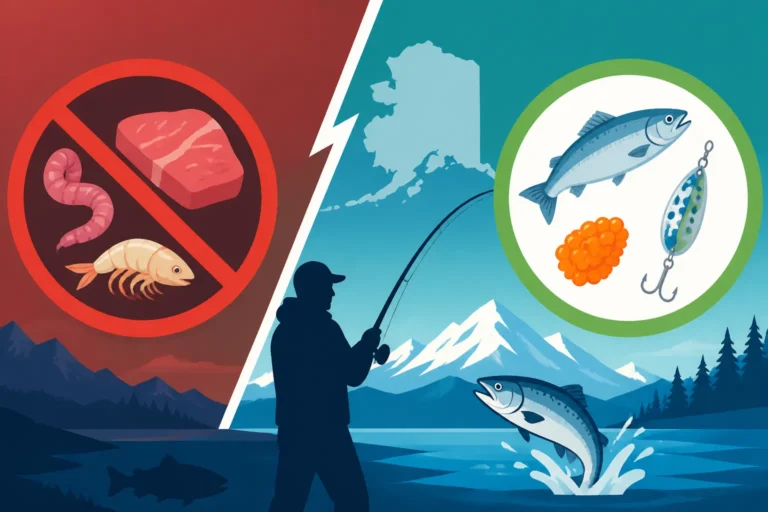
- Bait Restrictions: Some rivers, particularly those with sensitive wild trout or steelhead populations, will have Alaska Bait Restrictions Explained. While pink salmon will readily hit bait like cured salmon roe or chunks of herring, you might be limited to artificial lures only in certain areas. Always check the regulations for the specific section of the river you're fishing.
- Snagging: In most sport fisheries, snagging (intentionally hooking a fish anywhere other than in the mouth) is illegal. However, there are very specific "terminal fisheries" where snagging is permitted, typically to harvest abundant salmon species like pinks or chums at the very end of their life cycle. These areas are explicitly designated in the regulations. Do not assume snagging is okay unless explicitly stated for that location.
The Importance of Emergency Orders
I can't stress this enough: Alaska's fishing scene is dynamic. River levels change, fish runs come in stronger or weaker than forecast, and weather can impact everything. This is where emergency orders (EOs) come into play. These are immediate changes to regulations that supersede the annual regulation booklet. They can close a fishery, change bag limits, alter legal gear, or open new sections of a river.
Imagine you're planning a trip to the Kenai Peninsula in August, expecting to catch a limit of pinks. If a critical sockeye run is underperforming, ADF&G might issue an emergency order closing specific sections of rivers to all salmon fishing, including pinks, to protect the sockeye. Failing to check for these EOs could lead to fishing illegally, even if you followed the printed booklet. The ADF&G website has a dedicated section for EOs, and many local tackle shops and guide services stay well-informed. There are even dedicated hotlines and sometimes apps to help you stay updated. Knowing Where to Find Alaska Emergency Order Announcements is part of being a responsible angler.
Recording Your Catch (Harvest Record Card)
For many species in Alaska, especially King salmon and halibut, anglers are required to immediately record their catch on a physical or digital harvest record card. This helps ADF&G track harvest numbers accurately, which is vital for management. When it comes to pink salmon, the requirement to record them varies.
Generally, pink salmon do not need to be recorded on a harvest record card in most sport fisheries, unlike King Salmon or even specific types of Sockeye in certain areas. This is again due to their immense abundance. However, there are exceptions, especially in personal use or subsistence fisheries, or if you're fishing under a specific permit where all salmon harvest, regardless of species, must be accounted for. It's crucial to understand What Is the Alaska Harvest Record Card and whether pink salmon are among Which Fish Must Be Recorded in Alaska for the specific area and type of fishery you're participating in. If in doubt, err on the side of caution and ask a local ADF&G office or a reputable guide.
Essential Tips for Pink Salmon Anglers
Fishing for pink salmon in Alaska can be one of the most exciting and productive experiences, especially for beginners or families. They're often abundant, aggressive, and provide consistent action. However, to maximize your enjoyment and ensure you're fishing responsibly, a few key tips can make all the difference.
Staying Informed Throughout the Season
As we've discussed, Alaska's fishing regulations are a living, breathing document. They can change with little notice, influenced by the unpredictable nature of wild salmon runs. Therefore, staying informed isn isn't just a recommendation; it's a necessity for a successful and legal trip.
- Bookmark the ADF&G Website: Make it a habit to check the Alaska Department of Fish and Game's official website regularly, especially in the weeks leading up to and during your fishing trip. Look specifically for the "Emergency Orders" section relevant to the region you plan to visit, whether it's Southcentral Alaska, Southeast, or another area.
- Utilize Local Resources: Talk to local tackle shop owners, fishing guides, and other anglers. They are often the first to know about changes on the ground and can offer invaluable, real-time advice on what's biting, what gear is working, and if any new restrictions have come into effect. For example, if you're fishing near Anchorage, a quick stop at a local shop in Eagle River or Soldotna could save you a lot of headache.
- Consider a Guide: If you're new to Alaska or a particular area, hiring a reputable fishing guide can be a game-changer. Guides are professionals who are deeply familiar with the current regulations, local nuances, and emergency orders. They handle the licensing questions, ensure you're using legal gear, and know the best spots. While this article focuses on sport fishing, understanding the differences between Alaska Sport Fishing vs Personal Use can also be important depending on your fishing goals.
- Consult the Annual Regulations Booklet: Always carry a copy of the current year's Sport Fishing Regulations for the region you're in. Whether it's a physical booklet you picked up at a tackle store or a downloaded PDF on your phone, it's your primary reference. These booklets provide details on Alaska Pink Salmon Run Timing and give you a general overview of what to expect.
Ethical Angling and Conservation
While pink salmon are numerous, responsible angling practices are still vital. Every angler plays a role in preserving Alaska's incredible fisheries for future generations.
- Understand Your Limits: Don't push the envelope. If the limit is 6 pinks, don't try to sneak in a seventh. Alaska Fish and Wildlife Troopers are present and vigilant, and the penalties for Alaska Fishing Violations and Fines can be severe, including hefty fines and loss of fishing privileges.
- Respect Spawning Fish: Pink salmon, like all salmon, undergo significant physical changes as they approach their spawning grounds. Their flesh deteriorates, and they become less desirable for consumption. Focus on catching brighter, ocean-fresh fish in marine waters or lower river sections. Once fish are in full spawning coloration (darker, with distinct humps on males), it's often best to let them continue their journey to reproduce.
- Proper Catch and Release: Even when limits are liberal, you might choose to release some fish, especially if you've already filled your cooler. Learn and practice Alaska Catch-and-Release Best Practices to ensure any released fish have the best chance of survival. This includes minimizing handling time, keeping the fish in the water, and using appropriate tools to remove hooks.
- Minimize Waste: Alaska's regulations often include provisions about utilizing your catch. It's generally expected that you will make reasonable efforts to retain and utilize all edible portions of the fish you harvest. This means not just cutting off the fillets and discarding the rest if there's edible meat on the carcass.
By combining vigilance about regulations with a strong ethical approach to fishing, you'll not only have a more successful trip but also contribute to the long-term health and abundance of Alaska's cherished pink salmon resources.
Disclaimer
The information provided in this guide is for general informational purposes only and is subject to change. While we strive to provide accurate and up-to-date content, Alaska's fishing regulations can be complex and are frequently updated by the Alaska Department of Fish and Game (ADF&G) through emergency orders and annual regulatory changes. It is the sole responsibility of each angler to consult the most current official ADF&G regulations and emergency orders for the specific region and time period they plan to fish before engaging in any fishing activity. Failure to do so may result in fines or other penalties.