Alaska Kenai Dip Netting Rules
Oh, the Kenai River personal use dipnet fishery! It’s a bucket list item for so many Alaskans and even some savvy non-residents, but let's be real, navigating those regulations can feel like trying to untangle a hundred yards of fishing line after a king salmon ran through it. It's notoriously busy, the rules change, and missing one tiny detail can mean a hefty fine or, worse, losing your precious salmon. This guide is here to cut through the confusion and give you a clear, realistic breakdown of the Kenai dip netting rules, so you can focus on filling your freezer, not scratching your head.
What Exactly is Kenai Dip Netting?
When we talk about Kenai dip netting, we're delving into a unique and incredibly popular segment of Alaska's fisheries: personal use. This isn't your typical rod-and-reel sport fishing. Instead, it’s a method that allows Alaskans and, under specific circumstances, non-residents, to harvest a significant amount of salmon for personal consumption using a large net. It's rooted in Alaska's tradition of utilizing natural resources for sustenance, but with very strict modern regulations to ensure sustainability.
The "Personal Use" Distinction
It's crucial to understand that Kenai dip netting falls under "personal use," which is different from "sport fishing" and "subsistence fishing." For a deep dive into the nuances, you might want to read our guide on Alaska Personal Use Fishing Explained. While subsistence fishing is primarily for rural residents to meet basic nutritional needs using customary and traditional practices, and sport fishing is recreational, personal use bridges a gap, allowing all Alaska residents (and again, limited non-residents) to harvest fish for their household's personal consumption. You cannot sell or barter personal use fish. This distinction is vital because the rules, permits, and harvest limits are entirely separate from sport fishing licenses and regulations. You don't need a standard Alaska Fishing License: Complete Guide for personal use dip netting, but you do need a specific permit.
This personal use designation means that the goal isn't just to catch a trophy; it's to gather enough fish to last your family through the year. Imagine the pride of pulling a bright red sockeye out of the Kenai, knowing it's destined for your smoker or freezer. It’s a truly Alaskan experience, but with that privilege comes the responsibility of understanding and strictly adhering to the rules that govern it. Failing to grasp this distinction is often the first step towards an unwitting violation, and believe me, enforcement is present and vigilant.
Why the Kenai River for Dip Netting?
The Kenai River is an iconic waterway, famous worldwide for its colossal king salmon and massive sockeye runs. For dip netters, it's primarily the sockeye (red salmon) that draws them in by the tens of thousands. The sheer volume of sockeye that ascend the Kenai River is astounding, often reaching millions in a strong year. This abundance, coupled with relatively accessible bank fishing spots, makes it the epicenter of personal use dip netting.
The dipnet fishery here is specifically located at the mouth of the Kenai River, near Kenai and Soldotna, where the salmon are still fresh from the ocean and haven't yet begun their spawning coloration. They are at their prime for eating, full of fat and flavor. The Kenai's geography, with its broad, tidal flats and defined river mouth, also lends itself well to the dip netting technique. However, this popularity brings challenges – intense crowds, parking dilemmas, and the need for incredibly stringent regulations to manage such a concentrated effort on a finite resource. It’s not a quiet, solitary fishing experience; it's a vibrant, sometimes chaotic, and truly communal event that requires patience, preparation, and a thorough understanding of the specific rules.
Essential Kenai Dip Netting Regulations You Can't Ignore
When you plan your dip netting trip, thinking you can just show up with a net is a recipe for disappointment and a potential citation. The rules are numerous and change frequently, making preparedness absolutely critical.
Permit Requirements and Eligibility
First things first: you absolutely need a permit to dip net on the Kenai. This isn't just a suggestion; it's the law. The permit you need is called the Upper Cook Inlet Personal Use Salmon Fishery Permit, and it's issued by the Alaska Department of Fish and Game (ADF&G).
Who Can Get One?
- Alaska Residents: Any Alaska resident with a valid Alaska resident hunting/fishing license is eligible to participate. You must have been an Alaska resident for at least 12 consecutive months immediately preceding the application for the permit. You can apply for this permit online through the ADF&G license portal.
- Non-Residents: This is where it gets tricky. Generally, non-residents are NOT allowed to participate in the Upper Cook Inlet personal use salmon fisheries, including Kenai dip netting. The personal use fisheries are primarily reserved for Alaska residents. While there are some very limited exceptions for non-residents in certain personal use fisheries in other parts of the state (like the Chitina dipnet fishery, which has its own distinct Alaska Chitina Dip Netting Regulations), the Kenai River personal use dipnet fishery is specifically restricted to Alaska residents only. If you're a non-resident planning a trip, stick to guided sport fishing charters, where you'll need an Alaska Non-Resident Fishing License Guide and a King Salmon Stamp if targeting kings.
Applying for Your Permit:
The permit is free, but mandatory. You'll typically apply for it online through the ADF&G website. It's not a physical license you carry, but rather a digital record associated with your fishing license. When you check out, make sure you receive confirmation. It’s always a good idea to print a copy or save it to your phone, just in case. ADF&G personnel will be checking permits on site, and not having proof of your permit is a quick way to end your fishing day prematurely. Each household only needs one permit, and all members of that household (spouse, dependent children under 18) can fish under that single permit, but their individual catches contribute to the household's overall limit.
Season Dates and Hours of Operation
This is arguably the most dynamic and frustrating aspect of Kenai dip netting. The season dates are not set in stone; they are highly dependent on the sockeye salmon run strength and are often adjusted via Emergency Orders.
General Season Framework:
- The Kenai River personal use dipnet fishery typically opens in early to mid-July.
- The primary target species is sockeye salmon.
- The season can run until late July or early August, but this is always subject to change.
Emergency Orders (EOs):
This is where real-time information becomes your best friend. ADF&G manages the fishery closely, and if the sockeye run is weaker or stronger than forecast, they will issue Emergency Orders to modify fishing days, hours, or even close the fishery. These EOs can happen with very short notice – sometimes just hours before they take effect.
How to Stay Informed:
- ADF&G Website: The official ADF&G website is the most reliable source for current Emergency Orders. They have a dedicated section for sport fish and personal use EOs.
- Local News & Radio: Tune into local Kenai Peninsula news outlets or ADF&G's social media channels.
- ADF&G Hotline: Many anglers call the local ADF&G office or check their dedicated fishing hotline for updates. You can learn more about this in our guide on How to Check Alaska Emergency Orders Before Fishing.
- Official Signage: Once you're on the Kenai, pay attention to any official ADF&G signage at access points.
Hours of Operation:
Even during the open season, there are specific legal fishing hours. For example, the Kenai River personal use dipnet fishery is usually open only from 6:00 AM to 11:00 PM daily during authorized periods. Fishing outside of these hours is illegal and will result in a citation. This is a common mistake for eager anglers who might arrive early or stay late, hoping for an advantage. Set alarms, be aware of the time, and respect the closure.
Gear Restrictions and Dip Net Specifications
You can't just show up with any old net. There are very specific rules about the type and size of dip net you can use, designed to ensure fair play and prevent overharvest.
Dip Net Definition:
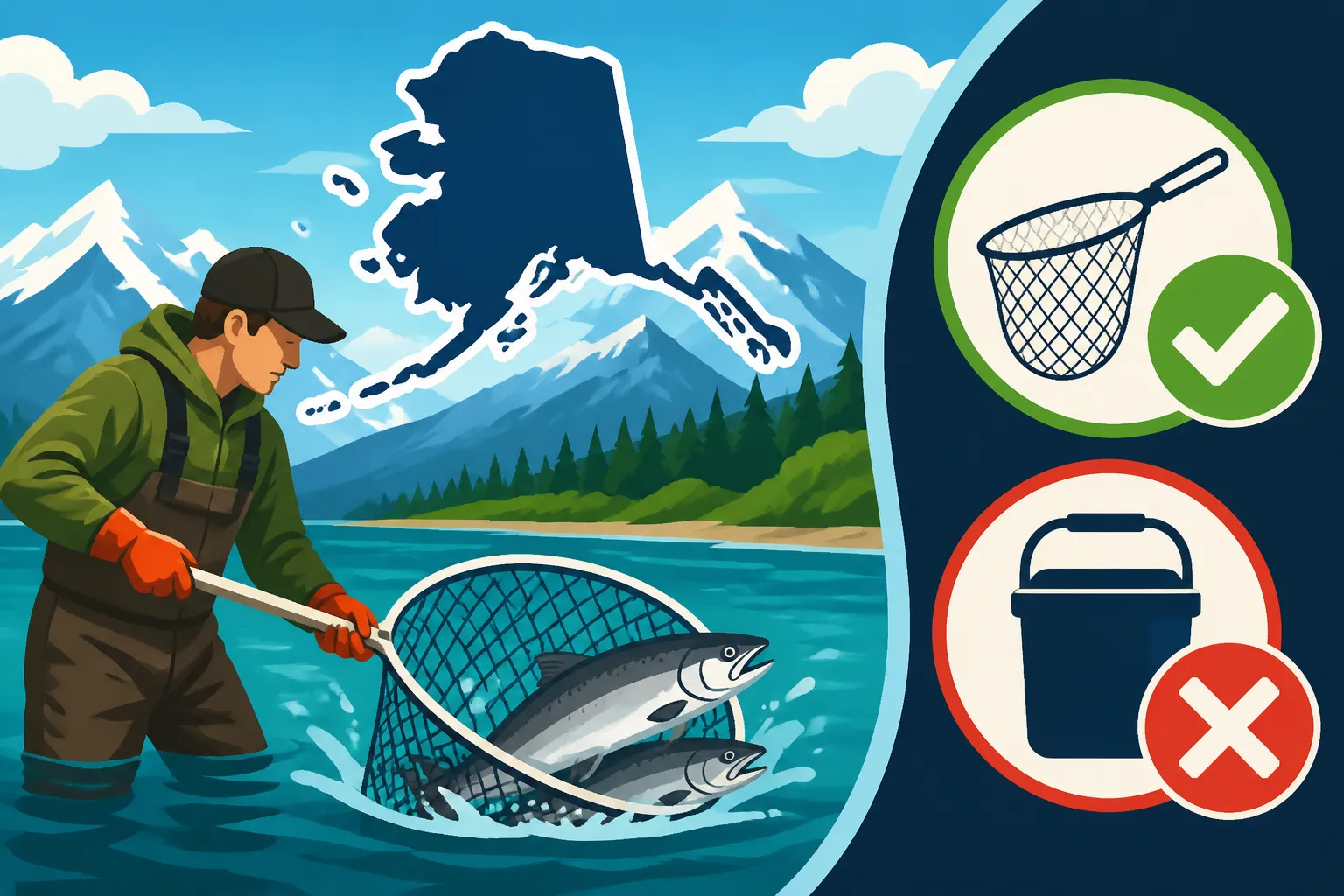
A "dip net" for this fishery is defined as a bag-shaped net supported by a rigid frame that is suspended from a handle. The key here is "rigid frame" – no free-form nets or cast nets are allowed.
Size Limitations:
- The bag of the net cannot be more than 5 feet in maximum depth.
- The circumference of the net opening cannot exceed 24 feet.
- The perimeter of the net opening cannot exceed 16 feet.
Essentially, picture a large hoop net, typically with a long handle to reach into the deeper waters or to pull fish ashore. Many people purchase commercially made dip nets from sporting goods stores like Cabela's, Bass Pro Shops, or even through Amazon. Make sure any net you purchase explicitly states it meets Alaska's personal use dip net regulations. Always double-check these measurements, as using an oversized net is a serious violation.
Other Gear:
- Waders: You'll be standing in the river, often up to your waist, so good quality chest waders are essential. Breathable Gore-Tex models are popular for comfort during long days.
- Poles: Some anglers use a second pole or gaff to help control the net once a fish is in it, especially if it's a strong sockeye. Be mindful of any specific rules regarding gaffs in the regulations, which usually state they can only be used to land a legally hooked or dipped fish, not to snag.
- Coolers & Ice: You'll be catching a lot of fish, and the Kenai Peninsula in July can be warm. Bring plenty of large coolers filled with ice to immediately cool your catch. This is not just for quality but for food safety.
- Fish Cleaning Station: While not technically "gear," having a good knife and a designated area to clean your fish is critical. Many people bring filleting tables that attach to their truck hitch, or simply use a tarp.
Net Operation:
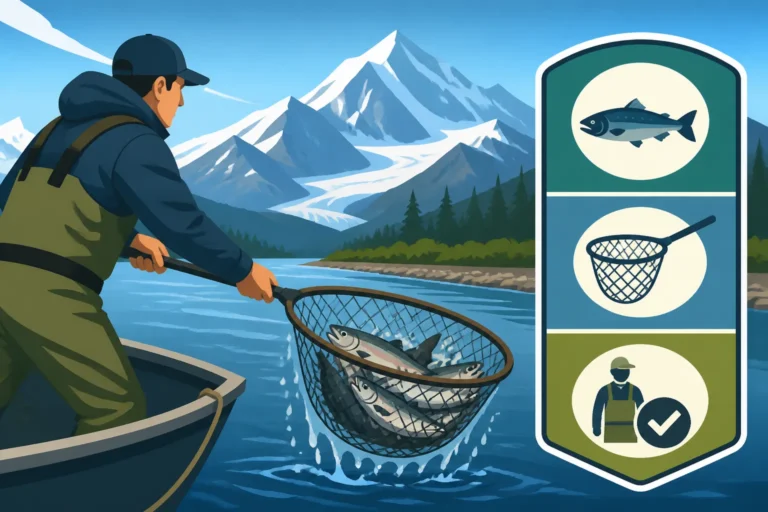
The method involves holding the net in the current, waiting for a salmon to swim into it, and then quickly scooping it up. It requires patience, strength, and a bit of technique to feel the fish enter the net. You cannot actively chase or herd fish with your net, nor can you use it to snag fish. The fish must swim freely into the net.
Bag Limits and Recording Your Catch
Once you've got your permit and your legal net, the next critical step is understanding your bag limits and the mandatory recording process. This is where most violations occur for those who aren't meticulous.
Daily and Seasonal Limits for Salmon
The bag limits in the Kenai personal use dipnet fishery are generous but strictly enforced. These limits are per household, not per individual, and apply to all salmon species combined, with a special carve-out for King Salmon.
General Limits for Sockeye, Coho, Pink, and Chum Salmon:
- Daily Bag Limit: Typically 25 salmon for the head of household and an additional 10 salmon for each household member. So, for a household of two, it would be 35 salmon (25 + 10). For a household of four, it would be 55 salmon (25 + 10 + 10 + 10).
- Seasonal Possession Limit: The total number of salmon you can possess from the Kenai personal use dipnet fishery at any given time (including those you've already taken home and processed) cannot exceed your daily bag limit. This means if you hit your daily limit, you need to go home, process your fish, and dispose of any unneeded parts before returning to fish again on another day, assuming the fishery is still open.
It’s easy to get caught up in the excitement and lose count, especially when the fishing is hot. Keep a running tally! ADF&G personnel are often present at access points, conducting creel surveys and checking coolers. They will ask you how many fish you have and verify it against your harvest card. For more specific details on sockeye limits, check out Alaska Sockeye Daily Limit by River.
The Mandatory Harvest Record Card
This is perhaps the single most important document you’ve got while dip netting, besides your permit. Every single salmon you retain from the Kenai personal use dipnet fishery must be immediately recorded on your harvest record card.
What is a Harvest Record Card?
The harvest record card is a physical card or a section of your digital permit where you log every fish. For a more general understanding, refer to Alaska Harvest Record Card Explained. It contains spaces for species, date, and location of harvest.
How to Fill It Out:
- Immediately: This cannot be stressed enough. As soon as a salmon hits the bank and you decide to keep it, you must punch or mark your card. Not after you've landed five, not after you've cleaned them, but immediately. ADF&G enforcement officers are very strict about this. They may observe you from a distance and then approach, and if you have an unrecorded fish on the bank, you're in violation.
- Accuracy: Clearly mark the species and date. While the Kenai dip net fishery is overwhelmingly sockeye, you might occasionally catch a pink or coho.
- Lost Card: If you lose your card, stop fishing immediately and contact ADF&G. Continuing to fish without a valid, properly marked card is a serious offense. For detailed instructions, our How to Fill Out an Alaska Harvest Record Card guide is a great resource.
This recording requirement is not just bureaucracy; it's a vital tool for ADF&G to monitor harvest numbers and ensure the sustainability of the fishery. Your accurate reporting directly contributes to future fishing opportunities.
Special Rules for King Salmon
While sockeye are the primary target, king salmon (Chinook) do occasionally enter the Kenai dip net area. However, the rules for kings are drastically different and much more restrictive due to conservation concerns.
- Closed Fishery: King salmon are often closed to retention during the personal use dipnet fishery. This means if you catch a king salmon, you must release it immediately and with as little harm as possible.
- Identification: It is crucial to be able to identify a king salmon quickly and accurately. Kings have small spots on both upper and lower lobes of their tail, a black mouth with black gums, and typically larger scales than sockeye. Sockeye have no spots on their tail and white gums. If you're unsure, it's safer to release.
- Recording if Open: In the rare event that king salmon retention is allowed (which usually requires a separate King Salmon Stamp and is very limited), their harvest must also be immediately recorded on your harvest card, and they often have a much lower bag limit, sometimes just one per season. The specific rules for Alaska King Salmon Fishing Regulations and Limits are incredibly complex and subject to change yearly.
The message here is clear: for Kenai dip netting, focus on sockeye. If a king happens into your net, release it carefully. Trying to hide an illegally retained king salmon is a quick path to major fines and equipment seizure.
Navigating the Kenai River Dip Netting Areas
The Kenai dipnet fishery is not just about nets and limits; it's also about where you can legally access and fish, and how you interact with the environment and other people in a very crowded setting.
Designated Fishing Zones and Access Points
The Kenai River personal use dipnet fishery has very specific boundaries. It primarily takes place on the lower Kenai River, from the river mouth upstream to the Warren Ames Bridge (the bridge you cross to get into Old Town Kenai).
Key Areas:
- South Beach: Located on the south side of the Kenai River, accessible via the Kalifornsky Beach Road (K-Beach Rd). This is a vast, sandy area where many people camp and fish. Vehicle access onto the beach is usually allowed, but watch the tides! Getting stuck in the incoming tide is a common and costly mistake. ADF&G often has a presence here.
- North Beach: On the north side of the river, accessed through the city of Kenai. This area is generally less vehicle-friendly for beach access, but offers different fishing dynamics as it's closer to the open ocean. There are designated parking lots and foot trails.
- River Banks: Within the legal boundaries, you can also fish from the river banks on both sides, as long as you're on public land or have permission from private landowners.
Understanding Boundaries:
It is absolutely critical to know the exact upstream boundary at the Warren Ames Bridge. Fishing even a few feet upstream of this bridge is a violation. Look for marker signs or buoys that denote the boundary. Using a GPS device can be helpful, but nothing beats knowing the physical landmarks. ADF&G patrols both by foot and by boat, and they know the lines precisely.
Parking and Camping:
During the peak season in July, these areas become incredibly congested. Parking can be a nightmare.
- South Beach: While you can often drive onto the beach, parking can still be competitive, and you need to be constantly aware of the tide.
- City of Kenai: The city often opens up additional parking areas and may run shuttle services. Expect to walk a good distance.
- Camping: Many people camp on South Beach. This is often "primitive" camping, so be prepared with all your own supplies. Rules regarding campfires, waste disposal, and bear safety are paramount. Remember, you're in bear country!
Safety Considerations and Crowding
Dip netting on the Kenai is not for the faint of heart, especially during peak runs. It’s an inherently physical activity in a very crowded, sometimes challenging environment.
Crowd Management:
- Elbow Room: Expect to be fishing shoulder-to-shoulder with hundreds, sometimes thousands, of other people. Patience and courtesy are essential.
- Kids and Pets: If you bring children or pets, keep them very close and supervise them constantly. The crowds, strong currents, and heavy equipment (nets, coolers) can be dangerous.
- Vehicle Traffic: On South Beach, vehicles drive right onto the fishing grounds. Be aware of your surroundings, especially with kids running around.
Water Safety:
- Strong Currents: The Kenai River has a very strong current, especially near the mouth. Even experienced swimmers can be quickly swept away. Always be aware of the current, and never wade out further than you're comfortable with.
- Tides: The lower Kenai is tidal. The water level can rise and fall dramatically. If you drive onto South Beach, you must know the tide schedule and move your vehicle well before high tide to avoid getting stuck or having your vehicle submerged. Many vehicles get lost to the tide each year.
- Cold Water: The water is glacier-fed and extremely cold, even in July. Hypothermia is a real risk if you fall in without proper gear. Always wear your waders correctly and consider a PFD (personal flotation device) if you're venturing into deeper areas or if you're not a strong swimmer.
Respecting the Resource and Other Anglers
Being a responsible dip netter goes beyond just following the legal rules. It's about respecting the environment and the community.
Fish Waste:
- Proper Disposal: When you clean your fish, do not leave entrails or carcasses on the beach or in the river shallows. This attracts bears and creates a terrible mess for others. Use designated disposal sites or bag your waste and take it to a proper refuse facility. Many people use large, sturdy trash bags available on Amazon for this purpose.
- Bear Awareness: Where there's fish waste, there are bears. Be bear aware: carry bear spray, make noise, and never approach a bear. Secure all food and fish waste properly.
Leave No Trace:
- Pack It In, Pack It Out: Whatever you bring to the river, take it home with you. This includes trash, broken gear, and anything else.
- Environmental Stewardship: The Kenai River is a precious resource. Treat it with respect so future generations can enjoy the same opportunities.
Angler Etiquette:
- Give Space: Try to give other anglers reasonable space, if possible in such crowded conditions. Avoid casting or netting into someone else's area.
- No Hogging: Don't try to claim an excessively large section of the river, especially during peak times. Share the resource.
- Help Each Other: It's a community. If someone needs help landing a fish, retrieving a dropped item, or has a question, lend a hand. We're all out there for the same reason – to get some delicious salmon!
Common Mistakes and How to Avoid Fines
Even with the best intentions, it's easy to make mistakes that can lead to violations. Being aware of these common pitfalls can save you a lot of grief and money.
Misinterpreting Emergency Orders
This is perhaps the biggest and most frequent mistake. Anglers arrive having planned their trip weeks or months in advance, only to find out the rules have changed overnight.
Scenario: You drive six hours from Anchorage, eager for the 6 AM opening, only to discover an Emergency Order (EO) was issued at 8 PM the night before, pushing the opening to 10 AM, or even closing the fishery for the day. You start fishing at 6 AM. ADF&G pulls up in their boat. You're now in violation.
Prevention:
- Check DAILY, even HOURLY: Before you leave home, and again when you arrive at the river, check the ADF&G website or call the hotline.
- Don't Rely on Hearsay: Don't trust what someone tells you at the gas station or what you read on an unofficial Facebook group. Go directly to the official source.
- Understand the "Why": EOs are issued for very specific reasons, usually to protect salmon escapement goals or ensure fair distribution of the harvest. They are there to manage the resource sustainably. Our guide on Alaska Fishing Emergency Orders Explained goes into detail about how these orders work and why they are necessary.
Improper Fish Recording
This mistake is often less about intentional deception and more about carelessness or misunderstanding the "immediately" rule.
Scenario 1: The "I'll do it later" mentality. You land a fish, throw it on the bank, then another. You decide you'll punch your card after you've landed a few. An enforcement officer approaches. You have two fish on the bank, and your card only shows one punch. Fine.
Scenario 2: The "Oops, I forgot a household member's tally." You're fishing with family members under one household permit. You're diligently recording your fish, but your teenage son landed three fish and forgot to tell you, and they aren't marked. The total on the bank now exceeds your recorded total. Fine.
Prevention:
- Punch the Card THE SECOND You Keep a Fish: Make it a habit. No excuses. Have your pen/puncher ready and accessible.
- Designate a Recorder: If multiple people are fishing under one permit, one person should be the designated record-keeper, and everyone must communicate every catch.
- Review Regularly: Periodically count your fish and compare it to your card to ensure they match.
- Know Your Household Limit: Be absolutely clear on your household's daily and seasonal limits based on the number of eligible members.
- Refer to Alaska Kenai River Sockeye Recording Rules for specifics on logging your sockeye.
Fishing Outside Designated Hours or Areas
The boundaries and operational hours are there for a reason, and ignoring them will lead to consequences.
Scenario 1: Early Bird or Night Owl. You want to beat the crowds, so you start dipping at 5:30 AM, or you stay past 11:00 PM because the fish are still running. ADF&G patrols are aware of this common temptation.
Scenario 2: Upstream Wanderer. You wander a bit too far upstream from the Warren Ames Bridge, thinking "it's just a little bit." An officer on the bank or in a boat observes you.
Prevention:
- Set Alarms: Use your phone to set alarms for the opening and closing times.
- Know the Landmarks: Visually identify the Warren Ames Bridge. Look for official signs marking the upstream boundary. Don't rely on assumptions.
- Stay Within Marked Zones: If there are roped-off areas or signs prohibiting access, respect them. These are often for conservation purposes, safety, or to protect critical habitats.
- Be Aware of Changing River Levels: The riverbed can change with currents and tides, potentially altering what constitutes "fishing in the river." Stay on solid ground if unsure.
Understanding these common pitfalls and actively working to avoid them will ensure your Kenai dipnetting experience is memorable for the right reasons – full freezers and great memories, not expensive tickets. For an overview of potential penalties, check out Alaska Fishing Violations and Fines.
Disclaimer
Please remember that fishing regulations in Alaska, especially for dynamic fisheries like the Kenai personal use dipnet, are subject to change without notice due to Emergency Orders. Always consult the most current Alaska Department of Fish and Game (ADF&G) regulations and Emergency Orders before heading out. This guide provides general information and should not be considered a substitute for official ADF&G publications.