How to Plunking for Salmon in Alaska
Trying to catch salmon in Alaska can feel like a daunting task, especially when you're standing on the bank, watching the mighty rivers flow by, wondering how on earth to reach those elusive fish. Many anglers get frustrated trying to cast far enough or keep their bait in the strike zone. This guide is dedicated to a tried-and-true method that solves this very problem: plunking. We'll break down everything you need to know to successfully "plunk" for salmon, giving you a real shot at bringing home some Alaskan giants from shore.
Understanding the Art of Plunking for Alaska Salmon
Plunking is a technique that might seem simplistic at first glance, but there's a real art to doing it effectively in Alaska's powerful rivers and coastal estuaries. It's a method that leverages the current to present your bait or lure naturally to salmon moving upstream, often eliminating the need for constant casting and retrieving.
What is Plunking and Why it Works in Alaska
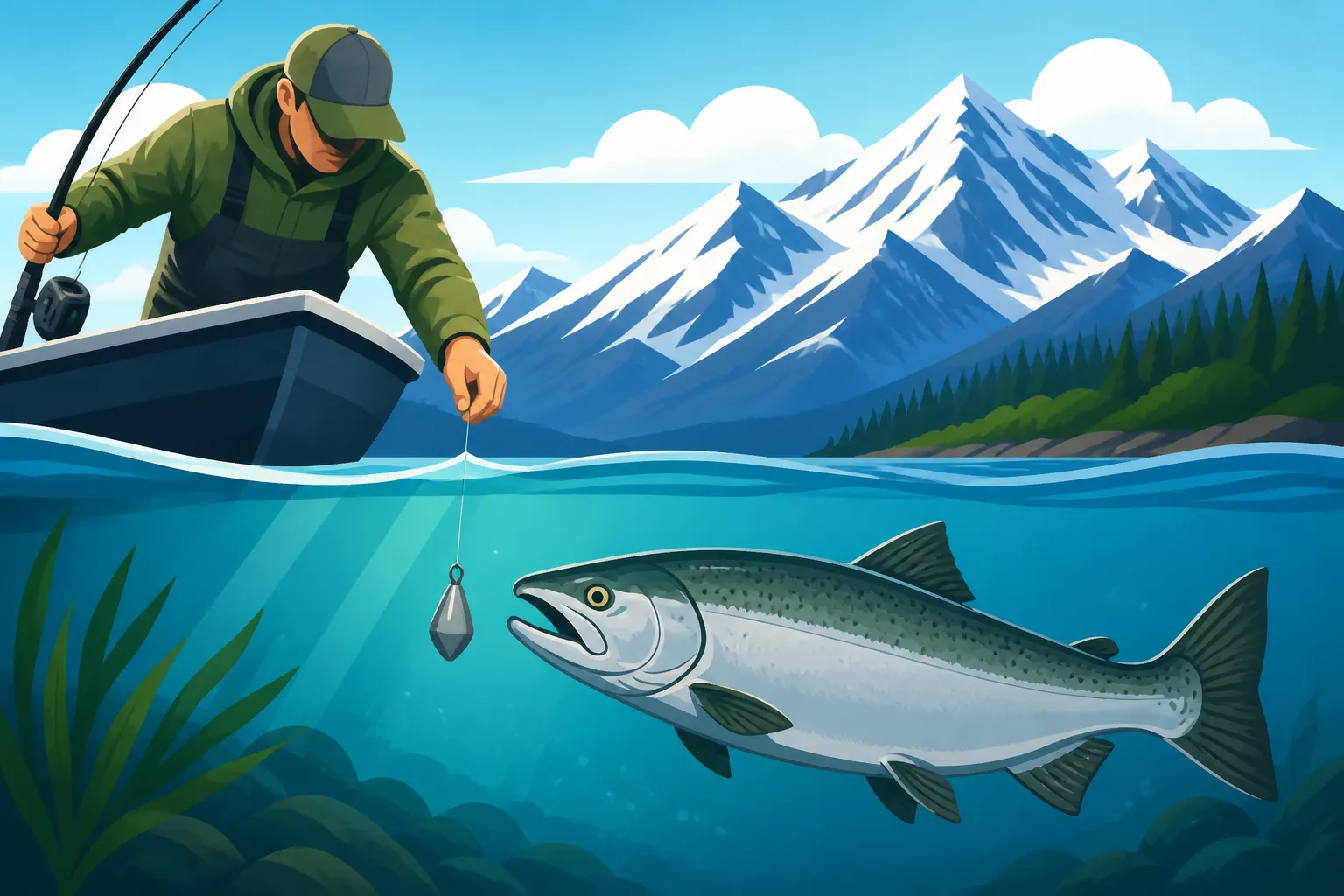
At its core, plunking involves casting a heavy weight (like a pyramid or cannonball sinker) and a baited or lured leader into a prime salmon travel lane, then allowing the current to keep your presentation stationary on the bottom. You "plunk" it down and wait. This method is incredibly effective in Alaska for several reasons. Firstly, Alaskan rivers, especially during a heavy salmon run, are often high and swift. Casting and retrieving consistently in such conditions can be exhausting and unproductive, as your lure is swept away quickly. Plunking keeps your offering in a consistent spot where salmon are likely to pass.
Secondly, salmon, particularly during their upstream migration, often hug the bottom or specific current seams to conserve energy. A well-placed plunking rig sits right in their path, offering a tempting meal or an irritating obstruction that triggers a strike. It's less about actively chasing the fish and more about patiently intercepting them. This passive yet highly strategic approach makes it a favorite among many local anglers, particularly on rivers like the Kenai, Kasilof, and Susitna, where bank access is common and strong currents prevail.
Ideal Conditions and Locations for Plunking
Plunking thrives in specific conditions and locations. The most important factor is the presence of a strong, consistent current that allows your weight to settle and your bait to flutter enticingly. You're looking for stretches of river with good current flow but not so turbulent that your gear gets tangled constantly.
- River Bends and Eddies: Salmon will often rest or travel along the inside bends of rivers, or just outside the main current where an eddy forms. These "current seams" are fantastic spots for plunking because fish are concentrated and moving predictably.
- Deep Channels and Drop-offs: If you can identify a deeper channel close to shore, or a significant drop-off, these are prime areas. Salmon use these deeper pockets as highways, especially during periods of bright sun or heavy boat traffic.
- Near Obstructions: Log jams, large rocks, or bridge pilings can create current breaks where salmon momentarily hold. Plunking just upstream or downstream of these structures can be highly productive. However, be prepared to lose some gear to snags!
- Confluence of Rivers: Where a smaller tributary meets a larger river, the mixing currents and potential food sources often attract salmon. These can be excellent, albeit sometimes crowded, plunking locations.
Remember that Alaska Fishing Regulations Explained can change, sometimes with emergency orders, so always check the latest rules for your specific area. Understanding salmon behavior and river dynamics is crucial; observing other successful anglers can also provide invaluable clues about prime plunking spots and optimal conditions.
Essential Gear and Rigging for Plunking Success
Having the right equipment is non-negotiable for plunking in Alaska. The powerful currents and the sheer size and strength of salmon, especially King Salmon, demand robust gear that can withstand the fight. Don't skimp here; a lost fish due to inadequate tackle is a truly heartbreaking experience.
Rods, Reels, and Line: Building Your Foundation
For plunking, you need gear that's built for battle.
- Rods: A heavy-action rod, typically 9 to 12 feet long, is ideal. The extra length helps with casting heavier weights and controlling fish in strong currents. A sturdy backbone is crucial for setting the hook and muscling large salmon. Many anglers prefer conventional baitcasting rods for this, as they offer excellent control and cranking power. Brands like Lamiglas or Ugly Stik make durable rods suitable for this kind of heavy-duty fishing, and you can often find a good selection on platforms like Amazon.
- Reels: Pair your heavy-action rod with a high-quality, robust baitcasting reel. It needs a smooth drag system and a strong retrieve. Look for reels with a high line capacity, as you might need to let a powerful salmon run. Lever drag or star drag systems are common choices, offering precision control during the fight. A reel specifically designed for saltwater or heavy freshwater use will hold up best.
- Line: Your main line should be braided, typically 50 to 80 lb test. Braid has minimal stretch, offering superior sensitivity for detecting subtle bites in strong currents, and its strength is unmatched. However, because braid is highly visible, you'll need to use a leader. A good leader material is fluorocarbon or monofilament, ranging from 30 to 60 lb test, depending on the target species and water clarity. Fluorocarbon is less visible underwater and more abrasion-resistant, which is a huge plus when fishing around rocks or logs. Remember, building your setup with the right components is key to a successful outing, and our Alaska Fishing Gear and Tackle Guide offers even more in-depth advice.
The Plunking Rig: Components and Assembly
The plunking rig itself is straightforward but designed for maximum effectiveness and minimal tangles in moving water.
Here’s a common setup:
| Component | Purpose | Recommended Size/Strength |
|---|---|---|
| Main Line | Connects to your reel, provides strength and sensitivity | 50-80 lb braided |
| Sliding Sinker | Allows weight to sit on the bottom while fish pulls leader freely | Pyramid or cannonball, 4-12 oz+ |
| Snap Swivel | Attaches weight to main line, allows easy weight changes | Heavy-duty, 75-150 lb test |
| Bead | Protects knot from sliding sinker impact | Hard plastic or rubber |
| Barrel Swivel | Connects main line to leader, prevents line twist | Heavy-duty, 75-150 lb test |
| Leader | Less visible to fish, provides abrasion resistance | 30-60 lb fluorocarbon/monofilament |
| Hook/Lure | Your bait or presentation, targets the fish | Single hook, treble hook, or lure |
Assembly Steps:
- Main Line to Sinker: Thread your main braided line through a large snap swivel. Then, slide a hard plastic bead onto your main line. The bead acts as a buffer, protecting the knot that follows from the heavy sinker slamming into it.
- Barrel Swivel: Tie the main line to one end of a strong barrel swivel. A Palomar knot or improved Clinch knot works well here.
- Leader: To the other end of the barrel swivel, tie your fluorocarbon or monofilament leader. The length of your leader can vary, typically 2 to 5 feet, depending on how far you want your bait to drift from the main weight. A longer leader allows for more natural movement, but can also lead to more tangles in swift current.
- Hook/Lure: At the end of your leader, tie on your preferred hook or lure. If using a single hook, make sure it's stout and sharp. If regulations allow, a treble hook might offer better hook-up ratios with certain baits.
This setup ensures that when a salmon takes your bait, the line slides freely through the snap swivel (which is connected to your heavy sinker), allowing the fish to pull on the leader without feeling the full resistance of the weight. This is often called a "sliding sinker rig" or "drift rig" and is essential for effective plunking.
Best Baits and Lures for Alaska Plunking
The choice of bait and lure can make all the difference, and it often depends on the salmon species you're targeting and current regulations.
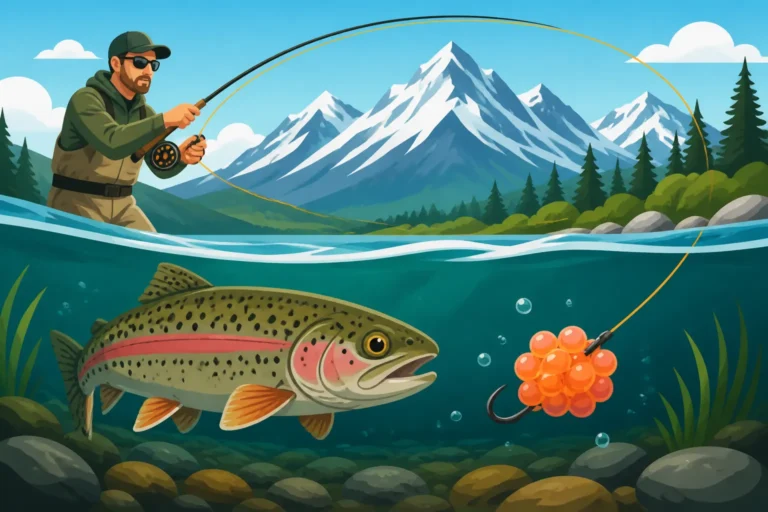
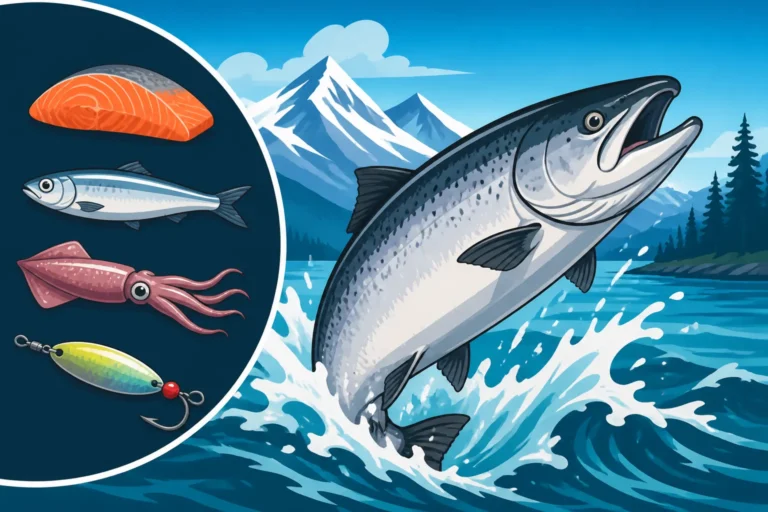
- Cured Salmon Roe: This is arguably the most classic and effective bait for salmon in Alaska. The scent and natural appearance of salmon eggs are irresistible to migrating fish. Many anglers cure their own eggs, but you can also find commercially cured eggs. A small cluster of eggs, often presented in an egg loop on your hook, is a deadly offering. Learn more about Best Bait for Alaska Salmon for detailed information.
- Spinners and Spoons: While often associated with casting and retrieving, certain large, heavy spinners and spoons can be effective when rigged on a plunking setup, especially when trying to aggravate a salmon into striking. Popular options include Vibrax spinners, Pixie spoons, or even large Mepps Aglias. The flash and vibration can be enough to draw attention in murky water.
- Plug Cut Herring: For species like King Salmon, a plug-cut herring (a section of herring cut at an angle to make it spin in the current) can be incredibly effective. The scent trail and spinning action mimic an injured baitfish. This is particularly popular in saltwater plunking, but can also work in large river systems.
- Soft Plastics: Sometimes, soft plastic lures designed to imitate eggs or small baitfish can work, especially if they have some scent added. They are durable and can withstand multiple fish.
Always check local emergency orders and the current How to Read the Alaska Sport Fishing Regulations Booklet before heading out, as bait restrictions (e.g., bait bans, single-hook only) are common in many Alaskan rivers, especially during sensitive salmon runs or when targeting certain species like King Salmon. For instance, the Alaska King Salmon Fishing Regulations and Limits often include specific gear restrictions.
Step-by-Step Guide to Plunking for Salmon
Mastering the art of plunking requires more than just casting out a heavy weight. There's a methodical approach that increases your chances of success.
Setting Up Your Spot and Casting Techniques
Choosing and preparing your fishing spot is the first critical step.
- Scout Your Location: Before you even cast, spend some time observing the water. Look for current seams, deeper pockets, and any visible signs of salmon jumping or rolling. On rivers like the Kenai, popular bank fishing spots are often obvious, but a keen eye can spot less crowded, equally productive areas. Consider what species you're targeting – for example, How to Catch Sockeye Salmon in Alaska might involve slightly different current choices than for kings.
- Positioning: Stand slightly upstream of where you want your rig to settle. This allows for a natural drift as your weight sinks. If you're fishing with multiple rods (check regulations on how many rods you can use; generally two), space them out to cover more water and avoid tangles.
- The Cast: This isn't a delicate fly-cast. You're throwing a heavy weight, so a powerful overhead or side-arm cast is usually required. Aim to cast slightly upstream and across the current. As soon as your weight hits the water, let out a little extra line. This helps the sinker get to the bottom quickly before the current sweeps it too far downstream. You want the weight to "plunk" firmly on the bottom.
- Engage and Wait: Once your weight is settled, engage your reel's drag, take up any slack line until you feel the weight firmly on the bottom, and place your rod in a sturdy rod holder. Many experienced plunkers use specialized bank-fishing rod holders that anchor securely into the ground. These are essential because when a big salmon hits, it hits hard, and an unsecured rod can be pulled into the river in a flash. Then, you wait. This is where the patience comes in.
Detecting Bites and Setting the Hook
This is where the sensitivity of your braided line and good rod choice really pay off.
- Reading Your Rod Tip: Your rod tip is your primary indicator. In strong currents, it will have a constant, gentle bend from the pressure of the water on your line. A bite will typically manifest as a sharper, more rhythmic tugging, a sudden jerking motion, or even a complete slackening of the line (indicating a fish swimming directly at you). Sometimes, it might just be a subtle twitch – don't dismiss these!
- The Salmon's Initial Take: King Salmon, in particular, often hit hard and decisively. Sockeye and Coho might be a bit more subtle at first. Don't confuse a fish mouthing the bait with the current bumping your line. Learn to differentiate the two.
- Setting the Hook: When you detect a clear bite, don't hesitate. Grab your rod firmly and perform a strong, sweeping hook set. You're trying to drive a large hook into the tough mouth of a powerful fish, often through several feet of water and heavy current. A soft hook set will often result in a missed fish. Maintain steady pressure after the set; these fish will fight hard.
Playing and Landing Your Salmon
Once that hook is set, the real fun (and challenge) begins.
- The Fight: Alaskan salmon are renowned for their strength and stamina. Be prepared for powerful runs, headshakes, and potential aerial displays. Let your rod and reel's drag system do their job. Don't try to muscle a big fish in too quickly; you risk snapping your line or pulling the hook. Keep the rod tip up, maintaining a good bend in the rod to absorb the shock. Pumping the rod (lifting the rod tip, reeling down, then lifting again) is a common technique to gain line.
- Managing the Current: The river current will be both a friend and foe. It helps tire the fish but can also make them feel twice as large. Try to guide the fish out of the main current if possible, into shallower or slower water, where you have more control. Be mindful of any obstacles like logs or other lines in the water.
- Landing the Fish: As the fish tires and you bring it close to shore, decide how you'll land it.
- Netting: A large, sturdy net is essential for landing salmon from the bank. Position the net in the water and lead the fish headfirst into it. Once the fish is in, scoop it up quickly and efficiently.
- Beach it: In sandy or gravelly areas, you can sometimes "beach" a tired salmon by slowly leading it onto the shore in shallow water. This requires careful timing to avoid letting the fish thrash its way back into deeper water.
- Handling Your Catch: Once landed, handle your fish with care. If you plan to release it (check Alaska Fishing Limits and Bag Limits Explained and practice catch-and-release rules), do so quickly and gently. If keeping it, dispatch it humanely and get it on ice as soon as possible to preserve the quality of the meat. Be aware of your surroundings, as fresh salmon scent can attract wildlife, including bears. Our guide on How to Catch King Salmon in Alaska offers more tips on handling these magnificent fish.
Maximizing Your Plunking Success: Tips from a Local
Plunking isn't just about setting a rig and waiting; it's about understanding the subtle nuances of the river and its inhabitants. Over the years, I've picked up a few pointers that consistently lead to more fish.
Reading the Water and Understanding Salmon Behavior
Truly successful plunkers are excellent observers. The river speaks volumes if you know how to listen.
- Current Seams and Eddies: As mentioned, these are prime spots. Watch where the fast water meets the slower water. Often, you'll see a distinct line on the surface where debris collects. That's a highway for salmon. Cast your plunking rig just inside the slower water, at the edge of that seam, letting your bait drift into the fish's travel path. Salmon often use these seams to move upstream with minimal effort.
- Water Clarity and Depth: On days with clearer water, salmon can be spookier. You might need a longer, lighter leader and less flashy lures. In murkier water, scent becomes paramount, and a more vibrant, high-contrast lure or bait might be more effective. Deeper channels are almost always good bets, but don't ignore shallower stretches that might serve as resting areas.
- Identify Travel Lanes: Salmon, especially Sockeye, tend to follow specific "lanes" or paths as they migrate. Sometimes these are visible as subtle depressions or faster currents. Observing where other anglers are consistently catching fish or where fish are jumping can give you clues to these unseen highways. This concept is vital, whether you're plunking or trying other techniques like Drift Fishing in Alaska: How-To Guide.
Timing Your Plunking Adventures
Timing is everything in Alaska fishing, and plunking is no exception.
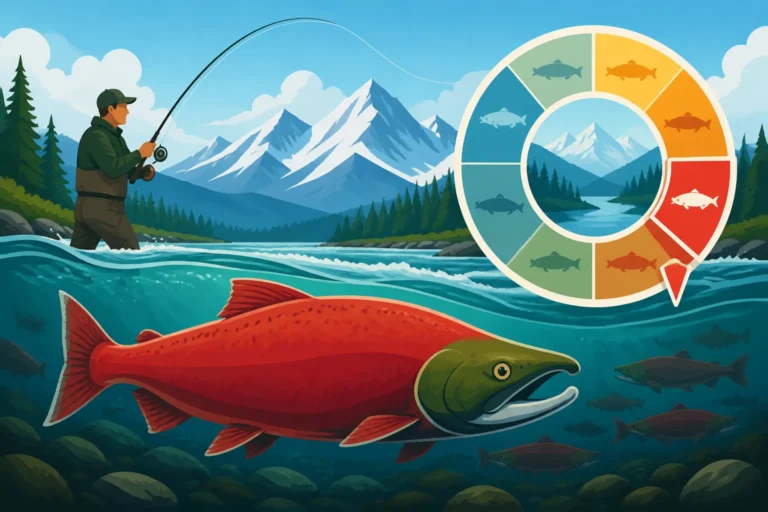
- Salmon Run Timing: Understanding when each species of salmon is running is critical. King Salmon typically arrive first, often in May and June, followed by Sockeye in June and July, and then Coho (Silver) Salmon in August and September. Pink and Chum salmon runs fill in the gaps. Knowing the general Alaska Salmon Run Timing Explained for your chosen river will help you target the right species at the right time.
- Tidal Influence (Coastal Rivers): For rivers that are tidally influenced, like the lower Kenai or Kasilof, incoming tides can bring fresh fish into the system, often making the first few hours of the incoming tide particularly productive. Conversely, outgoing tides might move fish downstream or push them out of certain areas. Understanding How Tides Affect Alaska Salmon Fishing can greatly boost your success.
- Time of Day: While Alaska's summer daylight hours are incredibly long, there can still be peak bite times. Often, early mornings and late evenings, when the light is lower, can be more productive. Overcast days can also provide good fishing throughout the day. However, during a strong run, salmon might bite at any time, especially if your bait is in their path.
- Emergency Orders: The Alaska Department of Fish and Game (ADF&G) frequently issues emergency orders that can change regulations on the fly, sometimes closing fisheries or modifying gear restrictions. Always check the ADF&G website or local sport shops before you go. This is crucial for avoiding Alaska Fishing Violations and Fines.
Safety Considerations and Regulations
Alaska is a wild place, and fishing comes with its own set of responsibilities and potential hazards.
- Bear Safety: You are fishing in bear country. Always be aware of your surroundings, make noise, and carry bear spray. Properly storing your catch and food is vital. Don't leave fish unattended on the bank.
- River Conditions: Alaskan rivers can be powerful and dangerous. Always wear a life vest if you're near deep, swift water, especially if wading. Be mindful of slippery banks and uneven terrain. Never turn your back on the river.
- Regulations: Beyond just knowing the fish limits, understand all applicable regulations. This includes legal fishing hours, bait restrictions, hook configurations (e.g., single hook, barbless), and any special harvest reporting requirements. For example, What Is the Alaska Harvest Record Card and how to fill it out correctly is crucial for King Salmon and other species. Not adhering to these rules can result in hefty fines and the loss of your catch and gear. Always carry your valid Alaska Fishing License: Complete Guide and any necessary stamps, like the King Salmon Stamp, which you can purchase online or at most tackle shops, including some found on Amazon.
Following these tips and staying informed will not only enhance your plunking experience but also ensure you're fishing safely and responsibly in the Last Frontier.
Disclaimer
The information provided in this guide is for general informational purposes only and does not constitute legal advice regarding fishing regulations. Alaska fishing regulations are complex and subject to change frequently, sometimes daily, through emergency orders issued by the Alaska Department of Fish and Game (ADF&G). It is the angler's sole responsibility to consult the most current official ADF&G sport fishing regulations booklet and any active emergency orders for the specific region and waterbody they intend to fish before heading out. Failure to do so can result in significant fines and penalties. Always prioritize safety and adherence to all local, state, and federal laws.