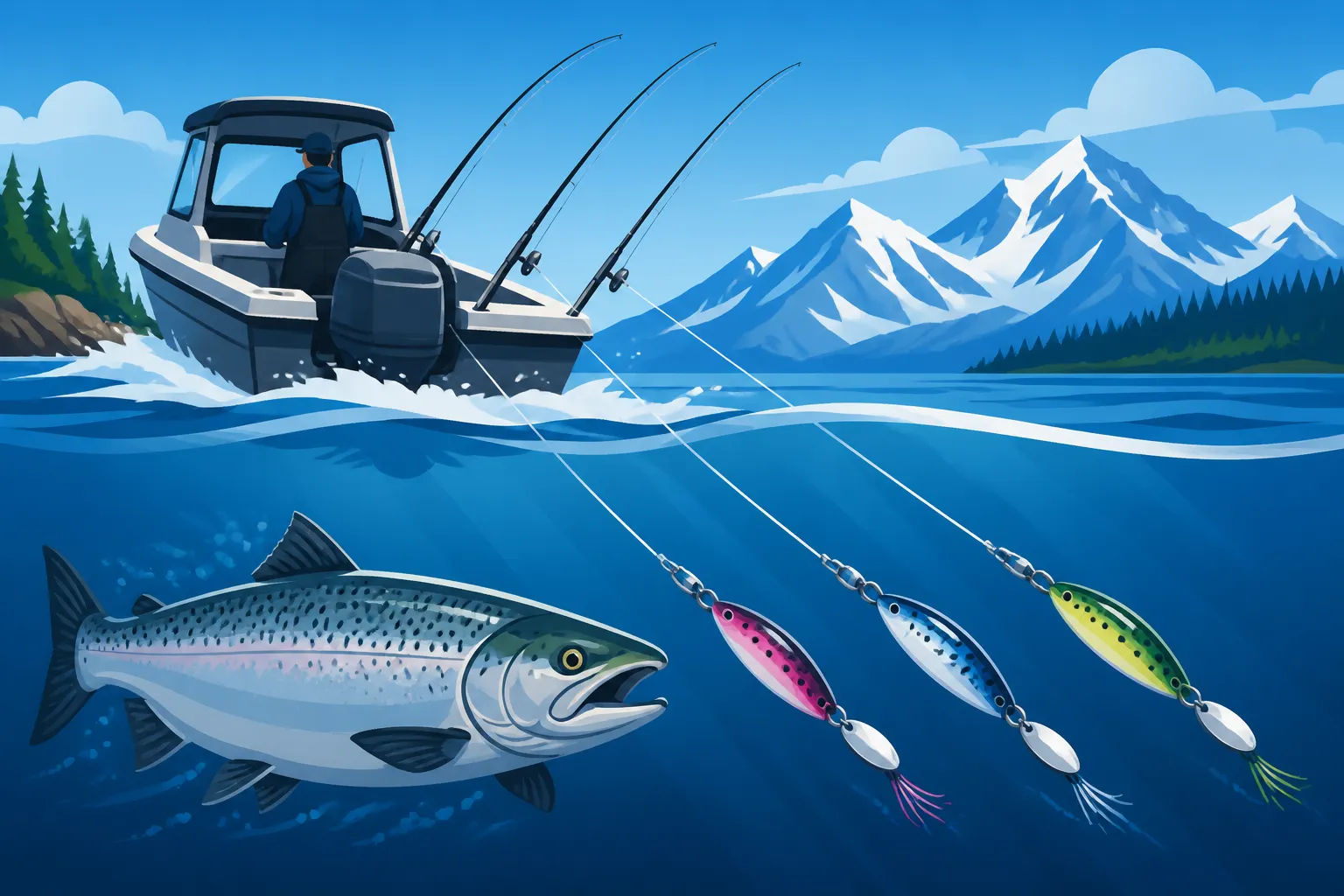
How to Back Trolling for Salmon in Alaska
The majestic rivers of Alaska offer some of the most exhilarating salmon fishing experiences on earth, but they can also be incredibly challenging. Many anglers find themselves frustrated, struggling to present their gear effectively in strong currents or deeper holes where trophy salmon often hold. This comprehensive guide is here to demystify back-trolling, a highly effective technique that allows you to methodically cover prime salmon habitat and consistently put fish in the net, even when other methods fall short.
Understanding Back-Trolling: A Deep Dive into River Dynamics
Back-trolling is a nuanced yet incredibly effective technique, particularly in the big, powerful rivers of Alaska, where salmon often hold in specific current seams and deep pools. It’s not just about letting your boat drift; it's a deliberate, controlled method of presenting your lure or bait precisely where the fish are, for an extended period, in a way that mimics natural prey movement. Think of it as a stealthy, methodical dance with the river's current.
What Makes Back-Trolling So Effective?
The core principle behind back-trolling's success lies in its ability to present your offering at or just above the salmon's eye level, against the current, at a speed that allows fish to easily intercept it. Unlike traditional downstream drifting where your gear might zip past too quickly, or anchoring where you’re confined to one spot, back-trolling gives you supreme control. You're essentially using your boat's motor to slow your downstream progress, often moving slower than the current itself, or even holding stationary, allowing your lure to "swim" naturally. This subtle, prolonged presentation is often the key to enticing a strike from a wary King Salmon or a fast-moving Sockeye. It excels in varying water depths and speeds, from the deep troughs of the Kenai River to the structured banks of the Kasilof.
Consider a hypothetical scenario: you're fishing a broad bend on the Kenai where you know big Chinook are holding. The current on the outside bend is ripping, but there's a softer seam, maybe 15 feet down, where the Kings are likely resting. If you simply drifted, your lure would be dragged quickly by the surface current, likely missing that sweet spot. With back-trolling, you can angle your boat into the main current, use your kicker motor in reverse (or main motor in reverse if no kicker), and precisely match the speed of that deeper, slower seam. Your lure stays in the strike zone longer, giving those big fish ample time to decide to bite. This deliberate control is what truly sets it apart from more passive drift fishing, turning a quick pass into an extended, irresistible presentation. It's particularly useful when you're trying to target specific species, like when you're mastering How to Catch King Salmon in Alaska.
Back-Trolling vs. Drift Fishing: A Comparison
While both back-trolling and drift fishing involve moving with the current, their execution and effectiveness are quite different. Drift fishing, often done from a McKenzie-style drift boat or an inflatable raft, relies primarily on the current to move your boat and gear. You might use oars to slow down or maneuver, but the overall pace is dictated by the river. It's fantastic for covering long stretches of river, targeting actively feeding fish, or presenting lighter tackle in shallower waters.
Back-trolling, on the other hand, gives you much finer control over your boat's speed and position relative to the current. You're actively engaging your motor to oppose the current, allowing for a slower, more deliberate presentation. This is paramount when salmon are holding tight to structure, are less aggressive, or when you need to keep your lure in a specific, small strike zone for an extended period. For instance, if you're trying to fish a deep, narrow trench where salmon are stacked, back-trolling allows you to meticulously work that trench. If you were merely drift fishing, you'd be pushed through it too quickly to ensure a proper presentation. This method shines in situations where you're looking to hit a specific run or hole repeatedly, perfecting your approach each time. Understanding these distinctions is crucial when choosing the Best Fishing Techniques for Alaska for your target species and river conditions.
| Feature | Back-Trolling | Drift Fishing (Traditional) |
|---|---|---|
| Control | High; motor used to precisely regulate speed/position | Moderate; primarily current-driven, oars for minor adjustments |
| Speed | Slower than current, or stationary relative to bottom | Typically at or slightly faster than current |
| Presentation | Extended, natural "swimming" action against current | Quicker, downstream presentation |
| Targeting | Pinpoint accuracy in specific holes, seams, structure | Covering broader stretches of river, active fish |
| Depth Control | Excellent, can hold in deeper water longer | Good, but challenging to hold precise depth in varied currents |
| Ideal Conditions | Strong currents, deep pools, less aggressive fish | Moderate currents, active fish, covering water |
| Equipment | Power boat (jet or prop) with kicker often preferred | Drift boats, rafts, sometimes small jon boats |
Essential Gear for Back-Trolling Success
Equipping yourself correctly for back-trolling salmon in Alaska is paramount. The right setup not only makes the technique more effective but also handles the formidable power of a hooked salmon in strong river currents. You don't want to be under-gunned when that King Salmon decides to make a run! Finding reliable gear is key, and many anglers source their essential items from retailers like Amazon, especially for specific brands or components.
Rods and Reels: The Backbone of Your Setup
For back-trolling, you'll want a rod with enough backbone to handle heavy weights and stout salmon, yet sensitive enough to telegraph subtle bites. A medium-heavy to heavy power rod, typically 8 to 10.5 feet in length, is ideal. These longer rods help with line management, especially when you're trying to keep your line clear of the propeller or other lines in the boat. A fast action tip will help you feel those subtle takes and set the hook effectively, while the powerful butt section provides the leverage needed to fight a big fish. Brands like Lamiglas, G. Loomis, or Shimano often produce excellent salmon rods that hold up to the Alaskan challenge.
Matching this with a robust baitcasting reel is essential. Look for a reel with a strong drag system, a good line capacity (at least 200 yards of 20-30 lb monofilament or braid), and smooth gearing. Reels like the Abu Garcia Ambassadeur series, Shimano Tekota, or Daiwa Lexa are popular choices among Alaskan anglers. Many of these reliable models can be easily found on Amazon, offering a wide selection of sizes and gear ratios to suit your specific needs. A quality reel ensures you can both deploy your heavy weights smoothly and confidently fight a powerful King Salmon without fear of equipment failure.
Line and Terminal Tackle: Connecting You to the Fish
Your main line should be a strong braided line, typically 50 to 80 lb test, chosen for its minimal stretch and incredible sensitivity. This allows you to feel even the slightest tap from a salmon that might be mouthing your lure. However, since braided line is highly visible, you'll need a leader. A good quality fluorocarbon leader, in the 25 to 40 lb range, is often preferred for its invisibility underwater and abrasion resistance. The length of your leader can vary, but generally, 3 to 6 feet is a good starting point. You'll connect your main braided line to your leader with a strong swivel and bead chain, which helps prevent line twist, especially when using spinning lures.
When it comes to terminal tackle, you'll need a variety of weights to get your lure down to the fish. Slinky weights, pencil lead, or cannonball sinkers ranging from 3 to 16 ounces are common, depending on the current speed and depth. Having a selection is crucial, as river conditions can change hourly. Hooks should be razor-sharp and strong; single barbless hooks are often required in many Alaskan salmon fisheries to reduce fish mortality and comply with Alaska Barbless Hook Requirements. Treble hooks may be legal in some areas, but always check the latest Alaska Fishing Regulations Explained for your specific location. Swivels, like barrel or ball-bearing swivels, are also important components to prevent line twist, especially when your lure is performing its tantalizing wobbling action in the current.
Lures and Bait: What to Present
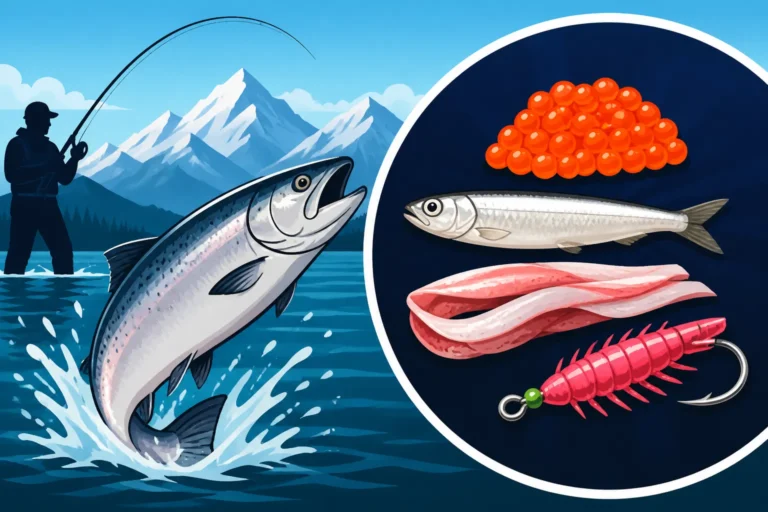
The choice of lure or bait depends heavily on the salmon species you're targeting and the specific regulations in place. For King Salmon, popular choices include large diving plugs like the Kwikfish (K14, K15, K16 sizes) or Magnum Wiggle Warts. These lures dive and wobble aggressively, creating vibrations that attract big Chinook. Often, these plugs are "wrapped" with a fillet of sardine or herring to add scent and natural appeal. Spinners, especially large Pixee or Vibrax spinners, can also be highly effective.
When targeting Sockeye Salmon, back-trolling can be adapted using small, unweighted flies or beads (often called "flicking" or "flossing" in specific techniques) to intercept them as they swim upstream. For Coho (Silver) Salmon, smaller Kwikfish or spinners, sometimes tipped with a small piece of bait like an cured egg cluster or herring, work well. Always ensure your chosen bait and technique are compliant with local bait restrictions and emergency orders, which can change rapidly. For an in-depth look at what works best, check out Best Lures and Bait for Alaska King Salmon. Many anglers find that specialty shops and even online retailers like Amazon offer an extensive range of colors and sizes for these proven salmon lures.
Step-by-Step Guide to Back-Trolling for Salmon
Alright, you've got your boat, your gear, and your enthusiasm! Now, let's break down the actual process of back-trolling. This isn't just dropping a line; it's a strategic operation that, when done right, can lead to consistent success on the water.
Setting Up Your Run
The first and arguably most crucial step is identifying where the salmon are likely to be. This means understanding river structure: deep channels, current seams (where fast and slow water meet), eddies, and gravel bars. Salmon will often hold in these areas, seeking refuge from the main current while waiting to continue their journey upstream. Use your fishfinder to locate schools of fish or promising structure.
Once you have your target area, position your boat well upstream of it. You want enough room to set your gear and get it to the desired depth before entering the prime holding water. For example, if you're targeting a deep hole that starts 100 yards downstream, begin your setup 150-200 yards above it. Deploy your lines by letting out your weight and lure/bait. The amount of line you let out will depend on the depth you're targeting and the amount of weight you're using. A good rule of thumb is to let out enough line so that your weight is occasionally ticking the bottom, but not constantly dragging and snagging. This "tick-tick-glide" motion tells you you're in the strike zone. If you're using diving plugs, ensure they are running true – sometimes you need to tune them by slightly bending the eyelet.
The Art of Boat Control and Presentation
With your lines deployed, it's time to engage your motor. Typically, a small kicker motor is used, but a larger main motor in reverse works too. The goal is to control your downstream speed. You want to move slower than the current, or sometimes even hold nearly stationary, to allow your lures to "swim" against the current. This creates a natural, enticing action. If the current is pushing you too fast, increase your motor's RPMs in reverse. If you're moving too slowly or even upstream, reduce your power.
Watch your rod tips, your line angle, and your fishfinder. Your line should ideally be at a 45-degree angle or less, indicating your lure is relatively close to the boat and maintaining depth. If your line is straight out behind you, you're likely going too fast or not using enough weight. Pay close attention to how your lure is behaving on your fishfinder – you should see it working near the bottom. The key is to maintain a consistent depth and speed through the prime fishing zone, slowly backing your boat down the river. This precise boat control is a skill that takes practice, but it's what differentiates a successful back-troller from someone just drifting aimlessly. For deeper insights into navigating these challenging waters, consider reading How Tides Affect Alaska Salmon Fishing or learning more about specific areas in the Kenai River Fishing Guide.
Detecting Bites and Setting the Hook
Salmon bites when back-trolling can range from a subtle tap to a violent yank that nearly rips the rod from your hands. Because you're often using braid, you'll feel every bump and tick of your weight on the bottom, so learning to differentiate between a rock and a fish is crucial. A salmon bite often feels like a heavier, distinct thud or a sudden, sustained pull.
When you feel a bite, resist the urge to immediately yank back. Instead, let the fish take the lure for a moment to ensure it's fully in its mouth. Then, sweep your rod back firmly and deliberately to set the hook. With larger King Salmon, a strong, sweeping hookset is absolutely essential to penetrate their tough mouths. Once hooked, keep steady pressure on the fish, using your reel's drag system to manage its runs. Don't pump the rod too aggressively; let the rod and reel do the work. Remember, these are powerful fish in strong currents, so patience and controlled fighting are key.
Mastering the Nuances: Tips, Tricks, and Troubleshooting
Back-trolling is a technique with many layers, and truly mastering it involves understanding the subtle cues of the river and adapting your approach. It’s not a set-it-and-forget-it method; it’s an ongoing conversation with the environment and the fish.
Reading the River and Adjusting Your Approach
Alaska's rivers are dynamic, and conditions can change rapidly due to weather, tides, and salmon runs. A vital skill for back-trollers is learning to read the river. Look for color changes in the water, indicating depth or current variations. Observe other boats – where are they catching fish? Pay attention to swirling eddies, current breaks, and log jams, as these are natural holding spots for salmon. Your fishfinder is your best friend here, showing you depth contours, submerged structure, and, hopefully, schools of fish.
Adjust your weight, line length, and boat speed based on what the river is telling you. If you're constantly snagging, lighten your weight or reel in a bit of line. If you're not ticking bottom at all, add more weight or let out more line. Experiment with lure colors and sizes. Sometimes, a subtle change from a bright chartreuse Kwikfish to a more subdued metallic pattern can make all the difference. Always be ready to adapt; rigidity will often lead to frustration. Staying informed about How Alaska Bag Limits Change In-Season and checking Alaska Fishing Emergency Orders Explained is also part of reading the river, ensuring you're compliant and aware of any significant changes.
Common Back-Trolling Mistakes to Avoid
Even experienced anglers can fall into common traps. One frequent mistake is using too much or too little weight, leading to either constant snags or the lure washing out of the strike zone. Another is not maintaining consistent boat speed relative to the current; erratic speed changes can make your presentation unnatural. Too often, I see anglers who are simply drifting with the current, mistaking it for back-trolling. Remember, back-trolling involves active motor control against the current.
Another error is having a dull hook. Big salmon have tough mouths, and a dull hook will result in missed opportunities. Always check your hook points regularly. Finally, don't be afraid to try different depths and areas. Just because salmon were in one spot yesterday doesn't mean they'll be there today. The fish move, and you need to move with them. Don't be afraid to experiment with different lure types and presentations. For instance, while plugs are popular, sometimes a simple cured egg presentation or a large spinner can be more effective, especially during a hot bite on the Copper River. Remember, a common frustration for newcomers is not knowing the specific rules, so refreshing yourself on the Alaska Fishing Regulations Explained can prevent issues.
The Role of Electronics and Safety Considerations
Modern boat electronics, especially good fishfinders with GPS capabilities, are invaluable for back-trolling. They allow you to mark hot spots, track your drift speed, and monitor your depth and the presence of fish. Some advanced units can even display bottom contours in real-time, helping you navigate complex riverbeds. Utilize these tools to your advantage, but don't rely on them exclusively – your eyes and feel for the river are just as important.
Safety on Alaskan rivers cannot be overstated. Always wear your life vest, especially in fast-moving water. Be aware of submerged hazards, strong currents, and other boat traffic. If you're using a kicker motor, ensure it's functioning correctly. Carry all necessary safety gear, including a first-aid kit, communication devices, and bear spray, as you're often in remote areas. Remember, you're in wild country, and preparedness is key. For more tips on staying safe, check out How to Fish Safely Around Alaska Bears before you head out.
Back-trolling is a skill that takes time to develop, but the rewards are well worth the effort. With practice, patience, and the right approach, you'll find yourself consistently connecting with Alaska's incredible salmon, creating memories that will last a lifetime.
Disclaimer
The information provided in this guide is for general informational purposes only and is not intended as legal advice regarding fishing regulations. Alaska fishing regulations, including bag limits, seasons, and tackle restrictions, can change frequently and vary by region, species, and even specific rivers. Always consult the latest Alaska Department of Fish and Game regulations and emergency orders before heading out on the water. Following all local rules and safety guidelines is the sole responsibility of the angler.