How to Fly Fishing for Salmon in Alaska
Fly fishing for Alaska salmon is often seen as the pinnacle for many anglers, a truly epic challenge that can sometimes feel like trying to catch a phantom. You’re up against powerful, instinct-driven fish, often in swift currents and unpredictable weather. But don't despair! This guide is here to demystify the process, walking you through the essential gear, effective techniques, and prime locations to help you successfully land those magnificent Alaskan salmon on a fly rod.
Understanding Alaska Salmon and Their Habits for Fly Fishing
Before you even think about casting a line, it's crucial to understand the stars of the show: Alaska's incredible salmon species. They're not all the same, and their individual quirks will dictate your approach. Getting inside their heads, so to speak, is half the battle.
The Five Species of Pacific Salmon in Alaska
Alaska is home to all five species of Pacific salmon, and each offers a unique fly-fishing experience. Knowing what you're targeting will make all the difference in your gear and technique choices.
First, you have the mighty King Salmon, also known as Chinook. These are the giants, the bruisers, often weighing 20-50 pounds, with some absolute monsters pushing 70 pounds or more. Hooking one on a fly rod is an unparalleled battle, demanding heavy tackle and sheer grit. They enter rivers earlier in the season, typically May through early July, and their power means you’ll need every bit of your strength and a stout setup. Next are the Sockeye Salmon, or Reds. While not as large as Kings, usually 6-12 pounds, they arrive in staggering numbers, creating legendary salmon runs. They’re notorious for being difficult to entice with a fly in freshwater because they aren't actively feeding. Most Sockeye are caught by "flossing," a method we'll delve into later. The beautiful Coho Salmon, or Silvers, are the acrobats of the salmon world. Ranging from 8-15 pounds, they're famous for their aggressive strikes and spectacular aerial displays. They typically run later in the summer and into the fall, making for some incredibly exciting fly fishing, especially on surface flies. Then there are the Pink Salmon, often called "Humpies" due to the pronounced hump males develop during spawning. These are the smallest and most numerous, usually 3-5 pounds. They run on even-numbered years in huge quantities, making them a fantastic target for beginners or those just looking for constant action. Finally, we have the Chum Salmon, or Dogs, often overlooked but powerful fighters. They typically weigh 8-15 pounds and are known for their sharp, canine-like teeth. Chums can be quite aggressive and provide a strong fight on a fly rod, especially in rivers like the Kuskokwim or Yukon.
If you want to dive deeper into the specific characteristics of each, you can check out our guide on Types of Salmon in Alaska Explained. Understanding these distinctions is key to a successful fly-fishing trip, as a fly that works for a Coho might be completely ignored by a Sockeye, and a rod suitable for a Pink will be woefully inadequate for a King.
Salmon Behavior During Their Spawning Runs
One of the most crucial things to grasp about fly fishing for salmon in Alaska's freshwater systems is that these fish are primarily on a mission to spawn, not to feed. They've stopped actively eating once they enter the rivers from the ocean. This changes the entire dynamic of how you approach them with a fly.
When salmon enter freshwater, their focus shifts entirely to reproduction. Their digestive systems begin to shut down, and they no longer actively hunt for food. So, why do they "strike" a fly? It's often not a feeding strike, but rather a territorial response, an instinctual snap, or simply the fly irritating them as it drifts into their personal space. They're conserving energy, so a fly that's presented naturally and minimally invasive is often more effective than something flashy trying to trigger a feeding response that isn't there. This behavior means your presentation, the fly's depth, and its movement through the water are paramount. You're not trying to mimic natural food; you're trying to provoke a reaction. This is particularly true for Sockeye, which are notoriously difficult to catch on a traditional "feeding" fly presentation, leading to the development of specific techniques like flossing. The vibrant colors and aggressive patterns often used for Coho, however, are designed to trigger an instinctive predatory response, even if they aren't actually hungry. The key is knowing which instinct to play on for each species.
Essential Gear for Fly Fishing Alaska Salmon
Hitting the rivers of Alaska without the right gear is like showing up to a gunfight with a butter knife – you're just not prepared for the battle ahead. Alaska's environment is demanding, and its salmon are notoriously powerful. Investing in quality, appropriate gear isn't just a suggestion; it's a necessity for both success and safety. For a more comprehensive look at what to pack, our Alaska Fishing Gear and Tackle Guide offers tons of useful tips.
Rod, Reel, and Line Selection
The foundation of your salmon fly fishing setup starts here. You need equipment that can handle big fish, strong currents, and potentially long days on the water.
For most Alaska salmon species, you'll want to gravitate towards heavier fly rods than you might typically use for trout. An 8-weight rod is often considered the minimum for Coho and Chum, offering enough backbone to cast larger flies and fight these powerful fish. If you're specifically targeting King Salmon, you'll need to step up significantly – a 10-weight or even a 12-weight rod is highly recommended. These rods provide the leverage needed to turn a big King in heavy current and absorb the shock of their powerful runs. Look for rods with a fast action, which will help you cast heavy sinking lines and larger flies more effectively, especially when battling the constant winds that can sweep through Alaskan valleys.
Matching your rod with a high-quality reel is just as important. Your reel needs a smooth, powerful drag system that can withstand blistering runs and quickly dissipate heat. Many experienced anglers prefer large arbor reels, which retrieve line faster and reduce line memory. Capacity is also key; ensure your reel can hold your fly line plus at least 200 yards of 30-pound backing, especially when a King Salmon decides to make a break for it. Popular reel brands like Lamson, Orvis, and Sage are often seen on Alaskan rivers because they deliver the reliability you need.
When it comes to fly lines, you'll likely use a few different types depending on the species and conditions. A weight-forward floating line is versatile for casting streamers to Cohos or Pinks in shallower water. However, for Sockeye or Kings, especially in deeper, faster currents, various sinking tips or full sinking lines are indispensable. Integrated sinking lines (like those from Scientific Anglers or Rio) that have different sink rates for the front and back sections can be particularly effective for getting your fly down quickly to where the fish are holding. These specialized lines are easily found on Amazon and other dedicated fly shops.
Waders, Boots, and Apparel
Comfort and safety in Alaska’s variable climate are non-negotiable. You'll be spending a lot of time in and around cold water, so staying dry and warm is paramount.
High-quality, breathable chest waders are essential. Brands like Simms and Patagonia are popular choices among Alaskan anglers because of their durability and ability to keep you dry through countless hours of wading in chilly rivers. Look for waders with reinforced knees and seat, as you’ll inevitably be kneeling, sitting, or even sliding over riverbanks. Paired with your waders, sturdy wading boots with good ankle support are critical for navigating slippery river bottoms and uneven terrain. Felt soles provide excellent grip on slick rocks, but some regulations might prohibit them to prevent the spread of invasive species; rubber soles with studs are a great alternative.
Beyond waders, layering is the name of the game in Alaska. The weather can change on a dime, from sunny skies to torrential downpours or even snow flurries, sometimes all in the same day. Start with moisture-wicking base layers, add insulating mid-layers like fleece or down, and top it off with a waterproof and windproof outer shell. A good quality rain jacket and pants are non-negotiable. Don't forget a warm hat, gloves, and polarized sunglasses to cut glare off the water and protect your eyes. It’s always better to overpack layers and shed them if you get warm than to be miserably cold and wet.
Flies and Terminal Tackle
Choosing the right flies and setting up your leader system correctly can mean the difference between an epic day and going home empty-handed.
For King Salmon, large, weighted intruders, articulate streamers, and massive egg patterns in bright colors like chartreuse, fuchsia, or black and blue are often effective. For Sockeye, the name of the game is usually small, heavily weighted lead-eyed flies in simple patterns like Alaska Sockeye Candy or Russian River Fly, often just a bead and some yarn, designed to drift naturally near the bottom. When targeting Coho, brighter, more aggressive streamers like the Clouser Minnow, Dolly Llama, or Stinger Prawn in various shades of pink, chartreuse, or orange work wonders, as do topwater poppers in lower light conditions. Pink Salmon will hit almost anything pink, from small streamers to weighted nymphs. Chum salmon respond well to larger, brightly colored flies similar to those used for Cohos, often with a bit more flash.
Your leader and tippet setup will vary, but generally, you'll want stronger material than for trout. For Kings, 20-25 pound fluorocarbon tippet is not uncommon. For Sockeye, 12-15 pound test is typically sufficient. For Cohos and Chums, 15-20 pound test usually holds up. Always carry extra spools of tippet in various strengths. Don't forget essential accessories like nippers, forceps, a wading staff for stability in swift currents, and a good net. Many of these smaller but crucial items, like a multi-tool or a selection of specialized flies, are readily available on Amazon.
Proven Fly Fishing Techniques for Alaska Salmon
Fly fishing for salmon in Alaska is a dynamic dance between understanding fish behavior, mastering your cast, and presenting your fly just right. It’s not always about textbook dry fly presentations; sometimes it’s about getting down deep and provoking a strike.
The Art of "Flossing" for Sockeye Salmon
Sockeye salmon are legendary for their incredible runs up rivers like the Kenai and the Russian River, but they present a unique challenge to fly anglers: they generally don't bite flies in freshwater in the traditional sense. This is where "flossing" comes into play.
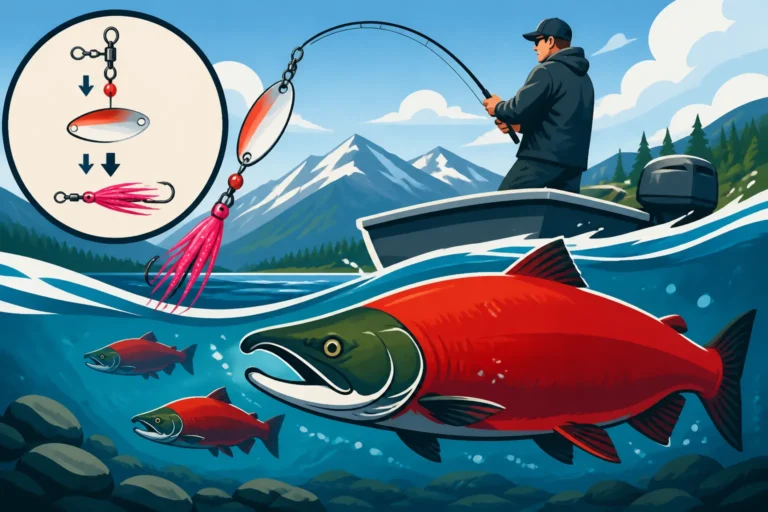
Flossing is a technique designed to catch Sockeye (and occasionally other salmon) by drifting a weighted leader and a small, unweighted fly through a school of fish. The goal is for the leader to drift across the fish's mouth, and as the leader tightens, the fly swings into the corner of its jaw. It sounds controversial, and it certainly can be, but when done correctly and legally, it's a highly effective way to catch these abundant salmon. The key is to use a long leader (often 9-12 feet) with a weight placed several feet above a very short piece of tippet (usually 18-24 inches) tied to a small, often bead-headed or yarn fly. You cast upstream and slightly across, allowing the current to carry your line and leader downstream. As your line straightens out at the end of the drift, the leader (and hopefully the fly) will sweep through the Sockeye's path. When you feel a subtle take or snag, set the hook with authority. It’s crucial to be aware of Alaska Sockeye Salmon Fishing Regulations and Limits as specific weights, leader lengths, and areas can be subject to strict rules and emergency orders. Mastering the mend to control your drift and keep your line slack enough for a natural presentation, but tight enough to feel a subtle pickup, is what truly defines a good flosser.
Swinging Streamers and Egg Patterns for Kings, Cohos, and Rainbows
While Sockeye often require a specialized approach, many other Alaskan fish species respond incredibly well to swinging flies, which mimics natural prey or provokes an aggressive response.
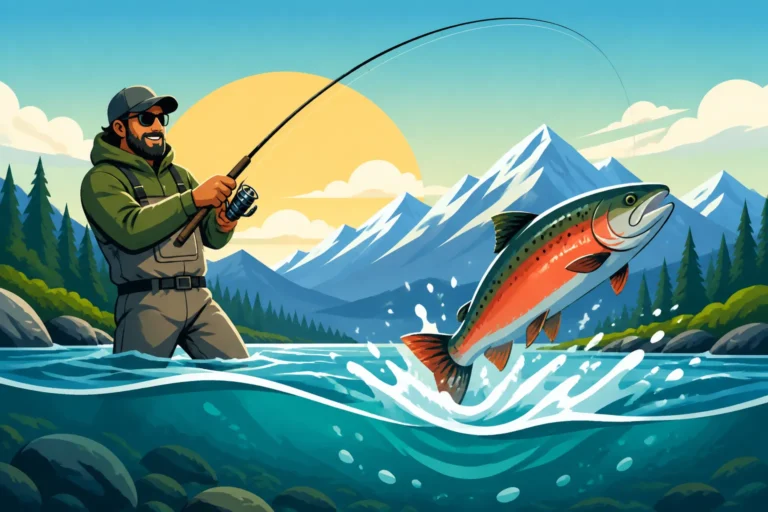
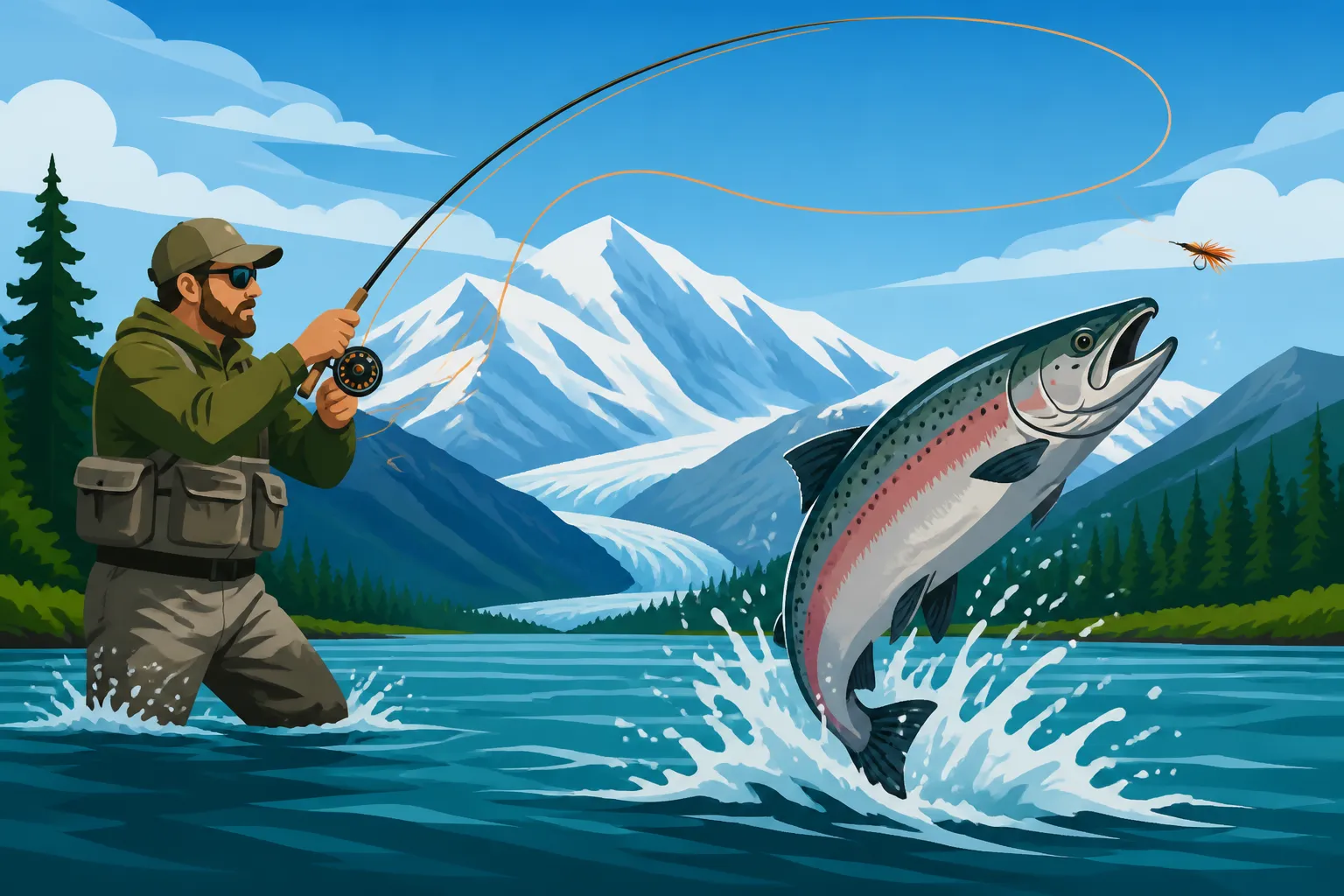
Swinging a streamer or an egg pattern involves casting your fly across and slightly downstream, then allowing it to swing through the current on a tight line. As the fly moves, it creates an enticing presentation that can trigger powerful strikes. For King Salmon, you'll typically use large, weighted streamers or intruder-style flies on a sinking line. The idea is to get the fly down deep into their holding lies, often in troughs or behind structure. Your cast should place the fly upstream enough to allow it to sink before it reaches the target zone. As it swings, you might add a subtle strip or twitch to impart more action. Be prepared for a violent strike; a King Salmon taking a swung fly is an experience you won't soon forget.
For Coho Salmon, swinging streamers is incredibly effective, especially as they become more aggressive closer to spawning. Brightly colored patterns like Dolly Llamas or chartreuse/pink Clouser Minnows swung through seams and pools can result in explosive takes. The same goes for egg patterns when targeting Rainbow Trout, particularly those that are feeding behind spawning salmon, gorging on loose eggs. For trout, smaller, more natural-looking egg patterns, often fished with an indicator or dead-drifted, are productive. When swinging, a slow, deliberate retrieve at the end of the swing can often entice a follow-up strike. It’s all about getting that fly to look alive and irresistible as it sweeps through the fish’s strike zone. You might even find success with this method for Chum Salmon, which are strong fighters and often react to the same patterns as Cohos. For more on catching these fighters, check out How to Catch Coho Salmon in Alaska.
Nymphing and Indicator Fishing in Slower Waters
Not all salmon fishing in Alaska happens in fast, heavy currents. Sometimes, fish hold in slower pools, eddies, or deeper runs, where a more subtle approach with nymphing or indicator fishing can be deadly effective.
Nymphing, or indicator fishing, involves suspending a weighted fly (or flies) under a strike indicator (a bobber for fly fishing) and allowing it to drift naturally with the current. This technique is often used for trout, but it can also be highly effective for salmon, particularly King Salmon, Coho, or even Chum that are holding in deeper, slower water and might be less inclined to chase a swung fly. The indicator helps you detect subtle takes that you might otherwise miss. Your setup would typically include a floating fly line, a tapered leader, and a piece of tippet tied to your fly. Attach the indicator at a depth that allows your fly to drift just above the river bottom, where fish are often holding. Cast upstream and allow your setup to drift naturally, mending your line to avoid drag and ensure your fly is moving at the same speed as the current. Watch the indicator closely; any twitch, hesitation, or sudden movement means it’s time to set the hook. This method requires patience and a keen eye but can yield excellent results in the right conditions.
This technique is also fantastic for targeting resident Rainbow Trout that feed on dislodged salmon eggs and insect nymphs, especially on rivers like the Kenai or Russian after the salmon have moved through. A small, weighted egg pattern or a stonefly nymph fished under an indicator can lead to some incredible trout action when the salmon fishing slows.
Best Times and Locations for Fly Fishing Salmon in Alaska
Alaska is a vast state, and knowing when and where to go is crucial for a successful fly fishing adventure. Timing is everything when it comes to salmon runs, and choosing the right river can make all the difference.
Understanding Salmon Run Timings
Salmon runs in Alaska are migratory events dictated by species, river system, and even specific genetic populations. Getting the timing right is probably the single most important factor for success.
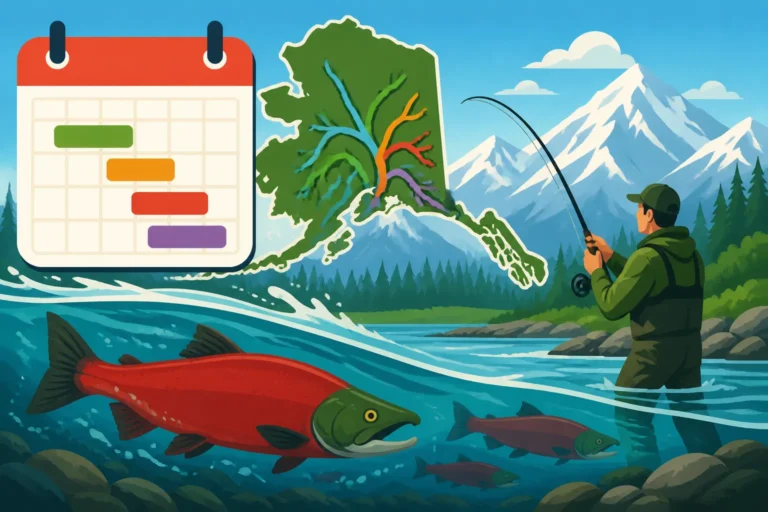
The season kicks off in late May and early June with the first push of King Salmon, particularly in rivers like the Kenai and Kasilof. These early Kings are fresh from the ocean, bright, and notoriously strong fighters. By mid-June and into July, the Sockeye Salmon runs truly explode. Rivers turn red with thousands upon thousands of these determined fish, offering incredible volume, especially on the Kenai River. Mid-July often sees a continuation of Sockeye, along with the start of Pink Salmon in even-numbered years. As August arrives, the Coho Salmon begin to show up in earnest, continuing through September and even into October in some systems. These late-season Silvers offer some of the most exciting fly fishing, with aggressive takes and acrobatic fights. Chum Salmon runs often overlap with Sockeye and Coho, providing another powerful target throughout the summer.
It's absolutely essential to consult the Alaska Department of Fish and Game (ADF&G) regulations and run forecasts. These can be found online and are constantly updated with Alaska Fishing Emergency Orders Explained, which can change bag limits, open/closed areas, and even allowed gear on very short notice. Being informed can save you a lot of heartache and ensure you’re fishing legally. You can delve into more specifics with our guide on Alaska Salmon Run Timing Explained.
Popular Fly Fishing Destinations
Alaska is peppered with incredible fishing destinations, each with its own charm and target species. Knowing where to focus your efforts can help tailor your trip.
One of the most famous destinations is the Kenai Peninsula, often considered the heart of Alaska’s road-accessible salmon fishing. The Kenai River is world-renowned for its monster King Salmon and massive Sockeye runs. However, its popularity also means it can get crowded, especially during peak Sockeye season. Nearby, the Kasilof River offers another excellent King Salmon fishery, often less crowded than the Kenai. For Sockeye, the Russian River, a tributary of the Kenai, is legendary, though it also sees heavy angler pressure during the peak of the run. You can find detailed information about this iconic waterway in our Kenai River Fishing: Complete Guide.
Further afield, destinations like Bristol Bay offer unparalleled fly-out fishing experiences, with vast, wild rivers teeming with Sockeye and incredible Rainbow Trout feeding behind them. Rivers like the Nushagak or the Naknek are famous for their King Salmon and Sockeye runs. In Southeast Alaska, rivers around Juneau, Sitka, and Ketchikan are fantastic for Coho, Pink, and Chum Salmon, often with less pressure than the road systems of Southcentral. These regions also offer fantastic opportunities for fly fishing for resident species like Cutthroat Trout and Dolly Varden. For a broader view, check out our Best Fishing Spots in Alaska guide.
River Conditions and Safety
Alaska’s wildness is part of its allure, but it also demands respect and preparation, especially concerning river conditions and wildlife.
River conditions can change dramatically due to rainfall or snowmelt. High, murky water can make fly fishing incredibly challenging, requiring heavier sinking lines and flies with more vibration or scent. Conversely, low, clear water demands a stealthier approach with longer leaders and smaller flies. Always check local river levels and weather forecasts before heading out. Safety is paramount: fast currents, slippery rocks, and deep holes are common. A wading staff is a wise companion for stability.
And then there's the wildlife. You are sharing the river with bears – both black bears and grizzlies – which are also drawn to the salmon. Always be bear aware: make noise, carry bear spray, know how to use it, and never store food or fish near your fishing spot. Processing your catch away from the riverbank is a good practice. Most importantly, never approach or feed bears. Being prepared for potential encounters is part of the Alaskan experience. You can learn more about how to navigate these encounters safely in our article on How to Fish Safely Around Alaska Bears.
Here's a quick reference for common salmon species and effective fly patterns:
| Salmon Species | Primary Run Time (Peak) | Typical Weight | Recommended Fly Rod Weight | Effective Fly Types & Colors |
|---|---|---|---|---|
| King (Chinook) | Late May – Early July | 20-50+ lbs | 10-12 weight | Large Intruders, Articulate Streamers (chartreuse, black/blue, purple), large Egg Patterns |
| Sockeye (Red) | Mid-June – Mid-July | 6-12 lbs | 8-9 weight | Weighted Sockeye Flies (small, unweighted yarn or bead patterns), Russian River Fly, Sockeye Candy |
| Coho (Silver) | August – October | 8-15 lbs | 8-9 weight | Streamers (Clouser Minnow, Dolly Llama, Stinger Prawn), Poppers (pink, chartreuse, orange, white) |
| Pink (Humpy) | Mid-July – August (even years) | 3-5 lbs | 6-8 weight | Small Streamers, Pink Poppers, Weighted Nymphs (pink, purple, chartreuse) |
| Chum (Dog) | July – August | 8-15 lbs | 8-10 weight | Larger Streamers (bright greens, chartreuse, pink, purple), Boss, Comets |
Disclaimer
Please remember that fishing regulations in Alaska can change frequently due to emergency orders from the Alaska Department of Fish and Game. Always consult the most current regulations booklet and check for emergency orders before you head out on the water. This guide is for informational purposes only and does not supersede official regulations.