How to Fish Beads for Alaska Trout
Trying to entice those wild, wary Alaska trout can sometimes feel like you're speaking a different language. You've got your favorite flies, your trusted spinners, but sometimes, especially when salmon are spawning, they just won't hit. That's where the magic of bead fishing comes in. It’s a technique designed to perfectly mimic the natural food source that trout, Dolly Varden, and even char gorge on during the salmon runs: loose salmon eggs. This guide is all about demystifying bead fishing, so you can confidently tie on a bead and land some of Alaska's most prized freshwater fighters.
Why Trout in Alaska Love Beads: Mimicking Nature's Bounty
If you've ever spent time on an Alaskan river when salmon are spawning, you've witnessed the incredible bounty of salmon eggs drifting downstream. These eggs, dislodged from nests (redds) by currents, predators, or even other spawning salmon, represent a high-calorie, easily digestible meal for trout and other opportunistic fish. It's a critical food source that allows them to pack on weight before the long winter.
The Irresistible Allure of a Drifting Egg
When a salmon egg breaks free from a redd, it's carried by the current, tumbling and bouncing along the riverbed. To a hungry trout, this isn't just a snack; it's a fundamental part of their diet. Trout are incredibly efficient at identifying and intercepting these free-floating protein bombs. A well-presented fishing bead, when rigged correctly, imitates this natural drift almost perfectly. The round shape, the translucent quality, and the subtle bounce as it tumbles downstream are all cues that trigger a trout's feeding instinct. It’s not about flashy colors or aggressive retrieves; it’s about presenting something that looks utterly natural and effortless for the fish to consume.
Think about it from the trout's perspective. During peak salmon runs, millions of eggs are available. They become conditioned to look for these morsels. When you cast a bead that behaves just like a real egg, you’re tapping into a deeply ingrained feeding behavior. This is particularly effective in rivers with strong salmon populations, such as the Kenai River or the Russian River, where trout and Dolly Varden are practically programmed to feed on eggs. This is also why understanding the local Alaska Salmon Run Timing Explained is so crucial, as it directly impacts when bead fishing will be most effective.
Capitalizing on Natural Feeding Behaviors
Bead fishing isn't just about mimicry; it's about understanding and exploiting trout's natural feeding stations. Trout will often position themselves downstream of spawning salmon, in eddies, behind current breaks, or along seams where dislodged eggs accumulate. They conserve energy, waiting for the current to deliver their next meal. Your job as an angler is to place your bead into these precise feeding lanes, allowing it to drift naturally with the current, just like a real egg.
This technique is especially powerful when other methods fail. Sometimes, during intense egg drops, trout become so focused on eggs that they'll ignore traditional flies or lures. A bead offers that perfectly natural presentation that's hard to refuse. It's not uncommon to witness a phenomenal day of bead fishing when other anglers using different presentations are struggling, simply because the trout are "locked in" on eggs. It's a testament to the power of matching the hatch, or in this case, matching the hatch of salmon eggs. This natural approach is often considered one of the Best Fishing Techniques for Alaska for trout and char.
Essential Gear for Bead Fishing in Alaska
Having the right equipment is paramount for successful bead fishing. It’s not overly complicated, but a few key items will make a significant difference in your ability to present the bead effectively and detect subtle strikes. You don't need highly specialized gear that's hard to find; many items can be easily found on platforms like Amazon or at your local tackle shop.
Rods, Reels, and Lines
For bead fishing, a sensitive rod is your best friend. You're often detecting very light takes, sometimes just a subtle pause or twitch of your indicator.
- Rods: A medium-light to medium action spinning rod, typically 7 to 9 feet in length, with a fast tip is ideal. The longer length helps with casting lighter rigs and controlling your drift. A common choice would be a 7'6" to 8'6" rod rated for 6-12 lb line. Fly anglers can use a 6-8 weight fly rod, often longer, around 9-10 feet, which aids in mending line and achieving drag-free drifts. Look for rods with good backbone but a sensitive tip section.
- Reels: For spinning setups, a smooth spinning reel in the 2000-3000 series is usually perfect, providing a good balance with the rod. For fly fishing, a large arbor reel that balances your rod is standard. The key is a smooth drag, as Alaska trout can be surprisingly powerful.
- Main Line: For spinning gear, 8-10 lb monofilament or braided line is common. Braid offers incredible sensitivity, which is a huge advantage for feeling those soft takes. If using braid, you’ll definitely want a fluorocarbon leader. For fly fishing, a weight-forward floating line that matches your rod weight is standard.
Leaders, Tippet, and Weights
Your leader and tippet setup is where the magic really happens, as it connects your bead to your main line and allows for a natural drift.
- Leader Material: Fluorocarbon is almost universally preferred for bead fishing due to its invisibility underwater and its abrasion resistance. It sinks faster than monofilament, which can help get your bead down quicker. For Alaska trout, a 6-10 lb test fluorocarbon leader is a good starting point, adjusting based on water clarity and fish size. You can typically find quality fluorocarbon leader material on Amazon.
- Tippet: Often, a separate tippet section (usually 2-4 feet long) is tied to the leader, allowing for quick changes of your bead rig without cutting back your main leader. This also provides a weaker link, protecting your more expensive main leader if you snag. A common tippet size is 6-8 lb test fluorocarbon.
- Weights (Split Shot or Slinkies): You’ll need weight to get your bead down to the strike zone, especially in faster currents. Small, round split shot (non-toxic options are widely available) are common, crimped on your leader above the bead. The amount of weight will vary significantly based on current speed and water depth. Many anglers prefer "slinkies" – small lead-free weights encased in paracord – which are less prone to snagging on the bottom. When tying on split shot, use a split shot pliers to avoid damaging your line.
Beads, Hooks, and Strike Indicators
These are the core components of your bead rig. Getting these right is crucial.
- Fishing Beads: This is the namesake of the technique! Beads for trout fishing come in various sizes, colors, and materials.
- Sizes: Common sizes range from 6mm to 12mm. Smaller beads (6-8mm) mimic resident trout eggs or smaller salmon species. Larger beads (10-12mm) imitate King or Sockeye salmon eggs. The "perfect" size often depends on the predominant spawning salmon species and the size of eggs they are dropping.
- Colors: Natural egg colors are key. Common choices include Mottled Orange, Roe, Tangerine, Peachy King, Cerise, and Natural Glow. Often, having a variety of slightly different shades can make a huge difference. Transparency is also a factor; some beads are solid, while others are translucent.
- Material: Most beads are made from soft plastic or hard plastic. Softer beads have a more natural feel in the fish's mouth, which can lead to longer hold times.
- Hooks: Single, barbless hooks are usually required or highly recommended in Alaska's trout fisheries, especially on catch-and-release sections. Sizes typically range from #2 to #6, depending on the bead size. The key is to have the hook riding behind the bead, not embedded in it. Some popular options include Owner SSW, Gamakatsu Octopus, or specific trout bead hooks like those from Allen Fly Fishing. Always check local regulations, as some areas, like portions of the Kenai, have strict Alaska Barbless Hook Requirements.
- Strike Indicators: Also known as bobbers or floats, these are essential for detecting bites. In bead fishing, a strike indicator isn't just for keeping your bait afloat; it's a visual cue for even the slightest take. Foam indicators (like the popular Thingamabobber or Airlock Strike Indicators) or yarn indicators are common. The size of your indicator should match the amount of weight you’re using – big enough to suspend your weight but not so big it creates unnatural drag. Many specialized indicators can be found for a good price on Amazon.
Here's a quick reference table for common bead choices:
| Species Targeted | Typical Bead Size | Common Bead Colors | Notes |
|---|---|---|---|
| Rainbow Trout | 6mm – 10mm | Mottled Orange, Roe, Cerise, Natural | Match to sockeye, pink, or chum eggs; smaller for wary fish. |
| Dolly Varden | 8mm – 12mm | Tangerine, Peachy King, Cerise, Glow | Dolly Varden are aggressive egg-eaters; larger sizes work well. |
| Arctic Char | 8mm – 10mm | Roe, Mottled Orange, Tangerine | Similar to Dolly Varden, often found in the same waters. |
| Mixed Trout/Char | 8mm – 10mm | Roe, Cerise, Mottled Orange | Good all-around choice for general egg-eating trout. |
Mastering the Art of Rigging and Drifting Beads
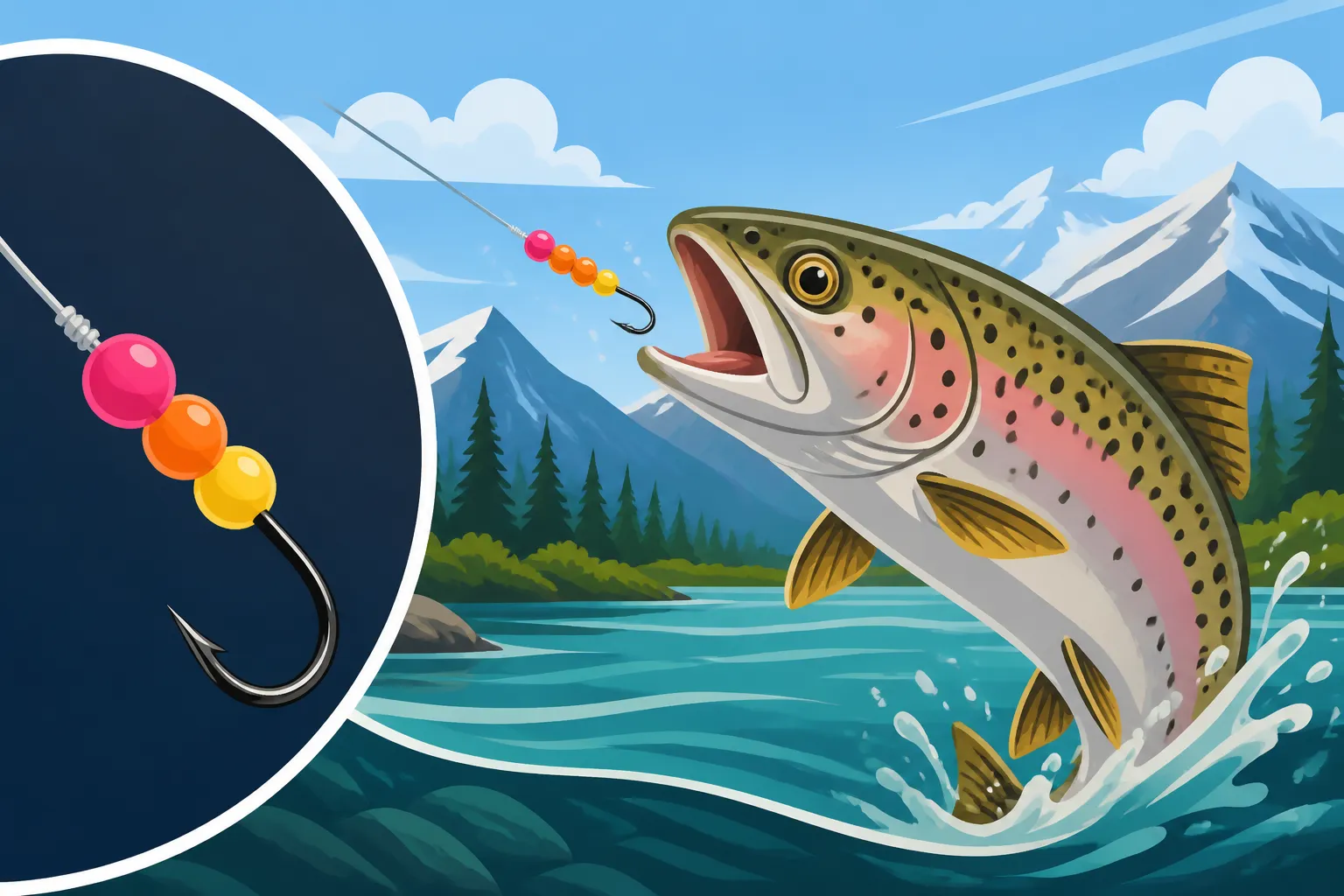
Rigging a bead correctly is crucial. It’s not simply tying it onto your hook. The goal is to have the bead slide freely on your leader, stopping just above the hook, allowing the hook to ride free and clear. This subtle detail ensures a natural presentation and better hookups.
The Proper Bead Rigging Technique
The standard bead rig involves a few key steps to ensure the bead behaves naturally and the hook is exposed for a clean strike.
- Tie on your hook: Start by tying your chosen hook (usually a #2 to #6 single, barbless hook) to the end of your fluorocarbon tippet using a strong knot like a improved clinch or palomar knot. Remember, for bead fishing, the hook is not in the bead; it's trailing behind it.
- Thread the bead: Take your selected fishing bead and thread it onto your tippet above the hook. The bead should slide freely up and down the line.
- Place the "stopper": This is the critical step. To keep the bead from sliding all the way down to the hook eye, you need a "stopper" knot. Tie a small overhand knot or a double surgeon's knot on your tippet approximately 1.5 to 2 inches above the hook eye. Some anglers prefer a small piece of surgical tubing or a bead peg (found on Amazon) inserted into the bead hole itself, which slides onto the line and holds the bead in place, but still allows for adjustment. The goal is for the bead to sit just above this stopper, not directly on the hook. This separation allows the hook to ride freely and ensures better hook penetration when a trout takes the bead. If the bead is right on the hook, it can impede the hook from setting correctly.
- Add split shot (if needed): Depending on current and depth, you'll add split shot to your leader, typically 12-24 inches above your bead rig. Start with minimal weight and add more as needed to achieve a natural drift. The goal is to tick the bottom occasionally without snagging constantly. For areas with lots of snags, opting for a lighter wire hook or a slinky weight can save you frustration.
This setup ensures that when a trout mouths the bead, the hook is exposed and ready to set. The bead itself acts as the visual attractor, while the small, nearly invisible hook is what actually catches the fish.
Achieving the Perfect Drag-Free Drift
Once your rig is tied, the real skill comes in presenting it. Trout that feed on drifting eggs are looking for something that moves with the current, not against it. Any unnatural drag will make your bead look suspicious, and wary Alaska trout will often ignore it.
- Casting Upstream: Cast your rig slightly upstream and across the current. This gives your bead time to sink to the desired depth before it reaches the strike zone.
- Mending the Line: As your line and indicator drift downstream, you'll need to "mend" your line. This means repositioning your main line (especially with fly fishing) so that it doesn't create a belly in the current that would pull your indicator faster or slower than the current, causing drag. A proper mend ensures your indicator, weight, and bead all drift at the same speed. For spinning gear, a high rod tip and careful line management achieve a similar effect.
- Watching Your Indicator: Your strike indicator is your window into what’s happening underwater. Watch it intensely. Any pause, twitch, sudden stop, or unnatural movement could be a bite. It might not plunge dramatically like a traditional bobber; often, it's just a subtle hesitation. This is where the sensitivity of your rod and the use of braid or a good floating fly line really pay off. When you see that slight anomaly, set the hook! Many times, what feels like a snag is actually a fish.
- Reading the Water: Pay attention to current seams, eddies, and deeper pockets downstream of gravel bars or obstructions. These are prime feeding lies where trout will hold, waiting for eggs. Observe how the current moves and try to anticipate where eggs would naturally accumulate. This ability to How to Read Alaska Fishing Regulations (in the broader sense of water, not just rules) and current flows is a huge asset.
Remember, practice makes perfect. It takes time to get a feel for how much weight to use, how to mend your line effectively, and how to detect those incredibly subtle strikes. Don't get discouraged if you miss a few fish at first. Keep experimenting with your weight, drift, and indicator placement.
Fine-Tuning Your Bead Presentation and Troubleshooting
Even with the right gear and basic technique, there's always room for refinement. Alaska's trout can be notoriously finicky, and small adjustments can turn a slow day into a stellar one.
Adjusting Depth and Weight
Getting your bead into the correct depth is perhaps the most critical factor. Trout aren't usually looking for eggs just below the surface; they're often hugging the bottom where real eggs tumble.
- Tick the Bottom: Aim to have your weight (and thus your bead) occasionally "tick" or bounce off the riverbed. This mimics a natural egg tumbling along. If you're not occasionally feeling the bottom or getting light snags, you're likely not deep enough.
- Experiment with Weight: Start light and add weight incrementally until you're ticking the bottom. In faster, deeper water, you'll need more weight. In slower, shallower runs, less weight is required. Too much weight, however, will cause constant snags and unnatural drifts. This is where having a variety of split shot sizes or a selection of slinky weights comes in handy. Remember, the goal is to get the bead down, but still maintain that natural, unencumbered drift.
- Leader Length: Your leader length between your indicator and your bead rig should be adjusted to match the depth of the water you're fishing. A general rule of thumb is to set it about 1.5 times the water depth. For example, in 3 feet of water, a 4.5-foot leader below the indicator is a good starting point. Don't be afraid to adjust this throughout the day as you move to different spots or as water levels change.
Color and Size Selection
The "perfect" bead color and size can change hourly, let alone daily. What worked yesterday might not work today, or even this morning.
- Match the Hatch (of Eggs): Observe the natural eggs in the river. Are they bright orange Sockeye eggs, or the slightly paler, larger King salmon eggs? Are they fresh and vibrant, or older and cloudy? Try to match your bead to what's naturally available. If no salmon are actively spawning, a more translucent or muted egg color might be better, suggesting an older, harder-to-find egg.
- Consider Water Clarity: In clear water, more natural, translucent, or muted colors like "Natural Roe" might be more effective. In stained or cloudy water, brighter, more opaque colors like "Cerise" or "Tangerine" can stand out better.
- Size Matters: If the primary spawning salmon are Sockeye, use smaller beads (8-10mm). If King salmon are around, larger beads (10-12mm) might be more appropriate. Don't forget that even smaller resident trout eggs or sculpin eggs can be imitated with 6-8mm beads, especially in systems without active salmon spawning. Sometimes, a subtle change from a 10mm to an 8mm bead can completely change your luck. This detailed knowledge helps immensely when fishing for specific species like Alaska Rainbow Trout Regulations and Limits or even Alaska Dolly Varden Regulations and Limits.
Common Mistakes to Avoid
Even seasoned anglers can make mistakes with bead fishing. Recognizing and correcting these can significantly improve your success.
- Not Setting the Hook on Subtle Takes: This is probably the most common mistake. Bead bites are often not aggressive tugs. It can be a subtle hesitation of the indicator, a slight sideways movement, or simply the indicator disappearing under the surface without a splash. Assume every anomaly is a fish and set the hook with a quick, upward sweep of the rod.
- Fishing Too Shallow: As mentioned, trout are often looking for eggs near the bottom. If you're not occasionally feeling bottom, your bead isn't where the fish are. Add more weight or adjust your indicator depth.
- Using Too Heavy of Line/Tippet: While you want strong line, overly heavy leader or tippet can create too much drag and make your presentation look unnatural. It can also be more visible in clear water. Balance strength with stealth.
- Bead Too Close to the Hook: If your bead is right on the hook, it can prevent the hook point from properly penetrating the fish's mouth. Ensure that 1.5 to 2 inches of leader separate the bead from the hook eye, allowing the hook to trail naturally.
- Fishing Out of Season: While trout will eat eggs when available, bead fishing is most effective during active salmon runs. Trying to bead fish in the spring before salmon arrive, for example, will likely be unproductive. Knowing When Is the Best Trout Fishing in Alaska is crucial for this technique.
By paying attention to these details and continually adjusting your presentation, you'll find that bead fishing can be an incredibly effective and rewarding way to target Alaska's magnificent trout and char. It takes a keen eye, a sensitive touch, and a willingness to adapt, but the rewards are well worth the effort.
Disclaimer
Fishing in Alaska requires adherence to specific regulations that can change frequently due to emergency orders. Always consult the current Alaska Department of Fish and Game (ADF&G) regulations and emergency orders before heading out. This guide provides general information and should not be considered a substitute for official regulations. Be aware of bag limits, size restrictions, gear restrictions, and special area rules, particularly concerning Alaska Fishing Regulations Explained and Alaska Fishing Emergency Orders Explained. Fishing responsibly helps preserve Alaska's incredible fisheries for future generations.