Alaska Barbless Hook Requirements
There's nothing quite as frustrating as planning your dream Alaska fishing trip, only to arrive and realize you've misunderstood a critical regulation – especially when it comes to something as seemingly simple as hooks. Many anglers, seasoned and novice alike, get caught up in the excitement of the "Last Frontier" and overlook the nuances of local rules, particularly the specific requirements for barbless hooks. This guide aims to demystify Alaska's barbless hook requirements, ensuring you're fully prepared and compliant, protecting both your fishing experience and the incredible fish populations that call Alaska home.
Why Barbless Hooks Matter in Alaska
Alaska isn't just a place to catch fish; it's a place where conservation and sustainable angling practices are deeply ingrained in the fishing culture. The regulations surrounding barbless hooks are a prime example of this commitment, designed to minimize harm and ensure the health of the state's precious aquatic ecosystems.
The Conservation Ethos: Protecting Wild Fish
The core reason behind barbless hook regulations is conservation, plain and simple. When you're fishing in Alaska, especially in renowned rivers like the Kenai or the Russian River, you're often targeting wild fish populations that are incredibly important to the state's ecological balance and economy. Wild salmon, trout, and steelhead have often made incredible journeys to reach their spawning grounds, and every effort is made to protect them.
Barbless hooks significantly reduce the physical trauma to fish, particularly those intended for release. A barbed hook creates a larger wound channel, tears more tissue when removed, and makes the release process slower and more stressful for the fish. Imagine trying to remove a barbed hook from a struggling, powerful King salmon; it's a battle that can leave the fish exhausted and injured. A barbless hook, on the other hand, can often be dislodged with a simple twist or a gentle push, minimizing the time the fish is out of water and decreasing the likelihood of infection or mortal injury. This is crucial for upholding sound Alaska Catch-and-Release Best Practices. The less stress a fish endures during a catch-and-release event, the higher its chances of survival and successful spawning. This is why you'll often find barbless hook mandates in areas with strong catch-and-release ethics or where specific species are under heightened conservation concerns.
Angler Ethics and Enhanced Fishing Experience
Beyond the biological imperative, using barbless hooks also speaks to an angler's ethical responsibility. Responsible angling is a cornerstone of the Alaska fishing community. It's about respecting the resource and contributing to its longevity, ensuring that future generations can experience the same incredible opportunities we enjoy today. By voluntarily adopting barbless hooks, even in areas where they aren't strictly mandated, you're demonstrating a commitment to ethical fishing practices.
From a practical standpoint, barbless hooks can actually enhance your fishing experience. Releasing fish becomes much quicker and easier, which means you spend less time fumbling with pliers and more time actually fishing. It also makes unhooking accidental catches or non-target species a breeze, allowing them to swim away unharmed without unnecessary stress. Think about that moment when you've landed a beautiful rainbow trout you intend to release; a quick, clean release with a barbless hook makes the entire encounter more enjoyable and less stressful for everyone involved, especially the fish. Plus, if you ever accidentally hook yourself, a barbless hook is infinitely easier and less painful to remove – a small but significant personal benefit!
General Barbless Hook Regulations You Need to Know
Navigating fishing regulations in Alaska can feel like trying to solve a puzzle, especially with the ever-changing landscape of emergency orders and species-specific rules. When it comes to barbless hooks, the key takeaway is that while they aren't universally required across all of Alaska all the time, they are mandatory in many critical and popular fisheries. It's vital to understand the general principles before you even pack your bags.
Statewide Default vs. Specific Exceptions
Alaska doesn't have a blanket statewide rule demanding barbless hooks for all fishing. Instead, the regulations are highly localized and species-specific. This means you might be allowed to use barbed hooks in one river system for certain species, while just a few miles away, on a different river or even a different section of the same river, barbless hooks could be strictly enforced. This variability is often tied to the conservation status of specific fish stocks, the intensity of fishing pressure, or particular management strategies for a given area. For instance, many marine waters targeting halibut or rockfish don't require barbless hooks, but the moment you step into certain salmon or trout rivers, the rules change.
The best way to stay informed is to consult the most current Alaska Sport Fishing Regulations booklet, available annually from the Alaska Department of Fish and Game (ADF&G) or online. This comprehensive guide outlines the specific rules for each region and waterbody. Pay close attention to the section pertaining to the area you plan to fish. Remember, even within a single river, regulations can vary by time of year, species targeted, and even specific stretches of water. It's always your responsibility as an angler to know the rules for your specific location and target species. Learning How to Read Alaska Fishing Regulations Booklet thoroughly is perhaps the most important pre-trip task.
Defining a "Barbless" Hook
So, what exactly constitutes a "barbless" hook in the eyes of ADF&G? It's not enough to just bend the barb slightly or snap off the very tip. The regulation states that a hook is considered barbless when the barb has been "removed, or completely bent down, or crimped in a manner that no longer allows the barb to project out from the shank of the hook." This means the barb must be fully flattened against the hook shank, creating a smooth profile that allows for easy disengagement.
If you run your finger or a piece of cloth along the inside curve of the hook where the barb used to be, it should glide smoothly without catching. Any protrusion or sharp edge that could impede removal means the hook is still considered barbed and thus illegal in barbless-only waters. Many experienced anglers prefer to buy hooks that are manufactured barbless, as they offer the cleanest profile and consistent quality. However, converting barbed hooks is a common and accepted practice, provided it's done correctly. This strict definition is critical because an improperly crimped barb can still cause unnecessary damage to fish and put you at risk of a violation.
Specific Scenarios and Species Requiring Barbless Hooks
While the general rule is "check the regulations," certain fishing scenarios and iconic Alaskan species are far more likely to fall under barbless hook mandates. Knowing these common situations can help you prepare your tackle box before you even leave home.
King Salmon Fisheries: A Conservation Priority
King salmon, also known as Chinook salmon, are arguably the most prized sport fish in Alaska, renowned for their immense size and powerful fights. However, many King salmon populations have faced conservation challenges in recent years, leading to stricter regulations aimed at protecting these magnificent fish. Consequently, barbless hooks are frequently, if not almost universally, required when fishing for King salmon in many of Alaska's most famous rivers.
Consider the Kenai River, especially during the highly anticipated King salmon runs. You'll almost certainly find that barbless hooks are mandatory, particularly during specific seasons or in certain sections where catch-and-release is common or wild stocks are particularly vulnerable. The same often applies to other vital King salmon rivers like the Kasilof River or sections of the Susitna drainage. Even if you're keeping a King, the rule often applies to ensure that any other fish you hook and release, or even an undersized King, has the best chance of survival. These regulations are dynamic, so always check for the latest Alaska King Salmon Fishing Regulations and Limits before heading out. Don't risk a fine or, worse, harming a vital part of Alaska's natural heritage by using the wrong tackle.
Trout and Steelhead Waters: Delicate Fisheries
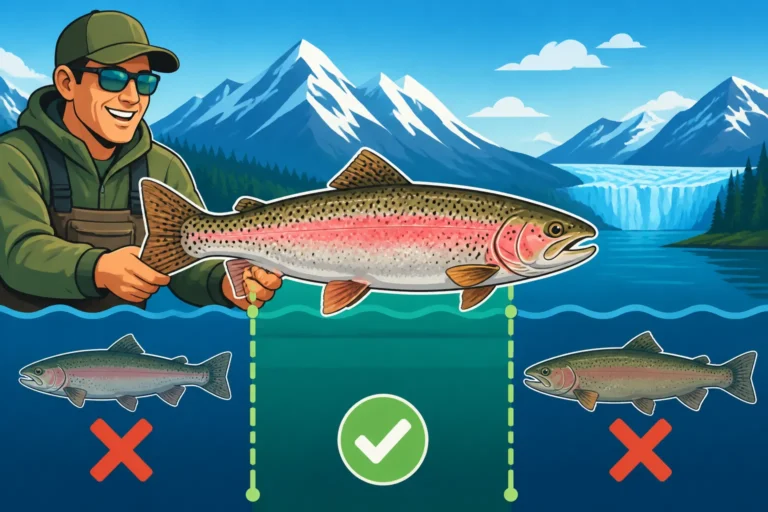
Alaska is also a world-class destination for trout and steelhead fishing, particularly for rainbow trout and anadromous steelhead. These freshwater species, often found in pristine, clear-water streams and lakes, are exceptionally vulnerable to handling stress and hook-related injuries. Therefore, it's very common to find barbless hook requirements in designated trout and steelhead waters, especially those managed for trophy catch-and-release or wild populations.
Rivers like those found on the Kenai Peninsula, where legendary Alaska Rainbow Trout Regulations are in place, often mandate barbless hooks to protect these delicate fish. Similarly, in areas known for Alaska Steelhead Catch-and-Release Rules, anglers are almost always required to use barbless hooks to ensure the highest survival rates for these sea-run beauties. Fly-fishing-only sections, which often overlap with prime trout and steelhead habitats, will virtually always specify barbless hooks. The smaller mouthparts and more delicate nature of trout and steelhead mean that a barbed hook can cause significant damage, making a clean, swift release much more challenging. Using barbless hooks here is not just a regulation; it's a fundamental aspect of responsible trout and steelhead angling.
Areas Under Emergency Order
Perhaps the most unpredictable, yet absolutely critical, scenario where barbless hooks can become mandatory is through an Emergency Order (EO). The Alaska Department of Fish and Game actively monitors fish populations throughout the season. If a particular run is weaker than expected, or if conservation concerns arise suddenly, ADF&G has the authority to issue an Emergency Order. These orders can change fishing regulations almost overnight, affecting bag limits, fishing times, gear restrictions – and frequently, hook requirements.
An Emergency Order might suddenly require barbless hooks for all species in a particular river, even if it wasn't previously a rule. For example, if a King salmon run is critically low, an EO might mandate barbless hooks not only for King salmon but for all salmon species in that river, ensuring minimal impact on any fish hooked. This is a common and necessary tool for adaptive management in Alaska. The crucial takeaway is that you must check for current Emergency Orders immediately before and even during your trip. You can do this by visiting the ADF&G website or calling their local offices. Ignoring an EO, even unintentionally, is still a violation. Make it a habit to check How to Check Alaska Emergency Orders Before Fishing every time you head out. It’s a simple step that can save you a lot of hassle and ensure you're always fishing legally.
Fly-Fishing-Only and Special Management Waters
Many of Alaska's most renowned fly-fishing destinations and specially managed waters, particularly those focusing on pristine wild fisheries or designated for catch-and-release, will have explicit barbless hook requirements. These areas are often set aside for their unique ecological value or to provide a specific type of angling experience, and gear restrictions are a key component of their management.
In these waters, the emphasis is heavily on minimizing impact and maximizing the health of the fish. For instance, some remote fly-in lodges or specific stretches of famous rivers might have "fly-fishing only, single barbless hook" rules year-round. These regulations aim to reduce stress on fish that might be caught multiple times, especially in popular spots. Even if you're not typically a fly angler, if you find yourself in one of these zones, your gear must comply. It's not uncommon for guides in these areas to carry spare barbless hooks or even crimp your barbed hooks on the spot if you forget. However, it's always best to arrive prepared. You can find excellent quality barbless hooks specifically designed for fly fishing and conventional tackle on platforms like Amazon, ensuring you're ready for any regulatory requirement.
How to Convert Barbed Hooks to Barbless
Let's face it, sometimes you just have that perfect lure or fly that only comes with a barbed hook, or maybe you've packed a box of your favorites and realized you're heading into barbless-only territory. Don't despair! Converting a barbed hook to barbless is a simple process that anyone can master with the right tools and a little know-how.
Tools You'll Need
The beauty of converting hooks is that it requires very minimal specialized equipment. Most anglers already have what they need in their tackle box, or it’s readily available at any outdoor store or even on Amazon.
- Good Quality Pliers: This is your most important tool. You'll want sturdy, needle-nose pliers or a good pair of fishing pliers with a strong, precise grip. The jaws should be able to get a firm hold on the small barb without slipping. Avoid cheap, flimsy pliers that might bend or break under pressure, as you need to exert a fair amount of force to properly crimp the barb. Look for pliers made from durable materials like stainless steel, especially if they might come into contact with saltwater, to prevent rust. Some multi-tool pliers also have a good enough grip for this task.
- Safety Glasses (Recommended): While not strictly necessary, wearing safety glasses is a smart precaution. When you crimp the barb, there's a tiny chance a small piece of metal could break off and fly towards your eye. Better safe than sorry!
That's really it. You don't need fancy machinery or complex devices. Simplicity is key when you're out in the field, possibly on a boat or riverbank.
The Flattening Technique: Step-by-Step
Once you have your pliers in hand, the actual process of converting a barbed hook is quick and straightforward. The goal is to completely flatten the barb against the hook shank so that it no longer protrudes.
- Grip the Hook Firmly: Hold the hook securely with one hand. If it's a small hook, you might want to hold it by the eye or the bend to give you leverage. Be careful not to hold it by the point!
- Locate the Barb: Identify the barb, which is the small, sharp projection on the inside curve of the hook point.
- Position the Pliers: Place the jaws of your needle-nose pliers directly over the barb. Make sure the jaws are flush against both sides of the barb and the hook shank, creating maximum contact. You want to press the barb into the shank, not just bend it away.
- Squeeze Firmly: Apply steady, firm pressure to the pliers. You should feel the barb flattening down. It might make a small "crunch" sound as the metal gives way. For larger, stronger hooks, you might need to apply significant force.
- Repeat if Necessary: If the barb isn't completely flat after the first squeeze, reposition your pliers and squeeze again. Sometimes, a couple of firm presses from slightly different angles will ensure it's fully flush. Don't be shy about applying pressure – you want it gone.
Here’s a quick guide for common hook sizes and suitable pliers:
| Hook Size Range | Recommended Pliers Type | Conversion Difficulty | Notes |
|---|---|---|---|
| #10 to #6 | Fine-tip needle-nose pliers | Easy | Small barb, easy to crimp. Good for trout and small salmon flies. |
| #4 to #1 | Standard needle-nose or fishing pliers | Moderate | Common size for salmon and trout lures/flies. May require firm squeeze. |
| 1/0 to 4/0 | Heavy-duty fishing pliers | Moderate to Hard | Larger barbs, stronger metal. Crucial for salmon and larger species. |
| 5/0 and up | Large, sturdy fishing pliers (e.g., Knipex) | Harder | Very strong hooks, requires significant hand strength. |
Checking Your Work
After you've crimped the barb, you absolutely must check your work to ensure it's truly barbless according to ADF&G standards. A visual inspection is a good start, but it's not enough.
- Visual Check: Look closely at the hook point. Can you see any protrusion where the barb used to be? It should look like a smooth curve.
- Friction Test: This is the most reliable method. Gently run the inside curve of the hook (where the barb was) across your thumbnail, a piece of cloth, or even the palm of your hand. If the hook snags or catches even slightly, the barb isn't fully flattened. Go back with your pliers and crimp it further until it slides smoothly without any resistance. This test is crucial because even a tiny bit of remaining barb can snag a fish's mouth and make release difficult, and it won't pass inspection if a fish and game trooper checks your gear. Don't risk a violation; take the extra 10 seconds to ensure your hook is perfectly compliant.
Common Misconceptions and How to Stay Compliant
Alaska's fishing regulations can sometimes feel like a moving target, especially for those new to the state. With barbless hook requirements, several common misconceptions can lead to unintentional violations. Understanding these pitfalls and adopting a proactive approach is key to staying compliant and enjoying your fishing trip.
"It's Just a Small Barb, It's Fine"
This is perhaps the most prevalent and dangerous misconception. Many anglers believe that if the barb is tiny, or if they've bent it down "mostly," it will suffice. The reality is, ADF&G regulations are very clear: the barb must be completely removed or flattened. There's no gray area for "almost barbless." A small barb, even if partially crimped, can still cause undue damage to a fish's delicate mouth tissue and complicate the release process.
Imagine a powerful sockeye salmon, fresh from the ocean, thrashing at the end of your line. Even a tiny, partially-flattened barb can catch in the soft tissue of its jaw, tearing and creating a larger wound than necessary. This increases bleeding, stress, and the risk of infection, significantly reducing its chances of survival, especially if it's a wild fish destined for spawning. From a regulatory perspective, a conservation officer won't distinguish between a "big" barb and a "small" barb; if it's not completely flattened, it's considered barbed, and you could face penalties. So, when in doubt, crimp it out until it's perfectly smooth.
"Only If I'm Targeting Certain Fish"
Another common misunderstanding is that barbless hook rules only apply if you are intentionally targeting a species known to require them. For example, an angler might think, "I'm fishing for pink salmon, not kings, so I don't need barbless hooks." However, if you are fishing in an area designated as barbless-only – say, a specific section of the Kenai River during a King salmon run – all hooks on all lines must be barbless, regardless of what species you're hoping to catch or what bites your line.
Alaska's rivers are teeming with various fish species. It's incredibly common to hook an unintended species, especially when multiple salmon runs overlap. You might be casting for silver salmon, but a king salmon might strike your lure. If your hooks aren't barbless in a mandated zone, you're in violation. The regulation is about the location and gear used, not solely about your intent. Always assume that if you're in a barbless-only waterbody, every hook that enters the water must be compliant. It's simply not worth the risk of an Alaska Fishing Violations and Fines for not understanding this distinction.
"My Guide Will Handle It"
While a professional fishing guide in Alaska is an invaluable resource, knowledgeable about regulations and best practices, it is ultimately your responsibility as the angler to ensure your gear is compliant. A good guide will certainly advise you, check your tackle, and often even provide appropriate gear. However, placing sole responsibility on your guide for your hook compliance is a mistake.
Think of it this way: if a fish and game trooper inspects your line and finds a barbed hook in a barbless-only area, you, the person holding the rod, will be held accountable. The guide might face separate penalties, but your violation is still your own. Before stepping onto the boat or wading into the river, take a moment to double-check your own hooks. Confirm with your guide that your setup is correct for the specific waters you'll be fishing that day. It's a quick conversation that can prevent a stressful situation and ensure you avoid How to Avoid Alaska Fishing Violations. Being prepared and personally responsible for your gear shows respect for the guide, the regulations, and the fish.
Staying Prepared: A Barbless Hook Compliance Checklist
To help you ensure you're always ready for Alaska's barbless hook requirements, here's a handy checklist. Keeping these points in mind will significantly reduce your chances of a surprise violation and help you enjoy a smooth, ethical fishing experience.
| Item/Action | Description | Status (Check Before Trip) |
|---|---|---|
| Consult Current Regulations | Always review the latest ADF&G Sport Fishing Regulations booklet for the specific region and waterbody you plan to fish. Check for species-specific and area-specific barbless rules. | ✅ |
| Check Emergency Orders (EOs) | Visit the ADF&G website or call local offices for any last-minute Emergency Orders. These can change regulations rapidly, including hook requirements. | ✅ |
| Inspect All Hooks | Go through your tackle box. For any lures or flies you plan to use, visually inspect each hook for barbs. | ✅ |
| Bring Pliers | Pack a sturdy pair of needle-nose or fishing pliers. Ensure they have a strong grip for crimping barbs effectively. | ✅ |
| Crimping Hooks (if needed) | If you find barbed hooks, use your pliers to flatten the barb completely against the shank. Perform the "friction test" to ensure smoothness. | ✅ |
| Consider Pre-Made Barbless Hooks | Purchase hooks or lures that are manufactured barbless for convenience and consistent compliance, especially for critical fisheries. Many brands offer barbless options. | ✅ |
| Ask Your Guide (if applicable) | If fishing with a charter or guide, confirm barbless hook requirements with them beforehand and double-check your gear with their input. | ✅ |
| Understand "Barbless" Definition | Be clear on what ADF&G considers a truly barbless hook (no protrusion, completely flattened). | ✅ |
| Educate Fellow Anglers | If fishing with friends or family, ensure everyone in your group understands and adheres to the barbless hook rules for the area. | ✅ |
| Pack a Hook File (Optional) | While not for barbs, a small hook file can help maintain sharp points, which is important for clean hooksets with barbless hooks. | ✅ |
Alaska offers some of the most spectacular fishing experiences on the planet, and a big part of preserving that is adhering to its thoughtful regulations. While the rules can sometimes seem complex, understanding and complying with barbless hook requirements is a fundamental step in being a responsible and successful angler in the Last Frontier. By preparing properly, you'll not only protect Alaska's incredible fish populations but also ensure your own trip is free from unexpected complications.
Disclaimer
The information provided in this guide is intended for general informational purposes only and is subject to change. Fishing regulations in Alaska are dynamic and can be updated at any time by the Alaska Department of Fish and Game (ADF&G). It is the sole responsibility of each individual angler to consult the official, most current ADF&G Sport Fishing Regulations booklet and any active Emergency Orders for the specific region and species they plan to fish before engaging in any fishing activity. Failure to do so may result in fines or other penalties.