Back-Bouncing in Alaska: How-To Guide
There's nothing quite like the thrill of fishing in Alaska, but if you've ever heard seasoned anglers talk about "back-bouncing" and felt a little lost in the jargon, you're definitely not alone. It can sound intimidating, like some secret handshake among the pros. However, this incredibly effective technique, especially for powerful salmon and even some feisty trout, is something every angler should have in their toolkit. This guide is here to demystify back-bouncing, walking you through exactly what it is, why it works so well in our Alaskan rivers, and how you can master it to dramatically improve your catch rates.
What Exactly is Back-Bouncing and Why Does it Work?
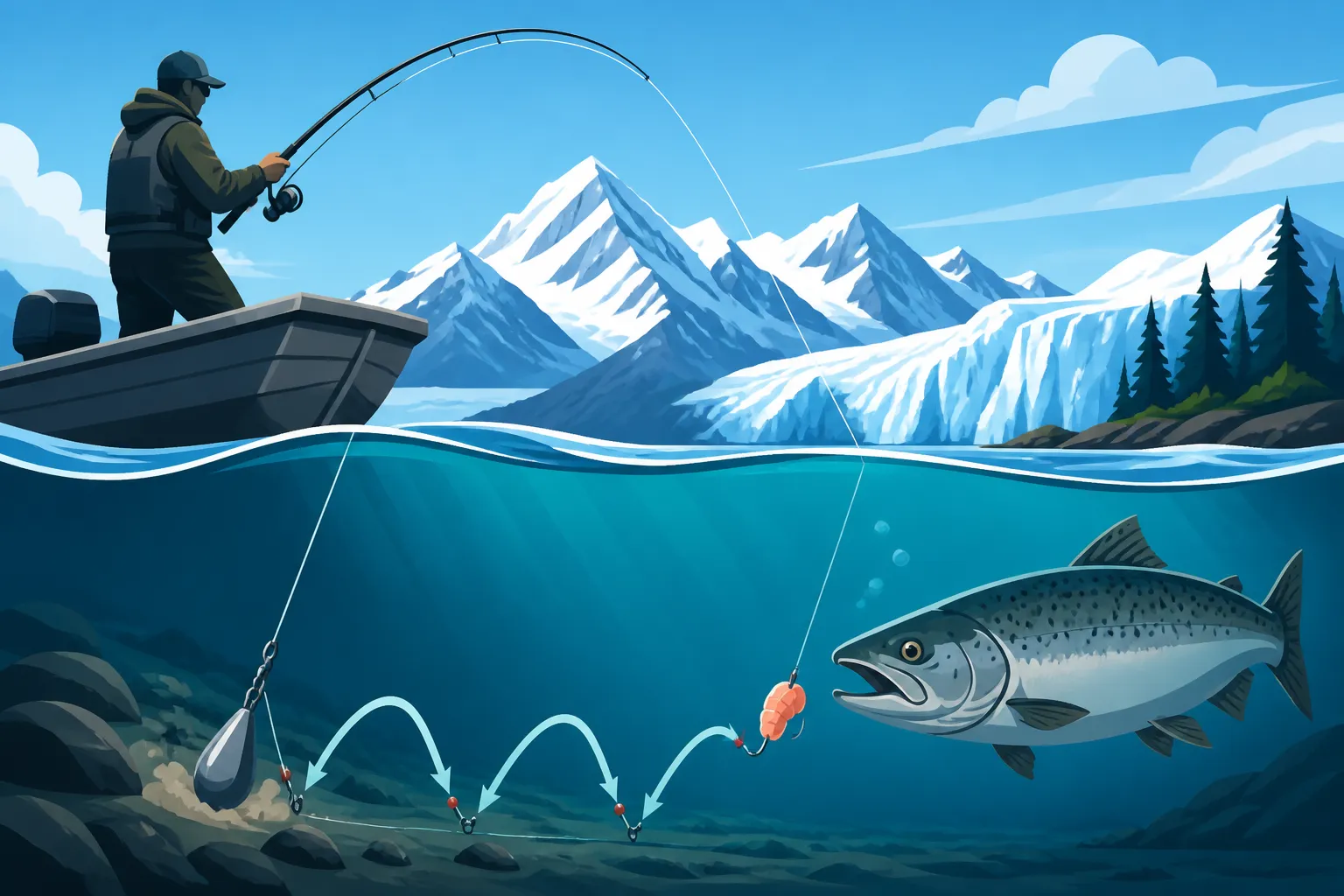
When you’re out on the mighty rivers of Alaska, battling powerful currents and trying to entice a monster King Salmon or a hard-fighting Silver, you need a technique that puts your bait right in their strike zone. That’s precisely what back-bouncing achieves, but it's more nuanced than simply dropping a weight and letting it go. It's a method of controlled drift fishing that allows your offering to "walk" along the river bottom, imitating natural food items being dislodged by the current. It’s a game-changer when conditions are tough, or fish are holding tight to the bottom.
The Mechanics of Back-Bouncing
At its heart, back-bouncing involves using a heavy enough weight to keep your bait or lure consistently near the riverbed, but light enough to allow it to tumble and bounce naturally with the current. Imagine a piece of dislodged salmon roe or a struggling baitfish being carried downstream, occasionally bumping along the rocks. That's the presentation you're aiming for. You're not just casting out and reeling in; instead, you're actively manipulating your line and boat to ensure that precise, bottom-hugging drift.
Unlike traditional drift fishing where your lure might swing through the water column, back-bouncing focuses intently on the bottom third of the river. The "bounce" comes from the weight making intermittent contact with the riverbed as your boat slowly moves downstream, usually with the aid of a kicker motor or by holding the main engine in reverse. You might be holding your rod tip low, feeling every tap and scrape of the weight, or even gently lifting and dropping the rod to impart more action. This tactile connection to the river bottom is crucial because it allows you to distinguish between the riverbed's natural contours and the subtle strike of a fish. For instance, on the Kenai River, where the currents can be ferocious, maintaining this delicate balance is key to fooling a wary King.
Why Back-Bouncing is So Effective for Alaska Species
Alaska's rivers are teeming with fish, but they're often in areas with strong currents, deep holes, or complex underwater structures where fish feel safe and conserve energy. This is where back-bouncing shines. Many of Alaska's most sought-after fish, particularly the salmon as they migrate upstream, tend to hug the bottom. They're looking for an easy meal as they fight against the flow. A perfectly presented back-bounced offering directly mimics this ideal snack.
The effectiveness lies in its ability to penetrate these hard-to-reach zones. When a powerful King Salmon is holding in a deep trough or behind a large boulder, it's unlikely to chase a bait swimming high in the water column. But an offering that tumbles right past its nose, appearing vulnerable and naturally swept by the current, is often too tempting to resist. It’s also incredibly versatile, allowing anglers to cover a significant amount of water while maintaining control over their presentation. This technique also works wonders during periods of high water or decreased visibility, as it puts the bait in the zone where fish are most likely to encounter it by feel, rather than sight alone. If you've ever wondered how to consistently reach those fish that seem to ignore everything else, back-bouncing is often the answer.
Essential Gear for Back-Bouncing in Alaska
Having the right equipment isn't just about comfort; it's about efficacy and safety, especially when you're battling the powerful fish and currents found in Alaska. Back-bouncing requires specific tackle that can withstand immense pressure, provide the necessary sensitivity, and allow for precise control. Skimping on gear can lead to frustration, lost fish, and a less enjoyable experience.
Rods, Reels, and Line Selection
Choosing the right rod, reel, and line is foundational for successful back-bouncing. Each component plays a vital role in executing the technique and landing your prize.
- Rods: For back-bouncing, you'll want a rod that's both powerful and sensitive. Typically, a rod in the 8-foot 6-inch to 10-foot 6-inch range with a medium-heavy to heavy power rating and a moderate-fast action is ideal. The length provides leverage for casting and fighting big fish, while the moderate-fast action allows the rod tip to load up, absorbing shocks and preventing break-offs, especially with the powerful headshakes of an Alaska King Salmon. Sensitivity is key to feeling those subtle "taps" of the river bottom versus a fish's bite. Brands like Lamiglas, G. Loomis, and Fenwick offer excellent options tailored for this kind of heavy-duty salmon fishing. While you won't find specific brand promotions here, many top-tier fishing rods designed for heavy salmon and steelhead can be found on Amazon for comparison and purchase.
- Reels: A sturdy, reliable level-wind baitcasting reel is the preferred choice for back-bouncing. These reels offer superior cranking power and line capacity, which are essential when you're fighting a large, hard-running salmon in a strong current. Look for reels with a smooth, powerful drag system that can be finely adjusted. The ability to easily spool off line in a controlled manner is also critical for maintaining that precise "bounce." Reels in the 200-400 size range, like a Penn Fathom or an Abu Garcia Ambassadeur, are common choices among Alaskan guides for their durability and performance.
- Line: Your mainline should be a high-quality braided line, typically in the 50 to 80-pound test range for King Salmon, and 30 to 50-pound test for Silver Salmon or larger Rainbow Trout. Braid has minimal stretch, offering incredible sensitivity that allows you to feel every bump on the bottom and every subtle take. The low diameter of braid also cuts through the water better, reducing drag from the current. You'll then tie on a leader of fluorocarbon line, which is nearly invisible underwater and highly abrasion-resistant—a must when fishing around rocky riverbeds. Leader test typically ranges from 30 to 50 pounds for Kings, and 20 to 30 pounds for Silvers, often 3 to 5 feet in length. The longer leader provides a buffer between your visible mainline and your bait, and also allows for more natural presentation of your offering. For a comprehensive look at what line weights work best for various Alaskan species, check out a guide like Alaska Fishing Gear and Tackle Guide.
Weights, Leaders, and Terminal Tackle
The devil is in the details, and with back-bouncing, your terminal tackle assembly is where you gain or lose control over your presentation.
- Weights: The most common and effective weights for back-bouncing are "slinky" weights. These are typically made of lead shot encased in a durable cloth tube, allowing them to bend and conform to the riverbed, snagging far less often than traditional lead sinkers. You'll need a range of sizes, from 2 to 8 ounces, to adapt to varying current speeds and depths. Sometimes, pencil lead or pyramid weights are used, but slinkies are generally preferred for their snag-reducing properties. Selecting the correct weight is paramount: too light, and your bait will wash downstream; too heavy, and it will drag, presenting unnaturally and significantly increasing snags. If you’re stocking up before your trip, a quick search on Amazon will show you various types and weights of slinky sinkers.
- Leaders: As mentioned, fluorocarbon leaders are key. They are virtually invisible to fish in the water and incredibly tough against abrasion from rocks and fish teeth. The length of your leader can vary depending on conditions and preference, but generally, 3 to 5 feet is a good starting point. Shorter leaders give you more direct feel of your bait, while longer leaders offer a more natural, unencumbered drift.
- Hooks: In many Alaskan fisheries, single hooks are mandatory, especially during salmon runs to reduce foul-hooking. Siwash hooks are a popular choice due to their strength and wide gap. Sizes typically range from 4/0 to 6/0 for King Salmon and 2/0 to 4/0 for Silver Salmon. You’ll attach these to your leader, often with a barrel swivel or snap swivel a foot or so above the hook to prevent line twist and allow for easy interchange of baits or lures. Always check the current Alaska Fishing Regulations Explained for specific hook requirements in the area you plan to fish, as these can change by river or even by section of a river.
Baits and Lures for Back-Bouncing
What you put on the end of your line is what ultimately convinces a fish to bite. For back-bouncing, natural presentations often yield the best results.
- Cured Eggs: Hands down, cured salmon eggs are one of the most effective baits for salmon, particularly Kings and Silvers. Whether it's skein (a chunk of eggs still in the membrane) or loose eggs tied into an egg loop or netting, the natural scent and appearance are irresistible. King Salmon eggs, in particular, are a favorite for targeting their namesake species due to their size and potent scent trail. Mastering how to present these fragile baits so they don't wash out too quickly is part of the art. Many anglers prefer to cure their own eggs, but high-quality pre-cured eggs can also be found at local tackle shops.
- Spinners and Plugs: While not always the primary choice for back-bouncing, certain plugs like Kwikfish or FlatFish, sometimes wrapped with sardine fillets for added scent, can be effective in specific situations, particularly for King Salmon. The wobbling action of these lures can be incredibly enticing. Similarly, large, heavy-bladed spinners can be back-bounced, offering flash and vibration to attract fish. For more on these, you might find specific recommendations in Best Lures for Alaska Salmon.
- Scent Attractants: Enhancing your bait with scent is a common practice in Alaska. Products like Pro-Cure, Smelly Jelly, or various anisescent oils can be applied directly to your cured eggs or plugs. These scents disperse in the water, creating a larger scent trail that can draw fish from a greater distance, making your presentation even more appealing in the often-turbid waters of Alaskan rivers.
Mastering the Back-Bouncing Technique
Back-bouncing isn't just about assembling the right gear; it's a dynamic technique that requires constant attention, keen observation, and an understanding of river dynamics. The "feel" for back-bouncing develops with practice, but knowing what to look for and how to react will put you well on your way to success.
Reading the River and Positioning Your Boat
Before you even drop a line, understanding the river you're fishing is paramount. Alaska's rivers are wild and ever-changing, and their currents sculpt the bottom into prime fish-holding lies.
- Understanding Currents and Structure: Fish don't just hang out anywhere; they seek out current breaks, deep holes, seams where fast water meets slow water, and submerged structures like log jams or rock piles. These spots offer shelter from the main current and funnel food right to them. Look for changes in water color, boils, eddies, and ripples on the surface that indicate what's happening below. For instance, on a river like the Kenai, where powerful King Salmon are a primary target, knowing how to identify deep runs and current seams is critical. A detailed guide like Kenai River Fishing: Complete Guide can provide invaluable local knowledge.
- Boat Positioning for Optimal Drift: This is where back-bouncing truly becomes an art. You want to position your boat slightly upstream and parallel to the seam or hole you intend to fish. Using a powerful kicker motor, you'll slowly "back-troll" or "back-drift" downstream, matching the speed of the current. The goal is to keep your boat moving at precisely the same speed as your weight and bait, allowing them to tumble naturally without dragging. If you're moving too fast, your weight will lift off the bottom; too slow, and it will drag and snag. This controlled descent downriver ensures your bait is presented in the most lifelike manner.
- Safety Considerations: Alaskan rivers, particularly the larger glacial-fed ones, can be swift, cold, and unpredictable. Always be aware of your surroundings, potential hazards like submerged logs, shallow bars, or rapidly changing currents. Wearing a personal flotation device (PFD) is always a good idea, and having experienced boat handlers is crucial when navigating these challenging waters.
The Drop, Drift, and Hookset
Once you've identified your target area and positioned your boat, the real work of back-bouncing begins. This three-stage process requires focus and a good sense of touch.
- The Drop: With your boat holding position or slowly backing down, free-spool your baitcasting reel, letting your weight and bait drop to the river bottom. It's vital to feel for that distinct "tap-tap" as your weight hits the bottom. Once you feel it, engage your reel, take up any slack, and begin your controlled drift. The amount of line you let out will depend on the depth and current; the deeper and faster the water, the more line you'll need.
- The Drift (and the "Bounce"): Now, with your rod tip low and pointed downstream, you'll meticulously control your boat speed to keep your weight just barely touching the bottom. You should feel the weight occasionally "bounce" or "tick" the riverbed. This is a rhythmic sensation. If you stop feeling it, let out a little more line; if it feels like it's dragging, speed up your boat slightly or reel in a bit of line. The challenge is distinguishing these bottom contacts from a fish's subtle bite. A bite often feels like a heavier, more deliberate "thump" or a sudden, solid stop. It's rarely a violent tug at first; often, it's a soft, sucking motion.
- The Hookset: This is perhaps the most critical moment. When you feel that distinct "thump" or sudden resistance that isn't the bottom, don't hesitate. Drop your rod tip slightly towards the fish to create a bit of slack, then quickly and powerfully sweep the rod upwards and slightly to the side. This isn't a gentle wrist flick; it's a full-body, authoritative hookset to drive the hook home into the tough jaw of an Alaskan salmon. King Salmon have incredibly tough mouths, and a weak hookset will almost always result in a lost fish. After the hookset, reel down quickly to maintain tension and prepare for the ensuing fight.
Adjusting to Conditions
Alaskan river conditions can change hourly, let alone daily. Being able to adapt your back-bouncing technique is a hallmark of an experienced angler.
- Water Level, Clarity, and Speed: These three factors profoundly impact fish behavior and your presentation. Higher, faster, or murkier water might require heavier weights to reach the bottom and a slower boat speed. In contrast, clear, slower water might allow for lighter weights and a more subtle presentation. You might also need to adjust your leader length; shorter in murkier, faster water for more control, and longer in clearer, slower water for a more natural look. Learning How Alaska Bag Limits Change In-Season can sometimes correlate with these conditions, as emergency orders are often issued in response to environmental factors affecting fish runs.
- Weight Adjustments: Always have a variety of slinky weights on hand. If you're consistently snagging, your weight might be too heavy or you're moving too slowly. If your bait isn't reaching the bottom, it's too light. It's a constant adjustment to find the "sweet spot" where your weight just barely ticks the bottom.
- Leader Length Variations: As noted, leader length impacts presentation. Experiment. Sometimes a shorter leader provides more control in heavy current, while a longer one might be necessary for spooky fish in clear water.
- Bait Choices Based on Conditions: In darker, murkier water, brighter or more heavily scented baits might be more effective. In clear water, a more natural, subtle presentation of cured eggs is often best. Consider the time of year and the primary food sources available. For example, during a strong Sockeye run, fish might be more inclined to strike at smaller, red-colored egg imitations, which you can read more about in Best Bait for Alaska Salmon.
Targeting Specific Alaska Species with Back-Bouncing
While back-bouncing is primarily a salmon technique, its effectiveness can extend to other prized Alaskan species under the right conditions. Understanding the nuances for each species will significantly boost your success.
King Salmon Back-Bouncing Strategies
King Salmon, also known as Chinook, are the undisputed kings of Alaskan rivers. They are powerful, notoriously hard-fighting, and often hold in the deepest, strongest parts of the river, making them ideal targets for back-bouncing.
- Prime Time and Behavior: The King Salmon run typically peaks in June and early July. During this time, they are fresh from the ocean, full of vigor, and highly aggressive. They tend to hold in deep runs, troughs, and behind large structures, conserving energy as they push upstream. These fish are not actively feeding in the river but will strike out of aggression or instinct. Therefore, presenting a large, juicy cured egg cluster or a wobbling plug right in their face can trigger a strike. For more details on the best times, check out When Do King Salmon Run in Alaska.
- Heavier Gear, Larger Baits: Due to their immense size and power (Kings can easily exceed 50 pounds, with record fish over 90!), you'll need the heaviest gear for back-bouncing Kings. This means 50-80 lb braided mainline, 40-50 lb fluorocarbon leaders, 5/0-6/0 hooks, and potentially 6-8 oz slinky weights in swift currents. Your cured eggs should be larger, often a full "dime-sized" or larger cluster. In rivers like the Kenai or the Kasilof, which are renowned for their King Salmon, guides often employ this technique with great success. For a deep dive into specific gear and tactics, refer to How to Catch King Salmon in Alaska.
- Patience and Persistence: King Salmon can be notoriously finicky. You might make dozens of perfect drifts before getting a single bite. But when that bite comes, it's usually unmistakable. The key is persistence, constantly adjusting your drift, weight, and even leader length until you find what triggers a strike. Sometimes, just a slight change in presentation can make all the difference between a slow day and landing a trophy.
Silver Salmon and Other Species
While Kings might be the primary target for heavy back-bouncing, the technique can be adapted for other species, particularly Silver Salmon, and even large trout in specific scenarios.
- Silver Salmon (Coho): Silver Salmon typically arrive in Alaskan rivers from late July through September. They are incredibly acrobatic, hard-fighting, and often found in slightly shallower, faster-moving water than Kings, or in the tails of deeper runs. For Silvers, you can lighten your gear slightly: 30-50 lb braid, 20-30 lb fluorocarbon leaders, and 2/0-4/0 hooks are generally sufficient. Smaller clusters of cured eggs, often from Silver or Sockeye salmon, are highly effective. Silvers are also more prone to hitting brightly colored spinners and small plugs, which can also be back-bounced. The strikes from Silvers are often more aggressive and immediate than Kings. For more information, explore How to Catch Coho Salmon in Alaska.
- Rainbow Trout and Dolly Varden: While not a primary back-bouncing technique for these species, it can be adapted. In areas below salmon spawning grounds, where trout and Dolly Varden congregate to feast on dislodged salmon eggs, a very light back-bouncing presentation with small egg imitations or single cured eggs can be deadly. Here, you'd use much lighter line (10-20 lb braid to 8-12 lb fluorocarbon leader), very small weights (1/4 to 1 oz), and small hooks (size 4 or 6). This is more akin to a controlled drift fishing technique but still employs the bottom-bouncing principle to get the bait to the fish. Focus on slower, deeper pockets where these opportunistic feeders are waiting for an easy meal.
- Adapting for Other Species: Generally, back-bouncing is most effective for anadromous fish like salmon that are moving upstream and holding close to the bottom. For other species like Pike or Arctic Grayling, different techniques like casting lures or fly fishing would be more appropriate. The beauty of back-bouncing lies in its specialized application for fish battling powerful river currents.
Common Mistakes to Avoid and Advanced Tips
Even experienced anglers can make mistakes, and back-bouncing, with its blend of feel and precision, offers plenty of opportunities for missteps. Knowing the common pitfalls and some advanced strategies can make a significant difference in your success.
Pitfalls for Beginners
Every seasoned angler has stories of learning the hard way. Avoiding these common errors can save you frustration and increase your chances of hooking up.
- Incorrect Weight Selection: This is perhaps the most common mistake. Too little weight, and your bait washes over the fish; too much, and you're snagging every third drift. You need to constantly adjust based on current speed and depth. There's no single "right" weight; it's a dynamic choice. If you're not consistently tapping the bottom, or you're dragging too much, adjust immediately.
- Not Feeling the Bottom Properly: Many beginners struggle to differentiate between the weight bouncing off rocks and a fish's bite. This takes practice. The key is to pay attention to the feel of the rod. A rock will often feel like a sharp, distinct tap-tap. A fish, especially a King Salmon, can feel like a softer, spongy thud, or a sudden, solid weight. Sometimes it feels like your line just got "heavy." Keep your rod tip low, maintain a soft grip, and focus on the subtle feedback from your line.
- Poor Boat Control: Allowing your boat to drift too fast or too slow relative to the current is detrimental. If you're faster than the current, your bait will drag; slower, and your line will belly out, causing your weight to lift off the bottom. Constant adjustment with your kicker motor is essential for maintaining a perfect, controlled drift. This is why having an experienced boat operator is so valuable, especially on challenging rivers.
- Missing Subtle Bites: As mentioned, salmon bites aren't always aggressive. Sometimes it's just a slight hesitation in the "bounce," or a feeling of "mush" on the end of the line. If anything feels different, set the hook. It's better to set on a rock occasionally than to miss a trophy fish.
- Ignoring Local Regulations and Emergency Orders: Alaska's fishing regulations are complex and can change rapidly, sometimes daily, due to emergency orders issued by the Alaska Department of Fish and Game (ADF&G). These changes often relate to bag limits, gear restrictions (e.g., single-hook only), or even closures for certain species or river sections. Always check before you go. You can learn more about this by referring to articles like How to Read Alaska Fishing Regulations and Alaska Fishing Emergency Orders Explained. Failing to do so can result in hefty fines and the loss of your catch.
Maximizing Your Success
Once you've got the basics down, these advanced tips can help you elevate your back-bouncing game from good to great.
- Regularly Checking Your Bait: Cured eggs can get washed out or mangled after a few drifts, or even after a missed bite. Check your bait frequently to ensure it's still presentable, properly scented, and securely hooked. A fresh, juicy egg cluster is far more enticing than a tattered remnant.
- Staying Alert and Focused: Back-bouncing is not a passive technique. It requires your full attention. Keep your eyes on the water, feel your line, and anticipate changes in the current. Distractions can lead to missed bites and snags. The more dialed in you are, the more successful you'll be.
- Practicing Proper Fish Handling: When you do hook a fish, especially if you plan on releasing it (which is mandatory for certain species or during specific emergency orders), practice responsible catch-and-release techniques. Land the fish quickly, keep it in the water as much as possible, use a net with rubber mesh, and release it gently. This helps ensure the long-term health of Alaska's incredible fisheries.
- Using Scent Attractants Effectively: Don't just dab scent on your bait once; reapply it regularly. Fish are attracted to scent trails, and a continuously refreshed application keeps your offering broadcasting its presence. Experiment with different scents. Some days, plain cured eggs are best; other days, a strong garlic or anise scent makes all the difference. Many high-quality scents are readily available, and a quick search on Amazon for "fishing attractants" will show you a huge variety.
- Consider a Fish Finder (for boat-based back-bouncing): While back-bouncing is about feeling the bottom, a good fish finder can give you a visual advantage. It helps you identify deep holes, submerged structures, and even schools of fish holding near the bottom. This allows you to position your boat more precisely and target the most productive areas. For understanding the species you might encounter, a guide like Alaska Fish Species Guide can be very helpful.
By mastering these techniques and avoiding common mistakes, you'll find back-bouncing to be one of the most rewarding and effective ways to target Alaska's magnificent salmon and other bottom-dwelling species.
| Component / Factor | Back-Bouncing (Typical) | Drift Fishing (Typical) |
|---|---|---|
| Presentation | Weight "bounces" along river bottom, bait tumbles close | Weight lifts/bounces, bait drifts freely mid-column or near bottom |
| Target Depth | Bottom third of the water column | Varies, often mid-water to near bottom |
| Primary Target | King Salmon, Silver Salmon, sometimes large Trout/Dolly Varden | Sockeye Salmon, Silver Salmon, Rainbow Trout, Steelhead |
| Current Speed | Most effective in moderate to strong currents | Effective in varying currents |
| Boat Control | Highly active, precise boat speed matching current | Less active, often involves casting from an anchored position or shore |
| Weight Type | Slinky weights, pencil lead (snag-reducing) | Split shot, pencil lead, slinky weights |
| Sensitivity | High tactile feel for bottom and subtle bites | Good feel, but often more visual strike detection |
| Primary Bait | Cured eggs, sardine-wrapped plugs, heavy spinners | Cured eggs, beads, flies, small spinners/lures |
| Gear Power | Generally Medium-Heavy to Heavy | Medium-Light to Medium |
Disclaimer
Fishing regulations in Alaska are subject to frequent changes, including emergency orders that can alter seasons, bag limits, and legal gear. Always consult the most current Alaska Department of Fish and Game regulations before heading out on your fishing trip. This guide is for informational purposes only and does not supersede official regulations.