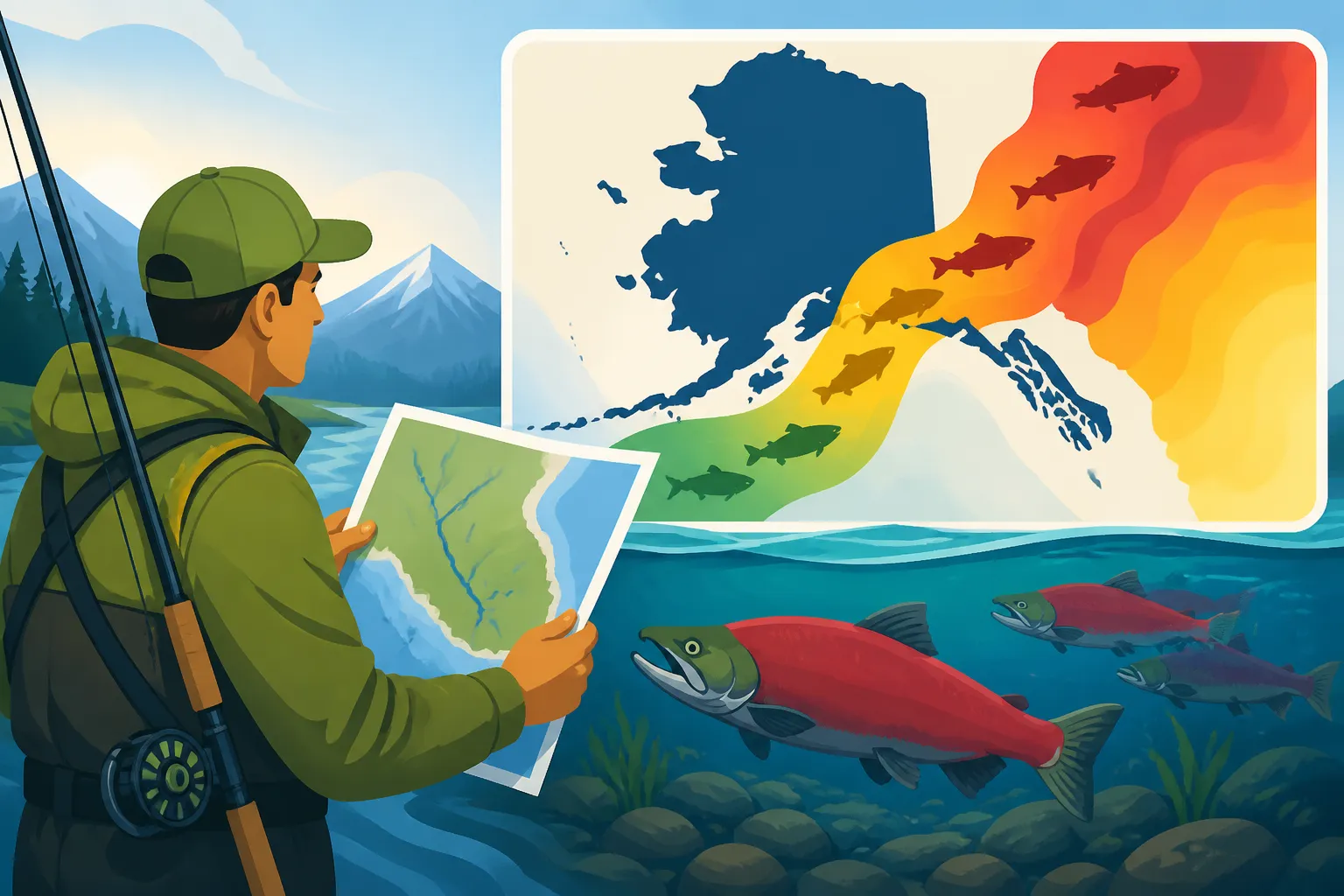
How to Read Alaska Salmon Run Forecasts
It's incredibly frustrating to plan an exciting Alaska fishing trip, only to arrive and find the salmon runs aren't quite what you expected, or even worse, the river is closed due to low returns. So many factors play into the timing and strength of these runs, and trying to decipher the technical jargon can feel like learning a whole new language. This guide aims to demystify Alaska salmon run forecasts, helping you understand where to find them, what the numbers really mean, and how to use this vital information to plan your ultimate angling adventure.
Why Understanding Salmon Run Forecasts is Crucial
You've saved up, booked your flights, and perhaps even reserved a charter; the last thing you want is to be caught off guard by a weak run or unexpected regulatory changes. Salmon run forecasts are more than just interesting statistics; they are the backbone of sustainable fishery management and your most valuable tool for trip planning. Without understanding them, you're essentially fishing blind, risking disappointment or even unwittingly violating fishing regulations that can change on a dime.
Avoiding Disappointment and Wasted Trips
Imagine flying all the way to Alaska, dreaming of a freezer full of sockeye, only to find the river barely has fish, or the run is so late that you've missed the peak. It happens more often than you'd think. Anglers who don't consult the forecasts or understand their implications can end up in precisely this situation. A solid understanding of the predicted returns allows you to adjust your travel dates, choose a different fishing location, or even pivot to target another species if a particular salmon run looks weak. It's about setting realistic expectations and maximizing your chances for success and enjoyment.
Navigating Dynamic Fishing Regulations
Alaska's fisheries are managed dynamically, meaning regulations can, and often do, change in-season to protect declining stocks or capitalize on unexpectedly strong runs. These changes are almost always in direct response to the actual salmon returns compared to the pre-season forecasts. If a run comes in much lower than predicted, emergency orders can quickly reduce bag limits, implement catch-and-release rules, or even close entire fisheries. Conversely, an exceptionally strong run might lead to expanded opportunities. Knowing how to read these forecasts gives you a heads-up on potential regulatory shifts, which can be critical for staying legal and having a productive trip. You can learn more about how frequently these rules change in our guide on How Often Do Alaska Fishing Rules Change.
Where to Find Official Alaska Salmon Run Forecasts
When it comes to official and reliable information, the Alaska Department of Fish and Game (ADF&G) is your authoritative source. They are the ones conducting the research, making the predictions, and ultimately setting the regulations. Don't rely solely on social media rumors or forum chatter; always cross-reference with the ADF&G.
The Alaska Department of Fish and Game Website
The ADF&G website (adfg.alaska.gov) is your first and most important stop. They publish comprehensive pre-season forecasts, in-season updates, and post-season analyses for various salmon species and regions across the state. Navigating the site can feel a bit overwhelming at first, as it’s packed with scientific data and regional reports.
Look for sections dedicated to "Commercial Fisheries" and "Sport Fisheries," as forecasts often overlap. Within these, you'll find links to specific regions like Southcentral, Southeast, Arctic-Yukon-Kuskokwim, and Westward. Each region will have detailed reports for key river systems and bays, such as the Kenai River, Kasilof River, and Bristol Bay. It's not always a single, easy-to-find page, but persistence pays off. They also issue Alaska Fishing Emergency Orders Explained that directly impact fishing seasons, often as a result of shifting run dynamics.
Local ADF&G Offices and Hotlines
Sometimes, the most current, localized information isn't immediately posted online in an easy-to-digest format. This is where calling the local ADF&G area offices can be incredibly helpful. These offices are staffed by biologists and technicians who are on the ground, monitoring the runs daily. They can often provide nuance that a written report might lack, especially as a run develops in-season. Many regions also have recorded hotlines that are updated regularly with the latest escapement counts and regulatory changes. For instance, the Kenai Peninsula has a well-known ADF&G hotline that provides daily updates during peak salmon season.
Engaging with Reputable Fishing Forums and Guides
While ADF&G is the official source, connecting with experienced local anglers and guides can offer valuable real-world context. Forums like those on Fish Alaska Magazine or Alaska Outdoor Journal often have lively discussions where anglers share observations and insights. Many seasoned guides, particularly those operating on famous rivers like the Kenai River or Kasilof River, closely track the ADF&G data and interpret it for their clients. They might offer a more digestible summary of what the numbers mean for a specific day's fishing. Just remember to always verify critical information against the official ADF&G reports.
Deciphering the Jargon: Understanding Key Forecast Terms
The world of salmon run forecasts comes with its own vocabulary. Knowing what terms like "escapement goals," "pre-season forecast," and "in-season update" mean will turn confusing numbers into actionable insights.
Pre-Season Forecasts vs. In-Season Updates
- Pre-Season Forecasts: These are the initial predictions released months in advance, typically in the fall or winter prior to the upcoming fishing season. They are based on historical data, ocean conditions, prior year broodstock escapement, and smolt survival rates. Think of them as the best educated guess biologists can make. For example, ADF&G might release a forecast for the total return of sockeye to Bristol Bay that is "above average" or "below average" based on these models. This initial forecast is crucial for long-term trip planning, allowing you to choose your fishing dates and locations.
- In-Season Updates: As salmon begin to return to rivers, ADF&G actively monitors their numbers using various methods like sonar, test netting, and weir counts. These in-season updates compare the actual daily and cumulative returns against the pre-season forecast. This is where the real-time adjustments happen. If the sockeye are arriving faster than predicted, or slower, the in-season updates will reflect that, often leading to immediate changes in bag limits or fishing times. Keeping an eye on these is key once your trip is approaching or underway.
Escapement Goals and Optimal Spawning Ranges
Every salmon river has a specific escapement goal, which is the number of spawning salmon ADF&G aims to have successfully reach their spawning grounds. This goal is vital for ensuring future generations of salmon. Escapement is measured by various methods, such as sonar counting the number of fish passing a specific point in a river.
- Biological Escapement Goal (BEG): This is a range or a specific number of spawners that biologists determine will produce the maximum sustainable yield for the fishery. If the actual escapement falls below the lower end of the BEG, it's a red flag, and fisheries will likely be restricted or closed to allow more fish to spawn. If escapement is well above the upper end, managers might allow for increased harvest.
- Optimal Escapement Goal (OEG): Similar to BEG, but might also consider economic factors, aiming for a balance between conservation and harvest opportunities.
Understanding these goals helps you interpret the in-season reports. If a report says "escapement is currently 50,000, with a BEG of 70,000-120,000," you know the run is behind schedule and restrictions are likely impending or already in place.
Here's a simplified table illustrating key terms:
| Term | Definition | Relevance to Anglers |
|---|---|---|
| Pre-Season Forecast | Initial prediction of total salmon returns for a given year and river system. | Guides overall trip planning, species targeting, and booking dates months in advance. |
| In-Season Update | Real-time monitoring and reporting of actual salmon returns. | Critical for making last-minute adjustments to your fishing plan, checking for emergency orders, and understanding current conditions. |
| Escapement Goal | Target number of salmon needed to reach spawning grounds for sustainable populations. | Indicates if a run is strong enough to meet biological needs; directly influences bag limits and fishery closures/openings. |
| Actual Escapement | The counted number of fish that have actually passed a monitoring point. | Compared against escapement goals and forecasts to determine if regulations need to be adjusted. |
| Total Run | The sum of all harvested salmon plus the total escapement. | Provides a complete picture of the year's return, used for future forecasting and historical comparison. |
Interpreting the Numbers: What "Strong" or "Weak" Really Means
When you see a forecast, it will often describe a run as "strong," "average," or "weak." But what do those terms actually translate to in terms of fish in the water and fishing opportunities?
Comparing Forecasts to Historical Averages
The key to understanding a forecast is to put it in historical context. ADF&G reports often provide not just the predicted number, but also the historical average for that specific run and river system. A forecast of 1.5 million sockeye for the Kenai River might sound like a lot, but if the historical average is 2 million, then 1.5 million is actually a below-average run. If it's 3 million, it's a stellar forecast! This historical comparison is vital. You might find resources on sites like Amazon that offer detailed historical fishing data or region-specific fishing guides that consolidate this information for easier comparison.
It's helpful to know the overall trends for each species. For instance, you can dive deeper into topics like Alaska King Salmon Fishing Regulations and Limits or When Do Sockeye Salmon Run in Alaska, which often discuss typical run sizes.
Understanding the Range of a Forecast
Forecasts are rarely a single, precise number. They're usually presented as a range (e.g., "expected return of 1.5 to 2.2 million sockeye"). This range reflects the inherent variability in nature and the limitations of predictive modeling. A forecast that has a narrow range suggests higher confidence, while a wide range indicates more uncertainty. As the season progresses, and in-season data becomes available, this range will usually narrow, and the forecast will become more refined.
Furthermore, a "strong" forecast might mean that the entire run is expected to be large, increasing the chances of hitting the peak. A "weak" forecast, conversely, means even at the peak, fish might be spread thinner, making fishing more challenging and leading to tighter regulations. This is where understanding Alaska Fishing Regulations Explained becomes even more critical.
Factors That Influence Salmon Run Forecast Accuracy
Salmon runs are complex biological events, influenced by a myriad of environmental factors from freshwater streams to the vast ocean. This complexity is why forecasts, while highly scientific, are never 100% precise.
Ocean Conditions and Predator Abundance
The Pacific Ocean is where salmon spend the majority of their lives, growing and maturing. Ocean conditions, such as water temperature, food availability (like zooplankton), and the presence of marine predators (e.g., hake, pollock, seals, and whales), profoundly impact salmon survival. A warm ocean "blob" or El Niño event can reduce food sources or push salmon into less favorable waters, leading to lower survival rates and weaker returns. Conversely, strong upwelling bringing nutrient-rich waters can boost survival. Biologists factor these large-scale oceanographic patterns into their pre-season models.
Freshwater Conditions During Spawning and Out-Migration
The journey doesn't end in the ocean. The health of the freshwater spawning and rearing habitats is equally vital. Droughts, floods, and unseasonably warm river temperatures during critical periods can devastate eggs and juvenile salmon (smolt). For instance, a severe drought might reduce the amount of suitable spawning gravel or lead to higher water temperatures, increasing stress and mortality for both eggs and juvenile fish. When those smolt migrate out to the ocean, river conditions (like river height and predation risk) play a big role in how many make it to saltwater. These early life stage mortalities can significantly depress future returns, even years down the line. You can explore how these conditions relate to specific species in our Alaska Sockeye Salmon Fishing Regulations and Limits guide.
Disease and Hatchery Contributions
Like any wild population, salmon are susceptible to diseases and parasites, which can sweep through populations and impact survival. While it's harder to predict disease outbreaks, overall population health is a factor in long-term trends. Additionally, hatchery-raised salmon contribute significantly to some fisheries. Forecasts for these systems include projections for hatchery returns, which tend to be more predictable than wild stock returns, though they too can be influenced by ocean survival rates. Understanding the balance between wild and hatchery fish is crucial for certain regions and species.
Using Forecasts to Plan Your Alaska Fishing Trip
Now that you know what forecasts are and where to find them, how do you actually use this information to plan your dream Alaska fishing trip? It's about combining the scientific predictions with your personal preferences and flexibility.
Timing Your Trip for Peak Runs
This is probably the most direct application of salmon run forecasts. If the pre-season forecast for your target species in a particular river looks promising, you can confidently book your trip around the historical peak of that run. For example, if you're targeting Kenai sockeye, and the forecast is strong, you'd aim for mid-July. If the forecast is weak, you might consider shifting to late July for coho salmon, which might have a stronger forecast, or exploring other rivers. Our Alaska Salmon Run Timing Explained and Alaska Fishing Seasons: Month-by-Month Guide provide general timing information that you can cross-reference with specific forecasts.
As your trip approaches, pay close attention to the in-season updates. If fish are arriving early, you might consider bumping your travel dates up slightly if possible. If they're late, a bit more patience might be rewarded. Remember, even with a strong forecast, weather conditions can temporarily delay fish entry into a river, so flexibility is a huge asset.
Selecting the Best Fishing Locations
Forecasts aren't uniform across the state. One river system might have a booming sockeye run while another struggles. Use this information to guide your choice of fishing destination. For example, if the forecast for the Copper River is exceptional for early sockeye, it might be worth the journey. Conversely, if your usual spot on the Deshka River is predicted to have a poor King Salmon return, you might consider shifting your focus to another river with a better outlook or exploring other species like rainbow trout if their populations are robust. Guides such as Best Salmon Fishing Rivers in Alaska can help you identify alternative locations.
This can also influence your choice of gear. If you anticipate smaller fish due to a weaker run, lighter tackle might be more enjoyable. If you're expecting a massive push of big sockeye, ensuring your gear is up to snuff can save you a lot of headaches. Many anglers use Amazon to find specific fishing gear, from heavier rods to durable waders, based on the anticipated run strength and conditions.
Adapting to In-Season Regulatory Changes
The ability to adapt is perhaps the most valuable skill for an Alaska angler. Keep a close eye on ADF&G emergency orders and in-season updates as your trip nears and throughout your time in Alaska. These updates, often announced via press releases or hotlines, will directly reflect how actual returns are stacking up against the forecast and escapement goals.
For example, if the Kenai River sockeye escapement is well below its goal, an emergency order might reduce the daily bag limit from three to one sockeye, or even close the personal use dipnet fishery. If you're targeting King Salmon and the run is struggling, the fishery might go catch-and-release only, or close entirely for retention. Being aware allows you to make informed decisions: switch species, try a different river, or simply enjoy the other incredible experiences Alaska offers. Always carry a copy of the current Alaska Sport Fishing Regulations Booklet, and know how to check for updates while in the field.
Disclaimer
The information provided in this guide is for general informational purposes only and is not intended as legal advice. Alaska fishing regulations, including salmon run forecasts and associated emergency orders, are subject to frequent changes by the Alaska Department of Fish and Game (ADF&G). It is the angler's sole responsibility to consult the most current official ADF&G regulations, emergency orders, and advisories before and during any fishing activity. Reliance on any information provided here is at your own risk.