Alaska Halibut Season Explained
Trying to figure out Alaska's halibut season can feel like deciphering a secret code, especially with all the talk about charters, GAF, and fluctuating dates. It's not as simple as just showing up with a pole. This guide is here to untangle that knot for you, explaining everything from the general season framework to regional nuances, the rules that apply to sport anglers and charters, and what impacts those crucial fishing dates so you can plan your trip with confidence.
The Big Picture: What Defines Alaska Halibut Season?
When you hear "halibut season" in Alaska, it’s not a single, universally fixed period like a summer holiday. Instead, it's a dynamic framework shaped by complex federal and state regulations, designed to manage a highly valuable fishery. This isn't just about making sure there are enough fish for everyone, but also about the long-term health of the halibut population, which is a massive concern for both commercial industries and sport anglers alike. The International Pacific Halibut Commission (IPHC) sets the overall catch limits, or quotas, for the entire North Pacific, and then different management bodies carve out how those quotas are allocated and fished within Alaska.
Understanding the Regulatory Framework
At the top, we have the International Pacific Halibut Commission (IPHC), an organization formed by the U.S. and Canada, which is the big boss for halibut management. They conduct scientific research, set the total allowable catch (TAC) for various regulatory areas across the Pacific, and implement conservation measures. Once the IPHC sets the TAC, the National Marine Fisheries Service (NMFS) and the North Pacific Fishery Management Council (NPFMC) take over for the U.S. waters, dividing that quota between commercial, sport, and subsistence users.
For us recreational anglers, the Alaska Department of Fish and Game (ADF&G) is our primary go-to, as they implement the sport fishing regulations within the federal guidelines. These regulations often come with specifics on gear, bait, and most importantly, daily and annual bag limits. It’s a multi-layered system that can feel a bit overwhelming, but understanding these layers helps explain why the rules aren't always straightforward or static. This intricate dance between different agencies is crucial for sustaining the world-class halibut fishery that draws so many to Alaska each year.
Commercial vs. Sport Halibut Fisheries
It's vital to understand that the commercial halibut fishery operates under a completely different set of rules, seasons, and quotas than the sport fishery. Commercial fishermen usually have very specific opening and closing dates, often with strict time limits or individual fishing quotas (IFQs) that dictate how much they can harvest. Their season might open and close quickly, sometimes within days or even hours, depending on the quota and fleet efficiency. This is usually managed by NMFS and NPFMC.
For sport anglers, especially those on charter boats, the season is typically longer and more stable, running for several months. However, our daily bag limits, size restrictions, and sometimes even the days we can fish are subject to specific rules designed to keep us within our allocated sport quota. These differences exist to prevent overharvesting and to ensure that both sectors of the fishing industry can sustainably pursue halibut. You’ll often hear discussions about quota share (QS) holders and commercial vessel registrations, which are entirely separate from what a sport angler needs to worry about, other than understanding that these commercial operations impact the overall health and management of the halibut population we all share.
Navigating the Annual Calendar: When Can You Catch Halibut?
Most sport anglers are eager to know: "When exactly can I drop a line for halibut?" While the specifics can change slightly year to year based on IPHC and NPFMC decisions, there's a general framework that largely holds true. Understanding this timeline is key to planning your ultimate Alaska fishing adventure.
General Season Dates for Sport Anglers
For the vast majority of sport anglers, the Alaska halibut season typically opens around February 1st and runs all the way through December 31st. That's a huge window! However, it’s not always productive to fish for halibut for the entire 11 months, and certain restrictions apply within that general window, especially for charter operations. While technically open, fishing in February or March can be challenging due to weather and halibut behavior, as they tend to be deeper and less active during the colder months.
The sweet spot for recreational anglers usually starts to pick up in May and really hits its stride from June through September. These are the months when the weather is generally more cooperative, the fish are more active, and charter services are operating at full swing. This longer season for sport fishing is a deliberate management decision, allowing flexibility for tourism and individual anglers, while still managing the overall take within the designated quota. Always double-check the current year's regulations on the ADF&G website or directly with your chosen charter operator, as specific dates for daily limits or closures can be adjusted.
Peak Fishing Periods and Weather Considerations
While the season is long, the best time to fish for halibut often narrows down to a few prime months. From late May through early September, halibut fishing is generally at its peak across most of Alaska's popular fishing grounds like Homer, Seward, and Sitka. During these months, halibut are typically more concentrated in shallower feeding grounds, making them more accessible and aggressive.
Weather plays an enormous role here. Alaska’s coastal waters can be notoriously unpredictable. While you might technically be able to fish in April or October, you're much more likely to encounter rough seas, high winds, and colder temperatures, which can make for an unpleasant and less productive day on the water. Charters might be less frequent or cancel more often outside the peak summer months. If you're planning a trip, consider the trade-offs:
- Early Season (May-early June): Often fewer crowds, still good fishing, but weather can be hit or miss.
- Mid-Season (Mid-June-August): Peak season, best weather odds, but also the busiest time with more boats and higher prices. You might want to consider booking your Alaska fishing charters well in advance if you plan for this window.
- Late Season (September-October): Fewer crowds, can still offer excellent fishing, but again, weather becomes a bigger factor.
Many anglers find that pairing a halibut trip with a salmon run, such as the famous Kenai River Sockeye Run in July, makes for an unforgettable Alaska experience. You'll find plenty of gear for these combined adventures on Amazon, from durable waders to versatile fishing rods.
Diving Deeper: Key Regulations Impacting Your Trip
Beyond the general season dates, there are crucial regulations that dictate how many halibut you can catch, what size they need to be, and even which days you can fish, especially if you're on a guided charter. These rules are put in place by the National Marine Fisheries Service (NMFS) and the North Pacific Fishery Management Council (NPFMC) to manage the sport quota and ensure sustainability. Ignoring these can lead to fines and a very unpleasant end to your fishing trip.
Daily and Annual Bag Limits
This is where things can get a little tricky, as bag limits for halibut often differentiate between unguided (private boat) anglers and guided (charter) anglers, and sometimes even by region.
For unguided anglers (those fishing from their own boats), the regulations tend to be more generous. Typically, you can retain two halibut per day, with no annual limit. However, there are often size restrictions on one of those fish. For example, you might be allowed to keep one halibut of any size, and a second halibut that must be 32 inches or less. These specific length limits are designed to spread the catch among more anglers and protect larger, more reproductively important breeding females. Always consult the current year’s Alaska Fishing Regulations Explained for the exact daily and size limits for the specific regulatory area you're fishing in.
For guided anglers (on a charter boat), the rules are usually more restrictive to manage the higher harvest potential of professional operations. Commonly, guided anglers are limited to one halibut per day, and often one within a specific size slot. For example, a common regulation might be "one halibut, 40 inches or less OR 80 inches or more." This "reverse slot limit" or "two-fish limit with reverse slot" is a prime example of complex management strategies to protect medium-sized breeding fish while allowing anglers to keep a smaller "chicken" halibut or a truly massive "barn door" halibut. The annual limit for non-residents on a charter is typically four halibut. It’s imperative to confirm these details with your charter captain before your trip.
Charter-Specific Rules: Reverse Slot Limits, GAF, and Thursday Closures
Charter-specific rules are probably the most talked-about and often frustrating aspects of Alaska halibut fishing regulations for visitors. They're designed to keep the guided sport harvest within its allocated quota, which is often a point of contention between different user groups.
One of the most notable is the reverse slot limit. Instead of a minimum size limit to protect juvenile fish (as is common in many fisheries), halibut charters often operate under a rule where you can keep one fish that is either under a certain length (e.g., 40 inches or 45 inches) OR over a much larger length (e.g., 80 inches). This means those prized 50-70 pound "trophy" halibut that are in their prime reproductive years often have to be released if you're on a charter. This rule can change annually and by region, so checking the current Alaska Halibut Charter Reverse Slot Limit is essential.
Another significant charter-specific rule is the Guided Angler Fish (GAF) program. This program allows charter operators to purchase quota shares from the commercial fishery to supplement their angler's harvest. In essence, it gives charter clients the option to retain an additional halibut beyond the standard daily bag limit, provided the charter has GAF available. This can be a game-changer for anglers hoping to take home more fish, but it often comes at an additional cost. Not all charters participate, so it’s something to ask about when booking.
And then there's the infamous Thursday closure. For many years, and sometimes still, specific regulatory areas have implemented a "no halibut retention" day for charter vessels, often on Thursdays. This means if you're scheduled for a halibut charter on a Thursday, you might only be able to fish for salmon or other species, or your charter might not run at all. These closures are implemented to slow down the harvest rate and ensure the sport quota lasts through the season. Always verify if a Thursday closure or similar specific day closure is in effect for your planned fishing location and dates when you are planning your trip.
| Rule Type | Unguided Anglers (Private Boat) | Guided Anglers (Charter Boat) | Notes |
|---|---|---|---|
| Daily Bag Limit | 2 halibut per day | 1 halibut per day (sometimes 2 with GAF) | Rules can vary by IPHC regulatory area and year. |
| Size Limit (Common) | 1 of any size, 1 ≤ 32 inches | 1 ≤ 40 or 45 inches OR 1 ≥ 80 inches (Reverse Slot Limit) | Designed to protect reproductively mature fish. Check specific rules. |
| Annual Limit | None | 4 halibut (non-residents) | For non-resident anglers on charter vessels. |
| Weekly Closures | None | Often Thursdays (Historically, other days can apply) | Implemented to manage harvest rates and extend the season. |
| GAF Program | Not applicable | Allows purchase of additional fish quota for clients (extra cost) | Check with charter operator for availability and cost. |
Regional Differences: Halibut Season Across Alaska
Alaska is immense, and its fishing regulations, especially for halibut, are not one-size-fits-all. What applies in the waters off Homer might be different from the rules near Sitka or in Prince William Sound. These regional variations are critical to understand because they directly impact your catch limits, size restrictions, and even the days you can fish. They stem from differences in halibut stock assessments, fishing pressure, and historical harvest levels in each area.
Southcentral Alaska Homer, Seward, and Valdez
The Southcentral region, particularly the waters of Cook Inlet and Prince William Sound, is a hotbed for halibut fishing and draws countless anglers to towns like Homer, Seward, and Valdez. This region falls under IPHC Regulatory Area 2C and 3A, and it often experiences some of the most dynamic sportfishing regulations.
Homer, famously known as the "Halibut Fishing Capital of the World," and Seward, a gateway to Resurrection Bay and the Gulf of Alaska, are prime examples. Here, you'll frequently encounter the charter-specific rules we discussed, such as the single daily bag limit, the reverse slot limit, and the dreaded Thursday closures. These rules are particularly stringent in these highly trafficked areas because of the immense fishing pressure. Anglers flock here, hoping to catch a "barn door" halibut, and managing that intense demand requires careful regulation. The specific length of the reverse slot (e.g., 40 inches or 45 inches) is often the subject of annual changes, so staying updated on the current year's Alaska Halibut Charter Regulations Explained is non-negotiable. Valdez and Whittier, while also offering excellent fishing, may sometimes have slightly different local interpretations or fewer closures depending on their specific sub-area management, but the overarching federal framework still applies.
Southeast Alaska Sitka, Juneau, and Ketchikan
Moving southeast, the Inside Passage and its surrounding waters offer a different halibut fishing experience. Towns like Sitka, Juneau, and Ketchikan are popular destinations, and while they share the same IPHC management zones (primarily Area 2C, but also parts of 3A further north), their specific sportfishing regulations for charters can sometimes vary from Southcentral. Historically, Southeast Alaska has had its own set of challenges and management strategies.
While the general season dates (Feb 1 – Dec 31) remain, charter anglers in Southeast might face different daily bag limits or size restrictions. For example, some years have seen a daily limit of two halibut for charter clients, with one of those often having to be under a specific size, or even a different type of slot limit altogether. These variations are often a response to local stock assessments and historical harvest data for the specific regulatory area. Southeast also boasts incredible salmon fishing, and often charters here offer combo trips, where you can target halibut and various salmon species like King and Coho on the same day. For these multi-species trips, ensure your gear is appropriate; you can find robust rods and reels suitable for both on Amazon. Always consult the ADF&G regulations specifically for the Southeast region when planning your trip to these stunning waters.
Gulf of Alaska and Bering Sea Broader Management
Beyond the immediate coastal areas where most sportfishing occurs, the larger expanse of the Gulf of Alaska and the Bering Sea are also crucial halibut grounds, though primarily for commercial and subsistence fisheries. These vast waters are divided into numerous IPHC regulatory areas (e.g., 4A, 4B, 4C, 4D, 4E for the Bering Sea and Aleutian Islands).
While sport fishing here is less common for the average tourist due to their remote nature, understanding their existence helps paint the full picture of halibut management. The IPHC sets catch limits for these areas, and the quotas are then managed by NMFS, often through IFQ programs for commercial vessels. The health of these distant stocks has a ripple effect on the overall halibut population and, consequently, on the quotas and regulations applied in the more accessible sportfishing areas like Southcentral and Southeast. For example, a decline in stock health in one of the broader IPHC areas could lead to more restrictive measures being imposed on sport anglers in other regions to ensure the overall harvest remains sustainable. It's a testament to the interconnectedness of this incredible fishery across the vast Alaskan waters.
Stay Informed: How to Plan for Changing Regulations
One of the biggest frustrations for anglers planning an Alaska fishing trip is the potential for regulations to change, sometimes even during the season. This isn't done to annoy anyone; it's a necessary part of adaptive management to ensure sustainability. However, it does mean you need to be proactive and informed to avoid unwelcome surprises.
Monitoring Emergency Orders and In-Season Changes
Alaska's fishing regulations are not set in stone for the entire year. Especially for species like halibut and salmon, the Alaska Department of Fish and Game (ADF&G) can issue "Emergency Orders" that modify seasons, bag limits, size restrictions, or even close fisheries entirely, sometimes with very short notice. These orders are typically based on real-time data about fish returns, harvest rates, and stock health. For example, if the sockeye salmon run on the Kenai River isn't meeting projections, ADF&G might issue an emergency order to close King Salmon fishing to protect an incidental catch. While usually tied to salmon, similar measures can be taken for halibut if quotas are being met too quickly.
The best way to stay informed is to regularly check the ADF&G website, specifically their Emergency Orders page. Many local tackle shops, fishing lodges, and charter operators also keep up-to-date information and are often excellent resources for local conditions and any recent changes. Signing up for email alerts from ADF&G can also be incredibly helpful. Imagine arriving in Seward excited to fish, only to find out a Thursday closure has been implemented, or the reverse slot limit has changed. Proactive checking can save you a lot of disappointment!
Booking Charters and Planning Ahead
Given the potential for regulatory shifts and the high demand for prime fishing dates, planning your Alaska halibut trip well in advance is crucial. This is especially true if you're aiming for the peak season months of June, July, and August.
When you're looking at How to Choose an Alaska Fishing Charter, make sure you ask specific questions about their policies regarding regulatory changes. What happens if a Thursday closure is announced for your booked date? Do they offer an alternative trip, a different species, or a refund? Reputable charters will be transparent about these possibilities. It's also wise to inquire about their experience with the GAF program if you're interested in retaining an extra halibut, as not all charters participate.
Many experienced anglers recommend planning at least 6-12 months out for the best availability, especially if you have specific dates or a particular charter in mind. This gives you time to research, compare options, and secure your spot. Don't forget to consider travel insurance that might cover cancellations due to unforeseen circumstances, including regulatory changes, although this can be tricky to find specifically. And when it comes to packing, be ready for anything; reliable rain gear, sturdy boots, and extra layers are easily found on Amazon and will make your trip much more comfortable, regardless of the weather or regulatory surprises. You’ll want to be prepared for the elements and ready to adapt your fishing strategy if needed.
Essential Gear and Techniques for Alaska Halibut
Catching a "barn door" halibut is a bucket-list item for many anglers, but it requires the right gear and knowledge of effective techniques. Halibut are powerful fish, often found in deep, current-swept waters, so your tackle needs to be robust enough to handle the fight and the conditions.
Rods, Reels, and Line for Big Halibut
When targeting halibut in Alaska, forget your lightweight trout gear. You're going to need heavy-duty saltwater equipment.
- Rods: Look for a stout, conventional saltwater rod, typically 6 to 7.5 feet long, with a heavy or extra-heavy action. Many guides prefer rods with a fast taper for better feel, but plenty of backbone to lift a heavy fish from the depths. A rod rated for 50-100 lb test line is a good starting point. Brands like Ugly Stik or Penn offer durable options that can withstand the Alaskan environment.
- Reels: A conventional star drag or lever drag reel, specifically designed for saltwater, is a must. It needs excellent cranking power and a smooth, reliable drag system. Capacity for at least 300-400 yards of heavy braided line is ideal. Popular choices include models from Penn (like the Fathom or Squall series), Shimano (like the Talica or Tekota), or Daiwa. Many charters provide gear, but if you're bringing your own, make sure it's up to the task.
- Line: Braided line is almost universally preferred for halibut fishing due to its zero-stretch properties, which allows you to feel subtle bites in deep water and withstand the strong currents. Go with at least 60-80 lb test, or even 100 lb test, especially if you're fishing in areas known for truly massive halibut. A shorter top shot of heavy monofilament or fluorocarbon leader (100-200 lb test) is often tied to the braid to resist abrasion from the halibut's sandpaper-like mouth and sharp gill plates. You can find quality braided line and fluorocarbon leader on Amazon from brands like PowerPro or Seaguar.
Baits, Lures, and Rigs That Work
Halibut are opportunistic feeders, so a variety of baits and lures can be effective. The key is to get your offering to the bottom and keep it there.
- Bait: Fresh bait is king. Herring, salmon heads, salmon pieces, octopus, and cod are all excellent choices. Many anglers use "cocktail" baits, combining several types to create a potent scent trail. Squid is also a very durable and effective bait. Rigging bait often involves large circle hooks (12/0 to 16/0) to ensure a solid hookset in the halibut's tough mouth and to facilitate catch and release for smaller fish or those outside the slot limit.
- Lures: Heavy jigs are extremely popular, especially when the halibut are aggressive. Metal jigs weighing 8 ounces up to 32 ounces (or even more in strong currents) in colors like white, chartreuse, or glow-in-the-dark are common. Soft plastic swimbaits on heavy jig heads, often imitating herring or cod, can also be very effective. Jigging can be a more active way to fish, often triggering reaction strikes. You might want to explore a variety of jigs and soft plastics available on Amazon to cover different conditions.
- Rigs: The most common setup is a "spreader bar" or "slider" rig, which helps keep your bait or lure off the bottom and reduces line twist. This rig typically has a heavy lead sinker (often 1 to 3 pounds, sometimes more in strong currents) on the bottom, with a leader extending off the main line for your hook. Some anglers also use a "double dropper loop" rig, allowing for two baits at different depths. For more on specific setups, check out our guide on How to Set Up a Halibut Rig for Alaska. When you're fishing in 200-300 feet of water, that heavy sinker is non-negotiable for getting to the strike zone quickly.
Fishing Techniques: Bottom Fishing and Jigging
Two primary techniques dominate Alaska halibut fishing:
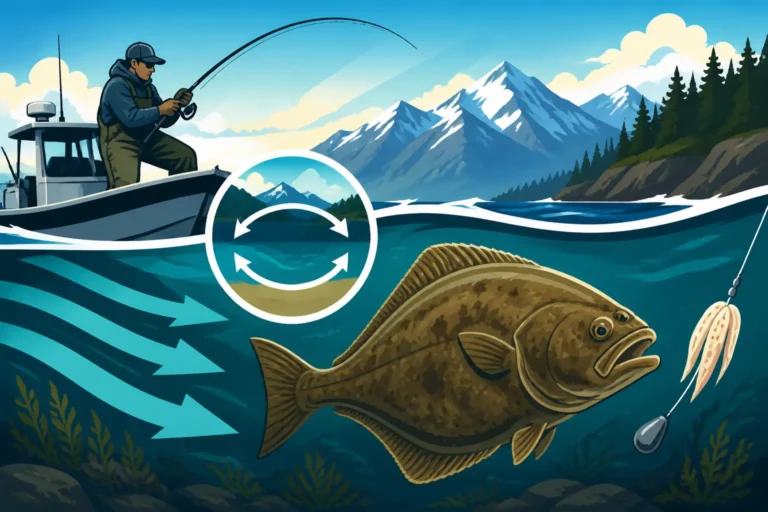
- Bottom Fishing (Drift or Anchored): This is the most common method. You drop your bait or lure to the bottom and let it sit or slowly drift along. If drifting, the boat's movement drags your offering across the seafloor, covering more ground. If anchored, you're targeting a specific spot. The goal is to keep your bait just off the bottom, perhaps a foot or two, so it's visible and accessible to cruising halibut. When you feel a bite, don't yank! Halibut often "mouth" the bait first. Let them take it, then reel down slowly until the rod loads up, and set the hook with a steady sweep. This method is particularly effective for large, wary halibut. You can learn more with our guide on How to Bottom Fishing for Alaska Halibut.
- Jigging: This is a more active technique where you drop a heavy jig to the bottom and then rapidly lift and drop it, imitating a wounded baitfish. This can entice aggressive halibut to strike. Vary your retrieve and depth until you find what the fish are responding to. Jigging can be physically demanding but is incredibly rewarding when the fish are in a feeding frenzy. Knowing How to Jig for Halibut in Alaska can add another dimension to your fishing strategy.
Remember, halibut fishing is often done in deep water, so having a good fish finder is invaluable for locating structure and schools of baitfish where halibut congregate. Your charter captain will have all this knowledge, but it’s always good to understand the basics!
Disclaimer
Please remember that fishing regulations in Alaska are subject to change by emergency order throughout the season. While we strive to provide the most accurate and up-to-date information, it is ultimately your responsibility to consult the current Alaska Department of Fish and Game (ADF&G) regulations and emergency orders before you go fishing. This content is for informational purposes only and does not constitute legal advice or a substitute for official regulations.