Alaska Sockeye Salmon Run Timing
Planning an unforgettable fishing trip to Alaska, only to realize you’ve completely missed the peak sockeye salmon run, is a gut punch no angler wants to experience. These vibrant, hard-fighting fish are a highlight of an Alaskan summer, but their arrival isn't a fixed date on a calendar. Understanding the nuanced timing of sockeye salmon runs across Alaska's diverse waterways is absolutely essential for a successful and thrilling adventure, and this guide is here to help you decipher it all.
Understanding Sockeye Salmon Runs
Sockeye salmon, often called "red salmon" due to their brilliant crimson spawning colors, are an iconic species in Alaska. Their annual migration from the ocean back to their natal freshwater streams and lakes is a spectacle of nature and a prime target for anglers. But pinning down exactly when they arrive is a delicate dance with nature, influenced by a myriad of environmental cues.
The Sockeye Life Cycle and Spawning Journey
To truly grasp run timing, you first need to appreciate the incredible journey these fish undertake. Sockeye typically spend 1 to 4 years in freshwater as juveniles, often rearing in lakes, before heading out to the vast Pacific Ocean for another 1 to 3 years. It's during their time at sea that they feed voraciously, growing strong and building up the energy reserves needed for their final, epic migration. When the time comes, usually in late spring or summer, an instinctual urge calls them home. They navigate hundreds, sometimes thousands, of miles back to the exact river, stream, or even specific gravel bed where they were born. This homing instinct is incredibly powerful, and it's this journey that defines the "run."
Once they enter freshwater, sockeye stop feeding. Their bodies undergo a dramatic transformation, shifting from silvery blue to that unmistakable scarlet red, with males often developing a pronounced humped back and hooked jaw. This biological clock, refined over millennia, dictates their precise return. They're driven by the need to find suitable spawning grounds, deposit their eggs, and complete their life cycle, an arduous task that will ultimately lead to their death after spawning. Knowing this helps you understand why they're so focused and why certain fishing techniques, like flossing, are uniquely effective for these non-feeding fish.
Why Timing is Absolutely Everything for Sockeye
For an angler, hitting the sockeye run at its peak means the difference between a once-in-a-lifetime experience and a frustrating trip with few bites. When the run is "on," rivers can be teeming with fish, offering incredible action and the chance to fill your cooler with some of Alaska's finest table fare. Miss it, and you might find yourself casting into an empty river or encountering only a few stragglers. The peak of the run isn't just about fish numbers; it's also about fish quality. Early in the run, sockeye are bright, ocean-fresh, and at their absolute prime for eating. As they spend more time in freshwater, their flesh quality diminishes as they utilize their fat reserves for spawning.
Beyond the sheer numbers and quality, understanding the run timing is crucial for logistical planning. Guides, lodges, and even rental cars can be booked solid months, sometimes a year, in advance for prime sockeye periods. Knowing when to target specific rivers means you can book your trip strategically, secure your spot, and ensure you have the best possible chance of success. It also allows you to align your visit with specific regulatory openings, as certain fisheries for species like sockeye are often managed with short, intense openings that demand precise timing.
Key Factors Influencing Run Timing
While historical data gives us a good baseline, sockeye salmon run timing is far from an exact science. Many environmental variables act as intricate gears in a complex biological clock, shifting the runs earlier or later each season.
Water Temperature and River Flow
Perhaps the most significant environmental drivers for sockeye migration are water temperature and river flow. As sockeye approach the freshwater estuaries, they are highly sensitive to these conditions. Warmer ocean temperatures can sometimes signal an earlier migration, as the fish are motivated to enter cooler river systems. Conversely, a prolonged cold spring might delay their push into freshwater. Similarly, river flow plays a critical role. High, turbid water from heavy rains or rapid snowmelt can make upstream migration more challenging, potentially slowing the run. Clear, moderate flows, on the other hand, can allow fish to move quickly and efficiently.
Consider a scenario where a particularly dry, warm spring causes river levels to drop and water temperatures to rise unusually early. This might prompt sockeye to enter rivers like the Kenai or Kasilof a week or two ahead of their typical schedule. Conversely, a late, heavy snowpack and a cool June could lead to high, cold water well into July, delaying the main push of fish. This is why seasoned anglers and guides are constantly monitoring conditions, knowing that last year's calendar might not hold true for this year. The fish are responding to their environment in real-time, and so must you.
Ocean Conditions and Food Availability
The vastness of the Pacific Ocean is where sockeye spend the majority of their adult lives, and conditions here profoundly impact their survival and their ultimate return timing. The availability of their primary food sources, like zooplankton, influences how well they grow and how quickly they mature. A strong forage base in their marine feeding grounds can lead to robust, healthy fish and potentially larger runs. Conversely, poor ocean conditions, such as warmer-than-average water temperatures impacting food availability, can result in smaller, less vigorous fish and reduced returns.
These oceanic factors can affect not just the timing, but also the overall size and health of the returning sockeye. For instance, some years might see a return of smaller, leaner fish if ocean feeding was subpar, while others yield larger, fatter "football" sockeye. Scientists from the Alaska Department of Fish and Game (ADF&G) use ocean conditions and smolt out-migration data to forecast sockeye returns years in advance, giving biologists and anglers a crucial heads-up, even though these forecasts are never perfectly precise.
Escapement Goals and Management Decisions
Alaska's fisheries are managed with sustainability as the top priority, and that means ensuring enough sockeye make it upstream to spawn. Each river system has an "escapement goal" – a target range for the number of fish that must pass through the fishery to reach the spawning grounds. The ADF&G rigorously monitors these numbers using weir counts, sonar, and aerial surveys. If escapement is lagging behind what's needed, emergency orders can be issued to restrict fishing, such as reducing bag limits, closing specific areas, or even temporarily shutting down a fishery to allow more fish to pass.
Conversely, if an exceptionally strong run materializes and escapement goals are being easily met or exceeded, the ADF&G might issue emergency orders to liberalize fishing. This could mean increasing daily bag limits or opening a fishery for longer periods, especially for personal use fisheries like the Kenai and Chitina dipnetting seasons. These management decisions can dramatically alter the fishing experience. It's critical to always check the latest regulations and emergency orders before heading out. Staying informed means knowing when to fish, where to fish, and how many fish you can legally keep. For detailed information, you can always refer to the official Alaska Fishing Regulations Explained guide.
Major Sockeye Salmon Rivers and Their Schedules
Alaska boasts an incredible number of rivers and streams that host sockeye salmon, each with its own unique timing and characteristics. While the exact peak can vary annually, understanding the general window for major systems is key to planning.
Kenai River Sockeye Runs
The Kenai River, especially the Lower and Middle Kenai, is arguably Alaska's most famous sockeye destination, drawing thousands of anglers each summer. The Kenai typically sees two distinct sockeye runs. The first run is smaller, primarily targeted by commercial fishermen in Cook Inlet, and usually occurs from late May through late June. These fish are headed mainly to the Russian River, a tributary of the Kenai, and are often caught by anglers at the confluence of the two rivers near Cooper Landing.
The second, much larger, and more famous Kenai sockeye run begins to build in early July, peaking around the second or third week of July, and continuing strong into early August. This is the run that fills the river with vibrant red fish and creates the iconic "combat fishing" scenes. Anglers flock to popular spots like the Kenai River personal use dipnet fishery near Kenai and Soldotna, or use traditional rod-and-reel methods further upstream. Understanding How to Time the Kenai Sockeye Run is vital for maximizing your success here.
Copper River Sockeye Runs
The Copper River is famous for its early and highly prized sockeye and king salmon. Located in Southcentral Alaska, its sockeye run is often the earliest major run in the state, typically beginning in mid-May and extending into June. These fish are known for their exceptionally rich, high-fat content, making them a gourmet favorite. While many are harvested commercially, sport and personal use opportunities exist, particularly in the Chitina area for dipnetting.
Due to its early timing, the Copper River sockeye run is often seen as the harbinger of the salmon season. Anglers planning to target this early run need to be prepared for potentially cooler, wetter weather than later in the summer. Fishing pressure here, especially for personal use, can be intense but rewarding, providing some of the freshest sockeye meat available.
Bristol Bay Sockeye Runs (Naknek, Nushagak, Alagnak)
Bristol Bay, located in Southwest Alaska, is home to the largest sockeye salmon run in the world, accounting for an astounding percentage of the global sockeye harvest. This vast region includes numerous productive rivers such as the Naknek, Nushagak, Alagnak, Kvichak, and Egegik. The sockeye runs here are colossal, with millions upon millions of fish returning annually. The peak timing typically falls between late June and mid-July, making it a relatively compressed but incredibly intense period.
Many anglers experience Bristol Bay through fly-in lodges or remote trips, offering unparalleled fishing opportunities. The sheer volume of fish is difficult to comprehend until you witness it firsthand. While primarily a commercial fishery, sport and personal use opportunities are abundant. If you're looking for an immersive experience with mind-boggling numbers of sockeye, a trip to Bristol Bay during this peak window is unparalleled. For a deeper dive, consider reading our guide on Bristol Bay Fishing: What to Know Before You Go.
Other Notable Sockeye Fisheries (Russian River, Kasilof River)
Beyond these giants, several other rivers offer fantastic sockeye fishing.
-
Russian River: A tributary of the Kenai, the Russian River has a significant sockeye run, primarily from mid-June through July. The fish here are part of the Kenai's first run and are known for their smaller size but exceptional fighting spirit. Anglers often employ fly-fishing techniques, particularly "flipping" or "flossing" for these fish. The confluence of the Russian and Kenai Rivers is a world-famous, albeit crowded, fishing spot.
-
Kasilof River: Located just south of the Kenai River on the Kenai Peninsula, the Kasilof also hosts strong sockeye runs. While perhaps less famous than the Kenai, it offers excellent opportunities, often a bit earlier than the main Kenai run, particularly for its first sockeye pulse in early June. The Kasilof typically sees a strong second run coinciding with the Kenai's big push in July, offering a potentially less crowded alternative for boat anglers.
-
Susitna River Drainage: Rivers within the vast Susitna drainage, accessible from the road system north of Anchorage, also have significant sockeye runs, typically peaking from mid-July into August. These can offer more remote, do-it-yourself options for those willing to explore.
Here's a generalized table summarizing the peak sockeye run timing for major Alaskan rivers:
| River System | General Peak Run Timing | Primary Fishing Methods | Notes |
|---|---|---|---|
| Copper River | Mid-May to Mid-June | Dipnetting, Rod & Reel | Earliest run, high-fat fish. |
| Russian River | Mid-June to Mid-July | Fly Fishing (flossing) | Tributary of Kenai, popular "combat" spot. |
| Kenai River | Early July to Early Aug | Rod & Reel, Dipnetting | Massive second run, very popular. |
| Kasilof River | Mid-June to Late July | Rod & Reel (drift, boat) | Often a bit earlier than Kenai. |
| Bristol Bay Rivers | Late June to Mid-July | Rod & Reel, Fly-in trips | World's largest sockeye fishery. |
| Susitna Drainage | Mid-July to Mid-Aug | Rod & Reel (bank, boat) | More DIY-friendly options. |
Note: These are general peak timings and can shift by several days or even a week or two year-to-year based on environmental factors.
How to Track Sockeye Salmon Runs in Real-Time
Given the variability of sockeye salmon runs, relying solely on historical averages is a recipe for disappointment. Savvy anglers know that real-time information is your best friend. Fortunately, the Alaska Department of Fish and Game (ADF&G) provides an impressive array of resources to keep you updated.
Official ADF&G Resources and Emergency Orders
The Alaska Department of Fish and Game (ADF&G) is the ultimate authority for current fishing conditions and regulations. They operate an extensive network of counting weirs, sonar installations, and aerial surveys on key rivers across the state. This data is usually updated daily during the fishing season and provides critical insights into how many fish are actually moving upstream. You can find this information directly on the ADF&G website, usually under specific regional fishing reports or "run timing" sections. This is by far the most reliable source for factual, unbiased data.
Crucially, the ADF&G also issues "Emergency Orders" that can change regulations, sometimes with very little notice. These orders are typically enacted to either protect fish stocks when runs are weak or to allow for increased harvest when runs are exceptionally strong. For example, a major sockeye river might suddenly close to sport fishing for several days, or the daily bag limit could be increased. Not checking these emergency orders is one of the quickest ways to accidentally violate regulations, which can result in significant fines. Always, and I mean always, check the ADF&G website or their dedicated emergency order hotline before you head out, and even during your trip if you're staying for an extended period. Our guide on How to Check Alaska Emergency Orders Before Fishing offers more in-depth advice on navigating these critical updates.
Local Fishing Reports and Forums
While official data is indispensable, local fishing reports and online forums offer another layer of insight. These sources often provide anecdotal evidence, local tips, and real-time observations that official data might not capture immediately. Tackle shops in towns like Soldotna, Homer, or Cooper Landing are often goldmines of information. Their staff are usually avid anglers themselves and interact daily with people who have just come off the water. A quick call or visit can give you the scoop on water conditions, what gear is working, and where the fish are currently concentrated.
Online fishing forums and social media groups dedicated to Alaska fishing are also incredibly active. Here, anglers share photos, discuss tactics, and provide updates on run intensity. While these sources can be incredibly helpful for getting a "boots on the ground" perspective, it's important to approach them with a discerning eye. Not all information shared online is accurate, and some anglers might be reluctant to share their best secrets! However, cross-referencing these reports with official ADF&G data can give you a very well-rounded picture of what's happening on the river. Many enthusiasts often review new gear they've purchased, from waders to specific sockeye flies, often linking to products they found useful on platforms like Amazon.
Understanding Historical Data vs. Current Trends
Historical run timing data, which typically shows the average dates of peak runs over many years, is an excellent starting point for planning your trip months in advance. It gives you a general window to target and helps you choose which rivers might align best with your travel dates. However, as we discussed, annual variations are the norm, not the exception.
Therefore, once your trip approaches, shift your focus from historical averages to current trends. Is the water temperature unusually high or low? Has there been significant rain or snowmelt? Are the early indicators (like test fisheries or weir counts) showing the run is early, on time, or late? By combining historical knowledge with up-to-the-minute data from ADF&G and local reports, you can make informed decisions. This adaptable approach allows you to adjust your plans, if necessary, even last minute, to ensure you're in the right place at the right time for that incredible sockeye action. It's a bit like weather forecasting – historical climate tells you what's typical, but the daily forecast tells you what to expect today.
Planning Your Trip Around Sockeye Season
Once you have a handle on the sockeye run timing, the next step is to translate that knowledge into a well-organized fishing adventure. Alaska fishing trips require careful planning, especially during the busy sockeye season.
Booking Accommodations and Guides in Advance
This is not an exaggeration: if you plan to fish during the prime sockeye runs on popular rivers like the Kenai, you need to book your accommodations and any guided trips months, often even a year, in advance. Many top guides and lodges are fully booked far out, especially for peak July dates. If you wait until spring, you might find yourself scrambling for substandard options or paying premium prices.
Think about it: the window for truly epic sockeye fishing is relatively short, and demand is incredibly high. By securing your lodging, whether it's a cabin in Cooper Landing or a hotel in Soldotna, and booking a reputable guide well in advance, you lock in your dates and ensure you have expert assistance. A good guide not only puts you on fish but also understands the nuances of local regulations, emergency orders, and ethical fishing practices. They often have access to private boat launches or prime fishing spots that can make a huge difference in your success and overall experience.
Gear Considerations for Sockeye Fishing
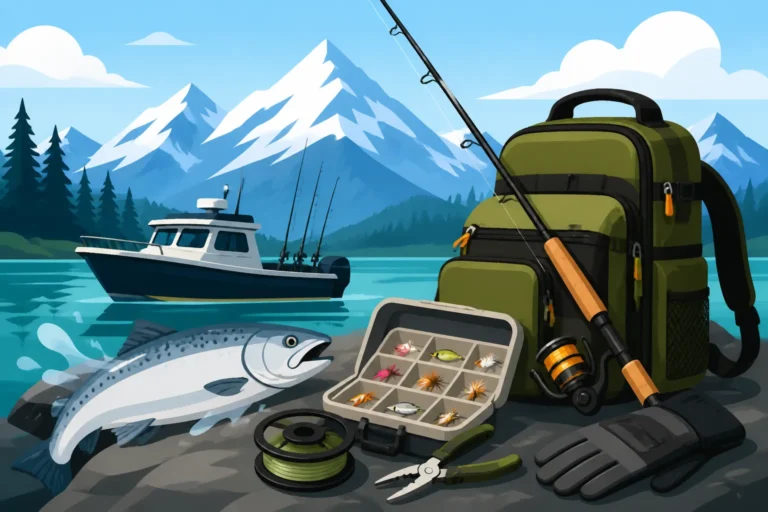
Sockeye salmon are powerful fighters, known for their strong runs and acrobatic jumps. You'll need appropriate gear to tackle them effectively. For most river fishing, a medium-heavy spinning rod or a fly rod in the 8-10 weight range is ideal. Pair this with a reliable reel spooled with strong braided line (20-30 lb test) or appropriate fly line. Leaders typically range from 15-25 lb monofilament or fluorocarbon.
When it comes to lures and flies, sockeye, as mentioned, generally stop feeding once they enter freshwater. This means traditional "catching" methods are less effective. Instead, techniques like "flossing" or "flipping" are common, where a small, brightly colored fly (often a weighted hook with some yarn or beads) is drifted or swung through schools of fish, aiming to hook them in the mouth as they open and close it. Popular fly patterns include the Russian River Fly, Sockeye Lightning, or Flesh Flies. You might also want to have a good pair of polarized sunglasses to spot the fish, and durable rain gear is an absolute must for Alaska's unpredictable weather. Many anglers purchase these essential items online from retailers like Amazon well before their trip to ensure they have exactly what they need.
Permits, Licenses, and Harvest Cards
Before you even make your first cast, you must have an Alaska fishing license. This is non-negotiable for all non-residents and most residents over the age of 16. You can easily purchase your license online through the ADF&G website before your trip, which is highly recommended. Learn more about How to Get an Alaska Fishing License Online to streamline this process.
For certain species, including king salmon and sometimes even sockeye in specific personal use fisheries, you may also need a King Salmon Stamp (if targeting Kings) or a specific permit for personal use fisheries (like the Kenai or Chitina dipnet). Additionally, all anglers must carry an Alaska Harvest Record Card, where you are required to immediately record all retained king salmon, and often sockeye salmon in personal use fisheries. Failing to record fish immediately is a common violation. The regulations regarding your catch, including daily and annual limits, are specific to each species and region. Our guide on Alaska Sockeye Salmon Fishing Regulations and Limits provides detailed information on what you can keep. Always be familiar with the rules for the waters you plan to fish to ensure a smooth and legal experience.
Tips for a Successful Sockeye Salmon Trip
Beyond knowing when and where to go, a successful sockeye salmon trip hinges on mastering the techniques, understanding fish behavior, and respecting the environment.
Effective Sockeye Fishing Techniques
Sockeye salmon fishing in Alaska is unique because these fish are not actively feeding once they enter freshwater. This means you’re not trying to entice them with bait as you would a trout or a king salmon. Instead, the most common and effective technique is often referred to as "flossing" or "flipping." This involves drifting a weighted leader with a small, unbaited fly or bead through dense schools of sockeye. The goal is for the line to pass over their back and for the fly to swing into their mouth, allowing you to set the hook. This takes practice and a good understanding of current speed and casting accuracy.
For those using a spinning rod, a heavy enough lead weight (often 1/2 to 1 oz or more, depending on current) is tied to the main line, followed by a leader of about 30-48 inches, and then a small, bright red or pink fly on a short dropper loop. Cast upstream and allow the rig to drift naturally downstream, keeping tension on the line and feeling for any slight bump. When you feel a strike, it's often more of a solid weight than a tap, and a firm sweep-set is usually required. Many seasoned anglers will advise you to check out How to Flip for Sockeye Salmon for a comprehensive breakdown of this technique.
Reading the Water and Fish Behavior
Sockeye salmon are creatures of habit and efficiency when migrating upstream. They will often choose the path of least resistance, following distinct current seams, gravel bars, or deeper channels. Learning to "read the water" means identifying these travel lanes. Look for areas where the current is slightly slower, often near submerged structure or the edge of a faster flow. You'll also need to identify where the schools of fish are holding. This can be challenging in murky water, but in clear rivers, you'll often see distinct red masses of fish.
Observe how the fish are moving. Are they actively pushing upstream, or are they holding in a pool, resting? Are they spread out or tightly schooled? Their behavior will dictate your approach. If they're actively moving, casting into their travel lane is key. If they're holding, you might need to make repeated drifts through the same spot. Being patient, observant, and willing to adjust your casting location by just a few feet can make a massive difference. Remember, the fish are almost always there; it's about presenting your offering in the right way, at the right depth, and in their face.
Conservation and Ethical Angling
Alaska’s incredible fisheries are a precious resource, and responsible angling ensures they remain healthy for future generations. This starts with understanding and adhering to all regulations, including daily bag limits and annual possession limits. Our guide on Alaska Fishing Limits and Bag Limits Explained is an excellent resource for this. Only keep what you can legally and ethically use, and be mindful of your personal limits, not just the legal ones.
Practicing catch-and-release properly is also crucial if you're not keeping every fish. Handle fish gently, minimize their time out of water, and use barbless hooks, which are often required for sockeye fishing in many Alaskan waters anyway. If you're fishing in a busy area, be respectful of other anglers and maintain appropriate spacing. Finally, always pack out everything you pack in, and dispose of fish carcasses responsibly, away from high-traffic areas to avoid attracting bears. Leaving the riverside cleaner than you found it is a small but vital contribution to preserving Alaska's wild beauty. Also, understanding the difference between Alaska Sport Fishing vs Personal Use will help you align your angling style with the regulations for that particular season and location.
Disclaimer
Please remember that fishing regulations and run timings in Alaska can change rapidly due to emergency orders issued by the Alaska Department of Fish and Game (ADF&G). Always check the latest official regulations and emergency orders before and during your fishing trip to ensure compliance. This guide provides general information and historical averages, but real-time conditions can vary.