How to Catch Kenai River King Salmon
Chasing King Salmon on the Kenai River is an experience that many anglers dream of, but it can also be incredibly frustrating. These majestic fish are notoriously challenging to catch, and the Kenai, famous for its giant Chinooks, demands respect, patience, and the right approach. If you've ever felt overwhelmed by the regulations, the sheer power of these fish, or simply where to even begin, you're not alone. This guide will walk you through everything you need to know to increase your chances of landing one of the Kenai's legendary King Salmon.
Understanding the Kenai River King Salmon Fishery
The Kenai River is a legend in the angling world, primarily due to its reputation for producing some of the largest King Salmon on the planet. But it's not just about size; it's about the entire experience of fishing this incredible waterway. Knowing the nuances of the fishery, from the fish's habits to the ever-changing rules, is your first step towards success.
The Elusive Nature of Kenai Kings
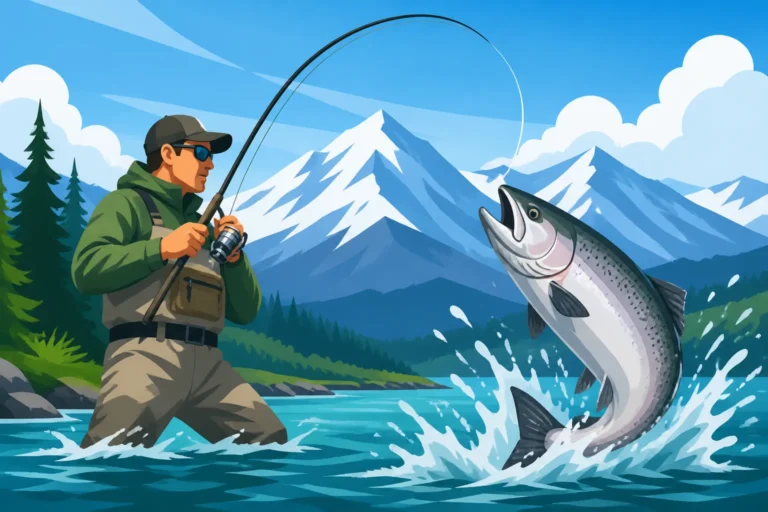
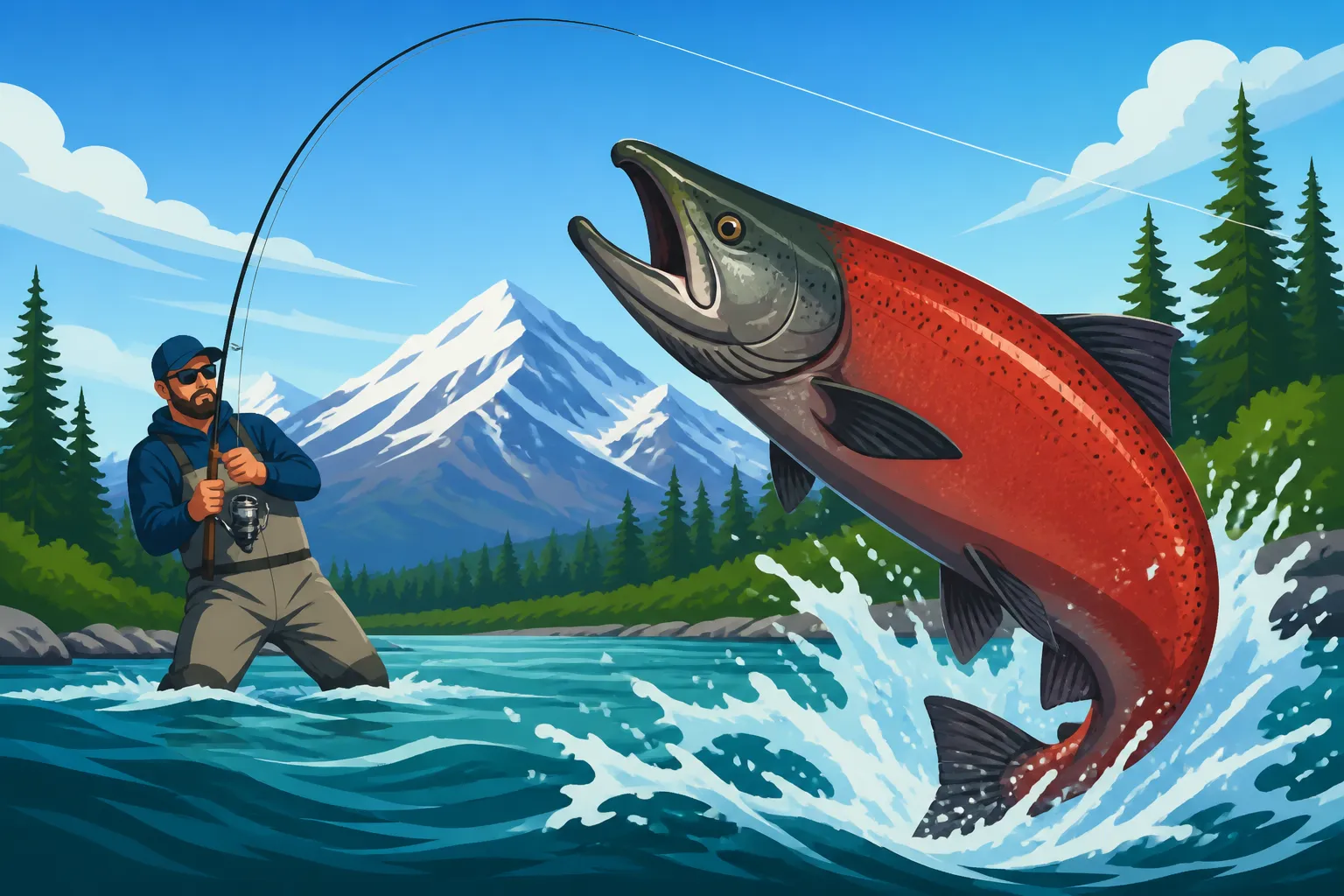
Kenai King Salmon, or Chinook Salmon, are true freshwater giants. They are built for power and endurance, making their upstream migration a test of strength. When you hook one, you'll immediately understand why they're so revered – they fight harder and longer than almost any other freshwater fish. This incredible power, combined with their often finicky feeding habits in the river, contributes to their elusive reputation. You could spend days on the water without a bite, and then suddenly, a brute hits your lure, and the battle of a lifetime begins. Their presence in the river is often governed by complex biological factors and environmental conditions, making predictions a constant challenge for even the most seasoned guides.
Key Seasons and Run Timing
Timing is absolutely everything when it comes to Kenai River King Salmon. The Kings typically enter the Kenai in two distinct runs, each with its own characteristics and peak fishing windows.
- First Run Kings (Late May – Early July): These are often the smaller of the two runs, but "smaller" on the Kenai still means impressive fish. They start showing up in late May, with the peak usually occurring in mid-to-late June. Fishing for the first run can be fantastic, but water levels and clarity are crucial. High, murky water from glacial melt or heavy rains can make fishing tough. These early fish are fresh from the ocean and incredibly strong.
- Second Run Kings (Mid-July – August): This is the run that put the Kenai on the map for its monster Kings. The second run typically begins in mid-July and peaks around the last week of July into early August. This is when the really big fish, often exceeding 50 pounds and occasionally hitting that magical 70-pound mark, enter the river. However, this period also coincides with the highest fishing pressure, and sometimes the runs can be weaker than hoped, leading to intense competition and often, frustration. Understanding the nuances of Alaska King Salmon Run Timing is paramount, as even a few days can make a difference in your experience.
Navigating Regulations and Emergency Orders
This is perhaps the most critical, and often the most frustrating, aspect of fishing for Kenai River King Salmon. Alaska's fishing regulations are not static, especially for Kings, which are often a species of conservation concern. You absolutely must stay current with the latest rules.
- Annual Regulations Booklet: The Alaska Department of Fish and Game (ADF&G) publishes an annual sport fishing regulations booklet that outlines seasons, bag limits, gear restrictions, and special provisions for specific areas, including the Kenai River. Make sure you have the most current version. You can usually find a copy at local tackle shops, ADF&G offices, or online. For a deep dive, check out the comprehensive Alaska King Salmon Fishing Regulations and Limits guide.
- Emergency Orders (EOs): This is where things get tricky. Due to fluctuating fish numbers, weather patterns, and conservation needs, ADF&G issues Emergency Orders throughout the season. These EOs can change everything from bag limits, gear restrictions (e.g., bait bans, single-hook only), and even close entire fisheries with little notice. It's not uncommon for rules to change overnight. Always check for current EOs before you head out, and even while you're there. Many anglers check daily. Learn How to Check Alaska Emergency Orders Before Fishing so you're never caught off guard. Ignoring an EO, even unknowingly, can lead to hefty fines and confiscation of your catch and gear. This ever-present uncertainty is a significant challenge for anglers planning a trip well in advance.
Table: Typical Kenai River King Salmon Run Timing & Considerations
| Run Type | Period (Approx.) | Key Characteristics | Considerations |
|---|---|---|---|
| First Run | Late May – Early July | Fresh, strong fish; generally smaller. | Variable water conditions; less crowded. |
| Second Run | Mid-July – Early August | Potential for trophy-sized Kings; high numbers. | Highest fishing pressure; strict regulations; EOs common. |
Essential Gear and Tackle for Kenai River Kings
You wouldn't bring a butter knife to a sword fight, and the same principle applies to fishing for Kenai Kings. These are powerful fish in a powerful river, and your gear needs to be up to the task. Skimping on tackle here will only lead to heartbreak.
Rods, Reels, and Line Choices
Your rod and reel are the backbone of your King Salmon setup. You need gear that can handle the brutal fights these fish put up.
- Rods: Look for heavy-action baitcasting or conventional rods, typically 9 to 10.5 feet long. A longer rod provides better line control, especially when fishing from a boat, and helps absorb the shocks of a King's head shakes and powerful runs. A common choice would be a rod rated for 15-40 lb line, or even heavier. Brands like Lamiglas, G. Loomis, and Fenwick offer excellent options designed for salmon fishing.
- Reels: A high-quality conventional reel with a strong drag system is essential. It needs to hold a lot of line and stand up to sustained abuse. Popular choices include models from Penn, Shimano, and Abu Garcia. A good reel will have a smooth, consistent drag that won't falter when a 50-pound King decides to make a 100-yard sprint. You want a reel that can hold at least 200-250 yards of heavy line.
- Line: Most serious Kenai King anglers use braided mainline, typically 50-80 lb test. Braid offers incredible strength, sensitivity, and a smaller diameter for its breaking strength. You'll then tie on a fluorocarbon or monofilament leader, usually 30-50 lb test, depending on water clarity and regulations. The leader provides abrasion resistance against rocks and teeth and can be less visible to the fish. Make sure your knots are impeccable – a weak knot is often the weakest link in the chain.
Terminal Tackle and Lures
This is where you connect with the fish, so precision and strength are paramount.
- Lures/Plugs: The Kenai is famous for its back-trolling plug fishing. The most iconic plug for Kenai Kings is the Luhr-Jensen Kwikfish, particularly in K15 or K16 sizes, often wrapped with sardine or herring. These plugs dive and wobble aggressively, imitating an injured baitfish. Other effective plugs include Mag Lip and Flatfish. The color choice can vary with water conditions; bright colors (chartreuse, orange, hot pink) work well in murky water, while more natural patterns (silver, black, green) can be better in clearer conditions.
- Scent: No matter what lure you're using, adding scent is almost always a good idea. Pro-Cure scents (e.g., Anise, Sardine, Herring) are widely used. You can slather them directly on your plugs or bait.
- Weights: For techniques like back-bouncing or drift fishing, you'll need various weights, from pencil lead to cannonball weights, to keep your presentation near the bottom. The Kenai's current can be strong, so you often need heavier weights than you might expect, sometimes 6-12 ounces or more.
- Hooks: When using bait or plugs, ensure your hooks are razor-sharp and strong enough to withstand a King Salmon. Treble hooks are common on plugs, but often regulations require single hooks during specific periods, so carry both. Owner and Gamakatsu are popular hook brands known for their strength and sharpness. Finding robust tackle can sometimes be a challenge locally, but you can usually find a great selection on Amazon if you order ahead. For more detailed advice on what works, check out Best Lures and Bait for Alaska King Salmon.
Waders, Rain Gear, and Essentials
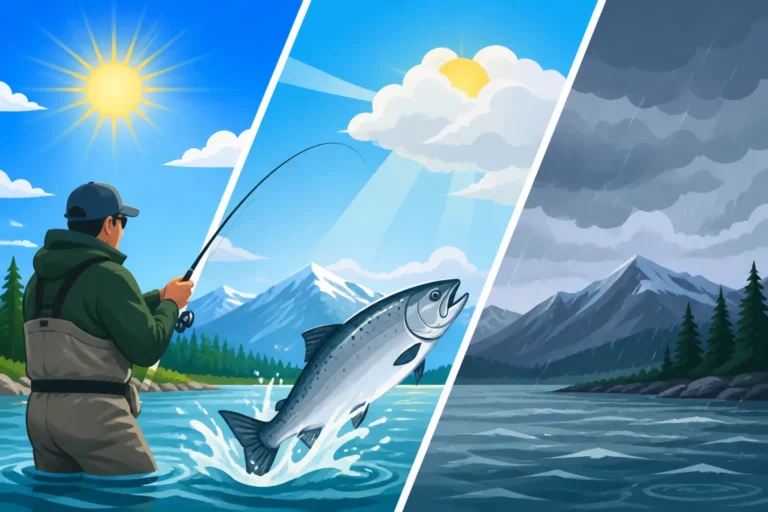
Alaska's weather is famously unpredictable. A beautiful sunny morning can turn into a torrential downpour in minutes, or a warm day can give way to chilly winds. Being prepared isn't just about comfort; it's about safety and extending your time on the water.
- Waders: Even if you're fishing from a boat, breathable chest waders are often a good idea for launching, beaching, or simply staying dry. Neoprene waders are warmer but less breathable. Make sure to pair them with wading boots that offer good ankle support and traction on slippery riverbanks.
- Rain Gear: This is non-negotiable. Invest in high-quality, waterproof and breathable rain jacket and pants. GORE-TEX or similar materials are worth the investment. Cheap rain gear will only leave you wet, cold, and miserable. Brands like Grundéns and Helly Hansen are popular among Alaskan anglers for their durability.
- Layers: Dress in layers. Start with a moisture-wicking base layer, add a fleece or wool mid-layer for warmth, and top it with your waterproof outer shell. This allows you to adjust to changing temperatures.
- Other Essentials: Bring warm gloves (neoprene or wool), a hat to protect from sun or cold, polarized sunglasses (crucial for spotting fish and protecting your eyes), sunscreen, insect repellent (mosquitoes and "no-see-ums" can be relentless), and plenty of snacks and water. A multi-tool and a reliable knife are also invaluable. For a comprehensive guide on staying comfortable, refer to How to Dress for Alaska Fishing. Sometimes, it's easier to find specialized outdoor gear and ship it directly to your lodging, or you can check for options on Amazon before you depart.
Proven Techniques for Targeting Kenai River King Salmon
Catching a Kenai King isn't just about luck; it's about employing the right techniques with precision and patience. These fish are smart and powerful, requiring a strategic approach.
Back-Trolling with Plugs
This is arguably the most iconic and often the most effective method for King Salmon on the Kenai River, especially from a boat.
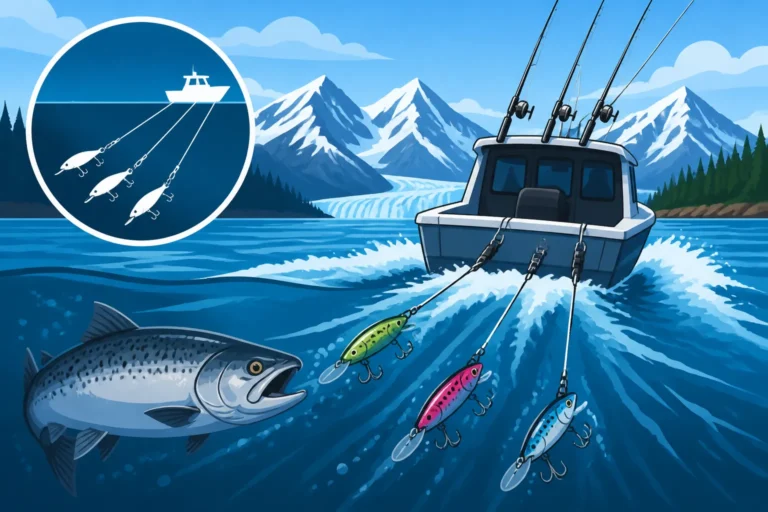
- The Concept: Back-trolling involves using the boat's motor (usually a small kicker motor) to slowly move the boat upstream or hold it stationary against the current, allowing your plugs to "work" downstream. The current imparts action to the plug, making it dive and wobble enticingly. The idea is to present your lure directly in the face of resting or migrating Kings without spooking them.
- Execution: Anglers typically deploy several rods from the stern, each with a Kwikfish plug wrapped with sardine or herring. The boat is positioned to drift or slowly motor upstream along known King holding areas – often deep channels, seams, or behind current breaks. The plugs are let out to a specific distance, usually 30-60 feet, depending on depth and current, and allowed to work the bottom. When a King hits, it's often a violent strike that nearly rips the rod from your hands.
- Tips: Pay close attention to your rod tip. The plug's action will create a distinct pulsing, or "thump," at the rod tip. If that thumping stops, you might have picked up debris, or a fish might have subtly mouthed the lure. Vary your scent application and occasionally check your plug for debris. Many guides swear by specific plug colors for different water conditions; having a range of options is key.
Back-Bouncing and Drift Fishing
These techniques are more hands-on and excel when fish are holding in specific pockets or when you want to feel every nuance of the river bottom.
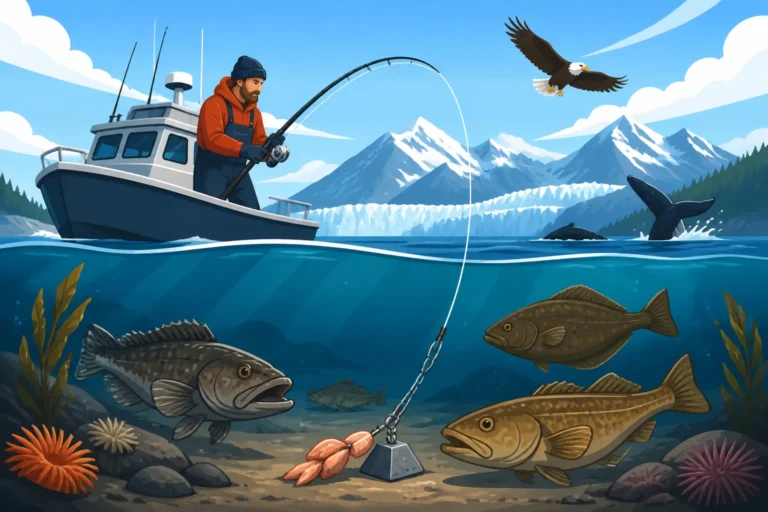
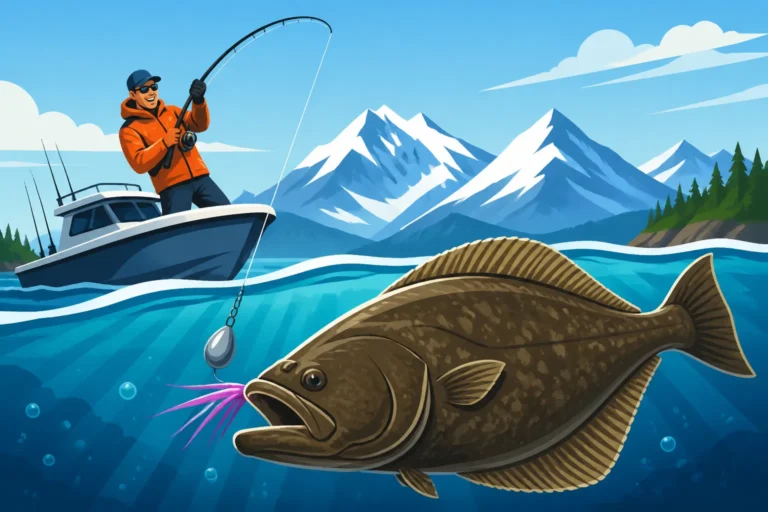
- Back-Bouncing: This method is about presenting bait or a lure right on the bottom where Kings often hold. You use a heavy lead weight (usually a pencil lead or cannonball) on a three-way swivel, with a leader (often 18-36 inches) trailing to your bait (often cured salmon eggs or a cluster of roe) or a small plug like a Kwikfish. You drop your weight to the bottom and let the current carry it downstream in a controlled manner, using your rod tip to "bounce" the weight along the riverbed. The goal is to keep tension on the line while feeling the bottom, detecting any subtle taps that might be a King. This can be done from a boat or, in certain areas, from the bank. For a detailed breakdown of this technique, read How to Back Bouncing for Salmon in Alaska.
- Drift Fishing: Similar to back-bouncing, drift fishing also aims to present bait or a lure near the bottom but often uses less weight and a more natural drift. You might use a weighted bobber, a slinky weight, or just enough lead to tick the bottom. This technique is often employed in slightly shallower or less turbulent water where the goal is a more subtle presentation. It's particularly effective with cured roe or beads that mimic salmon eggs, allowing them to tumble naturally along the bottom. Proper line control is vital to prevent snagging and to detect light bites. Understanding how to manage your line and feel for strikes is crucial when you How to Drift Fishing for Salmon in Alaska.
Proper Hook Setting and Fighting Techniques
Hooking a Kenai King is one thing; landing it is an entirely different battle. These fish will test your gear and your resolve.
- The Hook Set: When a King hits, it's often an unmistakable violent strike. However, sometimes it can be a subtle tap. If you feel anything out of the ordinary, particularly a solid weight or an unnatural stop in your lure's action, set the hook! With heavy gear and braided line, a strong, sweeping hook set is usually all it takes to drive the hook home. Don't be shy; lean into it.
- The Fight: Once hooked, a Kenai King will likely make a powerful, blistering run. Let the reel's drag do its job. Do not try to stop the fish with your thumb or by tightening the drag too much; you'll snap your line or break your rod. Your job is to apply steady pressure, keeping the rod tip up, and gain line whenever the fish pauses or changes direction.
- "Pump and Reel": This classic technique involves lifting your rod tip smoothly, reeling down as you lower it, then lifting again. This effectively pumps the fish closer to you.
- Keep Pressure: Never give the fish slack line. They'll shake their heads violently, and any slack increases the chance of them throwing the hook.
- Anticipate Runs: King Salmon have multiple strong runs in them. Be ready for them to surge away again, especially as they get closer to the boat or shore.
- Stay Focused: The fight can last anywhere from 10 minutes to over an hour, especially with a truly large fish. Stay calm, stay focused, and communicate with anyone else in the boat. For comprehensive tips on handling these behemoths, refer to How to Land a Big King Salmon in a River.
Practical Tips for a Successful Kenai King Salmon Trip
Fishing for Kenai Kings is more than just techniques; it's about planning, preparation, and mindset. A little foresight can make all the difference between a trip of a lifetime and a frustrating experience.
Hiring a Reputable Guide
For many, especially those new to the Kenai, hiring a professional guide is not just recommended, it's almost essential.
- Local Knowledge: Kenai River guides spend hundreds of days on the water each season. They know the subtle nuances of the river, where the fish are holding based on water levels and time of year, and what techniques are working that day. This local knowledge is invaluable.
- Equipment: Reputable guides provide top-notch gear and tackle, saving you the expense and hassle of bringing or buying specialized equipment. They'll also have the right boat for the river, which is crucial for safety and effective fishing.
- Regulations Expertise: Guides are typically on top of all the latest regulations and Emergency Orders, ensuring you're fishing legally and responsibly. This peace of mind is worth a lot.
- Safety: The Kenai River can be a challenging waterway. Experienced guides prioritize your safety, navigating rapids and currents with expertise.
- Increase Your Chances: While a guide doesn't guarantee a fish, they dramatically increase your odds of hooking a Kenai King. When choosing a guide, look for those with years of experience on the Kenai, good reviews, and a clear communication style. Ask questions about their typical methods, what's included in the price, and their catch-and-release philosophy. Our guide on How to Pick an Alaska Fishing Guide offers even more detailed advice.
Respecting the Resource and Other Anglers
The Kenai River is a shared resource, and its popularity means you'll often be fishing alongside many other anglers. Practicing good etiquette and respecting conservation efforts is vital for everyone's enjoyment and the future of the fishery.
- Follow Regulations: This cannot be stressed enough. Always adhere to bag limits, size restrictions, and gear requirements. If a slot limit is in place, measure carefully.
- Practice Catch and Release Ethically: If you're releasing fish (which is often required for Kings due to limits or EOs), do so quickly and carefully. Keep the fish in the water as much as possible, use wet hands, and revive it fully before letting it go.
- Don't Crowd Others: Give other anglers space. If you're drifting or back-trolling, maintain your lane and don't cut off other boats. If you're bank fishing, don't cast over someone else's line.
- Manage Your Waste: Pack out everything you pack in. Do not leave trash, fishing line, or discarded bait on the riverbanks or in the water.
- Be Patient: Fishing can be slow, especially for Kings. Frustration is understandable, but maintain a positive attitude and be courteous to those around you. Remember, everyone is there to enjoy the experience.
Fish Care and Preparation
When you do land that prized Kenai King Salmon, how you handle it immediately after the catch makes a huge difference in the quality of the meat.
- Bleeding the Fish: As soon as you decide to keep a King Salmon, bleed it immediately. This involves cutting the gills to allow the blood to drain. This greatly improves the flavor and shelf life of the meat.
- Keep it Cold: Get the fish on ice as quickly as possible. A large cooler filled with ice is essential. The colder you keep the fish, the better the quality.
- Filleting: If you're staying at a lodge or working with a guide, they often have facilities or services for filleting your catch. If you're doing it yourself, invest in a sharp, flexible filleting knife. Large King Salmon can yield a substantial amount of meat, so take your time to do a clean job. Our guide on How to Fillet a Salmon in Alaska provides excellent step-by-step instructions.
- Processing and Shipping: Most anglers visiting Alaska want to take their catch home. Many communities along the Kenai (like Soldotna or Kenai) have excellent fish processing services. They will fillet, portion, vacuum seal, and freeze your fish, often boxing it for airline travel. It's a fantastic service that ensures your hard-earned catch arrives home in perfect condition. Plan for this expense, as it's an important part of the overall experience. You can also purchase airline-approved fish boxes from Amazon or local tackle shops if you plan to process it yourself. For everything you need to know about getting your catch back home, check out Alaska Fish Processing and Shipping Home Rules.
Remember, fishing for Kenai River King Salmon is a journey, not just a destination. It's about the anticipation, the challenge, the stunning Alaskan scenery, and the sheer power of these incredible fish. Good luck, and tight lines!
Disclaimer
The information provided in this guide is for general informational purposes only and is not intended as legal or professional advice. Fishing regulations in Alaska, especially concerning King Salmon, can change frequently and without prior notice due to Emergency Orders issued by the Alaska Department of Fish and Game. Always consult the most current official Alaska Sport Fishing Regulations booklet and check for any Emergency Orders before engaging in any fishing activities. Compliance with all applicable laws and regulations is the sole responsibility of the angler.