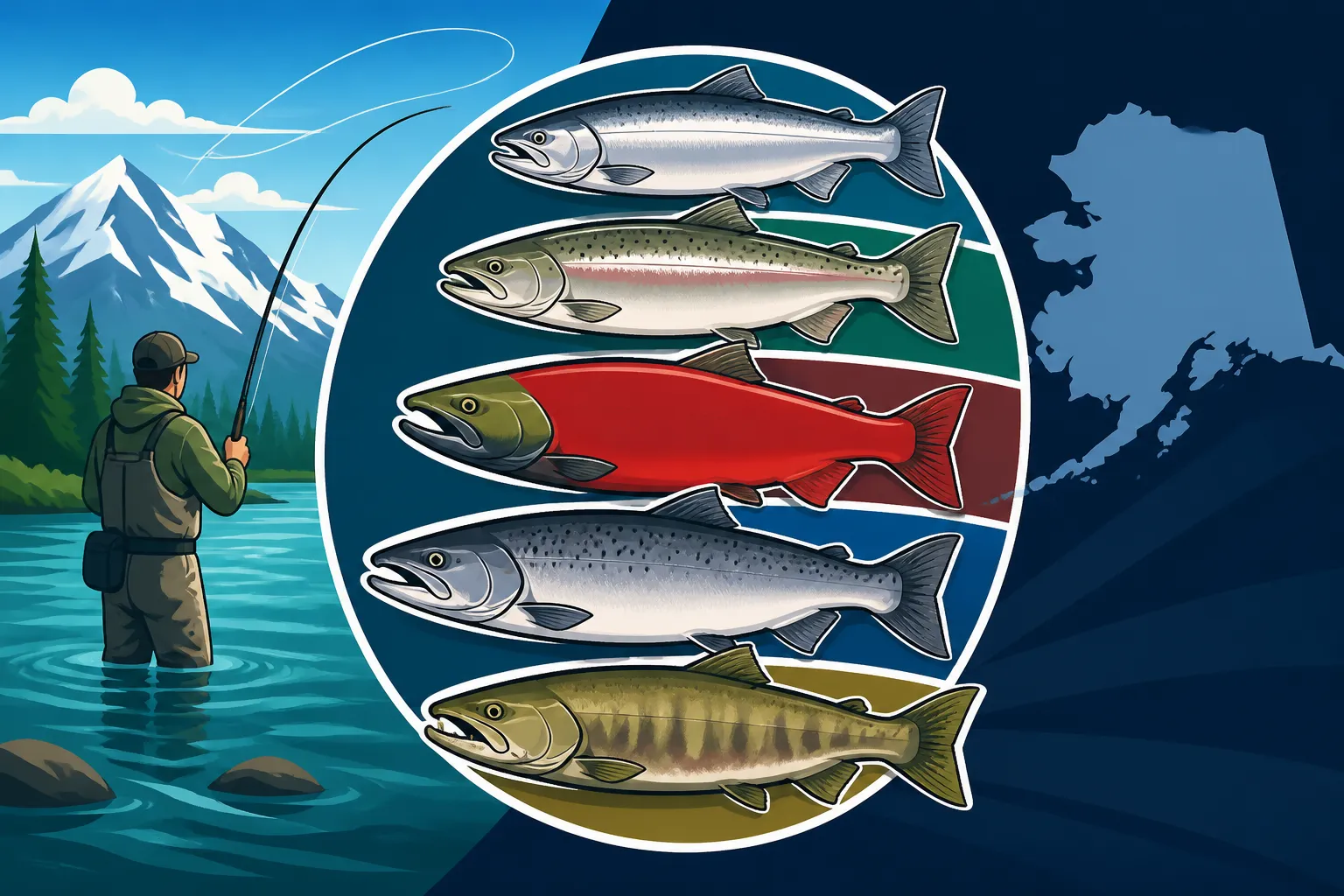
Types of Salmon in Alaska Explained
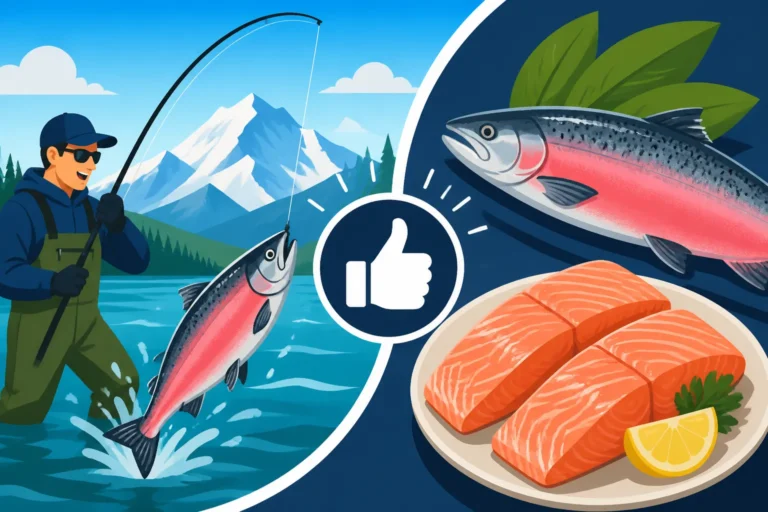
If you've ever stood on the banks of an Alaskan river or trolled the vast Pacific waters here, you know the thrill – and sometimes the confusion – of encountering one of Alaska's magnificent salmon. It’s a common frustration, especially for newcomers, to distinguish between a bright silver Coho and a chrome King when they're fresh out of the ocean, or to tell a Sockeye from a Pink when they start changing colors. This comprehensive guide is here to clear up that mystery, breaking down each of the five Pacific salmon species you'll find in Alaska, helping you identify them, understand their unique characteristics, and know where and when to find them.
The Five Pacific Salmon Species of Alaska
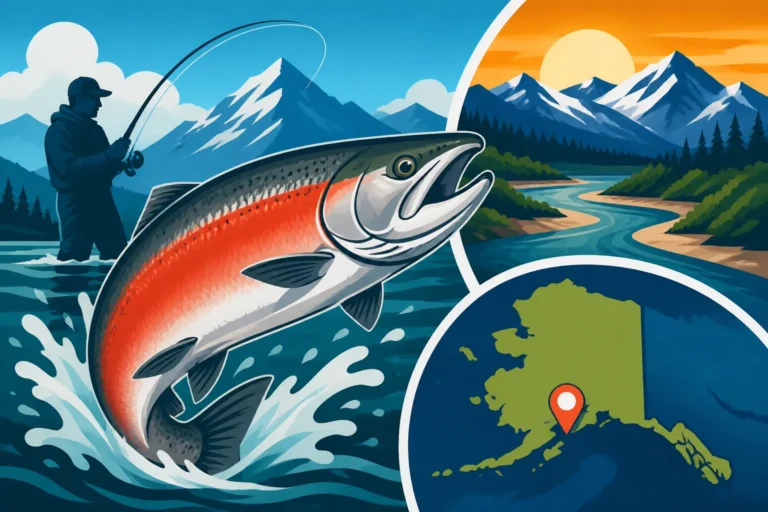
Alaska truly is the heartland of Pacific salmon, a place where these incredible fish not only thrive but also define much of the landscape, culture, and economy. When we talk about "Alaska salmon," we're generally referring to the five species of Pacific salmon that complete their life cycle here: Chinook (King), Sockeye (Red), Coho (Silver), Pink (Humpy), and Chum (Dog). Each one is a marvel in its own right, offering a unique challenge and reward to anglers. Understanding these distinct species isn't just about satisfying curiosity; it's crucial for following regulations, appreciating the diversity of Alaska's fisheries, and ultimately, having a more successful and rewarding trip.
Why Alaska is the Salmon Capital
There’s a reason Alaska holds such a legendary status among anglers worldwide, and it boils down to one simple truth: pristine habitats. The sheer scale of untouched wilderness, with countless rivers, streams, and coastal waters, provides the perfect environment for salmon to spawn, rear, and migrate. Unlike many other regions that have seen drastic declines due to habitat loss and overfishing, Alaska has maintained robust populations thanks to rigorous management and vast, unspoiled ecosystems.
From the glacial-fed rivers of Southcentral Alaska, like the mighty Kenai and Susitna, to the remote, wild watersheds of Bristol Bay, the sheer volume of healthy, cold water is unparalleled. These vital arteries are salmon highways, delivering millions of fish from the ocean back to their natal spawning grounds. This natural bounty means that during peak runs, it's not uncommon to witness rivers practically turn red with migrating Sockeye or to hear tales of tackle-busting King salmon in storied fishing holes. It’s an ecological miracle that Alaska has worked tirelessly to preserve, ensuring that these incredible runs continue year after year for generations to come.
The Importance of Salmon to Alaska's Ecosystem and Economy
The significance of salmon in Alaska extends far beyond just sportfishing; they are truly the keystone species of the entire Alaskan ecosystem and a foundational pillar of its economy. Ecologically, salmon act as a vital nutrient pump, bringing rich marine-derived nutrients from the ocean back into freshwater and terrestrial environments when they return to spawn and eventually die. This influx of nutrients fertilizes the forests, feeds bears, eagles, and countless other wildlife, and supports the very bugs and small fish that juvenile salmon will eventually eat. Without salmon, the entire ecological fabric of Alaska would unravel.
Economically, salmon support a massive commercial fishing industry, providing jobs and income to countless Alaskans, from fishermen to processors to transporters. The sportfishing industry also relies heavily on healthy salmon runs, drawing tourists and anglers from around the globe who come to experience the thrill of an Alaskan fishing adventure. Towns like Homer, Seward, and Soldotna see their populations swell each summer, bustling with activity centered around salmon. Furthermore, for many rural and Indigenous communities, salmon are not just a food source but a cultural bedrock, central to their traditions, diets, and way of life for millennia. This deep connection highlights why understanding and respecting these fish, as well as the Alaska Fishing Regulations Explained, is so profoundly important.
King Salmon (Chinook Salmon): The Royal Catch
When you talk about salmon fishing in Alaska, the King salmon often reigns supreme. Known scientifically as Oncorhynchus tshawytscha, but affectionately called Chinook by many, these fish are the largest and, to many anglers, the most prized of all Pacific salmon. Their sheer size, immense power, and often elusive nature make them the ultimate trophy. Landing a true "trophy King" is a bucket-list achievement for many who venture to Alaska's legendary rivers.
Identifying a King Salmon
Identifying a King salmon can be incredibly exciting, especially when you've got one on the line. While they share some similarities with their salmon cousins, particularly Coho, Kings have distinct features that set them apart.
- Size and Body Shape: Kings are, without a doubt, the largest of the Pacific salmon. While average weights might be in the 20-30 pound range, it's not uncommon to encounter fish well over 50 pounds, with the state record exceeding 97 pounds! They have a thick, robust body, giving them a powerful, almost barrel-chested appearance. This bulk allows them to fight with incredible strength, often peeling line off your reel with relentless runs.
- Coloration (Ocean Phase vs. Spawning Phase): Fresh from the ocean, a King salmon will have a brilliant, silvery sheen with a bluish-green back, making them undeniably stunning. This "chrome" phase is when they are at their most vibrant. As they move into freshwater and approach spawning, their coloration changes. They can develop a darker, often mottled olive-brown or reddish-purple hue, sometimes with distinct vertical bars or blotches. This transformation is part of their natural life cycle, but it can make identification slightly trickier for the uninitiated.
- Spots: One of the most reliable identification markers for a King salmon is the presence of irregular black spots on their back and on both lobes of their tail fin. Pay close attention to the tail – if both the upper and lower lobes have distinct spots, you're almost certainly looking at a King.
- Gum Line: This is perhaps the most definitive field identification marker. Gently lift the gill plate and look at the gum line inside the mouth. King salmon will have a solid black gum line, both on the upper and lower jaws, where their teeth meet the gums. This stark black is usually unmistakable and differentiates them from other species that might have white or mottled gums.
- Teeth: While all salmon have teeth, King salmon often have larger, more robust teeth compared to Sockeye or Pink salmon, though not as pronounced as the canine-like teeth of a spawning Chum.
Imagine you're fishing on the lower Kenai River, and you hook into something that feels like a freight train. It makes a powerful run, then another. As you finally bring it close, you notice the deep body, the iridescent silver flashing in the sun, and then, as it turns, those tell-tale spots spread across both halves of its tail. A quick glance inside its mouth reveals that distinct black gum line. No doubt about it – you've landed a majestic King. This firsthand experience is truly unforgettable, proving why many anglers invest in quality fishing guides and gear, often found on Amazon, to target these magnificent fish.
Characteristics and Behavior
King salmon are not just big; they are renowned for their aggressive fighting style and their impressive migrations. They are often considered the strongest fighters among salmon, capable of long, powerful runs and deep dives, testing every inch of your tackle and your stamina.
- Aggressive Fighters, Tackle Busters: Hooking a King salmon is an adrenaline rush. They don't give up easily, often leading to prolonged battles that can last 15-30 minutes or more, especially with a large fish in strong current. They are notorious for finding snags, jumping unexpectedly, or simply bulldogging their way to freedom. Anglers targeting Kings often use heavy-duty rods, reels, and strong lines to stand a chance.
- Their Diet and Preferred Habitats: In the ocean, King salmon are voracious predators, feeding on smaller fish like herring and squid. This diet fuels their immense growth. In freshwater, while they are no longer actively feeding in the same way, they will strike at lures, bait, and flies out of aggression or instinct. They tend to prefer deeper, cooler water in rivers, often holding in large pools, current seams, and behind structure where they can conserve energy before continuing their upstream migration. You'll often find them in the powerful currents of rivers like the Susitna or the deep holes of the Kenai, resting before tackling the next section of their journey.
- Longevity and Migration Patterns: King salmon have the longest lifespan of the Pacific salmon, typically living 3 to 7 years. This extended time in the ocean contributes to their impressive size. Their migrations are also among the longest and most demanding, with some fish traveling hundreds, if not thousands, of miles upriver to reach their spawning grounds. These epic journeys are a testament to their incredible resilience and drive.
Prime King Salmon Fishing
Timing and location are everything when it comes to King salmon fishing in Alaska. Their runs are specific, and being in the right place at the right time is key to success. For a truly immersive experience, many consult guides for Best Salmon Fishing Rivers in Alaska.
- Key Seasons: King salmon runs typically begin in late May and continue through July, with different rivers having slightly varied peak times. Early June often sees the first push of fish in many Southcentral rivers, with the run peaking in late June to mid-July. The exact timing can vary year to year based on water conditions and other environmental factors. You can learn more about specific timing in guides like Alaska King Salmon Run Timing.
- Popular Locations:
- Kenai River: Undoubtedly the most famous King salmon river in Alaska. The Kenai is known for producing some of the largest Kings in the world, including the current world record. Fishing here, especially during peak season, is an experience unto itself, with both guided and unguided options.
- Nushagak River: Located in Bristol Bay, the Nushagak sees massive King salmon runs, often considered one of the most prolific in Alaska. It's typically a fly-in or lodge-based experience due to its remote location.
- Deshka River: A popular tributary of the Susitna River, accessible via the road system from Anchorage. The Deshka offers good early-season King fishing for those looking for a shorter trip from the city.
- Susitna River System: A vast system of rivers and tributaries that hosts significant King salmon runs. Access can be challenging, often requiring jet boats or air charters.
- Common Techniques: Anglers use a variety of techniques to target Kings.
- Back-Trolling: Often done from a boat, using Kwikfish or similar diving plugs that are "back-trolled" downriver, allowing the current to work the lure. This is a highly effective method in larger rivers with strong currents.
- Back-Bouncing: Involves using heavy lead to bounce bait (like cured salmon roe) or lures along the river bottom, presenting it directly in front of holding fish. This method requires a sensitive rod and a good feel for the bottom.
- Casting Spinners/Spoons: From shore or boat, casting heavy spinners (like a Pixie or Mepps) or spoons and retrieving them through likely holding water can entice a strike.
- Fly Fishing: While challenging, fly fishing for King salmon is incredibly rewarding, often involving heavy sink tips and large, colorful flies presented to fish holding in deeper runs.
To really understand the nuances of these techniques, checking out resources like How to Catch King Salmon in Alaska can provide invaluable tips.
Sockeye Salmon (Red Salmon): The Iconic Alaskan Dynamo
Sockeye salmon, known as Oncorhynchus nerka, are arguably the most iconic of Alaska's salmon species, especially to those who participate in personal use or subsistence fisheries. While not typically the largest, their incredible fighting spirit, vast numbers, and superb table quality make them a favorite among anglers. Their vibrant colors during spawning are also a sight to behold, earning them the common name "Red salmon."
Identifying a Sockeye Salmon
Identifying a Sockeye can be straightforward once you know what to look for, especially when compared to the spots and gum lines of Kings or Cohos.
- Size and Body Shape: Sockeye are typically smaller and more slender than King salmon, usually weighing between 6 to 12 pounds, though larger individuals can approach 15 pounds. They possess a very sleek, torpedo-like body built for speed and endurance, allowing them to navigate powerful river currents with ease.
- Coloration (Ocean Phase vs. Spawning Phase): Fresh from the ocean, Sockeye are famously chrome bright with a distinctive steely blue-green back. Their sides are pristine silver, and their bellies are white, giving them a very clean appearance. Crucially, they lack the distinct spots on their back and tail that other salmon possess. This "silver bullet" look is beautiful. However, their spawning transformation is perhaps the most dramatic of all salmon. As they enter freshwater and mature, their bodies turn a brilliant, unmistakable crimson red, while their heads become a striking olive green. This dramatic change is what gives them the "Red salmon" moniker and makes them easy to spot in spawning streams.
- Spots: A key identifier for Sockeye is the absence of significant spots on their back or tail. While you might occasionally see a tiny speck, they generally lack the large, irregular spots found on King, Coho, or Pink salmon.
- Gum Line: Unlike the black gums of a King, Sockeye salmon have a white or light-colored gum line where their teeth meet the jaw. This is a very consistent and reliable identification marker.
- Teeth: Sockeye have relatively small, fine teeth, which are less pronounced than those of Kings or Chums. Their mouths tend to be smaller and more delicate.
Imagine you're standing knee-deep in the Russian River, amidst dozens of other anglers, and suddenly your line goes taut. You feel the rapid headshakes and then a powerful, sideways surge. As you manage to bring the fish closer, you note its brilliant silver sides, and most importantly, a completely spotless tail. When it's finally in hand, a quick check confirms the white gum line. You've just landed a perfect Sockeye salmon, ready for the grill! To truly appreciate these fish, understanding their biology and characteristics, like those detailed in Alaska Sockeye Salmon Explained, is key.
Characteristics and Behavior
Sockeye salmon exhibit unique behaviors and characteristics that distinguish them from other species, particularly their diet and their phenomenal schooling instinct.
- Filter Feeders in Freshwater: In the ocean, Sockeye primarily feed on plankton and small invertebrates. When they enter freshwater, they largely cease active feeding. This is a significant challenge for anglers, as they don't strike out of hunger. Instead, they react out of instinct, aggression, or a territorial response as they travel upstream. This unique feeding behavior means specific techniques are required to catch them.
- Incredible Fighting Power: Despite their moderate size, Sockeye are incredibly strong fighters, especially when hooked in fast-moving water. They are known for their powerful, stubborn runs and often make sudden, unpredictable changes in direction. Many anglers attest that a Sockeye on the line feels much larger than its actual weight, thanks to their muscular bodies and relentless energy.
- Strong Schooling Behavior: Sockeye salmon migrate in incredibly dense schools, sometimes forming massive aggregations that can literally "redden" the river during peak runs. This schooling behavior is why personal use fisheries in places like the Kenai River or Chitina can be so incredibly productive, allowing anglers to harvest many fish in a short amount of time. Witnessing thousands of Sockeye surge upstream together is one of Alaska's most breathtaking natural spectacles.
Prime Sockeye Salmon Fishing
Sockeye fishing is a quintessential Alaskan experience, often involving large numbers of fish and specialized techniques.
- Peak Season: Sockeye runs typically peak from June through August, varying slightly by river system. The first significant run usually hits the Kenai and Kasilof rivers in late June, followed by a second, often larger, run in late July. Bristol Bay rivers see their massive Sockeye runs primarily in June and early July.
- Famed Locations:
- Kenai River: The Kenai is legendary for its Sockeye runs, especially the "second run" in late July, which can see millions of fish. Sections like the Russian River confluence (near Cooper Landing) are prime spots for bank anglers.
- Russian River: A tributary of the Kenai, the Russian River is world-renowned for its Sockeye fishing, attracting thousands of anglers each summer for "combat fishing" opportunities. Access here is primarily bank fishing.
- Bristol Bay Rivers: Rivers like the Naknek, Kvichak, and Alagnak in the Bristol Bay region host the largest Sockeye runs on Earth, making it a dream destination for fly-out lodge trips.
- Copper River: Famous for its early, high-quality Sockeye, particularly targeted in commercial fisheries, but also accessible for personal use dip-netting for Alaska residents at Chitina.
- Common Techniques: Because Sockeye don't actively feed in freshwater, specialized methods are used to "snag" or "floss" them.
- "Flossing" or Drift Fishing: This involves using a long leader with a small, unweighted fly (often a red or pink coho fly or a bare hook with a bead) that drifts naturally with the current. The goal is for the line to pass through the Sockeye's open mouth or gill plate, allowing the hook to snag them outside the mouth as you sweep the rod. It's a precise and active technique, often requiring multiple casts and retrieves.
- Bobber Fishing with a Bead: In certain clear-water systems, a bead strung above a hook (mimicking a salmon egg) under a bobber can be effective, allowing for a natural drift that entices a strike.
Understanding these methods is crucial for success, and guides like How to Catch Sockeye Salmon in Alaska can offer detailed instructions. Remember to always check current Alaska Fishing Regulations Explained as rules for Sockeye can be very specific, especially regarding snagging and gear.
Coho Salmon (Silver Salmon): The Acrobatic Fighter
Coho salmon, known as Oncorhynchus kisutch or simply "Silver salmon," are beloved by anglers for their aggressive strikes and spectacular aerial acrobatics. While they don't reach the immense size of Kings, Cohos are incredibly powerful for their weight and provide some of the most exciting and consistent fishing opportunities in late summer and early fall. Their flashy appearance and willingness to chase lures make them a joy to catch.
Identifying a Coho Salmon
Distinguishing Coho salmon from Kings, especially when they're fresh from the ocean, can be tricky. However, there are a few key characteristics that help set them apart.
- Size and Body Shape: Coho salmon are typically smaller than Kings but larger than Pinks, usually ranging from 8 to 15 pounds, with some "trophy Silvers" pushing past 20 pounds. They have a sleek, somewhat compressed body shape, making them incredibly agile and capable of impressive leaps and turns when hooked.
- Coloration (Ocean Phase vs. Spawning Phase): Fresh Coho are stunningly silver, with a metallic blue-green back that gives them their "Silver salmon" nickname. Their sides are bright, unblemished silver, and their bellies are pure white. As they move into freshwater, their coloration deepens. Males, in particular, develop a reddish-purple or even brick-red hue, sometimes with a darker back and head, and they may develop a slight kype (hooked jaw).
- Spots: This is a critical identifier. Coho salmon have black spots, but unlike Kings, these spots are typically concentrated on the upper lobe of their tail fin. You might find a few scattered spots on their back, but rarely will they extend to the lower lobe of the tail. Observing this distinction is often key to accurate identification.
- Gum Line: Another definitive characteristic: Coho salmon have a white or very light-colored gum line on their lower jaw, while the upper jaw can be mottled or slightly darker but never uniformly black like a King salmon. This contrasts sharply with the all-black gums of a King.
- Teeth: Coho have moderate-sized teeth, less prominent than a King or Chum but more noticeable than a Sockeye.
Picture this: you're casting a spinner in Resurrection Bay near Seward, and suddenly your lure is annihilated. The rod bends violently, and then, a shimmering silver missile launches itself skyward, shaking its head furiously. As it splashes back down and you fight it closer, you notice the distinct spots primarily on the upper tail. A quick peek at the mouth reveals the mostly white gum line. You've just tangled with an acrobatic Coho, a true testament to its reputation. For those interested in comparing this experience with other species, consulting a resource like Five Species of Pacific Salmon Explained can be quite informative.
Characteristics and Behavior
Coho salmon are known for their feisty nature, willingness to chase lures, and their extended freshwater residence before spawning.
- Highly Acrobatic Fighters: If you love a fish that jumps, Coho are for you. They are legendary for their aerial displays, often leaping clear out of the water multiple times during a fight. They also make powerful runs and sudden changes of direction, testing anglers' reflexes and equipment. Their explosive energy makes every hook-up memorable.
- Aggressive Biters: Unlike Sockeye, Coho salmon actively feed in both saltwater and early stages of their freshwater migration. They are opportunistic predators, often aggressively striking at a wide variety of lures, flies, and bait. This makes them a fantastic target for both spin fishermen and fly anglers, as they are often more willing to cooperate than the notoriously finicky Sockeye. Their aggressive nature is one reason they are a favorite for charters.
- Later Runs, Often into Fall: Coho salmon typically have later runs than Kings and Sockeye, often peaking in late summer and continuing well into the fall, sometimes even into October in certain systems. This makes them a great target for those who prefer to avoid the peak summer crowds or for a late-season fishing trip. Many will spend weeks or even months in freshwater before finally spawning.
Prime Coho Salmon Fishing
Coho salmon offer excellent opportunities across a wide range of Alaskan waters, both fresh and saltwater.
- Seasons: Coho runs generally begin in late July and extend through September, with some rivers seeing fish well into October. August and September are often considered prime time for Silvers across much of Southcentral and Southeast Alaska. For a comprehensive overview, check out the Alaska Fishing Seasons: Month-by-Month Guide.
- Locations:
- Resurrection Bay (Seward): A fantastic saltwater destination for Coho, with charter boats having great success trolling for them. The nearby freshwater streams also get good runs.
- Kasilof River: While famous for Kings and Sockeye, the Kasilof also gets strong Coho runs, offering both bank and boat fishing opportunities.
- Sitka: Located in Southeast Alaska, Sitka is a premier destination for Coho salmon, offering abundant saltwater action and stunning scenery.
- Juneau Area: Like Sitka, the capital city area provides excellent Coho fishing in both marine and freshwater environments.
- Deshka River and Susitna River Tributaries: These rivers offer strong Coho runs accessible from the road system, providing great options for local anglers.
- Common Techniques: Coho's aggressive nature means they can be caught using a variety of methods.
- Casting Spinners and Spoons: This is a go-to method for Coho. Brightly colored spinners (like a Blue Fox or Mepps Aglia) and spoons (like a Pixie or Little Cleo) retrieved through current seams and pools are incredibly effective.
- Twitching Jigs: A popular and exciting method in clearer waters, involving jigging a weighted, feathered, or marabou jig with an erratic, twitching retrieve.
- Fly Fishing: Coho respond well to large, flashy streamer patterns, sometimes even topwater poppers in estuaries or slack water. Their aggressive takes on a fly rod are exhilarating.
- Trolling: In saltwater, trolling with cut plug herring, spoons, or hootchies behind a flasher is highly effective for locating schools of feeding Coho.
For detailed advice on methods, a guide on How to Catch Silver Salmon in Alaska would be immensely helpful.
Pink Salmon (Humpy Salmon): The Abundant Opportunist
Pink salmon, Oncorhynchus gorbuscha, are the smallest and most numerous of Alaska's Pacific salmon, often referred to as "Humpy salmon" due to the dramatic hump that develops on the back of spawning males. While sometimes overlooked by anglers chasing larger species, Pinks offer incredibly accessible and abundant fishing opportunities, making them a fantastic target for beginners, kids, or anyone simply looking for consistent action and a lot of fun.
Identifying a Pink Salmon
Pink salmon are relatively easy to identify due to their smaller size and distinctive spotting pattern, especially as they begin their spawning transformation.
- Size: Pink salmon are the smallest of the Pacific salmon, typically weighing between 3 to 5 pounds. Larger individuals might reach 8-10 pounds, but they are generally much smaller than Kings, Cohos, or Sockeye.
- Body Shape: Fresh from the ocean, Pinks are silvery and sleek, much like other salmon. However, as they enter freshwater and begin to mature, male Pink salmon develop a very pronounced, almost comical hump on their back, earning them their "Humpy" nickname. This hump is a key visual identifier for spawning males. Females also change color but don't develop the significant hump.
- Coloration (Ocean Phase vs. Spawning Phase): In the ocean, Pinks are bright silver with a greenish-blue back. As they approach spawning, their sides turn a pale, greenish-yellow to off-white, often with dark blotches, and the males' humps become more pronounced. Their heads can take on a grayish tint.
- Spots: This is the most reliable identifier for Pink salmon. They have numerous, large, oval-shaped black spots on their back, adipose fin, and, critically, on their entire tail fin. These spots are typically larger and more widely distributed than the spots on a King or Coho, and they cover both lobes of the tail.
- Gum Line and Teeth: Pink salmon have white gums and very small teeth, which are often barely noticeable. Their mouths are also proportionally smaller than other salmon species.
Imagine you're casting a small, bright spinner into a bustling stream near Anchorage's Ship Creek, and every other cast you're reeling in a feisty little fish. You notice its smaller size, the prominent black oval spots all over its back and tail, and if it's a male, that unmistakable hump starting to form. This consistent action makes them an excellent choice for a family outing, a true highlight for kids who might be new to fishing. Many find Amazon a great place to pick up affordable, lightweight spinning gear perfect for targeting these enthusiastic fish.
Characteristics and Behavior
Pink salmon are characterized by their short life cycle, massive population sizes, and aggressive feeding habits, making them a unique and accessible sportfish.
- Shortest Lifespan: Pink salmon have the shortest life cycle of any Pacific salmon, universally returning to spawn and die at just two years of age. This means they mature incredibly quickly.
- Highly Abundant: Due to their short life cycle and high reproductive rates, Pink salmon runs can be absolutely enormous, especially in even-numbered years in some regions (like Southcentral Alaska). While they return every year, some cycles are significantly larger than others, sometimes numbering in the tens of millions. This abundance makes them a great target when other salmon runs are slower.
- Aggressive Feeders: Pinks are very aggressive feeders, both in the ocean and in freshwater. They are highly opportunistic and will readily strike at a wide variety of lures, flies, and even bare hooks. This makes them incredibly fun to catch, as they are usually eager to bite. They may not be the hardest fighters, but their sheer numbers and willingness to strike make up for it.
Prime Pink Salmon Fishing
Pink salmon are widespread and offer abundant fishing opportunities throughout much of coastal Alaska.
- Seasons: Pink salmon generally run from July through August, with peak times often occurring in mid-July to mid-August. Their runs coincide with the height of Alaska's summer, making them a warm-weather favorite.
- Locations:
- Prince William Sound: Many streams and coastal areas within Prince William Sound experience huge Pink salmon runs, providing excellent opportunities for boaters and shore anglers alike.
- Ship Creek (Anchorage): Running right through downtown Anchorage, Ship Creek is an incredibly popular and accessible spot for Pink salmon fishing, drawing crowds of locals and tourists during the peak of the run. It's a truly unique urban fishing experience.
- Coastal Streams Throughout Southeast and Southcentral: Practically any small stream or river system draining into the ocean in these regions will see Pink salmon runs. They are incredibly prolific and widespread.
- Common Techniques: Given their aggressive nature, Pinks are not particularly finicky.
- Small Spinners and Spoons: Brightly colored, small to medium-sized spinners (chartreuse, pink, or orange are popular) and spoons are highly effective. Cast and retrieve through likely holding water.
- Flies: Fly anglers use small, flashy streamer patterns, often in pink, chartreuse, or iridescent colors. Stripping flies through schools of Pinks often results in immediate hook-ups.
- Jigs: Small jigs, often tipped with a piece of shrimp or even bare, can also be very productive.
For more detailed strategies on catching these plentiful fish, resources like Alaska Pink Salmon Regulations and Limits provide additional context.
Chum Salmon (Dog Salmon): The Powerful and Underestimated
Chum salmon, Oncorhynchus keta, are often the most misunderstood and underestimated of Alaska's Pacific salmon. Known as "Dog salmon" due to their impressive, canine-like teeth during spawning, and sometimes "Calico salmon" for their striking barred coloration, Chums are incredibly strong fighters and a vital component of both subsistence and commercial fisheries. While not always targeted by sport anglers, those who do pursue them often come away impressed by their raw power.
Identifying a Chum Salmon
Chum salmon undergo a dramatic transformation as they approach spawning, making them very distinct once they're in freshwater.
- Size and Body Shape: Chum salmon are typically larger than Pinks and Sockeye, often weighing between 8 to 18 pounds, with some individuals exceeding 20 pounds. They have a stout, torpedo-shaped body, built for power.
- Coloration (Ocean Phase vs. Spawning Phase): Fresh from the ocean, Chum salmon are silvery with a metallic green-blue back, similar to other salmon. They may have faint vertical bars. However, once they enter freshwater and begin to mature, their transformation is truly remarkable. They develop striking vertical bars or blotches of green, purple, and red (often described as "calico" or "tiger stripes") along their sides. This vibrant pattern is unmistakable. Males also develop a slight kype (hooked jaw).
- Spots: A key identifier for Chum salmon is the absence of significant black spots on their back or tail fin, particularly in their ocean phase. While you might occasionally see tiny specks, they lack the large, irregular spots found on Kings, Cohos, or Pinks.
- Gum Line: Chum salmon have a white or light-colored gum line, similar to Sockeye and Coho, but distinctly different from the black gums of a King.
- Teeth: This is where they earn their "Dog salmon" moniker. Spawning male Chum salmon develop large, protruding, canine-like teeth that are very prominent, giving them a fierce appearance. These teeth are a definitive identification feature in mature fish.
Imagine you're fishing a remote river in Western Alaska, and you hook into something that feels like a brick on the end of your line. It pulls with relentless power, headshaking and refusing to give ground. As you finally bring it to the surface, you're stunned by its vibrant, almost fluorescent green and purple vertical stripes, and then you notice the formidable, dog-like teeth. You've encountered a powerful Chum salmon, a testament to their strength and often overlooked beauty. For those wanting to learn more about this species, a guide like Alaska Chum Salmon: Facts and Fishing Tips provides excellent insights.
Characteristics and Behavior
Chum salmon are known for their incredible strength, distinct appearance during spawning, and their role in various fisheries.
- Strong, Powerful Fighters: Chum salmon are notoriously strong. They don't often jump like Cohos, but they are relentless tuggers, making powerful runs and dogged dives. Many anglers are surprised by the sheer brute force of a Chum salmon, often comparing their fighting ability to that of a King salmon of similar size. They are fantastic fish for testing your tackle and your arm.
- Excellent for Subsistence and Personal Use Fisheries: While sometimes considered less desirable for sport angling compared to Kings or Sockeye due to their flesh texture (which becomes softer faster in freshwater), Chum salmon are highly valued in subsistence and personal use fisheries. Their large numbers and ease of capture in certain areas make them a vital food source for many Alaskan communities. They are excellent when smoked or canned.
- "Dog Salmon" Name Origin: The name "Dog salmon" comes directly from the large, prominent canine-like teeth that mature males develop during their spawning phase. This fearsome dental display is used in territorial disputes with other males on the spawning grounds.
Prime Chum Salmon Fishing
Chum salmon are found across much of Alaska, with significant runs in various regions, offering unique fishing experiences.
- Seasons: Chum salmon typically run from mid-July through August, overlapping with Pink and Coho runs. Their presence can provide consistent action when other salmon species are less abundant.
- Locations:
- Coastal Rivers and Streams: Chum salmon are widespread in coastal rivers and streams throughout Southeast, Southcentral, and Western Alaska. They are often found in the lower reaches of these rivers.
- Norton Sound and Yukon River System: Western Alaska, particularly the Norton Sound region and tributaries of the vast Yukon River system, sees massive Chum salmon runs, which are critical for commercial and subsistence fisheries.
- Juneau Area: Many rivers and streams around Juneau offer good opportunities for Chum salmon, especially in the saltwater estuaries.
- Ketchikan Area: Further south in the Inside Passage, rivers near Ketchikan also get strong Chum runs.
- Common Techniques: Chum salmon are aggressive biters and can be caught using a variety of methods.
- Brightly Colored Lures: Chum are highly attracted to bright colors, especially chartreuse, pink, and iridescent blue. Spinners, spoons, and jigs in these colors are very effective.
- Large Flies: Fly anglers can have great success with large, flashy streamer patterns, often in chartreuse, purple, or pink, stripped quickly through likely holding water. Their aggressive takes on a fly rod are quite thrilling.
- Cured Roe and Bait: While they primarily strike out of aggression in freshwater, cured salmon roe can also be effective, particularly when drifted or still-fished in pools.
For those planning to target Chum, familiarizing yourself with Alaska Fishing Limits and Bag Limits Explained is important, as regulations can vary by region.
A Comparison of Alaska's Salmon Species
Understanding the differences between Alaska's five Pacific salmon species is fundamental for any angler. Beyond satisfying curiosity, accurate identification is crucial for adhering to specific bag limits, recording your harvest on an Alaska Harvest Record Card Explained, and simply appreciating the diverse ecology of Alaska's waters. While the detailed descriptions above offer depth, a quick reference guide can be invaluable when you're on the water and need to make a fast identification.
Here's a table summarizing the key distinguishing features of each species:
| Feature | King Salmon (Chinook) | Sockeye Salmon (Red) | Coho Salmon (Silver) | Pink Salmon (Humpy) | Chum Salmon (Dog) |
|---|---|---|---|---|---|
| Average Size | 20-30 lbs (can exceed 50 lbs) | 6-12 lbs | 8-15 lbs | 3-5 lbs | 8-18 lbs |
| Spots on Tail | Distinct spots on both upper & lower lobes | Generally no spots | Spots primarily on upper lobe only | Large, oval spots on entire tail | Generally no spots |
| Gum Line | Solid black (both jaws) | White or light | White or light (lower jaw), often mottled (upper) | White or light | White or light |
| Body Color | Silver with greenish-blue back; spawning: dark olive/reddish-purple | Chrome silver; spawning: vivid red body, green head | Bright silver; spawning: reddish-purple/darker | Silver; spawning: pale green/yellow with dark blotches, male hump | Silver with greenish-blue back; spawning: distinctive green/purple/red vertical bars |
| Mouth/Teeth | Robust teeth | Small, fine teeth | Moderate teeth | Very small teeth, small mouth | Large, canine-like teeth (spawning males) |
| Typical Season | Late May – July | June – August | Late July – Sept | July – August | Mid-July – August |
| Fighting Style | Powerful, deep runs, bulldogging | Strong, stubborn, fast runs | Acrobatic, jumping, head-shaking | Spirited, but generally less powerful | Brutally strong, relentless tugging |
Quick Reference Guide for Anglers
This table is designed to be a quick visual aid when you're out on the water. When you've got a fish in hand (or close to the net), quickly run through these key identifiers. The gum line and tail spot patterns are often the most definitive and reliable indicators, especially for distinguishing between Kings and Cohos, which can look very similar when fresh.
Carrying a laminated identification card, often available through outdoor retailers or even on Amazon, can be incredibly helpful. This way, you can quickly cross-reference features without having to remember every detail from memory. Knowing precisely what you've caught is not only satisfying but also a vital part of responsible angling, ensuring you adhere to specific bag and size limits for each species. Always remember that regulations can change seasonally or even weekly via emergency orders, so it's critical to know How to Read Alaska Fishing Regulations and check for any updates before heading out.
Tips for Identifying Salmon in the Field
Even with all the knowledge in the world, identifying salmon in the fast-paced environment of an Alaskan river or while reeling in a fighting fish can still be a challenge. Here are some practical, real-world tips to help you make accurate identifications when it matters most.
Focus on Key Physical Traits
Don't try to remember everything at once. Instead, zero in on the most reliable indicators first.
- The "Gum Line Check": This is often the most foolproof method, especially for separating Kings from other species. A King's mouth will be uniformly black where the teeth meet the gums on both the upper and lower jaw. If it's white or mottled, it's not a King. This distinction is so clear that many experienced guides will tell you it's the first thing they look for. Just gently lift the gill plate and peek inside.
- Tail Spots are Your Friend: After the gum line, look immediately at the tail fin.
- King: Spots on both upper and lower lobes.
- Coho: Spots mostly on the upper lobe only.
- Pink: Large, oval spots covering the entire tail (and usually the back).
- Sockeye & Chum: Generally no spots on the tail. This can quickly narrow down your options significantly.
- Body Coloration (with caution): While spawning colors are striking, they can also be deceptive. A King can turn dark red, as can a Coho. A Sockeye is bright red, but a fresh Coho is silver. Use color as a secondary identifier, especially when comparing a fresh, chrome fish to a fish that has been in the river for a while. The "chrome bright" phase of all salmon often makes them look more similar than their spawning colors.
- Overall Body Shape and Size: Pinks are noticeably smaller and often have that "hump." Kings are generally thicker and heavier. Sockeye are sleek and torpedo-shaped. These general impressions can give you an initial clue, but always back it up with more definitive traits like gums and spots.
Observe Behavior and Habitat
Sometimes, how and where you catch a fish can also provide clues about its species.
- Fighting Style: Did it peel line off the reel like a runaway truck (King, strong Chum)? Did it leap repeatedly out of the water (Coho)? Did it make strong, head-shaking runs (Sockeye, smaller Kings)? The fight itself can sometimes give you a strong hint before you even see the fish clearly.
- Where it's Caught:
- Are you in a turbulent, deep hole, known for powerful current? Likely King or a big Chum.
- Are you drift fishing with small flies in a clear, shallower run with many other anglers? Strong chance of Sockeye.
- Are you casting spinners in an estuary or lower river section in late summer? Could be Coho or Pink.
Knowing the typical habitats for each species can help you anticipate what you might hook into. For example, knowing the Best Time to Fish in Alaska for certain species can guide your expectations.
The Importance of Regulations and Catch Limits
Beyond simply identifying what you’ve caught, understanding why identification is so important is crucial. Each salmon species often has specific daily bag limits, annual limits (especially for non-residents targeting King salmon), and even specific size restrictions. For example, King salmon often have very strict limits, sometimes only allowing one per day or a certain annual total, and may require you to immediately record your catch on your Alaska Harvest Record Card Explained. Halibut, while not a salmon, also has complex Alaska Halibut Charter Regulations Explained which underscores the need for species identification for other fish too.
Misidentifying a fish could lead to exceeding your limit or retaining a fish that isn't legal, potentially resulting in fines or other penalties. This is why when in doubt, it’s always best to err on the side of caution or ask a local expert or guide. Responsible angling means knowing your fish and respecting the rules designed to conserve these amazing resources for future generations. Don't forget, you absolutely need an Alaska Fishing License: Complete Guide before you even cast your line!
Disclaimer
The information provided in this guide is for general informational purposes only and is not intended as legal advice regarding fishing regulations. Alaska's fishing regulations are complex and subject to change without notice through emergency orders. Always consult the official Alaska Department of Fish and Game (ADF&G) regulations booklet, available online and from license vendors, and check for current emergency orders before fishing. It is the angler's responsibility to know and follow all applicable regulations.