How Big Do Alaska Sockeye Get
One of the most exciting parts of planning an Alaska fishing trip is dreaming about the magnificent fish you'll catch. You've heard tales of legendary salmon, but when it comes to sockeye, also known as red salmon, many anglers wonder just how big these vibrant, hard-fighting fish truly get. It's a valid question, because while kings get all the glory for their sheer size, sockeye offer an entirely different, equally thrilling challenge. This guide will dive deep into the typical sizes you can expect, the factors that influence their growth, and how they stack up against other Alaskan salmon species.
The Average Alaska Sockeye Salmon Size You Can Expect
When you're out on the water, whether it's the famed Kenai River or one of the many productive streams in Bristol Bay, the sockeye you encounter will generally fall within a fairly consistent size range. These aren't the behemoths of the salmon world like their Chinook cousins, but they are incredibly muscular and put up an impressive fight for their size.
Typical Lengths and Weights for Anglers
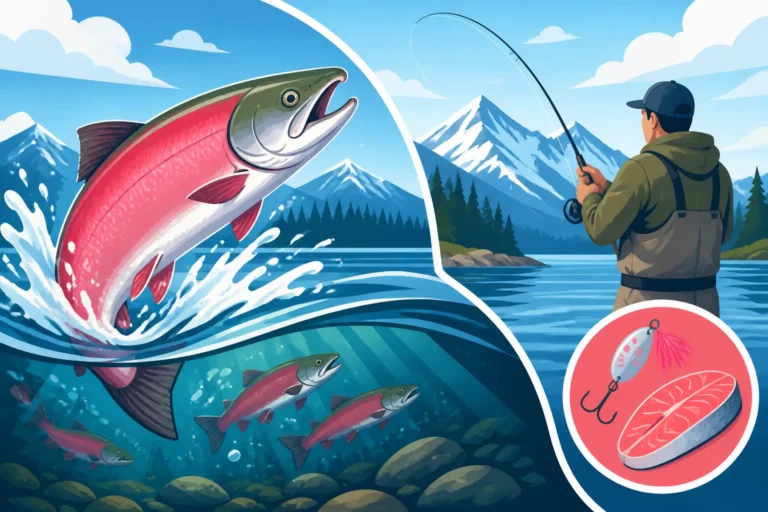
Most sockeye salmon caught in Alaska, particularly by sport anglers, will measure between 20 and 30 inches in length. In terms of weight, you're usually looking at fish that tip the scales from 4 to 12 pounds. Now, don't get me wrong, a 10-pound sockeye is a serious fish, especially when you feel its raw power as it peels line off your reel and leaps out of the water. It's not uncommon to hear stories of anglers mistaking a strong 8-pound sockeye for something much larger simply because of its incredible fighting spirit. These fish are built for speed and endurance, not necessarily brute force, making them a blast to catch. For many, landing a limit of these beautifully colored, delicious fish is the pinnacle of their Alaskan fishing adventure. You can get a better understanding of what to expect by checking out our guide on Alaska Sockeye Salmon Explained.
Factors Influencing Sockeye Growth
Several key factors play a significant role in how big an Alaska sockeye salmon will ultimately get during its life cycle. It's not just a matter of luck; it's a complex interplay of genetics, environment, and opportunity.
First off, genetics certainly play a part. Just like people, some fish are simply predisposed to grow larger and faster than others. Different populations of sockeye salmon across Alaska can have distinct genetic profiles that influence their maximum size potential. Secondly, and perhaps most crucially, is food availability in the ocean. Sockeye are plankton feeders, so abundant krill, copepods, and other small crustaceans in their marine feeding grounds directly translate to better growth. If ocean conditions are favorable, with rich upwellings bringing nutrients to the surface, sockeye will have a buffet, leading to larger average sizes. Conversely, lean years in the ocean can result in smaller fish returning to spawn. Thirdly, the age of the sockeye is a major determinant. Most Alaska sockeye spend 2 to 3 years in the ocean before returning to their natal streams to spawn. A fish that spends an extra year or two out at sea, packing on weight, will naturally be larger than one that returns earlier. Finally, the river system itself can have an impact. Some river systems, due to their specific migration patterns or feeding opportunities within freshwater lakes during their juvenile stage, are known for producing slightly larger or more robust sockeye populations. This is why you often hear specific rivers mentioned when people talk about trophy sockeye.
Breaking Down the Sockeye's Life Cycle and Size Milestones
To truly appreciate the size of an Alaskan sockeye, it helps to understand their incredible journey, from tiny fry to magnificent spawning adults. Their growth is directly tied to the distinct stages of their life cycle, particularly the time they spend in the rich, feeding grounds of the Pacific Ocean.
Early Life and Ocean Growth
Sockeye salmon begin their lives as eggs laid in freshwater streams or lakebeds, typically in the fall. After hatching, the tiny alevin, then fry, spend one to three years growing in freshwater lakes, feeding on plankton. This freshwater rearing phase is crucial for their initial development. Once they've grown enough, usually around 4-6 inches, they undergo a transformation into smolts and migrate downstream to the ocean.
It's in the vastness of the North Pacific that sockeye truly bulk up. They are pelagic feeders, meaning they live and feed in the open ocean, primarily on zooplankton, shrimp, and small invertebrates. For the next 2 to 3 years, sometimes even 4, they roam these productive waters, accumulating the energy reserves needed for their arduous return journey. This period of oceanic feeding is where they gain the vast majority of their size and weight. A sockeye that spends a full four years at sea will naturally be significantly larger and heavier than one that only spends two. This critical period is deeply tied to the overall health of the ocean ecosystem. If you're interested in the full journey, our article on Alaska Salmon Life Cycle Explained is a great read.
Spawning Run: The Final Push
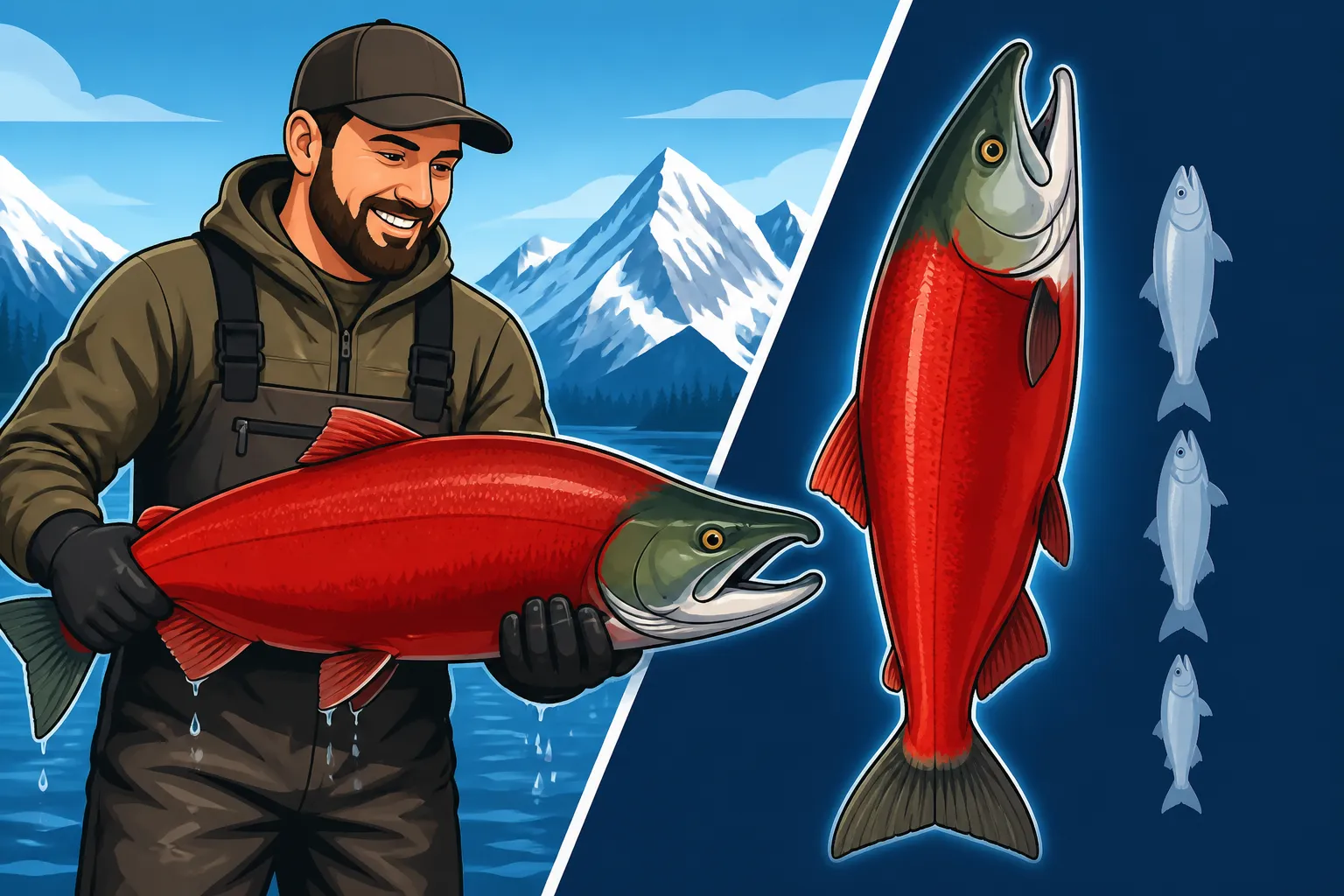
Once a sockeye salmon decides its time to return, typically in late spring or early summer, they embark on one of nature's most epic migrations. During this freshwater journey, often hundreds of miles upstream, sockeye do not feed. Instead, they rely entirely on the fat reserves they built up during their time in the ocean. Interestingly, as they transition from the saltwater environment back into freshwater, their bodies undergo a remarkable transformation. Their silvery ocean camouflage gives way to the iconic brilliant red bodies and olive-green heads that give them their "red salmon" nickname, especially males. Their jaws also begin to hook, and a hump may develop on their backs.
While they don't gain weight during this phase, the sheer physical exertion of fighting currents, navigating obstacles, and avoiding predators means they are at their absolute peak of physical conditioning when they enter the rivers. This is when anglers typically encounter them, and why they are such powerful fighters. The energy they conserve in their ocean growth phase is paramount for successfully reaching their spawning grounds. Understanding the timing of these runs is key to planning your trip, and our guide on Alaska Salmon Run Timing Explained offers invaluable information.
Comparing Sockeye Size to Other Alaskan Salmon Species
Alaska is home to five species of Pacific salmon, and while they all share the common goal of returning to freshwater to spawn, their sizes vary dramatically. Knowing these differences can help you set realistic expectations for your fishing trip and appreciate each species for its unique attributes.
Sockeye vs. King Salmon
When we talk about size, the King Salmon (Chinook) is king for a reason. These are the giants of the Pacific, often reaching 30-50 pounds, with some truly enormous specimens topping 70 or even 90 pounds. They are broad-shouldered, incredibly powerful fish that demand heavy tackle and serious muscle to land.
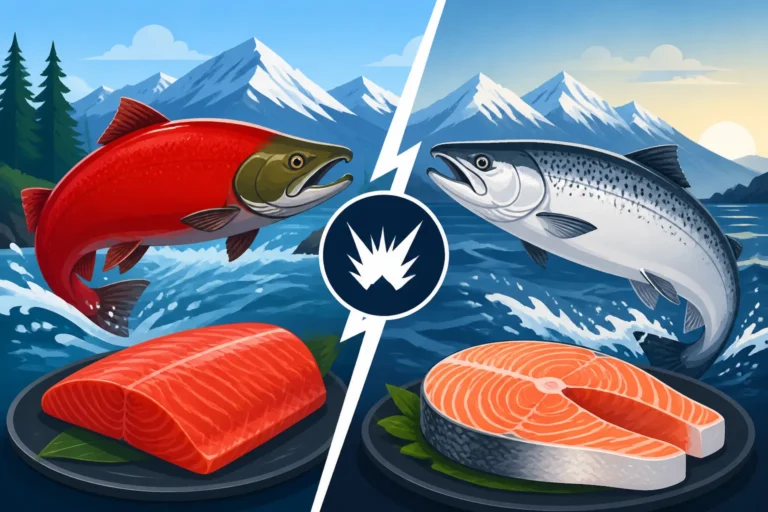
Sockeye salmon, as discussed, typically range from 4 to 12 pounds. While still formidable fighters, they are leaner, more agile, and rely on speed and acrobatics rather than brute force. Think of it this way: a King is like a heavyweight boxer, while a sockeye is a middleweight martial artist – both incredibly strong, but in different ways. An angler heading out specifically for a trophy-sized fish would target a King, while someone looking for consistent action and excellent table fare often sets their sights on sockeye. If you're wondering how to tell them apart, our article on How to Identify Alaska Salmon Species is a great resource.
Sockeye vs. Coho and Pink Salmon
Let's look at the other end of the spectrum. Coho Salmon (Silver) are often considered a middle ground in terms of size and fight. They typically weigh between 8 and 15 pounds, with some reaching over 20 pounds. Like sockeye, they are acrobatic and put on an incredible aerial display, but they generally have more bulk and a bit more pulling power than sockeye.
Pink Salmon (Humpy), on the other hand, are the smallest and most numerous of the Alaskan salmon. They average 3-5 pounds, rarely exceeding 8-10 pounds. While incredibly fun to catch, especially on light tackle due to their abundance, they don't offer the same sustained fight as a sockeye or coho. Chum Salmon (Dog Salmon) are typically larger than pinks but often similar in size to sockeye, ranging from 8 to 15 pounds, sometimes more. They are known for their strong pull but are generally less acrobatic than coho or sockeye. So, sockeye sit comfortably in the mid-range of salmon sizes, offering a fantastic balance of challenging fight and manageable size.
Here's a quick comparison of average sizes for Alaskan Pacific Salmon:
| Salmon Species | Average Length (Inches) | Average Weight (Pounds) | Max Reported Weight (Pounds) |
|---|---|---|---|
| King (Chinook) | 30-50+ | 30-50 | 126 |
| Sockeye (Red) | 20-30 | 4-12 | 16 |
| Coho (Silver) | 20-30 | 8-15 | 30+ |
| Chum (Dog) | 25-35 | 8-15 | 35 |
| Pink (Humpy) | 18-25 | 3-5 | 15 |
(Note: These are average sport-caught sizes; maximums are rare, record-breaking fish.)
Sockeye Salmon Size Records and Notable Catches
While most sockeye you encounter will be within the typical size range, there are always those exceptional fish that push the boundaries. Alaska is famous for its abundant fish, and every now and then, a true giant makes an appearance, becoming the stuff of legend among local anglers.
State and World Records
The all-tackle world record for sockeye salmon stands at an impressive 15 pounds, 3 ounces, caught in 1987 in British Columbia's Quinault River. While Alaska has incredibly productive sockeye fisheries, the state record isn't far behind. The Alaska state record sockeye weighed 16 pounds, caught in the Kenai River back in 1974. These are truly monumental sockeye, far exceeding the average catches and representing fish that likely spent an extended period feeding in the ocean, hitting the genetic jackpot for size, and encountering perfect conditions. These records really highlight the potential of these powerful fish, even if most of us won't ever see one quite that big. It just goes to show you what's possible when you're fishing in a place like Alaska!
Legendary River Systems for Big Sockeye
While large sockeye can theoretically be found in any productive river system, some waterways have gained a reputation for consistently producing larger-than-average fish. The Kenai River on the Kenai Peninsula is perhaps the most famous, known not only for its prolific sockeye runs but also for the overall size of its salmon. While not every sockeye from the Kenai will be a record-breaker, the chances of hooking a fish on the higher end of the typical 4-12 pound range, or even exceeding it, seem to be greater here. The immense size of the Kenai's King Salmon might overshadow its sockeye a bit, but the sockeye fishing is legendary for a reason. Learning about specific rivers, like those highlighted in Best Rivers for Sockeye Salmon in Alaska, can guide you to some incredible experiences.
Another area renowned for its sockeye abundance and quality is Bristol Bay. This region, home to rivers like the Naknek, Kvichak, and Alagnak, hosts the largest sockeye salmon run in the world. While individual fish might not consistently rival the Kenai's giants, the sheer volume and overall health of these stocks are incredible, and catching a limit of beautiful, robust sockeye here is a given for many anglers. The pristine environment and rich feeding grounds in the Bering Sea contribute to a healthy population of good-sized fish.
When you're preparing for a sockeye trip, considering the right gear is also essential. Even though they're not King Salmon, they're not a fish to be underestimated. Many anglers find durable, well-reviewed spinning reels and sturdy rods on Amazon that can handle the powerful runs of a sockeye. Good line, strong hooks, and reliable waders are always a wise investment. You can find more comprehensive gear recommendations in our Alaska Fishing Gear and Tackle Guide. Just remember, whether you're chasing the next record or simply enjoying a bountiful harvest, understanding the sockeye's size potential adds another layer of appreciation to your Alaskan fishing adventure.
Disclaimer
Please remember that fishing regulations in Alaska can change rapidly due to emergency orders, conservation efforts, and in-season adjustments by the Alaska Department of Fish and Game (ADF&G). Always consult the most current ADF&G regulations booklet and any active emergency orders for the specific region you plan to fish before heading out. This guide provides general information and should not be used as the sole source for regulatory compliance.