Five Species of Pacific Salmon Explained
Stepping into the vast wilds of Alaska, it's easy to feel a little overwhelmed by all the talk of salmon. You hear about Kings, Sockeye, Silvers, Pinks, and Chums, and for someone new to the scene, or even a seasoned angler from the Lower 48, it can feel like trying to tell apart different shades of blue in a fog. But knowing the difference between these incredible fish is crucial for everything from identifying your catch to understanding fishing regulations, and even appreciating their unique fight and flavor. This guide is here to untangle that confusion, giving you a clear, insider's look at the five iconic Pacific salmon species that call Alaska home.
The Regal Lineup: Meeting Alaska's Pacific Salmon Species
When we talk about "salmon" in Alaska, we're almost always referring to one of the five species of Pacific salmon. These are truly incredible creatures, each with their own distinct life cycle, appearance, and fishing characteristics. They are born in freshwater, migrate to the vast ocean to feed and grow, and then return to their natal streams to spawn, completing a journey that is nothing short of miraculous. Understanding each one individually is the first step to becoming a more informed and successful angler here in the Last Frontier. It’s not just about catching fish; it’s about appreciating the unique natural cycles that make Alaska such a special place for fishing.
King Salmon Chinook: The Apex Angler's Dream
Ah, the King Salmon, or Chinook as they're also known. This is often the holy grail for many anglers making the pilgrimage to Alaska. These fish are kings for a reason – they are the largest, most powerful, and often the most sought-after salmon species. Landing one of these giants is a truly unforgettable experience, a battle that tests your tackle and your resolve.
When you're out on the water, whether it's the famed Kenai River or a vast saltwater bay, the anticipation of hooking into a King is palpable. These fish can put up an incredible fight, often making long, powerful runs that can strip line from your reel in seconds. They are true athletes of the aquatic world, built for strength and endurance. You'll often hear whispers of world-record Kings, and it’s no exaggeration; these fish are built like torpedoes and fight like freight trains. Checking the latest data from the Alaska Department of Fish and Game, it's clear why they hold such a legendary status among fishermen.
Identifying the King Salmon
Identifying a King Salmon, especially a fresh one, is usually pretty straightforward due to their impressive size and distinct features. They boast a bluish-green back fading into silvery sides and a white belly. What truly sets them apart is their black mouth and gums, and small, irregular black spots on both lobes of their tail and across their back. If you're comparing salmon side-by-side, the King's spots are more scattered and less uniform than some of the other species.
A typical mature King Salmon caught in sport fisheries usually weighs between 20 and 40 pounds, though fish exceeding 50 pounds are caught annually, especially on rivers like the Kenai. Some monster "barn door" Kings can push upwards of 70, 80, or even 90 pounds, making them an incredible catch of a lifetime. The sheer bulk of a King is unmistakable. When you hold one up, there's a certain heft and presence that no other salmon can quite match. If you're wondering how to identify a King Salmon, keep an eye out for those black gums and large size.
Fishing for King Salmon and Their Flavor
Fishing for King Salmon often involves heavy-duty gear and specific techniques, whether you're trolling in saltwater with cut-plug herring or larger spoons, or back-trolling and back-bouncing in freshwater rivers with plugs, eggs, or even big flies. Rivers like the Nushagak River and the Kasilof River are legendary for their King runs. Given their size and fighting prowess, it's essential to have reliable gear. Many anglers find durable rods and reels, along with quality lines, on platforms like Amazon before their trips. For an in-depth dive into techniques, you might want to read our guide on how to catch King Salmon in Alaska.
In terms of culinary quality, King Salmon are often considered the pinnacle. Their flesh is rich, oily, and intensely flavorful, ranging in color from deep red to pale pink, depending on their diet and genetics. This high oil content makes them fantastic for grilling, smoking, or baking, retaining moisture and flavor beautifully. Many Alaskans will tell you there's nothing quite like a freshly caught King on the grill, its rich flavor a true taste of the wild. They are truly the royalty of the salmon world, both in the water and on the plate.
Sockeye Salmon Oncorhynchus Nerka: The Red Rocket
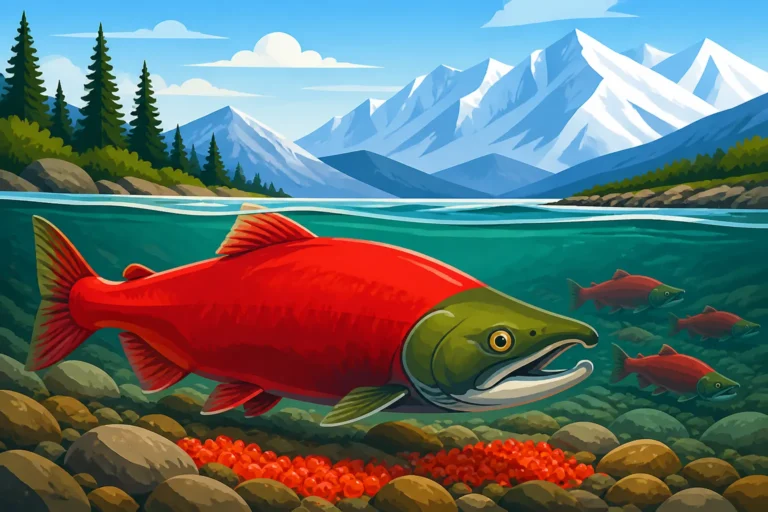
If the King is the undisputed heavyweight, the Sockeye Salmon, also known as Red Salmon, is the nimble, acrobatic middleweight. These fish are renowned for their incredible fight on light tackle and their brilliant red flesh. While they don't reach the colossal sizes of Kings, what they lack in sheer bulk, they more than make up for in speed, endurance, and sheer numbers, making them a favorite for many Alaskans and visitors alike.
Fishing for Sockeye is a distinct experience, often characterized by large schools returning en masse to rivers like the Kenai and the Russian River. The sheer volume of fish can be astounding, creating a vibrant, almost chaotic, fishing scene. They are known for their incredibly strong runs and aerial acrobatics once hooked, often leaping clear out of the water in a dazzling display of power. It's a different kind of fight than a King, but equally exhilarating. You'll hear about "combat fishing" for Sockeye, and it’s a term born from the intense, shoulder-to-shoulder action on some rivers during the peak of the run.
Identifying the Sockeye Salmon
Sockeye Salmon in their ocean phase are typically iridescent blue-green on their back with silver sides and a white belly, similar to a King but without the spots. However, once they enter freshwater and begin their spawning migration, their appearance changes dramatically. They develop a vibrant, unmistakable red body, and their head turns green. Males often develop a pronounced humped back and elongated, hooked jaws (kype). These striking color changes make them quite easy to identify once they're in the rivers.
They are generally smaller than Kings, averaging 6 to 12 pounds, though some can reach up to 15 pounds. A Sockeye in its prime, fresh from the ocean, is a marvel of silver and blue, sleek and powerful. But it's their spawning colors that truly capture the imagination, transforming them into living jewels of the river. If you're trying to figure out how to identify a Sockeye Salmon, look for that solid blue-green back in saltwater, or the iconic red body and green head in freshwater.
Fishing for Sockeye Salmon and Their Flavor
Sockeye fishing is often about timing and technique. They primarily feed on zooplankton in the ocean, and once in freshwater, they stop feeding. This means traditional bait or lures that mimic forage fish are generally ineffective. Instead, anglers typically use a technique called "flossing" or "flipping," where a leader with a bare hook or a small, brightly colored fly (often a weighted "sockeye fly") is cast upstream and allowed to drift into the Sockeye's mouth as they swim against the current. It’s a specialized skill, but incredibly effective when done correctly. If you're planning a trip to the Kenai, our guide to Alaska Sockeye Salmon limits on the Kenai is essential reading.
The flavor of Sockeye Salmon is highly prized, often considered second only to King Salmon by many connoisseurs. Their flesh is a deep, rich red, and contains a good amount of healthy oils, giving it a firm texture and a distinct, clean flavor. It’s excellent grilled, baked, pan-seared, or smoked, and it holds up well to various cooking methods. This intense color and flavor profile make it a favorite for canning and smoking commercially, too.
Silver Salmon Oncorhynchus Kisutch: The Acrobatic Dynamo
The Silver Salmon, also known as Coho Salmon, is often revered for its aggressive strikes and incredible aerial displays. These fish are a joy to catch, offering a thrilling fight that combines speed, strength, and acrobatic leaps. They tend to be a bit more predictable than Kings in terms of their willingness to strike lures and flies, making them a fantastic target for both seasoned anglers and those new to Alaska fishing.
As summer wanes and autumn colors begin to grace the landscape, Silver Salmon begin their prolific runs into rivers and streams across the state. They arrive eager to chase down a well-presented lure or fly, often exploding on the surface with a splash that gets the heart racing. Their willingness to strike, coupled with their spirited fight, makes them a perennial favorite during the late summer and early fall seasons. It’s a great time to be out on the water, with cooler temperatures and vibrant scenery enhancing the fishing experience. You can learn more about how to catch Silver Salmon in Alaska for a deeper dive into techniques.
Identifying the Silver Salmon
Ocean-phase Silver Salmon have bright, iridescent silver sides, a darker blue-green back, and a white belly. A key identifying feature is the presence of small, scattered spots primarily on the upper lobe of their tail, and often some on their back, but usually not below the lateral line or on the lower tail lobe. Their gums are white, which is a crucial distinction from the black gums of a King. Their body shape is generally more slender and streamlined than a King.
Silver Salmon typically weigh between 8 and 15 pounds, with some larger individuals reaching over 20 pounds, especially in Southeast Alaska fisheries. When they enter freshwater to spawn, their silver sheen gives way to a darker, often reddish-maroon hue on their sides, with a darker back. Males will also develop a more pronounced kype. When you're trying to identify Alaska salmon species, the white gums and spots mostly on the upper tail are strong indicators for Silvers.
Fishing for Silver Salmon and Their Flavor
Fishing for Silver Salmon is incredibly diverse and often very active. They readily strike a wide variety of lures, including spinners, spoons, twitching jigs, and wobbling plugs. They are also fantastic targets for fly anglers, who use patterns like Dolly Llamas, Clouser Minnows, and various egg patterns. Whether you're casting from the bank, drifting from a boat, or even trolling in saltwater, there’s a method for every angler. Rivers like the Kenai and Kasilof offer excellent Silver Salmon fishing opportunities, as do many streams in Prince William Sound and Southeast Alaska. For gear, many anglers look for a good selection of durable spinners and spoons, readily available on Amazon.
Culinary-wise, Silver Salmon boast firm, orange-red flesh with a delicate flavor and good oil content. While perhaps not as rich as a King, their flavor is distinct and highly prized, making them incredibly versatile in the kitchen. They hold up beautifully to grilling, baking, pan-frying, and smoking. Many Alaskans prefer Silvers for their consistent texture and flavor, finding them perfectly balanced for a wide range of recipes. They're an excellent choice for a fresh salmon dinner, offering a taste that truly captures the essence of Alaskan wilderness.
Pink Salmon Oncorhynchus Gorbuscha: The Abundant "Humpy"
The Pink Salmon, affectionately (or sometimes not-so-affectionately) known as "Humpies," are the smallest and by far the most abundant of Alaska's Pacific salmon species. They are famous for their enormous runs, occurring primarily in even-numbered years in many regions, and their distinctive appearance during the spawning phase. While sometimes overlooked by anglers seeking larger species, Pinks offer incredible opportunities for high-volume fishing, especially for families and beginners.
These fish return to their spawning grounds in staggering numbers, often filling coastal streams and rivers. While not known for their culinary prestige like Kings or Sockeye, they offer an exciting fishing experience due to their sheer abundance and willingness to bite. For many, a day of catching Humpies is about pure fun, rapid-fire action, and enjoying the process of being out on the water. They are a fantastic entry point for new anglers or kids, as success is often measured in dozens of fish rather than just a few.
Identifying the Pink Salmon
In saltwater, Pink Salmon are bright silver with a dark blue-green back. They are easily identified by their very large, oval-shaped spots on their back and both lobes of their tail fin. Another key feature is their exceptionally small scales. Their mouth and gums are typically white.
As they transition to freshwater for spawning, male Pink Salmon undergo the most dramatic transformation of all salmon species, developing a profoundly humped back (hence "Humpy") that becomes incredibly pronounced. Their body color shifts to a pale, mottled gray on the back with a whitish belly. They typically weigh between 3 and 5 pounds, though some can reach 8-10 pounds. This smaller size, combined with the large spots and the male's humped back, makes them quite easy to spot and identify, especially during an even-year run. If you're looking to understand why Pink Salmon are called Humpies, just witness a spawning male in the river.
Fishing for Pink Salmon and Their Flavor
Pink Salmon are aggressive biters and will strike a wide array of small lures and flies. Spinners, spoons, and small twitching jigs are highly effective. For fly anglers, pink or chartreuse colored flies, particularly Dolly Llamas and various egg patterns, work exceptionally well. They are often found in nearshore saltwater areas, tidal estuaries, and the lower stretches of rivers. Places like Ship Creek in Anchorage see incredible runs of Pinks. Due to their abundance, they make fantastic targets for light tackle and are often the species that introduces many new anglers to the joys of salmon fishing.
The culinary reputation of Pink Salmon is often debated. Their flesh is typically lighter in color and has a milder flavor and softer texture compared to Kings, Sockeye, or Silvers. This is partly due to their lower fat content. However, when caught fresh and handled properly, they can be quite delicious, especially when baked, pan-fried, or used in dishes where their milder flavor can be enhanced with seasonings. They are also widely used in commercial canning and often appear as "pink salmon" in grocery stores. Don't let their small size fool you; a fresh Humpy can make for a delightful meal if prepared with care. Many swear by them, particularly for fish tacos or patties. You can explore more about Alaska Pink Salmon regulations and limits to plan your catch.
Chum Salmon Oncorhynchus Keta: The Unsung Workhorse
The Chum Salmon, also known as Dog Salmon or Keta Salmon, is often the most misunderstood and undervalued of Alaska's Pacific salmon species. While they may not have the glamour of a King or the vibrant flesh of a Sockeye, Chums are incredibly important ecologically and offer a unique angling challenge, especially for those who appreciate their powerful fight. They are vital to many subsistence fisheries and are increasingly recognized for their firm, albeit lighter-colored, flesh.
Chum Salmon undertake extensive migrations, often traveling long distances up major river systems to spawn. When they're fresh from the ocean, they are truly powerful fish, putting up an impressive fight with strong, dogged runs. For the discerning angler, hooking into a fresh Chum can be just as exciting as any other salmon species, offering a raw power that rivals even the mighty King.
Identifying the Chum Salmon
Fresh Chum Salmon from the ocean are sleek, silvery fish with a metallic blue-green back. They lack distinct spots, which is a major distinguishing feature compared to Kings, Pinks, and Silvers. However, as they enter freshwater to spawn, their appearance undergoes a dramatic change. They develop distinctive vertical bars of green, purple, and red on their sides, earning them the nickname "Calico Salmon" in some areas. Males also develop incredibly pronounced, dog-like teeth (hence "Dog Salmon") and a significant kype.
Chum Salmon are medium to large in size, typically weighing between 8 and 18 pounds, with some individuals exceeding 20 pounds. Their average size can sometimes rival that of a Coho or a smaller King. Their lack of spots, combined with their large mouth and "dog teeth" in spawning males, are key identifiers. When fresh, their body is very streamlined and powerful. If you're pondering Alaska Chum Salmon: Underrated or Not, their fighting strength and unique appearance are certainly points in their favor.
Fishing for Chum Salmon and Their Flavor
Chum Salmon are aggressive and will strike a variety of lures and flies. Brightly colored spinners, spoons, and large jigs in chartreuse, pink, or orange are often effective. For fly anglers, large streamers, particularly those with gaudy colors, can entice a strike. They are found in many of Alaska's coastal rivers and estuaries, often running concurrently with Pink and Silver salmon in late summer. They are fierce fighters, known for their head shakes and powerful, bulldog-like runs. If you want to learn more about specific techniques, our guide to How to Catch Chum Salmon in Alaska can provide valuable insights.
When it comes to flavor, Chum Salmon have a milder, less oily flesh than Kings or Sockeye, and it's typically a paler pink or orange. Historically, they were often overlooked by sport anglers for consumption, sometimes dismissed due to their "dog salmon" moniker or lighter flesh. However, when caught fresh from the ocean or lower river and properly cared for, their firm texture and mild flavor make them excellent for grilling, baking, smoking, and especially canning. They are also a staple for many indigenous communities due to their abundance and nutritional value. The key is catching them early in their run, before their flesh softens.
Spotting the Differences: A Comparative Overview
With five distinct species, it can certainly be a challenge to differentiate them, especially when they are fresh from the ocean and haven't yet developed their spawning colors. However, knowing a few key characteristics can make you an expert in no time. Think of it as a fun challenge, a way to deepen your appreciation for Alaska's diverse aquatic life. Our guide on how to tell salmon species apart offers even more detailed tips.
It's not just about looks; understanding the nuances of their behavior, run timing, and preferred habitat will also give you a leg up. For instance, knowing that Sockeye don't typically bite conventional lures in freshwater, or that Pinks are most abundant in even years, are vital pieces of information for any angler.
Key Visual and Behavioral Distinctions
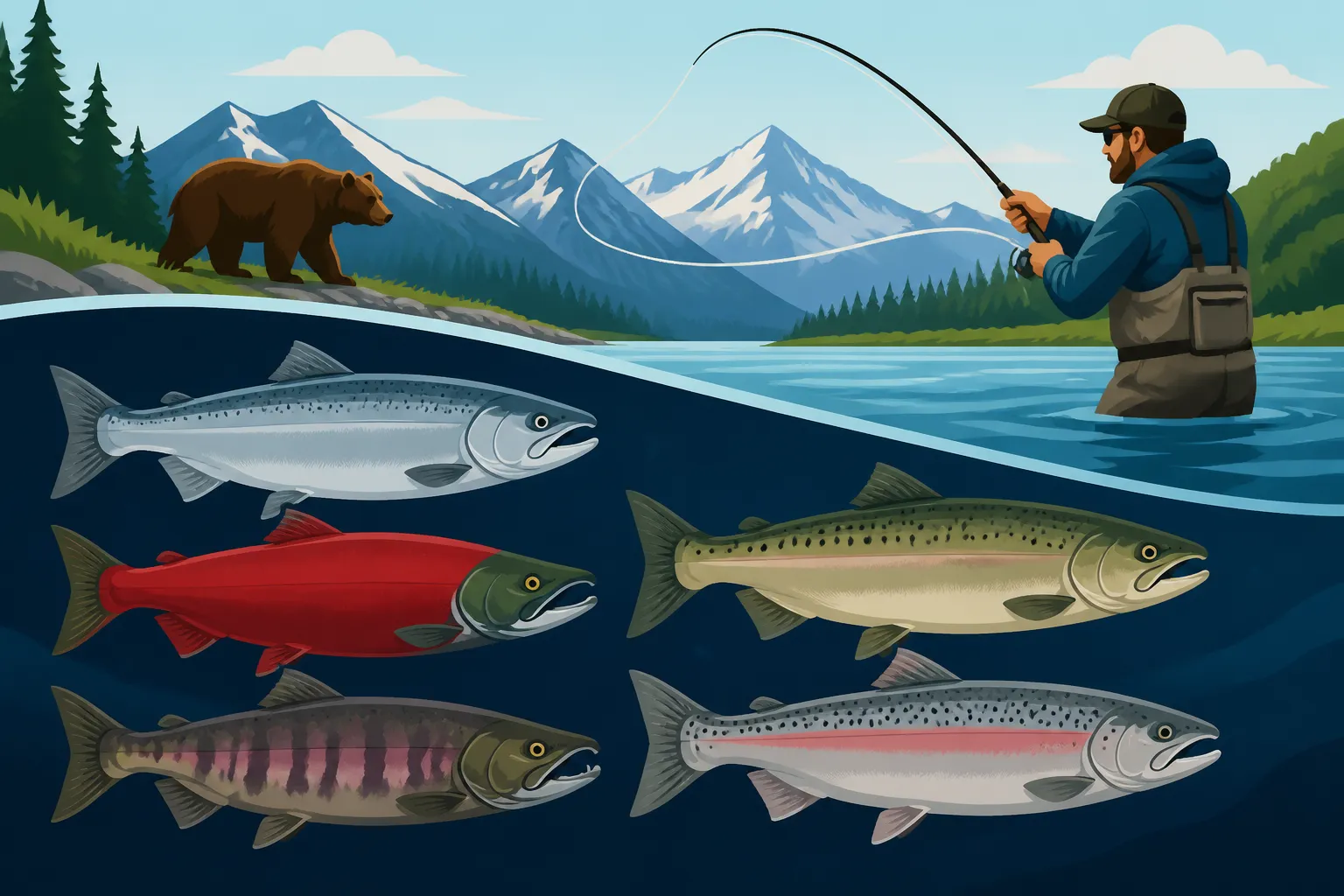
Let's break down the main ways to tell these magnificent fish apart. Focus on mouth color, tail spots, overall body shape, and average size. These are usually the most reliable indicators when you have a fish in hand.
- Mouth and Gums: This is often the quickest way to distinguish between some species. Kings have black mouths and black gums. Silvers have black mouths but white gums. Chums and Pinks generally have white mouths and white gums.
- Tail Spots: Kings have irregular spots on both lobes of their tail. Pinks have large, oval spots on both lobes of their tail and their back. Silvers typically have spots only on the upper lobe of their tail, and sometimes on their back, but rarely below the lateral line. Sockeye and Chum generally lack distinct spots on their tails, though a fresh Sockeye might have a few tiny speckles.
- Body Shape and Size: Kings are the largest and most robust. Sockeye are sleek and torpedo-shaped. Silvers are also sleek but a bit deeper-bodied than Sockeye. Pinks are the smallest and have very small scales. Chums are quite large and powerful, with a noticeable canine-like jaw development in spawning males.
Salmon Species Comparison Table
To make things even clearer, here’s a handy table summarizing the key identifying features and characteristics of Alaska's five Pacific salmon species. Keep this in mind next time you're trying to figure out what you've landed!
| Feature | King Salmon (Chinook) | Sockeye Salmon (Red) | Silver Salmon (Coho) | Pink Salmon (Humpy) | Chum Salmon (Dog/Keta) |
|---|---|---|---|---|---|
| Mouth/Gums | Black mouth, black gums | White mouth, white gums (often pale tongue) | Black mouth, white gums | White mouth, white gums | White mouth, white gums |
| Tail Spots | Irregular black spots on both lobes | No distinct spots | Spots primarily on upper lobe (sometimes back) | Large, oval spots on both lobes and back | No distinct spots |
| Body Color (Ocean) | Blue-green back, silver sides | Iridescent blue-green back, silver sides | Blue-green back, bright silver sides | Blue-green back, bright silver sides | Metallic blue-green back, silver sides |
| Body Color (Spawning) | Dark, olive-brown to reddish, mottled | Bright red body, green head | Dark, reddish-maroon sides, dark back | Light gray back, whitish belly, pronounced hump (males) | Muted green/purple/red vertical bars (calico pattern) |
| Average Weight | 20-40 lbs (up to 90+ lbs) | 6-12 lbs (up to 15 lbs) | 8-15 lbs (up to 20+ lbs) | 3-5 lbs (up to 8-10 lbs) | 8-18 lbs (up to 25+ lbs) |
| Scales | Large | Moderately large | Moderately large | Very small | Medium |
| Fighting Style | Powerful, dogged runs, deep fighters | Fast, acrobatic, jumpers | Aggressive strikes, aerial displays | Energetic for their size, quick runs | Powerful, bulldog-like runs |
| Flavor/Flesh | Rich, oily, deep red to pale pink, firm (excellent) | Deep red, firm, good oil content (excellent) | Orange-red, firm, good oil content (very good) | Lighter pink, softer texture, milder flavor (good, versatile) | Pale pink/orange, firm, mild flavor (good, especially smoked/canned) |
This table should be a great reference when you're trying to quickly identify your catch. Remember, practice makes perfect, and the more salmon you see and handle, the easier it becomes.
Why Understanding Salmon Species Matters for Alaskan Anglers
Knowing your salmon species isn't just a fun fact for your fishing buddies; it has real, practical implications when you're fishing in Alaska. The regulations here are intricate and often species-specific, changing based on time of year, location, and the particular run strength of each species. This makes being able to accurately identify your catch absolutely essential to staying compliant and ethical.
It’s not uncommon for different species to be present in the same waters at the same time, especially during overlapping runs. Imagine you're fishing a river that has both King and Silver Salmon present. The daily bag limit for Kings might be one, while for Silvers it could be two or three. Accidentally retaining the wrong fish can lead to significant fines and penalties. This is why paying close attention to the details discussed here is so important.
Navigating Regulations and Bag Limits
Alaska's fishing regulations are designed to conserve fish stocks while allowing sustainable harvest. These regulations often differentiate between salmon species based on their population health and management goals. For example, Alaska King Salmon Fishing Regulations and Limits are often much stricter than those for Pink or Chum salmon, reflecting their more sensitive populations. You'll also find different Alaska Sockeye Salmon Limits by River due to varying run strengths and local management needs.
Moreover, certain areas might have specific regulations, such as bait restrictions or barbless hook requirements, that are enacted to protect specific species or during certain times of their run. For instance, in some areas, barbless hooks might be mandated during a King Salmon run to reduce mortality on released fish, while other species might not have the same restriction. Understanding these nuances requires not only knowing the rules but also being able to correctly identify the fish you encounter. This is especially important if you're ever in a situation where an emergency order might change limits in-season. Checking How to Check Alaska Emergency Orders Before Fishing is a critical step for any responsible angler.
Enhancing Your Fishing Experience and Conservation Efforts
Beyond regulations, knowing the species helps you become a more effective angler. Each salmon has its preferred habitat, feeding patterns (or lack thereof in freshwater), and fighting style. If you're targeting Sockeye, knowing they don't typically bite on conventional lures will save you a lot of frustration. If you're after a trophy King, you'll use different gear and techniques than if you're trying to fill your cooler with Pinks. Understanding these specific behaviors and preferences is key to maximizing your success on the water.
Furthermore, being able to identify species contributes to broader conservation efforts. Responsible angling in Alaska means being a good steward of its incredible resources. If you accidentally catch a species that is closed or over its limit, being able to correctly identify it and release it quickly and safely (if regulations allow) is crucial. This helps ensure that future generations can continue to enjoy the same abundant fisheries. It’s all part of the unwritten contract we have as anglers in such a special place, to protect what we cherish. Our guide on Alaska Catch-and-Release Best Practices can offer valuable tips for ensuring the survival of released fish.
Planning Your Alaska Salmon Fishing Adventure
Now that you've got a better handle on the five species of Pacific salmon, it's time to think about putting that knowledge into practice! Alaska fishing is an experience of a lifetime, and with a little planning, you can significantly increase your chances of targeting the species you're most interested in. Timing, location, and choosing the right approach are all critical elements.
Best Times and Locations for Each Species
Each salmon species has a distinct run timing, with some overlap, and they favor different types of water and regions. Knowing when and where each species is most abundant is paramount to a successful trip.
- King Salmon: Typically run from late May through July. Early runs can be found in rivers like the Kasilof and Susitna, while later runs peak in rivers such as the Kenai and Nushagak. Saltwater trolling for Kings can be excellent in areas like Homer, Seward, and Sitka throughout the summer. Our article on the Best Time to Catch King Salmon in Alaska dives deep into this.
- Sockeye Salmon: Their runs are legendary, peaking from late June through July, particularly in rivers on the Kenai Peninsula like the Kenai and Russian Rivers, and in Bristol Bay. This is often when you see the iconic "combat fishing" scenes.
- Silver Salmon: These feisty fish typically run from late July through September. They are widely distributed, offering fantastic fishing in rivers throughout Southcentral and Southeast Alaska, including the Kenai, Kasilof, and many smaller coastal streams.
- Pink Salmon: The most abundant species, they typically run in July and August, primarily in even-numbered years in many areas. They are found in nearly all coastal rivers and streams, and are great for family fishing trips near Anchorage, Valdez, and Homer.
- Chum Salmon: Usually run from July through August, often overlapping with Pink and Silver salmon. They are found in many of the same rivers, often in the lower to mid-sections of larger river systems, and are a strong presence in regions like the Yukon and Koyukuk rivers.
You'll find that Alaska Salmon Run Timing Explained provides a comprehensive look at the calendar for all species.
Guided vs. Unguided Adventures
Deciding whether to go with a guide or try an unguided trip is another important consideration. Both have their merits, and the choice often depends on your experience level, budget, and desired fishing style.
- Guided Trips: For many visitors, especially those new to Alaska or targeting specific, challenging species like King or Sockeye, a guided trip is invaluable. Guides provide all the necessary gear, expertise, and local knowledge, taking the guesswork out of where to go and what techniques to use. They navigate complex regulations and often have access to prime fishing spots, maximizing your chances of success. They can also teach you the nuanced techniques, like "flossing" for Sockeye or the precise presentation needed for Kings. You can explore Guided vs Unguided Fishing in Alaska to weigh your options.
- Unguided Trips: If you're an experienced angler, comfortable with planning, and familiar with fishing regulations, an unguided trip offers more flexibility and can be more budget-friendly. Bank fishing for Pinks or Silvers can be very productive and easily accessible in many roadside locations. However, going unguided for species like Kings or Halibut in specific rivers or open ocean can be very challenging without prior knowledge or equipment. Even if you go unguided, ensuring you have the right gear is crucial; many reliable items, from waders to tackle, can be found on Amazon.
Ultimately, the goal is to have an incredible experience in Alaska. Understanding the salmon species is a huge part of that, allowing you to appreciate the ecosystem, comply with regulations, and, of course, catch some fantastic fish!
Disclaimer
Please remember that fishing regulations in Alaska can change frequently due to emergency orders and in-season management decisions by the Alaska Department of Fish and Game. Always consult the most current Alaska Sport Fishing Regulations booklet and check for any emergency orders before you head out on the water. This guide is for informational purposes only and should not replace official sources.