Alaska Chitina Dip Netting Regulations
Oh, the Chitina dip netting experience! It's one of those quintessential Alaskan adventures that many folks dream about, but let's be honest, it can feel like trying to decipher an ancient scroll when you're just trying to figure out the rules. The unique blend of remote beauty, the sheer power of the Copper River, and the promise of a freezer full of world-class salmon makes it irresistible, yet the regulations can be a real head-scratcher. That's why we're here today: to cut through the confusion and give you a straightforward, comprehensive guide to Alaska's Chitina dip netting regulations, so you can focus on the fishing, not the fines.
Understanding the Chitina Personal Use Fishery
The Chitina Personal Use Fishery isn't just another fishing spot; it's a deeply ingrained tradition for many Alaskans, a way to fill the larder with some of the best salmon on earth. But because it's so vital, and because the resource itself is precious, it comes with a very specific set of rules. It's not a sport fishery, nor is it subsistence in the traditional sense; it's a unique category designed to allow Alaskans to harvest large quantities of salmon for personal consumption.
What Makes Chitina Unique?
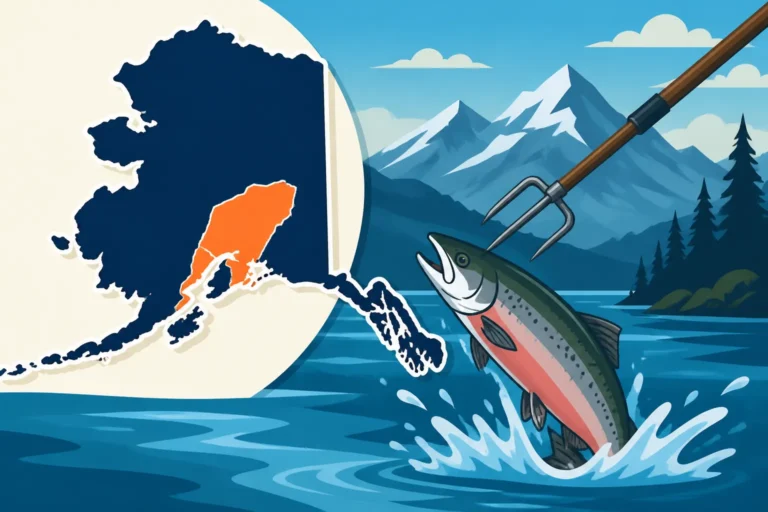
Imagine a roaring glacial river, the mighty Copper, carving its way through rugged canyons. Now imagine thousands upon thousands of sockeye salmon pushing upstream against that powerful current, their bodies gleaming red, driven by an instinct to spawn. That's the backdrop of Chitina. The fishery is located on the Copper River near the small community of Chitina, accessible primarily via the McCarthy Road – a journey in itself! This isn't your roadside stream fishing. It's a rugged, often muddy, and physically demanding fishery that requires special gear and a certain level of grit. The unique characteristic here is the sheer volume of salmon that move through, making dip netting an incredibly effective way to harvest. Many families travel from across the state, setting up temporary camps, turning the process into a multi-day family event.
The "Personal Use" Distinction
It's absolutely critical to understand that the Chitina fishery is designated as a personal use fishery, and primarily for Alaska residents. This isn't a place where tourists or non-residents can simply show up with a dip net and start harvesting. Alaska Department of Fish and Game (ADF&G) defines personal use fisheries as those where Alaskans can take fish, shellfish, or other aquatic invertebrates for personal consumption by themselves and their immediate families. The critical takeaway? If you're not an Alaska resident, this particular dip net fishery is generally not open to you. There can be very limited exceptions, such as a non-resident child fishing under the direct supervision of a resident parent, but for all practical purposes, direct participation in the Chitina dip net fishery is restricted to those who can prove Alaska residency. This distinction is paramount and often trips up newcomers. For a deeper dive into the different types of fishing, check out our guide on Alaska Sport Fishing vs Personal Use.
Essential Regulations for Chitina Dip Netting
Navigating the rules for Chitina can feel like a maze, but breaking them down into digestible chunks makes it much easier. These aren't just arbitrary rules; they're in place to manage a highly valuable resource and ensure sustainable runs for future generations. Ignoring them can lead to significant penalties, spoiling your trip and costing you a pretty penny.
Residency Requirements and Permits
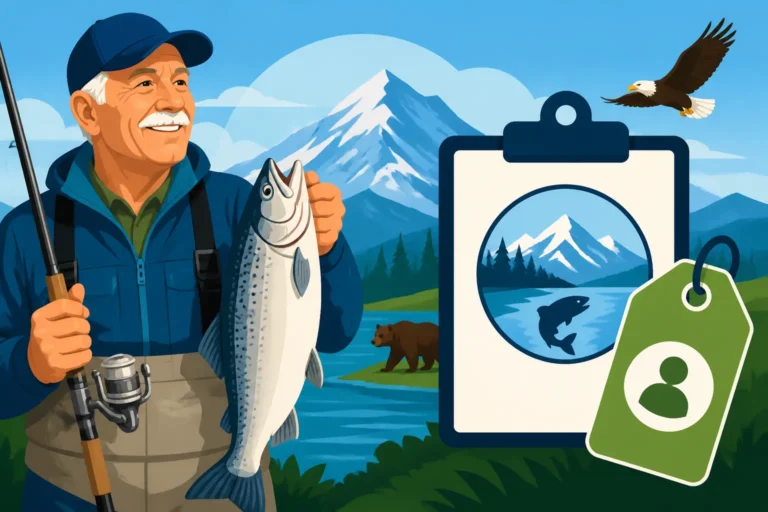
As touched upon, the Chitina Personal Use Dip Net Fishery is primarily for Alaska residents. To participate, you must possess a valid Alaska resident sport fishing license and obtain a special Copper River Personal Use Salmon Fishery permit. You'll need to confirm your residency status with ADF&G guidelines, which typically means residing in Alaska for a continuous 12-month period immediately preceding the application for a license or permit. Simply owning property or visiting regularly does not qualify you. The permit is issued per household, meaning one permit covers everyone in your immediate household. This is a crucial point – you can't have multiple members of the same household each holding their own permit. This permit, once obtained, must be in your possession while actively fishing. It's a small piece of paper, but it's your golden ticket. You can usually acquire these permits online through the ADF&G licensing portal.
Fishing Schedule and Openings
This is where things get really dynamic. Unlike many sport fisheries with set seasons, the Chitina dip net fishery operates on a schedule that is constantly adjusted based on the strength of the salmon run. The Alaska Board of Fisheries sets a general season framework, but the actual fishing periods (when and for how long you can fish) are determined by emergency orders issued by ADF&G. These orders are based on real-time sonar counts of salmon passing upstream. Typically, the fishery opens in late May or early June for sockeye salmon and can continue intermittently into early September, potentially including periods for coho salmon.
For example, a typical announcement might be: "The Copper River Personal Use Dip Net Salmon Fishery will be open from 6:00 a.m. Monday to 10:00 p.m. Wednesday." You must check the ADF&G website or call their recorded hotline before you head out, and even during your trip, as closures or extensions can happen suddenly. Nothing is more frustrating than driving all the way to Chitina, only to find the fishery closed. Staying informed is paramount. You can find out more about how these changes happen in our guide to Alaska Fishing Emergency Orders Explained.
Bag Limits and Possession Limits
The personal use nature of this fishery means that bag and possession limits are significantly different from sport fishing. For Chitina, these limits are generally set per household for the entire season, not per angler per day. The specific numbers vary each year and are also subject to adjustments via emergency orders, depending on the forecasted and actual salmon runs.
Typically, a household can harvest a base limit of sockeye salmon, and often there's an additional limit for king salmon and later in the season, coho salmon. For instance, a common household limit for sockeye might be 15 fish for the head of household and an additional 15 fish for each additional household member. There might also be a separate, much smaller limit for king salmon, perhaps one or two per household for the season. Remember, these are cumulative limits for the entire season. Once your household reaches its limit for a species, you are done harvesting that species for the year, even if the fishery reopens. It's a generous allowance designed to help Alaskans stock their freezers, but it's strictly enforced. Make sure you understand Alaska Fishing Limits and Bag Limits Explained to avoid issues.
Here's a simplified example of how annual household limits might look (always verify current regulations!):
| Household Members (Alaska Residents) | Sockeye Salmon Annual Limit | King Salmon Annual Limit |
|---|---|---|
| 1 | 15 | 1 |
| 2 | 30 | 2 |
| 3 | 45 | 2 |
| 4+ | 15 + (15 per add'l member) | 2 |
Note: These are illustrative numbers. Actual limits vary by emergency order and species. Always check current ADF&G regulations.
Permits, Harvest Cards, and Reporting
The administrative side of Chitina dip netting is just as important as the actual fishing. Proper documentation and reporting are not just formalities; they are crucial components of how ADF&G manages this fishery, ensuring its long-term health. Failing to adhere to these rules can lead to serious consequences, including fines and potential loss of fishing privileges.
Obtaining Your Chitina Dip Net Permit
Before you even think about packing your dip net, securing your permit is step one. As an Alaska resident, you'll need to go to the ADF&G online licensing system. The process is usually straightforward, but don't wait until the last minute, especially if it's your first time. You'll apply for the "Copper River Personal Use Salmon Fishery Permit." Remember the rule: one permit per household. This permit will specify the head of household and allow you to list other eligible household members who will also be participating in the harvest under that single permit. Once you've completed the application and paid any associated fees (which are typically minimal or free for the permit itself, but you still need a sport fishing license), you can print your permit and the accompanying harvest record card. Keep these safe and dry – having them on your person while fishing is non-negotiable. Our guide on How to Get an Alaska Fishing License Online can walk you through the general process for licenses.
Filling Out Your Harvest Record Card
This is a step that many anglers overlook or treat casually, but it's incredibly important. Attached to your permit, you'll find a harvest record card. Every single salmon you retain must be immediately recorded on this card. "Immediately" means as soon as the fish is brought ashore and retained, before you even think about cleaning it or moving to another spot. You need to clearly mark the date, species (King, Sockeye, Coho), and location of harvest.
Why is this so crucial? ADF&G uses this data to manage the fishery. Accurate, real-time data from anglers helps them determine if the run is strong enough to extend fishing periods or if conservation measures (like earlier closures or reduced limits) are necessary. Think of it as your contribution to conservation. Failing to immediately record your catch is a violation and can result in significant fines. Have a pen or pencil that works in wet conditions handy, along with a secure place to keep your card. For more details on the importance and specifics, see Alaska Harvest Record Card Explained.
Reporting Your Catch
The final step in the administrative process is reporting your total catch at the end of the season. Even if you didn't catch a single fish, you are still required to report. ADF&G provides clear instructions, usually through their online system. You'll enter the total number of each species harvested by your household. The deadline for reporting is typically by October 15th each year. This is not optional. Failure to report your harvest by the deadline can jeopardize your ability to obtain a permit for future personal use fisheries. So, even if your freezer is empty, take a few minutes to submit that "no harvest" report. It's part of being a responsible Alaskan angler.
Gear and Technique Restrictions
Chitina dip netting isn't just about showing up with any old net. There are very specific rules about the type of gear you can use and how you can use it. These restrictions are in place to ensure fair chase, prevent overharvest, and maintain the integrity of the personal use fishery. Understanding these specifics before you go can save you a lot of hassle and potential run-ins with Fish and Game troopers.
The Dip Net Itself
The dip net is, naturally, the star of the show, but it has to meet certain specifications. In the Chitina Personal Use Fishery, a legal dip net must:
- Be a bag-shaped net: This means it's designed to scoop fish, not to tangle them or act like a gillnet.
- Have a maximum diameter or perimeter of 5 feet: This refers to the opening of the net. You can't show up with a giant trawl net! This limit ensures a level playing field and manages catch efficiency.
- Be attached to a handle: The handle can be of any length, which is good because fishing the swift currents of the Copper often requires a long handle for reach and leverage. Many experienced dip netters use custom-built handles, sometimes 10 to 20 feet long, made from aluminum, fiberglass, or wood. You can find robust, purpose-built dip nets that comply with these regulations on platforms like Amazon, but always double-check the dimensions.
- Be operated by hand: This means no mechanical or hydraulic assistance for deploying or retrieving the net. It's a physically demanding technique, relying on human strength and skill.
The mesh size is also regulated. It needs to be large enough to allow smaller, non-target species to escape, but small enough to retain sockeye and king salmon effectively.
Legal Fishing Methods and Areas
The only legal method for harvesting salmon in the Chitina Personal Use Fishery is by dip net. No rods and reels, no spears, no gaffes (for initially landing fish), no snagging (intentionally hooking fish anywhere other than the mouth). While snagging is legal in some terminal fisheries in Alaska, Chitina is not one of them for initial harvest. If you accidentally snag a fish, you must immediately release it unharmed.
The fishery is conducted from specific locations along the Copper River, primarily below the Miles Lake Bridge. Access points are often rugged and require careful navigation, especially for older individuals or families with young children. The Bureau of Land Management (BLM) manages the access roads and some of the more popular fishing sites, like the 'gravel bar' and the 'flats.' Anglers typically position themselves on river banks or scaffolding structures (often temporary, built for the season) to dip their nets into the current. The powerful current means safety is a major concern; wearing a PFD (personal flotation device) is highly recommended, and knowing how to safely operate your dip net is crucial. Always check the official ADF&G map for the precise boundaries of the personal use fishing area to ensure you're not fishing in restricted waters. For specific regulations that apply to different regions, you might find our article on Alaska Fishing Regulations by Region helpful.
No Snagging or Gaffes
This bears repeating because it's a common misconception. While you might see images or hear stories of "combat fishing" in other Alaskan fisheries where snagging is permitted, it is not allowed as a method of initial take in the Chitina Personal Use Dip Net Fishery. Your dip net is the sole legal tool for capturing salmon. Once a fish is in your net and brought to shore, you can use a legal gaff (a sharp, hooked pole) to secure it and bring it fully out of the water, but not to initially hook the fish in the river. The regulations are very clear: fish must be taken by legal dip net only. This distinction is vital for ethical fishing and to avoid penalties. When you're dealing with regulations, sometimes knowing what not to do is just as important as knowing what you can do.
Handling Your Catch and Transporting Fish
So, you've battled the current, dipped your net, and landed some beautiful Copper River salmon – congratulations! But the journey isn't over. How you handle your catch from the moment it leaves the water until it reaches your freezer is also subject to regulations and best practices, especially when it comes to preventing waste and properly transporting your valuable harvest.
Immediate Action: Recording and Dispatching
The instant a salmon is retained from your dip net, two things must happen almost simultaneously:
- Immediate Recording: As we discussed, pull out your personal use harvest card and immediately mark down the date, species, and number of fish retained. This isn't something to do at the end of the day or when you get back to camp. Do it right then and there. It's critical for accurate data collection and compliance.
- Immediate Dispatch and Care: Once recorded, the fish should be dispatched quickly and humanely. A sharp blow to the head is common. Then, it's crucial to bleed the fish immediately. This significantly improves the quality and taste of the meat. Many anglers carry a sturdy knife for this purpose. Slit the throat or sever the artery just behind the gills. Let the fish bleed out in the river (if safe and practical, without losing it downstream) or in a bucket of cold water. Keeping your catch cool is paramount in Alaska's summer sun. Bring coolers with plenty of ice – the more, the better. You're trying to prevent spoilage and ensure that delicious salmon makes it to your dinner plate in prime condition.
Cleaning, Filleting, and Packaging
At Chitina, many anglers bring portable cleaning stations or simply use the riverbank. You can clean and fillet your fish on-site. Be mindful of waste; usually, you are expected to return carcasses to the main current of the river, where they can become part of the natural ecosystem, providing food for wildlife. However, check specific local regulations as some areas may have different rules for offal disposal.
When it comes to packaging, the goal is to protect your fish for the journey home and for long-term storage. Vacuum sealing is the gold standard. It prevents freezer burn and keeps the fish fresh for months. If you're driving a long distance, especially back to Anchorage or Fairbanks, having your fillets vacuum-sealed and frozen solid is ideal. Some commercial processors in communities like Valdez or Cordova (which might be on your route if you head that way) offer fish processing and even freezing services, but these can be pricey. It's often more economical to do it yourself or with family. For comprehensive information on how to prepare your catch, read our article on Alaska Fish Processing and Shipping Home Rules.
Transporting Your Harvest
Transporting your significant harvest from Chitina back home requires planning. All retained fish must be whole or dressed (meaning gutted and gilled, but not filleted) until they reach their final destination, usually your primary residence or a fish processor. This regulation allows Fish and Game personnel to easily identify the species and count the fish if you're inspected. Filleting on the riverbank for immediate consumption is one thing, but if you're transporting your season's limit, they generally need to be in an identifiable state.
Make sure your coolers are well-insulated and packed with plenty of ice. Layering ice and fish, and ensuring any drain plugs are closed (or draining into a separate container, not directly onto the road) will keep your fish cold and prevent water damage to your vehicle. For those considering what types of salmon they're aiming for, guides like Alaska Sockeye Salmon Fishing Regulations and Limits and Alaska King Salmon Fishing Regulations and Limits offer more species-specific details.
Staying Informed and Responsible
The Chitina Personal Use Fishery is a living, breathing thing, constantly changing with the salmon runs and the needs of conservation. Being a responsible angler means staying on top of these changes and understanding your role in preserving this incredible resource for future generations.
Checking Emergency Orders Regularly
I cannot stress this enough: check for emergency orders daily, or even multiple times a day, if you are actively fishing or planning a trip to Chitina. The ADF&G website (www.adfg.alaska.gov) is the official source for all emergency orders. They also often have a dedicated phone line with recorded updates. Fisheries can open, close, or have their limits adjusted with very little notice. Don't rely on word-of-mouth or last week's news. A quick check of your smartphone before you leave camp each morning could save you from fishing during a closed period, which is a serious violation. This is particularly relevant when considering how quickly Alaska Sockeye Daily Limit by River can change.
Protecting the Resource and Environment
The volume of people participating in the Chitina fishery means that responsible behavior is paramount. Always practice Leave No Trace principles. Pack out everything you pack in, including all trash and discarded fishing line. Be mindful of human waste, especially in crowded areas. Respect other anglers' space and their right to fish.
More importantly, understand that this fishery is dependent on healthy salmon runs. Adhering strictly to bag limits, using legal gear, and accurately reporting your catch directly contributes to the sustainable management of the Copper River salmon. Don't be tempted to bend the rules; the future of this unique fishery depends on everyone playing by them. If you see violations, consider reporting them to the Alaska Wildlife Troopers. It's a collective effort to keep this amazing tradition alive. Learning How to Read Alaska Fishing Regulations thoroughly can really help with this.
Understanding Penalties and Enforcement
Alaska Wildlife Troopers are present in the Chitina area, especially during peak fishing periods. They are there to enforce regulations and ensure the safety of all participants. Ignorance of the law is not an excuse. Common violations include:
- Fishing during a closed period.
- Exceeding household bag or possession limits.
- Failing to immediately record harvest on the permit.
- Using illegal gear or methods (e.g., snagging).
- Failure to report harvest by the deadline.
Penalties can range from significant fines to forfeiture of your catch and gear, and even loss of future fishing privileges. It's simply not worth the risk. A well-planned and compliant trip is a successful trip, even if the fish aren't biting every minute. Always carry your valid Alaska sport fishing license and your personal use permit and harvest card, as troopers will conduct checks. Being prepared and following the rules makes for a much more enjoyable experience for everyone involved. For general license information, our Alaska Fishing License: Complete Guide is a great resource.
Disclaimer
Please remember that fishing regulations in Alaska are subject to change, often with little notice, due to emergency orders issued by the Alaska Department of Fish and Game. While we strive to provide the most accurate and up-to-date information, it is always your responsibility to verify current regulations directly with the ADF&G before you head out. This guide is for informational purposes only and should not be considered legal advice.