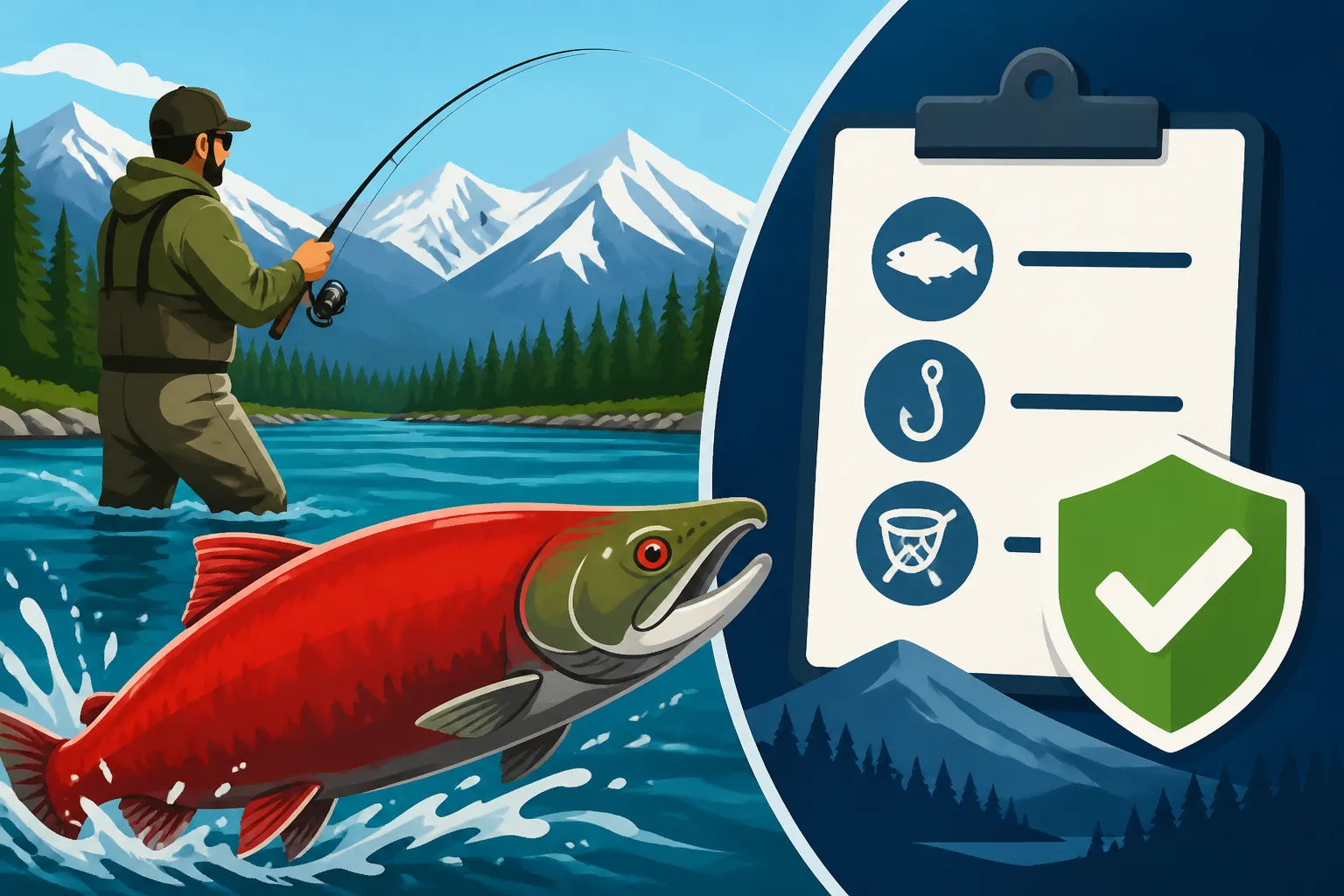
Alaska Kenai River Sockeye Recording Rules
Standing knee-deep in the Kenai River, rod bent, fighting a powerful Sockeye is an experience unlike any other. But amidst the thrill, it's easy to get tangled up in the complex recording rules. Many anglers find themselves scratching their heads, wondering exactly how to properly document their catch to stay compliant and help preserve this incredible fishery. This guide is here to untangle those knots, walking you through the specific requirements for recording your Sockeye salmon on the Kenai River.
Understanding Your Alaska Harvest Record Card for Sockeye
The Alaska Department of Fish and Game (ADF&G) requires anglers to record certain catches on a physical Harvest Record Card, which comes attached to your fishing license. This isn't just bureaucratic red tape; it's a vital tool for fisheries management, particularly when it comes to high-volume, highly popular fisheries like the Kenai River Sockeye runs. Failing to understand or properly complete this card can lead to serious headaches, including fines or even loss of fishing privileges.
Why Recording is Critical for Kenai Sockeye
The Kenai River's Sockeye salmon runs are legendary, attracting tens of thousands of anglers each summer, from seasoned Alaskans to first-time tourists. This immense pressure on the fishery necessitates meticulous tracking. Every Sockeye you keep, whether through sport fishing or personal use dipnetting, contributes to a larger data set that ADF&G uses to assess run strength, set future bag limits, and ensure sustainable management. Without accurate data from these harvest cards, it would be impossible to make informed decisions that protect the resource for future generations.
Imagine a scenario where the Sockeye run is weaker than expected. ADF&G needs real-time, or near real-time, data to implement emergency orders, such as reducing bag limits or even closing the fishery. The information recorded on your harvest card, combined with aerial surveys and sonar counts, helps paint a complete picture. Your seemingly small act of properly recording a fish is a critical piece of that giant puzzle. It directly impacts the health of the fishery and, ultimately, whether you'll be able to enjoy fishing the Kenai River next season. You can learn more about why these rules exist in our detailed guide on Alaska Harvest Record Card Explained.
The Basics of the Harvest Card Layout
Your Harvest Record Card is typically a small, paper card attached to your physical fishing license. It's designed to be simple, but the details are crucial. It will have spaces for:
- Your Name and License Number: This links the card directly to you.
- Year: The year the license and card are valid for.
- Species: Specific sections for different species, usually King Salmon and other species like Sockeye, Coho, etc.
- Date of Harvest: The exact day you caught the fish.
- Location of Harvest: The body of water (e.g., Kenai River, Russian River).
- Regulatory Area: The specific regulatory area the fish was taken from. For the Kenai River, this usually falls under the "Cook Inlet" or "Southcentral" region.
- Gear Type: How you caught the fish (e.g., sport rod and reel, dipnet).
- Number of Fish: The count of each species retained.
It's tempting to think of this as a quick scribble, but each field serves a purpose. The "location of harvest" is particularly important for Kenai Sockeye, as different sections of the river can have different regulations or management concerns. Carrying a waterproof pen, and perhaps even a small laminated copy of the Alaska Fishing Regulations Explained from ADF&G or a booklet found on Amazon, can be incredibly helpful for accuracy in the field.
Step-by-Step Guide to Recording Kenai Sockeye
One of the biggest frustrations for anglers is knowing when and how to correctly fill out the harvest card immediately after catching a fish, especially when the action is hot. The rules are pretty straightforward once you get the hang of them, but failing to follow the timing and detail requirements can land you in hot water.
When to Record Your Catch
The golden rule for recording any fish on your Harvest Record Card, including Kenai River Sockeye, is immediately after retention. "Immediately" means as soon as the fish is retained and dead, before you move from the location where it was taken, and certainly before you start fishing again.
Let's break down what "immediately" truly means in practice:
- Sport Fishing: You hook a Sockeye, land it, decide to keep it, dispatch it, and then before you cast your line again, you pull out your license and pen and record the fish. It should be recorded before it's placed in a cooler, fish bag, or stringer if those actions delay the recording process. This prevents any ambiguity or forgetting to record later.
- Personal Use Dipnetting: If you're participating in the immensely popular Kenai River Personal Use Dipnet Fishery, the rule is the same. As soon as a Sockeye is removed from the water and retained in your dipnet, and before you continue dipping or move away from your spot, you must record it. This is often where mistakes happen, as the frenetic pace of dipnetting can make it easy to get caught up in the excitement. However, the wardens are very strict about this.
The reason for this strict "immediate" rule is clear: it minimizes errors and prevents anglers from trying to keep more fish than legally allowed by "forgetting" to record. It also ensures that if a Fish and Game Trooper checks your catch, your card accurately reflects what's in your possession.
Key Information to Enter for Sockeye
For Sockeye salmon on the Kenai River, you'll specifically look for the "Salmon (other than King)" section on your harvest card. Here's a detailed look at what information needs to be entered:
- Date: Write the month and day. For example, if you catch a Sockeye on July 25th, you'd write "07/25" or "Jul 25".
- Location (Area): This is crucial. For Kenai River Sockeye, you'll typically mark "Cook Inlet" or the more specific "Kenai River." If you are fishing in an area like the Russian River Sanctuary, which is a tributary to the Kenai and has unique Sockeye regulations, you might specify "Russian River." The broader regulatory area is "Cook Inlet."
- Number of Fish: This is where you tally your Sockeye. If you catch one Sockeye, put a "1" in the box. If you catch another later in the day, you add another "1" in the next available space for that date and location, or increment the existing number if multiple Sockeye were caught at the exact same time and location before the next fishing action. However, it's generally safer and clearer to use a new line for each recording event for the same date/location. The goal is clarity and accuracy.
Important Note for Annual Limits: While the daily bag limit for Sockeye on the Kenai River can fluctuate, there is also often an annual limit, especially for non-residents. This annual limit is crucial to track. Your harvest card helps ADF&G monitor this. Make sure you are aware of your Alaska Sockeye Salmon Limits on the Kenai before you even head out.
Here's a simplified table illustrating how to record for a typical day on the Kenai:
| Date | Location (Area) | Species | Number of Fish |
|---|---|---|---|
| 07/25 | Kenai River | Salmon (other than King) | 1 |
| 07/25 | Kenai River | Salmon (other than King) | 1 |
| 07/25 | Kenai River | Salmon (other than King) | 1 |
| 07/26 | Kenai River | Salmon (other than King) | 1 |
This table shows an example of recording three Sockeye on July 25th and one on July 26th, all from the Kenai River.
Special Considerations for Dipnetting and Personal Use
The Kenai River Personal Use Dipnet Fishery is a unique experience and often where the most Sockeye are harvested in a short period. Because of the volume of fish, it's easy to lose track. However, the recording rules are just as strict.
When participating in the personal use fishery, often a family affair, each permit holder is responsible for recording their own fish. If you have a permit for yourself and one for your spouse, each of you must record the Sockeye you retain individually on your respective permit's harvest record. You cannot simply combine all fish under one person's permit, even if one person is doing most of the dipnetting. This is a common misunderstanding that can lead to violations.
Furthermore, ensure that the gear type used (dipnetting) is aligned with the specific regulations for the personal use fishery. These regulations are detailed in the Alaska Dip Netting Regulations and often come with specific pages in the ADF&G regulation booklet. Always double-check if there are any specific notations required for personal use catches versus sport-caught fish on your card. The overarching principle is that the record must accurately reflect who caught and retained the fish. If you're unclear, consulting the official ADF&G regulations, which are often available for download or purchase on Amazon in physical format, is always the best approach.
Navigating Kenai River Sockeye Regulations and Emergency Orders
The dynamic nature of Alaska's fisheries means that regulations, especially for Kenai Sockeye, are not set in stone for the entire season. They can change rapidly based on run strength and conservation concerns. Staying informed is just as important as knowing how to record your catch.
Daily and Annual Bag Limits for Sockeye
The Kenai River is typically subject to specific daily bag and possession limits for Sockeye salmon. For example, during peak runs, sport anglers might have a daily bag limit of three Sockeye, with an annual limit that might vary for residents and non-residents. The annual limit is where careful recording really comes into play, as it’s a cumulative total across the entire season and all waters, not just the Kenai.
For the personal use dipnet fishery, the limits are usually far more generous, often tied to household size. A head of household might be allowed 25 Sockeye, plus 10 for each additional household member. Again, each individual on the permit is responsible for recording their portion of the catch on their harvest card. You can find detailed information about these fluctuations in articles like Alaska Sockeye Daily Limit by River. It's crucial to consult the most current regulations for the season you're fishing.
How Emergency Orders Impact Recording
Alaska's fishing regulations are notorious for changing mid-season via "Emergency Orders" (EOs). For the Kenai River Sockeye, this is a very real possibility, especially if the run is weaker or stronger than forecasted. An EO can change the daily bag limit, possession limit, open/closed fishing days, or even specific gear restrictions (e.g., barbless hooks only).
When an Emergency Order is issued, it directly affects what you are legally allowed to catch and keep. Therefore, it also affects what you should be recording. If the daily bag limit for Sockeye is suddenly reduced from three to two fish via an EO, you must immediately adjust your fishing and your recording practices. Attempting to keep three fish and record them after an EO reduces the limit would be a violation.
It is your responsibility as an angler to stay up-to-date on EOs. You can do this by checking the ADF&G website, signing up for their text alerts, or listening to local radio broadcasts. We have a helpful guide on How to Check Alaska Emergency Orders Before Fishing that can provide more detailed ways to stay informed. Many local tackle shops, like those in Soldotna or Cooper Landing, also post EOs prominently.
Common Recording Mistakes to Avoid
Even experienced anglers can make mistakes. Here are some of the most common recording errors for Kenai River Sockeye and how to avoid them:
- Forgetting to Record Immediately: This is the most frequent violation. The excitement of landing a fish often makes people forget. Make it a habit: catch, kill, record, then resume fishing. Keep your license and a pen readily accessible, perhaps in a small waterproof bag you can find on Amazon.
- Recording the Wrong Date or Location: Be precise. Ensure the date matches the day you caught the fish, and the location is specific enough (e.g., "Kenai River" rather than just "Alaska").
- Incorrect Species: While usually obvious for Sockeye, especially during a run, make sure you're marking the correct box for "Salmon (other than King)" as opposed to accidentally marking King Salmon if you happen to catch one.
- Exceeding Daily/Annual Limits: Always know your current limits. Recording a fish that puts you over the limit is a violation, even if you record it. The act of retention is the violation.
- Improper Recording for Personal Use Permits: If multiple people are on a personal use permit, ensure each person records their own retained fish on their own section of the harvest card.
- Not Using a Waterproof Pen: While not a "recording rule" directly, a smudged or illegible record might as well be an unrecorded one in the eyes of a Fish and Game Trooper. Invest in a good waterproof pen.
Ensuring Compliance and Preserving the Fishery
Ultimately, the recording rules for Kenai River Sockeye are about more than just bureaucracy; they're about shared responsibility. Every angler plays a part in ensuring the sustainability of this incredible natural resource.
The Role of ADF&G in Sockeye Management
The Alaska Department of Fish and Game (ADF&G) is tasked with managing Alaska's diverse fisheries, including the economically and culturally vital Sockeye runs on the Kenai River. They employ biologists, researchers, and enforcement officers to monitor fish populations, conduct research, set regulations, and ensure compliance. The data you provide through your harvest card is a fundamental component of their management strategy.
By meticulously tracking the number of fish harvested, ADF&G can project future runs, understand population trends, and react quickly to changes in run strength. This active management helps prevent overfishing and ensures that the Kenai River remains a world-class Sockeye fishery for generations to come. When you correctly fill out your harvest card, you're not just avoiding a fine; you're actively contributing to scientific data collection that benefits everyone who loves fishing in Alaska. You can explore more about the broader framework in Alaska Fishing Regulations Explained.
Consequences of Improper Recording
The stakes for improper recording are significant. Fish and Game Troopers regularly patrol the Kenai River, and they are well-versed in checking licenses, harvest cards, and angler catches.
Consequences for violations can range from:
- Fines: Monetary penalties can be substantial, often several hundred dollars per violation.
- Forfeiture of Catch: You may lose the fish you've caught, even if you were otherwise within bag limits but failed to record properly.
- Seizure of Gear: In more severe cases, your fishing gear (rod, reel, dipnet) could be seized.
- Loss of Fishing Privileges: Repeated or severe violations can lead to suspension or revocation of your fishing license, meaning you can't fish in Alaska for a period of time.
These aren't empty threats; they are enforced to protect the resource. Troopers are not looking to ruin your trip, but they are serious about compliance. Knowing the rules and following them meticulously is the easiest way to avoid these unpleasant outcomes. Remember, when you're out on the Kenai River Fishing: Complete Guide, an encounter with a Fish and Game Trooper should be a routine check, not a reason for anxiety.
Disclaimer
The information provided in this guide is for general informational purposes only and is subject to change. Alaska fishing regulations, including those for Kenai River Sockeye, are dynamic and can be modified by emergency orders at any time. It is the angler's sole responsibility to consult the most current Alaska Department of Fish and Game (ADF&G) regulations before fishing. Always refer to the official ADF&G website or their printed regulation booklets for the most up-to-date and accurate information.