How to Back Bouncing for Salmon in Alaska
You've heard the whispers, seen the photos of massive salmon, and perhaps even tried traditional casting methods only to find them lacking against Alaska's powerful currents. Many anglers struggle to present their bait effectively in strong flows, leading to frustration and missed opportunities. This guide is dedicated to demystifying back-bouncing, a proven and highly effective technique for targeting salmon in Alaska's formidable rivers, helping you connect with those incredible fish you've dreamed of.
Understanding the Art of Back-Bouncing for Salmon
Back-bouncing might sound a bit quirky at first, but trust me, it's a technique that veteran Alaskan anglers swear by, especially when you're looking to put big salmon in the boat. It's not just randomly dropping a weight; it's a calculated dance between your rod, the current, and the riverbed, designed to put your bait right in the strike zone of holding salmon.
The Core Concept of Back-Bouncing
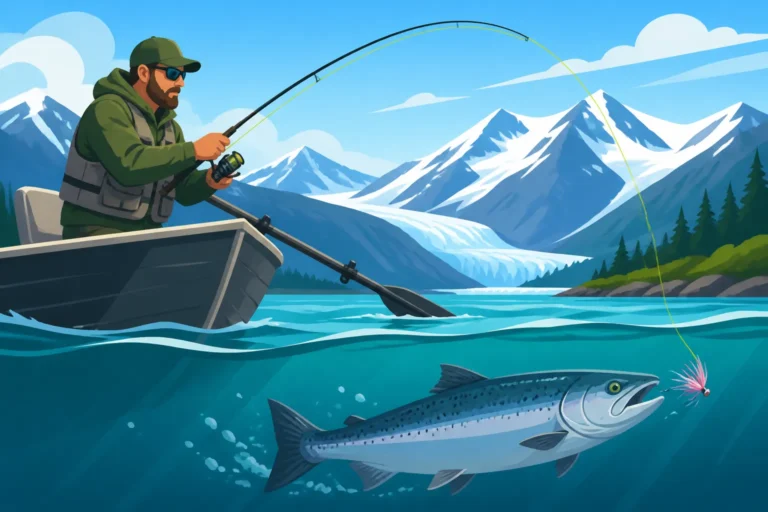
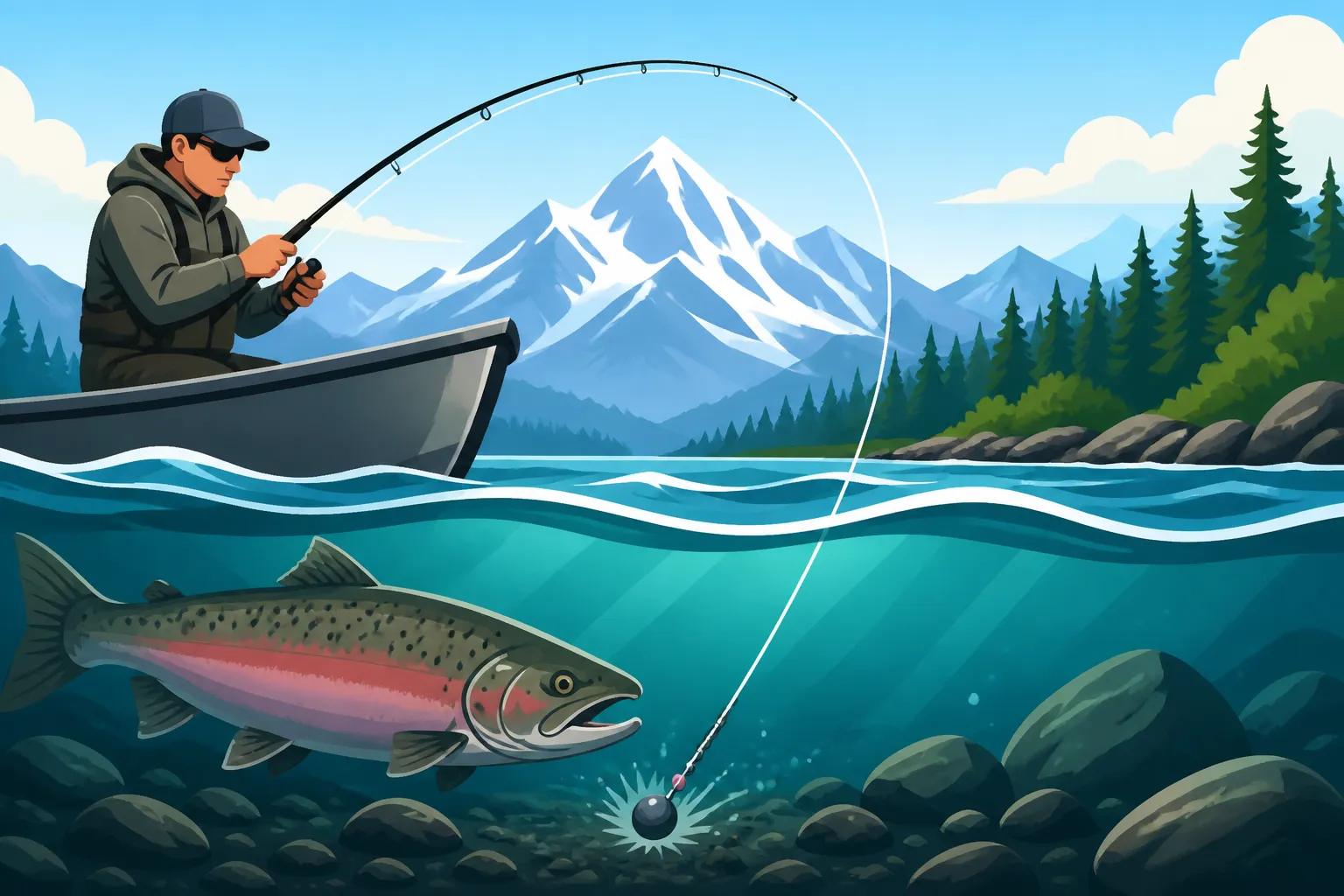
At its heart, back-bouncing is about controlling your presentation to allow your bait or lure to "bounce" along the bottom of a river, mimicking natural food items dislodged by the current. Unlike drift fishing where your bait is suspended in the water column, back-bouncing keeps your offering in direct contact with the riverbed. Imagine a salmon egg or a piece of roe tumbling naturally downstream; that's the illusion we're trying to create. You're using a heavy weight, often a "slinky" or a pyramid sinker, to maintain bottom contact while slowly letting your line out as your boat or bank position drifts with the current, or you simply walk upstream slightly, allowing the current to work the line downstream. The key is to feel those subtle taps as your weight hits rocks and gravel, distinguishing them from an actual bite. It's a tactile fishing experience that gets incredibly addictive once you get the hang of it. This method requires a sensitive touch and a good understanding of the river's contours, but it pays dividends when those kings and sockeye are hugging the bottom.
Why Back-Bouncing Excels for Alaska Salmon
Alaska's rivers are often fast-flowing, deep, and feature intricate bottom structures—perfect conditions for salmon to hold in specific seams and depressions, conserving energy as they migrate upstream. These fish aren't always actively chasing; sometimes they're just waiting for an easy meal to come to them. This is where back-bouncing shines. By keeping your bait right on the bottom, you're presenting it exactly where these lethargic or holding salmon are. Think about the mighty Kenai River or the Kasilof; these rivers have powerful currents that can make traditional casting and retrieving almost impossible to keep a bait down deep enough without snagging constantly or having it blown out of the strike zone. Back-bouncing allows for a slower, more controlled drift through prime salmon lies, giving the fish ample time to see, investigate, and ultimately strike your offering. It’s particularly effective during the peak of the King Salmon runs when these giants are often deep and prefer a subtle, on-the-nose presentation. Many guides on rivers like the Kenai will employ this technique, especially for their clients seeking trophy Kings. You can find more specific details on King Salmon strategies in our guide on How to Catch King Salmon in Alaska.
Targeting Specific Salmon Species
While primarily famous for King Salmon, back-bouncing can be adapted for other salmon species too, though the setup and nuances might change.
- King Salmon (Chinook): This is the bread and butter of back-bouncing. Kings are often found in deeper runs, holding close to the bottom. The slower, precise presentation of a back-bounced bait is absolutely deadly for them. You'll typically use larger baits like cured roe or even whole herring, along with heavier weights to keep everything down in the powerful current.
- Sockeye Salmon (Red): Sockeye are famously finicky feeders, primarily consuming plankton in saltwater and not feeding much in freshwater. However, during heavy runs in rivers like the Russian River or the Kenai, they can be "flossed" or "snagged" incidentally or intentionally in personal-use fisheries. While not a "feeding" technique for sockeye, a small, weighted fly or bare hook back-bounced through dense schools can be effective in areas where legal to do so, aiming to hook them in the mouth. It’s a different ballgame than targeting Kings, and knowing How to Catch Sockeye Salmon in Alaska is crucial.
- Coho Salmon (Silver): While Coho often prefer more active presentations higher in the water column, back-bouncing can still be effective, especially during low light conditions or when they are staging in deeper pools before moving upstream. You might opt for lighter weights and smaller, more active lures or cured eggs on your leader to entice a strike.
- Chum Salmon (Dog) and Pink Salmon (Humpy): These species are typically less targeted with dedicated back-bouncing methods, as they respond well to various casting and retrieving techniques. However, if they are holding deep in a specific channel, a lighter back-bouncing setup with brightly colored lures or eggs could still provoke a strike. Always check Alaska Fishing Regulations Explained for species-specific rules and restrictions in your area.
Essential Gear for Alaska Back-Bouncing
To successfully back-bounce for salmon in Alaska, you can't just grab any old rod and reel. This technique demands specific equipment that can handle heavy weights, powerful currents, and, most importantly, the brute strength of an Alaskan salmon. Investing in the right gear is crucial for both effectiveness and comfort.
Rods, Reels, and Line Selection
Choosing the right rod, reel, and line is foundational to effective back-bouncing. Without them, you'll struggle with sensitivity, control, and ultimately, landing fish.
- Rods: You'll want a rod that's stout enough to handle heavy weights (often 4-16 ounces or more depending on current and depth) but still sensitive enough to feel the subtle taps of your weight on the bottom and the even more subtle bite of a salmon. A medium-heavy to heavy power rod, typically 8 to 10 feet in length, is ideal. Longer rods help with line management, cushioning strong runs, and keeping your line out of the water, especially when fishing from a boat. A good quality graphite rod will offer the sensitivity needed. Brands like Lamiglas or G. Loomis often make excellent rods suited for this kind of heavy-duty salmon fishing. You can usually find a great selection on platforms like Amazon.
- Reels: A robust baitcasting reel is preferred for back-bouncing due to its control over line release and superior drag system for fighting large fish. Look for a reel with a high line capacity, a smooth, powerful drag, and durable gears. Reels specifically designed for salmon or steelhead, like certain models from Shimano or Daiwa, are excellent choices. A good level-wind system is also beneficial for even line distribution. The ability to precisely control the drop of your weight is paramount, making a baitcaster the clear winner over a spinning reel in most back-bouncing scenarios.
- Line: Your main line should be a strong braided line, typically 50-80 lb test. Braid offers incredible sensitivity, minimal stretch, and impressive strength-to-diameter ratio, allowing you to feel every bump and bite. Since braid is visible and can fray on rocks, you'll want to use a monofilament or fluorocarbon leader. A good leader material is usually 25-40 lb test, chosen for its abrasion resistance and invisibility in water. The length of your leader can vary, but generally, 2-6 feet is a good starting point, connecting your main line to your terminal tackle with a strong knot, such as a uni-to-uni or Albright knot. Our comprehensive Alaska Fishing Gear and Tackle Guide provides more insights into specific brands and setups.
Weights and Terminal Tackle Setup
The heart of your back-bouncing rig is the weight and how you set up your terminal tackle. This system needs to be robust and designed for constant bottom contact.
- Weights: The "back-bounce" action comes from your weight. Slinky weights (a cordura tube filled with lead shot) are incredibly popular because they're snag-resistant and conform to the riverbed. Pyramid sinkers are also effective, offering good bottom contact in moderate currents. The weight you choose will depend heavily on the river's current speed and depth. You might start with 4-6 oz in slower water and go up to 10-16 oz or even more in raging currents. It's smart to carry a variety of weights. You'll attach the weight to a sliding dropper system, often a three-way swivel or a slider, allowing your main line to run freely and transmit bites without the weight dampening the feel. This also helps prevent the fish from feeling the weight immediately after taking the bait.
- Hooks: Large, sharp, single hooks are standard for salmon, often sizes 2/0 to 5/0, depending on the bait and target species. Some anglers prefer treble hooks, but many areas in Alaska have single-hook restrictions, especially during King Salmon closures or in certain sensitive fisheries. Always consult local regulations, which can be found in Alaska Fishing Regulations Explained. Ensure your hooks are incredibly sharp; a dull hook means lost fish.
- Swivels and Leaders: Beyond the main leader, you'll need barrel or snap swivels to connect your leader to the main line and prevent line twist. A three-way swivel is often used for the weight setup, allowing one eye for the main line, one for a short dropper to the weight, and one for your leader to the hook. Fluorocarbon leader material is highly recommended for its abrasion resistance and low visibility, particularly if you're fishing clear waters. Consider pre-tying several leaders at home, so you're ready to quickly re-rig on the water.
Bait and Lure Choices
What you put on the end of that hook is what ultimately seals the deal. Salmon in rivers are often driven by instinct and territorial aggression, but they also respond to natural food sources.
- Cured Roe (Salmon Eggs): This is arguably the most effective bait for back-bouncing salmon, especially King and Silver Salmon. The scent trail of good quality cured roe is irresistible. You can buy pre-cured roe or learn to cure your own. Popular cures often include borax, Pautzke's Fire Bait, or other commercial blends, which enhance color, scent, and durability. Present a decent chunk of roe, often tied in an egg loop or a roe bag, about the size of a quarter or larger for Kings.
- Artificial Baits: Soft plastic beads (like those from BnR Tackle) are increasingly popular, especially for sockeye and rainbow trout in certain areas. They mimic salmon eggs and, when drifted naturally, can trigger strikes. Scented soft plastics designed to imitate eggs or small baitfish can also be effective. Adding scent to any artificial bait is always a good idea; gel scents infused with real fish oils can make a big difference. Our guide on Best Bait for Alaska Salmon has more details on specific types and techniques.
- Plugs and Lures: While back-bouncing typically involves bait, some anglers will use plugs like a Kwikfish or FlatFish, or even large spoons, on a dropper system. The key is to choose lures that have a good wobbling or vibrating action at slow speeds, as the current will be providing most of the movement. Adding a scent pad or injecting scent into hollow plugs can enhance their appeal. These are often used when fish are slightly more aggressive or when regulations prohibit bait. You can explore more options in our article on Best Lures for Alaska Salmon.
| Component | King Salmon (Heavy Current) | Coho Salmon (Moderate Current) | Sockeye Salmon (Light Current/Flossing) |
|---|---|---|---|
| Rod | 9-10 ft, Heavy Power | 8-9 ft, Medium-Heavy Power | 7-8 ft, Medium Power |
| Reel | Large Baitcaster (e.g., Shimano Calcutta 400) | Mid-size Baitcaster (e.g., Daiwa Tatula 200) | Mid-size Spinning or Light Baitcaster |
| Main Line | 65-80 lb Braid | 40-50 lb Braid | 20-30 lb Braid |
| Leader | 30-40 lb Fluorocarbon | 20-30 lb Fluorocarbon | 12-15 lb Fluorocarbon |
| Weight | 8-16 oz Slinky/Pyramid | 4-8 oz Slinky/Pyramid | 1-3 oz Pencil/Bullet |
| Hook Size | 4/0 – 5/0 Single | 2/0 – 3/0 Single | 1/0 – 1 Single (often bare) |
| Primary Bait | Cured Roe, Whole Herring | Cured Roe, Shrimp, Spinners | Small Beads, Bare Hooks |
Step-by-Step Guide to Back-Bouncing for Alaskan Salmon
Back-bouncing isn't just about dropping a weight; it's a methodical process that requires an understanding of river dynamics and precise execution. Once you master these steps, you'll be well on your way to consistent success on Alaska's salmon rivers.
Finding the Right Water
Before you even make your first cast, you need to understand where salmon are likely to be. This means "reading the water" — a skill that comes with practice but can be greatly accelerated by knowing what to look for.
- Holding Water: Salmon, especially King Salmon, conserve energy during their upstream migration. They seek out "holding water" – areas where the current is slower but still provides enough oxygen, often just downstream of a fast riffle, in a deep pool, or behind a large obstruction like a submerged log or rock. Look for seams where fast current meets slower water. These are prime ambush points. In rivers like the Kenai, these holding lies can be very specific, almost like invisible highways for the fish.
- Depth and Structure: Salmon will often hold close to the bottom, especially in deeper channels. Using a depth finder from a boat can help you identify these deeper troughs and underwater structures. From the bank, look for visual cues like changes in water color, eddy lines, or areas where the bank drops off steeply. These subtle signs indicate changes in depth and current, which are critical for locating fish. Don't be afraid to experiment with different depths and distances from shore until you find where the fish are concentrating. Sometimes, the fish might be just a few feet from the bank in surprisingly shallow water, especially during higher tides or certain times of the run.
The Cast, Drift, and Bounce Technique
This is the core execution of back-bouncing. It’s a rhythmic, controlled dance with the river.
- Initial Placement: From a boat, you'll position yourself upstream of your target area. From the bank, you'll cast slightly upstream and across the current. The goal is to let your weight sink quickly to the bottom.
- Achieving Bottom Contact: As your weight sinks, strip line off your reel to help it get down faster. Once you feel the weight "thunk" on the bottom, you've made contact. You'll feel a distinct vibration or series of taps as the weight bounces along the riverbed.
- The "Back-Bounce" Motion: This is where the technique gets its name. As your boat drifts downstream (or you walk slowly upstream if bank fishing), you'll constantly feed out small amounts of line, just enough to maintain light tension and allow the weight to gently "bounce" or "crawl" along the bottom. You want to feel those taps, but not let your weight drag or snag. Too much line out, and your weight drags; too little, and it lifts off the bottom. It's a fine balance. Many anglers refer to it as "walking" the weight across the bottom. If you're fishing from a boat, like many do on the Kasilof River, the boat's slow, controlled drift downstream with the current is essential. You're effectively presenting your bait back under the boat as you drift, hence "back-bouncing."
- Maintaining the Drift: The speed of your drift (either boat or bank-walking) should match the current speed enough to keep the bait natural but slow enough for the fish to react. This is often slower than the main current, allowing your bait to lag slightly. You're aiming for your bait to tumble and roll, not be swept away. If you're using a boat, a kicker motor can help control your speed precisely against the current.
Reading the Bite and Setting the Hook
Feeling the bite while back-bouncing can be tricky because you're already feeling the riverbed. This is where sensitivity in your rod and line truly pays off.
- Distinguishing Bites: A true salmon bite will feel different from a rock or gravel tap. It might be a heavier "thud," a sustained pull, or a series of sharper, more erratic tugs. Sometimes it feels like your weight suddenly stops dead, not because it's snagged, but because a fish has taken the bait and is holding it. Pay close attention to any deviation from the rhythmic "tap-tap-tap" of the bottom. Even a slight increase in pressure or a different cadence can indicate a fish. This is why braided line is so important; it transmits these subtle signals directly to your hand.
- The Hookset: When you suspect a bite, don't hesitate. Drop your rod tip slightly towards the water, reel up any slack, and then execute a firm, powerful sweep-set of the hook, pulling the rod tip upwards and slightly to the side. Avoid a sharp, jerky yank, as this can pull the bait from the fish's mouth without setting the hook. With the large, strong hooks used for salmon, a solid sweep will typically bury the hook effectively. Be ready for an immediate, powerful fight, especially if you've hooked into an Alaskan King Salmon! They're notorious for their explosive runs and head shakes. Our guide on Best Fishing Techniques for Alaska offers more context on various methods.
Tips and Tricks for Alaskan Back-Bouncing Success
Mastering back-bouncing goes beyond just the mechanics; it involves understanding the nuances of Alaskan rivers and salmon behavior. A few seasoned tips can dramatically increase your chances of success.
Common Mistakes to Avoid
Even experienced anglers can make simple errors that hinder their back-bouncing effectiveness. Being aware of these pitfalls can save you a lot of frustration.
- Using Too Light or Too Heavy a Weight: This is a Goldilocks situation. Too light, and your bait won't stay on the bottom, getting swept away by the current. Too heavy, and you'll constantly snag or miss bites because the weight dampens the feel. The goal is to use the minimum weight necessary to maintain intermittent bottom contact. If you’re fishing in a new spot, start with a medium weight and adjust up or down. If you're struggling to feel the bottom, go heavier. If you're constantly snagging, try a lighter slinky weight or adjust your drift speed.
- Failing to Maintain Tension: You need just enough tension to feel the bottom and detect bites, but not so much that you're pulling your bait off the bottom or making it look unnatural. A common mistake is letting out too much slack, which makes it impossible to feel a bite and delays your hookset. Conversely, keeping too much tension creates drag and can make your bait look unnatural. It's a delicate balance that comes with practice. The ideal scenario is a slight bow in the line, indicating the weight is just bumping along, not dragging.
- Ignoring River Structure: Salmon don't just randomly sit anywhere. They congregate in specific "travel lanes" and holding lies. Fishing randomly in open water where no fish are holding is a waste of time. Pay attention to water depth, current breaks, submerged logs, and gravel bars. These are all indicators of where salmon might be resting or staging. Often, the most productive areas are those subtle depressions or changes in the riverbed that guide fish upstream. Look for these subtle variations and focus your efforts there.
Adapting to River Conditions
Alaska's rivers are dynamic, and conditions can change rapidly. Being adaptable is key to consistent success.
- Current Speed and Water Level: A higher, faster river usually means you'll need heavier weights and possibly longer leaders to keep your bait in the strike zone. Conversely, in lower, slower water, lighter weights and shorter leaders might be more effective. Emergency Orders from the Alaska Department of Fish and Game (ADF&G) can also drastically alter fishing conditions or regulations, so always check before heading out. Understanding How Alaska Bag Limits Change In-Season is also crucial for compliance.
- Water Clarity: In clear water, fish can be more spooky. This calls for longer fluorocarbon leaders, smaller hooks, and a more natural presentation. Stealth becomes paramount. In murkier water (common after heavy rains), the scent of your bait becomes even more critical. You might enhance your roe with extra scent, or use brighter colored beads or plugs that stand out visually, in addition to relying on strong scent trails. Consider using UV-enhanced baits or lures found on Amazon.
- Time of Day and Tidal Influence: While river salmon aren't directly impacted by ocean tides, many of Alaska's lower river sections are tidal. Fish often move with the incoming and outgoing tides, especially in areas like the lower Kenai or Kasilof. Early morning and late evening often provide the best bites in non-tidal sections. In tidal zones, fishing during slack tide or on a specific part of the incoming/outgoing tide can be incredibly productive as fish move through channels. Knowing How Tides Affect Alaska Salmon Fishing can give you a significant advantage.
Maximizing Your Catch
Beyond the technical aspects, there are a few pro tips that can give you an edge.
- Scent is King: Seriously, don't underestimate the power of scent. Even if you're using real roe, adding a bit of extra Pautzke's Krill Juice or other salmon-attracting scents to your bait can make a huge difference, especially for Kings. Reapply scent frequently, as it washes off in the current. You can find many effective scents on Amazon, some specifically formulated for Pacific salmon.
- Keep Your Hooks Razor Sharp: This cannot be stressed enough. Even new hooks can benefit from a quick touch-up with a hook file or sharpener. A dull hook will glance off a salmon's tough mouth, resulting in a lost fish. Check your hook point after every fish, or after a few snags, and sharpen or replace as needed. This simple habit can convert missed bites into landed fish.
- Don't Be Afraid to Experiment: If what you're doing isn't working, change something! Try a different colored bait, a different size weight, a longer or shorter leader, or move to a different spot. Sometimes a subtle change can unlock the bite. Talk to other anglers (politely, of course), observe what successful fishermen are doing, and learn from your own experiences. The best Alaskan anglers are those who are constantly observing and adapting. For more nuanced advice on finding fish, check out Best Fishing Spots in Alaska to get a sense of productive waters.
Disclaimer
The information provided in this guide is for general informational purposes only and should not be considered legal advice regarding fishing regulations. Alaska's fishing regulations are complex, species-specific, and can change frequently via emergency orders. Always consult the most current Alaska Department of Fish and Game (ADF&G) regulations booklet, available online and from license vendors, before engaging in any fishing activities. Compliance with all state and federal regulations is the sole responsibility of the angler.