Alaska Sockeye Salmon Limits on the Kenai
Trying to make sense of the ever-changing Sockeye salmon limits on the Kenai River can feel like a full-time job. One day you hear stories of incredible catches, and the next, an emergency order completely changes the game. It's frustrating to plan a trip, invest in gear, and then arrive only to find the rules have shifted. This comprehensive guide will help you navigate the nuances of Alaska Sockeye salmon limits on the Kenai, from understanding the regulations to staying informed on critical emergency orders, ensuring your fishing trip is both successful and compliant.
Understanding Kenai River Sockeye Salmon Seasons and Runs
The Kenai River is legendary, and a huge part of that legend revolves around its incredible Sockeye salmon runs. These bright red beauties are highly sought after by anglers for their spirited fight and delicious, firm flesh. But to successfully target them, and especially to understand the limits, you first need to know when they arrive and why they're such a big deal.
The Allure of Kenai Sockeye: Why It's So Popular
There's a reason tens of thousands of anglers flock to the Kenai Peninsula each summer, specifically for Sockeye. They are incredibly strong fighters for their size, providing an exhilarating experience on the line, especially when you hook into a fresh one straight from the saltwater. Beyond the thrill of the catch, Kenai Sockeye (also known as Red Salmon) are renowned for their vibrant red-orange meat, making them a premier table fish for grilling, smoking, or canning. The sheer numbers of Sockeye that return to the Kenai are astounding, creating a spectacle that's hard to find anywhere else in the world. This high density of fish leads to what's often called "combat fishing," where anglers stand shoulder-to-shoulder, casting into the same productive waters, all hoping to hook into their limit. It's an intense, yet uniquely Alaskan experience that keeps people coming back year after year.
Primary Sockeye Runs on the Kenai
The Kenai River experiences two distinct Sockeye salmon runs each season, each with its own characteristics and peak times. Knowing these timings is crucial for planning your trip and understanding how limits might fluctuate.
The First Run of Kenai Sockeye typically begins in late May and continues through June. These fish are generally headed for the Russian River, a tributary of the Kenai, and are often smaller in stature than their later counterparts. Fishing for this run often concentrates near the confluence of the Kenai and Russian Rivers, as well as upstream on the Russian. While the numbers aren't as massive as the second run, it's a fantastic opportunity for early-season anglers looking for a taste of the action before the major crowds descend.
The Second Run is the behemoth, usually kicking off in early to mid-July and often peaking around the third or fourth week of the month, sometimes extending into early August. This run is what most people picture when they think of Kenai Sockeye fishing. Millions of Sockeye pour into the river system, destined for the vast upstream spawning grounds. This is when the banks of the Kenai truly come alive, with anglers vying for prime spots. These fish tend to be larger and incredibly fat from their ocean journey, making them even more desirable. The sheer volume during this run is what often triggers emergency orders to increase bag limits, which we'll delve into shortly.
Factors Influencing Run Strength and Timing
Predicting the exact timing and strength of a Sockeye run is an art, not a science, though the Alaska Department of Fish and Game (ADF&G) does a remarkable job with forecasts. Several environmental factors play a significant role. Water temperature is a huge one; warmer river temperatures can sometimes accelerate the migration, while unusually cold water can slow it down. The amount of snowmelt from the surrounding mountains influences river levels and turbidity, which can affect both fish movement and fishing conditions. Ocean conditions from the preceding years impact the survival rates of juvenile salmon, directly influencing the size of the returning adult run. Finally, ADF&G constantly monitors escapement goals – the number of fish needed to reach spawning grounds to ensure future generations. When escapement is strong and sustained, the likelihood of liberalized limits increases dramatically. It's a delicate balance of nature and management that keeps anglers on their toes every season.
Navigating the Complexities of Kenai Sockeye Bag and Possession Limits
Understanding the difference between daily bag limits and possession limits is paramount for any angler venturing to the Kenai for Sockeye. Confusing these can lead to fines and legal trouble, which is definitely not the souvenir you want from Alaska. It’s not always straightforward, but with a bit of clarification, you’ll be much better prepared.
Decoding Daily Bag Limits
A daily bag limit refers to the maximum number of Sockeye salmon you are allowed to harvest and keep in a single day, from midnight to midnight. This is perhaps the most immediate regulation anglers encounter. For Kenai River Sockeye, the general daily bag limit is often set at three Sockeye salmon. However, and this is a critical point for the Kenai, these limits are highly dynamic. When the run is strong and escapement goals are being met or exceeded, the Alaska Department of Fish and Game frequently issues Emergency Orders (EOs) to increase the daily limit. It's not uncommon for the daily limit to jump to six Sockeye salmon per person during the peak of the second run, and sometimes even higher for specific periods.
Imagine you're fishing on the Kenai River near Soldotna in mid-July. You start your morning, catch three Sockeye, and decide to call it a day, putting them on ice. Later that afternoon, you hear an emergency order has just been issued, increasing the daily limit to six. You could, theoretically, go back out and catch three more, bringing your total for that calendar day to six. But the key is always checking the latest regulations before you head out, and even during the day, as changes can happen quickly. Failing to adhere to the current daily limit, even if it changed while you were on the water, can result in significant penalties.
Understanding Possession Limits
The possession limit is where many anglers, especially those visiting for multiple days, often get confused. A possession limit refers to the maximum number of Sockeye salmon you can have in your physical possession at any given time, whether they are fresh, frozen, filleted, or even processed and packaged. This includes fish at your lodge, in your cooler, or in your vehicle, and often covers fish already at the local processor awaiting shipment. For Kenai Sockeye, the general possession limit is usually twice the daily bag limit. So, if the daily limit is three, the possession limit is six. If the daily limit is increased to six by an emergency order, the possession limit often follows suit, rising to twelve.
Let's say you're on a three-day fishing trip to the Kenai. On day one, the daily limit is three, and you catch three. You put them in your cooler. On day two, the daily limit is still three, and you catch three more. Now you have six Sockeye in your possession. If the possession limit is six, you cannot catch any more fish until some of your current catch is consumed, given away, or shipped out of the state. This is why many anglers utilize local fish processing services to fillet, vacuum seal, and freeze their catch, sometimes even arranging for shipping. Once fish are shipped out of Alaska, they are no longer considered "in your possession" for the purpose of the state's possession limit, freeing you up to catch more within the daily and remaining possession limits. It’s a vital distinction, especially if you’re hoping to fill your freezer back home.
Non-Resident vs. Resident Rules
For Sockeye salmon specifically, the daily bag and possession limits on the Kenai River are generally the same for both Alaska residents and non-residents once the fish are in the river. This means that if an emergency order increases the limit to six Sockeye per day for residents, it typically applies to non-residents as well. The primary distinction between residents and non-residents comes down to the cost and types of fishing licenses. Non-residents will, of course, pay a higher fee for their Alaska Fishing License: Complete Guide compared to residents.
However, it's crucial for non-resident anglers to be aware of the overall annual limits for certain species, particularly King Salmon, which can have stricter non-resident annual limits compared to residents. While Sockeye rarely have annual limits that pose an issue for the average recreational angler, understanding the broader regulatory framework, as outlined in the Alaska Non-Resident Fishing License Guide, is always a good idea. Always carry your current Alaska fishing license and any required stamps (like the King Salmon stamp, if you're targeting or might incidentally catch Kings) with you while fishing. You can purchase your license online or at many sporting goods stores across the state.
| Regulation Type | Standard Sockeye Limit | Emergency Order (EO) Potential (High Escapement) | Key Consideration |
|---|---|---|---|
| Daily Bag Limit | 3 Sockeye Salmon | Up to 6 or more Sockeye Salmon | Max fish caught from midnight to midnight |
| Possession Limit | 6 Sockeye Salmon | Up to 12 or more Sockeye Salmon | Max fish on your person or in your immediate control |
The Impact of Emergency Orders on Kenai Sockeye Limits
If you're fishing the Kenai River, especially during the peak Sockeye season, ignoring Emergency Orders (EOs) is like ignoring the weather forecast in a small plane – you're asking for trouble. These orders are the lifeblood of Alaska's dynamic fisheries management, and understanding them is crucial for a successful and legal trip.
What Are Emergency Orders and Why They Matter
Emergency Orders are the Alaska Department of Fish and Game's (ADF&G) primary tool for making real-time adjustments to fishing regulations. Unlike the annual regulation booklet, which sets baseline rules, EOs allow fishery managers to respond quickly to unfolding conditions on the river. This could mean adjusting bag limits, changing legal fishing times, modifying gear restrictions (like mandating single hooks or specific bait use), or even closing a fishery entirely. For Sockeye on the Kenai, EOs are most frequently issued to either increase limits when the run is exceptionally strong and meeting or exceeding escapement goals, or to reduce limits/close the fishery if the run is weaker than expected and conservation is a concern.
The purpose is always conservation and sustainable management. ADF&G is tasked with ensuring enough fish make it to the spawning grounds to perpetuate the species, while also providing reasonable fishing opportunities for the public. When millions of Sockeye are pouring into the Kenai, exceeding projected escapement needs, it makes sense to allow anglers to harvest more. Conversely, if the run falters, quick action is needed to protect the future of the fishery. Ignoring these orders, even unknowingly, is not an excuse, and violations can result in hefty fines, confiscation of gear, and even loss of fishing privileges. This is why staying informed is just as important as knowing how to cast. You can learn more about the broader context of these rules in our guide to Alaska Fishing Regulations Explained.
Common Changes Made by Emergency Orders
During a robust Kenai Sockeye run, it’s very common to see EOs that increase the daily bag and possession limits. For example, the standard "3 Sockeye daily / 6 Sockeye in possession" can quickly become "6 Sockeye daily / 12 Sockeye in possession" when the fish are thick. In exceptionally strong years, especially if there's a specific management need to reduce the number of fish bypassing spawning areas, limits can be further liberalized, sometimes allowing up to 10 or even 15 Sockeye per day for a brief period. These super-liberal limits are often short-lived and highly specific to certain dates or areas.
On the flip side, if a Sockeye run is weak, or if other concerns arise (such as King Salmon conservation during their concurrent run), EOs can reduce limits, implement shorter fishing hours, close specific sections of the river, or even shut down the entire Sockeye fishery for a period. For instance, sometimes certain areas might be closed to Sockeye fishing if too many King Salmon are being incidentally caught and retained, or if the Sockeye are simply not hitting escapement targets. These closures or reductions, while disappointing, are crucial for the long-term health of the fishery. Understanding the different Alaska Salmon Bag Limits by Species is essential for a productive trip.
How to Stay Informed About Kenai River Emergency Orders
Given the dynamic nature of these regulations, staying up-to-date is non-negotiable. Here’s how you can keep your finger on the pulse of Kenai Sockeye EOs:
The ADF&G website is the official and most reliable source. They have a dedicated "Emergency Orders" section, usually broken down by region. For the Kenai River, you'll be looking for Southcentral Alaska. It's wise to check this page daily, or even multiple times a day during peak season. You can even sign up for email notifications, which is incredibly helpful.
Local tackle shops and sporting goods stores along the Kenai Peninsula, particularly in towns like Soldotna and Cooper Landing, are also excellent resources. Staff at these establishments are often keenly aware of the latest EOs and can provide valuable insights. Many shops even post printed copies of EOs on their doors or counters.
The Alaska Department of Fish and Game News Release Hotline is another invaluable tool. A quick phone call can get you recorded updates. Number: 1-907-267-2518 (for Southcentral Alaska).
Finally, many experienced fishing guides and lodges on the Kenai will keep their clients informed. If you're utilizing a Best Salmon Fishing Guides in Alaska, they are typically on top of all regulation changes. Before you head out each morning, make it a habit to quickly verify the current rules. This proactive approach will save you potential headaches and ensure your focus remains on catching fish, not worrying about being compliant. Our guide on How to Read Alaska Fishing Regulations provides a detailed overview of interpreting these important documents.
Essential Gear and Techniques for Kenai Sockeye Fishing Within Limits
Successfully targeting Kenai River Sockeye isn't just about knowing the limits; it's also about having the right tools and techniques in your arsenal. The unique behavior of Sockeye, combined with the often-crowded fishing conditions, demands specific approaches and gear.
Recommended Gear for Sockeye Success
When it comes to Kenai Sockeye, power and durability are key. These fish are strong, and the environment can be tough on gear.
A heavy spinning rod and reel setup is the go-to for most Sockeye anglers. Look for a rod in the 9- to 10.5-foot range with a medium-heavy to heavy action, capable of handling 15-30 pound test line. This length helps with casting distance and mending line in the current. Pair it with a sturdy spinning reel (size 4000-6000) loaded with 30-50 pound braided line. Braid offers superior sensitivity and strength for its diameter, which is a huge advantage when fishing in heavy current.
For terminal tackle, you'll need a good selection of Sockeye flies (often called "Coho flies," despite being used for Sockeye). These are typically small, brightly colored flies in shades of red, pink, or orange, tied on sturdy hooks. Since Sockeye don't actively feed once they enter freshwater, the idea isn't to entice a bite, but rather to "line" or "floss" them, which we'll discuss next. You'll also need a variety of pencil weights or slinky weights ranging from 1/2 ounce to 1.5 ounces, depending on the current speed. For leader material, 20-30 pound monofilament or fluorocarbon is a good choice; 20-pound is often preferred as it's less visible in the water. Critically, during many Sockeye fisheries, barbless hooks are mandatory. Always check the current regulations, but it's a safe bet to use barbless hooks for Sockeye. You can find excellent options for all these items, from durable reels to quality braided line and a variety of Sockeye flies, on online retailers like Amazon. Having a good selection of sizes for your pencil weights on Amazon can also save you a trip to a crowded tackle shop. For more details on what to bring, check out our comprehensive Alaska Fishing Gear and Tackle Guide.
Effective Sockeye Fishing Techniques and Legalities
The most common and effective technique for Sockeye salmon on the Kenai is often referred to as "flossing" or "lining." Since Sockeye largely stop feeding once they enter the river, they won't typically strike a lure or bait out of hunger. Instead, flossing involves using a heavy weight to sink your line quickly, positioning your Sockeye fly just above the fish's nose as it swims upstream. The current then carries your line, and hopefully, the leader and fly, through the fish's mouth. When the line tightens, a quick upward sweep of the rod sets the hook in the fish's jaw. It's a precise technique that requires practice to master.
It's absolutely critical to understand the legalities of this method. ADF&G regulations specify that fish must be "hooked in the mouth" to be legally retained. This means snagging a fish anywhere else on its body is illegal, and such fish must be immediately released. This is where the skill comes in – aiming to get that hook in the mouth through proper flossing. During certain periods, especially when attempting to protect King Salmon that may be in the river, regulations will mandate the use of a single hook and restrict the use of bait. Always consult the Alaska Barbless Hook Requirements and current emergency orders for the specific rules applicable to your fishing day. When you inevitably catch a fish not hooked in the mouth, ensure you know Alaska Catch-and-Release Best Practices to minimize harm.
Preparing for the Crowds and "Combat Fishing"
Fishing the Kenai Sockeye run, particularly the second run in July, is not for the faint of heart. It is, undeniably, a "combat fishing" scenario. Picture hundreds of anglers lined up shoulder-to-shoulder, casting into the same stretch of water, often with lines crisscrossing in the air and subsurface. It can be intense, frustrating, and incredibly rewarding, all at once.
To prepare for this, patience and resilience are your greatest allies. Be prepared for tangles, snagged lines, and the occasional frustrated shout. Knowing proper river etiquette is crucial: always cast straight out or slightly downstream, avoid casting over other people's lines, and be prepared to reel in quickly if a tangle is inevitable. Wear appropriate rain gear and waterproof boots (waders are a must!), as you'll likely be standing in the river or on wet, muddy banks for extended periods. Having a good, lightweight backpack (like options you can find on Amazon) to carry essentials like snacks, water, and extra terminal tackle will make your experience more comfortable. Embrace the shared experience, enjoy the camaraderie, and focus on the thrill of the catch rather than the crowded conditions. It's part of the unique Kenai Sockeye experience.
Recording Your Catch and Responsible Practices on the Kenai
Beyond the thrill of the catch and the challenge of navigating regulations, responsible angling on the Kenai River means understanding your obligations for recording fish and practicing ethical behavior. This ensures the fishery remains healthy for generations to come.
The Alaska Harvest Record Card and Sockeye
While often associated with King Salmon, the Alaska Harvest Record Card is a critical document for tracking specific species harvested in Alaska. For Kenai River Sockeye, the general rule is that you do not need to record each individual Sockeye salmon on your Harvest Record Card. The card is primarily designed for species like King Salmon, Steelhead, and certain other high-value or highly managed fish, where individual harvest numbers are closely monitored for conservation purposes.
However, this doesn't mean you can completely ignore the Harvest Record Card if you're fishing the Kenai. If you possess a King Salmon stamp and happen to catch and retain any King Salmon (even incidentally while targeting Sockeye), you must immediately record that King Salmon on your card as required by Alaska Harvest Record Card Explained. Additionally, while rare for Sockeye, if a specific Emergency Order is issued that mandates Sockeye recording for a particular area or time, you would need to comply. The key takeaway is to always verify the specific rules for the species you are targeting and the waters you are fishing, as regulations can vary. When in doubt, it's always better to err on the side of caution and ask a local ADF&G representative or an experienced guide.
Ethical Angling and Conservation
Being a responsible angler on the Kenai River extends far beyond just following bag limits. It encompasses a broader commitment to ethical practices and conservation. The Kenai is a pristine, yet heavily used, natural resource, and it’s up to every individual to help protect it.
Firstly, leaving no trace is paramount. Pack out everything you pack in, and if you see litter, pick it up. This includes discarded fishing line, bait containers, and food wrappers. Respect private property; much of the land along the Kenai is privately owned, and access points are often limited. Stick to designated public access areas, trails, and fishing platforms. When it comes to fish waste, proper disposal is important. Never discard fish carcasses directly on the riverbank or in shallow waters near high-traffic areas, as this can attract bears and create unsanitary conditions. Utilize designated fish cleaning stations or dispose of waste in deep, fast-moving current, away from people.
Practicing good catch-and-release techniques for fish not intended for harvest, or those that are illegally hooked, is also crucial. Handle fish gently, minimize their time out of water, and use a de-hooking tool if necessary. Understanding these nuances, along with strict adherence to all Alaska Fishing Regulations Explained, contributes significantly to the health and future of this incredible fishery.
Processing and Transporting Your Kenai Sockeye
After a successful day on the Kenai, knowing how to properly handle your catch is the final step to enjoying your harvest. Most anglers opt to fillet their Sockeye, which maximizes the usable meat and makes transport easier. Many lodges and public access points offer fish cleaning stations, but be prepared to do it yourself if necessary.
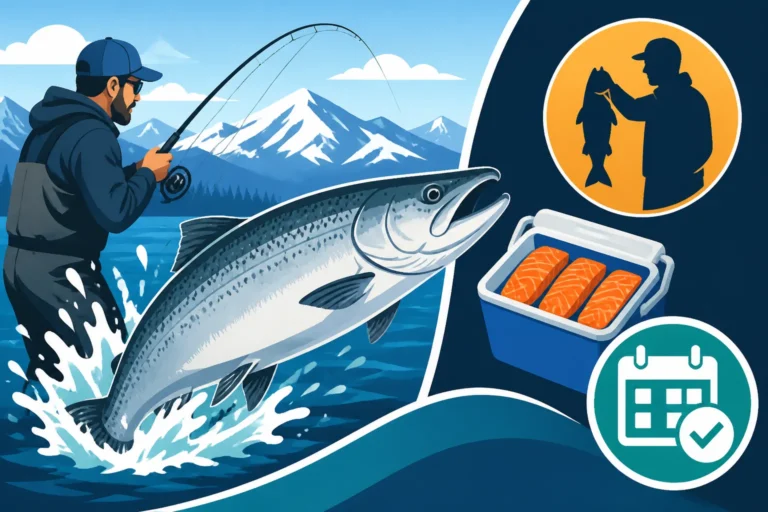
Once filleted, the most common method for preserving your catch is vacuum sealing and freezing. Vacuum sealing removes air, preventing freezer burn and keeping the fish fresh for much longer. Many local fish processors in towns like Soldotna or Cooper Landing offer these services, often including blast freezing and boxing your fish for shipment. This is a highly recommended service, especially for visitors.
If you plan to transport your fish yourself, you'll need sturdy coolers and plenty of ice or frozen gel packs. Ensure your coolers are well-insulated and can keep your fish frozen solid for the duration of your journey home. Some anglers even bring a portable vacuum sealer (which you can often find great deals on through Amazon) and process their fish themselves at their lodging. For those flying, airlines have specific rules for transporting frozen fish, often requiring it to be completely frozen and packaged in leak-proof containers. Always check with your airline in advance. Learning about Alaska Fish Transport and Shipping Home Rules will save you a lot of hassle and ensure your prized Sockeye make it to your dinner plate in top condition.
Disclaimer
The information provided in this guide is intended for general informational purposes only and is subject to change. Fishing regulations in Alaska, particularly on the Kenai River, are highly dynamic and frequently updated via Emergency Orders. Always consult the official Alaska Department of Fish and Game (ADF&G) regulations and current Emergency Orders before engaging in any fishing activities. Compliance with all federal, state, and local regulations is the sole responsibility of the angler.