Alaska Salmon Run Timing Explained
There’s nothing quite as deflating as planning a long-anticipated Alaska fishing trip, only to arrive and find the salmon runs are sparse, or worse, you’ve completely missed the peak. It’s a common frustration for both seasoned anglers and first-timers alike, feeling like you're trying to hit a moving target. This comprehensive guide is here to unravel the mysteries of Alaska salmon run timing, breaking down when and where each of the five iconic Pacific salmon species makes its legendary journey, so you can plan your adventure with confidence and maximize your chances of a successful catch.
Understanding the Alaska Salmon Lifecycle and Its Impact on Runs
To truly grasp why salmon runs in Alaska behave the way they do, we first need to appreciate the incredible journey these fish undertake. It's not just about a specific date on the calendar; it's about a complex biological drive fueled by instinct, survival, and the intricate rhythms of nature. Understanding their lifecycle gives you a massive advantage in predicting when and where they'll be.
The Journey from Ocean to Spawning Grounds
Every Pacific salmon species begins its life in freshwater rivers and streams, where eggs are laid, hatch, and the tiny alevin grow into parr and then smolt. After a period of growth in freshwater, these smolt migrate downstream to the ocean, where they spend several years maturing, feeding, and growing to impressive sizes. This oceanic phase is crucial for building the energy reserves they'll need for their monumental return. When the time is right, usually between two to five years later depending on the species, an unstoppable urge compels them to leave the rich feeding grounds of the ocean and embark on a grueling upstream migration back to the exact freshwater system where they were born. This return journey, often against powerful currents and past countless predators, is what we refer to as the "salmon run."
This homing instinct is one of nature's marvels. Scientists believe salmon use a combination of the earth's magnetic field, the sun's position, and an incredibly acute sense of smell to navigate thousands of miles back to their natal streams. It's a one-way trip, as Pacific salmon are semelparous, meaning they spawn once and then die shortly after. This final, heroic effort ensures the next generation of salmon continues the cycle, making the success of their run absolutely vital to the ecosystem. For anglers, this means you're targeting fish that are laser-focused on one thing: reproduction, and they're not feeding aggressively as they once did in the ocean.
Factors Influencing Run Timing
While the general timing of salmon runs is fairly consistent year-to-year, Mother Nature always adds her own variables. Several key factors can subtly, or sometimes dramatically, influence the precise timing and intensity of a run. Water temperature is a huge one; warmer ocean temperatures can sometimes lead to earlier returns, while a colder spring might delay them slightly. Similarly, river water levels play a critical role. High water from heavy rains or snowmelt can encourage fish to push further upstream faster, while low, clear water might make them hold in deeper pools or delay their entry into rivers.
Ocean conditions also have a significant impact long before the fish even return. The availability of food, ocean currents, and predator populations during their years at sea directly affect the health, size, and overall abundance of a given year's run. A good "ocean year" translates to fatter, healthier fish and potentially stronger returns. Conversely, poor ocean conditions can lead to smaller fish and weaker runs, which can result in stricter fishing regulations, including emergency closures. Understanding these broader environmental influences helps contextualize the annual forecasts provided by the Alaska Department of Fish and Game (ADF&G).
Why Timing is Everything for Anglers
For those of us with a rod and reel in hand, hitting the salmon run at the right time is paramount. Arrive too early, and the fish might not yet be in the river in catchable numbers. Come too late, and the run might be dwindling, or the fish could be "dark" – meaning they've been in freshwater for a while, their flesh is deteriorating, and their fighting spirit has waned as they focus solely on spawning. The sweet spot is usually the peak of the run when fresh, chrome-bright fish are pouring into the river, full of fight and still in prime condition for the dinner table.
Different species have different habits too. Some, like sockeye, move through rivers in massive, concentrated waves, making timing the pulse critical. Others, like kings, might have a more prolonged, staggered entry. Missing the peak by even a few days can mean the difference between epic, rod-bending action and a slow, frustrating day on the water. This is especially true in popular systems like the Kenai River or the Russian River, where hundreds of thousands of fish can pass through in a matter of weeks. Knowing the general windows for each species and then leveraging real-time resources to pinpoint the precise peak can transform your trip from good to unforgettable. You can find more detailed information on specific times in our guide on Best Time to Fish in Alaska.
King Salmon (Chinook) Run Timing: The Early Birds
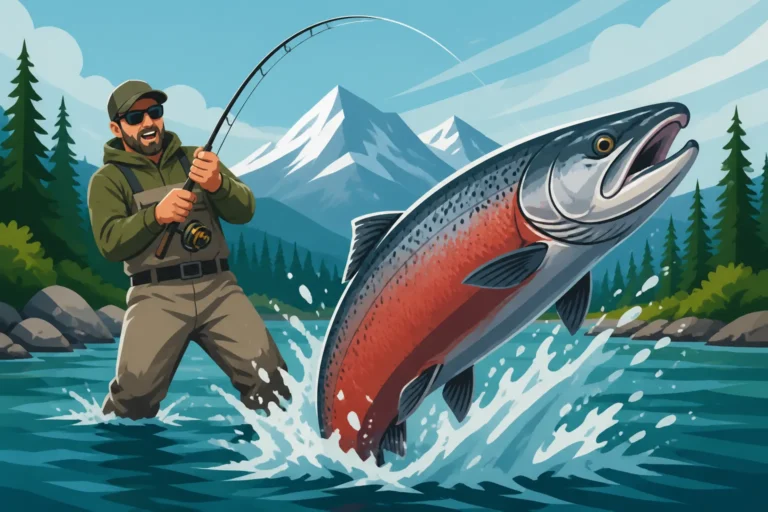
King salmon, also known as Chinook, are the largest and often the most prized of Alaska's salmon species. Their sheer size, powerful runs, and incredible fighting ability make them a bucket-list fish for many anglers. Because of their impressive stature, chasing kings often requires specialized gear and a good understanding of their specific run behaviors.
Peak Seasons and Regions for Kings
King salmon are typically the first of the five Pacific salmon species to arrive in Alaska's rivers, signaling the start of the summer fishing season. Their runs usually begin in late May and extend through mid-July, though this can vary significantly by region and specific river system. In Southcentral Alaska, rivers like the Kenai and Kasilof are world-renowned for their King salmon runs, with the Kasilof often seeing fish arriving a bit earlier in late May, followed by the Kenai in early June. Further north, the Deshka River and Susitna River also experience strong King runs during this period. Over in Southeast Alaska, areas around Juneau, Sitka, and Ketchikan see consistent King salmon fisheries starting in May and continuing into the summer, often with both ocean-bright migratory fish and those heading up local rivers.
The timing within these general windows is often broken down into early and late runs. For instance, the Kenai River has distinct early and late King salmon runs. The early run typically starts in mid-May and peaks in mid-June, while the late run often begins in early July and peaks around mid-July to early August. These specific timings are crucial for anglers to consider when booking trips, as different regulations often apply to different run segments. You can learn more about this magnificent species in our Alaska King Salmon: Complete Guide.
Early Run vs. Late Run Dynamics
The distinction between early and late runs is more than just a calendar date; it speaks to different populations of fish and often, different fishing experiences. Early run King salmon often encounter colder water and can be incredibly powerful, having just entered freshwater. They are typically pristine, chrome-bright, and highly sought after. However, early runs can also be more susceptible to environmental factors or lower escapement goals, sometimes leading to more restrictive regulations or even closures if numbers are low. Anglers targeting early kings must be particularly vigilant about emergency orders.
Late run King salmon, especially those on the Kenai River, are legendary for their size. These fish have spent a bit more time in the ocean, feeding and growing, and represent the peak of the season for many trophy hunters. The late run often occurs when water temperatures are warmer, and the rivers can be busier with anglers. While still formidable fighters, their flesh quality can begin to decline slightly compared to the earliest fish, especially as they push further upstream and near their spawning grounds. It's a balance between prime eating quality and the chance at a truly massive fish. Both runs offer incredible opportunities, but understanding their dynamics helps anglers choose the right time and prepares them for potential regulatory changes.
How to Track King Salmon Runs
Tracking King salmon runs effectively requires staying connected to official sources and local intelligence. The ADF&G website is the authoritative source for run forecasts, escapement numbers (the number of fish passing through weir counters), and crucial emergency orders. For example, during low King returns, the ADF&G might implement gear restrictions, bait prohibitions, or even full closures on certain rivers, like what has been observed on portions of the Kenai River in recent years. Checking the ADF&G website daily or subscribing to their email alerts is non-negotiable for serious King salmon anglers.
Beyond official channels, local tackle shops, fishing forums, and reputable charter guides are invaluable resources. These folks are on the water every day and often have a real-time pulse on what’s happening. Websites that aggregate fishing reports can also be helpful, though always cross-reference with official data. Planning your trip weeks or months in advance is smart, but leaving some flexibility to adjust based on real-time run data, especially for Kings, can make all the difference. For instance, if you're planning a trip to the Kenai, keeping an eye on the Kasilof River's King run, which often precedes it, can provide a good indicator of what's to come.
Sockeye Salmon (Red) Run Timing: The Abundant Swarms
Sockeye salmon, known for their brilliant red flesh and spirited fight, are arguably the most iconic and certainly the most abundant salmon species in Alaska's freshwater systems. Their runs are characterized by sheer numbers, providing an incredible opportunity for both sport and personal-use fisheries.
Key Sockeye Rivers and Their Peak Windows
Sockeye salmon runs in Alaska are truly a spectacle, often drawing hundreds of thousands, if not millions, of fish into specific river systems. The peak of the sockeye season generally falls between late June and late July, making this a prime time for many anglers. The Kenai River on the Kenai Peninsula is legendary for its massive sockeye runs, often peaking around the second or third week of July. Anglers line the banks during this time, often shoulder-to-shoulder, engaged in what's famously known as "combat fishing." Nearby, the Russian River, a tributary of the Kenai, also sees an incredible sockeye run, primarily from mid-June to mid-July, attracting a huge crowd.
Beyond the Kenai Peninsula, Bristol Bay in Southwest Alaska hosts the largest sockeye salmon fishery in the world, with millions upon millions of fish returning to rivers like the Naknek, Kvichak, and Nushagak. These runs typically peak in late June and early July. Other significant sockeye fisheries include the Copper River, known for its early and highly prized sockeye, with runs beginning in May and peaking in June, and various systems in Southeast Alaska. The precise timing for each river can vary by a week or two, so knowing your target river's historical peak is essential. For an in-depth look at this species, check out Alaska Sockeye Salmon Explained.
The Power of the Sockeye Pulse
Unlike some other salmon species that might trickle into rivers, sockeye often arrive in powerful "pulses" or waves. These pulses can see hundreds of thousands of fish enter a river system over just a few days, creating an electrifying fishing experience. One day, the river might seem quiet, and the next, it's alive with jumping, splashing sockeye. This makes timing the sockeye run particularly exciting and sometimes frustrating. Catching a pulse means consistent action and full stringers. Missing it means you might be fishing behind the main body of fish, or worse, before they've truly arrived.
These pulses are often influenced by tides in saltwater estuaries, and then by river conditions and water levels as they move upstream. During a strong pulse, the water can literally turn red with fish. This concentration of fish in the river allows for highly effective techniques like "flossing" or "flipping," where anglers use weighted lines to guide their leader and fly through the mouths of migrating salmon. The sheer numbers during these pulses are what allow for generous bag limits in many areas, providing ample opportunity for anglers to fill their freezers with some of the best-eating salmon.
Planning for the Sockeye Rush
Given the immense popularity and often crowded conditions of sockeye fisheries, especially on rivers like the Kenai and Russian, planning is paramount. Booking accommodations, guides, or securing rental equipment well in advance is highly recommended, sometimes even a year out, particularly if you're aiming for the peak of the Kenai River's famous late-run sockeye. Many outfitters, even large online retailers like Amazon, offer specialized sockeye fishing gear, from weighted leaders to specific fly patterns, and stocking up before you arrive can save you time and hassle.
Monitoring the ADF&G projections and real-time escapement counts (often updated daily via sonar or weir counts) is absolutely critical for sockeye. These numbers allow anglers to track the progress of the run and anticipate when the peak will hit their chosen fishing spot. When you see daily counts in the tens or even hundreds of thousands, you know it's prime time. Also, be aware of specific regulations such as Alaska Sockeye Salmon Limits by River as they can vary depending on where you are fishing. Consider fishing during weekdays if possible to avoid the most intense crowds, though even then, prepare for company. The experience of being part of a massive sockeye run is unique, a vibrant community of anglers sharing in Alaska's incredible bounty.
Pink Salmon (Humpy) Run Timing: The Biennial Boom
Pink salmon, often affectionately called "Humpies" due to the pronounced hump that develops on the backs of males during spawning, are the smallest and most numerous of Alaska's Pacific salmon. While sometimes overlooked by anglers focused on bigger species, they offer incredible action and are a great option for families and beginners.
Understanding Even-Year vs. Odd-Year Cycles
One of the most distinctive aspects of Pink salmon runs is their biennial dominance. In many regions of Alaska, Pink salmon runs are significantly stronger every other year. This pattern is often categorized into "odd-year" or "even-year" runs. For instance, rivers in Southcentral Alaska, like those flowing into Prince William Sound and Cook Inlet, typically experience massive Pink salmon runs in even-numbered years (e.g., 2024, 2026). In these "on" years, the sheer numbers of fish can be staggering, leading to incredible fishing opportunities.
Conversely, some regions, particularly in Southeast Alaska, experience strong runs in odd-numbered years (e.g., 2023, 2025). This cyclical pattern is thought to be related to environmental factors, spawning success, and predator/prey dynamics unique to each region. When planning a trip to target Pink salmon, knowing whether it's an "on" or "off" year for your chosen region is crucial. In "off" years, while fish will still be present, their numbers will be considerably lower, and fishing might be slower. However, even in "off" years, there are often enough Pinks to provide consistent action, especially in certain river systems.
Prime Locations and When to Find Them
Pink salmon runs generally occur mid-summer, typically from July through August, sometimes stretching into early September. They are incredibly widespread and can be found in virtually every coastal river and stream throughout Alaska. This makes them highly accessible, often providing excellent bank fishing opportunities close to towns and cities. Popular locations include streams around Anchorage, such as Ship Creek (though its Pink runs are modest compared to other areas), and numerous rivers throughout the Kenai Peninsula. Valdez and Whittier in Prince William Sound are also known for their immense even-year Pink salmon runs, drawing crowds for both sport and personal-use dipnetting.
Southeast Alaska, with its intricate network of islands and mainland rivers, is another prime destination for Pink salmon, particularly in its "on" years. Areas around Ketchikan, Juneau, and Sitka can see incredible numbers of Humpies flooding into streams and even into the saltwater near river mouths. Pinks are not particularly shy about entering smaller streams, making them a fantastic target for light tackle, fly fishing, or even just a simple spinner. This accessibility and consistent action make them a favorite for families and novice anglers looking to experience the thrill of catching salmon.
The Sheer Numbers of Pink Salmon
When a Pink salmon run is "on," the numbers are truly astonishing. It’s not uncommon to hear reports of millions of Pinks returning to a single bay or river system. This abundance translates directly into easy and continuous fishing. It's often said that you can catch Pinks on almost anything that flashes or moves when they are thick in the river. Small spinners, spoons, and flies are highly effective. Their smaller size, typically ranging from 3 to 5 pounds, makes them a perfect target for lighter rods and reels, providing a fun and energetic fight without being overwhelming.
While not as highly regarded for their table fare as Kings or Sockeye, Pink salmon are excellent when caught fresh and properly handled. They are fantastic for canning, smoking, or making salmon patties. Their sheer availability makes them an economic choice for filling the freezer. Furthermore, their abundance plays a critical ecological role, providing a massive food source for bears, eagles, and other wildlife, demonstrating the interconnectedness of Alaska's pristine environment. Even during slower fishing for other species, Pink salmon can often save the day, providing plenty of action and a memorable experience.
Chum Salmon (Dog) Run Timing: The Often Overlooked Fighter
Chum salmon, sometimes called "Dog salmon" due to their impressive canine-like teeth that develop during spawning, are a formidable and often underestimated species. While perhaps not as glamorous as Kings or Sockeye, they offer a powerful fight and are a valuable component of Alaska's diverse salmon runs.
Best Times and Places for Chum Salmon
Chum salmon typically stage their runs in mid-to-late summer, often overlapping with the tail end of sockeye runs and the beginning of coho runs. You can generally expect to find them in significant numbers from July through August, with some runs extending into early September. They are incredibly widespread, found throughout coastal Alaska, from Southeast to the Arctic. While they might not concentrate in the same combat-fishing numbers as sockeye in specific rivers, many systems see consistent, strong returns of Chum.
One of the most notable areas for Chum salmon is Western Alaska, particularly the rivers flowing into Bristol Bay and the Yukon River drainage. These regions see immense commercial and subsistence harvests of Chum. In Southcentral, rivers like the Deshka and Susitna, which also host King salmon, see good numbers of Chum. Southeast Alaska also offers excellent Chum fishing opportunities, with many smaller streams and even some larger rivers experiencing strong runs. Many anglers will encounter Chum while targeting other species, offering a pleasant surprise with their aggressive takes and strong battles.
Overlap with Other Salmon Species
The timing of Chum salmon runs often means they overlap with other popular species, which can be both a blessing and a curse. On the one hand, it means anglers targeting Sockeye or early Coho might find themselves hooking into powerful Chums, adding variety to their catch. On the other hand, because they often share river systems with Sockeye and Coho, Chums can sometimes be overlooked or targeted less intentionally. However, smart anglers recognize the value of these hard-fighting fish.
This overlap can also mean that fishing techniques for other salmon species, such as using spinners, spoons, or brighter flies, can be effective for Chum salmon. Their aggressive nature, especially when fresh from the ocean, means they will readily strike lures. When the Sockeye run starts to wane in late July, and before the main Coho push in August, the Chum run can provide a fantastic bridge, keeping the action going strong. Identifying a Chum salmon by its distinctive tiger-stripe coloration and large teeth is quite easy once you've seen a few. Our guide on Alaska Chum Salmon: Facts and Fishing Tips provides even more detailed information on this species.
Appreciating the Chum Salmon Fight
If you've never hooked into a fresh Chum salmon, you're missing out on a serious fight. These fish are renowned for their strength and tenacity. Pound for pound, many anglers will tell you a Chum offers a more robust, drag-screilling battle than a Sockeye, and sometimes even a respectable King. They hit hard, run fast, and pull with incredible power, often staying deep and using the current to their advantage. A 10-15 pound Chum can feel like a much larger fish on the end of your line, testing your gear and your angling skills.
While their table quality is debated—they have a firmer, less oily flesh than Kings or Sockeye—fresh Chum salmon are excellent when bled immediately and properly cared for. They are highly regarded for smoking, canning, and making delicious salmon jerky. For anglers who value the fight, the Chum salmon provides an exciting and accessible challenge, often without the intense crowds seen during peak King or Sockeye runs. Don't let the "Dog salmon" moniker deter you; these fish are champions of the river and offer a truly memorable angling experience.
Coho Salmon (Silver) Run Timing: The Late-Season Thrill
Coho salmon, affectionately known as "Silvers" for their brilliant, chrome appearance when fresh from the ocean, are a favorite among many Alaskan anglers. They are celebrated for their acrobatic fights, aggressive strikes, and excellent table quality, providing a fantastic late-summer and early-fall fishing opportunity.
Where and When to Target Silver Salmon
Coho salmon are the last of the major salmon species to make their significant runs into Alaska's freshwater systems, typically arriving from August through September, and sometimes even into October in certain areas. This late timing makes them a perfect target for extending the fishing season and enjoying Alaska's stunning autumn scenery. They are found throughout coastal Alaska, with particularly strong runs in Southcentral rivers like the Kenai, Kasilof, and Susitna River drainages, as well as numerous systems in Prince William Sound and Southeast Alaska.
In the Kenai River, the Coho run often picks up in August, peaking in late August and early September. Many anglers enjoy combo trips during this time, targeting both the tail end of the Sockeye run and the burgeoning Silver run. Further north, the Deshka River also offers excellent Coho fishing in August and September. Southeast Alaska, particularly around Juneau, Sitka, and Ketchikan, sees incredible ocean and river Coho fisheries, with anglers targeting them both in marine waters as they stage and in rivers as they migrate upstream. The sustained nature of their runs, often lasting for several weeks, provides ample opportunity to experience their thrilling fight. Our Alaska Coho Salmon: Facts and Fishing Tips resource has more details.
The Aggressive Nature of Cohos
What truly sets Coho salmon apart for many sport anglers is their aggressive feeding behavior and spectacular fighting style. Unlike spawning Kings and Sockeye who often need to be coaxed or "flossed," fresh Coho salmon are still actively feeding as they enter freshwater. This means they will readily strike a wide variety of lures, flies, and baits, making them incredibly fun to target with conventional spin gear or fly rods. They are notorious for their aerial acrobatics, often leaping clear out of the water multiple times during a fight, making for exhilarating battles.
Popular techniques for Coho include casting spinners (like the popular Pixie or Mepps Aglia), spoons, or drifting cured salmon eggs under a float. Fly anglers often have great success stripping large, flashy intruder patterns or leeches. Because they are so aggressive, Coho fishing can be less about precision timing and more about simply getting your offering in front of a fresh fish. Their willingness to chase and strike makes them an excellent choice for anglers of all skill levels, providing consistent action throughout their run.
Extending Your Alaska Fishing Season
The Coho salmon run offers a fantastic opportunity to extend your Alaska fishing season well beyond the summer rush. When the crowds for Sockeye and King salmon have started to thin, the Silver salmon arrive, providing a vibrant fishery into the cooler, crisp days of early autumn. This time of year in Alaska is often less crowded, the fall colors are beginning to emerge, and the fishing can be spectacular without the intense pressure of peak summer.
For those planning a late-season trip, targeting Coho allows you to enjoy a more relaxed pace while still experiencing world-class salmon fishing. Many lodges and guides offer specific Coho packages in August and September. The stable weather and cooler temperatures are often ideal for spending long days on the water. And when you factor in their outstanding taste—firm, flaky, and rich—Coho salmon are an all-around winner, providing a thrilling end to the Alaska salmon season.
Regional Variations in Salmon Run Timing
While we've discussed general run timing for each species, it's crucial to understand that Alaska is a vast state, and salmon runs can vary significantly by region. A species might peak in one area weeks before it does in another, due to geographic location, water temperatures, and the specific biology of distinct fish populations. Understanding these regional nuances is key to pinpointing your ideal fishing location and timing. You can get an even deeper dive in our Alaska Salmon Run Timing by Region guide.
Southcentral Alaska Salmon Runs (Kenai, Kasilof, Susitna)
Southcentral Alaska, particularly the Kenai Peninsula and the greater Cook Inlet region, is arguably the most accessible and heavily fished area for salmon. It's home to some of the most famous rivers, and its run timings are often what people refer to when discussing "Alaska salmon season."
- King Salmon: Early runs in the Kasilof and Kenai begin in late May, peaking mid-June. The Kenai's famous late run kicks off in early July and peaks mid-July to early August. The Susitna River drainage (Deshka, Talkeetna) also sees good King runs from late May to July.
- Sockeye Salmon: The Kenai River is world-renowned for its sockeye, with the main run typically from late June through late July, peaking around mid-July. The Russian River (a Kenai tributary) has a strong sockeye run from mid-June to mid-July. The Kasilof River also sees a significant sockeye run from late June to late July.
- Pink Salmon: Southcentral rivers, including those on the Kenai Peninsula and in Prince William Sound (like Valdez and Whittier), see massive even-year Pink salmon runs from mid-July through August.
- Chum Salmon: Present in many rivers from July through August, often overlapping with Sockeye and Coho. Rivers like the Deshka and Susitna are good spots.
- Coho Salmon: These late-season beauties arrive in force from August through September, extending the fishing season. The Kenai, Kasilof, and Susitna drainages offer excellent Coho fishing.
The road system access in Southcentral makes these fisheries incredibly popular, but also means they can be very crowded. Booking well in advance for guides or lodging is essential, especially for July trips.
Southeast Alaska Salmon Runs (Juneau, Ketchikan, Sitka)
Southeast Alaska, a sprawling region of islands and intricate coastline, offers a different salmon fishing experience, often characterized by strong saltwater fisheries in addition to productive river systems. Access is primarily by air or ferry, making it a distinct adventure.
- King Salmon: Southeast Alaska often has strong resident King salmon populations in its marine waters that can be targeted almost year-round, but migratory runs into rivers typically begin in May and continue through July. Areas around Sitka, Juneau, and Ketchikan are prime for ocean-bright Kings.
- Sockeye Salmon: Many smaller systems throughout Southeast see sockeye runs, usually from late June to late July, though not always in the concentrated numbers seen in Southcentral or Bristol Bay.
- Pink Salmon: Southeast Alaska often experiences its strongest Pink salmon runs in odd-numbered years (e.g., 2023, 2025), with massive numbers appearing from July through August. This is a primary target for many anglers in the region.
- Chum Salmon: Robust runs of Chum salmon are common in Southeast from July through August, both in marine waters and rivers.
- Coho Salmon: Coho fishing in Southeast is exceptional, starting in mid-July in saltwater and continuing strong through August and September as they move into rivers. This region is a top destination for late-season Coho.
The diverse geography of Southeast Alaska means that while some rivers are accessible, many fisheries involve boat-based angling in the ocean or fly-out trips to remote streams.
Western and Interior Alaska Salmon Runs (Bristol Bay, Yukon)
These vast, often remote regions are home to some of Alaska's most incredible and wild salmon runs, supporting massive commercial, subsistence, and sport fisheries. Access is typically by air or specialized river boats.
- King Salmon: The Nushagak River in Bristol Bay is famous for its King salmon run, peaking in late June and early July. Other rivers in Bristol Bay, and especially the mighty Yukon River, also host significant King runs, though access can be challenging.
- Sockeye Salmon: Bristol Bay is the epicenter of the world's sockeye salmon fishery, with millions of fish returning to rivers like the Kvichak, Naknek, and Alagnak from late June to early July. This is a truly unparalleled sockeye experience.
- Pink Salmon: While present, Pink salmon runs here are not as dominant as in Southcentral or Southeast, though some rivers still see good numbers, especially in even years.
- Chum Salmon: Western Alaska, including Bristol Bay and the Yukon River drainage, supports vast Chum salmon runs from July through August, providing a major resource for locals and a strong fighting fish for sport anglers.
- Coho Salmon: Coho runs in Western Alaska rivers like the Naknek and Nushagak are strong from late July through September, offering fantastic late-season action.
Fishing in Western and Interior Alaska often involves staying at remote lodges or doing multi-day float trips. These are truly wilderness experiences, offering incredible fishing away from the crowds.
Essential Tools and Resources for Tracking Salmon Runs
Successfully timing your Alaska salmon fishing trip requires more than just knowing the general windows; it demands vigilance and access to real-time information. Thankfully, there are excellent resources available to help you stay informed and make the best decisions.
Alaska Department of Fish and Game (ADF&G) Resources
The Alaska Department of Fish and Game (ADF&G) is your ultimate authority for all things salmon run related. Their website is a treasure trove of information, offering daily updates that are critical for anglers.
- Run Forecasts: Annually, the ADF&G publishes comprehensive salmon run forecasts for various regions and rivers. These forecasts, based on historical data, ocean conditions, and escapement goals, provide an estimate of how many fish are expected to return. While forecasts are just predictions and can sometimes be off, they offer a crucial baseline for planning.
- Escapement Counts: As salmon enter rivers, the ADF&G monitors their numbers using various methods like sonar, weir counters, and test fisheries. These daily escapement counts are posted online and show you precisely how many fish have passed a certain point in the river. Watching these numbers in real-time is the best way to determine when a run is building, peaking, or declining. For instance, if you're tracking the Kenai River Sockeye run, seeing daily counts of 50,000+ fish at the Soldotna sonar is a strong indicator that the run is in full swing.
- Emergency Orders (EOs): Perhaps the most critical information provided by ADF&G are the emergency orders. These are real-time regulatory changes that can occur at any moment during the season. They can modify bag limits, change legal gear (e.g., bait prohibitions, single-hook rules), or even close fisheries entirely if run numbers are too low to meet escapement goals. Checking for EOs daily, or even multiple times a day if you're on the water, is absolutely vital. Ignoring an EO can lead to significant fines and penalties. Our guide on Alaska Fishing Emergency Orders Explained is a must-read.
- Sport Fishing Regulations Booklets: The ADF&G publishes detailed regulation booklets for each region of the state. These comprehensive guides outline specific rules for each river, species, and season, including bag limits, size restrictions, and legal gear. Always have the most current booklet for your region with you, whether a physical copy or a digital version on your phone. You can also find out more about Alaska Fishing Regulations Explained in our general guide.
These resources are publicly available and constantly updated, ensuring you have the most accurate and current information to inform your fishing decisions.
Local Guides, Forums, and Real-Time Reports
While official ADF&G data is paramount, local intelligence can provide invaluable nuance and context.
- Local Fishing Guides: Reputable fishing guides in areas like Homer, Seward, or on the Kenai River are on the water almost every day. They see the fish, understand local conditions, and can offer real-time insights that complement official data. Many guides publish daily reports on their websites or social media. If you've booked a charter, your guide will be your best source of immediate information leading up to and during your trip.
- Tackle Shops and Outfitters: Local tackle shops are hubs of fishing knowledge. The staff and regular customers often have the most up-to-date information on what's biting, what gear is working, and where the fish are concentrated. They can also advise on specific lures or baits that are performing well for current conditions.
- Online Fishing Forums and Social Media Groups: Online communities dedicated to Alaska fishing can be incredibly active, with anglers sharing reports, tips, and photos in real-time. While these should always be taken with a grain of salt and cross-referenced with official sources, they can provide a good sense of the general fishing conditions and angler sentiment. Many guides also post their reports on these platforms.
- Webcams and River Gauges: For popular rivers, you might find webcams offering live views of fishing spots, which can give you a visual sense of crowds and water levels. River gauges provide real-time data on water height and temperature, which can impact fish movement and bite activity.
Combining these local insights with official data gives you the most comprehensive picture of salmon run timing and conditions. It’s like having boots on the ground, even when you’re planning from afar.
Interpreting Forecasts and Emergency Orders
Learning to effectively interpret the information from ADF&G can feel like a skill in itself, but it's crucial.
- Understanding Forecasts: Remember that forecasts are predictions. A strong forecast means there's a good chance for a robust run, but it doesn't guarantee a specific day's success. Use forecasts for long-term planning, like deciding which month to visit, but rely on real-time data for day-to-day decisions.
- Reading Escapement Data: Pay attention to the trend in escapement numbers. Is the daily count increasing, holding steady at a high level, or declining? Compare current numbers to historical averages for that date. This helps you determine if the run is early, on time, or late, and if it's strong or weak. For example, knowing How to Read Alaska Salmon Run Forecasts will greatly benefit your planning.
- Staying on Top of Emergency Orders: EOs are non-negotiable. They are issued when conservation concerns arise or when run strength allows for more liberal fishing. Make it a habit to check the ADF&G's EO page every single morning before you head out, and if possible, again in the evening. Many experienced anglers keep a small, portable radio or satellite messenger to receive updates in remote areas, or simply check their phones when they have service. If an EO is issued, you must comply immediately. This diligent approach ensures you're fishing legally and responsibly, helping to conserve Alaska's precious salmon resources for future generations. Don't be the angler who gets caught unaware – an uninformed angler is an illegal angler in the eyes of the law.
Here's a quick reference table for general salmon run timing in popular Southcentral Alaska rivers:
| Salmon Species | Peak Run Timing (General) | Key Southcentral Rivers (Examples) | Notes |
|---|---|---|---|
| King Salmon | Late May – Mid-July | Kenai, Kasilof, Deshka, Susitna | Early & Late runs on Kenai; Kasilof often starts earlier. |
| Sockeye Salmon | Late June – Late July | Kenai, Russian (Kenai Trib.), Kasilof | Massive runs, often in powerful pulses. Bristol Bay (SW AK) is world's largest. |
| Pink Salmon | July – August | Widespread (e.g., Kenai Tribs, PWS) | Dominant in even-numbered years in Southcentral (e.g., 2024). |
| Chum Salmon | July – August | Widespread (e.g., Deshka, Susitna) | Overlaps with Sockeye/Coho; powerful fighters. |
| Coho Salmon | August – September | Kenai, Kasilof, Susitna, PWS | Aggressive strikes, acrobatic fights; extends season into fall. |
Disclaimer
The information provided in this guide is for general informational purposes only and is subject to change. Alaska fishing regulations, including salmon run timings, bag limits, and legal gear, can change frequently, sometimes on very short notice, via emergency orders issued by the Alaska Department of Fish and Game (ADF&G). It is the angler's responsibility to check the most current regulations and emergency orders before and during any fishing trip. Failure to do so can result in fines and penalties. Always consult the official ADF&G website and local resources for the most up-to-date information.