Trolling in Alaska: How-To Guide
There's nothing quite like the thrill of feeling that rod bend when you're out on the vast, beautiful waters of Alaska. But let's be honest, fishing here can be intimidating, especially when you're trying to figure out the most effective way to cover water and find those elusive fish. If you've ever felt overwhelmed by the sheer size of the ocean or a massive river system, wondering where the fish might be hiding, then trolling is a technique you absolutely need in your arsenal. This guide will walk you through everything you need to know about trolling in Alaska, from the basic principles to advanced tactics, ensuring your next outing is a resounding success.
Understanding Trolling: More Than Just Dragging a Lure
Trolling in Alaska isn't just about tossing a line over the side and hoping for the best. It's a calculated, strategic method that allows you to present your bait or lure to a wide area, mimicking natural prey movements, and enticing fish that might not be actively feeding in one spot. It’s an incredibly versatile technique, applicable in both the vast saltwater expanses for salmon and halibut, and in some of the larger freshwater river systems.
The Basics of Trolling in Alaskan Waters
At its core, trolling involves moving your boat at a controlled speed while dragging one or more fishing lines with lures or baits behind it. The goal is to cover as much water as possible, crossing paths with fish that might be scattered or actively hunting. Think of it as painting a wide stroke across the canvas of the ocean or river, rather than dabbing at a single spot. This constant motion makes your offering appear alive and natural, triggering a predatory response in species like King Salmon or the mighty Halibut. It's particularly effective when fish are dispersed, or when you're exploring new areas without a specific "hot spot" in mind.
You'll quickly learn that speed and depth are your two biggest allies in trolling. Too fast, and your lure might not dive correctly or look natural; too slow, and it might lack enticing action. The same goes for depth – a lure fishing ten feet above the fish will never get a bite. Modern electronics, like fish finders and GPS, are indispensable tools for identifying prime areas and maintaining optimal presentation. It's a dance between your boat's throttle, your fishing gear, and the underwater landscape, all orchestrated to put your bait in the strike zone.
Why Trolling is So Effective in Alaska
Alaska's fishing grounds are enormous, from the sweeping coastlines of Southeast Alaska to the expansive Cook Inlet and beyond. This sheer scale is precisely why trolling shines here. Unlike casting to a specific spot, trolling allows you to systematically search vast areas where fish might be migrating, feeding, or just holding. For instance, migratory salmon, such as King and Silver Salmon, travel along specific depth contours and corridors in saltwater. Trolling lets you intercept these moving targets, presenting your lure directly in their path as they journey towards their spawning rivers.
Moreover, many Alaskan species, especially salmon and halibut, are aggressive feeders. A properly trolled lure or bait, mimicking a fleeing or injured baitfish, can trigger an instinctual strike even if the fish isn't actively feeding. It’s about being in the right place at the right time, repeatedly. This effectiveness is one reason why many Alaska Fishing Charters rely heavily on trolling, ensuring their clients have the best chance at a memorable catch. The sustained, widespread presentation simply increases the odds dramatically, especially during peak Alaska Fishing Seasons: Month-by-Month Guide.
Common Misconceptions About Trolling
One of the biggest misconceptions about trolling is that it's a lazy form of fishing, requiring little skill or effort. Nothing could be further from the truth! While the boat does the moving, the angler is constantly making adjustments, monitoring lines, and interpreting sonar readings. It's a dynamic process that demands keen observation and quick decision-making. You're not just dragging a line; you're actively hunting, using technology and intuition to outsmart your quarry.
Another common myth is that trolling is only for salmon in open water. While it's certainly excellent for that, trolling is incredibly versatile. It can be adapted for freshwater lakes targeting trout or pike, or even for bottom fish like lingcod and rockfish in saltwater using specialized gear like heavy jigs trolled slowly along the bottom. The depth and speed control mechanisms available today allow for incredible precision, dispelling the idea that it's a crude, unrefined technique.
Essential Trolling Gear for Alaskan Adventures
Getting set up for trolling in Alaska requires more than just a rod and reel. The right gear can make or break your trip, especially when battling powerful fish in challenging conditions. Investing in quality equipment means better control, fewer frustrations, and ultimately, more fish in the cooler.
Rods, Reels, and Line Choices for Trolling
When it comes to trolling, your rod and reel setup needs to be robust enough to handle the immense power of an Alaskan King Salmon or a "barn door" Halibut, while also being sensitive enough to detect subtle bites. For salmon, many anglers prefer a medium-heavy to heavy action rod, typically 8 to 10 feet long, designed for trolling. These rods have a softer tip to absorb strikes without pulling the hook, but plenty of backbone to fight a strong fish. Matched with a reliable line counter reel, like a Penn Squall or a Shimano Tekota, you'll be able to precisely replicate successful depths. Line counters are invaluable for knowing exactly how much line you have out, which is critical for depth control.
For line, a good quality monofilament line in the 20-30 lb test range is a common choice for salmon trolling due to its stretch, which acts as a shock absorber. However, many experienced anglers are switching to braided line (40-60 lb test) for its incredible strength, sensitivity, and lack of stretch, which allows for better hook sets, especially when fishing deep. If using braid, a fluorocarbon leader (25-50 lb test) is often tied on for its invisibility and abrasion resistance. For species like halibut, you'll want an even heavier setup – a stiff boat rod paired with a large conventional reel spooled with 80-100 lb braided line is standard, ready for the serious weight these fish can put on your gear. You can find many excellent options for all these components on Amazon.
Downriggers, Dipsy Divers, and Other Depth Control Devices
This is where trolling gets scientific, and it's absolutely crucial for success in Alaska. Fish often hold at very specific depths, and if your lure isn't there, you're just sightseeing.
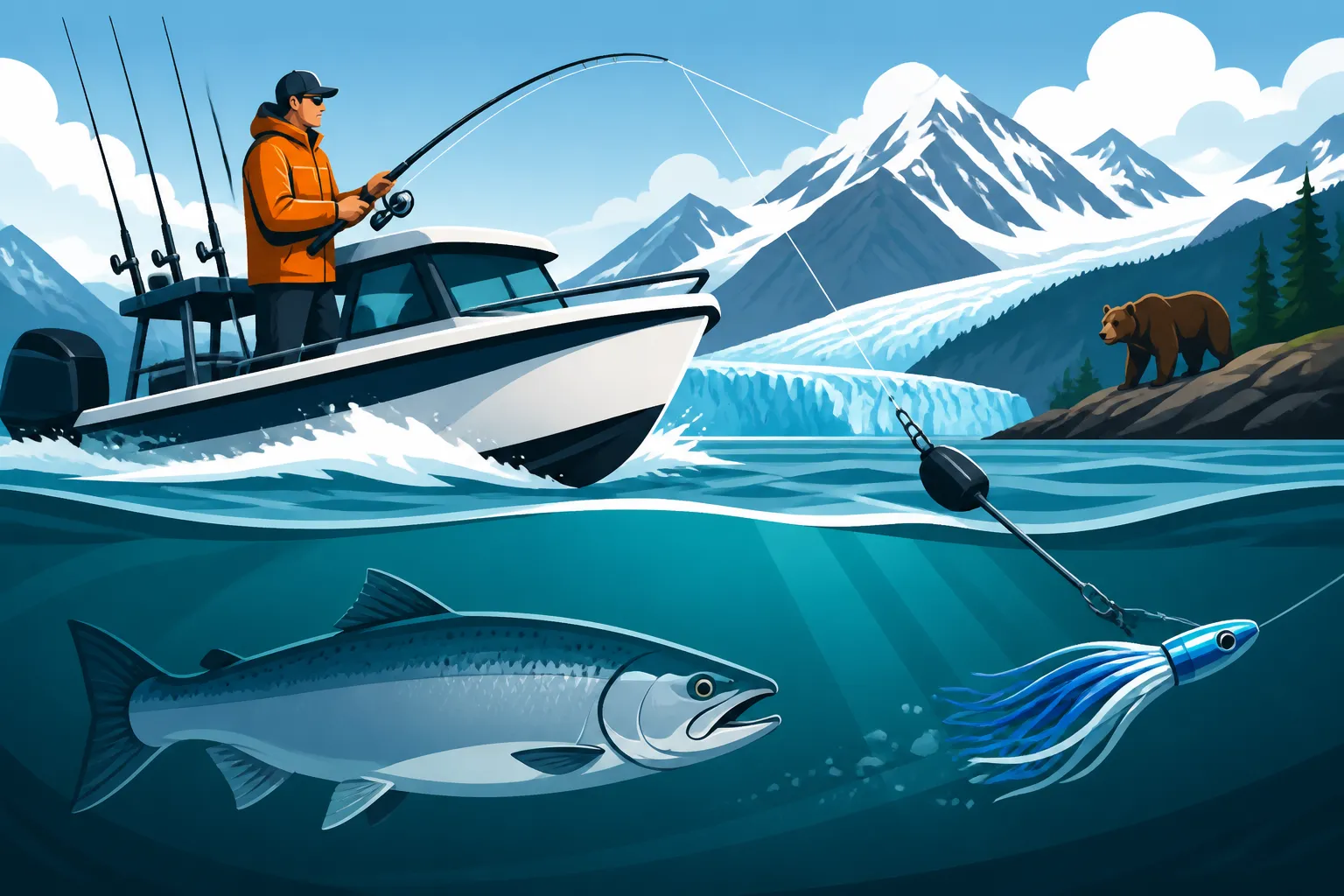
- Downriggers: These are the gold standard for precision depth control in saltwater salmon trolling. A downrigger uses a heavy ball (often 8-15 lbs) attached to a cable, lowered by an electric or manual winch. Your fishing line is clipped to this cable with a release clip, which holds your line and lure at the desired depth. When a fish strikes, the clip releases, and you fight the fish directly on your rod and reel. This allows your lure to run completely unimpeded, giving it maximum action. Brands like Scotty and Cannon are prevalent in Alaska.
- Dipsy Divers (or Jet Divers): These are disc-shaped or winged diving planers that attach directly to your main fishing line. They use water resistance to dive, taking your lure down to a specific depth without the need for a separate downrigger cable. They come in various sizes to achieve different depths and can be set to "trip" when a fish strikes, reducing resistance during the fight. These are popular for targeting salmon and even some trout species in larger lakes.
- Planer Boards: Less common for individual salmon trolling in Alaska, but seen occasionally, planer boards are designed to pull lines out to the side of the boat, covering an even wider spread. They're typically used when running multiple lines to prevent tangles.
- Lead Core Line: This specialized line has a lead core wrapped in a braided sheath, designed to sink at a predictable rate (typically 5 feet per color, with colors changing every 10 yards). By letting out a certain number of "colors," you can achieve different depths without external weights. It's often used in conjunction with a fluorocarbon leader. While effective, it's less precise than a downrigger for fine-tuning depth.
Understanding these tools and how to deploy them correctly is paramount. Matching your depth to where the fish are showing on your sonar or where baitfish are concentrated is a game-changer. For a more general overview of different fishing tools, check out our Alaska Fishing Gear and Tackle Guide.
Lures, Baits, and Attractors That Get Bites
The variety of lures and baits available for trolling is staggering, but a few stand out as consistent producers in Alaska.
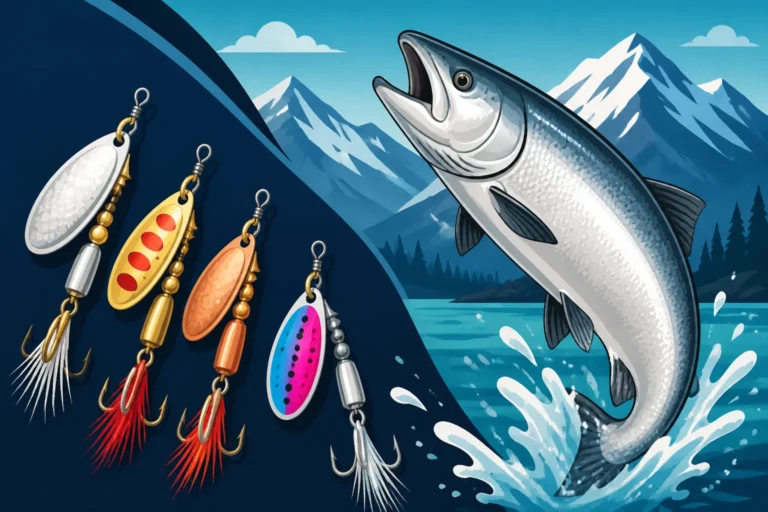
- Spoons: Classic metal spoons like the Silver Horde Coho Killer, Luhr Jensen Coyote, and P-Line Laser Minnow are incredibly effective for salmon. They mimic wounded baitfish with their wobbling, flashing action. Different colors and sizes can be critical; try bright colors on cloudy days or in murky water, and natural baitfish patterns on clear days. Many anglers stock up on these from retailers like Amazon before their trip.
- Hoochies and Plugs: Hoochies (squid skirts) are often fished behind a flasher or dodger (attractors, explained below) and are deadly for salmon, especially King and Sockeye. They come in a rainbow of colors. Plugs, like the Brads Killerfish or Kwikfish, are hard-bodied lures that dive and wobble on their own and can be very effective for King Salmon, especially when back-trolled in rivers or trolled in saltwater. For more specialized lures, see our guide on Best Lures for Alaska Salmon.
- Cut Plug Herring: This is arguably the most traditional and effective bait for King Salmon in saltwater. A whole herring is cut at an angle to create a natural, spinning action when trolled. It's often fished behind a flasher. The natural scent and appearance are hard for big Kings to resist.
- Flashers and Dodgers: These are not lures themselves but attractors. Flashers are typically long, thin blades that rotate, creating flash and vibration in the water to draw fish to your bait or lure. Dodgers are shorter, wider, and have a more erratic "kick" that imparts action to a trailing lure or bait, making it look irresistible. Brands like Pro-Troll and Les Davis are popular. They are essential for almost any salmon trolling setup in Alaska.
- Jigs (for Halibut): While not typically "trolled" in the traditional sense, heavy jigs can be slow-trolled or drifted very slowly for halibut. Large metal jigs or soft plastic swimbaits on heavy jig heads are common. Paired with bait like octopus or herring, they can be devastating.
The key is often presentation and experimentation. Start with proven combinations, but don't be afraid to try different colors, sizes, and depths until you find what the fish are hitting on that day.
Mastering Trolling Techniques for Different Alaska Species
Alaska offers a diverse range of fishing opportunities, and trolling techniques often need to be adapted for specific species and environments. What works for a King Salmon in the ocean might not be ideal for a rainbow trout in a lake.
Trolling for King Salmon Chinook
King Salmon, also known as Chinook, are the largest and often most sought-after salmon species in Alaska. They are powerful fighters, and successfully trolling for them requires a refined approach. In saltwater, Kings typically hug structure, depth contours, and baitfish schools, often holding at depths from 50 to over 200 feet, especially deeper later in the season.
The most effective method involves using downriggers to precisely place your lures or cut-plug herring at the depth where fish are observed on your sonar. You'll often troll at slower speeds, typically 1.5 to 3.0 knots, letting your flashers and lures do their work. A common setup is a large flasher (like an 11-inch Pro-Troll) followed by a 3- to 6-foot leader to a Hoochie or a cut-plug herring. The leader length can be crucial; sometimes, a shorter leader makes the Hoochie "kick" more aggressively, while a longer leader allows a cut-plug to swim more naturally. Pay close attention to your boat speed and make subtle S-turns, which cause your lures to speed up and slow down on the turns, often triggering a strike. For comprehensive information on how to target these magnificent fish, delve into our How to Catch King Salmon in Alaska guide, or our Alaska King Salmon: Complete Guide.
In some larger freshwater systems, like parts of the Kenai River, back-trolling with plugs like Kwikfish or Super Baits (often wrapped with sardine or herring) can be incredibly effective for King Salmon, especially when they are actively migrating upstream. This involves slowly moving downstream, using the current to give the plug a natural action, presenting it directly to holding fish.
Trolling for Silver Salmon Coho
Silver Salmon, or Coho, are renowned for their acrobatic fights and aggressive takes. They are typically found higher in the water column than Kings, often from the surface down to 50-80 feet, especially in saltwater. Their energetic nature means they'll often chase down a faster-moving lure.
When targeting Coho, you can still use downriggers, but often shallower settings are sufficient. Dipsy Divers are also a popular choice for their ease of use and ability to cover shallower depths. Trolling speeds for Silvers are generally faster, ranging from 2.5 to 4.0 knots, to trigger their aggressive instincts. Spoons, particularly brighter, flashier ones, are incredibly effective. Think about using a 4- to 6-inch spoon in colors like green splatterback, red/white, or chartreuse. Hoochies with a shorter leader behind a dodger or flasher are also very productive. Many anglers use lighter tackle for Silvers, making the fight even more exhilarating. These fish tend to school, so if you catch one, keep working that area! Our guide on How to Catch Silver Salmon in Alaska offers more insights into maximizing your Coho catch.
Trolling for Halibut and Bottom Fish
Trolling for Halibut and other bottom dwellers like Lingcod and Rockfish is a different beast entirely. While not "trolling" in the traditional sense of covering vast distances at speed, a slow, controlled drift or motor-assisted drift can be highly effective, mimicking trolling. Halibut are ambush predators that live on or near the seafloor, often in depths ranging from 50 to over 400 feet.
Heavy-duty gear is essential here. You’ll need stout boat rods, powerful conventional reels, and heavy braided line, typically 80-100 lb test, spooled on. The "lures" are often massive jigs (up to 24 oz or more) tipped with bait like herring, octopus, or salmon scraps. Alternatively, spreader bars with large circle hooks baited with whole herring or chunks of salmon are popular. The technique involves dropping your rig to the bottom, then slowly lifting and dropping it (jigging) while your boat drifts or motors slowly, just enough to keep the bait moving along the seafloor. It's crucial to maintain contact with the bottom, lifting your rod just enough to clear snags but allowing your bait to be in the strike zone. If you feel a "thump," drop your rod tip slightly to give the halibut a chance to inhale the bait before setting the hook. For more detailed information, see our guide on How to Catch Halibut in Alaska and our comprehensive Alaska Halibut: Complete Guide. Remember, special regulations apply to rockfish, often requiring a deepwater release device.
| Species | Typical Depth Range | Recommended Trolling Speed (Knots) | Primary Lures/Baits | Key Gear |
|---|---|---|---|---|
| King Salmon | 50-200+ feet | 1.5 – 3.0 | Cut-plug herring, Hoochies, Plugs, Spoons | Downriggers, Heavy Rod/Reel, Flashers |
| Silver Salmon | Surface – 80 feet | 2.5 – 4.0 | Spoons, Hoochies, Plugs | Downriggers/Dipsy Divers, Medium-Heavy Rod/Reel, Dodgers |
| Halibut | 50-400+ feet (on bottom) | 0.5 – 1.5 (slow drift/motor) | Large Jigs (w/bait), Spreader bars w/bait | Heavy Boat Rod/Reel, Lead Weights (1-3 lbs) |
Advanced Trolling Strategies and Tips
Once you've got the basics down, there's a whole world of advanced strategies that can elevate your trolling game and put you consistently on fish. It's about combining intuition with technology and understanding fish behavior.
Reading the Water and Interpreting Your Electronics
The most successful trollers in Alaska are masters at reading the water and, perhaps even more importantly, interpreting their electronics. Your fish finder is your window into the underwater world. Don't just look for fish arches; look for bait balls, thermoclines (layers of water with different temperatures), and changes in bottom structure. King Salmon and Halibut often relate to these features. If you see a dense school of baitfish at 80 feet, that’s where you want your lure.
GPS is also invaluable. Mark waypoints where you get strikes or observe bait. If you consistently find fish along a specific contour line, use your GPS to troll that exact path repeatedly. Pay attention to current breaks, tide lines, and color changes in the water. For instance, sometimes a distinct tide line where two currents meet can concentrate bait and, subsequently, predators. Also, watch for diving birds, which often indicate baitfish near the surface – a prime sign for hungry Coho. It's about piecing together a puzzle, and your electronics provide many of the key clues.
Speed, Depth, and S-Turns: Fine-Tuning Your Spread
Precision in speed and depth is what separates good trollers from great ones. Even a half-knot difference in boat speed can dramatically change the action of your lure. Watch your rod tips closely; they should have a consistent, enticing wiggle. If they're barely moving, you might be too slow; if they're vibrating violently, you might be too fast. Experiment until you find that sweet spot.
Varying your boat's speed and direction is also critical. Performing S-turns (gradual turns that allow your boat to weave) makes your lures on the inside of the turn slow down and drop, while those on the outside speed up and rise. This erratic action can often trigger a strike from a hesitant fish. Many veteran anglers will tell you that a surprising number of fish hit on the turn. Also, don't be afraid to change your depth throughout the day. Fish can move up and down the water column depending on light conditions, bait movement, and tidal influences. Keep an eye on your fish finder, and adjust your downriggers or Dipsy Divers accordingly.
Safety and Etiquette While Trolling in Busy Areas
Alaskan fishing grounds can get crowded, especially during peak salmon runs in popular areas like the Kenai River Mouth or Resurrection Bay. Safety and courtesy are paramount. Always be aware of other boats, especially those running downriggers or multiple lines. Keep a safe distance, and avoid cutting off other vessels. When making turns, try to do so gradually and predictably.
Understanding Alaska Fishing Regulations Explained is not just about avoiding fines; it's about respecting the resource and fellow anglers. Be mindful of your wake, especially near smaller boats or when passing near shore. When you hook a fish, communicate with other boats nearby if you need to maneuver. A quick call on the VHF radio or a hand signal can prevent tangles and frustration. Most importantly, never drop garbage overboard, and always follow proper catch limits and recording procedures. Our guide on How to Read Alaska Fishing Regulations can help you stay compliant.
Troubleshooting Common Trolling Challenges
Even the most experienced anglers encounter challenges while trolling. The dynamic nature of fishing means you'll face snags, changing conditions, and frustrating lulls. Knowing how to troubleshoot these common issues can save your day.
Dealing with Snags and Tangled Lines
Snags are an inevitable part of trolling, especially when fishing near structure or the bottom for halibut. The first rule is to try and avoid them by keeping a close eye on your depth sounder and knowing the underwater topography of the area you're fishing. If you do snag, stop the boat immediately, reverse course over the snag, and try to free your line by gently jigging. If it's a downrigger ball, try to pull it straight up. Sometimes, a strong, steady pull will break it free, but be prepared to lose some gear.
Tangled lines are another common headache, especially when running multiple lines or when a fish makes a wild run. The best prevention is proper spacing of your lines, using different depth control devices (e.g., a Dipsy Diver on one side, a downrigger on the other), and being mindful of turns. If lines do tangle, stop the boat, retrieve the tangles lines carefully, and untangle them one at a time. It’s a tedious process, but patience is key to avoiding further frustration or losing expensive gear. Many anglers find having spare leaders pre-tied, especially when using cut-plug herring, can speed up re-deployment after a tangle or snag.
Adjusting to Changing Conditions
Alaska's weather and water conditions can change rapidly, and successful trollers adapt on the fly. A sunny morning can quickly turn into a cloudy, rainy afternoon, affecting light penetration and fish behavior. In bright conditions, fish may go deeper, and more natural lure colors might be better. On cloudy days, brighter, more iridescent lures often shine. If the wind picks up, you might need to increase your boat speed slightly to maintain the same lure action, or switch to heavier downrigger balls or diving devices to stay at depth.
Tidal currents also play a huge role, especially in saltwater. Strong currents can make it difficult to maintain depth or can dramatically increase your lure speed relative to the water. Learning to "troll with the tide" (moving with the current) or "troll against the tide" (moving against the current) can impact your presentation and success. Sometimes, one direction is clearly more productive. Constantly observing the conditions and making small, incremental adjustments to speed, depth, or lure choice is the hallmark of an effective troller.
What to Do When the Fish Aren't Biting
Every angler has faced the frustration of a slow bite. When the fish aren't biting, don't give up; get creative! Start by systematically changing one variable at a time:
- Change Depth: Are you fishing too deep or too shallow? Try moving your lures up or down in 5-10 foot increments.
- Change Speed: Speed up or slow down by 0.5 to 1.0 knots.
- Change Lure/Bait: Switch colors, sizes, or even the type of lure. If you've been using spoons, try a Hoochie. If you're using bait, try a different cut or species. Consider trying some of the Best Bait for Alaska Halibut or specific salmon baits if targeting those.
- Change Location: If you've worked an area thoroughly with no success, move to a different spot. Look for new structure, bait balls, or signs of life on your sonar.
- Try S-Turns or Z-Patterns: These erratic movements can often entice a strike when a straight troll won't.
- Check Your Gear: Make sure your leaders aren't frayed, your hooks are sharp, and your bait is spinning correctly. Sometimes the simplest oversight can be the culprit.
Persistence and experimentation are key. The fish are often there; it's just a matter of figuring out what they want on that particular day.
Preparing Your Catch After a Successful Trolling Trip
Catching fish is only half the battle; how you handle your catch once it's in the boat makes a huge difference in its quality and taste. Proper care ensures that your hard-earned fish remains in prime condition for the dinner table.
Proper Fish Handling on the Boat
Once you've landed a fish, particularly a powerful one like an Alaskan King Salmon or a sizable Halibut, the clock starts ticking. The goal is to dispatch the fish quickly and humanely, and then get it on ice.
- Dispatch Quickly: For salmon, a swift, firm blow to the top of the head with a fish bat (priest) will stun it. For larger fish like halibut, some anglers prefer to use a "brain spike" to ensure immediate death. Bleeding the fish immediately after dispatching it is crucial. This involves making a cut to sever the main artery, usually near the gills. Bleeding removes lactic acid and improves the flavor and shelf life of the meat.
- Cleanliness: Keep your boat deck clean. Avoid letting the fish flop around in dirt or bilge water.
- Icing: Get the bled fish into a cooler filled with a good slurry of ice and saltwater as quickly as possible. This rapid cooling halts bacterial growth and firms up the flesh, preserving its quality. Don't just toss a few ice cubes on top; fully immerse the fish in the ice slurry if possible. This is especially important on longer trips.
- Protection: Protect your fish from direct sunlight. A wet towel over the cooler or a shaded spot on the boat can help keep things cool.
Filleting and Preservation Tips
Once you're back on shore, the next step is processing your catch. If you’re at a lodge or on a charter, they often offer professional processing services, which is a fantastic option. However, if you're doing it yourself, here are some tips:
- Clean Workspace: Set up a clean, sturdy filleting table. Have sharp knives, a sharpening steel, and plenty of clean water.
- Technique: Different fish require different filleting techniques. For salmon, typically you remove two full fillets from the backbone. For halibut, which is a flatfish, you'll remove four fillets – two from the top side and two from the bottom. There are many excellent videos and guides (like How to Fillet a Salmon in Alaska or How to Fillet a Halibut) available online to demonstrate proper technique.
- Remove Bloodline and Skin: For salmon, remove the dark red bloodline along the lateral line, as it can impart a strong, "fishy" flavor. For most fish, the skin can be removed easily after filleting.
- Vacuum Sealing: After filleting, pat the fish dry and vacuum seal it in meal-sized portions. This removes air, preventing freezer burn and greatly extending the shelf life of your fish. Quality vacuum sealers and bags are a worthwhile investment and easily found on Amazon.
- Freezing: Freeze your vacuum-sealed portions quickly. Flash freezing them on a flat tray before packing them tightly in a freezer can help preserve texture. Properly handled and frozen Alaskan fish can last for many months, allowing you to enjoy the taste of your adventure long after you've returned home.
Disclaimer
The information provided in this guide is for general informational purposes only and does not constitute professional advice. Fishing regulations in Alaska are complex and subject to change. Always consult the latest Alaska Department of Fish and Game regulations and emergency orders before heading out on the water. Fishing inherently carries risks, and safety should always be your top priority.