Alaska Dip Net Permit for Residents
Navigating the specific rules for fishing in Alaska can feel like trying to untangle a snarled fishing line, especially when it comes to the unique world of personal use fisheries. Many residents hear about the incredible opportunity to dip net for salmon, but the path to actually getting your permit and understanding the requirements often seems shrouded in mystery. This comprehensive guide is here to demystify the Alaska Dip Net Permit for residents, breaking down everything you need to know to participate legally and successfully in this quintessential Alaskan tradition.
Understanding Alaska's Personal Use Dip Net Fisheries
Alaska's personal use dip net fisheries are a truly special opportunity, primarily reserved for residents to harvest salmon for personal consumption. It's more than just fishing; it's a deep-rooted part of Alaskan culture, a way for families to fill their freezers with wild, sustainable salmon. But this unique privilege comes with its own set of rules and regulations that differ significantly from standard sport fishing.
What is Dip Netting and Why is it Unique to Alaska Residents?
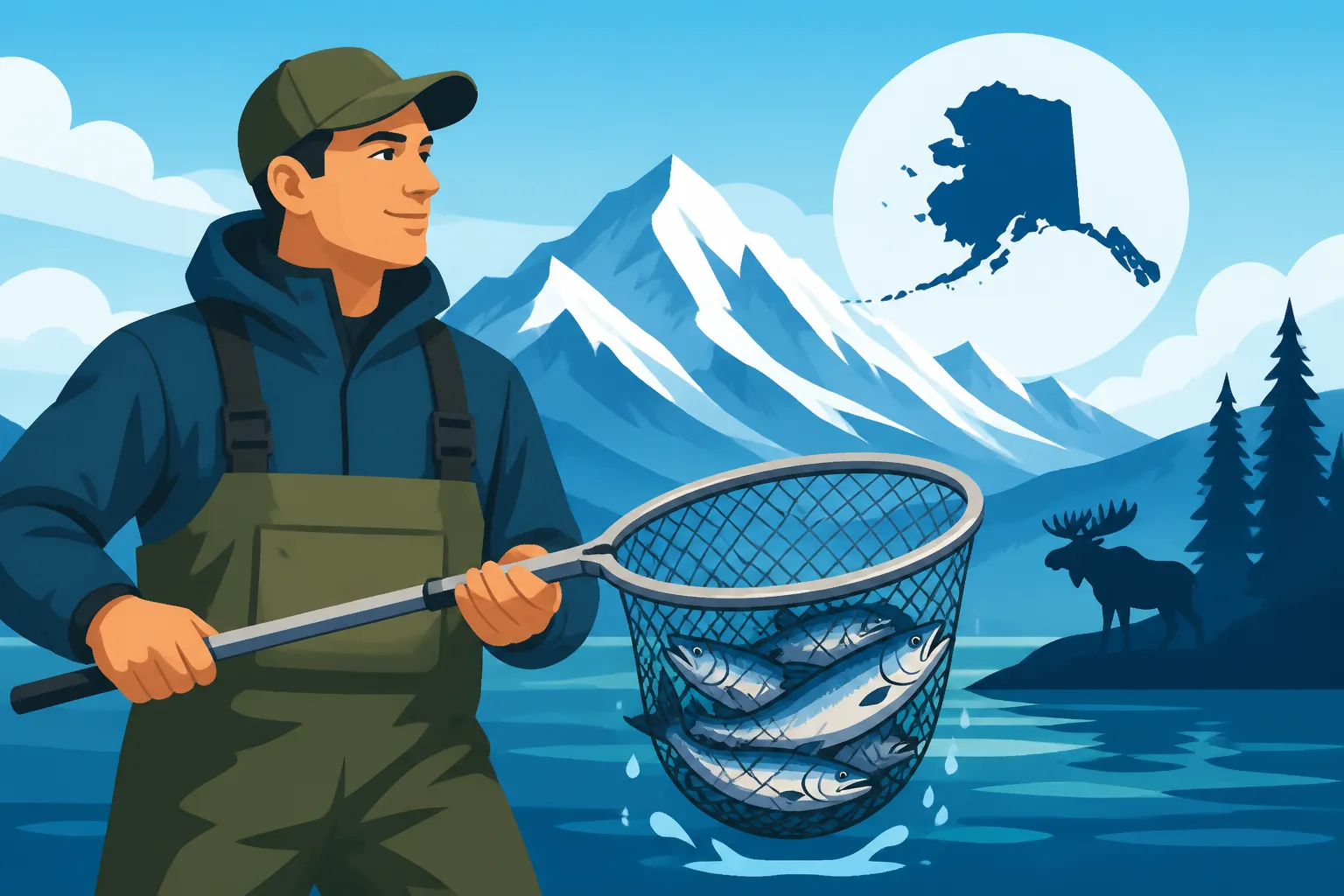
Dip netting is exactly what it sounds like: using a large, usually circular or rectangular net attached to a long pole to scoop salmon directly from the water as they migrate upstream. Unlike traditional rod and reel fishing, where you're trying to entice a bite, dip netting is about intercepting schools of fish, often in fast-moving rivers or near shorelines, as they make their way to their spawning grounds. Imagine standing in the river, feeling the current surge, and then suddenly, the powerful throb of a salmon hitting your net – it’s an exhilarating experience!
This method is largely unique to Alaska residents because it falls under the "personal use" category, which is designed to provide Alaskans with opportunities to supplement their diet with wild resources. These fisheries are managed separately from sport, commercial, and subsistence fisheries, with distinct regulations to ensure conservation while still allowing residents a generous harvest. The Alaska Department of Fish and Game (ADF&G) carefully monitors these runs, and when the numbers allow, they open these special opportunities. For many long-time Alaskans, a summer without a dip netting trip to the Kenai or Chitina feels incomplete. To dive deeper into the general concept, you can learn more about Alaska Personal Use Fishing Explained.
Key Differences Between Sport Fishing and Personal Use Dip Netting
It's easy to get confused between sport fishing and personal use dip netting, especially since both involve catching fish. However, they are fundamentally different in their purpose, regulations, and even the gear you can use. Understanding these distinctions is crucial to avoid accidental violations.
Sport fishing is typically recreational, using a rod and reel, and is open to both residents and non-residents, provided they have the appropriate licenses and stamps. The focus is often on the challenge of the catch, and while you certainly keep your fish, the methods and harvest limits are designed for individual angling. For instance, sport fishing might have stricter gear limitations, like single-hook rules or bait restrictions in certain areas.
Personal use dip netting, on the other hand, is about volume harvesting for food. It’s primarily targeting large runs of sockeye or king salmon, and the method itself – the dip net – is designed for efficiency. The harvest limits are often much higher than sport fishing limits for an individual, recognizing that families are gathering fish for their yearly supply. The regulations also reflect this difference, often including specific open times, areas, and gear requirements unique to dip nets.
Here's a quick comparison to highlight these differences:
| Feature | Sport Fishing | Personal Use Dip Netting |
|---|---|---|
| Purpose | Recreation, individual catch | Volume harvest for personal consumption |
| Eligibility | Residents & Non-Residents (with license) | Primarily Alaska Residents (with permit & license) |
| Gear | Rod & Reel, hooks, lures, bait | Large dip net (specific dimensions per fishery) |
| Harvest Limits | Typically lower individual limits | Higher household limits, sometimes annual |
| Permit/License | Sport Fishing License (and stamps) | Sport Fishing License + Personal Use Dip Net Permit |
| Reporting | Harvest Record Card (for certain species/regions) | Mandatory Harvest Record Card (all retained fish) |
| Management | ADF&G Sport Fish Division | ADF&G Personal Use/Subsistence Division |
Major Dip Net Fisheries and Their Importance
Alaska is home to several significant personal use dip net fisheries, each with its own character, challenges, and loyal following. These fisheries are vital cultural and economic resources for many Alaskan families, providing a direct link to wild salmon.
- Chitina Personal Use Salmon Fishery (Copper River): Located on the Copper River, this fishery is known for its strong runs of sockeye salmon, and occasionally Chinook (King) salmon. It’s a very rugged experience, often involving steep banks and strong currents, but the reward is often a freezer full of world-renowned Copper River salmon. The fishery is managed closely, and openings are announced based on salmon run strength. Many Alaskans make the pilgrimage to Chitina, sometimes camping for days, to participate. If you're planning a trip there, be sure to check out Alaska Chitina Dip Netting Regulations.
- Kenai River Personal Use Sockeye Salmon Fishery: This is perhaps the most famous and popular dip net fishery, located near Kenai and Soldotna on the Kenai Peninsula. It's often referred to as "combat fishing" due to the sheer number of people participating, especially during peak sockeye runs in July. Despite the crowds, the Kenai offers relatively easy access for many, with ample sockeye to be had. The energy is infectious, and it's a true community event. For specific details on this iconic fishery, see Alaska Kenai Dip Netting Rules.
- Kasilof River Personal Use Salmon Fishery: Also on the Kenai Peninsula, the Kasilof River offers a slightly less crowded alternative to the Kenai, primarily for sockeye and sometimes king salmon. The Kasilof personal use fishery is often drift-boat based, adding a different dimension to the experience compared to bank fishing.
- Fish Creek Personal Use Fishery (Susitna Valley): Located near Palmer, this fishery offers an opportunity for residents in the Mat-Su Valley to dip net for coho (silver) salmon. It's a smaller-scale fishery but provides a valuable opportunity closer to Anchorage and Palmer.
Each of these fisheries is managed with careful consideration of spawning escapement goals and has specific permit requirements, opening dates, and harvest limits. Staying informed about these is critical, which brings us to the next section: how to get your permit.
Eligibility and How to Obtain Your Alaska Resident Dip Net Permit
Before you even think about grabbing a dip net, you need to make sure you're legally eligible and understand the process for securing your permit. The state of Alaska takes its residency requirements seriously, especially for personal use fisheries, so it’s not something to gloss over.
Defining "Alaska Resident" for Fishing Purposes
This is where many new Alaskans or those who split their time can get tripped up. To qualify for a resident personal use dip net permit, you must meet the definition of an Alaska resident. According to ADF&G, an Alaska resident is generally defined as a person who has maintained a domicile in Alaska for the preceding 12 consecutive months and has not claimed residency in another state or country.
What does "maintained a domicile" mean in practical terms? It means Alaska must be your true, fixed, and permanent home. The state looks for several indicators, including:
- Having an Alaska driver's license or state ID.
- Registering to vote in Alaska.
- Filing for a Permanent Fund Dividend (PFD).
- Registering your vehicles in Alaska.
- Paying Alaska state income taxes (if applicable) or not filing income taxes in another state.
- Maintaining a primary residence here.
Simply living in Alaska for a year might not be enough if you still hold a driver's license from your previous state or claim residency elsewhere for tax purposes. It's about demonstrating an unequivocal intent to reside permanently in Alaska. Make sure your residency is clearly established before applying for any resident-specific licenses or permits, including your general Alaska Resident Fishing License: Cost and How to Buy.
Step-by-Step Guide to Applying for Your Dip Net Permit
Once you've confirmed your residency, obtaining your dip net permit is a fairly straightforward process, primarily handled online. The key is to do it before the season starts and to pay close attention to which permit you need for which fishery.
- Obtain Your Alaska Sport Fishing License: First and foremost, you need a valid Alaska Sport Fishing License for the current year. This is a prerequisite for any personal use permit. You can easily purchase this online through the ADF&G website.
- Determine Your Fishery: Decide which personal use dip net fishery you plan to participate in. The most common are the Chitina and Kenai River fisheries, and each requires a separate permit. You can't use a Chitina permit for the Kenai and vice versa.
- Apply Online: Visit the ADF&G's online licensing and permit system. You'll typically find a section for "Personal Use Fisheries Permits."
- For Chitina: The Chitina permit is a harvest ticket that needs to be filled out and returned. You print it, carry it with you, and then mail it back or submit online after your trip.
- For Kenai River (or Kasilof/Fish Creek): These permits are often a simpler declaration, often tied to your sport fishing license, where you declare your intention to participate. You'll record your catch on a separate Alaska Harvest Record Card, which we'll discuss in more detail shortly.
- Complete the Application: Follow the prompts, providing your personal information, residency details, and sport fishing license number. There is typically no additional fee for the personal use dip net permit itself, beyond the cost of your sport fishing license.
- Print Your Permit/Card: Depending on the fishery, you'll either print a physical permit to carry with you or confirm your registration and be ready to record your catch on your harvest card. Always carry your sport fishing license and any required permits or harvest cards with you while fishing.
It's important to remember that these systems open for applications well before the fishing season begins, usually in late spring. Don't wait until the last minute, especially for popular fisheries like the Kenai, as knowing you're ready to go helps immensely with planning.
Essential Documents and Information Needed
When you go to apply, or if you're ever stopped by an Alaska Wildlife Trooper (FWT) in the field, you’ll need to have certain documents readily available. Being unprepared can lead to fines or even confiscation of your catch.
Here’s a checklist of what you’ll typically need:
- Valid Alaska Sport Fishing License: Your current year’s license is non-negotiable.
- Alaska Resident Personal Use Dip Net Permit: This could be a physical print-out for fisheries like Chitina, or an electronic confirmation for others.
- Alaska Harvest Record Card: This separate card is absolutely vital for recording your catch in real-time. More on this soon!
- Photo Identification: An Alaska driver's license or state ID to prove your residency.
- Proof of Residency (if requested): While your driver's license is usually sufficient, sometimes an FWT might ask for additional proof, especially if there are any discrepancies. Having a PFD application confirmation, utility bill, or voter registration card on your phone can save you a headache.
Always keep these documents in a waterproof bag or container while you're out fishing. Losing them in the river is a sure-fire way to ruin your day.
Navigating Dip Net Regulations and Harvest Reporting
The permit itself is just the first step. The true challenge and responsibility lie in understanding and adhering to the specific regulations for each dip net fishery and meticulously reporting your harvest. These regulations are dynamic and can change on short notice via emergency orders.
Understanding Specific Fishery Regulations and Emergency Orders
Each personal use dip net fishery has its own unique set of rules, often detailed in the annual Alaska Sport Fishing Regulations booklet under the "Personal Use Fisheries" section. These rules cover everything from the legal hours of operation, the specific gear allowed (e.g., maximum net diameter, mesh size), and, most importantly, the daily and annual bag limits for your household.
Crucially, these regulations are not set in stone for the entire season. ADF&G actively manages these fisheries in-season based on the actual strength of salmon runs. If a run is weaker than expected, they might close a fishery early or reduce bag limits. If it's exceptionally strong, they might extend fishing hours or increase limits. These changes are announced via Emergency Orders (EOs).
How to Stay Informed About Emergency Orders:
- ADF&G Website: The official ADF&G website is the primary source. They have dedicated pages for each major personal use fishery where EOs are posted immediately.
- ADF&G News Releases: Sign up for email notifications for news releases in the regions you plan to fish.
- Hotlines: Many regions have recorded hotline numbers that provide up-to-date information on openings, closures, and regulation changes.
- Local Media: Radio stations and local newspapers in fishing communities often broadcast or publish EO updates.
- Social Media: ADF&G maintains social media accounts that frequently share updates.
It is your responsibility as an angler to check for EOs before you head out and even while you’re fishing, as conditions can change rapidly. Showing up unaware of a closure or reduced limit is not an excuse. Checking How to Check Alaska Emergency Orders Before Fishing is an absolute must before every trip.
Filling Out Your Harvest Record Card Accurately
The Alaska Harvest Record Card is arguably the most critical document for personal use dip netters. Unlike sport fishing where you might only need to record certain species like king salmon, for personal use dip netting, every single fish you retain must be immediately recorded. This isn't just a suggestion; it's a legal requirement.
Why is it so important? The data collected from these harvest cards is vital for ADF&G to manage fish populations, ensure sustainable harvest levels, and inform future regulations. Without accurate reporting, the state has a harder time making informed decisions, which could ultimately jeopardize future fishing opportunities.
Step-by-Step Recording:
- Retrieve Fish: Once you've successfully dipped a salmon from the water and decided to retain it (meaning it's part of your bag limit), immediately record it.
- Locate Section: Find the correct section on your harvest card for the species and fishery.
- Mark: Using a pencil or permanent marker, black out the corresponding circle for each fish. Some cards might require you to write the date and species.
- Do Not Overlap: Ensure you are marking the correct number of fish without exceeding your household limit.
Common Mistakes to Avoid:
- Delaying Recording: Don't wait until you're done fishing for the day, or even until you've put the fish in the cooler. Immediate recording is the rule.
- Forgetting the Card: Always have your card with you and accessible.
- Incorrectly Marking: Make sure you're marking the right species and number.
- Not Submitting: At the end of the season (typically by October 15th), you must submit your harvest card, even if you didn't catch any fish. This is mandatory for all personal use permits. You can submit it online or by mail.
Ignoring these rules or misrepresenting your harvest can lead to significant fines, loss of fishing privileges, and potentially your gear. Being thorough and honest protects the resource for everyone. For a complete guide, refer to How to Fill Out an Alaska Harvest Record Card and Alaska Harvest Record Card Explained.
Transporting and Processing Your Dip Net Catch
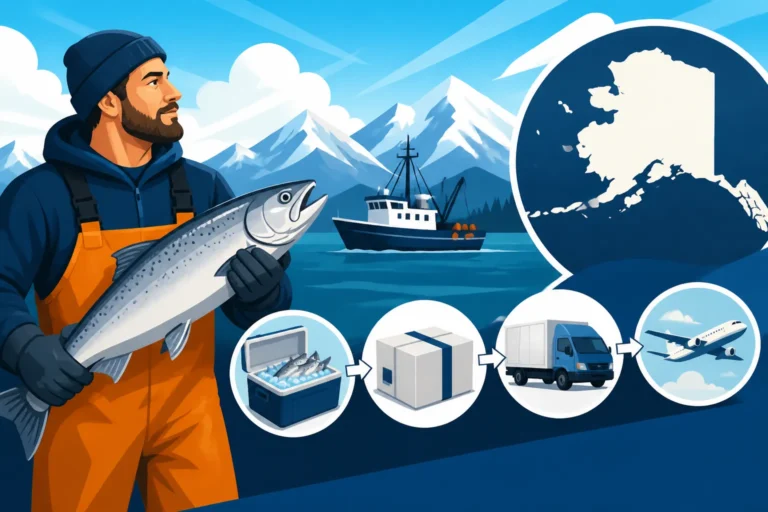
After a successful day of dip netting, you'll likely have a cooler (or several!) full of fresh salmon. But the journey from the riverbank to your freezer isn't without its own set of rules. Alaska has regulations concerning how you transport your fish and, if you plan to ship it, additional requirements.
Transporting Your Catch:
- Proof of Harvest: All fish you transport must be identifiable as having been legally taken. This typically means keeping your fish whole or in large fillets where the species is clearly discernible.
- Permit and License: Always carry your valid fishing license and personal use permit when transporting fish, especially if you're traveling a significant distance from the fishery.
- Species Identification: Ensure that if you've harvested multiple species, they are identifiable. For example, if you dip netted both sockeye and a king salmon, make sure you can differentiate them if asked by an FWT.
- Cooling: Keep your catch on ice to preserve freshness. This is not a regulation, but a critical best practice to ensure your hard-earned salmon tastes amazing.
Processing Your Catch:
Many dip netters process their fish themselves, cleaning, filleting, and vacuum-sealing their catch at home. This can be a significant undertaking, especially after a successful Kenai sockeye run where you might have 30 or more fish.
Alternatively, many local processors offer services to clean, fillet, vacuum-seal, and freeze your catch. Businesses like 10th & M Seafoods in Anchorage or various processors in Soldotna and Kenai cater specifically to sport and personal use anglers. While this convenience comes with a cost, it can save you hours of work and ensures professional packaging for long-term freezer storage. They also understand the rules for shipping fish out of state, which can be complex. You can read up on the general rules regarding Alaska Fish Transport and Shipping Rules.
Practical Tips for a Successful and Legal Dip Netting Experience
Dip netting is a blast, but it's also hard work and requires preparation. Going in with the right gear, a safety-first mindset, and an understanding of common pitfalls will make your experience much more enjoyable and keep you on the right side of the law.
Essential Gear for Dip Netting
Having the right gear isn't just about comfort; it's about efficiency and safety in often challenging conditions.
- Dip Net: This is obvious, but the type of net matters. Nets typically have a circular or rectangular frame (often aluminum or steel) ranging from 2-5 feet in diameter, attached to a strong handle up to 15 feet long. The mesh size is also regulated, so make sure yours complies with the specific fishery rules. You can find robust nets designed for these conditions on platforms like Amazon, or at local tackle shops in Alaska.
- Waders and Boots: You will be in the water, often up to your waist or chest, so good quality, durable chest waders are essential. Neoprene or breathable waders are common. Wading boots with good grip (felt soles are often banned in specific rivers, so check regulations) are crucial for navigating slippery riverbeds and strong currents.
- Gloves: Waterproof gloves or sturdy work gloves are a must. Handling cold, wet, slimy fish for hours will chap your hands, and protecting them from nicks and cuts from fish gills is important.
- Coolers and Ice: Bring plenty of large coolers filled with ice. You'll want to get your fish on ice as quickly as possible to maintain quality.
- Knives and Sharpeners: A good, sharp fillet knife is essential for processing your catch, whether on the bank (where permitted) or back at camp.
- Safety Gear:
- PFD (Personal Flotation Device): Especially important in swift currents or if you're not a strong swimmer.
- Bear Spray: You're in Alaska. Where there's salmon, there are bears. Carry bear spray and know how to use it.
- First-Aid Kit: Basic supplies for cuts, scrapes, and minor injuries.
- Headlamp/Flashlight: For early morning or late evening fishing, especially with Alaska's long summer days that can still turn dim.
- Rain Gear: Alaska weather is notoriously unpredictable. Even on a sunny day, a squall can roll in. High-quality waterproof rain jackets and pants are vital to stay comfortable and prevent hypothermia.
Safety Considerations and Etiquette in Crowded Fisheries
Dip netting can be a chaotic scene, especially at peak times on the Kenai River. Personal safety and respectful conduct are paramount.
- Bear Awareness: Always be bear aware. Make noise, carry bear spray, keep food secured, and properly dispose of fish carcasses (if permitted, usually in the river current, away from people and camps). Know what to do if you encounter a bear.
- River Conditions: Alaskan rivers are powerful. Strong currents, slippery rocks, and sudden drops can be dangerous. Always wade with caution, use a wading staff if unsure, and never venture beyond your comfort or skill level.
- Crowd Management: In popular spots, be patient and respectful of your fellow anglers. Don't crowd others, cast your net over their lines, or hog prime spots. Communicate clearly, especially when a fish hits your net or someone else's. Expect to share the river. The term "combat fishing" for the Russian River or Kenai Sockeye runs exists for a reason, but a little courtesy goes a long way.
- Know Your Limits: Don't overexert yourself. Dip netting, especially lifting a net full of struggling salmon against a strong current, is physically demanding. Take breaks, stay hydrated, and know when to call it a day.
- Designated Areas: Stick to clearly marked fishing areas. Wandering into private property or closed sections can lead to trouble.
Common Pitfalls and How to Avoid Violations
Even with good intentions, it's easy to make mistakes that could lead to a citation. Being proactive and diligent is your best defense.
- Not Checking Emergency Orders: This is the number one reason people get citations. Rules change, and ignorance is no defense. Always double-check ADF&G for the latest updates.
- Exceeding Bag/Possession Limits: Know your household's daily and annual limits. Remember, limits usually apply to a household (head of household plus dependents), not per individual licensed angler. You can find detailed explanations of these limits in Alaska Fishing Limits and Bag Limits Explained.
- Improper Recording: As stressed before, record immediately. Wildlife Troopers check, and if you have unrecorded fish, you’re in violation.
- Illegal Gear: Ensure your dip net meets the specific size and mesh requirements for the fishery you’re in. Some areas have specific restrictions.
- Fishing in Closed Waters/Times: Adhere strictly to open hours and designated areas. Fishing outside these times or zones is illegal.
- No License/Permit: Fishing without the required sport fishing license and personal use permit is a clear violation.
- Failure to Submit Harvest Card: Even if you didn’t catch anything, you must submit your card at the end of the season. This helps ADF&G track participation and effort.
By being informed, prepared, and respectful of both the regulations and your fellow Alaskans, your dip netting experience can be incredibly rewarding. It's an opportunity to connect with Alaska's wild resources in a truly hands-on way, and filling your freezer with fresh salmon is a satisfaction unlike any other. Happy dipping!
Disclaimer
The information provided in this guide is for general informational purposes only and is subject to change. Alaska fishing regulations, including those for personal use dip netting, can change rapidly due to emergency orders from the Alaska Department of Fish and Game (ADF&G). It is the individual angler's responsibility to consult the most current Alaska Sport Fishing Regulations booklet and check for emergency orders before participating in any fishery. Failure to do so may result in fines or other penalties.