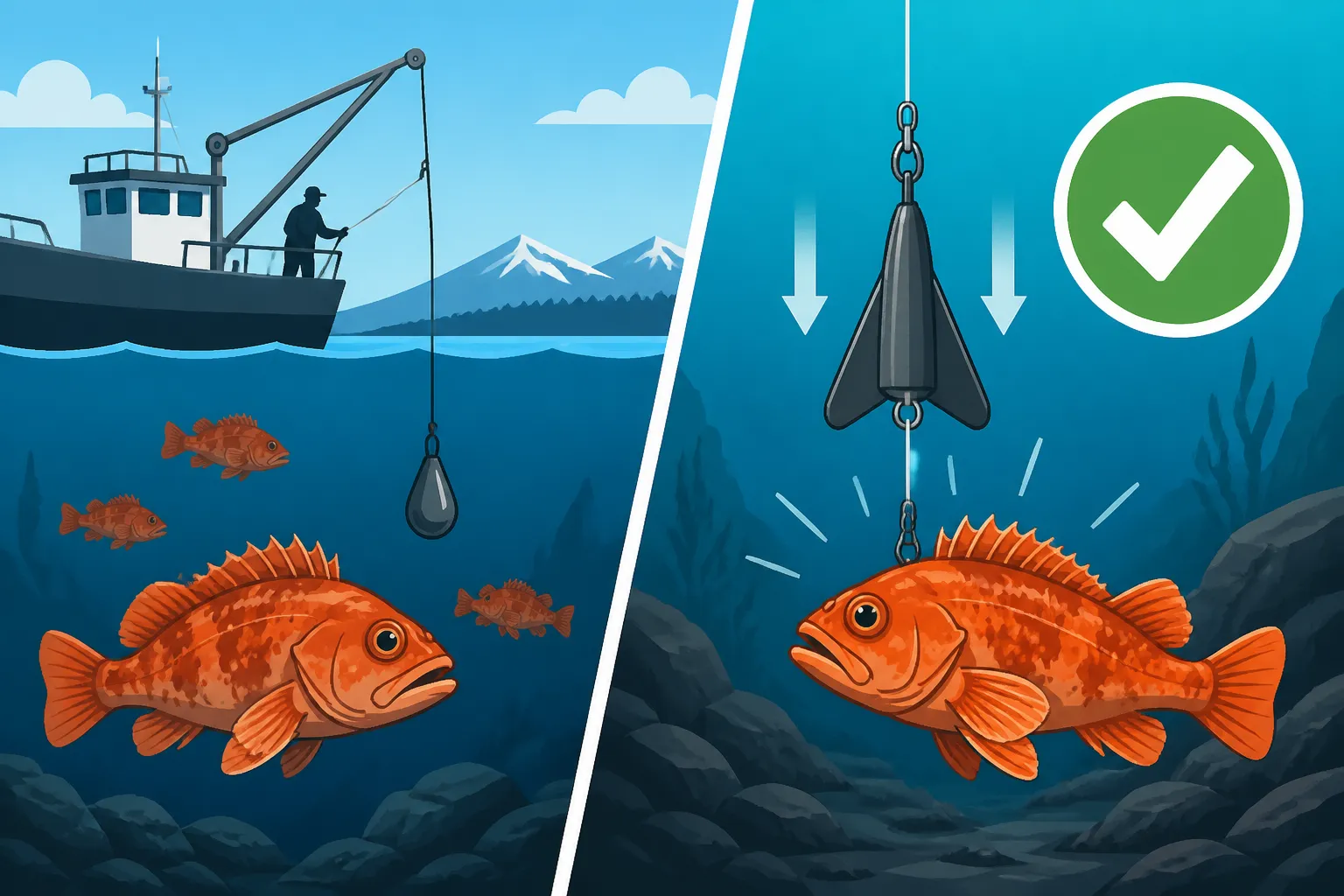
Why Rockfish Need a Descending Device
There's nothing quite like the thrill of reeling in a feisty rockfish from the deep waters of Alaska. But for many anglers, that excitement can quickly turn to heartbreak when they see their released fish float lifelessly on the surface. This sad reality stems from a condition called barotrauma, a serious physiological injury caused by rapid changes in pressure. Understanding why rockfish are so susceptible to this and how vital descending devices are to their survival is crucial for any responsible angler in the Last Frontier, and this guide will walk you through everything you need to know to make a difference.
What is Barotrauma and Why Does it Affect Rockfish So Severely?
You've probably heard the term "barotrauma" tossed around on fishing boats, but do you really know what it means for the fish? It's more than just a little discomfort; for deepwater species like rockfish, it's often a death sentence if not properly addressed. The key lies in their unique physiology and the extreme pressure differences they experience when brought quickly to the surface.
The Physiology of Deepwater Fish and Pressure Changes
Imagine taking a deep-sea diver from hundreds of feet down and rocketing them to the surface without decompression. Their body wouldn't handle it well, right? The same principle applies to rockfish, but with a critical difference: their swim bladder. Many fish, including rockfish, possess a gas-filled organ called a swim bladder that helps them maintain neutral buoyancy at a specific depth. When a rockfish is hooked and rapidly pulled from, say, 150 feet of water to the surface, the ambient pressure decreases dramatically. This causes the gas in their swim bladder to expand, sometimes several times its original volume.
This rapid expansion isn't just uncomfortable; it can lead to severe internal damage. The swim bladder can inflate so much that it pushes other organs out of place, ruptures blood vessels, or even forces the stomach out through the mouth (ever seen a fish with its stomach everted? That's barotrauma). Their eyes might bulge, and their vent might become distended. Unlike some other species, like halibut or salmon, which have an open connection between their swim bladder and gut (a physostomous swim bladder) allowing them to vent gas more easily, rockfish have a closed swim bladder system (physoclistous). This means they can't rapidly release excess gas themselves, making them incredibly vulnerable to barotrauma when ascending quickly. Their bodies simply aren't designed for such swift vertical travel.
Visible Signs of Barotrauma
When you reel up a rockfish from deep water, the signs of barotrauma are often immediately apparent and, frankly, quite disturbing to witness. It's not just a fish that looks a little shocked; these are clear indicators of severe internal distress and injury.
The most common and dramatic sign is a greatly bloated abdomen. This is the expanded swim bladder pushing against the fish's body cavity. You might also notice their eyes bulging dramatically, sometimes even appearing to pop out. This is due to the internal pressure pushing fluid into the eye sockets. Another frequent symptom is an everted stomach, where the fish's stomach is forced out of its mouth, resembling a pink balloon. Finally, their vent (anus) may be distended or protruding. While these signs are visible externally, remember that they represent significant, often irreversible internal damage to organs like the liver, kidneys, and intestines. A fish displaying these symptoms, if simply tossed back, has a very low chance of survival because it cannot swim back down and regulate its buoyancy, leaving it an easy target for predators or to succumb to its injuries. This is precisely why regulations in Alaska, often detailed in the Alaska Rockfish Retention and Release Rules, strongly emphasize or mandate the use of descending devices when releasing rockfish caught from certain depths.
The Science Behind Descending Devices: How They Work
Seeing a fish suffer from barotrauma is tough, and for a long time, anglers didn't have many good options to help. Thankfully, descending devices have emerged as a game-changer, offering a scientifically-backed method to significantly improve the survival rates of released rockfish. It’s all about getting them back to their comfortable depth quickly and safely.
Recompressing the Swim Bladder
The core principle behind a descending device is straightforward: reverse the rapid ascent that caused the barotrauma in the first place. Instead of hoping a floating fish will somehow recover and swim down, these devices provide an immediate, controlled descent back to the depth from which the fish was caught. When the fish is returned to pressure, the expanded gases in its swim bladder begin to recompress. This takes the immense pressure off its internal organs, allowing them to shift back into their natural positions, and alleviating the other symptoms of barotrauma like bulging eyes and everted stomachs.
The quicker this re-pressurization happens, the better the chances of survival. Studies by organizations like the Alaska Department of Fish and Game (ADF&G) and NOAA Fisheries have consistently shown that returning rockfish to depth using these devices dramatically increases their post-release survival. The physiological benefits are undeniable: reducing tissue damage, restoring buoyancy control, and helping the fish resume normal behavior. It's a much more humane and effective approach than older, less reliable methods like "fizzing" or venting, which involve puncturing the swim bladder. Fizzing can cause infections, damage vital organs if done incorrectly, and often isn't effective for the severe internal gas expansion rockfish experience. Descending devices, on the other hand, tackle the root cause of the problem by restoring proper pressure.
Improving Survival Rates
The evidence is overwhelming: descending devices work. While an exact percentage can vary based on species, depth, water temperature, and how quickly the device is deployed, scientific research indicates that the use of these tools can increase the survival rates of rockfish from less than 10-20% (for untreated, severely traumatized fish) to upwards of 80-90%. That’s a massive difference for the health of our fisheries.
Think about it from a population management standpoint. If thousands of rockfish are caught and released each season, and only a tiny fraction survive, that's a huge waste of a valuable resource and a significant impact on local ecosystems. By employing descending devices, anglers are actively contributing to the sustainability of rockfish populations, particularly long-lived species like Yelloweye Rockfish, which can live for over 100 years. This not only aligns with responsible angling ethics but also supports the robust future of Alaska Rockfish: Facts and Fishing Tips. When you're out on the water, whether you're targeting Alaska Halibut Fishing Regulations and Limits or Alaska Lingcod Fishing Regulations and Limits, if you inadvertently catch a rockfish, having a descending device ready means you're prepared to give that fish the best possible chance at survival. It's an essential piece of gear for anyone who cares about conservation.
Types of Descending Devices and How to Use Them Effectively
Okay, so we know why descending devices are so crucial, but what kind are out there, and how do you actually use them? It’s not complicated, but understanding the different types and proper deployment makes all the difference in a fish’s survival. You’ll find several options available, and thankfully, most are relatively inexpensive and readily available at tackle shops or online retailers like Amazon.
Clip-On Devices
These are perhaps the most popular and easiest-to-use descending devices on the market. They typically consist of a heavy weight (often 1-3 pounds, sometimes more depending on the target depth and fish size) attached to a clip or clamp. Brands like SeaQualizer and Fish-Saver are well-known examples.
How They Work:
You simply clip the device onto the lower jaw or lip of the rockfish you intend to release. The weight then pulls the fish down quickly, often to a pre-set release depth. Once it reaches that depth (which you can typically adjust on higher-end models to 50, 100, or 150 feet), the clip automatically releases, and the fish swims away. You then reel the device back up to deploy again if needed.
Using Them Effectively:
- Speed is Key: As soon as you decide to release a rockfish, get that device on and send it down. Minimize air exposure.
- Secure Clip: Ensure the clip is firmly attached to the fish’s jaw. You don't want it coming off halfway down, leaving the fish to float back up.
- Appropriate Weight: Match the weight to the fish size and current. A heavier weight will get the fish down faster, which is usually better.
- Depth Setting: If your device has adjustable depth settings, try to match it to the depth you caught the fish from. If you're unsure, setting it to a deeper option (e.g., 100 feet) is often a safe bet.
- Line Compatibility: Ensure the device's line (which you'll need to provide if it's not integrated) is strong enough and compatible with your reel.
Inverted Hook/Cradle Devices
These devices offer another effective way to return rockfish to depth, often favored by those who prefer not to "clip" the fish directly, or for larger specimens.
How They Work:
An inverted hook device is essentially a large, heavy-duty de-barbed hook that you can gently insert into the fish's mouth and out the other side of its jaw, like a piercing. The weight of the device pulls the fish down. Once at depth, a sharp tug on the line will typically dislodge the hook, allowing the fish to swim free. Some cradle-style devices involve placing the fish into a basket or cradle, lowering it, and then triggering a release mechanism at depth.
Using Them Effectively:
- Gentle Insertion: If using an inverted hook, be careful to avoid damaging gill plates or eyes. The goal is a quick, clean insertion and removal.
- Depth Monitoring: With some inverted hook setups, you're responsible for judging the depth. A line counter on your reel or marking your line can be helpful.
- Positive Release: Ensure the release mechanism (whether a tug or a trigger) works reliably so the fish isn't dragged back up.
No matter which type you choose, carrying one in your tackle box is a fundamental part of Alaska Catch-and-Release Best Practices. You can often find a good selection of descending devices on Amazon, allowing you to compare models and read reviews before your next trip.
Here's a quick comparison of common descending device types:
| Device Type | Mechanism | Pros | Cons | Ideal Use |
|---|---|---|---|---|
| Clip-On | Clip to jaw/lip, weighted descent, auto-release | Easy to use, fast, pre-set release depths | May require manual retrieval if no reel line | General rockfish release from varying depths |
| Inverted Hook | Barbless hook through jaw, weighted descent, manual tug release | Simple, effective, less equipment | Requires precise insertion, manual release | Anglers familiar with fish handling |
| Cradle/Cage | Fish placed in cradle, weighted descent, manual/auto-release | Minimal fish handling, secure during descent | Bulkier, can be slower to deploy | Larger rockfish, multiple fish if designed |
Regulations and Best Practices for Rockfish Conservation
While personal ethics drive many anglers to use descending devices, Alaska has taken significant steps to make them a mandatory tool in certain situations. Understanding these Alaska Fishing Regulations Explained is crucial, not just to stay legal but to contribute meaningfully to conservation efforts.
Alaska's Deepwater Release Requirements
Alaska's fishing regulations, particularly those concerning bottomfish like rockfish, are designed to protect these vulnerable species from the high mortality rates associated with barotrauma. For example, in many areas of Southeast Alaska and Prince William Sound, particularly when fishing for specific species like the long-lived Yelloweye Rockfish (often affectionately called "Red Snapper" by anglers), the regulations are quite explicit. The Alaska Rockfish Deepwater Release Device Rules often state that any non-pelagic rockfish (which includes Yelloweye and many other bottom-dwelling rockfish) caught from depths of 60 feet or deeper and intended for release must be immediately returned to the depth of capture using a descending device. This isn't just a suggestion; it's the law.
These rules are implemented through specific Emergency Orders as well as in the annual Alaska Fishing Limits and Bag Limits Explained and Alaska Fishing Regulations by Region booklets published by the Alaska Department of Fish and Game (ADF&G). It's always best to check the most current regulations for the specific area you'll be fishing, as these can change rapidly depending on stock assessments and conservation needs. Not complying with these regulations can result in hefty fines and penalties, but more importantly, it means you're contributing to unnecessary fish mortality. The intent is to give every released rockfish the best chance to survive, helping to sustain healthy populations for future generations of anglers.
Beyond the Law: Ethical Angling
While complying with regulations is a must, ethical angling goes beyond just following the rules. Even if you're fishing in an area or depth where a descending device isn't strictly mandated, choosing to use one for any rockfish caught from more than shallow water (say, 30-40 feet or deeper) is simply the right thing to do. It reflects a commitment to conservation and respect for the resource.
Here are some best practices for maximizing survival rates:
- Be Prepared: Always have a descending device rigged and ready before you even drop your line. Seconds count when a fish is suffering from barotrauma. Keep it easily accessible, perhaps next to your Alaska Fishing Gear and Tackle Guide.
- Minimize Air Exposure: As soon as a rockfish surfaces, identify it. If it's a non-target species or you've met your Alaska Rockfish Retention and Release Rules limit and plan to release it, get that descending device on and send it down immediately. Avoid unnecessary handling, photographs, or keeping it out of water for too long.
- Handle Gently: Even when attaching the device, be as gentle as possible. Avoid squeezing the fish's body, especially its abdomen, which is already under immense pressure.
- Target the Right Depth: If your device allows it, try to release the fish at or near the depth it was caught. This minimizes the remaining pressure adjustment it has to make on its own.
- Educate Others: If you're fishing with friends or family who are new to Alaska fishing, take the time to explain why these devices are important and how to use them. Spreading awareness is key to wider adoption.
- Consider Tackle: When fishing in areas known for rockfish, using circle hooks can reduce gut-hooking, which further improves survival rates, even with a descending device.
By embracing these practices, we can all play a part in conserving Alaska's incredible rockfish populations, ensuring that these vibrant, long-lived denizens of the deep continue to thrive. After all, the joy of fishing comes not just from the catch, but from knowing we're protecting it for tomorrow.
Disclaimer
The information provided in this guide is for general informational purposes only and is not a substitute for official regulations. Alaska fishing regulations, including those concerning descending devices and rockfish retention, can change frequently. Always consult the current Alaska Department of Fish and Game (ADF&G) regulations for the specific region and time you plan to fish. Failure to comply with official regulations may result in penalties.