How Old Are Alaska Rockfish
Figuring out the age of a fish, especially one you've just reeled in from the depths of Alaska, isn't usually the first thing on an angler's mind. But when you're talking about rockfish, these incredible creatures often live to be surprisingly old, sometimes even older than you or I! This guide is here to shed some light on the fascinating longevity of Alaska's rockfish, how we know just how ancient some of them are, and why understanding their age is so important for keeping these fisheries healthy for future generations.
The Astonishing Lifespan of Alaska Rockfish
When you think of fish, you might picture species that live a few years, maybe a decade or two at most. But Alaska's rockfish? They throw that expectation right out the window. Many species of rockfish found in Alaskan waters are some of the longest-lived vertebrates on the planet, with some individuals reaching truly astounding ages. It's not uncommon to hear tales of rockfish that have been swimming the cold Alaskan currents for 50, 60, or even over 100 years. This incredible longevity makes them a unique and vulnerable part of the marine ecosystem.
Why Rockfish Live So Long
There are several biological and environmental factors that contribute to the exceptionally long lifespans of many rockfish species. First and foremost, their habitat plays a huge role. Most rockfish in Alaska live in deep, cold waters, often clinging to rocky structures and ledges. These deepwater environments are characterized by stable, low temperatures and often lower metabolic rates for the creatures that inhabit them. Imagine living in a slow-motion world where everything moves just a little bit slower – that's somewhat analogous to what these deepwater fish experience. A slower metabolism generally translates to slower growth, delayed maturity, and ultimately, a much longer life.
Another key factor is their reproductive strategy. Rockfish are viviparous, meaning they give birth to live young, rather than laying eggs. While this might not directly extend an individual's lifespan, it's a strategy often seen in long-lived species where energy is invested heavily in a few large, well-developed offspring or, in the case of rockfish, many tiny larvae over many years. Many of the longest-lived species don't start reproducing until they are quite old themselves, sometimes 10, 20, or even 30 years into their lives. This delayed maturity means that older, larger fish are crucial for the continued health of the population, as they've had more opportunities to contribute to the next generation.
Record-Breaking Ages for Alaska Rockfish
When we talk about ancient fish, Alaska rockfish frequently top the charts. The rougheye rockfish (Sebastes aleutianus) is perhaps the most famous for its incredible longevity. Individuals of this species have been documented to live for over 200 years! Imagine a fish that was alive before Alaska was even a U.S. territory, still swimming the same waters today. It's truly mind-boggling. These fish are typically found in deeper offshore waters, often between 300 and 1,500 feet deep, which further supports the theory that deep, cold environments contribute to their impressive lifespans.
Another notable species is the yelloweye rockfish (Sebastes ruberrimus), often called "red snapper" (though not a true snapper). These vibrant, large rockfish can easily live over 100 years, with some records pushing 120 years. They are a popular target for anglers due to their size and delicious meat, but their slow growth and extreme longevity mean that populations are very sensitive to fishing pressure. Understanding these life history traits helps us appreciate the importance of careful management and responsible fishing practices when targeting these venerable fish. If you're looking for Alaska Rockfish Retention and Release Rules, you'll quickly see why proper handling is so critical.
How Scientists Determine Rockfish Age
So, how do scientists actually figure out that a fish has been alive for over a century, or even two? It's not like they have birth certificates or a family tree. The primary method, while seemingly simple, is incredibly effective and a bit like looking at a tree's growth rings.
Otoliths: The Inner Ear Bones
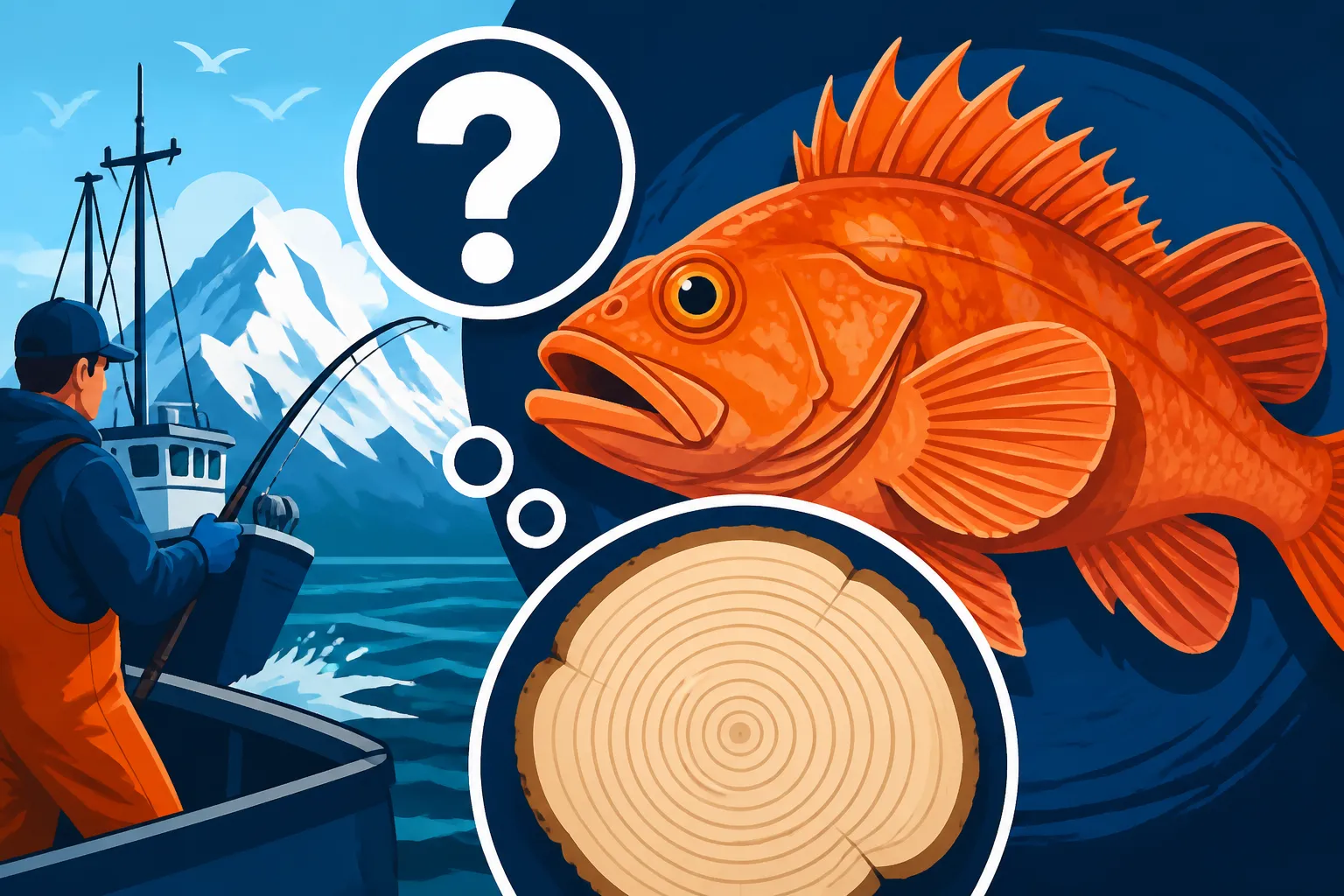
The secret lies in tiny structures called otoliths, or "ear stones." These are small, calcified structures found in the inner ear of bony fish. Just like trees form annual growth rings, otoliths grow by adding layers of calcium carbonate throughout the fish's life. Each year, a distinct opaque and translucent band forms, much like the rings you'd see on a tree stump. By carefully extracting these otoliths and examining them under a microscope, scientists can count these rings to determine the fish's age.
The process involves removing the otoliths, which are typically found within the fish's skull. For many species, the otoliths are quite small, requiring precision. Once extracted, they are often embedded in resin, sectioned (sliced thinly) using specialized equipment, polished, and then viewed under a microscope with transmitted light. The different light absorption of the opaque and translucent zones makes the rings visible. It's a meticulous process that requires trained experts, as the rings can be very fine, especially in older, slower-growing fish. This vital information helps managers understand the population structure and set appropriate Alaska Rockfish Deepwater Release Device Rules and catch limits.
Challenges in Age Determination
While otoliths are incredibly reliable, determining the age of very old rockfish isn't without its challenges. For one, as rockfish age, their growth slows significantly, and the rings on their otoliths become extremely narrow and compacted at the edges. This can make it difficult to distinguish individual annual rings, especially for fish over 50 or 100 years old. Imagine trying to count rings on a tree that's barely grown for decades; it's a similar principle.
Sometimes, alternative methods or supplementary techniques are employed. While not as common for routine aging, techniques like bomb radiocarbon dating have been used to validate otolith ages for extremely old specimens, particularly those caught before the mid-20th century when atmospheric nuclear bomb testing introduced a distinct carbon-14 signature into the environment. This "bomb pulse" serves as a unique time marker in the otoliths, helping to confirm the accuracy of traditional ring counts in older fish. Despite these challenges, otolith analysis remains the gold standard for rockfish age determination, providing invaluable data for conservation efforts.
Factors Influencing Rockfish Lifespan
The long life of Alaska's rockfish isn't uniform across all species. Just like humans have different average lifespans, so too do different kinds of rockfish. Furthermore, their environment and even human interaction can significantly impact how long an individual fish or a population lives.
Species-Specific Differences
While the general rule of thumb is "deepwater rockfish live longer," there's a wide range even within the rockfish family. Some species mature quickly and have relatively shorter lives, while others are the true centenarians of the sea.
Here's a look at some common Alaska rockfish species and their approximate maximum ages:
| Rockfish Species | Approximate Maximum Age | Typical Habitat Depth | Key Characteristics |
|---|---|---|---|
| Rougheye Rockfish | 200+ years | Deep (300-1500 ft) | Pinkish-red, rough scales, deepwater |
| Yelloweye Rockfish | 120+ years | Moderate to deep (50-1200 ft) | Orange-red, bright yellow eyes, large |
| Shortraker Rockfish | 175+ years | Very deep (500-2000+ ft) | Pinkish-red, often mottled, deepwater |
| Quillback Rockfish | 90+ years | Shallow to moderate (up to 600 ft) | Mottled brown/orange, high dorsal fin, rocky reefs |
| Canary Rockfish | 75+ years | Moderate (50-800 ft) | Bright orange-yellow, often with grey blotches |
| Black Rockfish | 50-60 years | Shallow to moderate (nearshore) | Dark grey to black, schooling fish |
| Dusky Rockfish | 50-60 years | Moderate (50-600 ft) | Dark brown to black, schooling fish |
As you can see, there's a significant difference between a black rockfish, which might live for half a century, and a rougheye that can live four times as long. This table highlights why a "one-size-fits-all" approach to fishing regulations simply wouldn't work for Alaska Rockfish Regulations and Limits.
Habitat and Environmental Conditions
Beyond species genetics, where a rockfish lives and the conditions it experiences profoundly affect its growth rate and, consequently, its lifespan.
- Depth and Temperature: We've already touched on this, but it bears repeating. Colder, deeper waters generally lead to slower metabolic rates and longer lives. A black rockfish living in shallower, warmer waters near the coast might grow faster but won't live as long as a shortraker rockfish dwelling in the frigid, dark abyssal plains.
- Food Availability: While generally not a major limiting factor in Alaska's rich waters, consistent access to food allows for steady growth. Fluctuations in prey availability, however, can impact growth, and potentially survival, especially for younger fish.
- Predation: Although adult rockfish, especially the larger ones, have few natural predators other than marine mammals like seals and sea lions, and larger fish, juveniles face a wider array of threats. Surviving those early years is crucial for reaching their full, impressive potential age.
- Water Quality: Healthy marine environments with good water quality are essential for all marine life. Pollution or habitat degradation can stress fish, reduce food sources, and impact overall health, potentially shortening lifespans.
Fishing Pressure and Conservation
Perhaps the most significant external factor influencing rockfish lifespan, especially for the individual fish we encounter, is fishing pressure. Because many rockfish species are so long-lived and slow to reproduce, they are incredibly vulnerable to overfishing. Removing too many of the older, larger individuals from a population can have devastating long-term effects. These large, older fish are often the most prolific breeders, contributing significantly to the next generation. If they are removed faster than new fish can mature and replace them, the population will decline.
This is why regulations are so critical, often including specific bag limits, size restrictions, and sometimes even seasonal closures or depth restrictions. Efforts to educate anglers on responsible fishing practices, such as using descending devices for rockfish released from deep water, are also paramount. It's a constant balancing act between allowing sustainable harvest and protecting these ancient wonders of the deep. You can learn more about these efforts in guides on Alaska Fishing Limits and Bag Limits Explained.
Implications for Anglers and Conservation
Understanding the incredible longevity of Alaska's rockfish has profound implications, not just for marine scientists and fishery managers, but for every angler who drops a line in Alaskan waters. It changes our perspective on these fish, elevating them from just another catch to truly venerable inhabitants of the ocean.
Why Catch-and-Release is Crucial for Rockfish
Given their long lives and slow reproductive rates, every individual rockfish, especially the older, larger ones, represents many decades of survival and a significant potential contribution to the gene pool. This makes responsible catch-and-release practices incredibly important. However, it's not as simple as just letting them go.
Rockfish, particularly those caught from deeper waters (typically over 60 feet), often suffer from a condition called barotrauma. This occurs when fish are brought up quickly from depth, causing gases in their swim bladder to expand. This expansion can push their stomach out of their mouth, pop their eyes, and cause internal damage, making it impossible for them to swim back down to the safety of the depths. A fish suffering from severe barotrauma that is simply tossed back will likely float on the surface, becoming easy prey for birds or marine mammals, or dying from exposure.
This is where descending devices come into play. These tools, which you can often find on Amazon or at local tackle shops, are designed to quickly and safely return a fish to its capture depth. They typically involve a weighted clip or cradle that holds the fish and a line that allows you to lower it back down. Once at depth, the clip is released, and the fish can decompress and swim away. Using a descending device significantly increases the survival rate of released rockfish, especially for those highly susceptible species like Yelloweye.
Understanding Regulations Based on Age
Fishery regulations in Alaska are directly influenced by the life history characteristics of rockfish, especially their age and growth rates. Managers use data from age studies to determine sustainable harvest levels. For instance, species like the yelloweye rockfish, with their extreme longevity and delayed maturity, often have stricter regulations, including lower bag limits and sometimes even specific depth restrictions to protect them. The goal is to ensure enough older, breeding-age fish remain in the population to sustain future generations.
Regulations might also incorporate size limits, which indirectly protect younger or older fish depending on the target species. A minimum size limit might protect juveniles, while a maximum size limit (often part of a "slot limit" where only fish within a certain size range can be kept) aims to protect the largest, oldest, and most reproductively valuable fish. For example, some areas have specific slot limits for halibut that protect the largest breeding females, and similar logic can apply to rockfish. Knowing Alaska Halibut Charter Regulations Explained can give you an idea of how these rules work for different species. Always check the current Alaska Fishing Regulations Explained booklet or emergency orders before you head out, as these rules can change based on the health of the fish stocks.
In essence, every time you encounter an Alaskan rockfish, whether you keep it or release it, you're interacting with a creature that has a rich, potentially multi-generational history. Treating them with respect, understanding their unique biology, and adhering to conservation-minded practices ensures that these incredible, long-lived fish will continue to thrive in Alaska's waters for centuries to come.
Disclaimer
Please remember that fishing regulations, seasons, and emergency orders can change frequently. Always consult the latest official regulations from the Alaska Department of Fish and Game (ADF&G) before planning or embarking on any fishing trip. This guide is for informational purposes only and should not be considered a substitute for official regulatory information.