Alaska Rockfish Deepwater Release Device Rules
One of the most disheartening things an angler can face in Alaska is reeling up a beautiful rockfish from the deep, only to realize it's suffering from barotrauma, with its stomach distended and eyes bulging. It’s a common and unfortunate side effect of bringing fish up from significant depths too quickly, and it often means the fish won't survive if released without intervention. Thankfully, the Alaska Department of Fish and Game (ADF&G) has implemented clear guidelines, and there are effective tools available to give these fish a fighting chance. This comprehensive guide will walk you through everything you need to know about Alaska's rockfish deepwater release device rules, ensuring you're a responsible and successful angler.
The Urgent Need for Deepwater Release in Alaska Rockfish Fisheries
Fishing in Alaska offers unparalleled experiences, from the massive halibut lurking on the seafloor to the various species of rockfish that populate our rugged coastal waters. However, targeting these deep-dwelling species comes with a responsibility, particularly when it comes to catch-and-release. Without proper care, released rockfish can face a grim fate.
Understanding Barotrauma and its Devastating Effects
Barotrauma is a physiological injury caused by a rapid change in pressure, much like what divers experience if they ascend too quickly without decompressing. For a rockfish, which has a closed swim bladder, being reeled up from depths exceeding 60 feet can be devastating. As the fish ascends, the pressure decreases, causing the gases in its swim bladder to expand. This expansion can push the stomach out through the mouth, bulge the eyes, and even damage internal organs.
Imagine trying to function with an inflated balloon in your chest cavity, making it impossible to swim down. That's essentially what happens to a rockfish with severe barotrauma. They lose their ability to submerge, floating helplessly on the surface where they become easy prey for gulls and other predators, or they simply die from internal injuries. It's a heartbreaking sight, and it's why the scientific community and conservation-minded anglers have pushed for solutions. The goal is always to maximize the survival of released fish, especially when populations are sensitive or under management.
The Mandate for Conservation: Why ADF&G Stepped In
Recognizing the significant mortality rates of rockfish released from deep water, the Alaska Department of Fish and Game (ADF&G) stepped in with regulations to promote their survival. These rules are a crucial component of the broader Alaska Fishing Regulations Explained and reflect a commitment to sustainable fishing practices. The emphasis is particularly strong for species like yelloweye rockfish, which are long-lived and slow to reproduce, making their populations more vulnerable to overfishing and discard mortality.
By requiring or strongly recommending the use of deepwater release devices, ADF&G aims to reduce the post-release mortality of rockfish. This isn't just about being "nice" to fish; it's a vital management tool that directly impacts the health and longevity of rockfish populations across the state. Without these measures, released fish that don't survive still count towards conservation goals in a negative way, potentially leading to more restrictive fishing seasons or bag limits down the line. It's an investment in the future of Alaska fishing.
Alaska's Official Rules for Rockfish Deepwater Release Devices
Navigating fishing regulations can sometimes feel like trying to untangle a particularly stubborn knot, but when it comes to rockfish deepwater release, the rules are fairly straightforward and critically important. Understanding them is key to being a responsible angler and avoiding potential Alaska Fishing Violations and Fines.
When and Where Release Devices are Required or Recommended
The primary trigger for needing a deepwater release device in Alaska is the combination of targeting rockfish and fishing at certain depths. Specifically, for sport fishing, descending devices are required for all rockfish, especially yelloweye rockfish, caught in waters deeper than 30 fathoms (180 feet) that are not retained. This requirement applies to various regions throughout Alaska's marine waters, where rockfish are commonly targeted, such as parts of Prince William Sound, Cook Inlet, and Southeast Alaska.
It's not just a suggestion; it's a rule designed to protect these vulnerable species. Even if you're fishing in shallower waters or targeting other species like halibut (which often share the same habitat), if you accidentally catch a rockfish and decide to release it, and you're at or beyond that 180-foot threshold, you need to use a deepwater release device. Always check the most current ADF&G regulations booklet for the specific region you'll be fishing in, as emergency orders or regional variations can occur. This is particularly important for species like the long-lived and highly susceptible yelloweye rockfish, which are a cornerstone of many angler's bucket lists.
What Constitutes an Approved Deepwater Release Device
The good news is that "approved" deepwater release devices aren't some exotic, hard-to-find piece of equipment. ADF&G defines an approved device as one that is "capable of releasing fish at the depth from which they are captured or at a depth where the fish can recover from the effects of barotrauma."
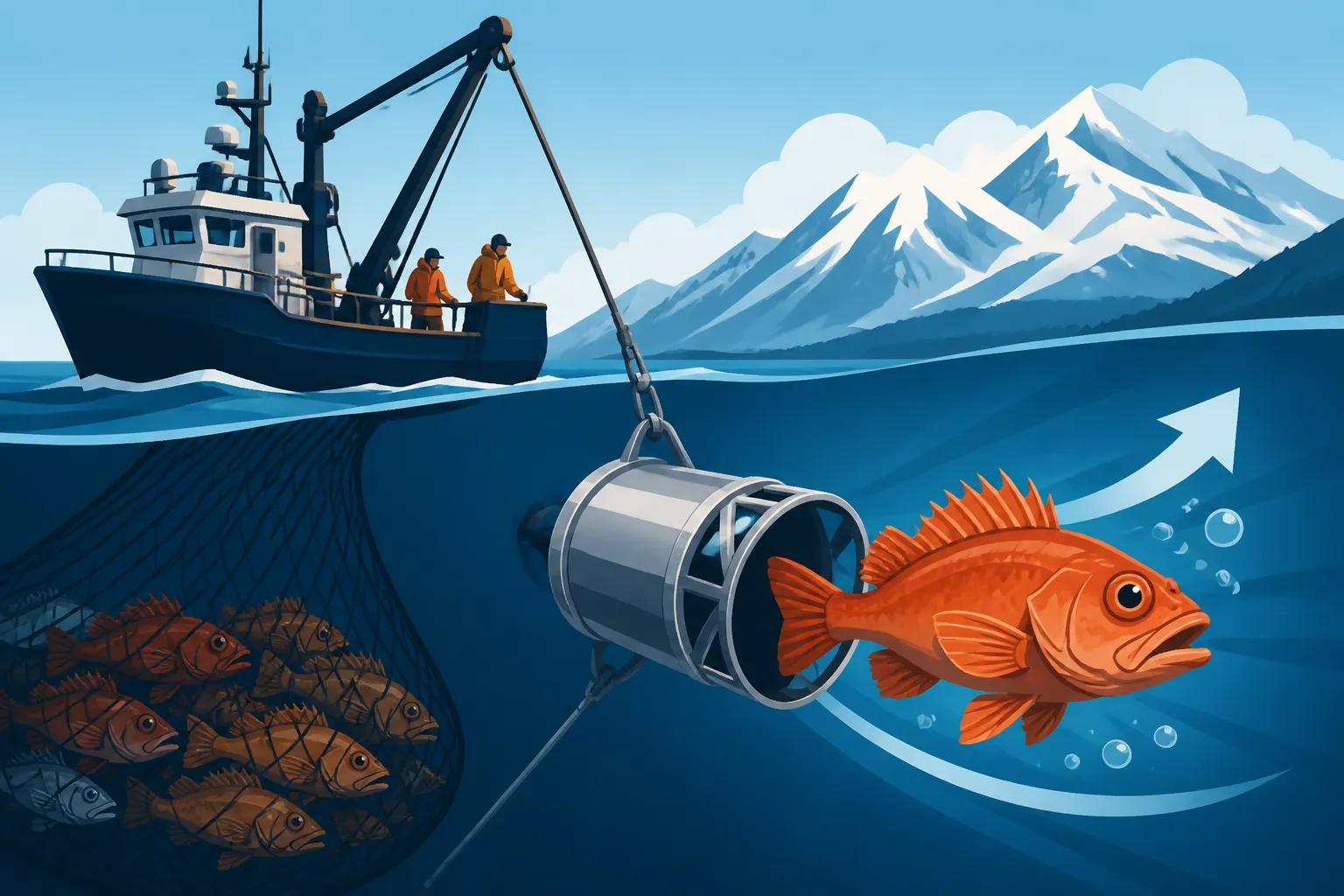
Essentially, any device that can quickly and safely transport a rockfish back down to a sufficient depth for its swim bladder to recompress is acceptable. These devices typically consist of a weighted clip or cradle that attaches to the fish, along with a line and a weight. The weight helps rapidly descend the fish, and the clip or cradle can be designed to release the fish automatically at a certain depth or manually via a jerking motion.
There's no single brand or model you must use, giving anglers flexibility. What matters is that the device is effective. You'll find various designs on the market, often available at local tackle shops in places like Homer or Seward, or through online retailers like Amazon. Common types include:
- Lip Clamps: These grasp the fish's lower jaw.
- Inverted Hooks: A barbless hook that goes through the lower jaw.
- Weighted Cradles/Baskets: The fish rests within a small cage or cradle.
The critical features are a substantial weight (usually 2-5 pounds, depending on the current and depth) to ensure rapid descent, and a reliable release mechanism. The goal is always to minimize the fish's stress and surface time.
Proper Techniques for Deploying a Release Device
Using a deepwater release device isn't complicated, but doing it correctly is crucial for the fish's survival. Here's a general process:
- Retrieve the Fish Quickly and Carefully: Once hooked, bring the rockfish to the surface as quickly as possible without "horsing" it. Minimize its fight time.
- Assess the Fish: As soon as it's boatside, quickly evaluate the rockfish. If it has obvious signs of barotrauma (protruding eyes, distended stomach, inability to swim upright), it's a candidate for release. If you intend to release it, do not put it in a livewell or hold it in a net for an extended period.
- Prepare the Device: Have your deepwater release device ready and weighted. Attach the weight (if not already integrated) and ensure the line is free-running.
- Attach the Fish: Gently but firmly attach the device to the fish. For lip clamps or inverted hooks, securely fasten it to the lower jaw. If using a cradle, place the fish within it. Handle the fish as little as possible, and always with wet hands to protect its slime coat. Avoid squeezing its body.
- Lower the Fish: Immediately lower the fish back into the water, allowing it to descend rapidly. Feed the line smoothly. The weight should pull the fish down quickly, allowing its swim bladder to recompress before it can expend too much energy fighting to get back down.
- Release at Depth: Once the fish reaches a sufficient depth (ideally the depth it was caught or at least 100 feet), activate the release mechanism. This might involve a sharp tug on the line for lip clamps or inverted hooks, or an automatic release for some cradle designs. You'll often feel the tug as the fish swims away.
- Retrieve the Device: Reel your device back up, ready for the next catch.
Remember, speed and minimizing handling stress are key. The less time a rockfish spends on the surface experiencing barotrauma, the higher its chances of survival. This practice aligns perfectly with broader Alaska Catch-and-Release Best Practices.
Practical Guide to Selecting and Using Your Release Device
Choosing the right deepwater release device can make a noticeable difference in the effectiveness and ease of use, especially when you're out on the water, currents are strong, and every second counts for the fish.
Exploring Different Types of Release Devices
There are several effective designs for deepwater release devices, each with its own benefits. Understanding these can help you pick the best one for your fishing style and the species you're targeting, including Alaska Lingcod Fishing Regulations and Limits if you're targeting other deepwater species.
| Device Type | Description | Pros | Cons |
|---|---|---|---|
| Lip Clamp | Spring-loaded clamp that grasps the fish's lower jaw. Attached to a heavy line. | Secure hold, quick attachment, simple release (sharp tug). | Can be stressful if fish struggles; requires good aim to attach quickly. |
| Inverted Hook | A large, often barbless, stainless steel hook. Attached to the fish's lower jaw. | Very secure, quick to deploy, often less expensive. | Can cause minor puncture wound; requires careful placement. |
| Weighted Cradle/Basket | A small, weighted basket or cradle where the fish is placed head-first. | Minimizes direct contact, less stressful for the fish, often auto-release. | Can be bulkier to store, fish might jump out if not placed quickly; sometimes slower to descend. |
| DIY Options | Weighted milk jugs, PVC tubes, or specialized homemade setups. | Cost-effective, customizable. | Reliability can vary; may not meet ADF&G criteria if not well-designed. |
Many anglers prefer lip clamps or inverted hooks for their speed and compact nature. Brands like SeaQualizer and Shelton Fish Descenders are popular, but simpler, unbranded versions are widely available. When purchasing, consider the weight and line quality. A heavier weight (2-5 lbs is typical) will descend the fish faster, which is critical. You can find a good selection of these devices, as well as the necessary weighted lines, at sporting goods stores or through online retailers like Amazon. Having a few different types on board, especially on a charter, can be beneficial to see what works best in varying conditions or for different fish sizes.
A Step-by-Step Guide to Effective Rockfish Release
Let's break down the optimal release process into manageable steps to ensure maximum survival. This is especially important for species like the various Alaska Salmon Species that might be caught as bycatch in certain areas, though they rarely suffer from barotrauma like rockfish.
- Immediate Action: As soon as you bring a rockfish to the surface that you intend to release, act quickly. Don't waste time admiring it or taking photos if barotrauma is evident. The clock is ticking.
- Handle Gently: Use wet hands or a wet towel to hold the fish. Never use a dry towel or gloves, as this removes the fish's protective slime coat, making it susceptible to disease. Support its body weight, especially if it's a larger fish.
- Attach the Device: Open your chosen deepwater release device. For a lip clamp or inverted hook, gently guide the fish's lower jaw into the mechanism and secure it. For a cradle, place the fish headfirst into the cradle. Ensure the fish is firmly but not painfully secured.
- Confirm the Weight: Double-check that your device has sufficient weight attached. A 2 to 5-pound lead weight is standard for most Alaska applications to ensure a rapid descent.
- Lower and Release: Place the fish back into the water, attached to the device. Let it sink quickly, feeding out the line smoothly. Once the fish is at the desired depth (100-200 feet is usually sufficient for recompression, but the deeper the better), activate the release. A sharp jerk of the line will typically disengage lip clamps or inverted hooks. Some cradle devices have a pressure-sensitive or timed release.
- Observe (if possible): If you're on a boat with a fish finder, you might even see the fish swim away on the screen after release. This is a great sign of success.
- Retrieve and Reset: Reel up your release device, clean it, and make sure it's ready for immediate use again.
This methodical approach ensures you give every released rockfish the best possible chance to return to its deepwater home and thrive.
Avoiding Common Mistakes and Maximizing Survival
Even with the best intentions, mistakes can happen. Being aware of common pitfalls can significantly increase the survival rate of your released rockfish.
- Delaying the Release: The single biggest mistake is delaying the re-submergence. Every minute a fish spends on the surface suffering from barotrauma reduces its chances of survival. Act immediately.
- Improper Handling: Dry hands, rough handling, or allowing the fish to flop around on the deck can strip away its protective slime layer, damage its fins, or cause further internal injury. Always use wet hands and minimize contact.
- Insufficient Weight: Using a release device that isn't heavy enough will result in a slow descent, prolonging the fish's distress and potentially allowing it to struggle back to the surface before full recompression. Ensure you have adequate weight for the depths you're fishing.
- Not Reaching Adequate Depth: Releasing the fish too shallow may not allow its swim bladder to fully recompress, leaving it vulnerable. Aim for at least 100 feet, but ideally, back to the depth it was caught.
- Releasing in the Wrong Spot: Avoid releasing fish near dense kelp beds or structure where they might get snagged, or directly into areas with known predators if possible.
- Ignoring Local Regulations: Regulations, particularly for specific species like yelloweye rockfish, can change. Always consult the current ADF&G regulations for your fishing area. For example, Alaska Rockfish Retention and Release Rules might have specific clauses.
By being mindful of these points, you elevate your fishing to a truly responsible and conservation-focused endeavor.
Broader Conservation for Alaska's Rockfish Populations
While deepwater release devices are a phenomenal tool for individual fish survival, they're just one piece of the larger puzzle of rockfish conservation in Alaska. A truly ethical angler understands the broader impact of their actions. Knowing your Alaska Halibut Charter Regulations Explained can also indirectly help, as rockfish are often caught during halibut trips.
Minimizing Surface Time and Responsible Handling
Beyond the deepwater release device, how you handle a rockfish before you even decide to release it plays a huge role. The goal is to minimize stress and physical damage at every step.
- Quick Retrieval: When you feel a bite, try to reel in quickly but smoothly. This limits the fish's fight time and the amount of lactic acid buildup in its muscles, which can be detrimental to survival.
- Gentle Landing: If you're bringing the fish aboard to unhook or attach a device, use a knotless, rubberized landing net to minimize damage to fins and slime coat. Avoid gaffing a fish you intend to release.
- Keep it Wet: If a fish is coming aboard, try to keep it over the water or place it on a wet surface. Prolonged exposure to air is stressful and can damage gills and eyes.
- Proper Unhooking: Use dehooking tools if the hook is deep. If the fish is gut-hooked and you intend to release it, often the best practice is to cut the line as close to the hook as possible. Attempting to remove a deeply embedded hook can cause more harm.
These small actions, consistently applied, show respect for the resource and significantly boost a fish's chances of recovery, whether or not a deepwater release device is ultimately needed. When you're considering the diverse Alaska Saltwater Fish Species, remember that each species has unique handling requirements.
Adhering to Bag Limits and Alaska Rockfish Retention and Release Rules
The ultimate form of conservation is knowing and respecting the harvest limits. Alaska's Alaska Fishing Limits and Bag Limits Explained are scientifically determined to ensure sustainable populations. For rockfish, especially yelloweye, these limits can be quite stringent due to their slow growth and reproduction rates.
If you've already filled your bag limit for a particular rockfish species, any additional fish of that species caught must be released. This is precisely when your deepwater release device becomes essential. The rules are not meant to make fishing difficult but to safeguard future opportunities. Regularly consulting the ADF&G website or the current regulation booklet is paramount. These rules can change seasonally or even with emergency orders, so staying informed is a mark of a truly dedicated and responsible angler. You'll find specific details on how to manage your catch and comply with these regulations under How to Read Alaska Fishing Regulations.
Disclaimer
The information provided in this guide is for general informational purposes only and does not constitute legal advice. Alaska fishing regulations are subject to change by the Alaska Department of Fish and Game (ADF&G) through emergency orders and annual updates. Anglers are solely responsible for knowing and adhering to all current state and federal fishing regulations for the specific waters and species they are targeting. Always consult the official ADF&G sport fishing regulations booklet and check for current emergency orders before engaging in any fishing activity.