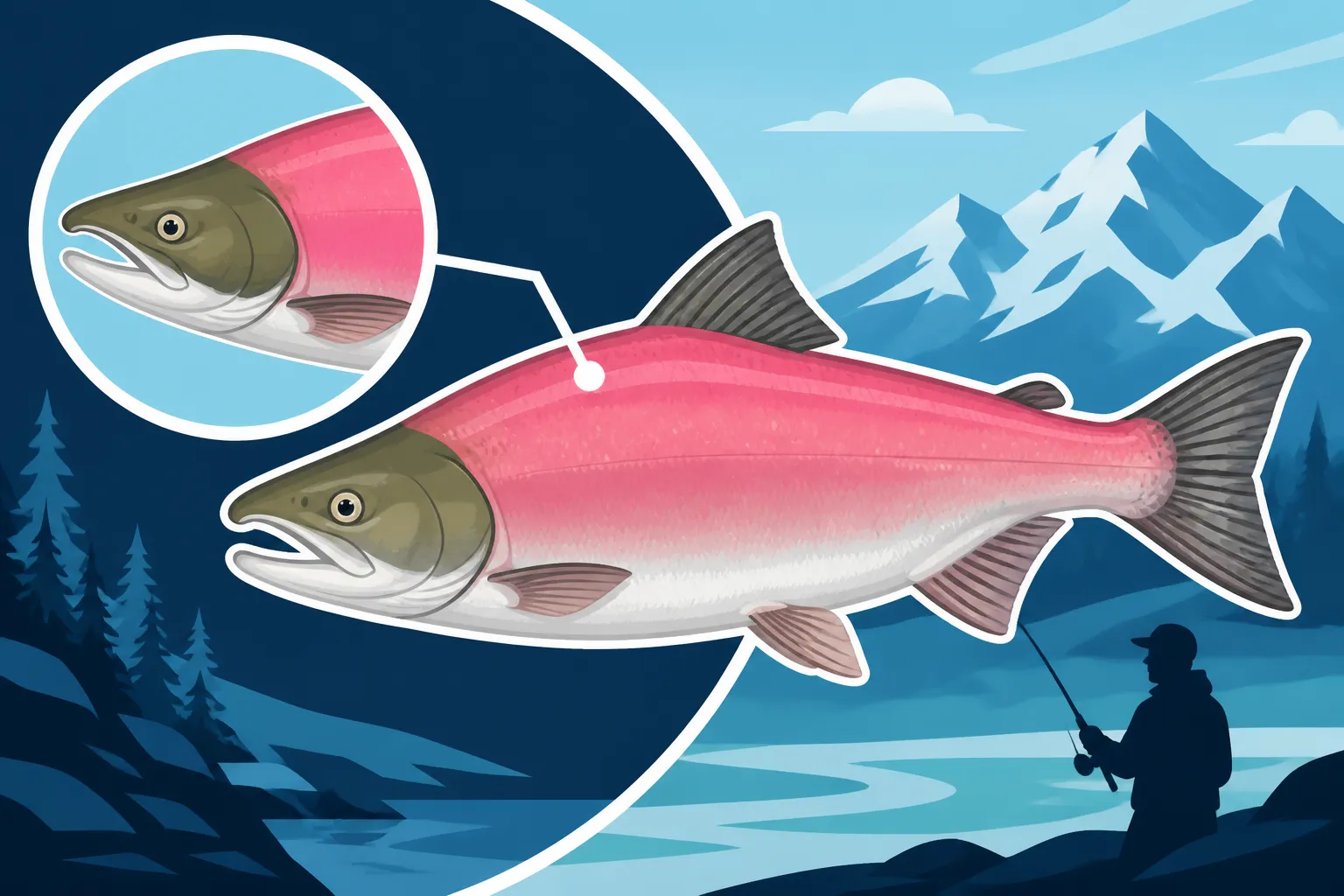
How to Identify a Pink Salmon
It’s a common scenario for anglers, whether you’re a seasoned veteran or new to the wild waters of Alaska: you hook into a salmon, and in the heat of the moment, you’re not entirely sure which species it is. This confusion can be frustrating, especially when regulations vary drastically between species. This comprehensive guide will walk you through the precise characteristics to help you confidently identify a Pink Salmon, often affectionately called a "Humpy," so you can fish within the rules and appreciate your catch.
The Defining Characteristics of Pink Salmon
Pink salmon (Oncorhynchus gorbuscha) might be the smallest of the Pacific salmon, but they make up for it in sheer numbers and a distinctive appearance, especially as they near their spawning grounds. Knowing these key features will make identification straightforward.
Size, Shape, and the Iconic Hump
When it comes to size, pink salmon are typically the smallest of the Pacific salmon species you'll encounter in Alaska. In saltwater, they usually weigh between 3 to 5 pounds, though you might occasionally land one a bit heavier, perhaps up to 8-10 pounds. Compare that to a mature King Salmon which can easily tip the scales at 20-50 pounds or more, and you'll immediately notice the difference. Their body shape is generally slender and torpedo-like when they are fresh from the ocean, making them powerful swimmers.
However, the most unmistakable physical characteristic of male pink salmon, and the reason for their "Humpy" nickname, is the dramatic hump that develops on their back as they approach spawning. This isn't just a slight bulge; it's a pronounced, almost grotesque, dorsal hump that gives them a distinctly prehistoric look. Females also develop a slight dorsal hump, but it’s far less prominent than that of the males. This physiological change is part of their breeding ritual, making them one of the easiest salmon to identify visually when they are in freshwater.
Distinctive Coloration and Spotting
The color of a pink salmon changes significantly depending on its stage in the life cycle and proximity to spawning. When they are in saltwater, actively feeding, they exhibit a beautiful iridescent blue-green back that fades into silvery sides and a white belly. This streamlined, camouflaged appearance helps them blend into the marine environment.
As they transition from saltwater to freshwater and prepare to spawn, their coloration undergoes a radical transformation. Spawning male pink salmon become incredibly dark, often displaying a greenish-brown to almost black back, with mottled sides that can range from pale gray to yellowish, sometimes even showing hints of red or pink blotches. Females, while also darkening, typically have a less dramatic color change, often appearing a dull olive-green or grayish-brown.
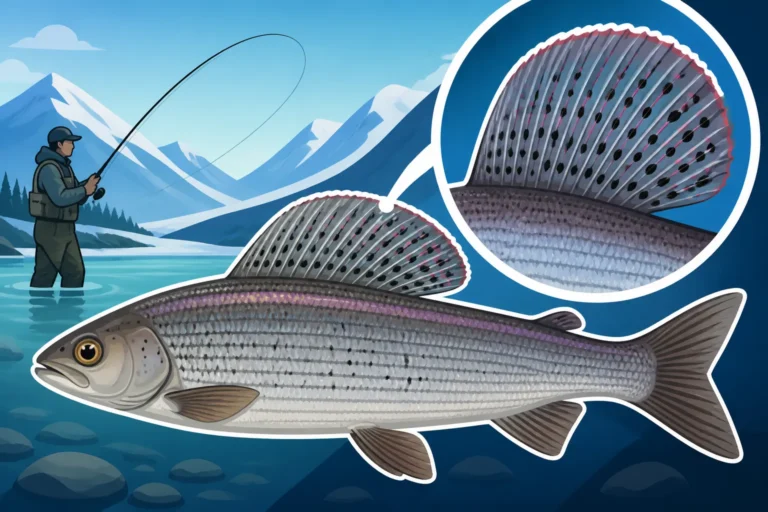
But beyond the overall body color, the most crucial identification mark for pink salmon is their spotting pattern. They possess large, oval-shaped black spots that are scattered across their back, adipose fin, and most importantly, cover their entire caudal (tail) fin. These spots are generally much larger and more irregularly shaped than those found on other salmon species, making them a tell-tale sign. If you see a salmon with prominent, large spots all over its tail, chances are you've got a Humpy. This specific spotting is a key identifier when you're out on the water, trying to differentiate your catch.
Mouth, Teeth, and Tail Fin Details
Observing the mouth and teeth can also provide clues, though the spots and hump are usually more definitive. Pink salmon have a relatively small mouth compared to other salmon species, and their teeth are small and conical, not the large, canine-like teeth you'd find on a spawning Chum Salmon. Their gums and mouth interior are typically pale, rather than the distinct black gum line you’d see on a King Salmon.
The tail fin, or caudal fin, of a pink salmon is generally V-shaped or slightly forked. As mentioned earlier, this is where you'll find those prominent, large, irregular black spots covering the entire fin. This consistent spotting across the whole tail is a critical distinction that sets them apart from other Pacific salmon. For anglers looking to understand the full array of regulations, be sure to check out our detailed guide on Alaska Pink Salmon Regulations and Limits.
Telling Pink Salmon Apart from Other Alaska Salmon Species
With five different species of Pacific salmon found in Alaska, it's easy to get them mixed up. Let's compare pink salmon to their cousins to highlight the key differences. This is vital not just for bragging rights, but for adhering to Alaska Fishing Regulations Explained.
Pink Salmon vs. Sockeye Salmon
Sockeye salmon, also known as Red Salmon, are often present in the same rivers as pinks during peak summer runs, particularly in places like the Kenai River. However, they are quite distinct.
- Coloration: The most striking difference when spawning is color. Sockeye turn a vibrant, unmistakable red on their body with a green head and often a white mouth. Pink salmon, by contrast, are dark, mottled greenish-brown to black with pale sides.
- Spotting: Sockeye salmon are largely devoid of spots on their back and tail fin. Their dorsal fin is smooth and lacks the distinct hump of a male pink. This absence of spots is a dead giveaway.
- Shape: Sockeye are generally more streamlined and torpedo-shaped, even when spawning, without the dramatic dorsal hump of a male pink. They are also typically larger than pinks, averaging 6-12 pounds.
- Gums: Sockeye usually have white gums, similar to pinks, but again, lack the spots and hump.
Pink Salmon vs. Coho Salmon (Silver Salmon)
Coho salmon, or Silver Salmon, are another popular species that can overlap with pink runs, particularly later in the summer. They offer a feisty fight and are highly prized.
- Size: Coho are typically larger than pinks, often ranging from 6 to 12 pounds, and can grow even larger.
- Coloration: In saltwater, Coho are strikingly silver with a blue back. When they enter freshwater, they develop a reddish-maroon or greenish-black back, but their sides retain more silver or turn a dull bronze. They don't have the mottled, irregular dark pattern of spawning pinks.
- Spotting: Coho salmon have small, indistinct black spots on their back, but crucially, their tail fin usually only has spots on the upper lobe (or dorsal lobe), with the lower lobe remaining unspotted. Pink salmon, remember, have large spots covering the entire tail fin.
- Mouth/Gums: Coho salmon have a distinct black mouth with a white gum line. This "black mouth, white gums" is a classic identifier for coho, different from the pale mouth of a pink.
- Hump: Coho do not develop the prominent dorsal hump that male pink salmon do.
Pink Salmon vs. Chum Salmon (Dog Salmon)
Chum salmon, sometimes called Dog Salmon due to the canine-like teeth males develop, can be challenging to distinguish from pinks at first glance due to overlapping sizes, but they have key differences.
- Size: Chum salmon are generally larger than pinks, typically ranging from 8 to 15 pounds, sometimes more.
- Coloration: While pinks turn mottled dark, spawning chum salmon are known for their striking vertical bars or "tiger stripes" of purple, red, and black on their sides. This vivid pattern is unmistakable and entirely different from a pink salmon.
- Spotting: Chum salmon generally lack distinct spots on their back and tail fin. Any spots present are usually very few and indistinct, not the large, pronounced spots of a pink.
- Mouth/Teeth: Spawning male chum salmon develop large, prominent, canine-like teeth, which is where their "dog salmon" nickname comes from. Their mouth and gums are typically pale, similar to pinks, but the teeth are vastly different.
- Hump: Chum males also develop a slight hump, but it's not as exaggerated or pronounced as the iconic "hump" of a male pink salmon.
Pink Salmon vs. King Salmon (Chinook Salmon)
King salmon, also known as Chinook, are the largest and most sought-after salmon species in Alaska. They rarely get confused with pinks due to their immense size difference, but it's worth noting the visual cues.
- Size: King salmon are giants, often weighing 20 to 50 pounds, with some trophy fish exceeding 70 or even 80 pounds. Pink salmon are tiny by comparison.
- Coloration: Kings have a greenish-blue back with silver sides, turning darker as they approach spawning but without the mottled pattern of a pink.
- Spotting: King salmon have black spots on their back and on both lobes of their tail fin. However, these spots are generally smaller and less defined than the very large, oval spots of a pink salmon.
- Mouth/Gums: King salmon have a distinctive black gum line in their mouth, regardless of their overall mouth color. This "black mouth, black gums" is a definitive identifier for Kings and is absent in pinks. You can find more details on How to Identify a King Salmon.
- Tail Fin: King salmon typically have a more squared-off or slightly indented tail fin, rather than the deeply forked or V-shaped tail of a pink.
For a comprehensive overview of all species, check out our Types of Salmon in Alaska Explained guide and How to Identify Alaska Salmon Species.
Here’s a quick comparison table to help you keep these magnificent fish straight:
| Feature | Pink Salmon (Humpy) | Sockeye Salmon (Red) | Coho Salmon (Silver) | Chum Salmon (Dog) | King Salmon (Chinook) |
|---|---|---|---|---|---|
| Average Size | 3-5 lbs (up to 10 lbs) | 6-12 lbs | 6-12 lbs (up to 20 lbs) | 8-15 lbs (up to 25 lbs) | 20-50+ lbs (up to 80+ lbs) |
| Spawning Color | Dark green/brown, mottled sides | Bright red body, green head | Reddish-maroon/bronze, darker back | Vertical bars (purple/red/black) | Darker olive-brown/black, no distinct bars |
| Dorsal Hump | Very large and prominent (males) | Absent | Absent | Slight (males) | Absent |
| Tail Spots | Large oval spots on entire fin | Absent | Small spots on upper lobe only | Absent or very few indistinct spots | Small spots on both lobes |
| Mouth/Gums | Pale mouth, pale gums | White mouth, white gums | Black mouth, white gums | Pale mouth, pale gums | Black mouth, black gums |
| Teeth | Small, conical | Small, conical | Moderate, sharp | Large, canine-like (males) | Moderate to large, sharp |
| Tail Shape | V-shaped / Slightly forked | Forked | Slightly forked | Slightly forked | Squared or slightly indented |
Habitat, Run Timing, and Practical Angler Tips
Understanding where and when you're likely to encounter pink salmon can also greatly assist in their identification.
Where and When You'll Encounter Pink Salmon
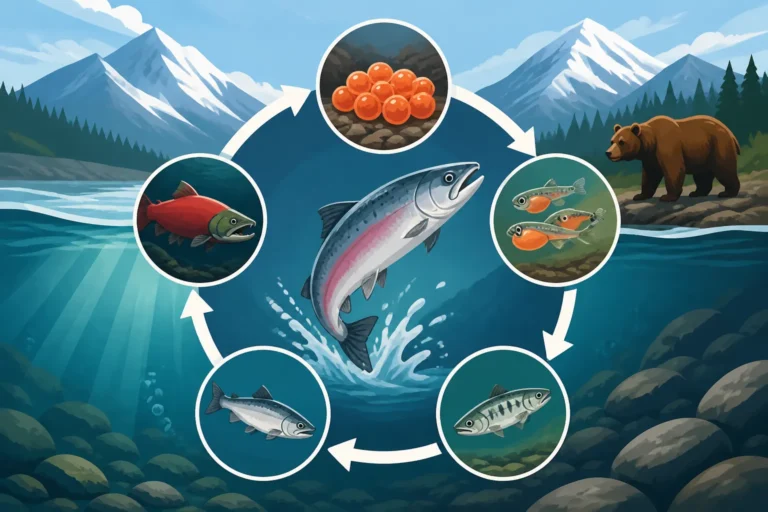
Pink salmon have a very predictable and fascinating life cycle. They are unique among Pacific salmon in that they almost exclusively adhere to a strict two-year life cycle. This means that in many river systems, you’ll see massive runs primarily in "odd" years (e.g., 2023, 2025) or "even" years (e.g., 2024, 2026), but rarely both. For instance, Prince William Sound often sees huge even-year runs, while some areas of Southeast Alaska have dominant odd-year runs. Knowing the dominant run year for your fishing area can help you anticipate their presence.
Their run timing typically begins in late July, peaks throughout August, and can extend into early September in many coastal streams and lower river systems across Alaska. They tend to spawn in the lower reaches of rivers, often in tidal zones or very close to saltwater, making them accessible to bank anglers. They are incredibly abundant and found throughout coastal Alaska, from Southeast to Bristol Bay. This abundance makes them an excellent target for beginners, and for those looking for sheer numbers of fish. If you're planning your trip around these fish, our guide on When Do Pink Salmon Run in Alaska can be incredibly helpful.
Quick Checks for On-the-Water Identification
When you're out on the water, whether you're fly fishing or trying How to Spin Fish for Alaska Salmon, a quick mental checklist can save you from misidentification:
- Size: Is it noticeably smaller than most salmon you've seen, generally under 5 pounds?
- Hump: If it's a male, does it have a prominent, almost cartoonish hump on its back?
- Tail Spots: Does the entire tail fin, from top to bottom, have large, distinct black spots?
- Overall Color: Is it dark, mottled, and somewhat greenish-brown or black, rather than vibrant red or shiny silver with subtle spots?
If you answer yes to these questions, you've most likely caught a pink salmon. These feisty fish offer a fantastic fight, especially on light tackle. While some anglers might consider them less desirable than other species, they are increasingly appreciated for their culinary value (especially when fresh from the saltwater) and for the sheer fun they provide on the end of a line. If you're curious about their eating quality, check out Are Alaska Pink Salmon Good to Eat.
When gearing up for your Alaskan adventure, consider a good pair of polarized sunglasses to help spot fish and a sturdy tackle box to carry your essentials. You can find a wide range of fishing gear and even waterproof fish identification cards on Amazon, which are super handy for quick checks on the riverbank. Don't forget that having a valid Alaska Fishing License: Complete Guide is non-negotiable for all anglers.
Ultimately, knowing how to identify a pink salmon not only helps you comply with regulations but also deepens your appreciation for the incredible diversity of Alaska's fisheries.
Disclaimer
Please note that fishing regulations in Alaska can change frequently due to emergency orders. Always consult the most current Alaska Department of Fish and Game (ADF&G) regulations booklet and check for any emergency orders pertaining to your specific fishing location before heading out. This guide is for informational purposes only and should not replace official ADF&G resources.