Alaska King Salmon: Facts and Fishing Tips
Few experiences in Alaska stir the soul quite like pursuing King Salmon, also known as Chinook. These magnificent fish are the stuff of legend, but the reality of chasing them can be daunting, with fluctuating runs, complex regulations, and the sheer challenge of landing such a powerful creature. This guide will dive deep into everything you need to know about Alaska King Salmon, from their fascinating biology to the most effective fishing strategies and crucial conservation efforts.
Understanding the Alaska King Salmon (Chinook)
The King Salmon, or Chinook salmon (Oncorhynchus tshawytscha), stands as a true icon of Alaska's wild rivers and vast marine waters. When anglers talk about the ultimate prize, often it's the sheer size and raw power of a Chinook that comes to mind. These fish aren't just big; they're an integral part of the Alaskan ecosystem and a vital part of many local economies and traditions. Getting to know them beyond just their fighting prowess can truly deepen your appreciation for the pursuit.
Biological Profile and Identification
King Salmon are the largest of the Pacific salmon species, hence their regal name. An average mature King Salmon returning to spawn typically weighs between 20 to 40 pounds, but fish well over 50 pounds are caught regularly, and the state record for a sport-caught Chinook is an astounding 97 pounds, caught in the Kenai River. Imagine the fight a fish of that magnitude puts up! Their bodies are thick and muscular, built for the incredible upstream migrations they undertake.
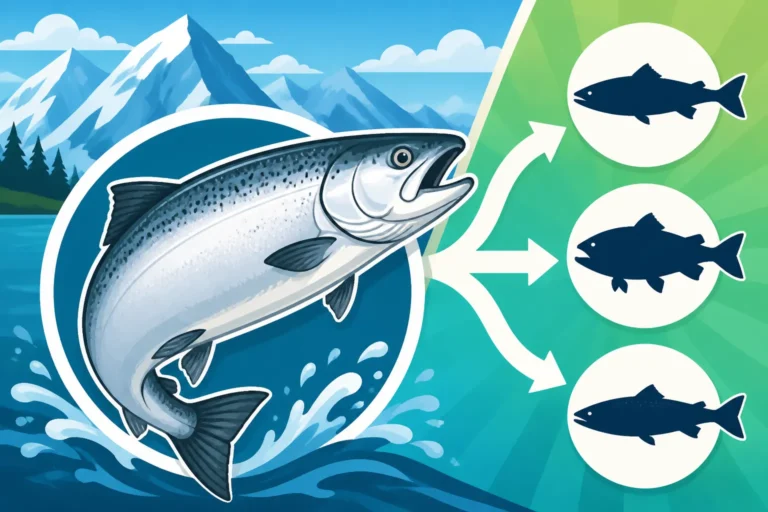
Identifying a King Salmon in the wild is relatively straightforward once you know what to look for. They possess distinct black spots on their backs and on both lobes of their caudal (tail) fin, which is a key differentiator from other salmon species like silvers (coho) or reds (sockeye). Another definitive characteristic is their mouth: the gum line inside their mouth is entirely black, a feature unique among Pacific salmon. This dark gum line is often referred to as a "black mouth" and is a reliable identification marker. Their overall coloration can range from dark blue-green on the back, fading to silvery sides and a white belly, though this can change dramatically as they approach their spawning grounds, becoming much darker, sometimes almost black or reddish-brown. This shift in color, known as "king turning," signifies their transition from ocean feeders to river spawners.
Life Cycle and Spawning Habits
The life cycle of an Alaska King Salmon is a truly remarkable journey of survival and instinct. It begins in the freshwater gravel beds of Alaskan rivers, where eggs are laid and fertilized. After hatching, the tiny alevin, then fry, spend a year or two in their natal river systems, feeding on insects and small aquatic organisms, growing stronger before undertaking their downstream migration to the vast Pacific Ocean. This freshwater rearing period is crucial for their development, helping them imprint on the unique chemical signature of their home stream.
Once in the ocean, these magnificent fish enter a feeding frenzy that can last anywhere from three to seven years, though typically four to five years. During this time, they travel thousands of miles across the Gulf of Alaska, foraging on smaller fish like herring and sand lance, as well as squid and other crustaceans. This rich diet fuels their incredible growth, transforming them into the powerful, silver-bright "kings" we eagerly pursue. The exact duration of their ocean residence directly correlates with their eventual size – the longer they stay, the larger they become. When their time comes, a primal urge compels them to return, often to the very same gravel beds where they were born, to spawn and complete their life cycle. This arduous upstream migration tests their endurance against swift currents, waterfalls, and predators, all while abstaining from feeding. After spawning, exhausted and depleted, the adult King Salmon die, their bodies providing vital nutrients back to the river ecosystem, nourishing future generations.
Where to Find King Salmon in Alaska
Alaska is synonymous with world-class King Salmon fishing, offering a diversity of environments where these magnificent fish can be targeted. From the vast, braided river systems of the Interior to the deep, nutrient-rich coastal waters of the Southeast, understanding where and why Kings congregate is key to a successful outing. Each region and specific waterway presents its own unique challenges and rewards for the dedicated angler.
Top River Systems
When people dream of catching a trophy King Salmon in Alaska, they often envision themselves on one of the state's legendary rivers. The Kenai River on the Kenai Peninsula is undoubtedly one of the most famous, holding the world record for sport-caught King Salmon and consistently producing some of the largest Kings in the state. Anglers flock to the Kenai in June and July, hoping to hook into one of these giants. The fishing here is intense, often involving drift boats or powerboats, targeting deep holes and current seams. If you're planning a trip to this iconic river, a thorough understanding of the Kenai River Fishing: Complete Guide is invaluable.
Another legendary destination is the Nushagak River in Bristol Bay. While a fly-in destination, it's renowned for incredibly strong King Salmon runs, often peaking earlier than other rivers, typically in mid-June. The Nushagak offers phenomenal fishing from both jet boats and bank fishing opportunities. Further north, the Deshka River and the Susitna River system, both accessible from Alaska's road system, are also prime King Salmon territories. The Deshka River is particularly popular for its early run of Kings in late May and early June, drawing many anglers from Anchorage. These rivers offer a mix of boat and bank fishing, with Kings often holding in deeper pools, behind log jams, or along current breaks. Each river has its nuances; for instance, the Nushagak River King Salmon Guide and Deshka River King Salmon Guide can provide more granular insights into these specific waterways.
Coastal Waters and Feeder Kings
Beyond the iconic rivers, a significant portion of King Salmon fishing in Alaska takes place in saltwater, particularly for "feeder kings." These are King Salmon that are actively feeding in the ocean and have not yet begun their spawning migration. They are known for their vibrant silver color, incredible strength, and delicious, rich meat, a direct result of their active feeding. Fishing for feeder kings is popular in various coastal communities throughout Southeast and Southcentral Alaska.
Places like Sitka, Homer, and Seward are major hubs for saltwater King Salmon charters. In Sitka, for example, anglers target kings throughout the summer months, often trolling with downriggers and baitfish or artificial lures in the nutrient-rich waters surrounding the archipelago. These fish are constantly on the move, chasing bait, and can be found anywhere from shallow bays to deep ocean waters. A trip to Homer Alaska Fishing Guide will show you the kind of productive waters where you can battle these fish near Kachemak Bay. Charters in these areas are well-equipped with advanced electronics to locate schools of baitfish, which, in turn, signal the presence of hungry King Salmon. Whether you're trolling herring off the coast of Sitka or jigging for them near Kodiak, the experience of battling a fresh-from-the-ocean King Salmon is truly unforgettable. The Sitka Salmon and Halibut Fishing Guide offers more details on saltwater opportunities in that region.
When to Target King Salmon in Alaska
Timing is absolutely everything when it comes to King Salmon fishing in Alaska. Unlike resident fish that might be available year-round, King Salmon are anadromous, meaning they spend most of their lives in the ocean and only return to freshwater to spawn during specific "runs." These runs are highly anticipated events, dictating when and where anglers focus their efforts. Understanding the general run timing and the factors that influence it can be the difference between a trip of a lifetime and a frustrating experience.
Peak Run Timing by Region
King Salmon runs in Alaska typically occur from late May through July, with specific peaks varying significantly by region and river system. It’s never a simple, static calendar, but more of a dynamic window influenced by environmental factors.
Let's look at a general breakdown:
| Region | Typical Peak Run Timing | Notable Rivers/Areas |
|---|---|---|
| Southeast Alaska | May – Early July | Juneau, Sitka, Ketchikan (saltwater & rivers) |
| Southcentral Alaska | June – July | Kenai River, Kasilof River, Deshka River, Susitna River |
| Bristol Bay | Mid-June – Early July | Nushagak River, Naknek River, Alagnak River |
| Interior Alaska | Late June – Mid-July | Tanana River tributaries |
For instance, the first major pulse of King Salmon often arrives in the Deshka River in Southcentral Alaska in late May, offering some of the earliest opportunities. The famous Kenai River King Salmon run typically kicks into high gear by mid-June, with the "late run" often peaking around early to mid-July, known for producing the largest fish. In contrast, the Nushagak River in Bristol Bay sees its most intense King Salmon action around the third week of June. Knowing Alaska King Salmon Run Timing for your chosen destination is crucial for planning. Remember, these are general guidelines, and Mother Nature always has the final say. It's always a good idea to consult the most current fishing reports and emergency orders before heading out, as conditions can change rapidly. For a more detailed look at specific monthly opportunities, check out Best Time to Catch King Salmon in Alaska.
Factors Influencing Runs
Several environmental factors play a significant role in influencing the precise timing and strength of King Salmon runs, making them somewhat unpredictable year to year. Water levels are a huge one. Heavy rainfall can cause rivers to rise and become turbid, making fishing challenging, but it can also trigger a pulse of fish to move upstream more quickly. Conversely, low water levels can slow migrations, concentrate fish in certain pools, and sometimes make them more reluctant to bite.
Water temperature is another critical factor. King Salmon prefer cooler water temperatures. If river temperatures rise too high, fish may hold in deeper, cooler sections or delay their migration. Early season snowmelt can bring cold, high water, while extended periods of warm, sunny weather can warm river systems. Tides also play a significant role, particularly in tidally influenced rivers like the Kenai and Kasilof. Incoming tides can draw fresh fish into the river mouth, making the bite more active during those periods.
Finally, ocean conditions can have a long-term impact on overall run strength. Abundant food sources and favorable temperatures in the Gulf of Alaska during their ocean phase lead to healthier, larger runs. Conversely, poor ocean conditions can result in lower returns of smaller fish. Anglers need to be adaptable and check local conditions frequently. Alaska Department of Fish and Game (ADF&G) provides regular updates and forecasts, and keeping an eye on these can significantly improve your chances of success.
Essential Fishing Techniques for King Salmon
Catching an Alaska King Salmon is a challenge that many anglers spend years perfecting. These powerful fish demand robust gear, specific tactics, and a good understanding of their behavior in both river and saltwater environments. It's not just about luck; it's about preparation, persistence, and knowing the right techniques for the conditions you face.
Gear and Tackle Setup
Successfully landing a King Salmon requires heavy-duty gear capable of withstanding incredible forces. For river fishing, a medium-heavy to heavy action casting rod, typically 9 to 10.5 feet long, paired with a high-quality baitcasting reel is standard. Reels like the Shimano Calcutta or Ambassadeur reels are popular choices, known for their strong drag systems and durability. These should be spooled with 30-50 lb monofilament or braided line, often with a 40-60 lb fluorocarbon leader for abrasion resistance and stealth. You can find a wide selection of suitable rods and reels for King Salmon fishing on Amazon, often with helpful reviews from other Alaskan anglers.
For saltwater fishing, even heavier gear might be preferred, especially when dealing with deep water and the possibility of "barn door" halibut on the same trip. A robust conventional rod and reel, spooled with 60-80 lb braided line, is common for trolling or jigging. Terminal tackle typically includes large, strong swivels, heavy-duty snap swivels, and Gamakatsu or Owner hooks in sizes 5/0 to 8/0, depending on the bait. Weights will vary greatly depending on current and depth, from 1-2 oz for drift fishing in rivers to 16-32 oz (or even more) for deep saltwater applications. Having a good variety of these essentials on hand, which you can easily source from places like Amazon, is a smart move before you ever set foot in Alaska. For a comprehensive list, check out our Alaska Fishing Gear and Tackle Guide.
Popular River and Saltwater Methods
King Salmon can be finicky, and success often comes down to presenting your bait or lure effectively. In rivers, several techniques dominate:
- Back-Trolling: This is a highly effective method, especially in larger rivers like the Kenai and Kasilof. Anglers use a boat to slowly back-troll lures like Kwikfish or Brad's Super Bait, often wrapped with a sardine fillet, directly into holding water. The lure’s action combined with the scent of the bait can be irresistible. Learn more with our guide on How to Back-Troll a Kwikfish for Kings.
- Back-Bouncing/Drift Fishing: This technique involves using a lead weight (often a "slinky" weight) to bounce your bait or lure along the bottom, just slightly slower than the current. This simulates natural drift and puts the offering right in front of the salmon. Cured salmon roe, often dyed bright red or orange, is a classic bait. For a deeper dive, check out How to Drift Fishing for Salmon in Alaska.
- Plunking: A more stationary method, popular in systems like the Susitna, where anglers cast heavy weights with baits or lures (like Spin-N-Glos or large spinners) out into the main current and let them sit. The current imparts action to the lure, enticing any Kings passing by.
In saltwater, where feeder kings roam, techniques differ:
- Trolling: This is the most prevalent method. Anglers use downriggers to get lures (spoons, hootchies, or plugs) or bait (cut-plug herring) down to specific depths where kings are feeding. The boat moves slowly, covering large areas. Our guide to Trolling in Alaska: How-To Guide provides more detail.
- Jigging: When kings are concentrated, vertical jigging with heavy metal jigs can be incredibly effective. This is an active method, requiring anglers to repeatedly drop and retrieve jigs, mimicking injured baitfish.
Regardless of the method, paying attention to scent, lure color, and presentation is key. Kings often respond well to strong scents, especially in turbid river water. Matching the hatch in terms of baitfish size and color in saltwater can also make a huge difference. For specific lure and bait recommendations, see Best Lures and Bait for Alaska King Salmon.
Regulations and Conservation for King Salmon
Fishing for King Salmon in Alaska isn't just about the thrill of the catch; it's also about being a responsible steward of this incredible resource. The Alaska Department of Fish and Game (ADF&G) meticulously manages these fisheries to ensure sustainable populations for future generations, and this often means strict, and sometimes changing, regulations. Understanding and adhering to these rules is paramount.
Understanding Daily and Annual Limits
One of the most crucial aspects of King Salmon fishing in Alaska is understanding the bag and annual limits, which vary significantly between residents and non-residents, and often change by specific river or region. For non-resident anglers, there are typically both a daily bag limit and an annual limit on King Salmon. For example, a common non-resident regulation might be a daily bag limit of one King Salmon, 28 inches or longer, with an annual limit of three King Salmon for the entire season across all systems. Residents usually have more generous limits, reflecting their direct stake in local fisheries. These limits are in place to manage harvest pressure on populations that can be highly vulnerable to overfishing, especially during periods of low returns.
Additionally, many King Salmon fisheries require a King Salmon Stamp in addition to your regular Alaska Fishing License. This stamp is an extra purchase, and the revenue often goes directly to King Salmon research and enhancement programs. It's critical to know if and when you need a King Salmon Stamp in Alaska, as failing to possess one when required can lead to hefty fines. The rules can be intricate, so familiarize yourself with the Alaska King Salmon Fishing Regulations and Limits for the specific area you plan to fish. For non-residents, understanding the Alaska Nonresident King Salmon Annual Limit Explained is especially important to avoid inadvertent violations.
Emergency Orders and Responsible Angling
Perhaps the most challenging aspect of King Salmon fishing regulations in Alaska is their dynamic nature. King Salmon runs can fluctuate dramatically from year to year due to various environmental factors, ocean conditions, and spawning success. To adapt to these changes and protect struggling runs, ADF&G frequently issues Emergency Orders (EOs). These EOs can change regulations on the fly, sometimes even mid-season. They might reduce bag limits, implement catch-and-release only rules, restrict certain gear types (like bait), or even close a fishery entirely.
For example, if the forecasted run of King Salmon into a river like the Kenai is particularly weak, ADF&G might impose a "no bait" rule for a period, or even shut down King Salmon retention to ensure enough fish make it upstream to spawn. These decisions, while sometimes frustrating for anglers who have planned trips months in advance, are vital for the long-term health of the species. It is an absolute requirement to check Alaska Fishing Emergency Orders Explained daily or at least very frequently, especially right before and during your trip. The ADF&G website and local sporting goods stores are excellent resources. Knowing How to Check Alaska Emergency Orders Before Fishing can save you from potential violations and help you plan effectively.
Beyond regulations, responsible angling practices are crucial. When catch-and-release is required or desired, particularly for wild Kings, minimizing stress on the fish is key. Use appropriate gear to land fish quickly, keep them in the water as much as possible, and handle them gently. Always be aware of your surroundings, especially in bear country, and practice good outdoorsmanship to preserve Alaska's pristine fishing environment for everyone.
Disclaimer
Please remember that fishing regulations in Alaska are subject to change by the Alaska Department of Fish and Game (ADF&G) at any time, especially via Emergency Orders. Always consult the most current ADF&G regulations booklet and check for emergency orders before you head out on your fishing trip. This guide is for informational purposes only and should not be considered legal advice regarding fishing regulations.