Where to Catch Cutthroat Trout in Alaska
Most visitors come to Alaska thinking about salmon, rainbows and halibut, then hear a local mention a twenty-inch cutthroat from a lake behind town and realize they have no idea where to start. Cutthroat live in a narrow coastal band, often in places that take a boat, a floatplane or a long hike to reach. This guide shows where to find them and how to fish each kind of water.
Where Cutthroat Trout Live in Alaska
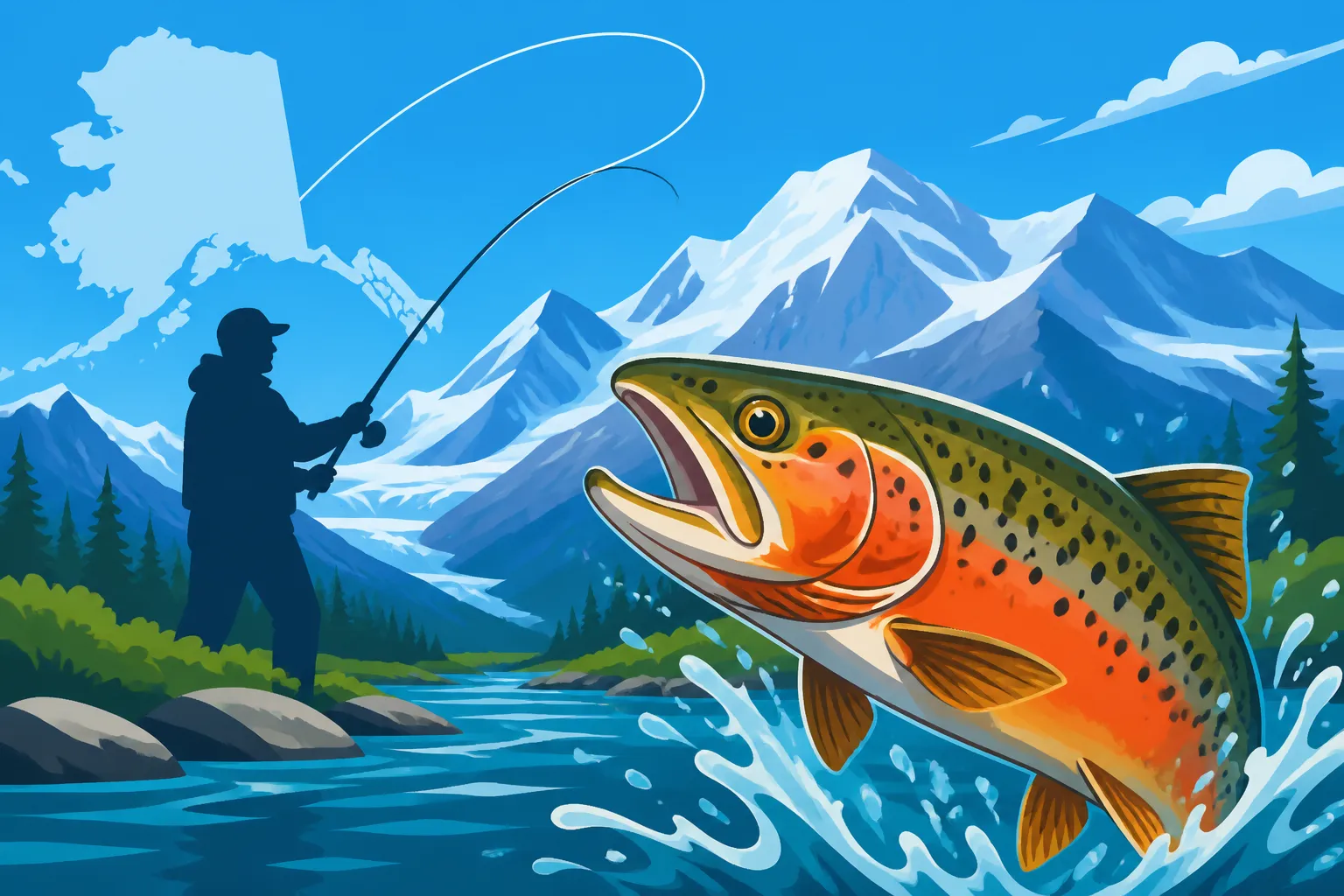
Alaska’s cutthroat are coastal cutthroat trout, the same subspecies found down the Pacific coast through British Columbia, Washington and Oregon. In Alaska, they hug the coast. You will find them across Southeast Alaska, from the Ketchikan area north through Prince of Wales Island, Wrangell, Petersburg, Sitka, Juneau and up toward Yakutat, with the northern edge of their range reaching Prince William Sound around Cordova. You will not find native cutthroat in the Interior, on the Kenai, in Bristol Bay or in the Arctic. For a general profile of the fish, see Alaska Cutthroat Trout: Facts and Fishing Tips.
Three Life Histories, Three Kinds of Water
Coastal cutthroat in Alaska do not all live the same way, and understanding the differences is the key to finding them.
- Sea-run cutthroat spend part of each year in salt water, feeding along beaches and estuaries, then return to fresh water to spawn and overwinter.
- Stream-resident cutthroat stay in small creeks their whole lives and rarely grow large.
- Lake-resident cutthroat live in lakes and their inlet and outlet streams, and these fish produce the biggest trout because they feed on sticklebacks, sculpins and young salmon.
Each type shows up in different places at different times, so the question “where” always comes with “when.”
Why They Can Be Hard to Find
Cutthroat often share water with Dolly Varden, rainbow trout, steelhead and salmon, and anglers who do not look closely miss them entirely. Look for the red or orange slash under the lower jaw, a scattering of spots across the whole body including below the lateral line, and a longer upper jaw that extends past the back of the eye. Cutthroat and rainbows also hybridize where they overlap, so some fish show traits of both.
Comparing Cutthroat Types
| Type | Typical Size | Where to Look | Best Season |
|---|---|---|---|
| Sea-run | 12 to 18 inches, some larger | Estuaries, tidal creeks, lower rivers | Spring and late summer into fall |
| Stream-resident | 6 to 12 inches | Small forested creeks | Summer |
| Lake-resident | 12 to 20 inches, occasional bigger fish | Lakes, inlets and outlets | Late spring, early summer, fall |
The Best Regions for Alaska Cutthroat
Prince of Wales Island
Prince of Wales is one of the best cutthroat destinations in the state. The island has a large road network for Southeast Alaska, built mostly for logging, which gives anglers access to dozens of streams and lakes. The Thorne River system holds sea-run and resident cutthroat along with steelhead and salmon. The Karta River, flowing out of a wilderness area into Kasaan Bay, is known for cutthroat in its lakes and lower river, and is reached by trail or boat. The Sarkar system and many smaller lake chains around the island are worth exploring with a map and a rental vehicle.
Most visitors reach the island by ferry or floatplane from Ketchikan, then base themselves in Craig, Klawock or Thorne Bay. Bring a good map, a spare tire and patience. Many roads are gravel, signage is limited and cell service is spotty.
Ketchikan and Wrangell
Around Ketchikan, cutthroat live in a number of lakes and streams reachable by road, trail or floatplane. The Naha River system north of town has a trail along it and lakes that hold cutthroat, and floatplane trips reach many remote lakes in Misty Fjords and on Revillagigedo Island. For the bigger picture of the area’s options, see Ketchikan Fishing Guide.
Wrangell has fewer visitors and plenty of lake and stream fishing, with Forest Service cabins on several lakes. Best Fishing Spots Near Wrangell, Alaska lists the main access points. Wrangell also sits near the mouth of the Stikine River, a big glacial river whose clearwater tributaries can hold cutthroat.
Petersburg
Petersburg sits on Mitkof Island, and Petersburg Creek, across the Wrangell Narrows on Kupreanof Island, is a well-known cutthroat stream with a lake and a Forest Service trail. Reaching it takes a short boat ride and a careful look at tides. Other creeks on Mitkof and the surrounding islands produce sea-run fish in spring and fall. Best Fishing Spots Near Petersburg, Alaska covers more of the area.
Juneau and Admiralty Island
Juneau is a surprisingly good cutthroat town. Turner Lake, reached by floatplane, has a strong reputation for large lake cutthroat and a Forest Service cabin. Windfall Lake, reached by a trail off the Glacier Highway north of town, is a popular day hike with fishing for cutthroat and Dolly Varden. Several road-accessible creeks and beaches hold sea-run fish in spring. For the rest of the region, check Juneau Fishing Guide.
Across Stephens Passage, Admiralty Island holds lake chains connected by the Cross-Admiralty Canoe Route, and Hasselborg Lake is a classic cutthroat destination with several public-use cabins. Admiralty also has one of the densest brown bear populations in the world, so plan your camp and your fish handling with that in mind.
Sitka and Baranof Island
Sitka’s road system is short, but anglers can reach several streams and a few lakes on foot, and floatplanes and boats open up lakes on Baranof and Chichagof islands. Cutthroat in this area tend to be lake residents and sea-run fish that enter streams in spring. Sitka Fishing Guide gives more context on fishing in this part of the region.
Yakutat and the Northern Edge
Yakutat is best known for steelhead and salmon on the Situk River, but the Situk and other nearby streams also hold cutthroat. Farther west, cutthroat reach the northern edge of their range in Prince William Sound, where streams and lakes around Cordova offer a chance at sea-run and lake fish. Best Fishing Spots Near Cordova, Alaska is a good place to start if you are looking that far north.
Regional Summary Table
| Region | Access | Water Types | Notable Spots |
|---|---|---|---|
| Prince of Wales Island | Ferry or floatplane, then road | Rivers, lake chains | Thorne, Karta, Sarkar |
| Ketchikan | Road, trail, floatplane | Lakes, streams | Naha River system, remote lakes |
| Wrangell | Boat, floatplane | Lakes with cabins, tributaries | Stikine tributaries, cabin lakes |
| Petersburg | Boat, trail | Creek and lake | Petersburg Creek |
| Juneau and Admiralty | Road, trail, floatplane | Lakes, beaches, creeks | Turner, Windfall, Hasselborg |
| Sitka | Foot, boat, floatplane | Streams, lakes | Baranof and Chichagof lakes |
| Yakutat and Cordova | Road, boat, floatplane | Rivers, lakes | Situk and Cordova-area waters |
When to Fish Each Type of Water
Timing matters as much as location. A creek that is full of sea-run cutthroat in May might seem empty in July.
Spring
Spring is prime for sea-run cutthroat. Fish that overwintered in fresh water start dropping back toward salt water, and they feed heavily on outmigrating salmon fry and smolt near stream mouths and estuaries. Fish the lower few hundred yards of a stream, the tidal flats outside the mouth and the beaches nearby. Small streamers that imitate fry or smolt work well.
Lake fish also wake up as the ice comes off and water warms. Inlets and outlets concentrate cutthroat, and shallow flats near the shoreline can produce good fishing on calm days.
Summer
In summer, sea-run cutthroat are mostly in salt water, cruising beaches and feeding on small fish and invertebrates. Some anglers target them from shore with small spoons and flies. Lake and stream residents remain available, though warm surface water can push lake fish deeper in midday. Early morning and evening are the best times to fish lake shorelines.
Late Summer and Fall
When salmon return to spawn, cutthroat follow them. Sea-run fish move back into streams and feed on loose eggs and later on decaying salmon flesh. This is one of the best times to catch big cutthroat in rivers. Bead patterns and egg flies drifted below spawning salmon work just as they do for rainbows, and Best Flies for Alaska Trout covers the patterns. In lakes, cutthroat feed heavily before winter, so fall can produce some of the year’s biggest fish near inlets.
A Simple Seasonal Plan
- In May and early June, fish estuaries and lower streams for sea-run fish feeding on salmon fry.
- In June and July, focus on lakes, especially inlets and outlets in the early morning.
- In August and September, fish streams below spawning salmon with egg and flesh patterns.
- In late fall, return to lakes and lower rivers before cold weather shuts things down.
Reading a Cutthroat Lake
When you arrive at a new lake, resist the urge to row straight to the middle. Cutthroat in Southeast lakes relate to structure and food, and most of that sits near the edges. Start at the inlet, where moving water carries insects and small fish into the lake, and work the drop-off where the shallow delta falls into deeper water. Then try the outlet, which concentrates fish heading downstream, and any rocky points or fallen trees along the shoreline.
On a calm evening, watch for rises and swirls along the shoreline. Lake cutthroat often cruise the edges in loose groups, and a well-placed leech or small streamer in front of a cruising fish is often eaten on the first strip. On windy days, fish the side of the lake the wind is blowing toward, where food piles up and the chop gives fish cover.
Common Mistakes
- Fishing the wrong water for the season, such as hammering an estuary in July after sea-run fish have moved into salt water.
- Using gear that is too heavy, which spooks fish in clear, small streams.
- Ignoring tides, which control when sea-run fish move in and out of creek mouths.
- Assuming every trout is a rainbow and missing the regulations that apply to cutthroat.
- Underestimating weather and leaving no buffer for floatplane delays.
Gear, Regulations and Practical Tips
Tackle That Works
A 5 or 6 weight fly rod covers most cutthroat fishing in Alaska. Use a floating line for streams and beaches and an intermediate or sinking line for lakes. Good fly patterns include small baitfish streamers, leeches, sculpins, egg patterns and flesh flies.
Spin anglers do well with a light to medium-light rod, 6 to 8 pound line, small spinners, spoons and soft-plastic minnows. In many Southeast waters, single-hook or artificial-lure rules may apply, so you may need to swap treble hooks for single hooks.
A lot of traveling anglers order basic gear before the trip. Amazon is a convenient place to stock up on small spinners, spare leaders, split shot and hooks in the sizes you need, and to compare rain gear and waders without driving from store to store. Order early enough that everything arrives before you leave, because shipping to Southeast Alaska towns can take a while if you forget something.
Rain Gear and Waders
Southeast Alaska is a temperate rainforest. Expect rain on most days, even in summer. Good rain gear is not optional, and Best Rain Gear for Alaska Fishing explains what to look for. Breathable waders with a good wading boot are useful on streams and lakes, though many anglers fish beaches in rubber boots and quick-dry pants. If you are still deciding, Do You Need Waders for Alaska Fishing lays out the options. Many anglers buy a packable wading jacket, a dry bag and a spare pair of gloves from Amazon before the trip so they have backups when the first set gets soaked.
Regulations
Cutthroat regulations in Southeast Alaska vary by water body and can include size limits, low daily bag limits, single-hook artificial-lure rules and catch-and-release sections. Many lakes and streams have special rules that differ from the general region. Always check the current regulation summary for the specific water you plan to fish, and read Alaska Southeast Regulations Summary before your trip. Adult anglers need a sport fishing license, and the age thresholds and license options differ for residents and nonresidents.
Forest Service Cabins
The Tongass National Forest has many public-use cabins on cutthroat lakes, often with a rowboat provided. They make a lake trip far more comfortable and give you a dry base when weather turns. Cabins on popular lakes book up well in advance, so reserve early. Bring your own life jackets and know how to handle a rowboat in wind. A cheap headlamp, a small water filter and a lightweight tarp from Amazon or a local outfitter make cabin life easier, since most cabins have no electricity and only a basic stove.
Bears and Safety
Brown and black bears are common across Southeast Alaska, especially on Admiralty, Baranof and Chichagof islands and around salmon streams in late summer. Make noise, carry bear spray, keep fish away from camp and never leave a catch unattended. How to Fish Safely Around Alaska Bears goes into detail. On floatplane trips, confirm pickup times and carry extra food in case weather delays your flight.
Handling and Releasing Fish
Cutthroat populations in many small Alaska lakes and streams grow slowly and can be hurt by heavy harvest. Many anglers release most of what they catch. Use barbless hooks, keep fish in the water as much as possible and avoid squeezing them. Large lake cutthroat, in particular, may be decades in the making, so a quick photo and release keeps them in the water for the next angler.
A Sample Trip
Imagine a five-day trip to Juneau in late May. On day one, you fish road-accessible beaches and creek mouths near town for sea-run cutthroat chasing salmon fry. Day two is a hike to Windfall Lake, where you fish the shoreline and outlet. Days three and four are spent at a Forest Service cabin on Turner Lake, reached by floatplane, fishing the inlet with streamers and leeches. On the last day, you return to town and fish another estuary on the evening tide. That kind of plan lets you sample both sea-run and lake fish in one week and adapt to weather.
Cutthroat fishing in Alaska rewards anglers who plan around access, timing and local rules. Choose a region, pick the type of water that fits the season, and give yourself time to explore. The fish are not always easy to find, but that is part of what makes them special.
Disclaimer
This article is for general informational purposes only and does not constitute professional advice. Laws, prices and regulations vary by location and change over time. Consult a qualified professional for guidance on your specific situation.