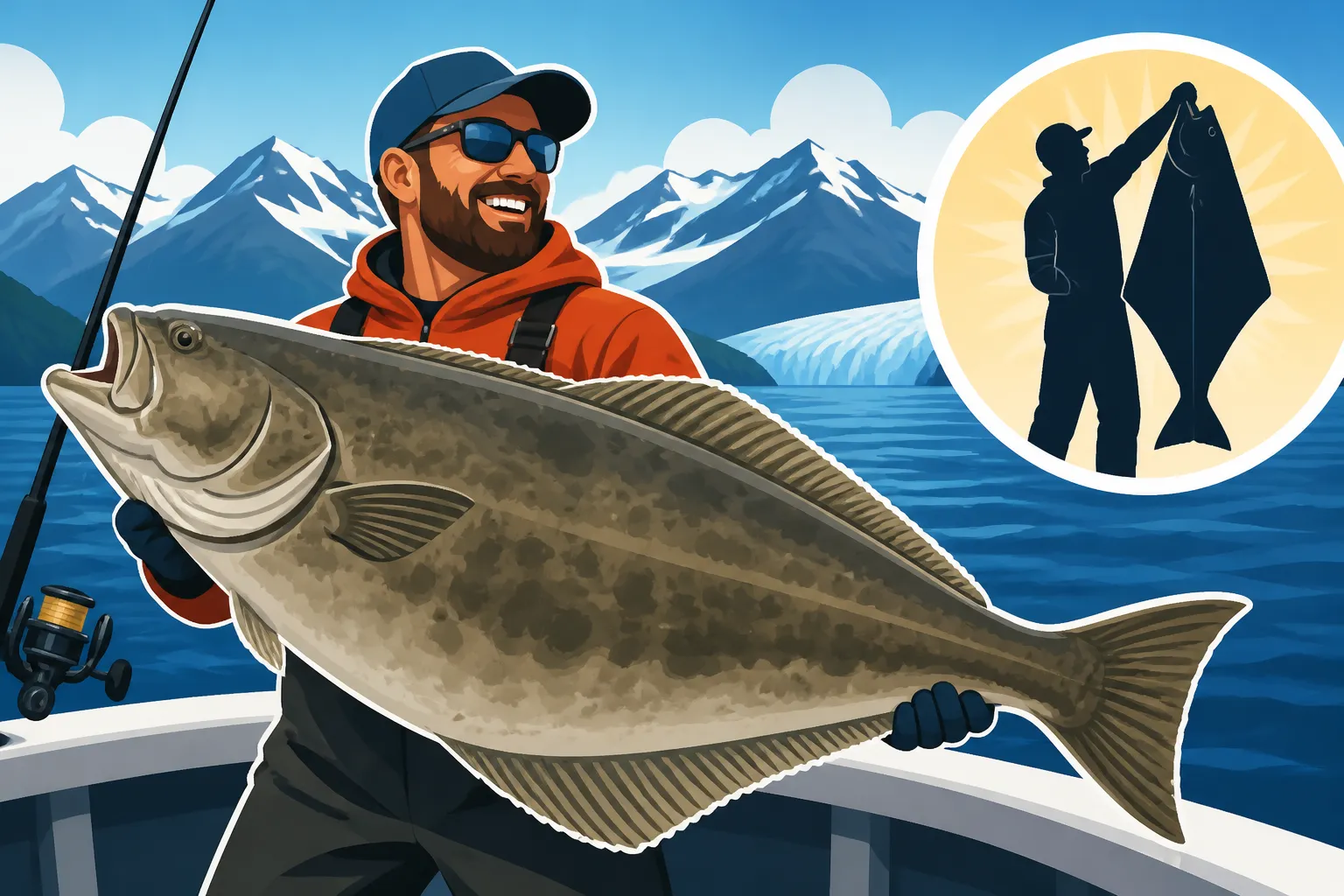
Alaska Halibut Size and World Record
There's nothing quite like the dream of hooking into a monster halibut, a true "barn door" of the deep. Many anglers journey to Alaska specifically to chase that behemoth, a fish so large it can dwarf a grown person. But what exactly defines a truly giant halibut, what’s the largest one ever officially caught, and where do you even begin to look for such an incredible creature? This guide dives deep into the world of Alaska's massive halibut, covering their impressive sizes, the legendary world record, and how you might just catch one yourself.
The Allure of Alaska's Giant Halibut
Alaska's waters are legendary for many things, but perhaps none more iconic than the sheer size of its Pacific Halibut. These flatfish aren't just big; they're in a league of their own, growing to dimensions that astound even seasoned anglers. The pull of catching one of these magnificent giants is a primary reason many plan an Alaska fishing trip, hoping to experience the ultimate tug-of-war with a true denizen of the deep.
Why Alaska Produces Such Large Halibut
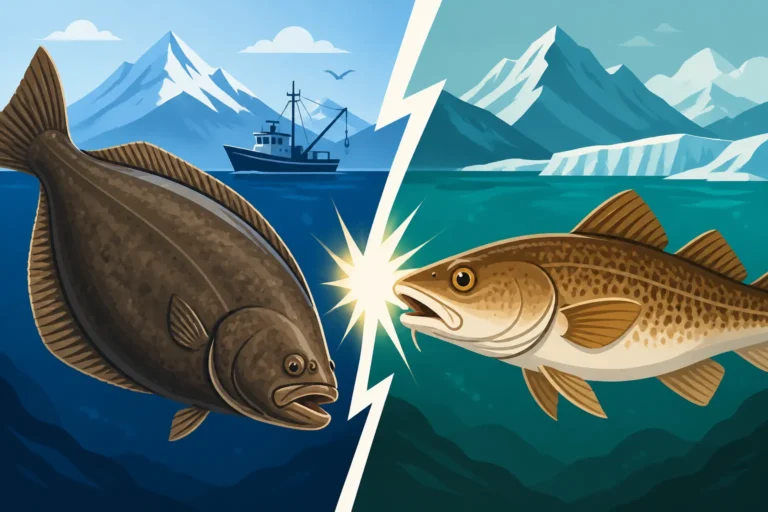
The secret to Alaska's colossal halibut lies in its unique marine environment. The frigid, nutrient-rich waters of the Gulf of Alaska and the Bering Sea provide an almost perfect habitat for these apex predators. Think of it like a giant, cold-water buffet that never closes! The upwelling currents bring a constant supply of food – everything from cod, pollock, and crabs to other bottom-dwelling fish. This abundance of protein allows halibut to grow steadily over many years, accumulating mass at an impressive rate.
Furthermore, these cold waters mean a slower metabolism for the halibut, which contributes to their longevity. Unlike warmer water species that might grow fast and die young, Alaskan halibut can live for decades, allowing them ample time to reach truly monumental sizes. It’s a delicate balance of temperature, food supply, and long lifespans that culminates in the extraordinary specimens found here. This robust ecosystem is why places like Homer, Seward, and Kodiak are consistently lauded as the Best Halibut Fishing in Alaska.
Understanding Halibut Growth and Lifespan
Pacific Halibut are fascinating creatures, starting their lives upright like most fish before gradually flattening and having one eye migrate to the other side of their head. They settle to the bottom as juveniles and begin their slow, steady growth. A halibut can live to be 50 years old or even older, with the females generally growing much larger and living longer than the males. This is why most of the truly gigantic "barn door" halibut landed are almost always female.
In their early years, they grow relatively quickly, but as they age, their growth rate slows down, though they continue to put on weight. A 10-year-old halibut might weigh around 50-70 pounds, while a 20-year-old could easily be over 150 pounds. The largest, oldest individuals often reside in deeper, colder waters, constantly feeding and avoiding predation, slowly becoming the behemoths of legend that anglers dream of encountering.
Distinguishing Between "Chicken" and "Barn Door" Halibut
If you spend any time talking to Alaskan halibut anglers, you'll quickly hear terms like "chicken" and "barn door" thrown around. These aren't official scientific classifications, but rather common, affectionate (or awe-filled) nicknames used to categorize halibut by size.
A "chicken" halibut typically refers to a smaller, more manageable fish, usually in the 10 to 40-pound range. These are often the ones targeted for their tender, flaky meat, perfect for dinner. They put up a good fight, but most anglers can handle them with relative ease. Charter captains often encourage anglers to keep "chicken" halibut due to their excellent eating quality and sustainable catch limits.
A "barn door," on the other hand, is a different beast entirely. We're talking about halibut exceeding 100 pounds, often pushing into the 200, 300, or even 400-pound class. These fish are massive, powerful, and require significant strength and specialized gear to land. The fight can be brutal, testing an angler's endurance and tackle to its limits. Landing a "barn door" is often a group effort, and it's a badge of honor among the fishing community.
The Official World Record Halibut
For many, the ultimate goal isn't just to catch a big fish, but to catch the biggest. The International Game Fish Association (IGFA) maintains the official world records for various fish species, and the Pacific Halibut is no exception. It’s a highly coveted record, representing the pinnacle of sportfishing achievement.
The IGFA All-Tackle World Record
The current IGFA All-Tackle World Record for Pacific Halibut stands at an astonishing 459 pounds. This monstrous fish was caught off Unalaska, Alaska, by angler Jack Tragis on June 11, 1996. Imagine reeling in a fish that outweighs a grizzly bear! This record has held for decades, a testament to the rarity and immense power of such a catch.
This fish wasn't just big; it was exceptionally conditioned, demonstrating the prime feeding grounds around the Aleutian Islands. Such a catch requires not only incredible luck but also the right gear, technique, and a boat crew ready to handle a fish of that magnitude. It's the kind of story that gets told and re-told around campfires for generations.
Alaska's State Record Halibut
Interestingly, Alaska's state record for Pacific Halibut is one and the same as the IGFA All-Tackle World Record. This means Jack Tragis's monumental 459-pound halibut from Unalaska is recognized as both the largest Pacific Halibut ever officially caught on rod and reel globally and the largest caught within Alaskan waters.
It's a point of pride for Alaskan anglers and speaks volumes about the unparalleled quality of fishing in the state. While other massive halibut have certainly been caught by commercial fishermen or in ways that don't adhere to sportfishing rules, for the recreational angler, this 459-pound mark remains the one to beat.
Why Some Giant Catches Aren't Records
You might occasionally hear whispers or see photos of even larger halibut caught in Alaska. So why aren't they the world record? There are several key reasons why a truly gigantic catch might not make it into the record books.
Firstly, many immense halibut are caught commercially using longlines or trawls. While these catches might be significantly larger than the sportfishing record, they don't count under IGFA rules, which focus on recreational angling using rod and reel. Secondly, to be considered for an IGFA record, strict rules must be followed regarding tackle, fighting methods, and weighing procedures. This includes using a single rod and reel, no assistance in fighting the fish, and having the fish weighed on certified scales by a verified witness. Many anglers, especially those on private trips, might not be thinking about record requirements when they're battling a fish of a lifetime. Sometimes, a trophy fish is simply released after a quick photo, especially with the growing emphasis on conservation and catch-and-release practices for large, breeding females.
What Influences Halibut Size and Where to Find Giants
If you're dreaming of landing a truly colossal halibut, understanding where and when to look is crucial. It's not just about luck; it's about knowing the patterns and preferences of these massive flatfish.
Prime Locations for Trophy Halibut
While big halibut can technically be found across Alaska's vast coastline, some locations are undeniably hotbeds for trophy-sized fish. The deep, fertile waters off the coast of Homer, often called the "Halibut Fishing Capital of the World," consistently produce impressive catches. Seward, with its proximity to the abundant waters of Resurrection Bay and the Gulf of Alaska, is another prime spot.
Further west, the waters around Kodiak Island and the remote areas of the Aleutian Islands, where the actual world record was caught, are known for holding truly enormous halibut. Sitka, in Southeast Alaska, also offers incredible opportunities, often combining excellent halibut fishing with world-class salmon runs. These areas share common traits: deep, cold water, strong currents, and a rich food web that sustains the largest fish. If you're planning a trip, looking into Best Halibut Fishing in Alaska can give you an edge on locations.
Deep Water vs. Shallow Water Giants
It's a common misconception that all the biggest halibut live in extreme depths. While larger halibut are often found in deeper waters (200-800 feet), especially in summer, they do move. They'll often push into shallower feeding grounds (50-150 feet) during certain tidal cycles or when schooling baitfish move closer to shore.
The key is often structure – ledges, pinnacles, drop-offs, and underwater plateaus – where currents concentrate bait. These topographical features provide ambush points for the halibut, regardless of depth. Experienced captains and guides, especially those running Alaska Fishing Charters: Complete Guide, know these local honey holes like the back of their hand, often using sophisticated sonar to locate these prime feeding zones where "barn doors" lurk.
Seasonal Factors and Halibut Behavior
Halibut fishing in Alaska is largely seasonal, peaking from May through September. The biggest fish often become more accessible during the warmer summer months when they actively feed. As the water temperatures rise slightly, their metabolism increases, making them more aggressive feeders. This is why many anglers plan their trips for June, July, and August, hoping to hit the peak of the season. You can learn more about specific timing in guides like Best Time to Catch Halibut in Alaska and Alaska Halibut Season Explained.
Spawning also plays a role. Halibut typically spawn in deep offshore waters during the winter months. After spawning, they return to shallower, more accessible feeding grounds, often ravenously hungry. Understanding these seasonal migrations and feeding patterns is crucial for anyone hoping to tangle with a truly oversized halibut.
Strategies for Catching a Trophy Halibut
Catching a halibut of any size is a blast, but targeting a "barn door" requires a whole different level of preparation, skill, and sheer grit. This isn't your casual Sunday afternoon fishing trip.
Essential Gear for "Barn Doors"
Forget your lightweight trout rod; you'll need serious tackle for Alaska's giant halibut. We're talking about heavy-duty conventional rods, often 6-7 feet long with a fast taper and a stout backbone, designed to handle extreme pressure. Paired with these are robust conventional reels, capable of holding hundreds of yards of 80-150 pound braided line. Many experienced anglers prefer reels with a high retrieve ratio to quickly gain line on a deep-diving fish, and a strong drag system is non-negotiable.
Terminal tackle is equally important. Think heavy-duty swivels, 200-300 lb test monofilament or fluorocarbon leaders, and large circle hooks (16/0 to 20/0) to ensure a solid hookset in a powerful jaw. Some anglers even use specialized deep-drop lights, which can be found on platforms like Amazon, to attract halibut in deep, dark waters. Don't skimp on quality here; a cheap component is almost guaranteed to fail when that 200-pounder decides to make a run.
Best Baits and Techniques for Large Halibut
When it comes to bait for giant halibut, bigger is often better. Whole or large chunks of salmon heads, herring, cod, or even octopus are highly effective. These baits emit strong scents and present a substantial meal that appeals to larger, more opportunistic feeders. Fresh bait is always preferred, but quality frozen bait works well too.
The primary techniques involve bottom fishing or jigging.
- Bottom Fishing: This involves dropping your baited rig to the seafloor and letting the current do the work. The goal is to keep your bait just off the bottom, where halibut cruise. You'll need significant lead weight, sometimes up to 2-3 pounds, to hold bottom in strong currents.
- Jigging: This active technique involves vertically dropping heavy metal jigs (often 12-24 ounces) to the bottom and then rhythmically lifting and dropping them to simulate a wounded fish. Jigs tipped with a piece of bait, like a herring fillet, can be incredibly enticing. Many anglers find jigging more engaging and it can often trigger aggressive strikes from curious halibut. For more detail, check out How to Catch Halibut in Alaska.
The Fight of a Lifetime and Landing Big Fish
Hooking into a "barn door" halibut is an experience you won't soon forget. The initial bite can feel like your rod got snagged on a truck, followed by powerful, head-shaking runs that can strip line off your reel at an alarming rate. It's a test of strength, endurance, and patience. The key is to maintain constant pressure, pump the rod to gain line, and be prepared for the fish to make repeated dives back to the bottom.
Landing a truly large halibut typically involves gaffs and harpoons once the fish is alongside the boat. This is where teamwork with your captain and deckhands is critical. Safety is paramount – a thrashing halibut of several hundred pounds is incredibly powerful and can cause serious injury. Once subdued, many charter operations have specialized lifts or "fish doors" to bring the massive fish aboard. Remember, proper handling is important, especially if you plan to keep your catch, or if you're practicing Alaska Catch-and-Release Best Practices.
Here's a quick comparison of halibut size categories:
| Category | Approximate Weight Range | Common Characteristics | Angler Experience Needed | Best Use |
|---|---|---|---|---|
| "Chicken" | 10 – 40 lbs | Manageable size, excellent table fare, relatively easier to fight. | Beginner to Intermediate | Fillets for fresh eating or light smoking |
| "Medium" | 40 – 100 lbs | Good fight, provides substantial amount of meat, common charter catch. | Intermediate | Excellent for freezing, smoking, diverse culinary uses |
| "Barn Door" | 100 – 459+ lbs (World Record) | Extreme fight, requires heavy tackle and skill, often targets of dedicated trophy hunters. Can be difficult to manage on deck. | Advanced | Trophy photos, large volume for sharing/processing, often released if female |
Keeping Your Trophy and Navigating Regulations
Once you've battled and landed your dream halibut, the adventure isn't over. You'll need to know how to properly handle your catch and navigate Alaska's specific fishing regulations, which can be quite complex, especially for halibut.
Processing and Transporting Your Catch
A big halibut means a lot of delicious meat. Most charters offer fish processing services right on the dock or recommend local processors. They'll fillet, skin, portion, vacuum seal, and often freeze your catch, preparing it for transport. This is a crucial step to ensure the quality of your hard-won fillets. You can find detailed advice on How to Fillet a Halibut and how to prepare it for its journey home.
When planning your trip, consider how you'll get your fish home. Many services offer shipping directly to your door, or you can check insulated fish boxes as airline baggage. Always check airline regulations regarding frozen fish well in advance. Having a plan for your catch before you even leave ensures that none of that precious Alaskan bounty goes to waste.
Alaska Halibut Regulations and Limits
Alaska's fishing regulations are designed to manage sustainable fisheries, and halibut, being such a popular and valuable species, has specific rules. These regulations can vary by region, time of year, and even whether you're fishing on a guided charter or unguided. It's imperative to always check the most current Alaska Department of Fish and Game (ADF&G) regulations before you head out.
For charter anglers, there are often daily bag limits (e.g., Alaska Halibut Daily Limit for Charter Anglers), and sometimes size restrictions or even "reverse slot limits" designed to protect larger, breeding females. For unguided anglers, the limits might be different, for example, Alaska Halibut Limit for Unguided Anglers. Additionally, specific regulations like the "Thursday Closure" in some areas for charter boats are common. Always double-check with your charter operator or local ADF&G office; emergency orders can change rules on the fly, so staying informed is key.
Disclaimer
Fishing in Alaska involves inherent risks, including but not limited to adverse weather conditions, encounters with wildlife, and marine hazards. Always prioritize safety, check local regulations, and consider hiring experienced guides or charters. The information provided in this guide is for general informational purposes only and should not be considered legal or professional advice. Always consult the official Alaska Department of Fish and Game regulations for the most current and accurate rules.