Alaska King Salmon Annual Limit for Non-Residents
One of the biggest head-scratchers for non-resident anglers dreaming of a trip to Alaska is figuring out the exact rules for King Salmon. It’s not just about the daily limit you see posted; there’s an overarching annual limit that can quickly get confusing, especially if you plan multiple trips or fish in different areas. This guide aims to demystify the Alaska King Salmon annual limit for non-residents, ensuring you understand the regulations, track your catch correctly, and enjoy a worry-free fishing adventure.
Why Annual Limits Exist for King Salmon
It’s easy to feel a bit overwhelmed by all the regulations in Alaska, and many non-residents wonder why there are so many specific rules, especially for prized fish like King Salmon. The truth is, these limits aren't put in place to make your life harder, but rather to protect a truly precious and often vulnerable resource. King Salmon, or Chinook, are vital to Alaska's ecosystems, its Native cultures, and its massive sport and commercial fishing industries. However, these magnificent fish have faced significant challenges in recent years, with many runs experiencing lower returns.
Conservation Efforts for Sustainable Fisheries
The Alaska Department of Fish and Game (ADF&G) is constantly monitoring salmon runs. They collect data on escapement (the number of fish that make it to spawning grounds), overall run strength, and harvest rates. When a specific stock or run is projected to be weak, managers have to make tough decisions to ensure enough fish get upstream to spawn, safeguarding future generations. This is the core of sustainable fisheries management. If too many fish are caught, especially by those who don't rely on them for subsistence, the long-term health of the population is at risk. This focus on sustainability benefits everyone, ensuring that these incredible fishing opportunities can continue for years to come.
Balancing Angler Opportunity and Resource Protection
Alaska welcomes anglers from all over the world, recognizing the tremendous economic and recreational value of sport fishing. However, managing a resource like King Salmon involves a delicate balancing act. On one hand, the state wants to provide opportunities for visitors to experience the thrill of catching these legendary fish. On the other hand, it has a responsibility to protect those fish. Non-resident annual limits, alongside daily and possession limits, are a key tool in this balance. They help distribute the harvest more equitably, reduce pressure on specific runs, and allow more Alaskans and visitors alike to have a chance at catching a King without overexploiting the population. Without these measures, certain rivers could be fished out entirely, ruining not just the fishing but the entire ecosystem. It's a tough but necessary call that helps preserve the magic of Alaska King Salmon: Complete Guide for everyone.
The Non-Resident Annual King Salmon Limit Explained
When you’re planning your Alaskan King Salmon adventure, whether it’s your first time or your tenth, understanding the non-resident annual limit is absolutely critical. It’s one of those rules that can easily catch you off guard if you’re not tracking it diligently. Unlike resident anglers, non-residents have a much stricter annual cap on King Salmon retention across the entire state, regardless of where or when they fish.
The General Rule: A Statewide Cap
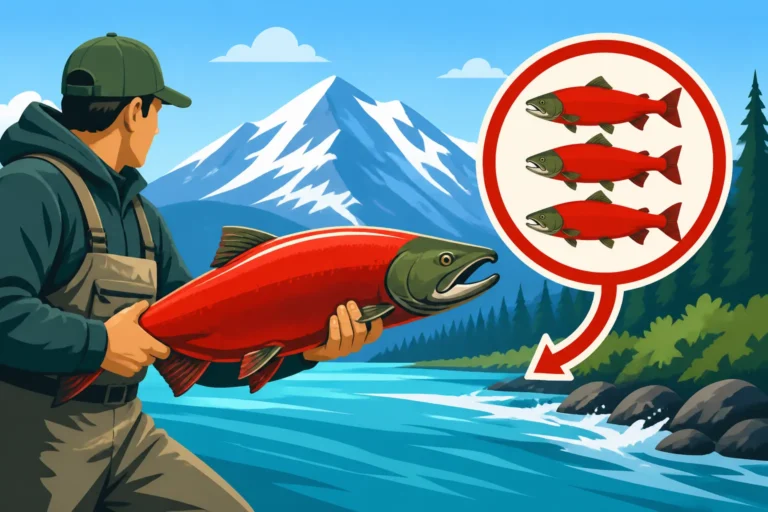
For most sport fishing in Alaska, non-resident anglers are typically restricted to an annual limit of three King Salmon 20 inches or greater in length. This limit is statewide, meaning it applies to all waters of Alaska, from the saltwater bays of Southeast to the mighty rivers of Southcentral, like the Kenai and Kasilof. It's not three Kings per trip, or three Kings per region, but three Kings total for the entire calendar year.
This annual limit is in addition to any daily or possession limits that might be in effect for a particular area or time. For example, if you’re fishing the Kenai River during a period where the daily limit is one King Salmon, and you catch and retain one, you’ve now used one of your three annual King Salmon. If you then fly up to Southeast Alaska later in the summer and catch another King, you’re down to your last one for the year. It’s a cumulative tally that every non-resident must track meticulously. For more details on overall regulations, check out Alaska Fishing Regulations Explained.
The Role of the Alaska Harvest Record Card
This is where the Alaska Harvest Record Card becomes your best friend – and a legal necessity. Every non-resident angler who purchases an Alaska fishing license is required to carry a harvest record card or include the harvest information directly on their physical or digital license. This card is not just a suggestion; it’s a legal document where you must record every King Salmon you retain immediately after landing it.
Here’s why it’s so important:
- Tracking Your Annual Limit: The harvest record card is the official way you track your three King Salmon. You'll record the date, location, and species (King Salmon) of each retained fish.
- Enforcement: Alaska Wildlife Troopers frequently check harvest record cards. If you’re found with an unrecorded King Salmon or have exceeded your annual limit, you face significant fines and penalties.
- Conservation Data: The data collected from harvest cards helps ADF&G biologists monitor harvest rates and make informed management decisions, which ties back to the conservation efforts we discussed earlier.
Don't wait until you're back at the lodge or in your truck to fill it out. The regulation states "immediately upon retention." This means as soon as that beautiful King is in your boat or on the bank and you decide to keep it, you need to mark it down. You can often find durable, waterproof harvest cards for purchase on sites like Amazon, or sometimes included with your fishing license. Learning How to Fill Out an Alaska Harvest Record Card is a simple, but crucial, step.
Here's a simplified table illustrating the tracking process for a non-resident angler:
| Date | Species Retained | Location (River/Area) | Annual Count | Notes |
|---|---|---|---|---|
| June 15, 2024 | King Salmon | Kenai River | 1 of 3 | Caught during a guided trip. |
| July 3, 2024 | King Salmon | Kasilof River | 2 of 3 | Unguided bank fishing. |
| August 1, 2024 | King Salmon | Sitka (Saltwater) | 3 of 3 | Last King Salmon for the year. Cannot retain any more King Salmon until Jan 1, 2025. |
| August 15, 2024 | King Salmon | Susitna River | Exceeded | Violation! Must release all future King Salmon. |
Remember, once you hit that three-fish annual limit, any King Salmon you catch for the remainder of the calendar year must be immediately released unharmed.
Navigating Varying Regional and In-Season Rules
While the statewide annual limit for non-resident King Salmon is a pretty consistent baseline, Alaska fishing is rarely that simple. The state is vast, with incredibly diverse ecosystems and varying fish stocks. This means that what applies on the Kenai River in June might be completely different from what applies in Southeast Alaska in July, or even what applies on the same river just a week later. It's a dynamic system that requires constant vigilance from anglers.
Regional Differences in King Salmon Limits
Alaska is broken down into various management regions, each with its own specific regulations tailored to local fish populations, harvest histories, and conservation needs. For King Salmon, these regional rules often dictate daily bag limits and size restrictions that can be much more stringent than the statewide annual limit. For instance, the bag limits in the freshwater rivers of Southcentral Alaska, like the Kenai Peninsula, often differ significantly from the saltwater regulations found in Southeast Alaska.
For example, a typical daily limit for King Salmon might be one fish per day in a given river, while in a different region, it could be two. Some areas might have specific slot limits, where only King Salmon within a certain size range can be retained, or reverse slot limits, like those sometimes seen for halibut, that aim to protect larger, more reproductively valuable fish. Always double-check the regulations booklet for the specific region you plan to fish. ADF&G publishes comprehensive booklets annually, and an electronic version is available on their website, which you can easily download to your phone or tablet. Getting familiar with How to Read Alaska Fishing Regulations is a skill every angler visiting Alaska needs to master.
Emergency Orders and In-Season Changes
Perhaps the most challenging aspect of fishing in Alaska is the possibility of in-season regulation changes, known as Emergency Orders (EOs). These EOs are issued by ADF&G to respond quickly to changes in fish run strength. If a King Salmon run is projected to be weaker than anticipated, ADF&G might issue an EO to reduce bag limits, implement catch-and-release only, restrict gear, or even close a fishery entirely. Conversely, if a run is exceptionally strong, limits might be liberalized.
These emergency orders can happen at any time, sometimes with very short notice. This means the regulations you read in the annual booklet or online in April could be completely different by the time you arrive in July. Missing an emergency order can lead to unintentional violations, which can be costly and frustrating.
To stay current, you should:
- Check the ADF&G Website: They have a dedicated section for emergency orders, often broken down by region.
- Sign Up for Email Alerts: Many regions offer email notification services for EOs.
- Consult Local Guides and Shops: Reputable fishing guides, like those found through Alaska Fishing Charters: Complete Guide, and local tackle shops are usually very up-to-date on the latest regulations and EOs. They often post notices and can provide real-time advice.
- Use the ADF&G Mobile App: The official app is an invaluable tool for on-the-go access to regulations and emergency orders.
Imagine you've planned your dream trip to the Kenai River in late July, hoping for a shot at a big King Salmon. You checked the regulations in May, and it said one King Salmon over 20 inches. But then, a few days before your arrival, an emergency order is issued closing the King Salmon fishery due to poor returns. If you don't check for EOs, you might unknowingly fish for and even retain a King, leading to a violation. Staying informed is truly the key to a successful and legal trip, especially when dealing with Alaska King Salmon Fishing Regulations and Limits.
Ensuring Compliance and Responsible Angling
Getting to Alaska and reeling in a majestic King Salmon is an experience many anglers dream of. But with that dream comes a responsibility to understand and abide by the rules. Compliance isn't just about avoiding fines; it's about being a respectful steward of Alaska's incredible natural resources. Non-resident anglers have a particularly important role to play, as their collective impact on the fishery can be substantial.
Double-Checking License and Stamp Requirements
Before you even cast a line, make sure your paperwork is in order. As a non-resident, you'll need an Alaska Fishing License: Complete Guide that specifically caters to your residency status and the duration of your trip (e.g., 1-day, 3-day, 7-day, 14-day, or annual). These can easily be purchased online through the ADF&G website.
Beyond the general fishing license, if you plan to target King Salmon, you will almost certainly need to purchase an Alaska King Salmon Stamp. This stamp is an additional fee that goes directly to King Salmon restoration and enhancement efforts. Even if you only intend to catch and release King Salmon, in many areas, you are still required to have the King Salmon stamp if you are targeting them. Always verify the specific requirements for the body of water you intend to fish. For instance, Alaska King Salmon Stamp Requirements will detail when and where this is necessary. Many anglers find it convenient to purchase their license and stamp online, print them out, and then keep them in a waterproof pouch, perhaps one readily available from Amazon, along with their harvest card.
Best Practices for Tracking Your Catch
The annual limit isn't something you can estimate or remember after the fact. It requires diligent, immediate recording.
- Immediate Recording: As soon as you decide to retain a King Salmon, it must be recorded on your harvest card. Don't wait until you get back to the dock or lodge. Keep a pen or pencil handy and protected from the elements. Many anglers use permanent markers to prevent smudges.
- Accuracy is Key: Ensure the date, species (King Salmon), and location are accurate. If you're unsure about the location, list the nearest major river or body of water.
- Review Your Card: Periodically review your harvest card, especially if you’re moving between different fishing locations or planning another trip later in the season. This helps you keep track of your progress toward the three-fish annual limit.
- Know Your Limits: Always confirm the daily and possession limits for the specific waters you are fishing before you start. This information is separate from the annual limit and can vary widely. Websites like Amazon sell compact, waterproof regulation booklets or cases for carrying your license and harvest card, which can be really helpful.
What Happens if You Exceed the Limit?
Exceeding your annual King Salmon limit, or any bag limit, is considered a fishing violation in Alaska, and the consequences can be severe.
- Fines: You could face substantial fines, often hundreds or even thousands of dollars per violation. The fines typically increase with the severity and number of fish over the limit.
- Forfeiture: Any illegally retained fish will be confiscated.
- Gear Forfeiture: In some cases, your fishing gear, including rods, reels, and even boats, could be seized.
- Loss of Privileges: Violations can lead to the suspension or revocation of your fishing privileges in Alaska, and potentially other states as well. You might be barred from purchasing an Alaska fishing license for several years.
- Criminal Charges: Serious or repeat violations can even lead to criminal charges.
It's a serious matter, and ignorance of the law is rarely an acceptable defense. The best approach is to be overly cautious. If there's any doubt about a regulation or whether you've reached your limit, err on the side of caution and release the fish. The memory of a beautiful catch-and-release King Salmon is far more valuable than the stress and cost of a violation. Understanding How to Avoid Alaska Fishing Violations is as important as knowing how to catch a fish.
Frequently Asked Questions About Non-Resident King Salmon Limits
It’s completely normal to have a ton of questions when you’re dealing with the intricate web of Alaska fishing regulations, especially for King Salmon. Many non-resident anglers share similar concerns, and getting clarity on these points can make your trip much smoother and more enjoyable. Let's tackle some of the most common queries.
Does the 3-King Limit Include Catch-and-Release Fish?
This is a really important distinction! The non-resident annual limit of three King Salmon applies only to those fish that you retain – meaning, those you keep and take home. If you catch a dozen King Salmon during your trip but choose to release eleven of them unharmed, only the one fish you kept counts towards your annual limit.
However, even if you only plan to catch and release, remember that in many areas, if you are targeting King Salmon, you are still required to purchase and possess an Alaska King Salmon stamp. Always check the specific regulations for your fishing location, as these rules can vary. The best practice for catch-and-release is to minimize handling, keep the fish in the water as much as possible, and use barbless hooks to reduce injury, ensuring that those fish have the best chance of survival. For more on this, look up Alaska Catch-and-Release Best Practices.
What if I Fish with a Charter?
Fishing with a charter boat is a popular option, especially for halibut and King Salmon, as the guides are experienced and the boats are well-equipped. Many non-residents assume that because they're with a professional guide, they don't need to worry about the regulations. While a good guide will absolutely help you understand the rules, the responsibility for adhering to limits, including the annual King Salmon limit, ultimately falls on you, the angler.
Here's what to keep in mind:
- Your License and Stamp: You are still required to have your own valid Alaska fishing license and King Salmon stamp (if applicable) when fishing on a charter. Do not expect the charter operator to provide this for you, though some might offer a convenient way to purchase it. Check out Do Charters Include Alaska Fishing Licenses for more.
- Harvest Card: You are personally responsible for recording any King Salmon you retain on your harvest card, immediately upon retention. Your guide might prompt you or even help you, but it's your card and your responsibility.
- Daily Limits: Charter captains are very aware of daily and possession limits for their area, and they will ensure the boat does not exceed these. However, they might not always be tracking your personal annual limit across multiple trips you've taken with different outfits. It’s crucial to communicate your annual King Salmon count to your guide, especially if you're close to hitting your three-fish limit.
For instance, if you've already kept two Kings on previous trips (which your guide wouldn't know unless you told them), and you're on a charter that allows you to keep one, you'll need to inform the guide that this is your last King for the year. A good guide will appreciate your diligence and help you ensure compliance.
How are Emergency Orders Announced?
Emergency Orders can definitely throw a wrench into well-laid plans, but thankfully, ADF&G has several ways to get the word out. Staying informed is the best defense against accidental violations.
- ADF&G Website: The official Alaska Department of Fish and Game website is the primary source. They have dedicated pages for emergency orders, usually organized by region (e.g., Southcentral, Southeast, Interior). You can often find a current list and archives of past EOs.
- Email Subscriptions: ADF&G offers free email subscription services. You can sign up to receive alerts for specific regions or fisheries directly in your inbox. This is one of the most reliable ways to get timely notifications.
- Local Media and Tackle Shops: Local newspapers, radio stations, and especially bait and tackle shops in popular fishing towns like Soldotna, Homer, or Valdez will often post emergency orders. Stopping by a local shop not only helps you get gear (perhaps a new lure you saw on Amazon) but also gives you access to the latest local intelligence.
- ADF&G News Releases and Social Media: They often issue press releases and post updates on their social media channels, which can be another quick way to get information.
- Mobile Apps: The official ADF&G app provides access to emergency orders, regulations, and fishing reports all in one convenient place on your smartphone.
It’s always a good idea to check for emergency orders right before you leave for Alaska, and then again daily or every few days while you are fishing, especially if you are targeting species like King Salmon that are subject to frequent management changes. Checking How to Check Alaska Emergency Orders Before Fishing is a smart habit for any angler.
Disclaimer
The information provided in this guide is for general informational purposes only and is not a substitute for the official Alaska Department of Fish and Game regulations. Fishing regulations are subject to change rapidly through emergency orders. Always consult the current year's Alaska Sport Fishing Regulations booklet and check the ADF&G website for the most up-to-date rules and emergency orders before engaging in any fishing activity. It is the angler's responsibility to know and follow all applicable regulations.