How to Spin Fish for Alaska Salmon
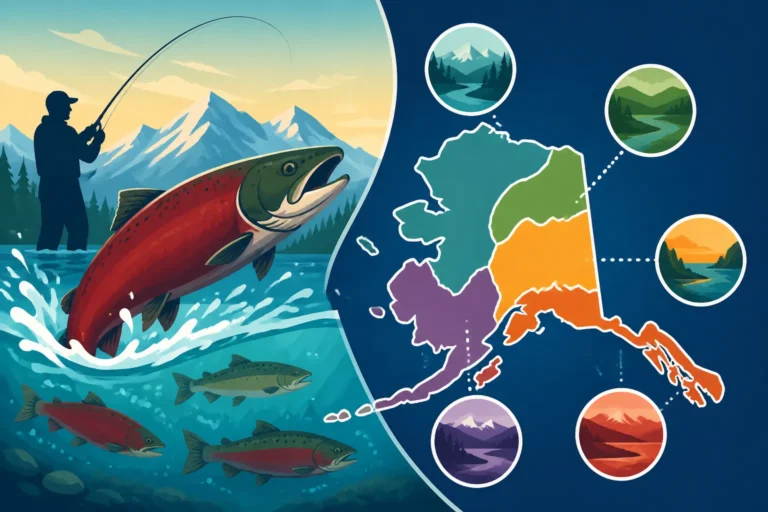
If you've ever dreamt of battling a mighty Alaska salmon, only to feel overwhelmed by the sheer scale of the gear, the vastness of the rivers, or the specific techniques needed, you're not alone. Alaska fishing can seem daunting, but spin fishing is an incredibly effective and accessible way to hook into these incredible fish. This guide is designed to demystify the process, walking you through everything you need to know to successfully spin fish for salmon across the Last Frontier.
Understanding Alaska Salmon Behavior for Spin Fishing
Before you even think about casting a line, getting a handle on salmon behavior is crucial. These aren't just any fish; they're driven by instinct, returning from the ocean to spawn in freshwater, and their focus shifts dramatically once they enter the rivers. Knowing their patterns and preferences will vastly improve your spin fishing success.
Reading the Water and Salmon Runs
Successfully spin fishing for Alaska salmon often boils down to knowing where the fish are and when they're there. Salmon, particularly when they enter freshwater, tend to follow predictable paths and hold in specific types of water. Look for seams where faster currents meet slower water, deeper pools, behind large rocks or logs that break the current, and along cut banks. These are prime resting or staging areas where salmon conserve energy before continuing their upstream journey. Observing other anglers can also give you clues, but always be ready to explore and find your own hot spots.
Furthermore, timing your trip with the salmon runs is paramount. Alaska has distinct salmon runs throughout the summer, with different species peaking at various times. For instance, you’ll find that the Alaska Salmon Run Timing Explained article offers a detailed breakdown. King salmon often kick off the season in late May and June, followed by sockeye in June and July, and finally coho in August and September. Knowing which species are running and in what numbers for your chosen location, like the Kenai River or the Kasilof, will help you decide what tackle to bring and what techniques to focus on. Checking local fish and game reports and online forums can provide invaluable, real-time information on run intensity.
Species-Specific Habits and Preferred Lies
While all salmon are strong fighters, each species has its quirks that impact how you should approach them with spin gear. King salmon, for example, are often found in deeper, slower pools or large eddies. They're powerful fish that prefer to hold in the main current’s seam, requiring heavier gear and often a more aggressive presentation to elicit a strike. Coho (silver) salmon, on the other hand, are incredibly acrobatic and often cruise shallower water, especially near cover like submerged timber or brush. They respond well to faster retrieves and flashy lures.
Sockeye salmon are a unique challenge for spin anglers. Once they enter freshwater, they generally stop actively feeding. This is why techniques like "flossing" or "flipping" are popular for sockeye, where the goal isn't necessarily to get them to bite a lure, but to catch them by snagging the line in their mouth as they swim upstream. While often done with fly gear, spin anglers adapt by using a heavy leader, a small hook, and a bead or small weight to get the line into the salmon's mouth in areas where legal. Understanding the nuances of each species will allow you to tailor your spin fishing approach and increase your odds of success. For more specific guidance on different species, you might want to look into Alaska King Salmon Fishing Regulations and Limits or Alaska Sockeye Salmon Fishing Regulations and Limits to understand what you can and can't do.
Essential Gear for Spin Fishing Alaska Salmon
One of the biggest hurdles for new anglers heading to Alaska is figuring out what gear to bring. The sheer variety can be overwhelming, but with a clear understanding of what you'll be targeting and the conditions you'll face, assembling your spin fishing arsenal becomes much simpler. Robust, reliable equipment is non-negotiable here.
Rods, Reels, and Line Selection
For Alaska salmon, you're going to need gear that can handle serious strain. Forget your ultralight trout setup; these fish are built like torpedoes. For most river and bank spin fishing, a medium-heavy to heavy-action spinning rod, between 8 to 10 feet in length, is ideal. The longer rod provides better casting distance, crucial for reaching salmon holding in mid-river, and also offers more leverage when fighting a strong fish in a current. Brands like Lamiglas, Fenwick, or St. Croix make excellent salmon rods. You can often find a good selection of durable rods and reels on Amazon that are suitable for Alaska's demanding conditions.
Pair your rod with a durable spinning reel in the 4000 to 6000 size range. Look for reels with a strong drag system and a good line capacity. Shimano and Daiwa are popular choices known for their reliability. Spool your reel with 20 to 30-pound braided line. Braid offers superior sensitivity, minimal stretch, and incredible strength for its diameter, which is a huge advantage when feeling subtle bites or battling a fish in heavy current. Always tie a fluorocarbon or monofilament leader of 15 to 25 pounds, about 3 to 6 feet long, to your braided mainline. This provides a bit of stretch, abrasion resistance, and a nearly invisible connection to your lure, which can be critical in clear Alaskan waters.
Lures, Baits, and Terminal Tackle
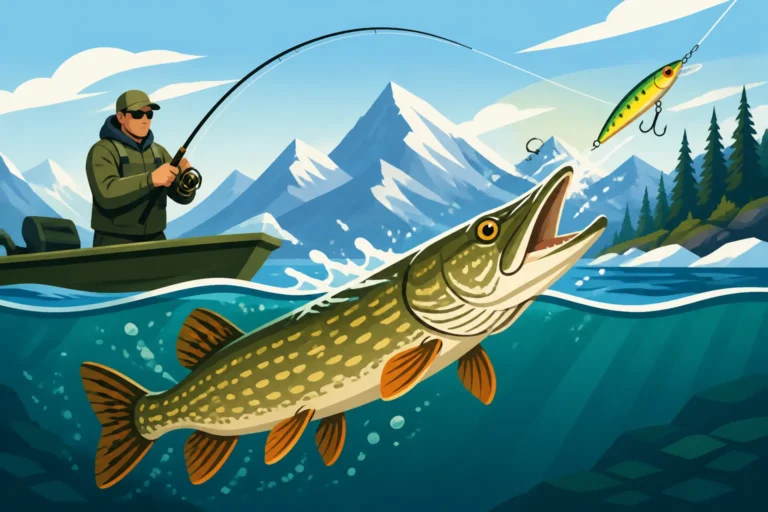
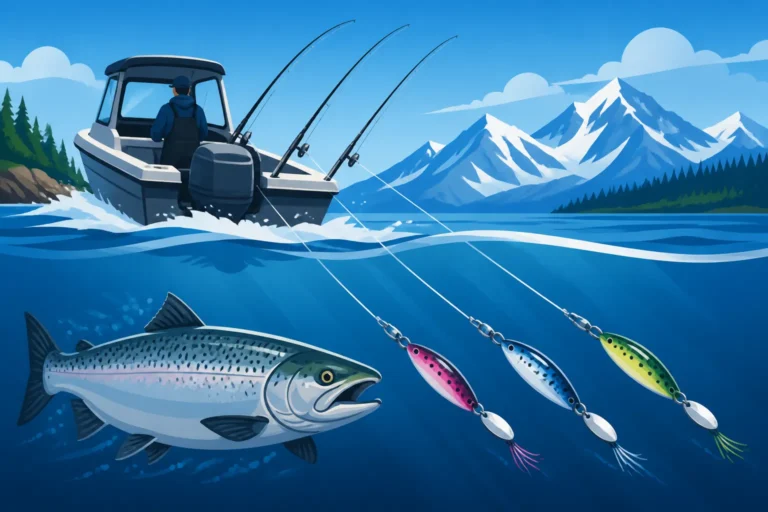
The array of salmon lures is vast, but some stand out as consistent producers for spin anglers in Alaska. Spinners like the venerable Pixie, Vibrax, or Mepps are staples, especially for coho and aggressive king salmon. Their flashing blades and vibrating action mimic baitfish or attract curious salmon. Spoons, such as the Koho or Croc, are also highly effective, particularly in deeper, faster water where their wobbling action can entice strikes. Drift fishing setups often involve a weighted bait presentation, using cured salmon eggs (check out How to Use Cured Salmon Eggs in Alaska for details), roe bags, or even imitation egg patterns like those from Beau Mac, drifted naturally along the bottom.
Terminal tackle is equally important. You'll need an assortment of lead weights or slinkies (pencil weights are great for snaggy bottoms) ranging from 1/2 ounce to 2 ounces, depending on current speed. Swivels are essential to prevent line twist, especially when using spinners. Hooks should be strong and sharp; popular choices include Gamakatsu or Owner, typically in sizes #1 to 3/0 for single hooks, or #4 to #1 for treble hooks, always checking local regulations for specific hook requirements. A solid tackle box filled with a variety of these items, readily available on Amazon, will prepare you for different conditions and salmon species. For a deeper dive into lure selection, our guide on Best Lures for Alaska Salmon is an excellent resource.
Effective Spin Fishing Techniques for Alaska Salmon
Once you have your gear dialed in, it’s time to talk about how to present your offerings to those powerful salmon. Spin fishing isn't just about casting and reeling; it's about understanding the subtle art of presentation that makes your lure irresistible to a fish that might not even be actively feeding.
Casting and Retrieval Methods
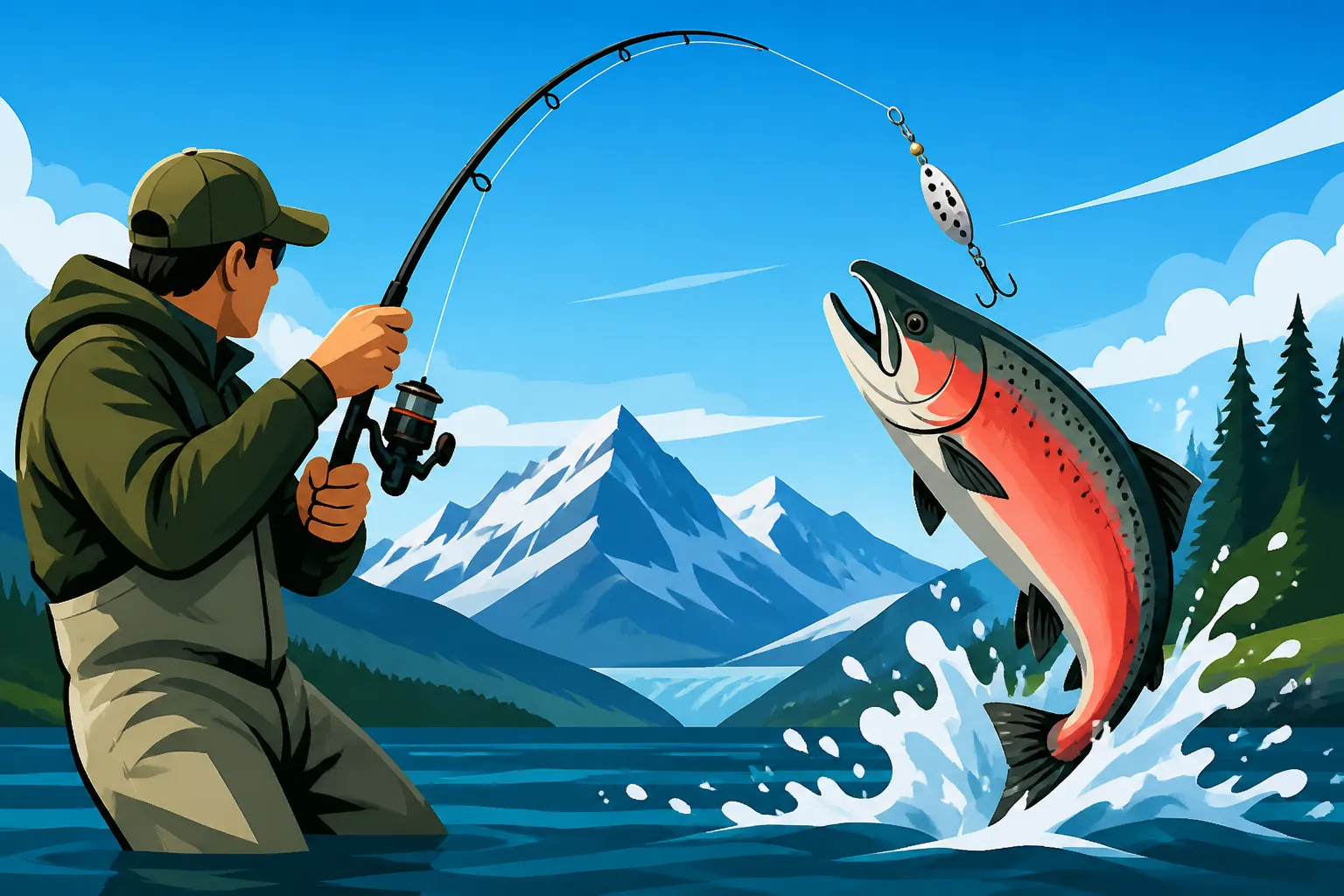
For many species, especially coho and aggressive kings, a well-executed cast and retrieve is all it takes. When casting, aim to land your lure slightly upstream of where you suspect salmon are holding. This allows the lure to sink to the desired depth and drift naturally into their strike zone as it's retrieved. A common technique is to cast across and slightly upstream, letting the current sweep your lure downstream while you maintain a controlled retrieve, keeping just enough tension on the line to feel a bite. The speed of your retrieve is critical and often needs adjustment based on water conditions and fish activity. In colder water, a slower retrieve might be more effective, while a faster, erratic retrieve can trigger aggressive strikes in warmer water or from active fish.
Varying your retrieval can also make a huge difference. Don't just reel steadily. Try twitching your rod tip, pausing the retrieve momentarily, or speeding it up to mimic an injured baitfish. This erratic action often triggers a predatory response, even from salmon that are primarily focused on spawning. Pay close attention to how your lure is moving in the current and adjust your retrieve speed to maintain optimal depth and action. Sometimes, a subtle flutter on the drop after a cast can be what makes a chrome-bright silver slam your lure.
Drifting and Plunking with Spin Gear
While casting and retrieving is effective, particularly in lakes or slower river sections, many Alaska salmon fisheries, especially for sockeye and kings, lend themselves to drift fishing or "plunking" with spin gear. Drift fishing involves presenting a bait or lure near the bottom, allowing it to tumble naturally with the current. This often requires a heavier weight, like a slinky or lead sinker, positioned above a leader and a small bead or bare hook. The goal is to get your offering into the salmon’s travel lanes without it dragging unnaturally on the bottom. Cast upstream and across, letting your weight tap the bottom as it drifts downstream. Maintain just enough slack to allow a natural drift but enough tension to feel the subtle 'tap-tap-tap' of your weight on the bottom or, more importantly, a salmon taking interest.
Plunking, on the other hand, is a more stationary technique, often used from the bank in larger rivers like the Kenai or Kasilof when targeting king salmon. This involves casting a heavy lead weight with a bait (like a large roe bag or herring) or a Kwikfish plug attached to a dropper line, and then letting it sit on the bottom in a promising spot. The current will impart action to the bait or lure, waiting for a salmon to cruise by and pick it up. This is a patience game, but it can be incredibly effective when salmon are stacked up in specific runs. It’s also a technique that benefits from a sturdy rod holder to keep your setup secure while you wait.
Navigating Alaska's Unique Spin Fishing Challenges
Alaska presents some truly unique fishing scenarios that can either make or break your trip. Being prepared for these challenges, from crowded riverbanks to ever-changing regulations, is just as important as knowing your casting technique.
Dealing with Crowds and "Combat Fishing"
Let's be real: some of Alaska's most famous salmon runs, like the sockeye runs on the Russian River or the Kenai River, can feel less like serene wilderness fishing and more like a contact sport. This phenomenon, affectionately known as "combat fishing," is a rite of passage for many but can be frustrating for the unprepared. Expect shoulder-to-shoulder anglers, tangled lines, and sometimes, less-than-polite interactions. The key to surviving (and even enjoying) combat fishing is patience, courtesy, and a clear understanding of the unwritten rules.
Always be mindful of your casting space and try to match the rhythm of the anglers around you. If everyone is casting at a certain angle or distance, try to conform to avoid tangles. Communication is key; a simple "Line in!" or "Fish on!" can prevent major headaches. While it might seem chaotic, there's a certain camaraderie that develops, and successful anglers are often willing to share tips with respectful newcomers. Being prepared with a sturdy net and a willingness to help fellow anglers can go a long way. If the crowds become too much, consider exploring less accessible areas or trying during off-peak hours, or even seeking out Best Fishing Spots in Alaska that are known to be less crowded.
Understanding Regulations and Emergency Orders
Alaska's fishing regulations are complex and can change frequently, sometimes daily, especially during critical salmon runs. Ignorance is not an excuse, and violations can lead to hefty fines or even confiscation of gear. Before you even pack your bags, make sure you understand the regulations for your specific fishing location and target species. This includes bag limits, possession limits, legal gear (e.g., single hook, barbless hooks, no bait zones), and specific recording requirements for species like King Salmon on your harvest card. Our detailed guide on Alaska Fishing Regulations Explained is a must-read, and you'll also want to understand your Alaska Harvest Record Card Explained if you're targeting certain species.
The most critical aspect of Alaska regulations is staying informed about emergency orders. These are real-time changes to regulations issued by the Alaska Department of Fish and Game (ADF&G) to protect fish stocks or adjust to fluctuating run numbers. Emergency orders can close entire fisheries, change bag limits, or restrict gear with little notice. Always check the ADF&G website or call their local offices before heading out each day. Many local tackle shops and guide services will also have the latest information. Don't rely solely on what you read weeks before your trip; assume regulations can change. Knowing How to Check Alaska Emergency Orders Before Fishing is a non-negotiable part of responsible angling in Alaska.
Maximizing Your Success and Enjoyment on the Water
Beyond the techniques and gear, a truly successful Alaska fishing trip involves a blend of responsible practices, safety awareness, and a mindset geared for the unexpected. After all, it's not just about catching fish; it's about the entire experience in this incredible wilderness.
Fish Care and Handling
Catching an Alaska salmon is exhilarating, but what you do with it after it's landed is just as important, especially if you plan to release it or take it home for dinner. If you're practicing catch-and-release, handle the fish as little as possible. Keep it in the water, use a rubberized net to minimize scale and slime loss, and remove the hook quickly with forceps or pliers. If the fish is deeply hooked, it's generally best to cut the line as close to the hook as possible to give the fish a chance. Always be gentle and release the fish headfirst into the current, supporting it until it swims away strongly. For more, check out Alaska Catch-and-Release Best Practices.
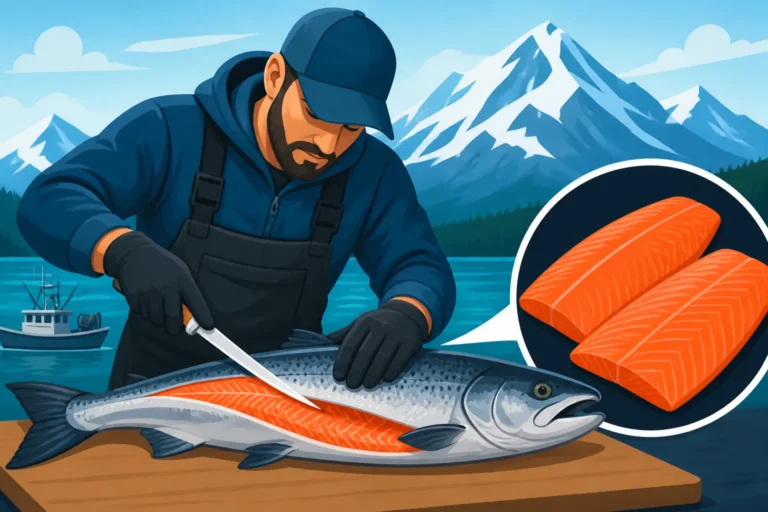
If you're keeping your catch, dispatch it quickly and humanely. A swift blow to the head is typically recommended. Then, bleed the fish immediately by cutting the gills or the artery under the throat. This significantly improves the taste and quality of the meat. Get your fish on ice as soon as possible to preserve freshness, especially in Alaska's summer sun. Knowing Alaska Fish Transport and Shipping Rules will be crucial for getting your prized catch back home in prime condition, whether you process it yourself or use a local fish processor.
Safety Considerations in the Alaskan Wilderness
Alaska's beauty comes with inherent risks. Beyond the fishing, you need to be aware of your surroundings. Bears are a very real presence in many salmon fishing areas, attracted by the same fish you're after. Always carry bear spray (and know how to use it!), make noise while hiking, and never store food or fish near your campsite. Be "bear aware" and vigilant.
Weather in Alaska can change in an instant. A sunny morning can turn into a cold, driving rain or even snow at higher elevations. Layer your clothing, and always bring quality rain gear and waterproof boots. Dressing appropriately, as covered in How to Dress for Alaska Fishing, is not just about comfort; it's about safety. Hypothermia is a serious risk. Swift, cold rivers also pose dangers. Always know your limits, wear a personal flotation device if on a boat or near strong currents, and never fish alone in remote areas. A well-planned trip includes emergency supplies, a way to communicate (satellite phone or inReach device), and letting someone know your itinerary.
Lure Selection for Spin Fishing Alaska Salmon
Choosing the right lure can often feel like a guessing game, but for Alaska salmon, there are clear favorites that consistently produce results. Understanding when and where to use each type can dramatically boost your catch rate.
| Lure Type | Primary Target Species | Ideal Conditions/Notes | Popular Brands/Styles |
|---|---|---|---|
| Spinners | Coho, King, Pink, Chum | Clear to moderately clear water, varied current speeds. Aggressive fish. | Blue Fox Vibrax, Mepps Aglia, Worden's Original Rooster Tail, Pixie |
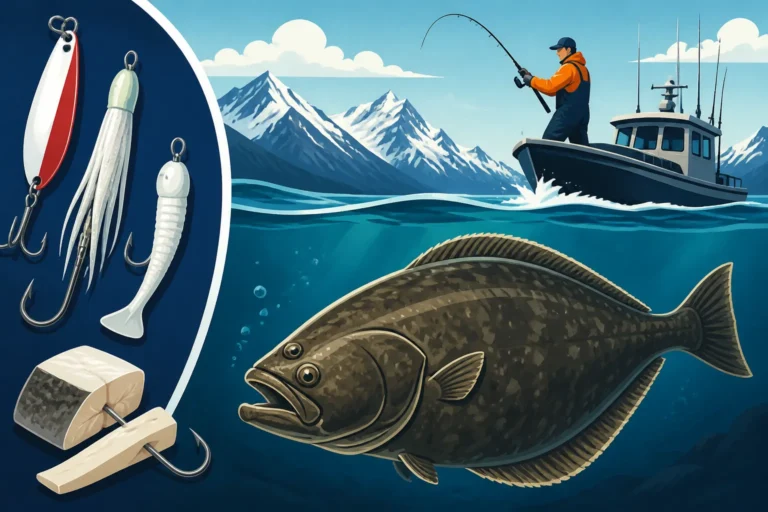
| Spoons | King, Coho, Pink, Halibut | Deeper pools, strong currents, casting for distance. Fluttering action. | Luhr-Jensen Krokodile (Croc), P-Line Laser Minnow, Silver Horde Coho Killer |
| Jigs | Coho, Rainbow Trout | Fished vertically or swung. Effective in deeper holes or low light. | Marabou jigs, Leadhead jigs with plastic tails, Salmon Candy |
| Plugs (e.g., Kwikfish) | King, Coho | Back-trolling or back-bouncing in strong currents. Often wrapped with bait. | Luhr-Jensen Kwikfish, Brads KillerFish |
| Drift Gear (Egg/Bead setups) | Sockeye, King, Rainbow Trout | Natural presentation in current. Imitates natural salmon eggs. | Raven Floats, DNE Tackle Beads, yarn egg clusters |
This table provides a snapshot, but remember that local conditions and fish preference can vary daily. It's always a good idea to have a variety of colors and sizes on hand. Natural colors like chartreuse, orange, and black are often go-tos, but don't shy away from bright pinks or blues, especially for coho.
Disclaimer
The information provided in this guide is for general informational purposes only. Fishing regulations in Alaska are subject to change by the Alaska Department of Fish and Game (ADF&G). It is the angler's responsibility to check and comply with all current federal, state, and local regulations, including emergency orders, before engaging in any fishing activity. Always prioritize safety and ethical fishing practices.