How to Spin Fishing for Salmon in Alaska
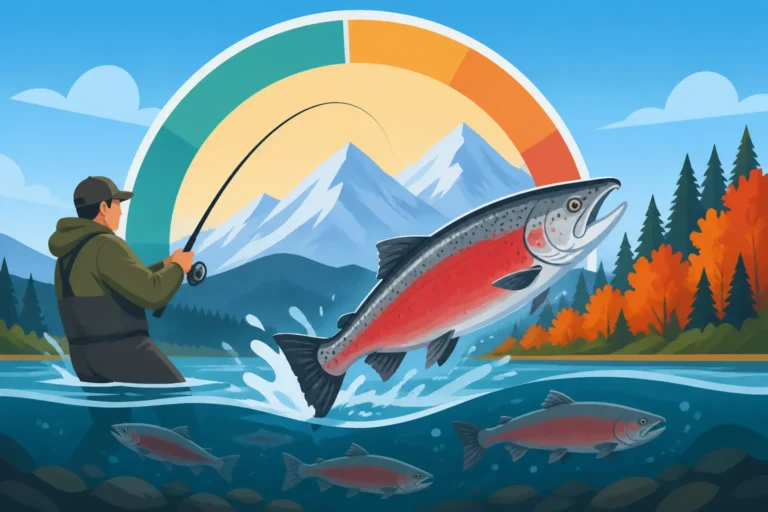
Trying to hook into one of Alaska's magnificent salmon on a spinning rod can feel like a game of chance, especially when you're used to different fishing styles or waters. Many anglers get frustrated wondering if their lure is right, if they're casting in the prime spot, or if they're even allowed to use their preferred technique with the ever-changing regulations. This comprehensive guide is here to demystify spin fishing for salmon in Alaska, offering you practical advice and proven strategies to increase your chances of success on the Last Frontier's legendary rivers.
Understanding Alaska Salmon Behavior for Spin Fishing
Before you even think about tying on a lure, you've got to get inside the mind of an Alaskan salmon. These fish aren't just swimming upstream; they're on a mission, driven by ancient instincts, and their behavior shifts depending on the species, the river, and even the time of day. Knowing where they rest, how they react to current, and what triggers their strikes can make all the difference between a fish tale and a fish dinner.
Reading the Water for Salmon Holds
Salmon, especially when they're transitioning from saltwater to freshwater, aren't just randomly distributed throughout the river. They're looking for specific features that offer them respite from the current, protection, or advantageous positions. This is where "reading the water" becomes an art form.
Imagine a powerful river like the Kenai or the Kasilof. Salmon aren't going to fight that main current every second of every day. Instead, they'll seek out slower pockets of water, often called "holds." These can be behind large boulders, in deeper pools, along cut banks where the current is significantly reduced, or even at the seam where fast water meets slower water. Look for changes in water color, depth, and surface tension. A darker patch of water often indicates deeper areas where fish might congregate. A calm eddy behind a snag could be a prime resting spot. When you're standing on the bank, scanning the river, try to visualize the underwater topography. Where would you rest if you were a fish battling an upstream current for hundreds of miles? Often, these are the same places you'll find salmon stacked up. Understanding the nuances of Alaska Fishing Regulations by Region can also give you clues, as certain areas might be known hotspots or restricted zones based on fish behavior.
Key Salmon Species and Their Spin Fishing Quirks
Alaska is home to five species of Pacific salmon, and while they all share the fundamental urge to return to their natal rivers to spawn, their personalities and preferred baits can vary wildly. You can't just fish for a sockeye the same way you would for a king.
- King Salmon (Chinook): These are the titans of Alaska's rivers, often reaching incredible sizes. Kings are aggressive when they first enter freshwater and are known to strike at larger, brighter lures, especially those that mimic baitfish or are designed to trigger a territorial response. Later in their run, they become more focused on spawning, making them harder to entice with traditional lures, though they can still be caught with techniques that put your offering right in their face. Popular choices include large spinners, plugs like Kwikfish or Flatfish, and often cured roe presentations. If you're targeting these giants, make sure you understand the specific rules, as Alaska King Salmon Fishing Regulations and Limits can change frequently.
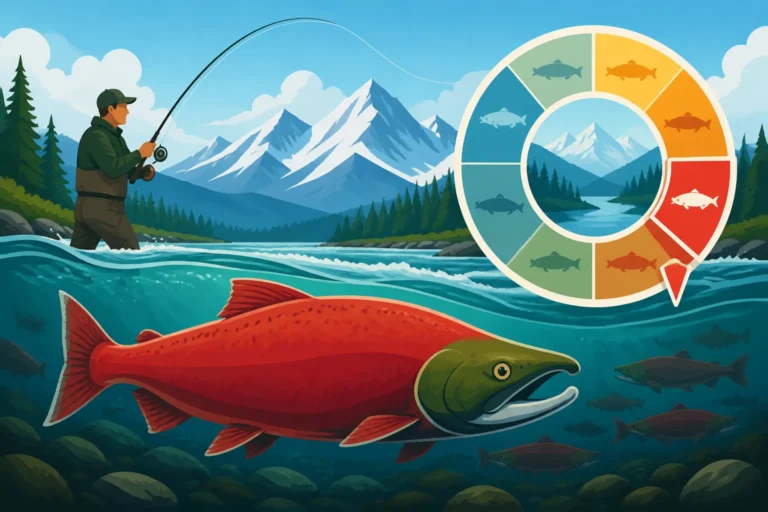
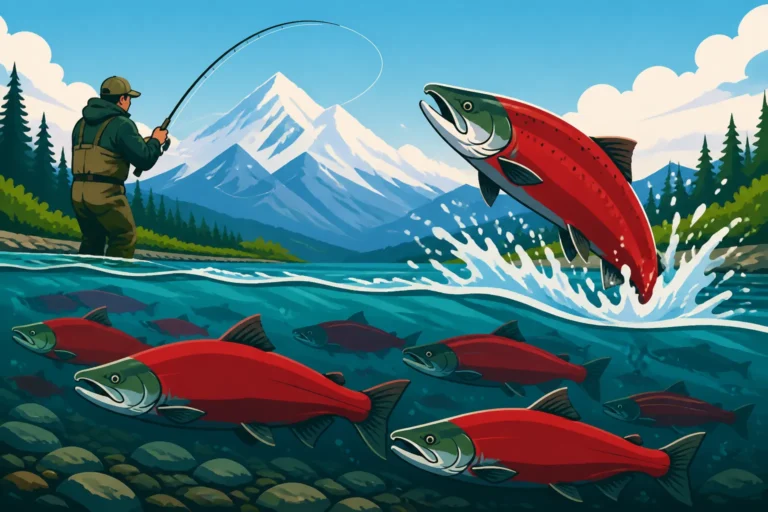
- Sockeye Salmon (Red): Sockeye are famously challenging on traditional gear because they primarily feed on plankton in the ocean and stop feeding once they enter freshwater. This means you're not trying to feed them, but rather to "floss" them or trigger an aggressive reaction. They often hold in shallower, faster-moving water, making long casts and precise drifts essential. Small, unweighted flies or beads presented on a long leader, designed to drift naturally into their mouths, are key. Traditional lures rarely work for sockeye, so your spin fishing approach needs to mimic fly fishing techniques as closely as possible, focusing on getting your line to pass through their schooling mouths.
- Coho Salmon (Silver): Coho are arguably the most acrobatic and fun salmon to catch on spinning gear. They are active feeders in freshwater, readily striking a variety of lures and baits. They love flashy spinners, bright spoons, and even Twitching jigs. When a coho hits, be ready for aerial displays and powerful runs. They tend to hold in slightly slower pockets than sockeye, often near submerged structure or along current breaks. Their aggressive nature makes them a favorite for many spin anglers. For more on these dynamic fish, check out Alaska Coho Salmon Fishing Regulations and Limits.
- Pink Salmon (Humpback): Pinks are the smallest and most numerous of the salmon species, running in massive numbers every odd-numbered year in many systems. They are aggressive and will readily hit small, flashy spinners, spoons, and flies. Pinks are a great species for beginners or kids due to their abundance and willingness to bite. You'll often find them schooling in relatively shallow water, sometimes right at the confluence of streams or in the slower sections of rivers. They're a blast on light tackle.
- Chum Salmon (Dog): Chums are powerful, bulldog-like fighters. While not as prized for eating as kings or sockeye, they offer a tremendous fight. They'll often hit brighter, larger spinners and spoons, similar to coho. They're known for their impressive teeth and often hold in deeper, slower pools, or along river bends. If you hook into a chum, prepare for a prolonged battle; they're tenacious.
Knowing these characteristics helps you decide which species to target and adjust your gear and technique accordingly.
Essential Spin Fishing Gear for Alaska Salmon
Heading to Alaska without the right gear is like bringing a spoon to a knife fight. The conditions can be rugged, the fish powerful, and the elements unforgiving. Having reliable, appropriate spinning tackle is paramount to a successful trip and preventing frustrating equipment failures.
Rods, Reels, and Line Selection
Choosing the right rod and reel combination is critical for battling strong salmon in Alaska's swift currents. You need gear that can handle the abuse and has the backbone to land trophy fish.
- Rods: For king salmon, a medium-heavy to heavy power rod, typically 8'6" to 10'6" in length, is ideal. This length provides the leverage needed for long casts and battling large fish, especially when bank fishing or from a drift boat. For coho, pinks, and chums, a medium to medium-heavy rod around 8' to 9' is usually perfect. The longer rod helps with line control and absorbing powerful runs. Graphite rods offer sensitivity and a lighter feel, while fiberglass or composite rods provide more durability, which can be a plus in remote, rugged areas. Look for rods with a moderate-fast or fast action to give you enough tip flexibility for casting lighter lures but plenty of backbone to turn a fish. Many reputable brands offer excellent salmon rods, and you can often find good options on Amazon with detailed reviews.
- Reels: A high-quality spinning reel with a smooth, reliable drag system is non-negotiable. For kings, a size 4000 to 6000 reel is recommended, while for coho and other smaller salmon, a 3000 to 4000 series will suffice. The drag is your primary tool for fighting a powerful salmon; it needs to be consistently smooth to prevent line breaks. Look for reels with corrosion-resistant components, as you'll be fishing in potentially wet conditions. A reel with a good line capacity is also important, as an Alaska salmon can make incredibly long runs.
- Line: Braided line has become incredibly popular for salmon fishing due to its strength-to-diameter ratio and lack of stretch, which provides excellent sensitivity. For kings, 30-50 lb braided line is common, while 20-30 lb is suitable for coho and other species. Always use a monofilament or fluorocarbon leader, typically 15-30 lb test, depending on the species and water clarity. The leader provides a nearly invisible connection to your lure and offers abrasion resistance against rocks and fish teeth. When spin fishing for sockeye, you'll need to use much lighter leaders, often 8-12 lb fluorocarbon, to allow your small fly or bead to drift naturally. You can find a vast selection of braided lines, leaders, and fishing essentials on Amazon, often with quick delivery to many Alaskan towns.
Terminal Tackle: Lures, Baits, and Weights
This is where the real fun begins – picking what you'll tie on the end of your line! The variety of salmon lures out there can be overwhelming, but focusing on proven Alaska favorites will simplify your choices.
- Spinners: Spinners are a classic for a reason. Their rotating blade creates flash and vibration that salmon can't resist. For king salmon, larger spinners like a #4 or #5 Vibrax or similar inline spinners in bright colors (chartreuse, orange, hot pink) or metallic finishes (silver, brass, copper) are effective. For coho, pinks, and chums, slightly smaller spinners (#3 or #4) in similar colors often work wonders. The flash and thumping action mimic a wounded baitfish or simply irritate a salmon into striking.
- Spoons: Spoons wobble and flutter through the water, imitating baitfish. Silver, gold, coho blue, or iridescent patterns are popular. For kings, heavier spoons that can get down deep in strong currents are key. For coho, lighter spoons that can be retrieved at varying speeds are excellent. The erratic action of a well-presented spoon can trigger aggressive strikes. Brands like Pixee or Little Cleo have been putting fish in the boat for decades.
- Plugs: Plugs, especially diving models like Kwikfish, Flatfish, or Mag Lips, are very effective for king salmon. These lures dive and wobble, creating a strong vibration that kings home in on. They are often "back-trolled" or "back-bounced" from a boat, but smaller versions can be cast and retrieved from the bank in specific situations. They can also be "wrapped" with a thin slice of cured sardine or herring for added scent attraction.
- Jigs: Jigs, especially "twitching jigs" (often weighted with a marabou or rabbit strip tail) are incredibly effective for coho salmon. The technique involves casting the jig out and twitching it back towards you, mimicking an injured baitfish. Colors like chartreuse, pink, purple, and black are common. You can also fish heavier jigs for kings in deep holes.
- Baits: While many anglers prefer artificials, natural bait is often king, especially for Chinooks. Cured salmon roe (eggs) is a perennial favorite, often drifted under a bobber or fished with a weight. Herring, especially when back-trolled behind a diver, is another deadly king salmon bait. When fishing with bait, remember that scent plays a huge role. For purchasing bait-related items like egg cures or specific hooks, Amazon offers a wide array of choices for local delivery.
- Weights: Depending on the depth and current, you'll need various weights to get your lure or bait down to the fish. Pencil weights, slinky weights, or cannonball sinkers are commonly used for drift fishing. For casting, the weight of your lure often suffices, but sometimes adding a small split shot or two can help with distance or getting a spoon deeper. When sockeye fishing, sometimes no weight at all is needed, relying on the current and the light leader to present a bead or fly.
Effective Spin Fishing Techniques for Alaska Salmon
Alright, you've got your gear, you know your fish, now it's time to put it all into action. Spin fishing isn't just about casting and reeling; it's about understanding how to present your offering to a fish that might not be actively feeding, or to one that's holding in a tricky current.
Casting and Retrieval Strategies
Your casting and retrieval strategy will heavily depend on the species you're targeting and the water you're fishing. It's not a one-size-fits-all approach in Alaska.
- For Kings (Chinook): When bank fishing, look for those deeper runs and current breaks. Cast slightly upstream and across the current, allowing your plug, spinner, or baited rig to sink and then swing down through the holding water. Retrieve slowly, just fast enough to get your spinner blade turning or your plug wobbling. Sometimes, a subtle jigging motion or a pause in retrieval can trigger a strike. If you're back-trolling from a boat, you'll let out line and let the current or the boat's slow drift pull your plugs or bait downriver, keeping them in the strike zone.
- For Sockeye (Red): This is where spin fishing truly mimics fly fishing. Sockeye don't typically chase lures. The goal is often to "floss" them, meaning to drift a small, unweighted fly or bead into their open mouths as they school tightly. You'll need a long, light leader (8-12 lb fluorocarbon is standard) and a small, brightly colored fly (like a weighted Sockeye Slammer) or a bead. Cast upstream and across, letting the current carry your offering naturally downstream, keeping your rod tip high to mend your line and control the drift. As your line straightens out and comes across the fish, you'll often feel a slight tap or pressure — set the hook! This technique requires a lot of practice to master the drift and the subtle bite. You might also want to look into specific guides on How to Set the Hook on Alaska Sockeye for more detailed instructions.
- For Coho (Silver): Coho are more aggressive and will actively chase. Cast spinners or spoons across current, or slightly upstream, and retrieve at a moderate speed. Experiment with different retrieve speeds and depths. Coho often hit on the swing or during a steady retrieve. Twitching jigs are deadly for coho: cast them out, let them sink to the desired depth, and then retrieve with sharp, short jerks of the rod, pausing briefly between twitches. This makes the jig "dance" and often provokes a strike.
- For Pinks and Chums: These species are generally less finicky. Pinks will hit smaller spinners and spoons on a steady retrieve, especially in bright colors. Chums will respond to similar offerings, often preferring a slightly heavier presentation that gets down to them in deeper holds. Cast, let it sink a bit, and reel it in with a steady pace.
Drifting and Plunking Techniques
Beyond active casting and retrieving, two other techniques can be very effective for salmon in Alaska: drifting and plunking.
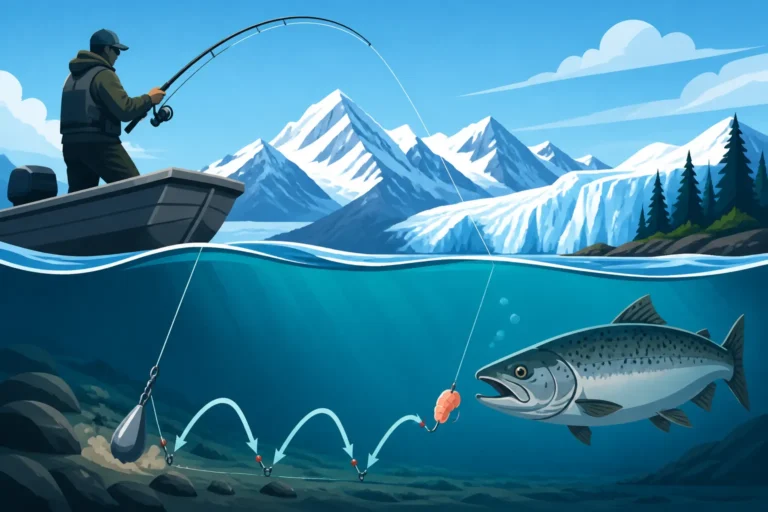
- Drift Fishing: This technique involves using a weight (like a slinky or pencil lead) and a leader with your bait or lure, allowing it to tumble naturally along the bottom of the river with the current. The goal is to present your offering in a way that looks completely natural, as if it's just another piece of detritus or food being washed downstream. For king salmon and coho, this often involves cured eggs or small clusters of bait, though soft plastic beads or small Cheaters can also be used. You want just enough weight to bounce along the bottom without snagging excessively. The key is to feel the weight tapping the bottom – too much weight and it drags, too little and it floats too high. When you feel a sudden stop or a subtle tug, set the hook! Drift fishing is particularly effective in rivers with varied bottom structures.
- Plunking (Bank Fishing): This is a more stationary method often used for kings and coho, especially in larger rivers or during specific times when fish are moving through predictable travel lanes close to the bank. You cast a heavy weight (often a pyramid or cannonball sinker) attached to a "spread-bar" or a three-way swivel rig, with a short leader (18-36 inches) trailing behind it, holding a spinner, plug, or bait (like cured roe or herring). The rig is cast out and allowed to sit on the bottom, with the rod in a holder. The current makes the spinner spin or the plug wiggle, creating action while you wait for a fish to pick up the bait. It's less active than drift fishing but can be incredibly effective when fish are moving in tight corridors. It's often employed in popular bank fishing spots on rivers like the Copper or Susitna.
When to Adjust Your Approach
Alaska's fishing conditions are rarely static. Water levels can rise and fall with rain or glacial melt, water clarity can change dramatically, and salmon behavior can shift throughout the day. Being adaptable is key to consistent success.
- Water Clarity: In clear water, fish tend to be spookier. Downsize your lures, use more natural colors (like silver or green), and extend your leader length. Fluorocarbon leaders are excellent in clear water due to their low visibility. In turbid or murky water (common after heavy rains or glacial melt), fish rely more on vibration and scent. Use larger, brighter, or more fluorescent lures (chartreuse, hot pink, orange) and lures that produce a lot of vibration. Don't be afraid to try bait.
- Water Level: High water often means fish are hugging the banks to avoid the main current. Focus your casts closer to shore, into eddies, and behind submerged structure. Low water can concentrate fish in deeper pools, but they might also be more exposed and wary. Approach quietly, make longer casts, and use subtle presentations. Understanding how Alaska Fishing Emergency Orders Explained affect conditions can also prompt adjustments to your approach.
- Time of Day: Early morning and late evening (especially during the midnight sun in summer) can often be the most productive times, as salmon might be more active or less pressured. However, salmon runs are often tide-dependent in lower river sections, so sometimes the best fishing is during an incoming tide.
A good angler constantly experiments. If what you're doing isn't working, don't be afraid to change your lure, color, retrieve speed, or even your location. Sometimes a tiny adjustment, like switching from a silver spinner to a gold one, can make all the difference. Remember to refer to the How to Read Alaska Fishing Regulations Booklet for localized rules.
Navigating Regulations and Safety
Fishing in Alaska isn't just about catching fish; it's also about respecting the resource, understanding the rules, and staying safe in a wild environment. These elements are just as crucial as your gear and technique.
Understanding Emergency Orders and Bag Limits
Alaska's fisheries are dynamically managed to ensure sustainability. This means regulations can, and often do, change at a moment's notice through "Emergency Orders." A river that was open yesterday might be closed today, or bag limits might be reduced.
- Before You Go: Always, always, check the latest emergency orders from the Alaska Department of Fish and Game (ADF&G) for the specific area and river you plan to fish. You can do this online, through phone hotlines, or by visiting local sporting goods stores. Ignoring emergency orders can lead to hefty fines and confiscation of gear. This is critical for species like king salmon where populations fluctuate, leading to closures or gear restrictions (like "single hook, no bait" rules). For detailed information, review Alaska Fishing Emergency Orders Explained.
- Bag and Possession Limits: Be intimately familiar with the daily bag limits (how many fish you can keep in one day) and possession limits (how many fish you can have in your possession at any given time, including fish already caught and processed). These limits vary by species, location, and whether you're a resident or non-resident. For example, Alaska Halibut Bag Limits Explained can be quite specific, especially for charter anglers. It’s your responsibility to know the rules, not just assume. When you land a fish, you often need to record it immediately on your Alaska Harvest Record Card Explained, especially for king salmon.
- Gear Restrictions: Pay close attention to gear restrictions. Some areas may prohibit bait, multiple hooks, or weighted treble hooks. Barbless hooks are often required. During king salmon closures, single-hook, artificial lure-only rules are common. Don't risk a violation because you weren't aware of the specific rules for your stretch of river.
Wildlife Encounters and River Etiquette
Fishing in Alaska puts you in the heart of raw wilderness, which means sharing the landscape with incredible wildlife and fellow anglers.
- Bears: Alaska is bear country, home to both black bears and grizzlies (brown bears). Be "bear aware" at all times. Make noise when hiking, carry bear spray (and know how to use it), store food properly, and never leave fish guts or carcasses where bears can easily access them near popular fishing spots. If you hook a fish and a bear is nearby, consider cutting your line rather than engaging with the bear. Your safety is paramount.
- Moose and Other Wildlife: You might also encounter moose, eagles, wolves, or other animals. Give them space and respect their wild nature. Never approach or feed wildlife.
- River Etiquette: Alaskan rivers, especially popular ones like the Russian River during the sockeye run, can get crowded. Practice good river etiquette:
- Give Space: Maintain a respectful distance from other anglers. Don't crowd someone's fishing spot.
- Be Mindful of Your Casts: Ensure your casts don't interfere with others' lines.
- Move Downriver: If you're drifting or wading, generally move downstream slowly to allow others to fish behind you.
- Clean Up: Pack out everything you pack in. Leave no trace.
- Respect Private Property: Be aware of land ownership and respect "no trespassing" signs.
- Ask Before Entering: If you need to cross someone's fishing water, politely ask if it's okay and make sure you do so quickly and without disrupting their fishing.
Following these guidelines not only makes for a more pleasant experience for everyone but also helps preserve the pristine nature of Alaska's fishing grounds.
| Salmon Species | Common Spin Lures | Best Times to Spin Fish (General) | Key Spin Fishing Technique |
|---|---|---|---|
| King Salmon | Large Spinners, Plugs (Kwikfish), Cured Roe | May – Mid-July (Early/Peak Run) | Drift fishing, back-trolling, casting/slow retrieve |
| Sockeye Salmon | Small Beads, Unweighted Flies (Flossing) | June – August (Peak Run) | Precise long drifts, line mending |
| Coho Salmon | Flashy Spinners, Spoons, Twitching Jigs | July – September | Active retrieve, twitching, casting/swinging |
| Pink Salmon | Small Spinners, Spoons | Mid-July – August (Odd Years) | Steady retrieve, casting in schools |
| Chum Salmon | Bright Spinners, Larger Spoons | June – August | Slower retrieve, getting deep |
Disclaimer
The information provided in this guide is for general informational purposes only and does not constitute legal advice. Alaska fishing regulations, emergency orders, and licensing requirements can change frequently. Always consult the latest official Alaska Department of Fish and Game (ADF&G) regulations and emergency orders for the specific area and time you plan to fish before heading out. It is the angler's responsibility to know and follow all applicable laws and regulations. Fishing in Alaska can involve inherent risks, including wildlife encounters and challenging environmental conditions. Always prioritize safety and be prepared for potential hazards.