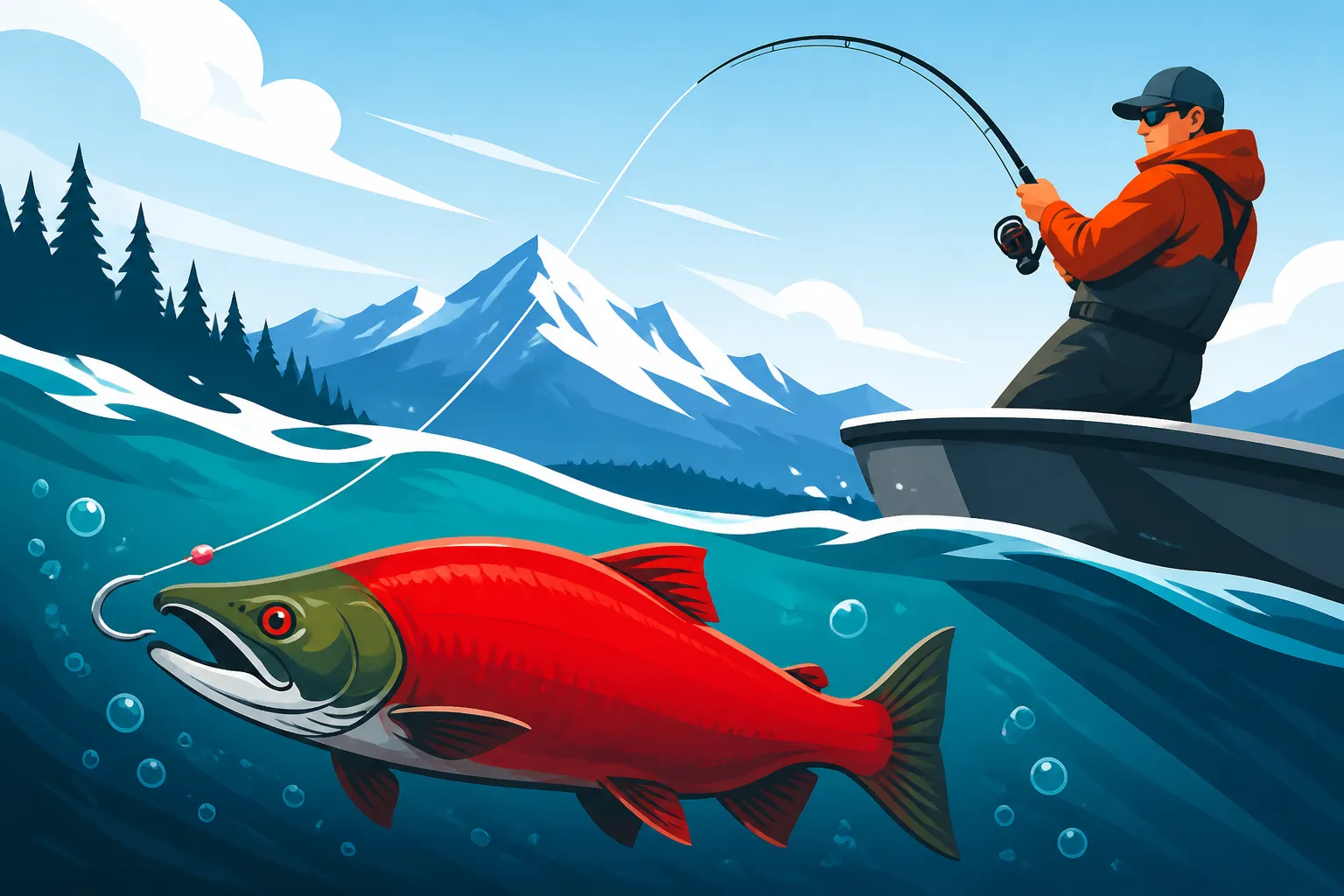
How to Set the Hook on Alaska Sockeye
If you've ever stood on the banks of a bustling Alaskan river, watching countless sockeye salmon surge upstream, only to feel that frustrating tap-tap-tap without a solid hookup, you're not alone. So many anglers come to Alaska dreaming of catching these powerful red salmon, only to find them incredibly elusive to actually get on the line. It's a common struggle, and frankly, it can be disheartening. This guide is dedicated to breaking down the unique challenges of hooking sockeye and arming you with the precise techniques and understanding you need to turn those missed opportunities into unforgettable fish-on moments.
Why Sockeye Salmon Are So Terribly Tricky to Hook
Let's be real: sockeye salmon are not like other fish, and fishing for them in freshwater is a whole different ballgame. You can throw every traditional lure and bait in your tackle box, and most of the time, they'll just ignore it. This isn't because they're smarter than you (though sometimes it feels that way!), but because their biology dictates a completely different approach. Understanding why they're hard to hook is the first step to mastering the technique.
They Aren't Actively Feeding
The biggest misconception people have about sockeye in freshwater is that you're trying to get them to bite. Once sockeye salmon leave the ocean and enter the rivers for their spawning migration, they stop feeding. Their entire biological imperative shifts from eating to reproducing. This means that attractive lures, scented baits, and even live worms — things that would normally trigger a predatory strike from other fish — are largely useless for sockeye. They might bump them out of the way, or even open their mouths instinctively, but they're not trying to eat your offering. This fundamental difference means your strategy can't be about enticing a "bite." If you want to dive deeper into their behavior, check out our guide on How to Catch Sockeye Salmon in Alaska.
Think about it from their perspective: they've traveled hundreds, sometimes thousands, of miles, navigating treacherous waters, avoiding predators, and fighting currents, all with one goal in mind. Food is no longer a priority; passing on their genes is. This makes them incredibly focused, but also creates the opportunity for a technique that leverages their sheer numbers and instinctual movements rather than their appetite.
The Nuance of Their Mouths and Bodies
Sockeye salmon have relatively small, soft mouths compared to their King salmon cousins. When they do open their mouths, it's often more of a reaction to an obstruction in their path or a gill-flaring motion than an attempt to ingest something. This means that a violent, upward yank on the rod, which works for many other species, can often just tear through their soft mouth tissue or pull the hook clear before it has a chance to set.
Furthermore, when sockeye are migrating in dense schools, they're often bumping into lines and gear. What feels like a "bite" might just be a fish brushing against your line or bumping your leader. It takes a keen sense of touch and repetition to differentiate between these accidental contacts and a genuine "moment" when the line or hook is actually inside their mouth. The sheer volume of fish during peak runs, like those seen during the Alaska Sockeye Salmon Run Timing on the Kenai River, can lead to this confusion, making it even harder to isolate a true hooking opportunity.
Mastering the Sockeye Hook Set: The Deliberate Sweep
Forget everything you know about aggressive, upward hook sets for bass or trout. For sockeye, the technique is less about a "strike" and more about a calculated, smooth "sweep." This method, often referred to in various forms as "flossing" or "lining," capitalizes on the sockeye's non-feeding behavior and the dense schools they travel in.
The Art of the "Floss"
The core concept behind successfully hooking a sockeye in freshwater is to drift your line and presentation through the fish's open mouth. Because they're not biting, you're essentially waiting for your leader and hook to pass from one side of their mouth to the other. When the hook reaches the corner of their jaw, that's your window for a hook set. This is a very specific technique, and it's why understanding the Best Technique for Kenai Sockeye: The Flossing Debate is crucial, especially in high-pressure areas.
Detecting the Subtle "Bump"
This is where the real skill comes in. You won't feel a violent tug or a rod-bending strike. What you'll typically feel is a subtle, almost imperceptible pressure on your line. It might feel like:
- A slight pause: Your line, which was drifting smoothly, suddenly hesitates or slows down for a split second.
- A dull thud: Like bumping a log, but softer, almost spongy.
- Increased resistance: The current feels a little stronger, or your line feels suddenly heavy.
- A slight twitch in your rod tip: Even with a fast-action rod, this can be incredibly subtle.
The key is to pay constant attention to your line and the rod tip. Any deviation from its normal drift, any unexpected pressure, should trigger your hook set response. Many anglers watch where their main line enters the water, looking for any unnatural movement or hesitation.
The "Sweep and Maintain" Hook Set
Once you detect that subtle pressure, resist the urge to violently yank upwards. Instead, execute a smooth, deliberate sweep:
- Lower Your Rod Tip (Slightly): Before the sweep, ensure your rod tip isn't pointing straight up. A slightly lower angle (around 45 degrees or less, parallel to the water) gives you more leverage and a better angle for the sweep.
- Sweep Upstream and Sideways: In one fluid motion, sweep your rod tip parallel to the riverbank, often upstream, in the direction the fish is heading or where the current is taking your line. Imagine you're drawing a long arc with your rod tip. The sweep should be firm but controlled, covering about 3-5 feet of motion.
- Maintain Tension: As you sweep, keep continuous tension on the line. The goal isn't to yank the hook out, but to pivot it into the corner of the sockeye's jaw. The resistance of the fish and the sweep of your rod work together to turn the hook and embed it cleanly.
- No Slack! Slack line is the enemy. If there's any slack, your sweep won't translate directly to the hook, and you'll miss the opportunity. This is why keeping a tight line during your drift is paramount.
This method allows the hook to pivot and find purchase in the tougher, cartilaginous parts of the sockeye's jaw, which are much more secure than their soft mouth interior. It also reduces the chances of foul-hooking, which is often illegal and detrimental to the fish.
Here's a quick comparison of hook sets:
| Feature | Traditional Hook Set (e.g., Bass, Trout) | Sockeye "Sweep" Hook Set |
|---|---|---|
| Trigger | Aggressive bite, fish running with bait/lure | Subtle pressure, line hesitation, unexpected resistance |
| Rod Motion | Sharp, vertical upward yank | Smooth, deliberate sweep parallel to the bank, often upstream |
| Goal | Embed hook after fish takes bait/lure | Pivot hook into jaw corner after line "flosses" mouth |
| Force | Often powerful, quick snap | Firm, continuous pressure, controlled arc |
| Outcome if Wrong | Hook pulled out, missed fish | Tear-out, foul-hook, missed fish |
Essential Gear and Setup for Sockeye Success
Having the right gear isn't just about comfort; it's about maximizing your sensitivity and control, which are absolutely vital for successful sockeye fishing. A well-balanced setup will make detecting those subtle bumps and executing the perfect sweep much easier.
The Right Rod and Reel Combination
- Rod: You'll want a rod that's sensitive enough to detect the faintest touches but has enough backbone to handle a powerful, fighting sockeye in current. A medium-heavy to heavy power, fast-action spinning rod, typically between 8.5 to 10 feet in length, is ideal. The longer length helps with line control, casting distance, and guiding your drift. Brands like Lamiglas, Fenwick, or St. Croix offer excellent options, and you can often find great deals on Amazon.
- Reel: Pair your rod with a reliable spinning reel in the 3000-4000 series size. It needs a smooth, consistent drag system to prevent break-offs once you've hooked a fish. You'll be making many casts, so a comfortable, lightweight reel is a bonus. Shimano and Penn are popular choices among Alaskan anglers.
- Line: Spool your reel with 20-30 lb braided main line. Braid has virtually no stretch, which is critical for feeling those subtle bumps from the sockeye. Its strength also helps immensely in strong currents and when battling a hard-fighting fish. Connect your braid to a 15-20 lb fluorocarbon leader. Fluorocarbon is nearly invisible underwater, more abrasion-resistant than mono, and has just enough stretch to absorb some shock without compromising sensitivity. The leader length can vary, but generally 4-6 feet is a good starting point. Check out our comprehensive Alaska Fishing Gear and Tackle Guide for more insights on specific equipment.
Terminal Tackle Essentials
Your terminal tackle needs to be streamlined and effective for "flossing" techniques.
- Sockeye Hooks: Forget standard bait hooks. You need specialized sockeye hooks that are designed to pivot and grab quickly. These are usually small (sizes #2 to 1/0), strong, and incredibly sharp. Popular choices include Owner Mosquito Hooks, Gamakatsu Octopus Hooks, or specific "sockeye flies" that are essentially just weighted hooks with a bit of brightly colored yarn. Crucially, many sockeye fisheries, especially on rivers like the Kenai and Russian, mandate Alaska Barbless Hook Requirements to minimize harm to fish. Always crimp down your barbs if not using barbless hooks.
- Weight: Pencil lead or slinky weights are the go-to for sockeye fishing. These designs minimize snagging on the bottom, which is a constant battle in fast-flowing rivers. The amount of weight you need will depend entirely on the current speed and depth. You'll attach this weight to your main line or leader using a dropper loop or a swivel, ensuring it's positioned above your leader and hook. For most setups, you'll want the weight about 18-36 inches above your hook. The goal is to get your presentation down to the level of the fish without dragging excessively on the bottom.
- Flies/Jigs: For sockeye, a simple, unbaited fly or jig is the standard. These are usually small, sparse, and brightly colored, often in chartreuse, hot pink, or red. The idea isn't to imitate food, but to provide a small profile that can easily drift into a sockeye's mouth. These can be purchased pre-tied or made yourself. Remember, scent or bait is often prohibited or ineffective. For more on this, see Best Lures and Bait for Alaska Sockeye Salmon.
Other Critical Gear
- Waders and Boots: You'll be spending a lot of time in the water, sometimes chest-deep, so good quality waders are non-negotiable. Look for breathable waders for comfort, especially during long days. Neoprene booties and studded wading boots will give you the necessary traction on slippery river rocks.
- Line Clippers/Pliers: For changing tackle quickly.
- Polarized Sunglasses: These are invaluable for spotting fish in the water, reading current seams, and protecting your eyes.
- Fishing Vest/Pack: To keep all your terminal tackle, extra leaders, and tools organized and easily accessible. A good quality vest with plenty of pockets makes a world of difference.
Common Mistakes and How to Rectify Them
Even with the right technique and gear, sockeye fishing can still throw curveballs. Identifying common pitfalls and knowing how to adjust on the fly will dramatically improve your success rate.
The Overly Aggressive Hook Set
This is, by far, the most frequent mistake newcomers make. Years of fishing for bass, trout, or other salmon species that strike hard engrains an instinct to yank upwards with force. But as we've discussed, sockeye mouths are soft, and their behavior is different. A powerful, vertical pull often results in:
- Tear-outs: The hook rips through the soft skin of their mouth, and the fish gets away, often injured.
- Foul-hooking: Instead of setting in the jaw, the hook snags the fish on its body, tail, or fins. While sometimes accidental, intentionally foul-hooking is illegal and unethical.
- Missed opportunities: The hook simply pulls out of their mouth before it can set because the angle and force were wrong.
Rectification: Consciously retrain your muscle memory. When you feel a "bump," remind yourself to sweep the rod parallel to the water, in a controlled arc, and then maintain pressure. Practice the motion a few times on the bank before you start fishing. Focus on a steady, firm motion rather than a jerky yank.
Ignoring Current and Drift
Sockeye hold in specific current seams and travel lanes. If your gear isn't drifting naturally through these zones, you're just not putting your hook in front of enough fish. A bad drift could mean:
- Fishing too fast/slow: Your weight is too light or too heavy for the current, causing your gear to race ahead of the fish or drag on the bottom constantly.
- Line bowing: Wind or strong current creating a large bow in your line makes it impossible to feel those subtle bumps.
- Wrong depth: Your hook isn't where the majority of the fish are swimming.
Rectification: Constantly adjust your weight and casting angle. If your line is pulling ahead of your indicator (if you're using one), add more weight. If you're constantly snagging, reduce weight or shorten your leader. Learn to "mend" your line – making small upstream adjustments with your rod to keep your line taut and straight with your drift. Pay attention to other successful anglers; what weight are they using? Where are they casting? For specific river conditions, knowing How to Time the Kenai Sockeye Run or Alaska Sockeye Daily Limit by River can help you understand fish density and movement patterns.
Using the Wrong Terminal Tackle
Showing up with a huge treble hook and a chunk of roe is a recipe for frustration in most sockeye fisheries.
- Hooks that are too large or too small: You need hooks that are sized appropriately for their mouths and designed for positive jaw penetration.
- Dull hooks: Even the best technique is useless with a dull hook. Sockeye jaws are tough; your hook needs to be razor-sharp.
- Incorrect weight placement: Having the weight too close or too far from the hook can affect your drift and how the hook presents.
Rectification: Double-check your setup before you even get to the river. Ensure your hooks are sharp – carry a hook file and sharpen them frequently throughout the day. Adhere strictly to local regulations regarding hook size, barb status, and bait use, as detailed in the Alaska Fishing Regulations Explained and especially in guides like How to Read Alaska Fishing Regulations Booklet. Many areas will require single, barbless hooks. Purchase reputable brands for hooks like Owner or Gamakatsu; you can often find a good selection on Amazon.
Hesitation or Overthinking
The sockeye window of opportunity is incredibly brief. That subtle bump lasts only a fraction of a second.
- Delayed reaction: If you wait to confirm it's a "fish" before setting the hook, it's already too late.
- Second-guessing: Doubting yourself will lead to missed fish.
Rectification: Trust your instincts. If it feels different, sweep! It's better to make a few false hook sets than to miss a real fish. The more you fish for sockeye, the more attuned you'll become to those subtle cues. Repetition builds confidence. Remember, sockeye fishing is a numbers game; the more effectively you drift and react, the more fish you'll eventually put on the bank. If you're struggling, consider exploring other techniques like How to Flip for Sockeye Salmon, which also relies on quick reflexes and specific gear. When targeting these fish, understanding Alaska Sockeye Salmon: Size, Season, and Where to Catch can also give you context on their behavior.
Disclaimer
Fishing in Alaska involves inherent risks and is subject to rapidly changing regulations. Always consult the most current Alaska Department of Fish and Game regulations specific to your chosen fishing location before heading out. Safety precautions, including bear awareness and proper wading practices, should always be observed.