Alaska Halibut Size Limit Explained
Navigating Alaska's fishing regulations can feel like trying to untangle a particularly stubborn knot in your fishing line – especially when it comes to something as specific as halibut size limits. You've heard whispers of "reverse slot limits" and different rules for guided trips versus unguided adventures, and it's enough to make your head spin. This guide is here to untangle those knots, breaking down exactly what you need to know about halibut size limits in Alaska, ensuring you're compliant and confident on the water.
Why Alaska's Halibut Size Limits Matter for Everyone
When you're out on the vast Alaskan waters, reeling in a barn door halibut is the dream. But those dreams come with responsibilities, and the size limits aren't just arbitrary numbers. They're a cornerstone of sustainable fisheries management, crucial for ensuring that these magnificent creatures continue to thrive for generations of anglers to come.
The Big Picture: Conservation and Management Efforts
Alaska's halibut fishery is one of the most rigorously managed in the world, overseen by the International Pacific Halibut Commission (IPHC). This isn't just a local effort; it's a monumental undertaking by both the U.S. and Canada to ensure the health of the entire Pacific halibut stock. The IPHC sets the overall catch limits, or quotas, for different areas (called regulatory areas), like Area 2C (Southeast Alaska) and Area 3A (Southcentral Alaska, including popular spots like Homer and Seward).
From there, the Alaska Department of Fish and Game (ADF&G) implements specific sport fishing regulations within those quotas. These regulations, including size limits, are designed to distribute the harvest fairly among different user groups and to keep the overall catch within sustainable levels. Without these carefully crafted rules, the halibut populations, which are slow-growing and long-lived, could easily be overfished, leading to closures and a lot of disappointment for everyone who loves chasing these giants. It's a complex dance between science, conservation, and the desires of countless anglers.
Protecting the Giants: Role of Large Females in the Fishery
One of the primary reasons for specific size limits, particularly the "reverse slot limits" you often hear about, is to protect the large, mature female halibut. These impressive fish are the most reproductively valuable members of the population. A large female halibut can produce millions of eggs in a single spawning season, contributing significantly more to the next generation of halibut than smaller, younger females.
Imagine catching a truly enormous halibut. While it's an incredible trophy, that fish has likely been spawning for many years, acting as a crucial cog in the ecosystem. By encouraging the release of these very large fish, or only allowing one in a very specific scenario, regulators aim to keep those vital broodstock in the water, continually replenishing the population. This strategy ensures that the future of the fishery remains strong, allowing subsequent seasons to be just as productive. It’s a bit like investing in the future – sacrificing a short-term gain (keeping that monster fish) for a long-term benefit for the entire fishery.
Navigating Halibut Size Regulations: Guided vs. Unguided Anglers
Here's where things can get a little tricky, and it's probably the most common point of confusion for anglers heading to Alaska. The rules for guided trips (charters) are often significantly different and more restrictive than those for unguided anglers. This distinction is a key component of how the IPHC and ADF&G manage the overall halibut harvest.
Specifics for Charter-Guided Trips: The Reverse Slot Limit Dilemma
If you're planning to hop on an Alaska fishing charter, get ready to dive into the world of the "reverse slot limit." These rules are specifically designed for guided anglers and are often quite dynamic, changing from year to year, and sometimes even within a season via emergency orders. Understanding these regulations is critical, as violating them can lead to substantial fines. You can always check the full details in the Alaska Halibut Charter Regulations Explained guide.
A reverse slot limit typically means you can keep halibut under a certain length, and sometimes, if the regulations allow, one halibut over a very large length, while fish within the "slot" (e.g., between 40 and 80 inches) must be released.
Let's look at common scenarios, particularly in the popular Southcentral (Area 3A) and Southeast (Area 2C) regions:
-
Area 3A (Southcentral Alaska – e.g., Homer, Seward, Valdez): In recent years, charter anglers have often been restricted to a one-fish daily bag limit. This one fish often has a maximum size limit, for example, one halibut less than 40 inches in length. Some seasons might introduce a scenario where you can keep one smaller fish AND one very large fish (e.g., one under 40 inches and one over 80 inches), but this "two-fish with a giant" scenario is less common now and often subject to specific dates or regional carve-outs. Most frequently, it's just one fish, and it has to be a "chicken" halibut under a certain size. Remember, these precise numbers fluctuate. You might find yourself fishing from a charter out of Homer, and your captain will be constantly reminding everyone about the current 40-inch maximum length for your single fish. For more on daily limits, check out Alaska Halibut Daily Limit for Charter Anglers.
-
Area 2C (Southeast Alaska – e.g., Sitka, Juneau, Ketchikan): Regulations in this area can be even more variable, sometimes imposing a more stringent one-fish daily limit, with a specific "reverse slot." For instance, it might be one fish under 40 inches OR one fish over 80 inches, but not both. These regulations are incredibly precise and are updated annually, so relying on last year's rules is a recipe for trouble.
The key takeaway for charter anglers is this: your captain is your best resource. They are legally responsible for knowing and adhering to the current regulations and will instruct you on what you can and cannot keep. Always listen to their guidance carefully. They often have measuring devices permanently affixed to the boat, making compliance much easier.
Simpler Rules for Independent (Unguided) Anglers
For those venturing out on their own boat, or fishing from shore, the halibut size regulations are generally more straightforward and often more liberal than for guided trips. This is part of the management strategy to balance harvest between different groups. If you're planning an unguided trip, be sure to understand Alaska Halibut Limit for Unguided Anglers.
Typically, unguided anglers are allowed a two-fish daily bag limit, and often, there is no annual limit and no maximum size restriction. This means if you're out fishing near Kodiak or on the Kenai Peninsula in your own vessel, and you hook into a truly massive halibut, you can generally keep it (within your two-fish daily limit), provided you're not on a charter.
However, it's still crucial to confirm the specific minimum size limits or any other local restrictions that might apply to the area you're fishing. While generally more permissive, regulations can still vary by management area. For instance, in Area 3A, unguided anglers are typically allowed two halibut per day of any size. In Area 2C, unguided anglers also typically have a two-fish daily bag limit, but again, always double-check the current year's rules.
The simplicity of unguided limits is a big draw for many experienced anglers who prefer the freedom of charting their own course. However, with that freedom comes the responsibility of being your own regulatory expert. A quick cross-reference with Alaska Halibut Charter vs Unguided Limits Compared can help highlight these differences.
Understanding the Fluctuations: Emergency Orders and Annual Changes
One of the most challenging aspects of fishing in Alaska is the dynamic nature of the regulations. Halibut size limits, like many other fishing rules, are not set in stone for years at a time. They are reviewed annually by the IPHC and ADF&G, and critical decisions are made based on stock assessments, projected harvests, and conservation goals. This means what was legal last year might not be this year, and what's legal in June might change by July.
Annual Regulation Changes: Every year, typically in the late winter or early spring, the new regulations are finalized and published. It’s absolutely essential to get your hands on the most current Alaska Sport Fishing Regulations booklet for the region you plan to fish. These are available online through the ADF&G website, at license vendors, and in many sporting goods stores across the state. Trust me, printing out the relevant pages or downloading the PDF to your phone is a non-negotiable step before your trip. The Alaska Halibut Season Explained often outlines the periods these changes might affect.
Emergency Orders (EOs): Here’s where it gets even more complicated. Even after the annual regulations are set, conditions on the ground (or rather, in the water) can change rapidly. For example, if harvest rates are higher than anticipated, or if halibut abundance appears lower than projected, ADF&G can issue Emergency Orders. These EOs can modify bag limits, size restrictions, season dates, or even close fisheries entirely, often with very little notice.
It's not uncommon for a popular fishing area like the Kenai Peninsula or near Sitka to have an emergency order issued mid-season, tightening halibut size or bag limits to protect the stock. Imagine you’ve planned a trip for months, only to find the rules have changed just days before you arrive. It’s frustrating, but it’s a vital part of protecting the resource. For this reason, always check for Alaska Fishing Emergency Orders Explained right before you head out, and even during your trip if you're staying for an extended period. Many local bait shops and charter operators also post updates.
Essential Tips for Compliance and Responsible Halibut Fishing
Beyond just knowing the rules, there are practical steps you can take to ensure you're fishing responsibly and staying on the right side of the law. Alaska's fisheries are a precious resource, and every angler plays a role in their conservation.
Measuring Your Catch Accurately: Tools and Techniques
When you're trying to quickly measure a slippery, powerful halibut on a rocking boat, accuracy is paramount. A few inches can mean the difference between a legal fish and a violation.
- Use a Reliable Measuring Device: Don't guess! Carry a good quality, rigid measuring tape or a specialized fish measuring mat. Many anglers prefer the flexible, heavy-duty mats that lay flat and have clear markings, which can be easily found on platforms like Amazon. Some boats even have measuring marks painted on the deck or a built-in measuring board.
- Lay the Fish Flat: For the most accurate measurement, lay the halibut flat on a level surface. A deck or a measuring mat works best.
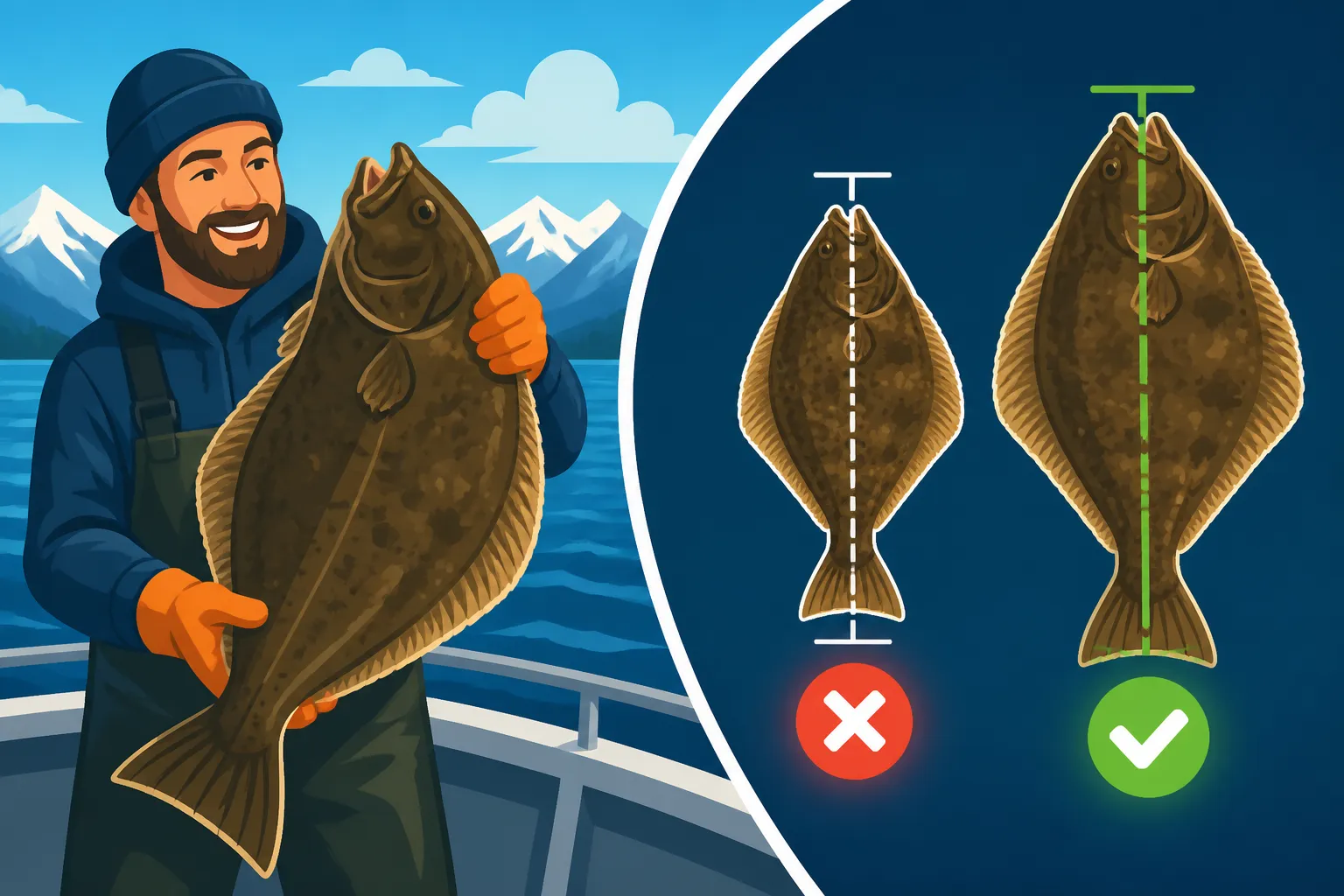
- Nose to Tail Fork: The standard way to measure halibut in Alaska is from the tip of the snout (upper jaw) to the fork of the tail. Ensure the mouth is closed and the fish is as straight as possible. Don't measure to the tip of the longest tail fin, as this will give you an artificially long measurement. Gently pinch the tail lobes together to find the true fork.
- Measure Immediately: If you catch a fish that appears borderline, measure it immediately. Don't wait until you're back at the dock. If it's undersized or within a release slot, you want to release it as quickly and safely as possible.
- Releasing Oversized or Slot Fish: If you catch a halibut that falls into a "must release" slot, handle it with care. Minimize its time out of the water. For very large fish, consider leaving them in the water alongside the boat and using a measuring tape from above if feasible. Barbless hooks can make release easier. Learning How to Catch Halibut in Alaska often includes proper handling techniques.
Best Practices for Handling and Releasing Oversized Halibut
When you've just wrestled a massive halibut to the surface, and the regulations demand its release, your immediate priority shifts from harvest to conservation. Proper release techniques are essential to maximize the fish's survival chances.
- Minimize Air Time: Halibut are big, heavy, and can be easily damaged by being out of the water, especially larger ones. If possible, measure the fish while it's still in the water, or lift it just enough to quickly get an accurate measurement before letting it go.
- Support its Weight: If you must bring a large halibut onto the boat for a quick measurement or photo, support its body weight horizontally, especially around its midsection. Avoid hanging it vertically by its jaw or tail for extended periods, as this can damage its internal organs and spine. A large cradle or specialized stretcher can be incredibly helpful for big fish.
- Use a Descending Device (for deep-water releases): While primarily used for rockfish, if you're fishing very deep and planning to release a halibut, a descending device can help it recover from barotrauma (the effects of rapid pressure change). However, halibut are generally more resilient to barotrauma than many rockfish species due to their deep-water adaptations. This is less critical for halibut than it is for other species, but it's a good tool to know about if you're jigging for halibut in deeper waters. Learning How to Jig for Halibut in Alaska can also highlight this.
- Quick and Gentle Release: Once measured, gently guide the fish back into the water headfirst. If it's a large fish, hold it by the tail and allow water to flow over its gills until it regains strength and swims away on its own power.
- Always Confirm Regulations: Before you even leave the dock, confirm the exact size and bag limits for your specific fishing area and whether you are fishing guided or unguided. Checking the ADF&G website, or consulting with local outfitters in places like Homer or Seward, is always a good idea. The Alaska Halibut: Complete Guide and Alaska Halibut: Facts and Fishing Tips are excellent resources.
| Angler Type | Typical Daily Bag Limit | Typical Size Limit | Key Considerations |
|---|---|---|---|
| Guided (Charter) | 1 fish | Highly variable "reverse slot limit" (e.g., one under 40 inches OR one over 80 inches; or just one under 40-45 inches). Specifics depend on IPHC/ADF&G area (e.g., Area 3A, Area 2C) and annual/in-season changes. | Must confirm with your charter captain. Regulations are complex and change frequently. Designed to protect large breeding females. |
| Unguided (Private) | 2 fish | Generally no maximum size limit. May have a minimum size (less common). | Generally more liberal than charter limits. Angler is responsible for knowing and adhering to current regional regulations. Confirm minimum sizes annually. |
Remember, the goal isn't just to catch fish, but to ensure there are plenty of fish for future trips. Respecting the size limits and practicing responsible angling techniques is paramount to enjoying the incredible halibut fishery Alaska offers. Whether you're planning a trip to the Homer Halibut Fishing Guide hot spots or casting lines in the waters near the Seward Halibut Fishing Guide, staying informed is your best catch.
Disclaimer
The information provided in this guide is for general informational purposes only and is subject to change. Alaska fishing regulations, including halibut size and bag limits, are dynamic and can be modified at any time by the Alaska Department of Fish and Game (ADF&G) and the International Pacific Halibut Commission (IPHC) through annual updates and emergency orders. It is the angler's sole responsibility to consult the most current official ADF&G sport fishing regulations booklet and any active emergency orders for the specific area and time they plan to fish before engaging in any fishing activities. Failure to do so may result in legal penalties.