Arctic Grayling Identification and Dorsal Fin
There’s nothing quite like the feeling of watching a flash of silver and iridescent purple break the surface of a pristine Alaskan stream, revealing the magnificent, sail-like dorsal fin of an Arctic Grayling. Many anglers dream of catching this iconic fish, yet sometimes the sheer variety of Alaska’s cold-water species can make identification a bit tricky, especially when you’re out in the wild. This comprehensive guide will walk you through everything you need to know about identifying the Arctic Grayling, with a special focus on its most defining feature: that spectacular dorsal fin.
The Allure of the Arctic Grayling: A True Alaskan Gem
The Arctic Grayling is more than just a fish; it's a symbol of Alaska's wild, untouched freshwater ecosystems. Its beauty, combined with its preference for remote, clear waters, makes it a highly sought-after species for both seasoned and novice anglers alike.
Why Anglers Seek Out This Unique Fish
For many, the draw of the Arctic Grayling isn't just about the catch; it's about the experience. These fish thrive in incredibly scenic environments, often requiring a hike or a float plane trip to access. Imagine casting your line into a crystal-clear stream, surrounded by towering spruce trees or rolling tundra, the only sound being the gentle murmur of the water and the occasional call of a loon. The grayling themselves are notoriously eager biters, especially on small dry flies, making for exciting, visual fishing. They're not the biggest fish in Alaska, often ranging from 10 to 18 inches, but what they lack in size, they make up for in sheer elegance and a surprisingly spirited fight on light tackle. Many an angler has purchased a new lightweight fly rod from Amazon specifically for their next grayling adventure.
Beyond the thrill of the catch, the aesthetic appeal of an Arctic Grayling is undeniable. They are often referred to as the "jewel of the north" or "sailfish of the north" due to their striking colors and, of course, that prominent dorsal fin. Handling them carefully for a quick photo before release is a common practice, as their vibrant hues truly pop in the sunlight. These experiences are what carve indelible memories for those who venture to Alaska's interior for a fishing trip, far from the bustling salmon rivers closer to civilization.
General Characteristics Beyond the Fin
While its dorsal fin is undoubtedly the most distinguishing feature, the Arctic Grayling possesses several other general characteristics that help in its identification. Typically, these fish have a relatively slender, torpedo-shaped body, perfectly adapted for navigating swift currents. Their average size in Alaska usually falls between 10 and 18 inches, though some larger specimens in remote lakes or rivers can reach up to 20 or even 22 inches, particularly in areas with abundant food and less fishing pressure.
Their coloration can vary depending on their specific habitat and diet, but generally, they exhibit a beautiful mosaic of iridescent shades. The body usually ranges from dark gray or olive green on the back, fading to silvery sides and a white belly. Often, you'll notice hints of blue, purple, or even pinkish-red iridescence, especially on the flanks and fins. This shimmering quality, coupled with distinct markings, makes them stand out amongst other Alaska Freshwater Fish Species. They are a species that truly embodies the pristine nature of the waters they inhabit.
Deciphering the Dorsal Fin: The Grayling's Crowning Glory
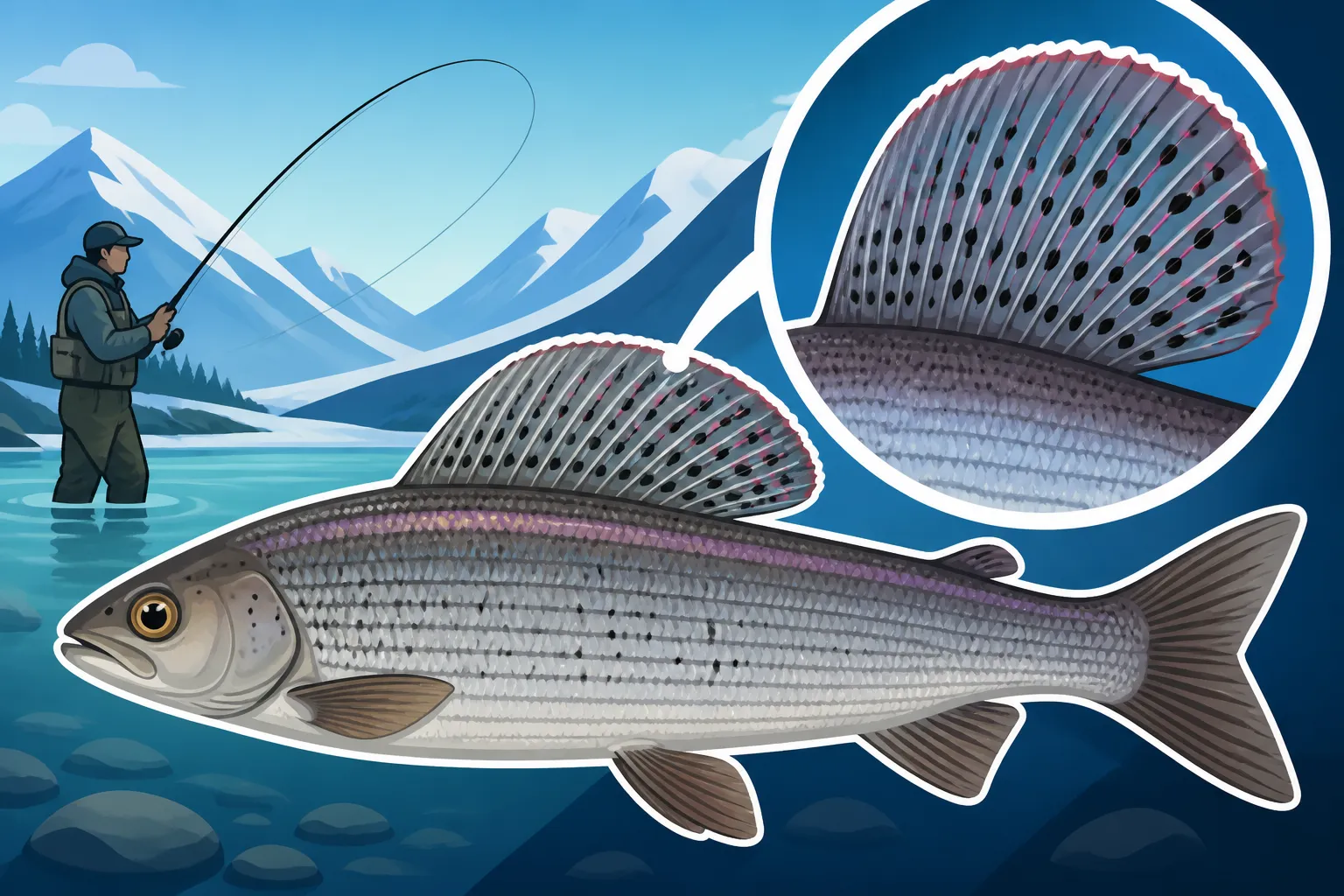
When you're trying to identify an Arctic Grayling, your eyes will almost immediately be drawn to its most spectacular feature: the dorsal fin. This isn't just any fin; it's a vibrant, often oversized, and highly decorative "sail" that sets it apart from nearly all other freshwater species in Alaska.
The Distinctive Sail-Like Dorsal Fin Explained
The dorsal fin of an Arctic Grayling is truly a marvel of nature. Unlike the relatively small, triangular, or rounded dorsal fins found on most trout or char species, the grayling's dorsal fin is exceptionally tall, long, and broad, extending almost the entire length of its back. It has a beautiful, sail-like or flag-like appearance, which is how it earned its nickname, the "sailfish of the north." This fin is typically adorned with rows of vibrant, iridescent spots and streaks, often in shades of purple, blue, green, and red, against a dusky or dark background. These patterns can vary in intensity, becoming particularly brilliant on spawning males.
The rays of the dorsal fin are often soft and flexible, giving it a flowing, almost ethereal quality when the fish is swimming or held gently in hand. It’s significantly larger in males than in females, becoming even more exaggerated during the spawning season when it's used in courtship displays. This pronounced fin helps distinguish it immediately from species like the Dolly Varden, which has a much smaller, less colorful dorsal fin. If you're wondering How to Catch Arctic Grayling, appreciating this fin is the first step in recognizing your target.
How to Differentiate from Look-Alikes
In Alaska's diverse waters, it's possible to encounter other fish that might, at a quick glance, be confused with an Arctic Grayling, especially smaller ones. However, the dorsal fin almost always provides the definitive identification cue.
- Rainbow Trout and Dolly Varden: While Alaska Rainbow Trout Guide might lead you to beautiful fish, their dorsal fins are proportionally much smaller, more triangular, and lack the vibrant, spotted patterns of the grayling. Dolly Varden and Arctic Char, often found in similar habitats, also have modest dorsal fins. The dorsal fin on a grayling is not only taller but also longer, often reaching back past the adipose fin (the small, fleshy fin near the tail) when laid flat. For a closer look at the differences, you might consult resources like Alaska Dolly Varden vs Arctic Char. No other salmonid in Alaska boasts such a grand dorsal appendage.
- Other Trout and Char Species: Consider the length and height of the dorsal fin relative to the fish's body. A grayling's dorsal fin will almost appear disproportionately large. It's truly a standout feature. Additionally, grayling typically have smaller mouths compared to many trout and char, and their overall body shape is often more streamlined. When inspecting a fish in hand, if you see that unmistakable sail, you've likely got an Arctic Grayling. The vivid coloration and distinct spots on the dorsal fin are rarely, if ever, replicated with such intensity and size in other Alaskan freshwater fish.
Beyond the Fin: Other Key Identification Features
While the dorsal fin is undoubtedly the grayling's most striking feature, a few other characteristics can help confirm its identity and distinguish it from other species you might encounter in Alaska's pristine waterways.
Coloration and Markings
The body of an Arctic Grayling boasts a spectrum of colors that adds to its allure. From the dark, almost black, upper back that often has an olive or brownish tint, its sides transition into a shimmering silver, sometimes with hints of blue, violet, or green iridescence. This metallic sheen is particularly noticeable when the fish is fresh out of the water or when light catches it just right. The belly is typically a crisp white.
A consistent identifying mark for Arctic Grayling is the presence of several distinct, crescent-shaped black spots along the sides, usually grouped just behind the gill plate. These spots, sometimes referred to as "parr marks" though they are permanent adult markings, are a reliable indicator. Furthermore, the gill plates themselves often display iridescent patches of turquoise or purplish blue, particularly vibrant on larger, mature fish. This combination of body colors and unique markings creates a truly stunning fish that stands out against the muted tones of its natural surroundings. You won't find this exact combination on other salmonids, making it a valuable clue when you're trying to figure out which species you've caught.
Mouth and Head Structure
Another reliable identification feature of the Arctic Grayling is its mouth and head. Compared to the robust, often large-mouthed salmon and trout species, the grayling has a relatively small, delicate mouth. It's described as a "terminal" mouth, meaning it's located directly at the end of its snout, designed for picking small insects off the surface or from the substrate. This is a stark contrast to the often underslung or large, gaping mouths of predators like trout or pike.
The head itself is proportionally small relative to its body, with prominent eyes set fairly far forward. The overall impression is one of elegance and refinement, rather than aggressive predatory power. This smaller mouth also gives you a clue about what they prefer to eat – tiny aquatic insects, nymphs, and small flies. Many anglers will head to Amazon to find suitable small dry flies and nymphs for these fish. If you're targeting them, understanding this mouth structure is key to choosing the right gear, as detailed in our Alaska Fishing Gear and Tackle Guide.
Fin Placement and Other Fins
Beyond the magnificent dorsal fin, the Arctic Grayling's other fins also contribute to its unique appearance and can aid in identification. The pectoral fins (located behind the gills) and pelvic fins (on the belly, below the pectoral fins) are typically a pale yellow or amber color, often with darker streaks or a reddish tint. These fins are well-developed and aid in maintaining stability in fast-moving water.
The anal fin, situated along the underside behind the vent, is usually similar in color to the pelvic fins, though sometimes slightly less vibrant. The caudal fin, or tail fin, is distinctly forked, providing efficient propulsion. While not as flashy as the dorsal fin, the combination of these proportionally sized, often yellowish fins, along with the forked tail, helps round out the grayling's distinctive profile. The adipose fin, that small, fleshy fin between the dorsal and caudal fins, is also present, a characteristic shared by all salmonids.
Here’s a quick comparison to help solidify your identification:
| Feature | Arctic Grayling | Rainbow Trout (e.g., resident trout) | Dolly Varden / Arctic Char |
|---|---|---|---|
| Dorsal Fin | Very large, sail-like, long, tall, vibrantly colored with spots/streaks | Smaller, triangular/rounded, less colorful, no prominent spots | Small, rounded, often dusky, no prominent coloration or spots |
| Body Shape | Slender, torpedo-shaped | More robust, often deeper-bodied | Stockier, more cylindrical |
| Mouth | Small, terminal (at the end of snout) | Larger, often extending past the eye | Large, extending back to or beyond the eye |
| Body Coloration | Dark back, silvery sides, white belly, iridescent hues, distinct black crescent spots behind gills, iridescent gill plates | Greenish-brown to silvery, pink/red lateral band, small black spots all over | Olive green to brown, pale yellow/orange spots (Dolly), large pink/red/orange spots (Char) |
| Tail Fin | Distinctly forked | Slightly forked to square | Slightly forked to square |
| Typical Habitat | Cold, clear streams, rivers, remote lakes | Rivers, streams, lakes, often prefers faster currents | Cold, clear rivers, lakes, coastal estuaries |
Where to Find and What to Know When Catching Grayling
Knowing how to identify an Arctic Grayling is one thing, but finding them and ensuring their health for future generations is another entirely. These fish are relatively delicate, so good angling practices are paramount.
Prime Arctic Grayling Habitats in Alaska
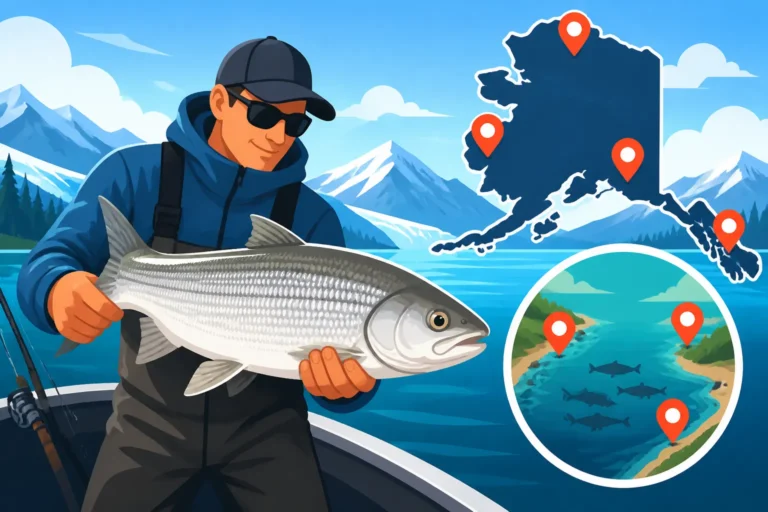
Arctic Grayling thrive in cold, clear, well-oxygenated waters, making them a superb indicator species for pristine environments. In Alaska, you'll primarily find them throughout the Interior and Arctic regions. They are widespread in the drainages of the Yukon River, Tanana River, and various smaller streams and lakes north of the Alaska Range. Think of the tributaries of the Susitna River and countless smaller, unnamed creeks that crisscross the vast Alaskan wilderness.
For a quintessential grayling experience, many anglers venture into areas accessible by the Denali Highway or the Steese Highway in Interior Alaska. Rivers like the Chena River near Fairbanks, or more remote systems accessible via float plane in the Yukon-Kuskokwim Delta, are renowned for their healthy grayling populations. These fish prefer gravel-bottomed streams with moderate currents, often congregating in pools, eddies, and the slower water behind submerged rocks or logs. When exploring potential spots, look for "riffle-pool" complexes where the water flows over shallow gravel and then deepens into a pool, as these areas often hold a good number of grayling. Our guide on Best Fishing in Interior Alaska offers more specific locations for those looking to plan a trip.
Best Practices for Catching and Handling Grayling
Catching Arctic Grayling is often a joy, as they are usually eager to bite, especially on small flies or lures. They are a favored target for fly anglers using dry flies, nymphs, or small streamers, but they can also be successfully caught with ultralight spinning gear using tiny spinners or spoons. Gear-wise, a 3 or 4-weight fly rod or a similarly light spinning rod from brands like Fenwick or Shimano, often purchased through Amazon, is ideal to fully appreciate their spirited fight without overpowering them. For more details on appropriate tackle, check out Best Flies for Alaska Trout or Best Lures and Bait for Alaska Rainbow Trout, many of which also work wonderfully for grayling.
Given their delicate nature, practicing Alaska Catch-and-Release Best Practices is crucial, especially for trophy-sized grayling. They have relatively soft mouths, so using barbless hooks can minimize damage and make release easier. When you land a grayling, handle it minimally and gently. Keep the fish in the water as much as possible, using wet hands if you need to touch it. Avoid squeezing its body or gills, and quickly remove the hook. If you wish to take a photo, do so quickly and ensure the fish is only out of the water for a few seconds. Always be aware of local regulations, as bag limits and seasons can vary; our resource on Alaska Arctic Grayling Regulations and Limits provides essential information before you head out. Respecting these beautiful fish and their pristine habitats ensures that future generations of anglers can also experience the thrill of the Arctic Grayling.
Disclaimer
The information provided in this guide is for general informational purposes only and is not intended as legal or professional advice. Fishing regulations in Alaska can change frequently due to emergency orders and other factors. Always consult the latest Alaska Department of Fish and Game regulations booklet and emergency orders before planning any fishing trip.