How to Tell a Rainbow Trout from a Steelhead
It's a common dilemma that vexes even seasoned anglers: standing on the riverbank, staring at a shimmering fish in your net, and wondering, "Is this a rainbow trout or a steelhead?" This isn't just an academic question; it often has real implications for regulations and how you appreciate your catch. The confusion is completely understandable because, at their core, they are the same species. This comprehensive guide aims to untangle that mystery, offering clear identification markers and behavioral insights so you can confidently tell the difference every time.
The Core Distinction: Anadromy
Let's cut right to the chase with the fundamental difference that sets these two magnificent fish apart. While they share the same scientific classification (Oncorhynchus mykiss), their life history strategies diverge dramatically, leading to the distinct terms we use. Understanding this biological split is the key to unlocking their identities.
What is a Rainbow Trout?
When we talk about a "rainbow trout" in the traditional sense, we're usually referring to the resident, freshwater-dwelling form of Oncorhynchus mykiss. These fish spend their entire lives in the rivers, streams, and lakes where they were born, never migrating to saltwater. They are true freshwater warriors, adapting to the specific conditions of their inland homes. Their life cycle is entirely contained within the freshwater ecosystem, meaning they hatch, grow, mature, and spawn all without ever venturing into the ocean.
You'll find these vibrant fish in an incredible array of freshwater environments across Alaska, from the crystal-clear waters of the Kenai Peninsula to the remote lakes of the Interior. They thrive in cold, oxygen-rich water with plenty of structure for cover, such as fallen logs, undercut banks, and gravel bottoms for spawning. Because they remain in freshwater, their diet typically consists of aquatic insects, smaller fish, and various terrestrial invertebrates that fall into the water. This consistent freshwater existence contributes to their classic, often richly colored appearance, which we'll delve into shortly. They might migrate short distances within a river system to find food or suitable spawning grounds, but a journey to the sea is simply not part of their genetic programming. If you're looking for more details on these stunning fish, our Alaska Rainbow Trout Guide offers an extensive look at their biology and habits.
What is a Steelhead?
Now, here's where things get fascinating. A steelhead is, genetically speaking, still a rainbow trout, but one that has adopted an anadromous life strategy. "Anadromous" means they hatch in freshwater, migrate to the ocean to feed and grow, and then return to freshwater to spawn. Think of them as the adventurous, sea-going cousins of the resident rainbow trout. This migration is a perilous journey, but it offers immense benefits, primarily access to a richer, more abundant food source in the ocean, allowing them to grow significantly larger and stronger than their freshwater counterparts.
After hatching in a freshwater stream, juvenile steelhead (often called "smolts") will spend anywhere from one to three years in their natal river before undergoing a physiological change called smoltification, which prepares them for saltwater life. Once in the ocean, they can spend another one to four years feasting and growing before instinct calls them back to their birth stream to spawn. Unlike Pacific salmon, which typically die after spawning, steelhead are iteroparous, meaning they can survive spawning and return to the ocean, potentially making multiple spawning migrations throughout their lives. This ability to return and spawn again is a remarkable adaptation. The rigorous journey and different marine diet significantly impact their appearance, which we'll explore next. They are often revered by anglers for their incredible fighting power and elusive nature, especially in rivers like those found in Southeast Alaska.
Physical Characteristics: Spotting the Differences
While their shared lineage can make identification tricky, there are distinct physical cues that, once you know what to look for, can help you differentiate between a rainbow trout and a steelhead. These differences are primarily a result of their divergent life histories and the environments they inhabit.
Coloration and Markings
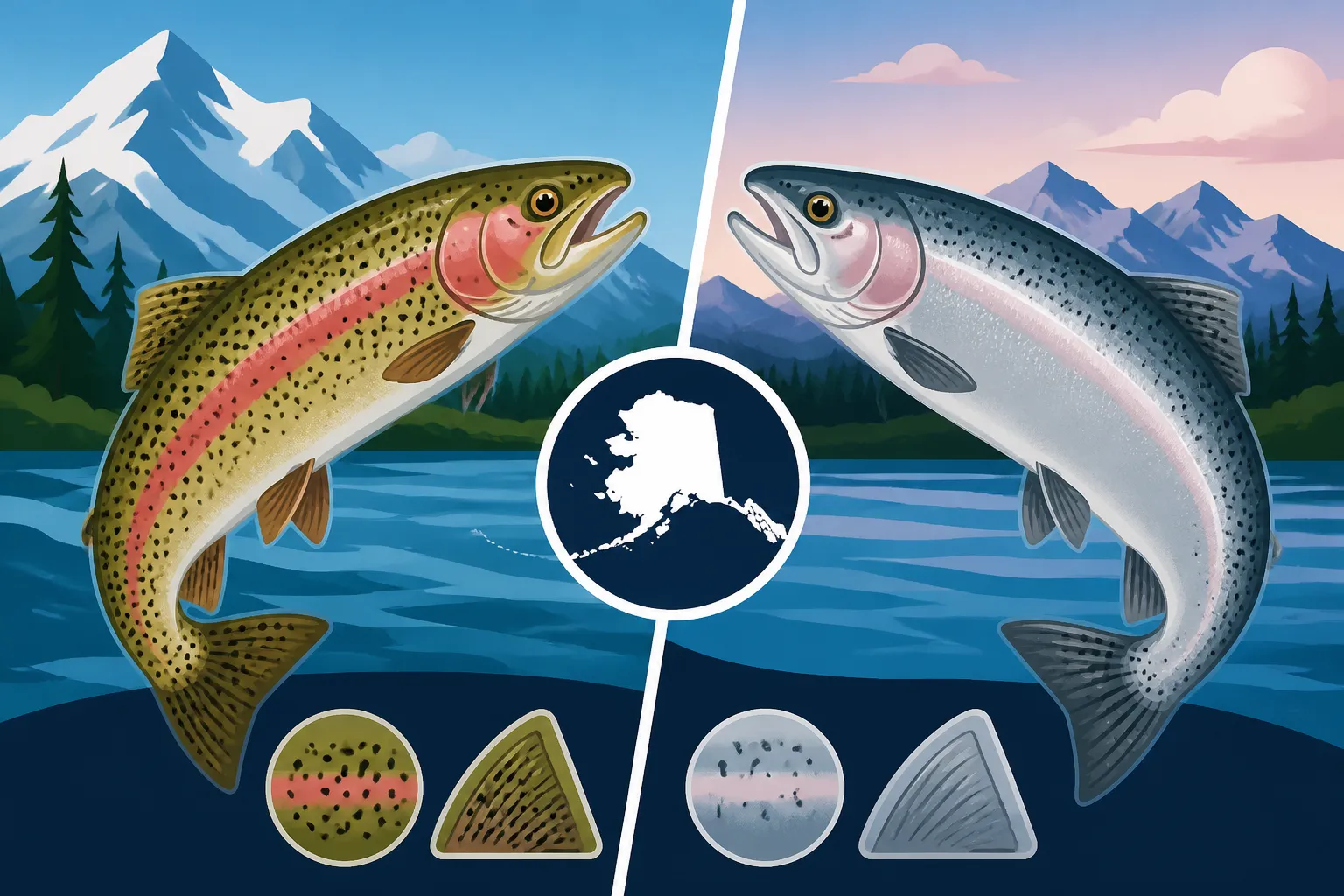
This is often the first and most obvious clue, though it's not foolproof. Resident rainbow trout are famed for their vibrant, iridescent hues. Their flanks often shimmer with a beautiful blend of olive-green, gold, and silver, accented by a prominent, often reddish or pinkish lateral stripe running down their side, giving them their "rainbow" name. Their backs are usually darker, a rich olive or brown, fading to lighter sides and a white belly. Critically, they are typically covered in numerous small, distinct black spots across their back, dorsal fin, caudal (tail) fin, and sometimes even their adipose fin and head. These spots are usually round and well-defined. The intensity of their colors can vary greatly depending on their specific habitat, diet, and even their mood, but the general pattern holds true. A trout living in a heavily vegetated stream might display darker, more camouflaged tones, while one from a clear, rocky lake could be brighter.
Steelhead, on the other hand, spend a significant portion of their lives in the vast, open ocean. This marine existence gives them a more uniform, steely, and silvery appearance, hence their name. Their colors are often muted, giving them a sleek, almost chrome-plated look. The distinctive pink or red lateral stripe, so vibrant on a resident rainbow, is usually much fainter, if present at all, on a steelhead. Their backs will still be darker, often a slate gray or dark blue, which helps them camouflage in the open ocean waters, blending with the depths when viewed from above. The spotting on a steelhead, while still present, tends to be more sparse and less distinct than on a resident rainbow. The spots are typically smaller, sometimes appearing as faint speckles, and less numerous, especially below the lateral line. The overall impression is one of streamlined, silvery efficiency, a stark contrast to the painterly palette of a freshwater rainbow.
Body Shape and Size
The environment also plays a significant role in sculpting their physical form. Resident rainbow trout, while they can grow quite large in nutrient-rich lakes, generally exhibit a somewhat stockier, more robust build. Their bodies might be a bit deeper through the middle, giving them a slightly less elongated profile. They are powerful swimmers, perfectly adapted to navigating river currents and maneuvering around obstacles in their freshwater homes. Their size is largely dictated by the food availability in their specific lake or river system. For instance, a rainbow trout in a small, isolated stream might only reach a pound or two, while one in a large, productive lake could easily hit double digits, especially in places like the famed Bristol Bay region.
Steelhead, by virtue of their oceanic feeding migrations, tend to be significantly larger and possess a more streamlined, torpedo-like body shape. Their time in the vast ocean, chasing forage fish and growing without the physical constraints of a river, allows them to pack on considerable mass. They develop a powerful, muscular tail and a sleek, elongated body designed for speed and endurance in open water. When they return to freshwater, they retain this impressive physique. A typical steelhead might range from 6 to 15 pounds, but trophy specimens can easily exceed 20 pounds, particularly on renowned rivers. This larger size and powerful build make them legendary fighters, often making spectacular aerial displays when hooked. Their sheer physical presence and muscularity are often a dead giveaway.
Fin Features
Even the fins can offer clues, though these require a closer look and can be influenced by other factors like wear and tear. Both rainbow trout and steelhead share the characteristic adipose fin (a small, fleshy fin between the dorsal and caudal fins), a trait common to all salmonids. However, there are subtle differences to note.
The fins of resident rainbow trout are generally well-proportioned and often display some of the same spotting patterns found on their bodies, particularly on the dorsal and caudal fins. The edges of their fins might be slightly rounded or softer in appearance, especially if they are older or have spent a lot of time in abrasive stream environments.
Steelhead, due to their strenuous ocean migrations and powerful movements, often have more pronounced and stiff fins. Their caudal fin (tail) is typically larger and more squared-off or slightly forked, built for propulsion over long distances. The edges of their fins might appear sharper and more defined, and sometimes, particularly after a long journey or multiple spawns, their fins can show signs of wear and tear, appearing frayed or nicked. This isn't always a reliable indicator as freshwater trout can also experience fin damage, but it's a piece of the puzzle. An excellent article comparing these specific features is our Rainbow Trout vs Steelhead in Alaska guide, which provides even more detailed images and descriptions to help you in the field.
Habitat and Behavior: Where and How They Live
Beyond their physical appearance, understanding where these fish live and how they behave offers another layer of insight into telling them apart. Their choice of environment fundamentally shapes their lives and interactions.
Freshwater vs. Ocean Environments
The most straightforward way to distinguish between a resident rainbow trout and a steelhead is by considering their primary habitat. As discussed, resident rainbow trout are strictly freshwater creatures. You'll find them holding in river runs, lurking under logjams in lakes, or darting through riffles in streams. They are part of the permanent freshwater community, interacting with other freshwater species like Dolly Varden and Arctic Grayling. Their movements are typically limited to within a specific river or lake system, driven by factors like food availability, water temperature, and spawning needs. If you catch a beautiful, spotted trout deep within a landlocked lake, far from any saltwater influence, it’s safe to assume it's a resident rainbow.
Steelhead, conversely, are transients of the marine and freshwater worlds. They spend their formative years in freshwater, then embark on an incredible journey to the ocean. Here, they forage and grow, becoming powerful, ocean-hardened fish. When they return to freshwater, it's solely for the purpose of spawning. They don't linger in the ocean for their entire lives; they are drawn back to the very streams where they were born, sometimes traveling hundreds of miles upstream. Therefore, if you catch a large, silvery trout in a river that flows directly to the ocean, especially during the typical steelhead run timings (often late fall, winter, or early spring in many regions), the chances are high it's a steelhead. These fish are driven by a powerful instinct to reproduce, a stark contrast to the resident trout who are always "home."
Spawning Habits
Both resident rainbow trout and steelhead spawn in freshwater, laying their eggs in gravel nests called redds. However, their spawning frequency and the implications for management differ significantly.
Resident rainbow trout typically spawn annually, usually in the spring, once they reach sexual maturity. They will find suitable gravel beds in their home river or stream, perform their mating rituals, and then continue to live in that freshwater system. Their lives are a continuous cycle within the same environment. Understanding the precise timing and locations for these activities is key for anglers, as outlined in our Best Time for Trout Fishing in Alaska guide.
Steelhead also spawn in freshwater, returning from the ocean to do so. This is where the magic happens. Unlike most Pacific salmon species which are semelparous (die after spawning once), steelhead are iteroparous. This means a steelhead can survive the rigors of spawning and the subsequent journey back to the ocean. They might then return to spawn again in a subsequent year, potentially multiple times throughout their lives. These multi-spawning fish are often referred to as "repeat spawners" and are highly prized. This ability to return to the ocean and come back to spawn again is a critical biological distinction and a significant factor in their conservation. It makes the management of steelhead populations particularly complex and highlights the importance of catch-and-release practices, as detailed in the Alaska Steelhead Catch-and-Release Rules.
Angling Considerations: Fishing for Each Species
The subtle differences between rainbow trout and steelhead also translate into distinct approaches for anglers. From the gear you choose to the regulations you follow, knowing which fish you're targeting can make all the difference in your success and compliance.
Gear and Techniques
When you're chasing resident rainbow trout in Alaska, especially in smaller streams or lakes, you're often looking at lighter tackle. A 4-6 weight fly rod is perfect for casting dry flies, nymphs, or small streamers. For spin fishing, a light-action rod with 4-8 pound test line is usually sufficient for tossing spinners, spoons, or small soft plastics. Rainbow trout, while strong, are typically smaller than their steelhead cousins, so presentation and finesse often trump brute force. You might use small beads to imitate salmon eggs, or focus on insect patterns if you're fly fishing. Brands like Amazon offer a wide range of suitable gear, from delicate fly lines to robust spinning reels that are perfect for these situations. Our Alaska Fishing Gear and Tackle Guide has some excellent recommendations for outfitting your next trout adventure.
Steelhead, being larger and immensely more powerful, demand more substantial gear. If you're fly fishing for steelhead, you'll often step up to 7-9 weight rods, capable of handling larger flies, heavy sink tips, and long casts, and, most importantly, powerful fish. Techniques like spey casting or single-hand nymphing with heavy rigs are common. For spin fishing, a medium-heavy rod with 10-20 pound test line is often necessary, especially when fishing in strong currents with heavier lures or bait. These fish are notorious for their blistering runs and acrobatic jumps, so strong hooks, reliable reels, and durable lines are paramount. Many anglers rely on specific brands of durable fishing line and tackle found readily on platforms like Amazon to withstand the brutal fight of a chrome bright steelhead. The techniques for catching these migratory fish often involve covering a lot of water and understanding their migratory patterns, which can be quite different from targeting resident trout. Whether you're drift fishing or fly fishing, precision and power are key. For fly fishing enthusiasts, our guide on How to Fly Fish in Alaska can provide deeper insights into the techniques applicable to both species.
Conservation and Regulations
Understanding the distinction between rainbow trout and steelhead is not just about bragging rights; it's vital for adherence to fishing regulations and contributing to conservation efforts. In many parts of Alaska, and indeed across the Pacific Northwest, steelhead populations face unique conservation challenges due to habitat degradation, past overfishing, and climate change impacts on both freshwater and marine environments. Consequently, regulations for steelhead are often much stricter than those for resident rainbow trout.
For instance, in certain river systems, rainbow trout might have a harvestable limit, while steelhead could be strictly catch-and-release, often with specific requirements like using barbless hooks. The Alaska Department of Fish and Game (ADF&G) frequently implements emergency orders or specific guidelines, such as those found in Alaska Fishing Regulations Explained, to protect vulnerable steelhead runs. This is particularly true for wild, unclipped steelhead, which are genetically invaluable. It's not uncommon for anglers to be required to release all steelhead, regardless of size or condition, to ensure these majestic fish have every opportunity to spawn and contribute to future generations. You might also find special rules regarding specific stretches of rivers or certain times of the year when steelhead are most vulnerable. For example, some areas might have bait restrictions or single-hook rules to minimize harm. Always, always check the current regulations for the specific body of water you plan to fish, as rules can change rapidly. Our resource on Alaska Steelhead Catch-and-Release Rules is a must-read for anyone targeting these magnificent fish.
It's also worth noting that distinguishing between wild and hatchery-reared steelhead is another layer of complexity. Hatchery fish are often marked (e.g., with an adipose fin clip) to differentiate them from wild populations, and regulations might allow for the retention of hatchery fish while requiring the release of all wild fish. This nuanced approach to management underscores the importance of accurate identification for every angler.
Here's a quick comparison table to help you keep these distinctions straight in your head:
| Feature | Resident Rainbow Trout (Freshwater) | Steelhead (Anadromous Rainbow Trout) |
|---|---|---|
| Primary Habitat | Spends entire life in freshwater (rivers, lakes) | Hatches in freshwater, migrates to ocean, returns to spawn |
| Coloration | Vibrant, iridescent, distinct pink/red lateral stripe, often richly colored. | Silvery, chrome-plated, muted colors, faint or absent lateral stripe. |
| Spotting | Numerous, distinct, round black spots all over body, dorsal, and tail fins. | Sparser, smaller, less distinct spots, especially below lateral line. |
| Body Shape | Generally stockier, robust, often deeper through the middle. | Streamlined, torpedo-like, elongated, very powerful. |
| Size | Typically smaller (1-10 lbs, varies greatly by habitat). | Significantly larger (6-20+ lbs), due to ocean feeding. |
| Fin Appearance | Well-proportioned, often spotted, can show wear. | Larger, stiffer tail fin, can show wear from migration. |
| Spawning | Usually spawns annually in freshwater, can be repeat spawners. | Iteroparous (can spawn multiple times), returns from ocean. |
| Angling Tackle | Lighter gear (4-6 wt fly, light spin). | Heavier gear (7-9 wt fly, medium-heavy spin). |
| Conservation | Often less restrictive regulations, may have harvest limits. | Often strict catch-and-release, special rules for wild fish. |
Disclaimer
The information provided in this guide is for general informational purposes only and is subject to change. Fishing regulations in Alaska are complex and can vary significantly by region, river system, and even specific dates, often changing mid-season due to emergency orders. Always consult the most current Alaska Department of Fish and Game (ADF&G) regulations booklet and check for any emergency orders before you head out on the water. Your local knowledge and understanding of current conditions are paramount for a safe and successful fishing trip.