When Do Alaska Salmon Spawn
Figuring out the precise timing of when Alaska salmon spawn can feel like trying to hit a moving target. You hear about these massive salmon runs, but knowing exactly when and where these incredible natural events culminate in the act of spawning is crucial for understanding their life cycle and, for anglers, knowing when to respect their critical mission. This guide will walk you through the various spawning seasons for Alaska's iconic salmon species, delve into the biological drivers behind this magnificent journey, and offer insights into how their efforts sustain the entire ecosystem.
Understanding the Salmon Spawning Cycle in Alaska
The salmon spawning cycle isn't just a brief moment in time; it's the culmination of years of ocean life and an epic upstream migration fueled by an unyielding biological imperative. For many, it's the defining characteristic of these incredible fish, a journey that marks both an ending and a new beginning.
The Urge to Return: What Triggers Spawning?
Imagine spending years in the vast, food-rich expanse of the North Pacific, growing strong and healthy. Then, one day, an ancient switch flips. For Alaska's salmon, this switch is a combination of instinct and environmental cues. As they mature, their bodies undergo incredible physiological changes, preparing them for the freshwater journey. Their digestive systems begin to shut down, their silver ocean scales transform into vibrant spawning colors, and their energy reserves are meticulously conserved for the arduous swim upstream.
The primary trigger for their return to freshwater is often tied to photoperiod (daylight length) and internal biological clocks. Once in freshwater, factors like water temperature, flow rates, and even the scent of their natal stream, a unique chemical signature imprinted on them as smolts, guide them unerringly home. This powerful instinct to return to the exact gravel bed where they were born is one of nature's most astounding feats. Without this unwavering drive, the very existence of salmon runs, and all the life they support, would simply cease.
The Journey Home: Migration to Spawning Grounds
The migration itself is a grueling marathon, often involving thousands of miles from their feeding grounds in the ocean to the precise gravel beds of their birth. Picture a King Salmon, weighing upwards of 50 pounds, battling upstream against powerful currents, leaping waterfalls, and evading predators like bears and eagles, all without eating a single meal. It's a testament to their strength and determination.
Different salmon species have different migration patterns and distances. Some, like Pink Salmon, might only travel a few miles up coastal streams, while others, like many King or Sockeye Salmon, might navigate hundreds of miles deep into the interior, pushing past major river systems like the Copper River, Kenai River, or Susitna River. This journey is metabolically expensive; they are literally burning through their body fat and muscle tissue to reach their destination. For an angler, understanding this incredible journey instills a deep respect for every fish caught, and helps us appreciate the importance of Alaska Fishing Regulations Explained and Alaska Catch-and-Release Best Practices to ensure the health of future runs.
The Spawning Act: Building Redds and Fertilization
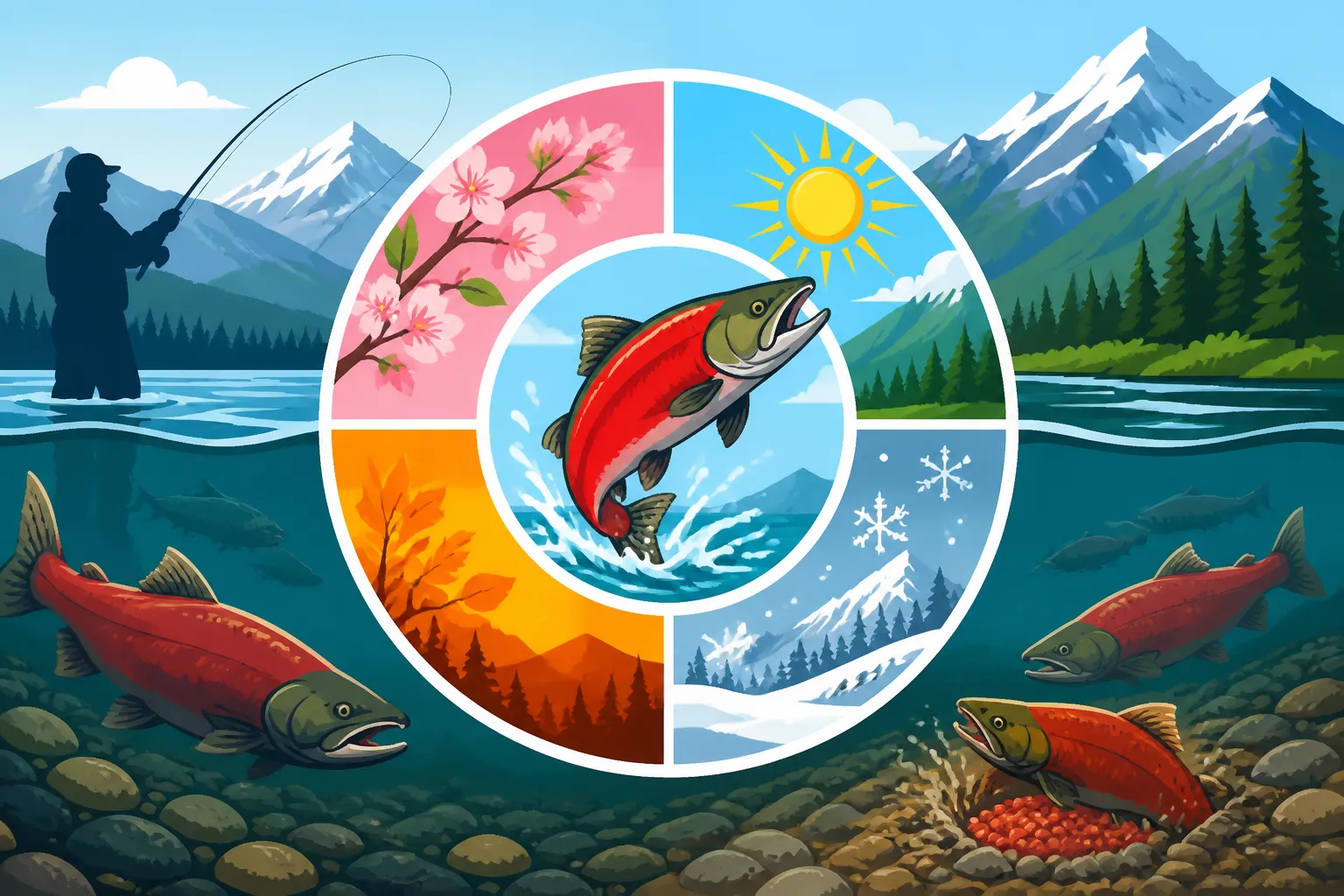
Once salmon reach their chosen spawning grounds – typically shallow, clear, gravelly areas of rivers or lake tributaries – the final, most crucial act of their lives begins. The female, using her tail, meticulously excavates a shallow depression in the gravel called a "redd." This isn't just a random hole; she's creating a perfectly oxygenated, protected nursery for her future offspring. She'll deposit thousands of eggs into this redd.
Immediately, the male, often fiercely territorial and displaying his vibrant spawning colors and kype (hooked jaw), will move alongside her to fertilize the eggs with his milt. This process might be repeated several times, with the female digging new pockets and covering previous ones with fresh gravel, creating a series of nested redds. This diligent protection ensures the eggs are safe from predators and abrasive river flows. It’s an exhausting process, leaving both fish utterly spent and marking the beginning of the end of their incredible lives.
Spawning Seasons for Each Alaska Salmon Species
Alaska is home to all five species of Pacific salmon, and while their general life cycles are similar, their specific spawning timelines vary. Knowing these timings is key for anyone interested in observing the phenomenon or understanding fishery management.
King Salmon (Chinook) Spawning Timeline
King Salmon, also known as Chinook, are often the earliest to return to freshwater and begin their spawning ritual. Their sheer size and power demand respect, and their migration often starts in late spring. You'll typically find King Salmon spawning from late July through September, with peak activity often in August.
Rivers like the Kenai River and Kasilof River on the Kenai Peninsula see strong King Salmon runs, with fish pushing far upstream to find suitable gravel beds. The exact timing can vary significantly by river system, and some of the more interior systems might see fish spawning later in the fall. During this period, their vibrant red, green, and black mottled colors are unmistakable. Understanding when these majestic fish are focused on reproduction is essential, and often leads to specific Alaska King Salmon Fishing Regulations and Limits and closures to protect these crucial populations.
Sockeye Salmon (Red) Spawning Timeline
Sockeye Salmon, famous for their brilliant red bodies and green heads during spawning, are arguably the most iconic of Alaska's salmon due to their massive runs and economic importance. Their spawning typically occurs from late July through September, often peaking in August and early September.
Sockeye are unique in that many populations spawn in river systems connected to lakes. The adults will often hold in the lakes for a period before moving into tributary streams or along lake edges to spawn. The famed Bristol Bay region and the Kenai River are prime examples of where you can witness enormous Sockeye runs. The Russian River, a tributary of the Kenai, is another hot spot. When Sockeye are spawning, they are entirely focused on reproduction and are not actively feeding, which is an important consideration for anglers. This dedication to spawning is why many Alaska Sockeye Salmon Fishing Regulations and Limits are in place, particularly around peak spawning times.
Coho Salmon (Silver) Spawning Timeline
Coho Salmon, or Silvers, are often the last of the salmon species to arrive in significant numbers for their freshwater spawning journey, bringing the salmon season to a vibrant close. Their spawning generally takes place from September through November, extending into early December in some warmer systems.
These aggressive and acrobatic fish transform into dark red or maroon hues with darker backs during their spawning phase. They prefer smaller streams and tributaries, often traveling further upstream than Pink or Chum salmon. While they might not form the enormous, concentrated redds of Sockeye, their late season presence is a vital food source for wildlife entering winter. Observing them requires patience and often a bit more willingness to brave cooler, wetter weather. For those seeking late-season action, knowing Best Time to Catch Coho Salmon in Alaska is key, though fishing directly on spawning beds is generally discouraged or prohibited.
Pink Salmon (Humpy) Spawning Timeline
Pink Salmon, affectionately known as "Humpies" due to the pronounced hump males develop on their backs, have the shortest life cycle of all Pacific salmon and typically spawn every two years. Their spawning season is relatively early and swift, generally from late July through August, sometimes extending into early September.
Pinks often spawn in the lower reaches of rivers and streams, sometimes even in the intertidal zones. They don't typically travel as far upstream as Kings or Sockeye. Their spawning colors are a mottled grey, brown, and green, often with dark spots. Due to their biennial cycle, you'll often hear about "even-year" and "odd-year" runs, with one year often having significantly larger returns than the other in specific regions. For example, Prince William Sound often sees massive even-year runs. The sheer abundance of Pink Salmon makes them a cornerstone of the Alaskan ecosystem, providing an accessible food source for countless predators.
Chum Salmon (Dog) Spawning Timeline
Chum Salmon, also called "Dog Salmon" due to their impressive canine-like teeth developed during spawning, are known for their striking vertical stripes of purple, green, and red. Their spawning season broadly overlaps with Pinks and Sockeye, typically from late July through September, with some runs continuing into October.
Chum salmon often spawn in larger rivers and sloughs, and also utilize coastal streams. While not as prized by some anglers as Kings or Sockeye, they are incredibly important for subsistence users and are a powerful fighting fish. Their ability to spawn in a variety of freshwater habitats, including those with higher turbidity or slower flows, makes them a resilient species. Like other salmon, fishing directly on redds or actively spawning fish is both ethically questionable and often against regulations, but understanding their presence helps with responsible fishing practices throughout the season. Learning about Alaska Chum Salmon Regulations and Limits is always a good idea before heading out.
Here's a quick overview of the typical spawning windows for each species:
| Salmon Species | Primary Spawning Window | Key Characteristics |
|---|---|---|
| King Salmon | Late July – September | Earliest to return, largest fish, travel far upstream. |
| Sockeye Salmon | Late July – September | Bright red bodies, green heads; often spawn in lake-fed systems. |
| Coho Salmon | September – November | Late season spawners, often in smaller streams; aggressive. |
| Pink Salmon | Late July – August | Biennial runs, pronounced hump on males; lower river spawners. |
| Chum Salmon | Late July – September | Vertical stripes of purple, green, red; large teeth; resilient. |
Note: These are general timelines; exact peak spawning can vary by river system, latitude, and annual conditions.
What Happens After Spawning? The Salmon's Life Cycle
The spawning act is not just a biological event; it's a profound ecological contribution that resonates throughout the Alaskan wilderness. Once their eggs are laid and fertilized, the salmon's journey takes a poignant turn.
Post-Spawning Mortality: The Ultimate Sacrifice
For all five species of Pacific salmon found in Alaska, spawning is a semelparous event – meaning they spawn once and then die. This "post-spawning mortality" is not a failure, but the ultimate sacrifice, an essential part of their life cycle. Their bodies, depleted of all energy reserves, slowly decompose in or near the rivers where they spawned. This might seem sad, but it's an incredibly vital part of the ecosystem.
Their decaying bodies release a tremendous amount of marine-derived nutrients, essentially fertilizing the freshwater environment. These nutrients, brought from the ocean, enrich the rivers and surrounding riparian zones, providing essential building blocks for insects, plants, and ultimately, the next generation of salmon fry. It's a continuous cycle of life and death, where one generation literally feeds the next, creating a vibrant, self-sustaining ecosystem that epitomizes the raw power of nature.
The Next Generation: Egg Incubation and Fry Emergence
Deep within the gravel redds, the fertilized eggs, often called "alevins," begin their development. This incubation period is a critical and vulnerable stage. Water temperature, oxygen levels, and stable gravel beds are paramount for their survival. Depending on the species and water temperature, this can take several weeks to many months.
Once hatched, the tiny alevins remain buried in the gravel, feeding off the yolk sac attached to their bodies. When the yolk sac is absorbed, they emerge from the gravel as "fry." These little fish then begin their freshwater journey, growing and developing, eventually migrating downstream to the ocean as "smolts" to begin their own epic journey. This freshwater phase is when many young salmon are vulnerable to predation and rely heavily on the health of the stream. Knowing the nuances of the Alaska Salmon Life Cycle Explained helps us understand the importance of protecting these delicate habitats.
Ecological Impact: The Gift of Life
The annual return of spawning salmon is far more than just a fish run; it's a massive nutrient subsidy to the entire ecosystem. Beyond fertilizing the rivers, the millions of salmon carcasses become a feast for countless wildlife species. Grizzly bears, black bears, wolves, eagles, gulls, and even smaller mammals and insects rely heavily on this bounty.
Consider the Kenai Peninsula in late summer and fall. When salmon are spawning, the banks of rivers like the Kenai and Kasilof come alive with wildlife. Bears can be seen fishing the redds, while eagles perch in overhead trees, waiting for an opportunity. This transfer of marine nutrients into terrestrial environments supports entire food webs, influencing forest health, soil composition, and the populations of apex predators. It's a profound reminder that everything in nature is interconnected, and the health of the salmon runs directly impacts the health of the vast Alaskan wilderness.
Observing Salmon Spawning Ethically and Responsibly
If you're fascinated by this natural wonder, there are ways to observe salmon spawning without disturbing these vital creatures during their most critical life stage. It's all about respect and understanding.
Best Places and Times for Viewing
Many of Alaska's state parks and national refuges offer fantastic opportunities for salmon viewing. On the Kenai Peninsula, the Russian River Falls viewing platform in the Chugach National Forest is famous for Sockeye Salmon leaping waterfalls, especially in July and August. Brooks Falls in Katmai National Park, while harder to access, is world-renowned for brown bears fishing for spawning Sockeye in July. Local fish weirs and hatcheries, such as the Crooked Creek Fish Weir near Kasilof, often have viewing platforms and interpretive signs. Even in urban areas like Anchorage, Ship Creek can offer glimpses of spawning Coho later in the fall.
When planning to visit, remember that the "best time" will align with the peak spawning periods for the dominant species in that particular location, as detailed in the table above. Early morning or late afternoon can often be ideal, as light conditions are softer, and wildlife activity might be higher. Always check local visitor centers or park websites for current conditions and viewing advice. Bringing a good pair of polarized sunglasses (you can find excellent options on Amazon) can help you see fish more clearly in the water, and binoculars are great for observing wildlife from a safe distance.
Regulations and Respecting the Spawning Grounds
When you're out observing salmon, whether you're fishing or just watching, it's paramount to be a responsible and ethical visitor. Fish that are actively spawning, often seen in shallow redds, are incredibly vulnerable. Many areas have specific closures or restrictions around spawning beds to protect these fish. Always consult the current Alaska Fishing Regulations Explained booklet for the specific region you plan to visit.
Key rules to remember:
- Do not wade directly into redds: The gravel beds contain the fragile eggs, and walking on them can destroy future generations.
- Maintain distance: Give spawning fish plenty of space. Any disturbance can disrupt their critical work.
- Respect private property and designated viewing areas: Stick to established trails and platforms.
- Pack it in, pack it out: Leave no trace of your visit.
- Be bear aware: Where there are spawning salmon, there are often bears. Carry bear spray, know how to use it, and make noise when hiking.
Understanding and respecting the salmon's mission ensures that these incredible cycles continue for generations to come, allowing future visitors and anglers to experience the wonder of Alaska's spawning salmon.
Disclaimer
The information provided in this guide is for general informational purposes only and is subject to change. Alaska fishing regulations, seasons, and emergency orders can change rapidly. Always consult the latest official Alaska Department of Fish and Game regulations and emergency orders before planning or undertaking any fishing activities.