Why Are Big Halibut Always Female
It's a question that's likely crossed the mind of almost every angler who's ever pulled a truly massive Pacific halibut from the icy depths of Alaska's waters: why does it seem like all the colossal, barn-door sized fish are always female? It's a valid observation, and frankly, it can be a bit perplexing when you're out on the water, seeing one huge female after another come over the rail. This guide will dive deep into the fascinating biological reasons behind this phenomenon, offering a clear, in-depth explanation of why the largest halibut you'll encounter are almost exclusively female.
The Fundamental Biology of Pacific Halibut Growth
Understanding why big halibut are almost always female starts with a peek into their fundamental biology. Like many species in the animal kingdom, there's a significant difference in how male and female Pacific halibut grow and develop over their lifespan. It's not just a coincidence; it's a deeply ingrained evolutionary strategy that contributes to the species' overall success.
Differential Growth Rates Between Sexes
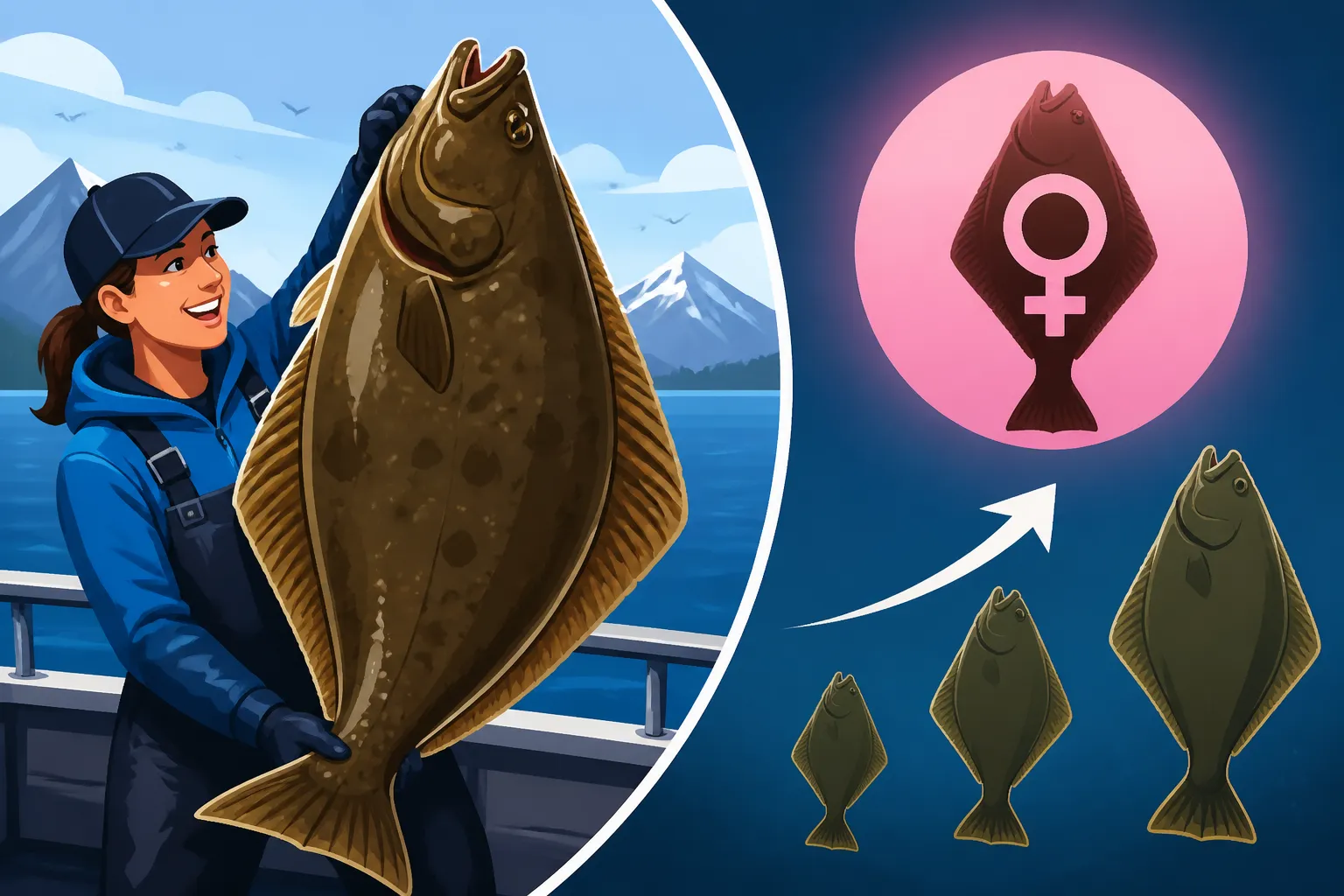
The primary reason for the size disparity is a marked difference in growth rates between male and female halibut. From a relatively young age, female halibut simply grow faster and larger than their male counterparts. This isn't unique to halibut; you see similar patterns in other fish species, birds of prey, and even some insects. For Pacific halibut, it means that by the time they reach sexual maturity, there's already a noticeable size gap. As they continue to age, this gap only widens.
Think of it this way: if you had two halibut, a male and a female, born on the same day and living in identical conditions, the female would consistently outpace the male in terms of weight and length year after year. While both sexes can live for a good number of years, females have a genetic predisposition to dedicate more energy towards somatic growth – that's body growth – especially in their younger and middle adult years. This accelerated growth allows them to reach impressive sizes that males rarely, if ever, attain. Many experienced anglers fishing out of places like Homer or Seward can attest to this, rarely seeing a male over, say, 70-80 pounds, while females regularly push into the hundreds.
Longevity and Reproductive Strategy
Another critical factor contributing to the "big female" phenomenon is longevity. Female Pacific halibut generally live much longer than males. While a male halibut might reach an age of 20-30 years, a female can easily surpass 40 or even 50 years, with some records showing individuals living into their 60s. This extended lifespan directly correlates with the potential for greater growth. The longer an individual lives, the more time it has to accumulate mass, assuming conditions are favorable.
This difference in lifespan is tied into their reproductive strategy. For a female halibut, being larger and older means she can produce a significantly greater number of eggs – often millions in a single spawning season. This high fecundity is crucial for the species' survival. Males, on the other hand, don't need to be as large to fulfill their reproductive role; their contribution is primarily sperm production, which doesn't require the same energetic investment in body mass as egg production. This biological imperative drives females to live longer and grow larger, maximizing their reproductive output over many years. It's a classic case of quantity over individual size for the males, and sustained, massive production for the females.
Environmental Factors and Life Cycle Contributions
Beyond inherent biology, the environment and the specific life cycle demands placed upon male and female halibut also play a significant role in their observed size differences. These factors reinforce the natural tendencies and further explain why the big ones are almost exclusively females.
Energy Allocation for Reproduction
The energy budget of an organism is finite, and how that energy is allocated between growth, maintenance, and reproduction is a key evolutionary trade-off. For female Pacific halibut, the sheer energetic demands of producing millions of eggs each year are immense. To sustain this, females must grow large enough to store sufficient energy reserves. A larger body size equates to greater storage capacity for fat and other nutrients, which are then mobilized for egg development.
This energy allocation means that after reaching sexual maturity, females continue to grow, seemingly prioritizing growth in preparation for massive reproductive events. This cycle of feeding, growing, and spawning year after year, over a long lifespan, steadily increases their size. In contrast, while males also mature and participate in spawning, their energetic investment in reproduction is comparatively lower, allowing them to focus more on foraging for sustenance rather than accumulating massive reserves for egg production. You'll find a lot of information on this dynamic if you ever dive into marine biology texts, perhaps even some available on Amazon, detailing the life history strategies of various fish species.
Survival Advantages of Larger Females
Being large offers significant survival advantages in the marine environment, particularly for females. A larger body size provides better protection against predators, as fewer marine animals are capable of preying on a massive halibut. It also allows them to consume a wider range of prey species, giving them access to more food resources, which further fuels their growth. This means larger females are often more successful hunters and less likely to fall victim to predation, allowing them to live longer and continue growing.
Moreover, larger females are often more resilient to environmental stressors, such as fluctuations in water temperature, food availability, or disease. Their greater body mass and energy reserves provide a buffer against periods of scarcity. This enhanced resilience means a higher probability of surviving tough times, ensuring they live long enough to contribute many more spawning cycles to the population. It's a positive feedback loop: growing larger enhances survival, which in turn allows for even more growth and reproduction. This creates the situation where the truly old, truly giant halibut are almost invariably female.
Implications for Anglers and Fishery Management
This biological reality – that big halibut are almost always female – has profound implications not just for the curious angler, but also for the sustainable management of the Pacific halibut fishery in Alaska. Understanding this helps shape regulations and informs best practices for responsible fishing.
Targeting and Releasing Practices
Knowing that the largest halibut are fertile females is crucial for anglers. When you land a massive "barn door" halibut, you're not just catching a big fish; you're often catching a significant reproductive asset for the population. This understanding encourages many anglers, particularly those focused on conservation and sustainability, to consider releasing these very large females. While keeping a trophy is a dream for many, the ecological value of a 200+ pound female, capable of producing millions of eggs annually, is immense.
Many charter operations, especially those in popular fishing destinations like Homer and Seward, actively educate their clients on this. They might encourage anglers to release the giants and instead keep the smaller, "chicken" halibut, which are often younger and more likely to be males. This practice helps ensure that the prolific breeders remain in the water to sustain future generations. For those interested in deeper dives on ethical fishing, you can find a wealth of resources online or in books available from retailers like Amazon, offering insights into Alaska Catch-and-Release Best Practices.
Regulatory Measures for Halibut Conservation
Fishery managers at bodies like the International Pacific Halibut Commission (IPHC) and the Alaska Department of Fish and Game (ADF&G) are acutely aware of the sex-specific growth and longevity patterns of halibut. This knowledge is fundamental to setting sustainable fishing regulations. Measures such as size limits, bag limits, and even slot limits are designed to protect the breeding stock, particularly large females.
For instance, the Alaska Halibut Charter Reverse Slot Limit is a prime example of a regulation directly influenced by this understanding. This type of slot limit often allows anglers to keep smaller fish while requiring the release of very large fish, or perhaps one large and one small. The exact rules for Alaska Halibut Fishing Regulations and Limits can be complex and vary by region and year, but the underlying principle is often to protect the highly fecund larger females. By doing so, managers aim to maintain a healthy spawning population, ensuring there are enough large breeders to replenish the stocks.
Here's a simplified look at the general differences in growth:
| Characteristic | Male Pacific Halibut | Female Pacific Halibut |
|---|---|---|
| Growth Rate | Slower, maxes out earlier | Faster, continues over longer periods |
| Maximum Size | Typically up to ~80-100 lbs (rarely larger) | Regularly over 100 lbs, can exceed 400+ lbs |
| Lifespan | Generally shorter (up to 30 years) | Significantly longer (up to 60+ years) |
| Fecundity | Produces sperm; less energetic reproductive investment | Produces millions of eggs; high energetic investment |
| Contribution | Genetic diversity | Genetic diversity, high egg production, population driver |
It's clear that the robust size of female halibut makes them disproportionately important to the overall health and productivity of the fishery.
Common Misconceptions About Halibut Sex and Size
Despite the scientific consensus, there are still some common misunderstandings and myths circulating about halibut sex and size, particularly among newer anglers. Clearing these up helps everyone have a better grasp of this incredible species.
Separating Myth from Biological Fact
One common misconception is that large males exist but are simply too smart or too strong to be caught. While it's true that any large fish can be challenging to land, the reality is that the biological ceiling for male halibut size is simply lower. You won't find many reports of male halibut pushing into the 200-pound range, not because they're uncaught, but because they simply don't grow to that size. The biology is quite clear: females have the genetic blueprint for prolonged, extensive growth.
Another myth might be that all halibut start as one sex and change to another. While some fish species exhibit hermaphroditism (changing sex during their lifespan), Pacific halibut do not. They are born either male or female and remain that sex throughout their lives. So, a small halibut is either a small male or a small female, and it will develop along that predetermined growth trajectory. Understanding these basic facts, which are often covered in materials you might find about Alaska Fish Species Guide, helps us appreciate the true biology of the species without relying on anecdotes.
The Role of "Chicken" Halibut
The term "chicken halibut" is widely used by anglers in Alaska to refer to smaller halibut, typically in the 10-30 pound range. While some might assume these are exclusively young males, the truth is that "chicken halibut" can be either males or young, immature females. As discussed, both sexes start small, and males generally remain on the smaller side throughout their adult lives. So, when you're catching those delicious "chickens," you're likely encountering a mix of adult males and younger females who haven't yet reached their full growth potential.
These smaller fish are often preferred by many for their tender, flakier meat and easier handling, both on the boat and during processing at home. Many charter captains will guide you toward these size classes if your goal is delicious table fare, as they are plentiful and their removal has less impact on the overall reproductive capacity of the stock compared to harvesting a massive, egg-laden female. This is a practical consideration for many planning their trip to fish for Alaska Halibut: Size, Season, and Where to Catch. The smaller size also means they fit more easily into fish boxes and coolers, reducing the logistics of getting your prized catch home.
Knowing this distinction helps anglers make more informed decisions about what fish to keep and what to release, aligning their fishing practices with conservation goals. It's not about avoiding males or females, but rather understanding their respective roles in the ecosystem and making responsible choices for the future of the fishery. Whether you're researching gear on Amazon or planning your next big trip, keeping these biological facts in mind will enhance your appreciation for Alaska's incredible halibut.
Disclaimer
Please remember that fishing regulations in Alaska can change frequently due to emergency orders and conservation efforts. Always consult the latest Alaska Department of Fish and Game (ADF&G) regulations and any specific emergency orders for the area you plan to fish before heading out on the water. This guide is for informational purposes only and does not replace official regulatory documents.