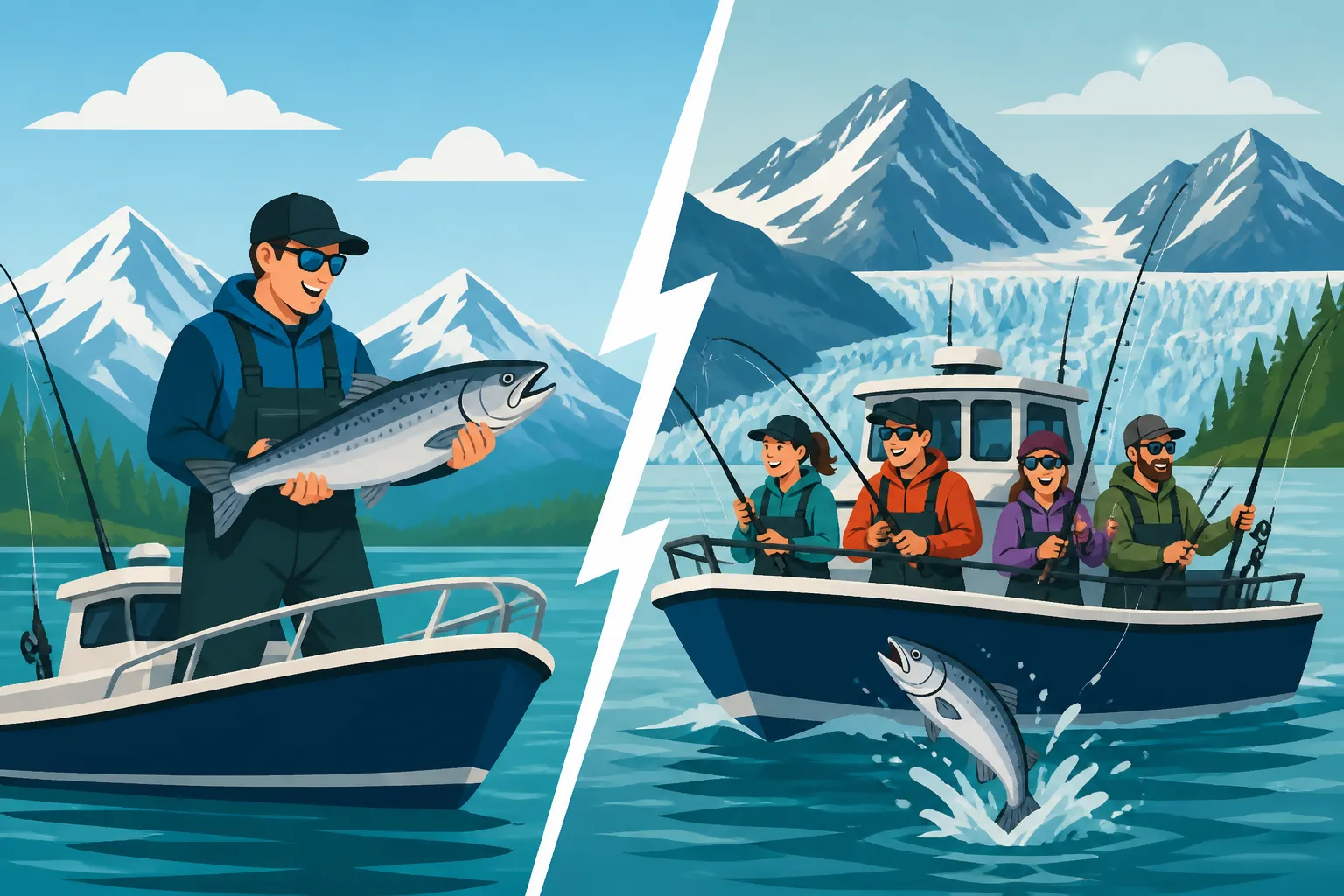
Private vs Shared Alaska Fishing Charters
Planning an unforgettable fishing trip to Alaska often boils down to a fundamental question: should you opt for a private charter or join a shared experience? Many anglers agonize over this choice, worried about budget, flexibility, and getting the most out of their precious time in the Last Frontier. This comprehensive guide will break down the ins and outs of private versus shared Alaska fishing charters, helping you weigh the options and make the best decision for your dream angling adventure.
Understanding the Core Differences Between Private and Shared Charters
The distinction between private and shared fishing charters in Alaska is more than just about cost; it profoundly impacts your entire fishing experience. From the dynamics on the boat to the flexibility of your itinerary, these two options offer vastly different approaches to tackling Alaska's incredible waters.
What Exactly Is a Shared Fishing Charter?
A shared fishing charter, often referred to as an "open boat" or "head boat" trip, is exactly what it sounds like: you purchase a single spot on a vessel that will be filled with other individual anglers or small groups. These trips typically have a set schedule, target species, and departure times that the charter company determines in advance. You'll be sharing the deck, the captain's attention, and the overall experience with people you might never have met before.
Think of it like carpooling for fishing. Everyone chips in a portion of the boat's operating costs, making it a much more accessible option for solo travelers, couples, or small groups who don't want to incur the full expense of chartering an entire boat. The group size can vary significantly, from a handful of anglers on a smaller boat targeting salmon on the Kenai River to a dozen or more on a larger vessel heading out into Kachemak Bay for halibut. The camaraderie can be fantastic, as you share stories and tips with fellow enthusiasts, but it also means compromising on certain aspects of the trip to accommodate the group's collective needs.
What Defines a Private Fishing Charter?
Conversely, a private fishing charter offers exclusivity: you and your chosen companions (family, friends, or colleagues) are the sole occupants of the boat, along with the captain and any crew. This means the entire vessel and its resources are dedicated entirely to your group, offering a truly personalized adventure on Alaska's vast waters.
With a private charter, you're essentially renting the entire boat for a specified duration, giving you much greater control over the trip's details. You can often work directly with the captain to tailor the itinerary, choose specific fishing spots, and focus on particular species. For instance, if your heart is set on landing a trophy King Salmon, a private charter can dedicate the entire day to that pursuit, adjusting techniques and locations as needed. This level of customization comes with a higher price tag, as you bear the full cost of the boat's operation, but it provides an unparalleled level of freedom and an intimate experience often sought by families or serious anglers.
Weighing the Pros and Cons: Which Charter Style Suits Your Trip?
The decision between a private and shared charter often boils down to balancing cost, flexibility, and your desired fishing experience. Each option presents distinct advantages and disadvantages that can make or break your trip of a lifetime in Alaska.
Advantages and Disadvantages of Shared Charters
Shared charters are generally the more budget-friendly option, as the cost of the boat, fuel, and guide is split among all passengers. This significantly reduces the individual price, making an Alaska fishing adventure accessible to more people. It's an excellent choice for solo travelers or small groups where booking an entire boat might be prohibitively expensive. Many people also enjoy the social aspect of shared charters. You get to meet new people from all walks of life, share fishing stories, and celebrate successes together. There's a certain energy that comes from a boat full of enthusiastic anglers, all hoping for that big catch. This can lead to unexpected friendships and a unique communal experience.
However, shared charters come with compromises. Since you're part of a larger group, flexibility is often limited. The captain must cater to the collective interest, meaning you might not get to spend as much time targeting your preferred species or using your favorite technique. If one person wants to fish for rockfish and another for lingcod, a decision needs to be made for the group. Schedules are typically rigid, with set departure and return times, and you're bound by the group's pace. This can be frustrating if you prefer a more relaxed pace or want to stay longer when the bite is hot. Furthermore, while most anglers are respectful, group dynamics can sometimes be challenging. You might encounter personalities that clash, or anglers who aren't as mindful of personal space or shared fishing etiquette, potentially detracting from your enjoyment. Destinations like Homer or Seward often have a robust offering of shared halibut charters, which can be fantastic for targeting these giants, but you'll be fishing alongside others and adhering to the charter's chosen fishing grounds.
Advantages and Disadvantages of Private Charters
The primary advantage of a private charter is the unparalleled personalization and flexibility it offers. You and your group have the freedom to customize the trip to your exact specifications. Want to spend the entire day chasing a specific species, like the elusive steelhead in a remote river system or giant halibut in deep offshore waters? A private charter makes that possible. You can dictate the departure time (within reason, depending on tides and daylight), the duration of the trip, the fishing methods employed, and even the specific areas you wish to explore. This level of control ensures your trip aligns perfectly with your fishing goals and preferences. For families or groups with varying skill levels, a private charter means the captain can provide undivided attention, offering personalized instruction for beginners or focusing on advanced techniques for seasoned anglers. This can be particularly beneficial if you're introducing children to fishing or have specific learning objectives.
The most significant disadvantage, as you might expect, is the cost. Private charters are considerably more expensive than shared trips because you are responsible for the entire boat's operating expenses. This can be a substantial investment, especially for longer trips or larger vessels. While the experience is often worth the price for many, it's a major factor to consider when budgeting your Alaskan adventure. Another potential drawback, though less common, is the "pressure to perform" that can sometimes accompany a private trip. With the entire boat focused on your group, some anglers might feel an added sense of expectation to catch fish, which can sometimes overshadow the enjoyment of the experience itself. However, a good guide will always prioritize your enjoyment over fish counts, ensuring a relaxed and fun atmosphere.
| Feature | Shared Fishing Charter | Private Fishing Charter |
|---|---|---|
| Cost | Lower per-person cost, split among all anglers | Higher total cost, paid by your group exclusively |
| Group Size | Multiple individuals/small groups (typically 6-12+) | Your chosen group only (often 1-6 people, max boat capacity) |
| Flexibility | Limited; set schedule, target species, fishing spots | High; customizable schedule, species, locations, techniques |
| Personalization | Minimal; captain caters to general group interest | High; captain focuses solely on your group's preferences |
| Privacy | Low; sharing space with strangers | High; exclusive to your group |
| Social Aspect | Opportunity to meet new people, communal experience | Intimate experience with known companions |
| Ideal For | Solo anglers, couples, budget-conscious, casual trips | Families, serious anglers, special occasions, targeted species |
| Instruction | General advice, shared attention | Dedicated, personalized coaching |
Deciding Factors: Key Questions to Ask Yourself
Choosing between a private and shared charter isn't a one-size-fits-all decision. It hinges on your specific needs, desires, and the practicalities of your trip. Asking yourself a few key questions can help clarify which option aligns best with your Alaska fishing dreams.
Your Budget and Group Size
This is often the first and most critical factor for most travelers. If you're traveling solo or with just one or two other people, the per-person cost of a private charter can be quite steep. In such cases, a shared charter often makes far more financial sense, allowing you to experience world-class Alaska fishing without breaking the bank. For example, a full-day shared halibut trip out of Seward might run a few hundred dollars per person, while a private boat for the day could easily be several thousand. Understanding the nuances of Alaska Fishing Charter Cost Explained is crucial here.
However, if you have a larger group – say, a family of four or six friends – the cost difference per person between a shared and private charter often narrows considerably. Dividing the cost of a private boat among more people can make it surprisingly competitive, especially when you factor in the added benefits of exclusivity and customization. For instance, if you have a group of four and a private charter costs $2,000, that's $500 per person, which might not be much more than a premium shared trip, but offers significantly more value in terms of experience. Consider who you're traveling with: for a family with young children, the comfort and safety of a private boat often outweigh the extra expense, allowing for bathroom breaks, snack times, or changes in fishing spots without inconveniencing others. This also makes them excellent options for Best Fishing Charters for Families in Alaska.
Your Fishing Goals and Experience Level
What do you hope to achieve on your Alaska fishing trip? Are you a seasoned angler with a specific target species in mind, perhaps aiming for a monster halibut or a record King Salmon? If so, the flexibility of a private charter allows you to dictate the focus, spending the entire day pursuing that one trophy fish. The captain can take you to specific, less-frequented spots and employ specialized techniques tailored to your expertise. This focused approach is invaluable for serious anglers. If you're interested in really honing your skills for a specific catch, a private guide can provide undivided attention, offering tips and tricks on how to catch Alaska King Salmon: Complete Guide or Alaska Halibut: Complete Guide.
On the other hand, if you're a beginner simply looking to enjoy the experience, catch some fish, and perhaps learn the basics, a shared charter can be perfectly adequate. The group setting can reduce individual pressure, and you can still benefit from the guide's general instruction and the excitement of collective catches. Many shared charters are designed for a broad range of experience levels, providing a comfortable and enjoyable introduction to Alaska fishing. If your goal is more about the experience of being on the water and landing any fish, rather than a specific type or size, a shared charter often provides excellent value.
Flexibility and Customization Desires
How much control do you want over your fishing day? If you crave spontaneity, the ability to change plans based on weather or fish activity, or have specific locations you're dying to visit, a private charter is the undisputed champion. Imagine the flexibility to stay an extra hour when the salmon are biting hot, or to pivot from halibut fishing to salmon trolling if conditions change. You can also specifically request to use certain gear or techniques, or even ask to head back to shore early if someone in your party isn't feeling well. This level of autonomy is simply not possible on a shared trip.
Shared charters, by their nature, adhere to a fixed itinerary. The captain has to keep the entire group happy, which means sticking to a predetermined schedule and fishing grounds. While a good captain will always try to make the most of the day for everyone, individual requests for changing locations or extending fishing time are usually out of the question. If you're comfortable letting the captain lead and don't have strong preferences about every detail of the day, a shared charter won't feel restrictive. But if the thought of being locked into a rigid schedule or having to compromise on your fishing desires gives you pause, then the investment in a private charter for the ultimate custom experience might be well worth it.
Booking Your Alaska Fishing Adventure: Tips and Considerations
Once you've weighed the pros and cons and have a clearer idea of whether a private or shared charter suits you, the next step is to secure your spot. Booking your Alaska fishing trip requires some foresight and diligent research to ensure a smooth and successful outing.
How to Find Reputable Charter Operators
Finding a trustworthy and experienced charter operator is paramount for any Alaska fishing trip. Start by researching online. Websites like FishingBooker are excellent resources, offering listings of numerous charters across Alaska, complete with reviews from past clients. These platforms can help you compare options, see availability, and often read detailed descriptions of what each charter offers. Don't just rely on a single review source; cross-reference information with platforms like TripAdvisor, Google Reviews, and direct testimonials on the charter's own website. Look for consistent positive feedback regarding the captain's expertise, the boat's condition, the quality of the gear, and the overall customer service.
Word-of-mouth recommendations are also incredibly valuable. Talk to friends, family, or fellow anglers who have fished in Alaska. They can provide firsthand accounts and recommend operators they've had great experiences with. When you narrow down your choices, don't hesitate to contact the charter directly. A reputable operator will be happy to answer all your questions, discuss their experience, and even provide references if you ask. Ensure they are properly licensed and insured, which is a non-negotiable for safety and compliance with Alaska Fishing Regulations Explained. Whether you're planning a trip to the famed Kenai River Fishing: Complete Guide or venturing out from Homer Alaska Fishing Guide, always prioritize reputation and safety.
Essential Questions Before You Book
Before you commit to a booking, whether it's private or shared, make sure you have all the necessary information. This proactive approach will help prevent any unwelcome surprises down the line. First, clarify exactly What's Included in an Alaska Fishing Charter. Does the price cover bait, tackle, and fishing gear, or do you need to bring your own? Are rain gear, snacks, and drinks provided, or should you pack them yourself? These details can significantly impact your overall budget and packing list.
Next, understand their cancellation policy, especially regarding weather. Alaska weather can be unpredictable, and charters sometimes get canceled for safety reasons. What's the refund policy in such cases? It's always a good idea to discuss the expected bag limits for your target species and how the charter handles fish processing. Many charters offer basic filleting, but what about vacuum sealing, freezing, and boxing your catch for transport home? Knowing the process for Fish Processing After an Alaska Charter is essential if you plan to bring your fish back with you. Finally, for private charters, explicitly discuss your desired itinerary and target species to ensure the captain is on board and capable of delivering the experience you seek. A thorough discussion with the charter operator, perhaps discovered through a search on FishingBooker, is a crucial step in preparing for an incredible fishing adventure in Alaska. This is all part of learning How to Choose an Alaska Fishing Charter.
Disclaimer
The information provided in this guide is for general informational purposes only and is not intended as legal or professional advice. Fishing regulations, seasons, and licensing requirements in Alaska can change frequently. Always consult the official Alaska Department of Fish and Game (ADF&G) regulations and emergency orders before planning and embarking on any fishing trip.